RICHI grass crusher machine turns prepared alfalfa, hay, forage and straw into 0.5–20 mm material for feed, grass pellets and other biomass processing. Select the screen and machine size around the product you need to make.
The grass crusher machine uses a forced-feeding arrangement to deliver prepared forage into the high-speed hammer crushing zone. Repeated hammer impact, cutting and friction reduce the fibers until sufficiently small material passes through the selected screen, while oversized particles remain in the chamber for further grinding.For a standalone replacement machine, we can match the 9FB model and screen to your existing process. For a new project, RICHI can work backward from the finished product—grass meal, feed ingredients, forage pellets or biomass products—to determine whether bale breaking, pre-cutting, crushing, conveying and downstream processing are required.
○ RICHI MACHINERY
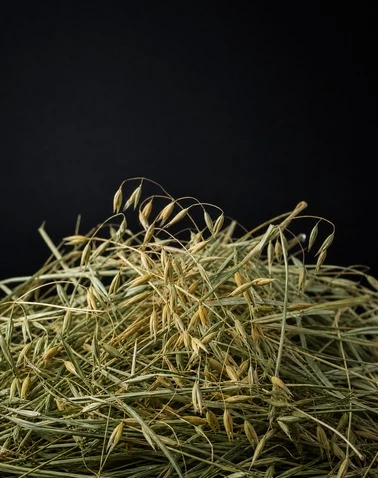
RICHI grass crusher machine processes prepared alfalfa, ryegrass, oat hay, Sudangrass, Napier grass, hay, straw and other suitable forage or fibrous crop materials. Baled, long or freshly harvested material may require opening, cutting or moisture adjustment before fine grinding.
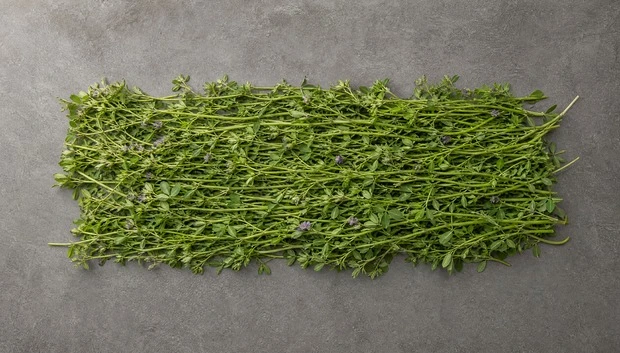
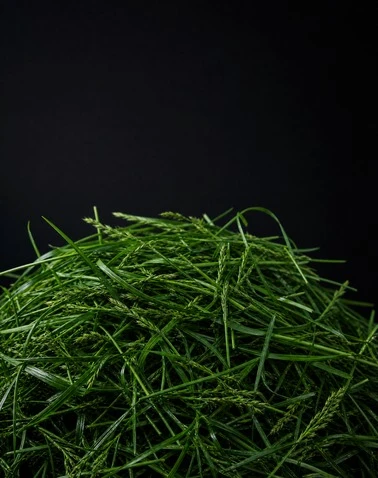
Alfalfa Grass
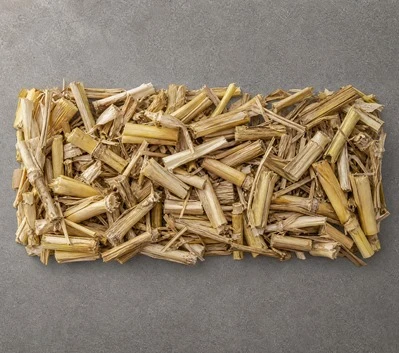
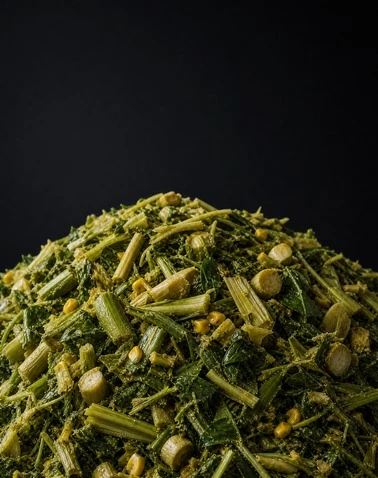
Corn Stalk
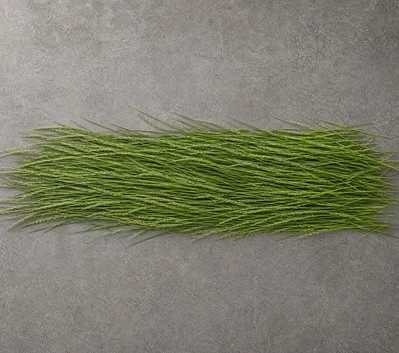
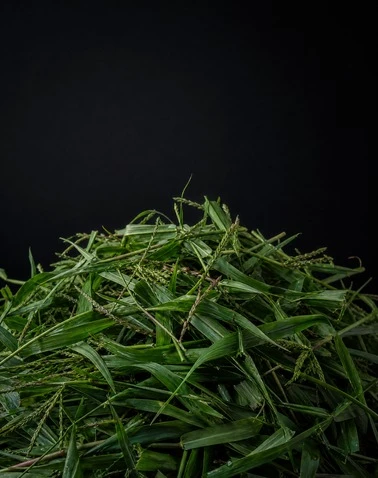
Ryegrass Hay
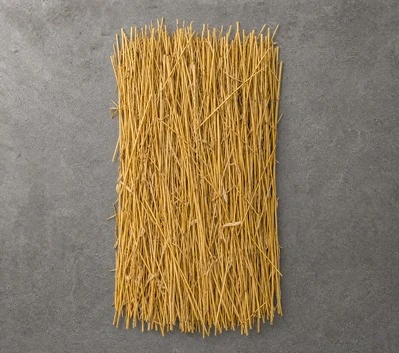
Wheat & Rice Straw
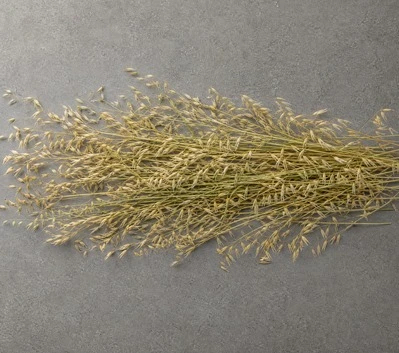
Oat Hay
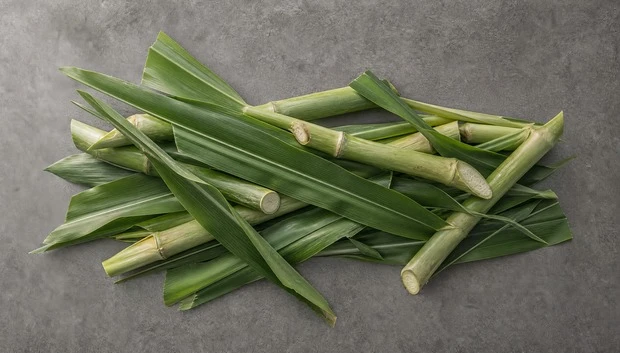
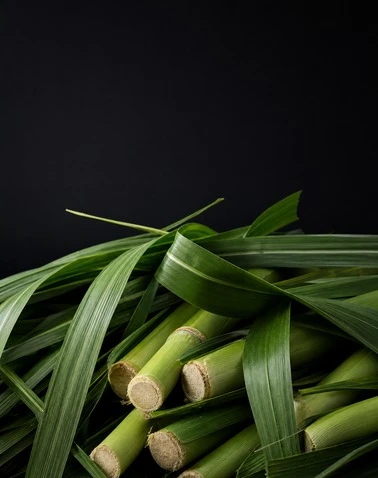
Elephant Grass
Our customers include feed mills, forage processors, grass and biomass pellet plants, large livestock operations, integrated farms, agricultural cooperatives and processing service providers that need prepared forage or crop residues reduced to a controlled size for further production.
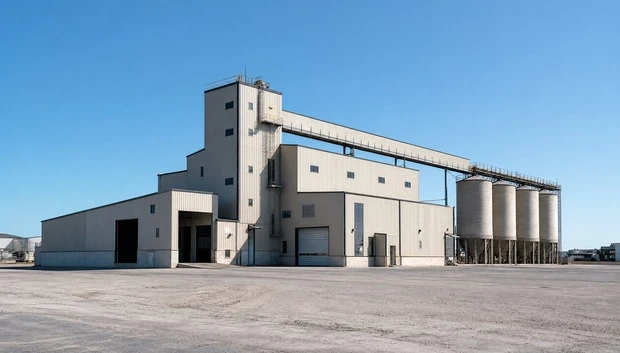
Large Cattle Farms
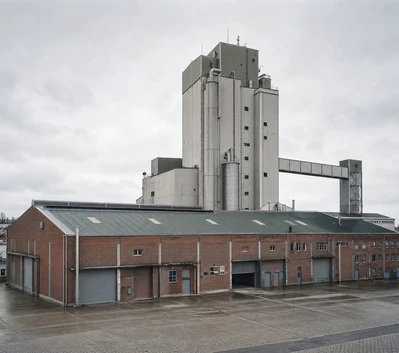
Forage Processing Factory
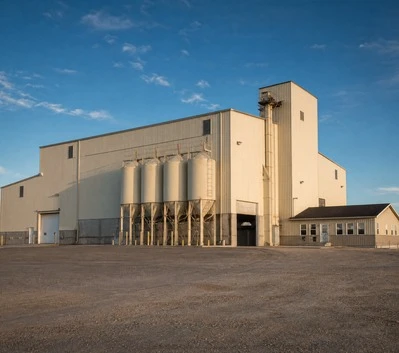
Animal Feed Mills
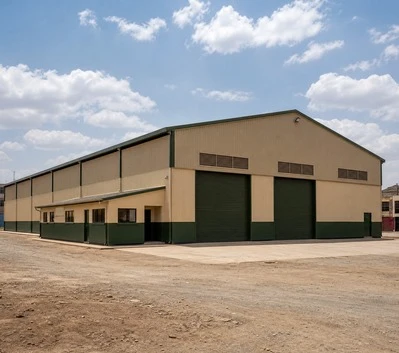
Livestock Service Center
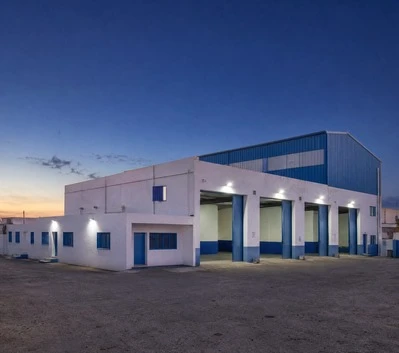
Agricultural Machinery Services
Biomass Energy Plants
○ RICHI MACHINERY
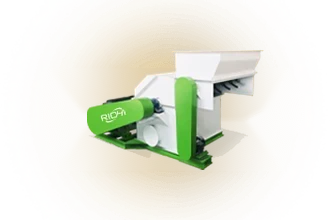
Hay, alfalfa and straw do not flow like grain, especially when fibers are long, fluffy or unevenly distributed. The forced-feeding section actively introduces prepared material into the crushing chamber, reducing bridging and helping maintain a more consistent feed rate under continuous operation.
The rotor carries multiple working hammers that repeatedly strike, tear and shear fibrous material as it moves through the chamber. Hammer arrangement is designed to use the available crushing area effectively, supporting progressive size reduction rather than relying on a single cutting action.
A replaceable screen surrounds the effective grinding zone and determines when sufficiently reduced material can leave the chamber. Different screen openings allow the same grass crusher machine to serve different downstream requirements without treating one particle size as suitable for every forage product.
Rotor balance becomes increasingly important at operating speed. Dynamic balancing helps control vibration generated by the rotating assembly, supporting smoother operation and reducing unnecessary mechanical loading on bearings and other connected components during continuous grass grinding.
Effective grinding depends on the interaction between hammer movement and the screening surface, not hammer speed alone. The working clearance is designed to maintain useful material circulation and repeated contact while allowing adequately reduced fibers to discharge through the screen.
The 9FB series increases effective chamber width as processing demand rises—from 400 mm on the 9FB56×40 to 1,500 mm on the 9FB60×150. This provides a practical way to scale the grinding section for higher material flow rather than relying only on increasing motor power.
Hammers and screens are working parts and should be inspected as part of routine production maintenance. The machine is designed so these components can be accessed for inspection and replacement, allowing operators to respond to wear instead of accepting declining grinding performance.
The chamber brings the feeding stream, rotating hammer assembly and screening area together within a compact grinding section. Its configuration is intended for continuous processing of properly prepared fibrous feedstock, with the final setup matched to material behavior and production duty.
○ RICHI MACHINERY
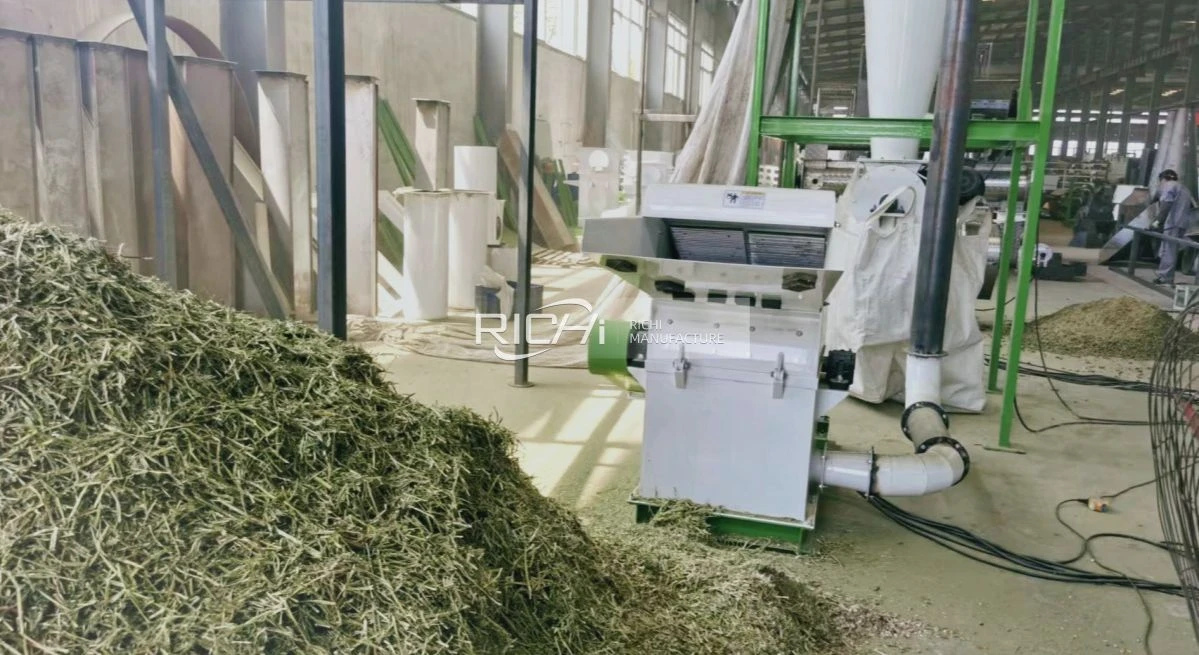
RICHI has supplied grass crusher machine equipment for forage, feed and grass pellet projects in different markets worldwide. These project and factory videos let you see real materials being processed, pre-shipment testing and machines prepared in our workshop—not just specifications on a page.
Built for an Uzbek grass pellet plant processing locally sourced alfalfa and dry forage. The grass crusher machine prepares the fibrous material for downstream pelletizing.

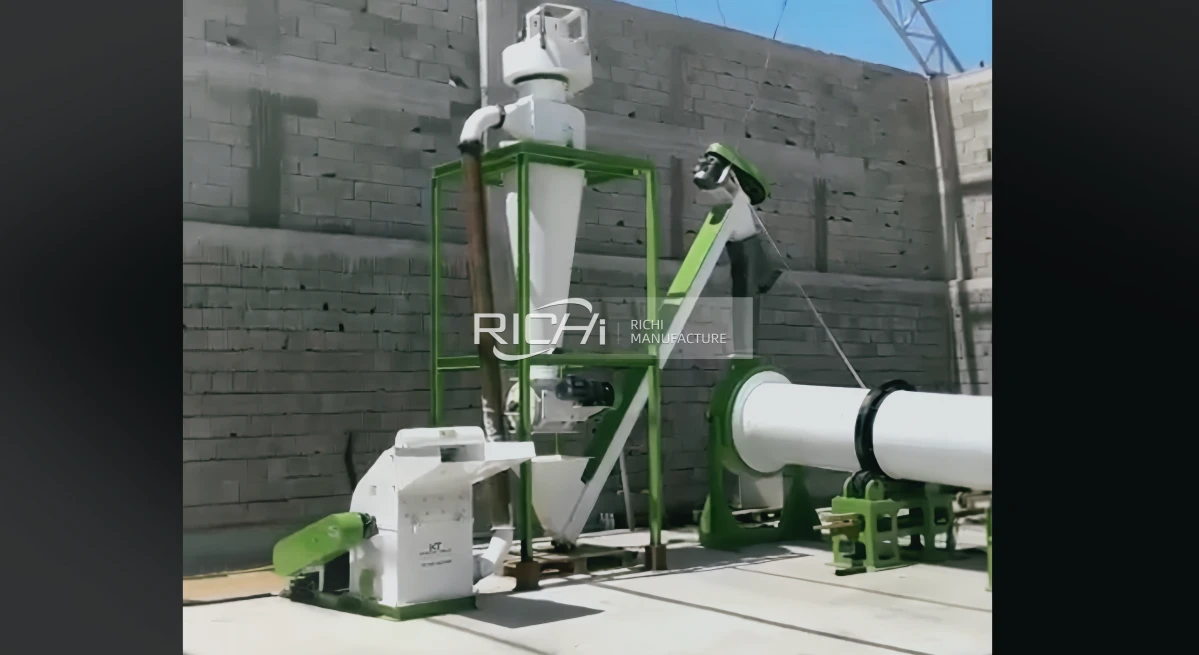
Pre-shipment testing for a Kazakhstan grass pellet project using prepared alfalfa and cereal straw. We checked feeding, crushing and discharge before delivery.
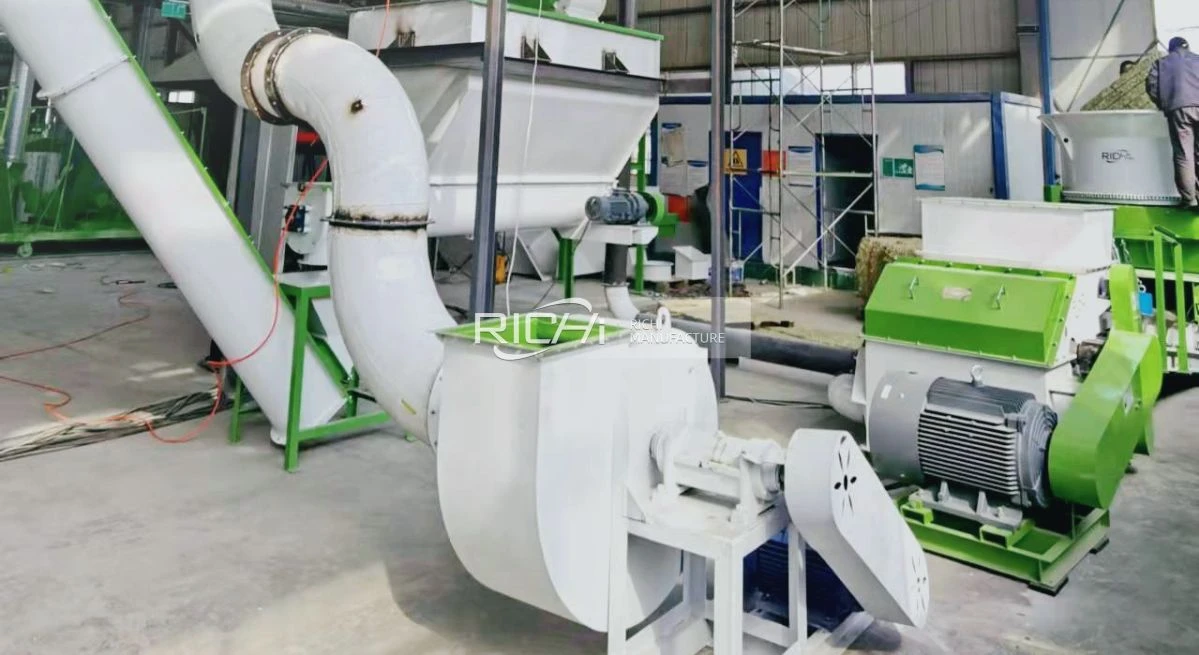
This pre-shipment test uses dry hay prepared for an USA forage-processing project. The grass crusher machine was run to verify stable material flow and the required grinding duty.
○ RICHI MACHINERY

Grass meal, compound feed ingredients and pellet feedstock do not necessarily need the same grinding degree. We define the required material condition from the downstream process first, then select the 9FB model and crushing target around it.

A 3 t/h requirement means little without the material and target size. Pre-cut alfalfa through a coarser screen and tough straw through a finer screen create different loads, so model selection considers the actual grinding duty rather than t/h alone.

If your raw material arrives as square or round bales, we do not simply specify a larger grass grinder. RICHI can match bale opening and coarse preparation with the crushing section, creating a continuous route from compressed forage to process-ready material.

Forage density, fiber toughness and storage condition can change between harvests or suppliers. We evaluate the normal material together with expected variations so the selected configuration is not based only on one unusually easy production sample.

For retrofit projects, we can match a new grass crusher machine to existing bale breakers, conveyors, mixers or pellet equipment. Available space, transfer heights and upstream/downstream capacities are checked before deciding what should actually be replaced.

RICHI manufactures equipment for bale handling, crushing, feed processing and pellet production. When grass crushing is only one stage of your project, we can evaluate how its output must connect with mixing, conditioning, pelletizing and other required downstream operations.
Grinding grass finer is easy to specify on paper; designing the right process is harder. RICHI matches each grass crusher machine to the incoming forage and the product that follows, so capacity, grinding degree and upstream preparation work together instead of becoming separate compromises.
○ RICHI MACHINERY
RICHI offers six grass crusher machine models from 9FB56×40 to 9FB60×150, with reference capacities from 0.5 to 6.0 t/h. The larger model is not automatically the right choice: actual selection should also consider forage type, prepared feed length, screen opening, target particle size and operating hours. The listed capacity is a reference operating range, not a guarantee for every grass and every screen. Finer grinding, tougher fibers, longer feed material and unsuitable moisture conditions can reduce throughput. Send us your actual material and required size for project-specific selection.
| Model | Capacity (t/h) | Main Motor Power (kW) | Rotor Diameter (mm) | Crushing Chamber Width (mm) |
|---|---|---|---|---|
| 9FB56×40 | 0.5–0.8 | 37 | 560 | 400 |
| 9FB56×60 | 1.0–1.5 | 55 | 560 | 600 |
| 9FB60×80 | 2.0–2.5 | 75 | 600 | 800 |
| 9FB60×100 | 2.5–3.0 | 90 | 600 | 1000 |
| 9FB60×120 | 3.0–4.0 | 110 | 600 | 1200 |
| 9FB60×150 | 5.0–6.0 | 132 | 600 | 1500 |
○ RICHI MACHINERY
A complete grass crushing system begins before the grass crusher machine. RICHI designs the material route around the actual feed form—whole bales, opened forage or pre-cut loose material—and continues through grinding, collection and transfer to the next production stage. New systems and existing-plant upgrades can both be configured around the 9FB series.
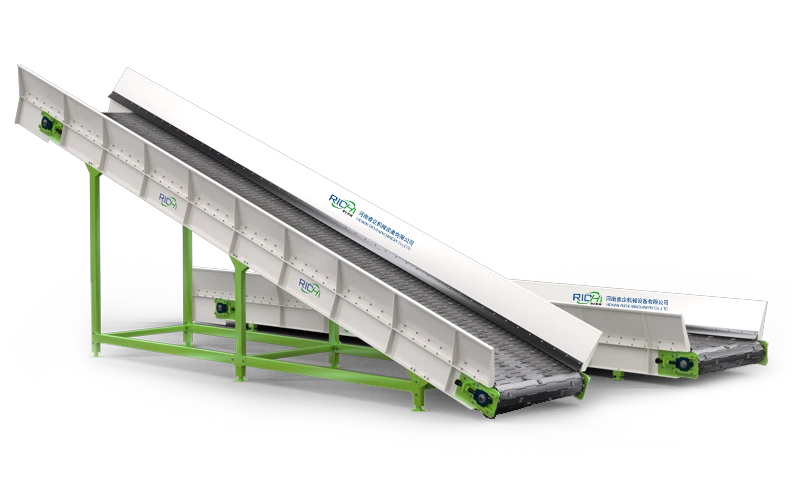
Belt, screw and other suitable conveyors transfer prepared forage between processing stages, with the feeding arrangement matched to its low bulk density and fibrous form.
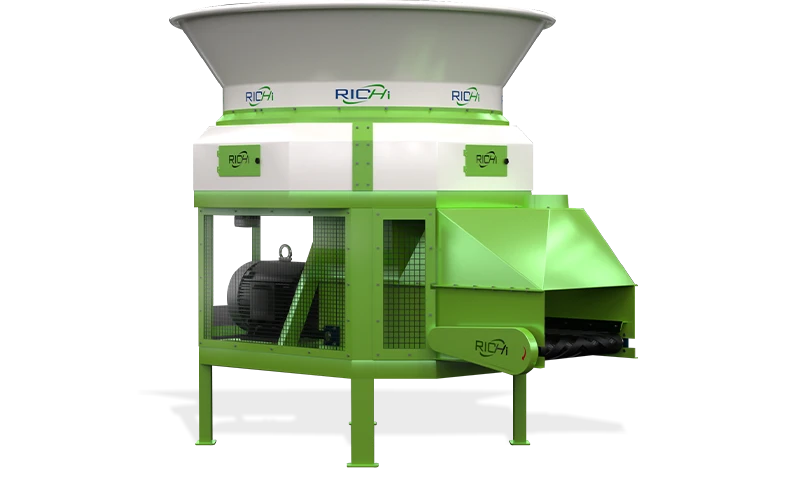
Opens square or round hay, alfalfa and straw bales before grinding, providing loose material that can be handled more reliably by the following crushing section.
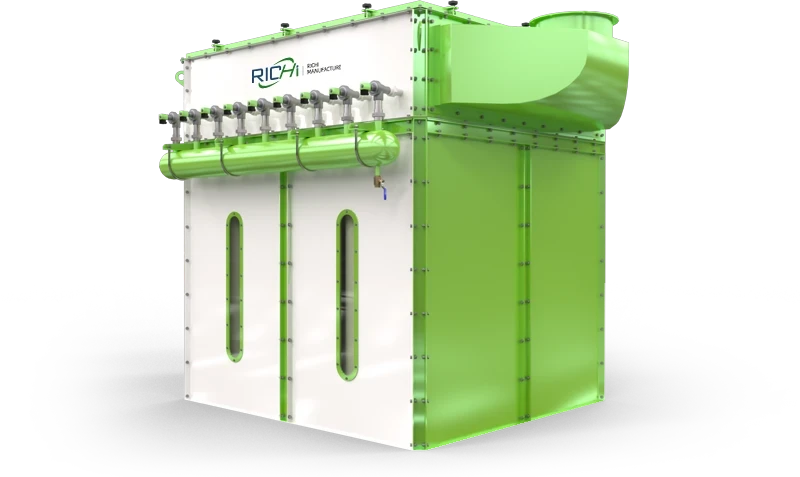
Cyclones, fans and dust collection equipment can be configured around the discharge system to collect ground forage and manage airborne fines according to the material and plant layout.
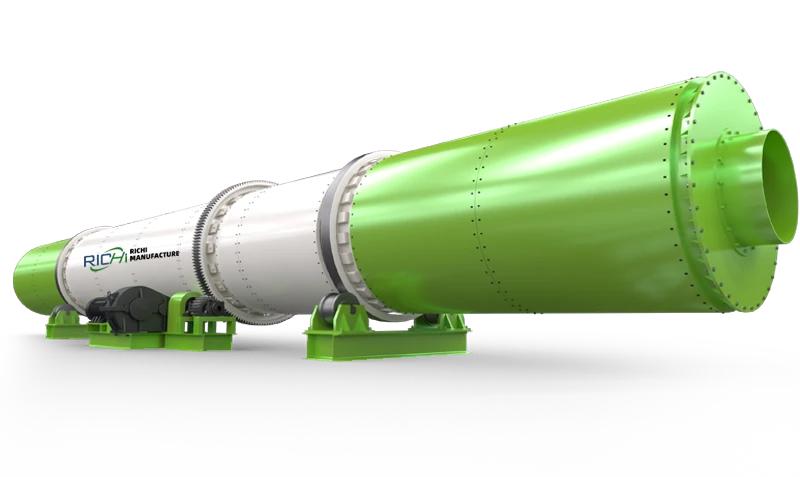
Added when forage moisture is too high for stable grinding or the downstream process. The rotary dryer reduces moisture to a suitable level before fine crushing, with configuration based on the grass type, initial moisture and required final condition.
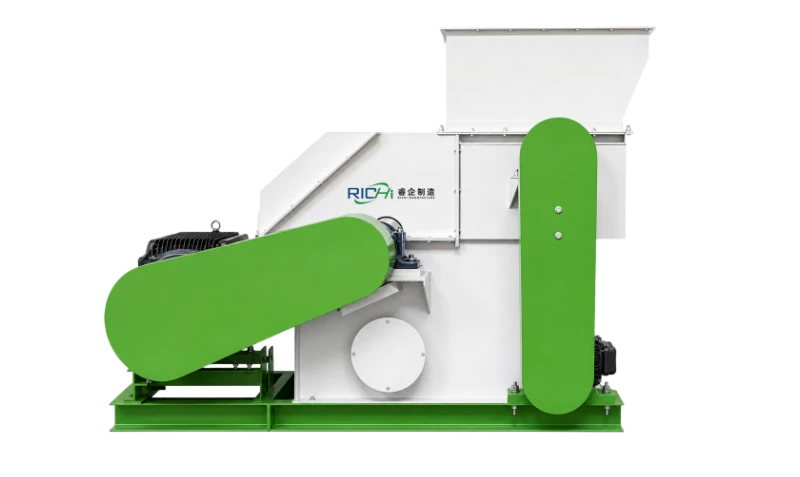
The 9FB is selected after we know what reaches it and what must leave it. Instead of treating the grass crusher machine as an isolated unit, RICHI matches its capacity and grinding target with upstream bale opening or cutting and with downstream feed, grass pellet or biomass processing. For customers who already have part of the line, we can work around existing equipment rather than automatically replacing it. The same engineering approach applies whether the project is a new grass processing plant, a capacity expansion or the replacement of an undersized crusher.
Design My Grass Crushing System○ RICHI MACHINERY
Whole-plant corn contains stalk, leaf, cob and grain fractions, so its condition matters more than the name of the crop. Wet silage is not a routine fine-grinding feedstock; material intended for further crushing must first reach a suitable moisture and prepared size for the downstream process.
○ RICHI MACHINERY
The 9FB60×100 is rated at approximately 2.5–3.0 t/h, so I would not select it as a comfortable 3 t/h design point without checking the material first. If your plant must continuously supply 3 t/h, screen size, alfalfa moisture, prepared length and operating margin should be evaluated before confirming the model.
For 6 mm grass pellets, a screen in the several-millimeter range is normally a more practical starting point than automatically grinding everything through 2 mm. The final choice depends on stem structure, formulation and pellet mill requirements; unnecessarily fine grinding increases power consumption and can reduce crushing capacity.
No. A 4 mm screen is a passage-control component, not a guarantee that every particle will measure exactly 4 mm. Fibrous material produces a distribution of particle sizes because leaves, stems and tougher fibers break differently during hammer grinding.
The 9FB series covers a stated processing range of approximately 0.5–20 mm, but 0.5 mm represents fine grinding rather than the normal target for every forage application. Before specifying that duty, we would confirm how much material must actually reach the fine fraction and whether the added grinding load is commercially justified.
Material in this condition may be suitable if it feeds continuously without bridging, but feedability must be checked against its bulk density, stem stiffness and moisture. Very long, tangled forage should be pre-cut first; whole dense bales should go through bale breaking rather than directly into the 9FB.
No. Dense 400–500 kg bales should be opened before fine grinding. A typical arrangement is bale breaking → controlled conveying → grass crushing, with additional cutting only where the opened fibers remain too long for stable feeding.
Yes, provided its actual discharge condition is suitable for the crusher and the two machines are capacity-matched. We would check the opened fiber length, discharge rate, conveyor dimensions and surge behavior rather than simply connecting a nominal 5 t/h bale breaker to a 5–6 t/h crusher.
Around 12–15% moisture is a practical condition for many dry alfalfa grinding duties. At approximately 18%, fine-screen grinding can become noticeably more difficult, with lower throughput and a greater tendency for material to accumulate around the screen. If 18% is common rather than occasional, the system should be selected around that condition. Comparable forage-hammer-mill references also rate alfalfa below roughly 15–18% moisture.
No, not for normal fine grinding. Fresh Napier grass is generally too wet and too long to treat like dry hay. It normally needs cutting first and, where the intended product requires dry fine-ground material, drying before the grass crusher.
Usually not if your final product is conventional wet silage. A 9FB grass crusher is intended for further size reduction of suitably prepared material; high-moisture fermented silage is a different processing duty. If you intend to dry the whole-plant corn for meal or pellets, then a fine-grinding stage can be evaluated after moisture reduction.
No. Remove stones and as much soil contamination as practical before fine grinding, and use magnetic separation where tramp metal is possible. Soil accelerates wear; stones and metal create a much more serious risk of damage to the grinding components.
Not necessarily. Moving from an 8 mm to a 4 mm screen increases the amount of size reduction required before material can leave the chamber, so some capacity loss is normal. Before increasing motor power, check moisture, feed length, hammer wear, screen condition, feeding stability and discharge airflow.
Start with the required hourly duty rather than annual tonnage alone. At 8,000 t/year, a plant operating 2,000 hours annually needs about 4 t/h average net output; one running 4,000 hours needs about 2 t/h. That difference can move the project into a completely different 9FB model range.
Do not plan a 2-to-4 t/h expansion around motor replacement alone. Across the 9FB range, chamber width and overall grinding capacity also change. If 4 t/h is a confirmed second-stage target, it is better to size the machine and surrounding conveyors with that expansion in mind from the beginning.
Yes. One 9FB can process properly prepared alfalfa and ryegrass, but do not assume identical tonnes per hour. Their stem structure, leaf fraction, bulk density and feeding behavior differ, so model selection should cover the more demanding operating condition.
Not necessarily. The forage-grinding duty and grain-grinding duty are different, and an existing grain mill may be better retained for grain. For a 10 t/h formula containing 60% alfalfa, for example, the theoretical alfalfa requirement is 6 t/h before allowing for operating margin and production scheduling.
Probably not. If 30–50 mm chopped forage is the finished requirement, a forage cutter or chaff cutter is generally closer to the job. The 9FB becomes relevant when you need further size reduction for forage meal, formulated feed, pellet production or similar processing.
Because the feeding duty is different. Grain is dense and free-flowing; opened alfalfa is light, bulky and fibrous. A mill that performs well on grain can suffer unstable feeding or bridging when long, low-density forage is introduced without the correct upstream preparation and feeding arrangement.
Check material moisture and incoming fiber length first, then inspect screen condition, hammer wear, feeding rate and discharge. If the blockage appears only after changing to a finer screen, the grinding duty or evacuation rate may be exceeding what the current configuration can sustain.
Yes. Soil and mineral contamination can substantially accelerate abrasive wear on hammers and screens. Instead of promising a fixed wear life, we would first reduce contamination upstream and then monitor hammer edges, screen openings, power draw and declining throughput to establish a maintenance interval for your material.
Yes, if one model can cover the required throughput at both grinding specifications. Interchangeable screens allow different production runs, but the machine should be sized against the finer, more demanding duty rather than only the easier product.
For this type of pellet production, a several-millimeter grind is a practical starting point, rather than leaving long forage fibers or automatically reducing everything below 1 mm. The exact screen should be finalized around pellet diameter, alfalfa stem condition, formulation and pellet-mill behavior.
No. At a continuous 4 t/h feed rate and 35% grass inclusion, the theoretical grass demand is only 1.4 t/h. You then add a reasonable margin based on batch scheduling and operating hours instead of automatically buying a 4 t/h grass crusher.
Yes, in some layouts. If sufficient vertical clearance is available, gravity transfer can simplify the system. Send the floor-to-floor height, crusher discharge elevation, mixer inlet elevation and equipment footprint so we can check whether direct discharge is practical or a conveyor is required.
Send the existing grinder dimensions, motor power, screen size, actual t/h, incoming forage length and moisture, discharge height, conveyor dimensions and available L × W × H. Also tell us why it is being replaced—capacity, blockage, wear or particle size—so the new machine solves the actual bottleneck.
For dry, finely ground alfalfa, dust collection should normally be considered. A properly designed arrangement may use enclosed transfer, cyclone separation, aspiration and filtration depending on the plant. The objective is not “zero dust,” but controlled material collection and reduced airborne fines around the grinding section.
As a practical global reference, an industrial grass crusher machine typically costs about USD 5,000–30,000 for the crusher itself, while a complete grass-crushing section can cost substantially more. The final price is mainly affected by model and motor power, feeding arrangement, screens, conveyors, bale/pre-cutting equipment, dust collection, electrical specification and automation.
Yes. The motor and electrical configuration can be specified for the confirmed project power supply. Send voltage, frequency, phase and installation country before manufacturing; do not assume that equipment configured for another market can simply be connected without checking the motor and controls.
Start by comparing the actual material condition rather than only the grass name. Send photos or video, moisture, average and maximum length, whether it is baled or loose, required particle size and hourly capacity. For an unfamiliar or unusually difficult forage, representative-material testing can be discussed before final configuration.
For whole bales, the front end normally begins with bale opening and controlled conveying, followed by additional cutting where the opened fibers remain too long. Drying is added when the incoming moisture is above the condition required for stable grinding and downstream pellet production. The 9FB is then selected around the prepared material actually reaching it.
○ RICHI MACHINERY
As a global leader in pelletizing solutions, RICHI represents a fully integrated technology partner that masters every dimension of modern production systems. From pioneering research in material science to precision engineering and industrial-scale manufacturing, we build complete production ecosystems that transform raw materials into high-value pellets. Our holistic approach ensures each project is founded on three pillars: engineering precision that guarantees operational efficiency, continuous innovation that adapts to evolving market demands, and uncompromising reliability that sustains production for decades. With vertically controlled manufacturing and end-to-end project management, we deliver not just equipment, but fully optimized production assets that drive profitability across industries worldwide.

Engineering & Manufacturing
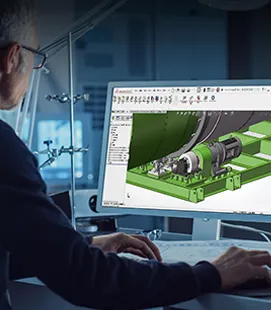
Research & Development

Technical Services

Patents & Certifications

Global Partnerships
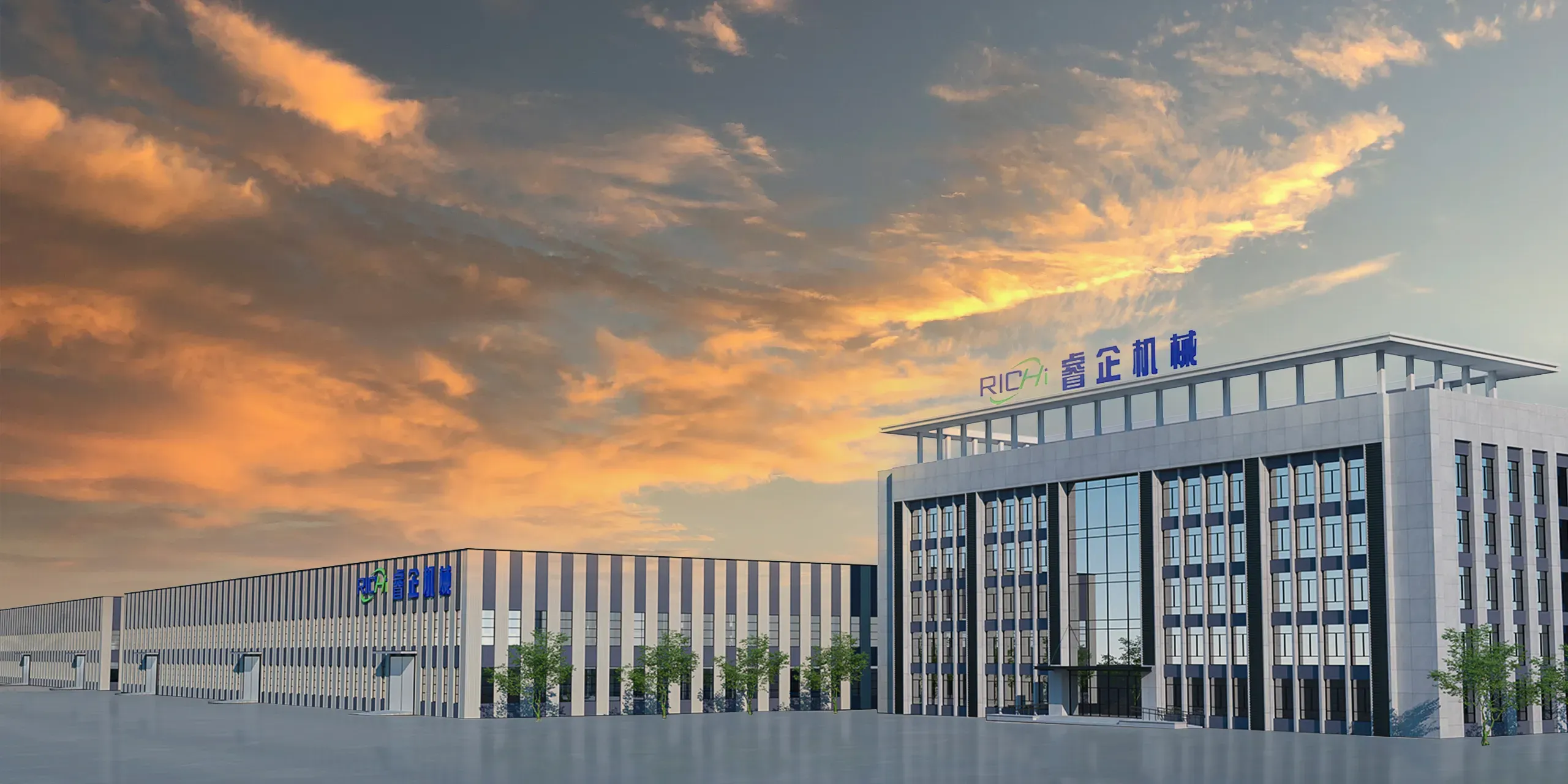
Global Headquarters
○ RICHI MACHINERY
Founded in 1995, RICHI Machinery has evolved from a specialized manufacturer into a global engineering provider for complete pelletizing systems. With two major manufacturing bases spanning over 60,000 m², we control every step from design to delivery, ensuring unmatched quality and depth of production. Our commitment to excellence is reflected in our global impact, serving clients in over 140 countries with more than 2,000 successful projects and 10,000+ equipment units delivered worldwide.
Production Area
Countries Served
Global Projects
Equipment Delivered
○ RICHI MACHINERY
For nearly three decades, RICHI has mastered the complexities of diverse materials across global industries. We provide end-to-end pelletizing systems, delivering the complete technological and engineering support needed to transform raw materials into high-value products. From initial concept to operational plant, we are your single partner for launching and scaling a successful pellet processing business.
○ RICHI MACHINERY
○ RICHI MACHINERY
Keeping in touch with us is an effective way to solve all your problems. If you have any needs or questions, please leave your contact information, then RICHI technical consultants will send design, quotation, videos to your mailbox. You can also contact us directly via WhatsApp: +86 13838389622
Copyright©2015-2026 by HENAN RICHI MACHINERY CO., LTD. All rights reserved.