
A large poultry feed manufacturer in Egypt's Nile Delta selected one RICHI SZLH250 Poultry Chick Pellet Mill for Feed Formulation System in Egypt to add a dedicated small-capacity starter-feed module inside its existing 200,000 T/Y feed plant.
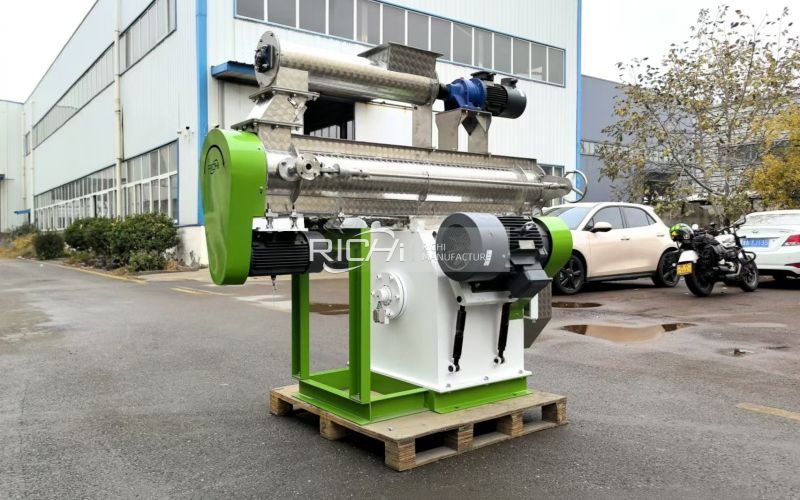
A large poultry feed manufacturer in Egypt's Nile Delta selected one RICHI SZLH250 Poultry Chick Pellet Mill for Feed Formulation System in Egypt to add a dedicated small-capacity starter-feed module inside its existing 200,000 T/Y feed plant. The factory near Tanta already operated larger pellet mills for its mainstream broiler grower and finisher products. It did not need another complete animal feed production line; it needed a smaller machine that could run specialized chick formulas without repeatedly interrupting the scheduling of the high-capacity pelletizing sections.
The selected SZLH250 uses a 22 kW main motor and provides an approximately 1–1.5 T/H production capacity for suitable poultry feed formulations. In this project, cereal ingredients requiring grinding are generally prepared through approximately 1.5–2.5 mm hammer-mill screens before batching and mixing.
The prepared starter mash is conditioned and formed into approximately 2.5–3.0 mm parent pellets, which are then reduced through a crumbler to roughly 1–2.5 mm chick starter crumble according to the individual product specification. The dedicated module is designed for approximately 2,000–2,500 T/Y of specialized chick starter feed rather than the 15,000 T/Y originally considered for this single small pellet mill.
Name:
Poultry chick feed ring die pellet mill
Country:
Egypt
Date:
2026
Capacity:
1–1.5 T/H
Model:
SZLH250
Main Motor Power:
22 kW
Application:
Broiler chick starter feed
Pellet diameter:
2.5–3.0 mm
The overall plant is much larger than the new machine. Its annual production includes multiple poultry-feed products manufactured through existing grinding, batching, mixing, pelletizing, cooling and finished-feed systems. Installing an SZLH250 does not mean a 1–1.5 T/H machine is expected to process the factory's entire output.
The reason for choosing a smaller pellet mill is production separation. Starter formulations are manufactured in smaller batches and can require different grinding, micro-ingredient dosing, conditioning and final physical form from high-volume grower and finisher feeds. Running these smaller orders through a large pellet mill can create unnecessary changeover time and disrupt the main production schedule.
The SZLH250 chicken feed making machine therefore operates as a dedicated specialty module. At approximately 1–1.5 T/H, it provides enough capacity for the customer's 2,000–2,500 T/Y chick starter program while leaving the larger pellet mills focused on higher-volume feeds.
| Project Parameter | Configuration | Project Basis |
|---|---|---|
| Equipment | Poultry chick feed ring die pellet mill | Dedicated starter-feed module |
| Model | SZLH250 | Suitable for the required specialty production scale |
| Main Motor | 22 kW | SZLH250 configuration |
| Feeder Power | 1.1 kW | Controlled mash feeding |
| Conditioner Power | 1.5 kW | Steam conditioning before pelletizing |
| Production Capacity | 1–1.5 T/H | Suitable poultry feed formulations |
| Dedicated Annual Output | Approximately 2,000–2,500 T/Y | Specialized chick starter production |
| Upstream Grinding Screen | Approximately 1.5–2.5 mm | For cereal ingredients requiring finer preparation |
| Parent Pellet Diameter | Approximately 2.5–3.0 mm | Before crumbling |
| Final Chick Feed | Approximately 1–2.5 mm crumble | Adjusted by product specification |
| Main Application | Broiler chick starter feed | Single application in this project |
The 1–1.5 T/H capacity range is used consistently throughout this project. Actual throughput within that range depends on formula, mash moisture, grinding condition, die resistance, steam quality and operating settings. The SZLH250 poultry feed pellet machine should not be described as a 15,000 T/Y starter-feed machine because one unit would require an unrealistic number of annual operating hours to manufacture that volume.
Capacity arithmetic is especially important in retrofit projects. At 1 T/H, producing 15,000 tonnes would require 15,000 effective pelleting hours. Even at 1.5 T/H, it would still require approximately 10,000 hours. Neither figure is compatible with a normal annual operating schedule for one machine.
By contrast, a dedicated production requirement of approximately 2,000–2,500 T/Y is much more realistic. At an average of roughly 1.25 T/H, 2,000 tonnes requires about 1,600 effective production hours, while 2,500 tonnes requires approximately 2,000 hours. This allows the machine to operate as a specialty unit rather than continuously at maximum load.
If an Egyptian customer genuinely needs 15,000 T/Y of chick starter from one dedicated line, RICHI would select a larger pelletizing system or multiple machines according to the required operating schedule instead of forcing the requirement onto an SZLH250.
The pellet mill receives prepared mash rather than whole corn or soybean meal directly. Ingredients requiring size reduction first pass through the existing hammer-mill section. For this starter-feed module, cereal grinding generally uses approximately 1.5–2.5 mm screens, producing a finer particle distribution than would normally be selected for some later-stage poultry feeds.
The hammer-mill screen opening should not be interpreted as the exact size of every ground particle. Material passing through a 2 mm screen still contains a distribution of finer and coarser particles. Hammer condition, rotor speed, grain type, moisture and aspiration all influence the actual particle-size profile.
After grinding, ingredients move through the plant's existing batching and formulation system. Macro ingredients are weighed according to the starter formula, while premixes, minerals, amino acids and other micro-components are introduced through the appropriate dosing section before mixing.
Corn is an important energy ingredient in Egyptian poultry feed, while soybean meal provides an important protein component. The Tanta plant combines these with other available cereals, vegetable oils, protein ingredients, minerals, vitamins and feed additives according to the current nutrition specification.
The customer does not operate one permanent recipe such as 55% corn and 22% soybean meal. Raw-material availability, nutrient specifications, ingredient prices and chick-feed formulation targets change over time. The feed formulation system therefore determines the actual recipe for each production batch.
This is also why pellet-mill settings cannot be copied mechanically from one formula to another. Higher oil inclusion, changes in soybean meal, alternative cereal use or changes in mineral content can affect friction, pellet formation, throughput and die load.
The physical-feed route is a key part of this project. The SZLH250 animal feed pellet machine does not simply produce a 2.5 mm hard pellet and send that intact product directly to day-old chicks. Instead, the pellet mill forms approximately 2.5–3.0 mm parent pellets, which pass through the downstream crumbler.
The crumbler reduces the parent pellets into approximately 1–2.5 mm particles for chick starter products, with the exact distribution adjusted according to the feed manufacturer's specification. Screening after crumbling separates suitable product from excessive fines and oversized pieces.
This process creates a controlled starter-feed physical form without requiring the pellet mill to manufacture extremely small-diameter pellets directly. It also allows the manufacturer to adjust crumble size for different starter SKUs using downstream settings.
Prepared starter mash enters the conditioner before ring die pelletizing. Steam introduces heat and moisture and changes how the mash behaves under compression. However, RICHI does not assign one universal conditioning temperature to all chick feed produced in Egypt.
Actual settings depend on formula composition, initial mash moisture, steam quality, residence condition, required throughput and downstream cooler performance. Too little conditioning can make pellet formation difficult, while excessive moisture can create unstable operation and increase the burden on cooling.
Operators therefore adjust the feeder and steam system while watching motor current, pellet formation, fines, discharge condition and cooler performance. The 1–1.5 T/H capacity target remains the equipment range, but the exact operating point can move within that range as formulas change.
Small die holes increase resistance compared with larger poultry-feed pellets, so die selection has a meaningful effect on output and motor load. Simply choosing the smallest possible hole does not automatically produce a better chick feed.
For the Egyptian plant, the more controllable solution is to use a suitable parent-pellet diameter and then create the final chick-feed size through crumbling. This allows the pellet mill to operate under more stable conditions while the downstream crumbler provides flexibility in finished particle size.
Die compression characteristics are selected from the actual formulation and required pellet behavior rather than being fixed to one universal compression ratio. Oil content, cereal composition, fiber and mineral inclusion all change the resistance experienced inside the die.
The core keyword for this project includes a feed formulation system because the SZLH250 does not work independently of the surrounding process. Chick starter feed normally contains relatively small quantities of multiple nutrition components, so accurate dosing and uniform mixing are particularly important before pelletizing.
A feed pellet mill can improve physical form, but it cannot correct an inaccurate formula or poor micro-ingredient distribution. If dosing is inconsistent, pressing the mash through a ring die does not make the formulation more accurate.
The existing plant therefore retains its formulation, batching and mixing system, while the SZLH250 serves as the dedicated thermal-mechanical forming section for the chick starter stream. This is the main reason a standalone machine purchase makes sense at such a large factory.
The production module does not end at the ring die. Hot parent pellets leaving the SZLH250 first require cooling before the finished starter product is prepared and handled. The downstream equipment must therefore support the same 1–1.5 T/H production range.
After appropriate cooling, parent pellets enter the crumbler and are reduced to the required starter-feed particle range. Screening then removes excessive fines and separates oversized material according to the process arrangement. Suitable material can be managed through the plant's recycle system where the production design permits.
If the Counterflow Pellet Cooler or Pellet Crumbler Machine can process only 0.7 T/H, the customer cannot obtain a stable 1–1.5 T/H finished-product rate even when the pellet mill itself is operating correctly. For this reason, RICHI checks the complete specialty module rather than quoting the pellet mill in isolation.
At first glance, a 22 kW SZLH250 may seem unusually small inside a 200,000 T/Y feed factory. The scale makes sense when the machine's job is defined correctly. It is not the main poultry-feed pelletizer; it is a dedicated production asset for relatively small batches of high-specification starter feed.
This separation can reduce the number of product changes required on the plant's larger pellet mills and gives the production team more freedom to schedule specialty starter products independently. It can also help isolate die selection and crumbling requirements from the high-volume grower and finisher sections.
The benefit therefore comes from production organization and equipment matching rather than from pretending that one small pellet mill can serve the entire factory.
The Egyptian feed manufacturer evaluates starter-feed quality through the complete process rather than from the appearance of parent pellets alone. Ground-particle distribution, batching accuracy, mixer performance, conditioner operation, die condition, cooling, crumbling and screening all influence the finished product.
The percentage of excessive fines is particularly relevant in a crumble product. Fines can originate during pellet formation, during crumbling or during subsequent conveying. If the final package contains too much powder, simply changing the ring die may not solve the problem.
RICHI therefore recommends sampling at more than one point when troubleshooting: parent pellets after cooling, material immediately after crumbling and finished feed after screening or conveying. This helps determine where particle breakdown actually occurs.
The SZLH250 Poultry Chick Pellet Mill for Feed Formulation System in Egypt is prepared for export from Qingdao, China, with Alexandria used as the destination seaport before inland transport to the Tanta-area feed plant. Alexandria is Egypt's principal Mediterranean commercial port and provides a logical entry point for equipment serving the Nile Delta.
Before dispatch, RICHI reviews the existing workshop interface, including mash-bin discharge height, feeder connection, steam supply, pellet-mill foundation, cooler capacity, crumbler position, electrical conditions and maintenance access. Because this is a retrofit inside an operating feed factory, accurate interfaces are more important than simply supplying the machine dimensions after arrival.
This Poultry Chick Pellet Mill for Feed Formulation System in Egypt uses one RICHI SZLH250 as a dedicated starter-feed pelletizing module inside a much larger poultry feed factory near Tanta. The machine has a 22 kW main motor, 1.1 kW feeder, 1.5 kW conditioner and a clear production capacity of approximately 1–1.5 T/H. Its dedicated annual starter-feed requirement is approximately 2,000–2,500 tonnes rather than the total production volume of the factory.
Ingredients requiring grinding are generally prepared through approximately 1.5–2.5 mm hammer-mill screens before batching and mixing. The prepared starter mash is conditioned and pelletized into approximately 2.5–3.0 mm parent pellets, followed by cooling and crumbling to a final chick-feed size of approximately 1–2.5 mm. Screening completes the physical feed preparation before storage and packaging.
For another Egyptian poultry-feed producer evaluating a dedicated chick-feed pellet mill, RICHI Machinery needs the required T/H, annual starter tonnage, formula range, ground-particle requirement, parent pellet diameter, final crumble specification, mixer batch size, available steam, cooler and crumbler capacity, operating hours and existing workshop layout. These parameters determine whether an SZLH250 is correctly sized or whether a larger pelletizing module is required.
Having the right mix of reliable, high-quality pellet machine and pelletizing systems and expert support is essential to your success. Watch how our end-to-end feed pellet plant solutions have helped our customers optimize their performance.
Our customized and future-proofed turnkey pellet plant solutions is designed with you at the core. From vision to reality and beyond, our team stays connected with yours. Giving you peace-of-mind with an expert at your side.
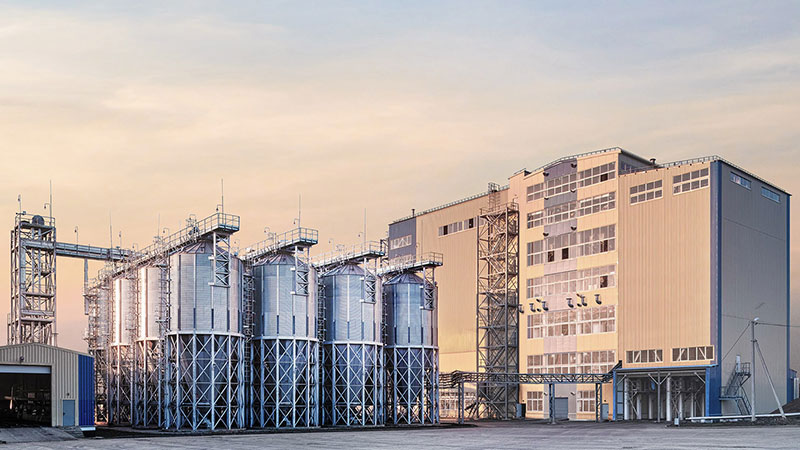
At RICHI, we go beyond project completion. With RICHI Servicee, we’re your dedicated partners in success. Count on us for expert guidance, minimal downtime, and optimized productivity. Choose RICHI for unmatched service and support.
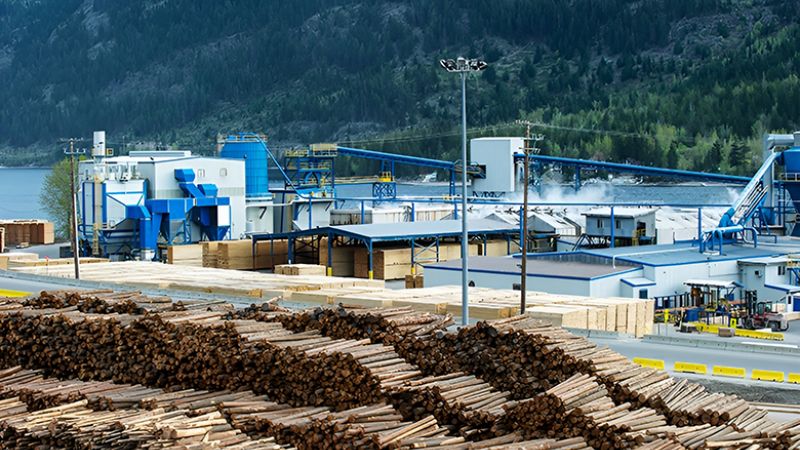


Meet global product demands and quality standards with industry-leading pellet plant design, engineering, equipment, and construction services for pellet processors.


Your Partner Beyond Project Completion
2000+ cases
RICHI is the leading designer, manufacturer and builder of pellet plants in the world, completing over 2000 projects in 140 countries across 6 continents.
Read More
Increase plant productivity, profitability, and safety by integrating high quality equipment into your pellet production line. Over the years, RICHI has become China's top pellet equipment manufacturer. At the same time, RICHI has established valuable partnerships with the world's leading component and raw material manufacturers to bring you the best there is in technology, automation, and efficiency in pelleting plant machinery.

For nearly 30 years, RICHI has been providing best-in-class pellet plant equipment and services to clients across a variety of industries, sizes, and needs. We pride ourselves on the knowledge and skill that each team member possesses – from our technical sales team to our process design engineers. You can count on RICHI Machinery to take your operation to the next level of innovation, quality, and success.
Need help with your pellet manufacturing plant project? Contact us today.
ANIMAL FEED
BIOMASS
WOOD
ORGANIC FERTILIZER
AQUA FEED
CAT LITTER
MUNICIPAL WASTE RECYCLING
SPECIAL PELLET PRODUCTION
RICHI Machinery continues to deliver world class pellet mill equipment, pellet plant engineering and project solutions that add value to our customers in the animal feed, wood waste, agriculture waste, organic fertilizer, cat litter and special pellet products industries. Throughout the years, we RICHI Machinery have built strong brand, becoming industry-leading pellet machine manufacturer. We value integrity, promise quality, and prioritize your success.
Learn MoreWith our expert team, we precisely implement your process engineering requirements in pellet mill and pelletizing plant systems. No matter which industry you’re in – we understand your needs and deliver solutions that meet the highest standards.
At RICHI, quality comes first. Our pellet making machine and related pellet line equipment undergo rigorous quality controls to ensure they meet the highest standards. Rely on products that are durable, safe, and efficient.
With decades of experience in pellet machine and pellet production line production, we have earned a reputation as a trusted partner in various industries. Our expertise allows us to cover a wide range of applications.
Not only do we offer premium pelleting equipment, but we are also experts at designing, building, installing, and maintaining facilities from the ground up. Our expertise is within pellt plant process design, discovering the most efficient, productive, and profitable way to handle your materials in an end-to-end cycle.
○ RICHI MACHINERY
Keeping in touch with us is an effective way to solve all your problems. If you have any needs or questions, please leave your contact information, then RICHI technical consultants will send design, quotation, videos to your mailbox. You can also contact us directly via WhatsApp: +86 13838389622
Copyright©2015-2026 by HENAN RICHI MACHINERY CO., LTD. All rights reserved.