
A Quebec wood processor adds one MZLH520 biomass pelletizer to convert clean sawdust, planer shavings and prepared wood chips into 6–8 mm fuel pellets.
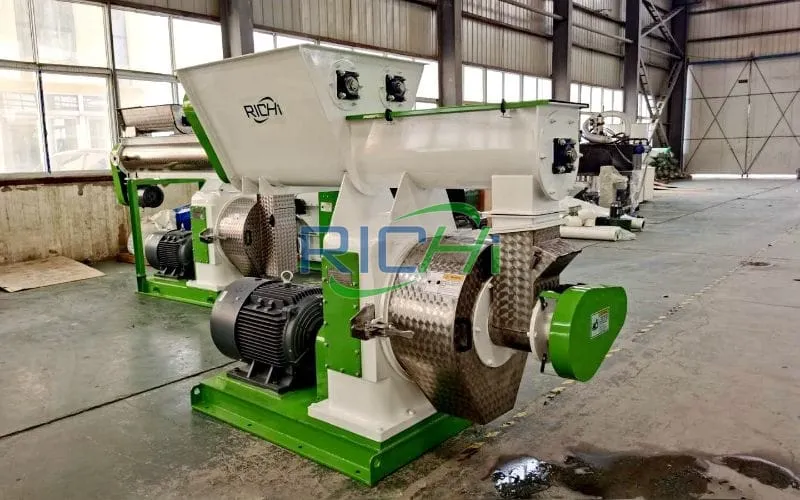
A wood-products company in Quebec selected one MZLH520 Compressed Wood Pelletizing Machine in Canada to add pelletizing capacity without rebuilding its existing biomass preparation system. The plant already receives clean sawdust, planer shavings and prepared wood chips from its own processing work and nearby sawmills, so the new investment focuses on forming dry wood fibre into saleable fuel pellets.
The MZLH520 operates as a standalone ring-die unit inside an established process that already includes screening, size reduction, drying, conveying, cooling and finished-product handling. Its 132 kW main motor and about 1.5–2.0 T/H reference biomass capacity fit a medium production window while leaving room for product trials, seasonal feedstock variation and scheduled maintenance.
Name:
Ring-die wood pelletizing machine
Country:
Canada
Date:
2026
Capacity:
1.5–2.0 T/H
Model:
MZLH520
Main Motor Power:
132 kW
Raw Materials:
sawdust, planer shavings
Pellet diameter:
6mm, 8mm
The customer is not building a greenfield pellet factory. Its main business already generates clean hardwood and softwood residues, while neighboring sawmills provide additional sawdust when internal supply is low. Adding one biomass pellet machine lets the company convert a larger share of suitable dry residues into fuel products while continuing to use the material receiving, grinding and drying assets already installed at the site.
This biomass pellet project is centered on clean biomass rather than mixed furniture waste. Maple and birch sawdust, spruce or pine shavings, and prepared sawmill chips can enter the fuel route when they are free from paint, preservatives, laminates and adhesive-bonded panels. Bark, mineral contamination and foreign matter are controlled because they can raise ash, increase wear and affect whether the finished pellet meets a buyer specification.
| Project Parameter | Configuration |
|---|---|
| Equipment | Ring-die wood pelletizing machine |
| Model | MZLH520 |
| Quantity | 1 unit |
| Main Motor Power | 132 kW |
| Ring Die Inner Diameter | 520 mm |
| Project Pellet Diameter | Mainly 6 mm, with 8 mm evaluated for selected industrial orders |
| Reference Biomass Capacity | Approximately 1.5–2.0 T/H under suitable prepared-material conditions |
| Main Feedstock | Clean sawdust, planer shavings and properly reduced wood chips |
| Installation Type | Standalone pelletizing-capacity addition |
The 1.5–2.0 T/H figure is a reference for suitable prepared biomass, not a permanent output guarantee. Hardwood ratio, softwood ratio, moisture, particle distribution, die specification, feeder stability and the amount of bark can all affect tonnes per hour. A harder or more abrasive blend may run differently from clean spruce sawdust even when both materials enter the same ring-die machine.
The customer selected the MZLH520 because its existing rotary dryer, buffer bins, pellet cooler and handling system can support this production class without a major plant-wide expansion. A much larger pelletizer would require more dry feedstock and stronger downstream capacity to remain well utilized, while a smaller unit would leave less reserve when the company accumulates enough prepared sawdust for longer production campaigns.
Fine sawdust that already meets the plant's particle requirement can bypass unnecessary crushing, while wood chips and coarse planer residues are reduced before they reach the pelletizer. This prevents the MZLH520 from being used as a drum wood chipper or wood hammer mill. A controlled particle distribution improves feeding and die loading, but one screen opening is not treated as the exact particle size of every piece of wood fibre.
Moisture is checked before pelletizing because the ring-die machine is not a dryer. Material that arrives too wet is routed through the customer's moisture-control section, while excessively dry sawdust may need controlled adjustment before compression. The practical operating window is established from material tests, die load, pellet surface, fines and cooler performance rather than one universal moisture number for every wood species.
The plant does not use a fixed hardwood-to-softwood ratio. Spruce and pine can provide favorable natural binding behavior, while maple and birch bring different density and wear characteristics, but the useful blend is established from actual forming tests and buyer specifications. The operator adjusts feeding and die conditions from the tested mixture rather than assuming that one species percentage will always give the same pellet quality.
Magnetic protection ahead of fine preparation helps reduce the risk from nails and other ferrous debris, but magnets cannot remove stones, sand, aluminium or adhesive-contaminated fragments. The receiving procedure therefore combines supplier control, visual inspection and mechanical protection. Cleanliness matters commercially as well as mechanically because ash and contaminants can determine which fuel-pellet market will accept the product.
The Compressed Wood Pelletizing Machine in Canada begins its work only after the raw material is clean, suitably dry and properly reduced. This process boundary is important in a retrofit because a ring-die pelletizer cannot compensate for wet chips, long splinters or unstable feeding. The plant therefore treats grinding, drying, pelletizing, cooling and screening as separate duties with matched capacities.
Cooling capacity is checked against the pelletizer's instantaneous output rather than the factory's average daily tonnage. Pellets leave compression warm and mechanically softer, then stabilize as heat dissipates. Screening separates loose fines before storage and provides useful operating feedback. A persistent rise in fines can indicate feedstock condition, die wear, compression settings or rough conveying rather than a packaging problem.
The main commercial product is a 6 mm wood pellet for retail and smaller heating applications, while 8 mm production can be evaluated for industrial or contract orders that specify a larger diameter. The machine can use more than one compatible die, but frequent switching is avoided unless sales justify it. Diameter is only one physical specification and does not by itself determine calorific value, ash, durability or combustion quality.
Finished-pellet quality is verified from the actual wood blend and buyer specification. Moisture, bulk density, mechanical durability, ash and calorific value are measured by the agreed test method rather than inferred from species names or machine model. Softwood content can influence forming behaviour, while hardwood and bark content can affect wear and ash, so the customer controls the feedstock recipe as carefully as the pelletizing settings.
The company does not market all pellets as automatically suitable for residential stoves, industrial boilers and export contracts at the same time. Each market can impose different limits on diameter, ash, moisture, durability and contaminants. The MZLH520 wood pellet mill provides physical densification, while commercial classification depends on feedstock control, laboratory results, quality documentation and the specification agreed with the buyer.
The 132 kW main drive is only part of the connected load around the pelletizing section. Feeders, conveyors, cooler fans, screening and dust collection add their own demand, so transformer capacity, motor starting, protection and cable sizing are checked for simultaneous operation. The customer also confirms maintenance clearance around the 520 mm ring-die platform before final positioning inside the existing building.
Fine dry wood presents combustible-dust and fire risks, so enclosed transfer points, aspiration, filtration, grounding and housekeeping form part of the operating plan. Dust-control equipment is sized from real airflow and duct resistance rather than a generic capture percentage. Temperature, bearing condition and buildup are monitored because safe wood-pellet production depends on the complete material-handling system, not only the press.
Quebec winter conditions place extra importance on covered storage and moisture control. Frozen clumps, snow-contaminated sawdust or condensation from moving cold biomass into a warmer building can create unstable feeding and local moisture pockets. The plant therefore keeps raw materials protected, allows cold material to equilibrate when needed and avoids sending visibly frozen or waterlogged feedstock directly into the pelletizing section.
The MZLH520 wood pellet machine can be shipped from Qingdao to the Port of Montreal and then moved inland to the Quebec facility according to the final freight plan. The article does not assign a fixed sea-transit, customs or installation period because vessel routing and site preparation vary. Confirmed drawings allow the customer to prepare support steel, electrical service, infeed and discharge elevations, aspiration interfaces and service access before arrival.
Expansion decisions are based on measured operating hours and prepared-sawdust inventory. If the MZLH520 runs only part of a shift, the customer may gain more annual output by extending scheduled production before adding another press. A parallel pelletizer becomes useful only when dry prepared material regularly waits ahead of the machine and the cooler, screen, storage and packing systems can accept the additional instantaneous flow.
For another buyer evaluating a Compressed Wood Pelletizing Machine in Canada, RICHI Machinery would review wood species, sawdust-to-chip ratio, bark content, incoming moisture, particle distribution, target pellet diameter, hourly demand, daily operating hours, existing dryer and grinder capacity, cooler capacity, electrical supply, dust-control system and workshop dimensions before confirming the machine and auxiliary scope.
Having the right mix of reliable, high-quality pellet machine and pelletizing systems and expert support is essential to your success. Watch how our end-to-end feed pellet plant solutions have helped our customers optimize their performance.
Our customized and future-proofed turnkey pellet plant solutions is designed with you at the core. From vision to reality and beyond, our team stays connected with yours. Giving you peace-of-mind with an expert at your side.
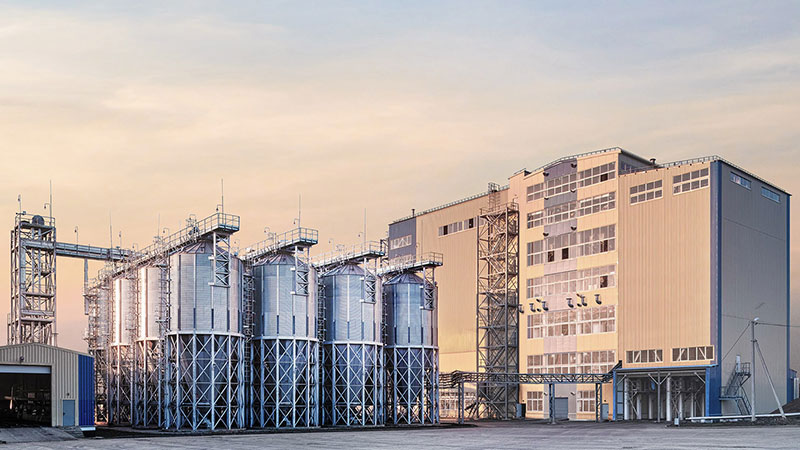
At RICHI, we go beyond project completion. With RICHI Servicee, we’re your dedicated partners in success. Count on us for expert guidance, minimal downtime, and optimized productivity. Choose RICHI for unmatched service and support.
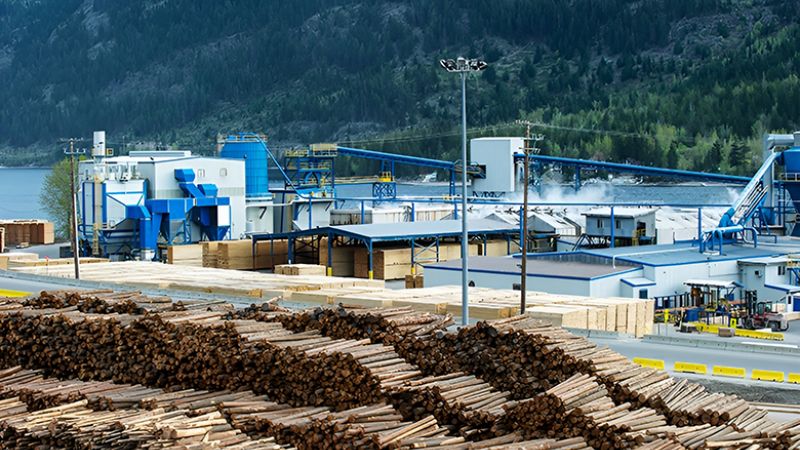


Meet global product demands and quality standards with industry-leading pellet plant design, engineering, equipment, and construction services for pellet processors.


Your Partner Beyond Project Completion
2000+ cases
RICHI is the leading designer, manufacturer and builder of pellet plants in the world, completing over 2000 projects in 140 countries across 6 continents.
Read More
Increase plant productivity, profitability, and safety by integrating high quality equipment into your pellet production line. Over the years, RICHI has become China's top pellet equipment manufacturer. At the same time, RICHI has established valuable partnerships with the world's leading component and raw material manufacturers to bring you the best there is in technology, automation, and efficiency in pelleting plant machinery.

For nearly 30 years, RICHI has been providing best-in-class pellet plant equipment and services to clients across a variety of industries, sizes, and needs. We pride ourselves on the knowledge and skill that each team member possesses – from our technical sales team to our process design engineers. You can count on RICHI Machinery to take your operation to the next level of innovation, quality, and success.
Need help with your pellet manufacturing plant project? Contact us today.
ANIMAL FEED
BIOMASS
WOOD
ORGANIC FERTILIZER
AQUA FEED
CAT LITTER
MUNICIPAL WASTE RECYCLING
SPECIAL PELLET PRODUCTION
RICHI Machinery continues to deliver world class pellet mill equipment, pellet plant engineering and project solutions that add value to our customers in the animal feed, wood waste, agriculture waste, organic fertilizer, cat litter and special pellet products industries. Throughout the years, we RICHI Machinery have built strong brand, becoming industry-leading pellet machine manufacturer. We value integrity, promise quality, and prioritize your success.
Learn MoreWith our expert team, we precisely implement your process engineering requirements in pellet mill and pelletizing plant systems. No matter which industry you’re in – we understand your needs and deliver solutions that meet the highest standards.
At RICHI, quality comes first. Our pellet making machine and related pellet line equipment undergo rigorous quality controls to ensure they meet the highest standards. Rely on products that are durable, safe, and efficient.
With decades of experience in pellet machine and pellet production line production, we have earned a reputation as a trusted partner in various industries. Our expertise allows us to cover a wide range of applications.
Not only do we offer premium pelleting equipment, but we are also experts at designing, building, installing, and maintaining facilities from the ground up. Our expertise is within pellt plant process design, discovering the most efficient, productive, and profitable way to handle your materials in an end-to-end cycle.
○ RICHI MACHINERY
Keeping in touch with us is an effective way to solve all your problems. If you have any needs or questions, please leave your contact information, then RICHI technical consultants will send design, quotation, videos to your mailbox. You can also contact us directly via WhatsApp: +86 13838389622
Copyright©2015-2026 by HENAN RICHI MACHINERY CO., LTD. All rights reserved.