
A large integrated poultry company in the Casablanca-Settat region selected one RICHI SZLH420 poultry pellet mill for integrated production system in Morocco to upgrade a defined pelleting section inside its existing feed mill.

A large integrated poultry company in the Casablanca-Settat region selected one RICHI SZLH420 poultry pellet mill for integrated production system in Morocco to upgrade a defined pelleting section inside its existing feed mill. The company operates breeder, hatchery, broiler-growing and poultry-processing activities and therefore requires a large, continuous supply of compound feed for its internal farming network.
The feed mill already had ingredient receiving, grinding, batching, mixing, steam supply, cooling, screening and bulk feed handling equipment. The project did not involve building another complete plant. Instead, the customer added one SZLH420 ring die feed pellet mill to convert a selected broiler-feed stream from mash into pellets while keeping most of the existing production infrastructure in service.
Name:
Poultry Feed Pellet Mill
Country:
Morocco
Date:
2026
Capacity:
10–12 T/H
Model:
SZLH420
Main Motor Power:
110 kW
Main Product:
Compound broiler feed
Typical Feed Forms :
Starter crumble and grower/finisher pellets
The integration’s annual feed program is approximately 150,000 tonnes, but that number must be separated from the capacity of one pellet mill.
The SZLH420 is configured around approximately 10–12 T/H under suitable compound-feed conditions.
If one machine alone had to pellet 150,000 tonnes annually, it would require approximately 15,000 operating hours at 10 T/H or 12,500 hours at 12 T/H.
That is impossible within one calendar year.
The correct project logic is therefore that one SZLH420 serves one production module or a defined share of the integration’s total broiler-feed demand.
The remaining feed can continue through existing production capacity, another pelleting route or mash-feed production according to the customer’s operating plan.
This also explains why purchasing one unit first can be practical for a large integrator.
The company can evaluate pelletizing performance, line balance, formula response and farm-feed logistics on one commercial module before deciding how much additional pelleting capacity is justified.
| Project Parameter | Configuration |
|---|---|
| Equipment | Ring die poultry feed pellet mill |
| Model | SZLH420 |
| Main Motor | 110 kW |
| Reference Capacity | Approximately 10–12 T/H under suitable feed conditions |
| Main Product | Compound broiler feed |
| Typical Feed Forms | Starter crumble and grower/finisher pellets |
| Feed-Mill Context | Part of an approximately 150,000 T/Y integrated feed operation |
| Project Type | Standalone pelleting-module addition within an existing feed mill |
The 110 kW SZLH420 provides a meaningful production step for a large poultry integration without pretending that one machine replaces the complete poultry feed production line.
At 10 T/H for sixteen effective pelleting hours per day and 300 operating days, theoretical annual output is approximately 48,000 tonnes before downtime and other production losses.
At 12 T/H under the same schedule, theoretical output is approximately 57,600 tonnes.
This makes the machine suitable for a substantial production module inside a much larger plant.
The calculation also helps the integration decide how many parallel pellet mills would ultimately be required if most of the 150,000 T/Y feed program is converted from mash to pellets.
Morocco’s poultry-feed industry depends significantly on imported feed ingredients.
Corn and soybean meal are particularly important in commercial broiler formulations, while the exact ingredient mix changes according to international prices, nutritional targets and procurement contracts.
The customer therefore does not use one permanent formula such as 50% maize, 22% soybean meal, 8% sunflower meal and fixed percentages of fishmeal, oil and premix.
Broiler starter, grower and finisher formulas have different nutrient requirements.
Imported maize can form the principal cereal-energy base, while soybean meal remains an important protein source.
Other ingredients such as wheat by-products, vegetable oil, mineral sources, amino acids and approved feed additives can be included according to formulation requirements.
Locally or regionally available ingredients can also be considered where their nutrient analysis and economics justify their use.
The feed pellet machine therefore needs to handle a family of formulas rather than one fixed Moroccan recipe.
The original production concept used separate 3.5 mm, 4.0 mm and 4.5 mm dies for starter, grower and finisher feed.
That is not necessary as a universal production rule.
For very young broilers, a common commercial route is to produce a parent pellet and then pass it through a crumbler to create the smaller starter feed form.
Grower and finisher feeds can use intact pellets sized according to bird age, feeding equipment and the integration’s feed specification.
This reduces the need to treat every broiler stage as a completely separate pellet-mill configuration.
The customer can still keep more than one ring die where different pellet diameters are required, but die selection is based on actual product specifications rather than a fixed age-to-diameter table.
The SZLH420 conditions mixed feed before the material enters the ring die.
Steam changes mash temperature and moisture and can improve the physical behavior of starch- and protein-containing ingredients during pellet formation.
However, starter feed does not automatically require 85–90°C while finisher feed requires 75–80°C.
Likewise, steam addition should not be fixed at 4%, 5%, 6% or 7% simply according to production stage.
The correct operating window depends on incoming mash moisture, ingredient composition, steam quality, oil content, throughput and the customer’s physical feed-quality target.
During commissioning, the operator monitors motor load, throughput, pellet formation, fines and cooler performance while adjusting feed rate and steam.
This process gives the integration a formula-specific operating range rather than a generic temperature table.
Ring die selection also involves more than pellet diameter.
The effective working length of the die holes determines part of the compression resistance experienced by the feed.
A formula with high maize and soybean-meal content can behave differently from one with more fibrous by-products or higher added oil.
Therefore, a permanent 1:12 compression ratio for starter and 1:10 for finisher should not be applied automatically.
Too much compression can increase motor load and reduce throughput.
Too little compression can increase fines or result in insufficient pellet durability.
RICHI evaluates die configuration from the actual formula family, required pellet diameter and production target.
This is particularly important in an integrated company because several broiler formulations may pass through the same machine every week.
The purpose of moving a selected feed stream from mash to pellets includes improving physical feed consistency and making feed easier to handle in the integration’s bulk distribution system.
However, the SZLH420 should not be sold with a guaranteed PDI above 93% for every formula.
Pellet durability is affected by grinding, formulation, conditioning, die configuration, cooling, screening and downstream conveying.
The cooler is especially important.
Fresh pellets leave the ring die warm and need to be stabilized before bulk storage and transportation to the farms.
If cooling is insufficient, the physical condition of the feed can deteriorate even when pellet formation at the die is good.
If the customer requires a numerical PDI specification, the feed mill should use a defined test method and compare actual production batches.
The same principle applies to fines after bulk trucking.
Samples should be taken at the final delivery point if the integration wants to understand how the complete handling system affects pellet quality.
An integrated poultry producer has a strong reason to pay attention to feed conversion because feed is a major cost in broiler production.
But a machine case should not state that changing from mash to pellets automatically improves FCR by 5–8% or reduces feed consumption by exactly 6%.
Broiler performance depends on genetics, formula nutrient density, pellet physical quality, housing, temperature, health status, feeder management and many other factors.
Pelleted feed can change feed intake behavior and physical feed handling, but the actual farm response needs to be measured by the integration.
The company can compare feed conversion, mortality, body weight and feed consumption between farms or production periods under controlled conditions.
The pellet mill supplies the physical feed form.
It does not independently create a guaranteed FCR result.
One advantage of an integrated poultry company is that the feed mill can coordinate directly with company farms.
Finished feed moves from production into bulk storage and then to the growing sites according to the integration’s production schedule.
The SZLH420 animal feed pellet machine therefore needs to fit not only the mixer and cooler but also the complete bulk-feed logistics system.
If one pelletizing module produces 10–12 T/H, the cooler, screen, elevator, finished-feed bins and truck-loading system must all accept the corresponding flow.
The feed mill also needs enough buffer capacity to keep different starter, grower and finisher products separated.
Cross-contamination and sequencing between formulas are handled through the plant’s own production and feed-safety procedures.
This is one reason large integrations benefit from detailed production scheduling rather than simply operating the pellet mill continuously at maximum nameplate capacity.
Steam supply is another important line-balance item.
A higher-capacity pellet mill requires stable steam delivery to the conditioner, but the exact steam requirement should not be fixed at 700–900 kg/h without the customer’s real formulation, initial moisture and operating conditions.
Boiler capacity, steam pressure, steam quality, pipe sizing, condensate management and control stability all affect conditioning.
The original claim that hot Moroccan summers required a steam preheater is also not a sound general rule.
Ambient temperature can influence ingredient and plant conditions, but steam quality problems should be diagnosed from the boiler and distribution system rather than automatically attributed to summer weather.
RICHI therefore reviews available steam pressure and flow before the SZLH420 is commissioned.
This poultry pellet mill for integrated production system in Morocco project uses one RICHI SZLH420 ring die pellet mill inside an existing large poultry-feed operation in the Casablanca-Settat region.
The machine uses a 110 kW main motor and provides a reference output of approximately 10–12 T/H under suitable compound-feed conditions.
The integration’s total annual feed program is approximately 150,000 tonnes, so one SZLH420 is treated as one pelleting module rather than the sole pellet mill for the entire factory.
The existing animal feed hammer mills, batching, mixer machines, steam system, cooling, screening, bulk storage and truck-loading equipment are retained where their capacities match the new module.
The main product is broiler feed.
Imported maize and soybean meal are important ingredients in the Moroccan feed market, while formulations remain flexible according to broiler stage, nutrient targets and raw-material economics.
Starter feed can be produced through a parent-pellet and crumbling route, while grower and finisher products use suitable intact pellet sizes.
Conditioning temperature, steam addition and ring die compression are adjusted from actual formula behavior rather than fixed tables.
The integration can then evaluate the real commercial result using measured throughput, pellet durability, fines after bulk handling, energy use per tonne and farm performance data.
For another buyer searching for a poultry pellet mill for integrated production system in Morocco, Morocco poultry feed pellet machine, 10–12 T/H broiler feed pellet mill, SZLH420 poultry pellet machine, integrated poultry feed mill equipment or high-capacity chicken feed pelletizer, RICHI first evaluates the complete annual feed balance.
Useful information includes birds placed per week, annual feed demand, percentage of feed that will be pelletized, number of feed SKUs, formulas, mixer capacity, mash-bin capacity, available steam, cooler capacity, finished-feed bin capacity, bulk-truck loading rate and daily operating schedule.
If the integration requires approximately 150,000 tonnes of pelletized feed per year, one SZLH420 is not enough.
RICHI Machinery would calculate the number of parallel pelletizing modules from annual tonnage, effective operating hours, maintenance allowance and realistic utilization rate.
If the immediate objective is to convert only one part of the feed program from mash to pellets, one SZLH420 can be integrated as the first commercial module while existing production continues elsewhere in the plant.
For a Moroccan integrated poultry project, send RICHI your annual feed tonnage, percentage to be pelletized, main broiler formulas, required feed forms, operating hours, steam conditions and existing feed-mill equipment. These parameters determine whether one SZLH420 is sufficient for the intended production module or whether multiple pellet mills are required for the full integration.
Having the right mix of reliable, high-quality pellet machine and pelletizing systems and expert support is essential to your success. Watch how our end-to-end feed pellet plant solutions have helped our customers optimize their performance.
Our customized and future-proofed turnkey pellet plant solutions is designed with you at the core. From vision to reality and beyond, our team stays connected with yours. Giving you peace-of-mind with an expert at your side.
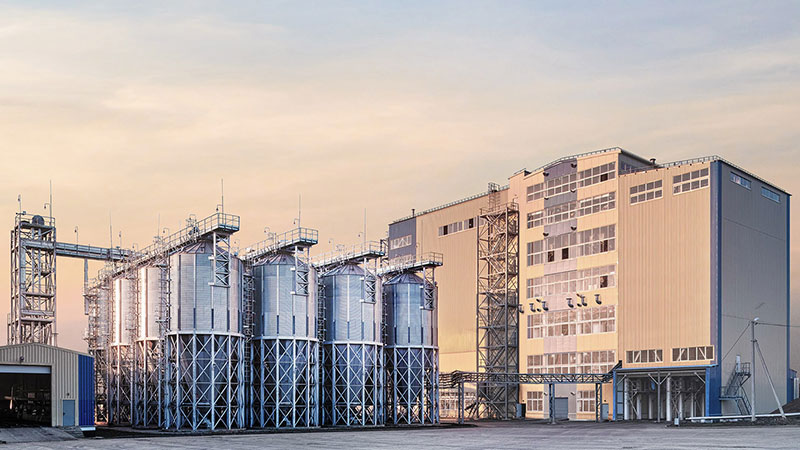
At RICHI, we go beyond project completion. With RICHI Servicee, we’re your dedicated partners in success. Count on us for expert guidance, minimal downtime, and optimized productivity. Choose RICHI for unmatched service and support.
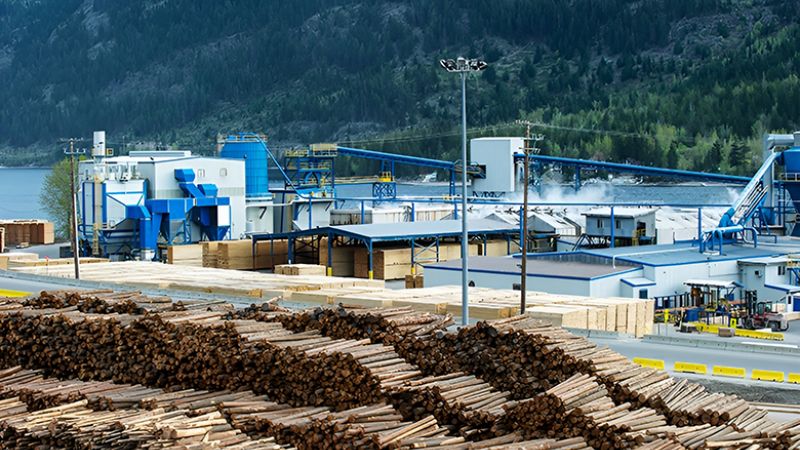


Meet global product demands and quality standards with industry-leading pellet plant design, engineering, equipment, and construction services for pellet processors.


Your Partner Beyond Project Completion
2000+ cases
RICHI is the leading designer, manufacturer and builder of pellet plants in the world, completing over 2000 projects in 140 countries across 6 continents.
Read More
Increase plant productivity, profitability, and safety by integrating high quality equipment into your pellet production line. Over the years, RICHI has become China's top pellet equipment manufacturer. At the same time, RICHI has established valuable partnerships with the world's leading component and raw material manufacturers to bring you the best there is in technology, automation, and efficiency in pelleting plant machinery.

For nearly 30 years, RICHI has been providing best-in-class pellet plant equipment and services to clients across a variety of industries, sizes, and needs. We pride ourselves on the knowledge and skill that each team member possesses – from our technical sales team to our process design engineers. You can count on RICHI Machinery to take your operation to the next level of innovation, quality, and success.
Need help with your pellet manufacturing plant project? Contact us today.
ANIMAL FEED
BIOMASS
WOOD
ORGANIC FERTILIZER
AQUA FEED
CAT LITTER
MUNICIPAL WASTE RECYCLING
SPECIAL PELLET PRODUCTION
RICHI Machinery continues to deliver world class pellet mill equipment, pellet plant engineering and project solutions that add value to our customers in the animal feed, wood waste, agriculture waste, organic fertilizer, cat litter and special pellet products industries. Throughout the years, we RICHI Machinery have built strong brand, becoming industry-leading pellet machine manufacturer. We value integrity, promise quality, and prioritize your success.
Learn MoreWith our expert team, we precisely implement your process engineering requirements in pellet mill and pelletizing plant systems. No matter which industry you’re in – we understand your needs and deliver solutions that meet the highest standards.
At RICHI, quality comes first. Our pellet making machine and related pellet line equipment undergo rigorous quality controls to ensure they meet the highest standards. Rely on products that are durable, safe, and efficient.
With decades of experience in pellet machine and pellet production line production, we have earned a reputation as a trusted partner in various industries. Our expertise allows us to cover a wide range of applications.
Not only do we offer premium pelleting equipment, but we are also experts at designing, building, installing, and maintaining facilities from the ground up. Our expertise is within pellt plant process design, discovering the most efficient, productive, and profitable way to handle your materials in an end-to-end cycle.
○ RICHI MACHINERY
Keeping in touch with us is an effective way to solve all your problems. If you have any needs or questions, please leave your contact information, then RICHI technical consultants will send design, quotation, videos to your mailbox. You can also contact us directly via WhatsApp: +86 13838389622
Copyright©2015-2026 by HENAN RICHI MACHINERY CO., LTD. All rights reserved.