
This is a project about feed crumbler equipment in Nigeria. He was making decent 5mm pellets for broiler growers, but for starter feed he needed crumbles – 1.8mm to 2.5mm. He had been using a small hammer mill to break the pellets. But the hammer mill gave him too much dust. Like, 25-30% fines.
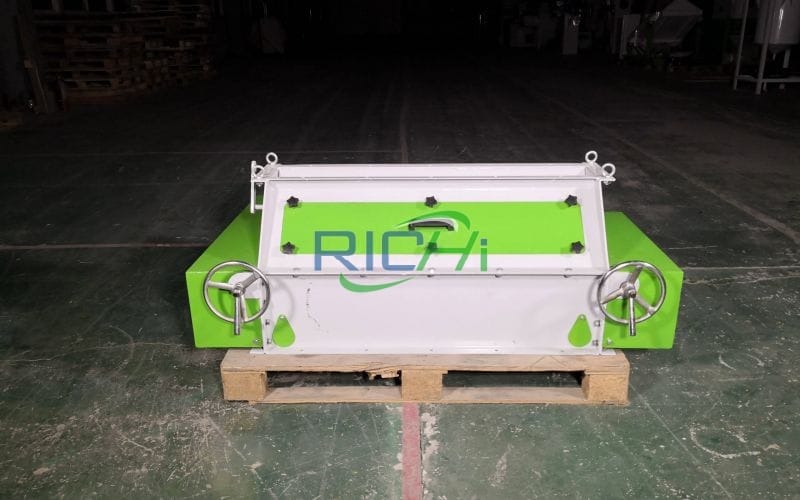
About eight months ago, we got a message through the website from a feed mill in Ibadan, Nigeria. Not a huge operation – maybe 400 tons a month of finished feed, mostly broiler starter and grower. The guy had been in business since 2016, built up slowly, bought equipment piece by piece. That’s common there. You don’t see many turnkey lines in mid-sized Nigerian mills. You see a mixer from one supplier, a pellet mill from another, a cooler that someone welded locally.
His problem was specific. He was making decent 5mm pellets for broiler growers, but for starter feed he needed crumbles – 1.8mm to 2.5mm. He had been using a small hammer mill to break the pellets. But the hammer mill gave him too much dust. Like, 25-30% fines. That’s feed that drops to the bottom of the feeder tray and the chicks won't touch it. He was basically throwing away a quarter of his production.
He asked a straight question: Can I buy just one piece of feed crumbler equipment in Nigeria that drops into my existing line and replaces that hammer mill?
The answer was yes. But we had to be careful about which model. His feed pellet machine was doing 2.5 tons per hour on a good day, but realistically 2 to 2.2 t/h continuous. If we gave him a crumbler that was too small, it would bottleneck. Too big, and he’d waste money on capacity he couldn’t use.
We ended up recommending the SSLG15x80 double-roll feed pellet crumbler. Not the smallest, not the largest. The 15cm diameter rolls, 80cm length. Single motor, 4kW. Simple as a brick.
This article is a review of that installation – what worked, what didn’t, and what anyone else considering a similar setup should know.
Name:
shirmp feed crumbler
Country:
Nigeria
Date:
2025
Capacity:
2.2 t/h
Model:
SSLG15x80
Main Motor Power:
4KW
Crumbling Roller Diameter:
15cm
Crumbling Roller Length:
80cm
This customer didn’t want a new production line. His existing setup was:
The hammer mill was originally bought for grinding maize. But he tried to use it for two jobs – grinding grain in the morning, crumbling pellets in the afternoon. That never works well. The hammer mill’s screen clearance and rotor speed are wrong for crumbling. You end up with either too many fines or oversized chunks that haven’t broken properly.
He looked at buying a full crumbling section – feeder, crumbler, sifter, return auger. But that would have meant re-doing his control panel, adding a second bucket elevator, and hiring another guy to run it. Too expensive and too complicated for a mill his size.
So he asked: Can the crumbler be mounted directly under my cooler discharge, without a separate feeder?
Yes, if the crumbler has an integrated feed mechanism. The SSLG series has a simple roll feeder built into the inlet. The material falls by gravity from the cooler into the crumbler. As long as the upstream discharge is controlled – he had a slide gate – it works fine. No extra motor, no variable speed drive.
That’s the whole point of buying feed crumbler equipment in Nigeria as a single unit. You don’t pay for features you don’t need. You just fix the broken part of your line.
Nigeria’s feed industry runs on a mix of local and imported materials. This customer’s broiler starter formula looked something like:
He was pelleting at 5mm diameter, 2.8 compression ratio die. That’s a bit higher compression than usual for broiler starters, but he liked the pellet durability. The pellets were hard – good for transport, but harder to crumble.
After cooling target temperature 40°C, but in Ibadan’s climate, sometimes the cooler couldn’t get below 45°C, the pellets went into a holding bin with about 20 minutes of residence time. That cooling and resting period is critical. If you feed warm pellets into a crumbler, they’re too elastic. They squish instead of shearing into clean crumbles.
The installation wasn’t complicated, but there were a few real-world details worth mentioning.
First, the height. His cooler discharge was about 1.8 meters above the floor. The crumbler needed to sit on a small platform to align with the next piece of equipment – a bucket elevator that lifted the crumbles to a screener. We sent him a simple drawing showing the recommended inlet height and discharge angle. His local fabricator welded up a stand from 4-inch channel iron in two days. Cost him about 150,000 naira roughly $100 at the time. Nothing fancy.
Second, the connection between the cooler and the crumbler. The cooler had a 500mm square outlet. The crumbler’s inlet is 800mm wide. That mismatch meant he needed an adapter chute. We could have sold him a stainless steel adapter, but shipping from China would have been expensive. Instead, we sent him a template drawing, and his welder built one from 2mm mild steel sheet. He lined it with 2mm UHMW plastic to reduce friction and prevent bridging. That plastic liner cost him maybe another 50,000 naira. Worked perfectly.
Third, the electrical connection. The crumbler runs on a 4kW, 380V/50Hz motor standard Nigerian industrial voltage. He had an extra slot in his control panel from an old conveyor he removed. His electrician wired it in – start/stop, thermal overload protection. No VFD needed because the crumbler doesn’t require variable speed for this application. Fixed speed works fine if the roll gap is adjusted correctly.
Total installation time: four days, including building the stand and adapter chute. Actual machine placement took about four hours.
The customer kept records – not perfect, but good enough to see the difference. Here’s what he shared with us after three months of running.
With the feed hammer mill baseline:
With the SSLG15x80 crumbler after tuning:
The fines reduction from ~30% down to ~10% was the big win. That’s 200kg less waste per hour. At local feed prices about 350 naira per kg for broiler starter at the time, that’s 70,000 naira per hour of wasted material that he got back. Of course, he wasn’t running 24 hours, but even at 6 hours per day, the math worked fast.
Let me be honest – the first week wasn’t smooth.
Problem 1: The roll gap drifted. He set the gap at 1.8mm on day one. By day three, the gap had opened to about 2.3mm because the adjustment handwheel vibrated loose. The crumbles were getting too big. We reminded him embarrassed that we forgot to mention it earlier to use the lock nut on the adjustment mechanism. He tightened it, marked the position with paint, and checked it every morning for the next week. After that, it stayed stable.
Problem 2: Magnetic protection saved him. On day five, the crumbler made a grinding noise and stopped. He opened the inspection door and found a small piece of metal – looked like a broken bolt from the cooler chain – stuck between the rolls. The magnetic plate in the inlet had caught it, but somehow a piece got through. The rolls had a small nick but still worked. Without that magnet, that bolt could have damaged the roll corrugations badly. He added a second magnet strip just to be safe.
Problem 3: Belt tension. The V-belts stretched a bit after the first 50 hours of running, which is normal. He didn’t check them. The belts started slipping under load, and the crumbler slowed down. Once he re-tensioned them took ten minutes with a wrench, it was fine. Now he checks belt tension every two weeks.
None of these were major failures. They were normal commissioning hiccups. But they’re the kind of details you don’t see in glossy brochures.
He had three alternatives:
He chose RICHI Machinery because we provided:
That reference call sealed it. The guy in Ghana told him: Buy it. But buy spare belts and one set of bearing housings. You’ll thank me. He did.
The machine was shipped from our Qingdao factory in a 20-foot container. We loaded:
The vessel went to Apapa Port in Lagos. That’s the main port for Nigeria’s imports. Shipping time was 35 days from Qingdao to Apapa, plus another 10 days for customs clearance and port delivery. Apapa is known for congestion, but this shipment moved reasonably fast because we used a clearing agent that specializes in agricultural machinery. The customer arranged his own trucking from Apapa to Ibadan – about a 2-hour drive, but with Lagos traffic, it took a full day.
One tip: we labeled the container clearly as ONE UNIT FEED CRUMBLER – AGRICULTURAL MACHINERY – NO COMMERCIAL VALUATION FOR RE-SALE. That helped his agent avoid being charged the higher tariff rate for industrial processing equipment.
After six months of running, he shared a few observations that I think are useful for anyone looking at feed crumbler equipment in Nigeria or anywhere else.
First: Don’t skip the sifter. He initially thought he could run the crumbler without a screener and just bag the crumbles directly. That didn’t work. The crumbler produces some fines 9-12% in his case and some oversized pieces. He ended up buying a simple two-deck vibrating screener from a local supplier – 1mm bottom deck, 3.5mm top deck. The oversized goes back into the crumbler he rigged a small bucket elevator, and the fines go back into the mixer for re-pelleting. That screener cost him about $1,200 but paid for itself in two months.
Second: Keep the rolls from touching when empty. He forgot this once. He closed the roll gap all the way with no material running, then started the machine. The rolls ran metal-to-metal for a few seconds before he realized it. That dulled a small section of the corrugations. Now he has a simple rule: never adjust the gap tighter than 0.5mm when the machine is off.
Third: Log your roll life. He started tracking how many tons he processes between roll changes. After 600 tons, the corrugations are still sharp. He expects to get at least 1,500 tons before needing to reverse the rolls they’re reversible – you can flip them to use the other edge. That’s better than the 800 tons he was told to expect from the cheaper competitor.
I’ll write it exactly as he sent it, cleaned up slightly for clarity:
Brother, this machine is good. Before, my starter feed was too dusty. My customers were complaining. Now, the crumbles are clean. One customer even increased his order by 20% because his chicks are eating better. The only thing I regret is not buying the spare rolls earlier. I waited two months after installation to order them, and shipping took another month. If I had ordered them with the machine, I would have saved that time. But the machine itself? No problem. It runs every day, sometimes 10 hours straight. The bearings are still cool. I will buy another one for my grower line next year.
That’s the kind of feedback that matters. He didn’t talk about advanced technology or innovative design. He talked about customers increasing orders, chicks eating better, and bearings staying cool.
Here’s my take, based on this project and others like it.
A single feed crumbler equipment in Nigeria makes sense if:
It does NOT make sense if:
For this customer, the single-unit approach worked because he had a clear problem, a limited budget, and realistic expectations. He didn’t ask the machine to do things it couldn’t do. He just wanted to replace a hammer mill that was the wrong tool for the job.
If you’re in a similar situation – you have a shrimp feed production line, you need crumbles, but you don’t want to buy a whole new section – get in touch. Send us your pellet diameter, your target crumble size, your hourly tonnage, and a photo of your current setup from the cooler discharge down to the next conveyor. We’ve done enough of these retrofits to tell you pretty quickly what will work and what won’t.
And if you’re in Nigeria or anywhere in West Africa, we can connect you with this customer or others who are running the same feed crumbler equipment in Nigeria. Sometimes hearing it from another mill operator is worth more than any spec sheet.
You can reach our team through the website or directly via the contact information on this page. Tell us what you’re running now, and we’ll tell you if a single crumbler is the right fix.
Having the right mix of reliable, high-quality pellet machine and pelletizing systems and expert support is essential to your success. Watch how our end-to-end feed pellet plant solutions have helped our customers optimize their performance.
Our customized and future-proofed turnkey pellet plant solutions is designed with you at the core. From vision to reality and beyond, our team stays connected with yours. Giving you peace-of-mind with an expert at your side.
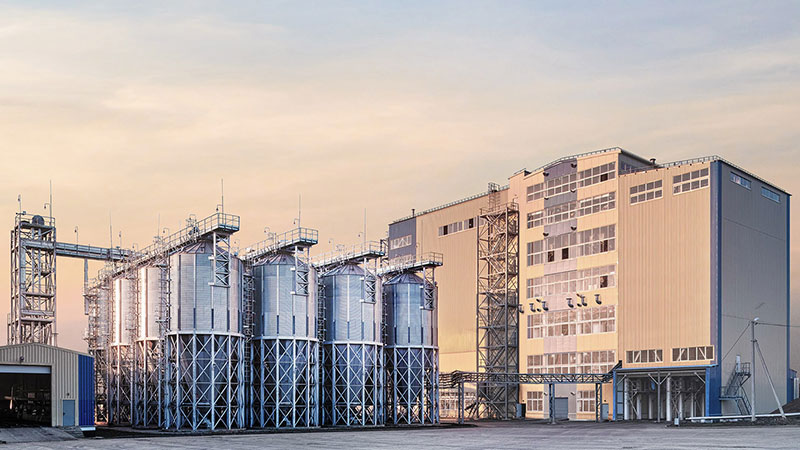
At RICHI, we go beyond project completion. With RICHI Servicee, we’re your dedicated partners in success. Count on us for expert guidance, minimal downtime, and optimized productivity. Choose RICHI for unmatched service and support.
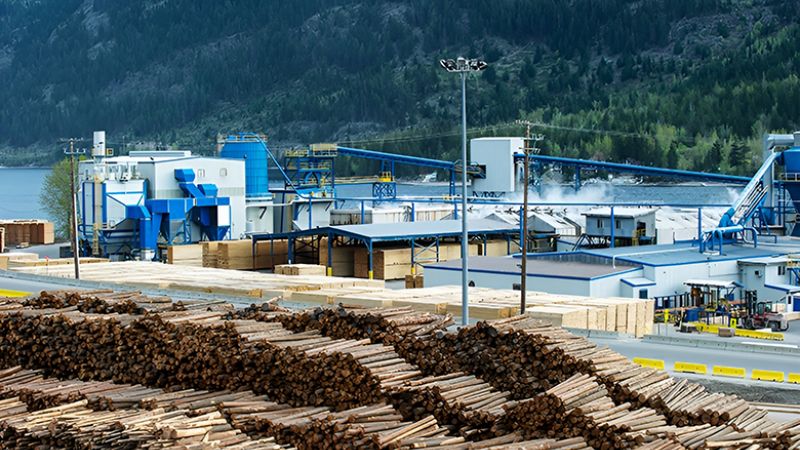


Meet global product demands and quality standards with industry-leading pellet plant design, engineering, equipment, and construction services for pellet processors.

Your Partner Beyond Project Completion
2000+ cases
RICHI is the leading designer, manufacturer and builder of pellet plants in the world, completing over 2000 projects in 140 countries across 6 continents.
Read More
Increase plant productivity, profitability, and safety by integrating high quality equipment into your pellet production line. Over the years, RICHI has become China's top pellet equipment manufacturer. At the same time, RICHI has established valuable partnerships with the world's leading component and raw material manufacturers to bring you the best there is in technology, automation, and efficiency in pelleting plant machinery.

For nearly 30 years, RICHI has been providing best-in-class pellet plant equipment and services to clients across a variety of industries, sizes, and needs. We pride ourselves on the knowledge and skill that each team member possesses – from our technical sales team to our process design engineers. You can count on RICHI Machinery to take your operation to the next level of innovation, quality, and success.
Need help with your pellet manufacturing plant project? Contact us today.
ANIMAL FEED
BIOMASS
WOOD
ORGANIC FERTILIZER
AQUA FEED
CAT LITTER
MUNICIPAL WASTE RECYCLING
SPECIAL PELLET PRODUCTION
RICHI Machinery continues to deliver world class pellet mill equipment, pellet plant engineering and project solutions that add value to our customers in the animal feed, wood waste, agriculture waste, organic fertilizer, cat litter and special pellet products industries. Throughout the years, we RICHI Machinery have built strong brand, becoming industry-leading pellet machine manufacturer. We value integrity, promise quality, and prioritize your success.
Learn MoreWith our expert team, we precisely implement your process engineering requirements in pellet mill and pelletizing plant systems. No matter which industry you’re in – we understand your needs and deliver solutions that meet the highest standards.
At RICHI, quality comes first. Our pellet making machine and related pellet line equipment undergo rigorous quality controls to ensure they meet the highest standards. Rely on products that are durable, safe, and efficient.
With decades of experience in pellet machine and pellet production line production, we have earned a reputation as a trusted partner in various industries. Our expertise allows us to cover a wide range of applications.
Not only do we offer premium pelleting equipment, but we are also experts at designing, building, installing, and maintaining facilities from the ground up. Our expertise is within pellt plant process design, discovering the most efficient, productive, and profitable way to handle your materials in an end-to-end cycle.
○ RICHI MACHINERY
Keeping in touch with us is an effective way to solve all your problems. If you have any needs or questions, please leave your contact information, then RICHI technical consultants will send design, quotation, videos to your mailbox. You can also contact us directly via WhatsApp: +86 13838389622
Copyright©2015-2026 by HENAN RICHI MACHINERY CO., LTD. All rights reserved.