
The decision to add a pellet mill came after the farm had already solved most of its feed preparation problems. Grinding and mixing were not the bottlenecks. The unresolved issue was how to turn locally available cassava, rice bran, protein meals and premixes into a consistent pellet that could be produced economically for a large layer-duck operation.
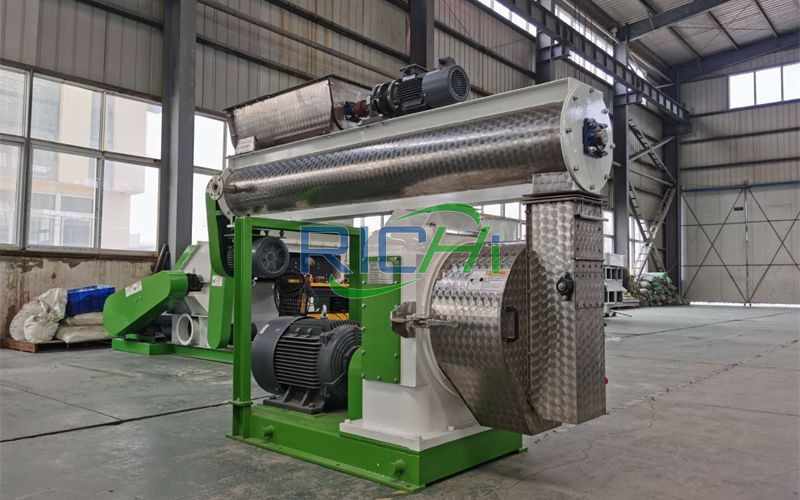
The decision to add a pellet mill came after the farm had already solved most of its feed preparation problems. Grinding and mixing were not the bottlenecks. The unresolved issue was how to turn locally available cassava, rice bran, protein meals and premixes into a consistent pellet that could be produced economically for a large layer-duck operation.
The customer operates a commercial duck farm in Central Java, Indonesia, with approximately 50,000 layer ducks. Cassava is grown on part of the company’s agricultural land, while additional cassava and other feed ingredients can be sourced from surrounding growers and processors. Instead of continuing to depend entirely on purchased compound feed, the company wanted to use more local ingredients and bring pellet production under its own control.
That requirement led to the purchase of a standalone cassava animal feed pellet machine in Indonesia. The farm already had crushing, weighing and mixing equipment, so replacing those systems would have added cost without solving the actual production constraint. What it needed was a reliable ring-die pellet mill that could accept a cassava-based mixed ration from the existing mixer and produce uniform duck feed pellets.
Name:
Cassava pellet machine
Country:
Indonesia
Date:
2025
Capacity:
3–4 t/h
Model:
SZLH320
Main Motor Power:
37 kW
Raw Materials:
cassava meal, Rice bran
Pellet diameter:
4 mm
Cassava is attractive as an energy ingredient because Indonesia has an established cassava supply chain and the crop can be sourced locally in many producing regions. For this farm, however, the decision could not simply be based on replacing maize kilogram for kilogram.
Fresh cassava root contains considerable moisture and naturally occurring cyanogenic compounds, so it is not fed directly into the pellet mill. The farm processes cassava into properly dried cassava chips or meal before formulation. Drying and suitable processing are important not only for storage stability but also for reducing cyanogenic compounds to safe levels before the ingredient enters animal feed.
The farm’s own cassava acreage also does not supply all of the feed required by 50,000 commercial ducks throughout the year. This point mattered when RICHI evaluated the project. Rather than designing the machine around the assumption that all cassava would come from the company’s fields, the customer planned a combination of farm-grown cassava and purchased cassava meal from regional suppliers.
This gave the feed operation a more realistic raw-material strategy: use company-grown cassava when available, purchase additional material during high-demand periods, and adjust inclusion according to ingredient price, nutritional formulation and cassava quality.
The customer did not attempt to make pellets from cassava alone. Cassava is principally an energy ingredient and is relatively poor in protein, so a commercially useful layer-duck ration requires protein sources, minerals, vitamins and other ingredients to achieve the required nutritional balance.
A representative formulation handled by the system includes:
The exact percentage of cassava is adjusted by the farm’s nutritionist rather than fixed at an unnecessarily high level. This is important for layer ducks because the objective is not simply to maximize cassava consumption; it is to maintain metabolizable energy, amino-acid balance, mineral supply and laying performance while reducing dependence on more expensive energy ingredients.
After the customer’s existing equipment and expected operating schedule were reviewed, the SZLH320 was selected as the core cassava animal feed pellet machine in Indonesia. The machine uses a 37 kW main motor and a 320 mm ring die, with a conditioner installed ahead of the pelleting chamber.
For this project, the relevant consideration was not simply the maximum nameplate capacity. Actual output depends on formula composition, cassava inclusion, grinding fineness, conditioning conditions, pellet diameter and the compression characteristics of the ring die. A nominal 3–4 t/h class machine provided sufficient reserve for the farm without forcing it to operate an oversized pelletizer at low load.
The customer selected approximately 4 mm finished pellets for its adult layer ducks. Other pellet diameters can be produced by changing the ring die, but pellet dimensions should ultimately be matched to duck age, feeding system and farm preference rather than treated as a universal specification.
The project was initially discussed around the idea of producing “floating duck feed.” During technical evaluation, RICHI separated this requirement from conventional feed pelleting.
A ring-die pellet mill such as the SZLH320 is designed to manufacture compressed compound feed pellets. It should not be represented as an extrusion system capable of reliably producing highly expanded floating aquatic feed with a controlled bulk density and expansion ratio.
If a customer genuinely requires pellets engineered to remain floating on water, an extrusion process is the appropriate route because density and expansion are created through controlled cooking, pressure and expansion at the extruder die. Ducks, however, do not inherently require floating feed. Commercial duck production commonly uses dry mash, crumbles or conventional pellets supplied through feeding systems.
For this Indonesian project, the customer therefore retained the economically more appropriate objective: producing nutritionally balanced cassava-based conventional pellets for layer ducks. This avoided purchasing a substantially more complex extrusion system for a product characteristic that the farm did not actually require.
The condition of cassava entering the feed system has a direct effect on storage, mixing and pellet quality. The customer’s preparation sequence is:
This arrangement also explains why the customer bought only the pellet mill rather than another complete animal feed production line. Its existing hammer mill and mixer could continue to be used. The new machine was inserted after mixing, with the discharge connected to the farm’s existing downstream handling system.
The conditioner was an important part of the equipment selection. Steam conditioning raises material temperature and moisture before compression, helping soften the feed mixture and gelatinize part of the starch. With a cassava-rich formulation, stable conditioning can improve pellet formation and reduce unnecessary load fluctuations at the ring die.
RICHI did not give the customer one fixed temperature or moisture setting for every formula. The appropriate operating window changes when cassava inclusion, rice bran content, oil addition or protein ingredients are changed.
During commissioning, operators therefore learned to judge the process from several indicators together: conditioner discharge condition, pellet mill amperage, throughput, die discharge, pellet surface, fines generation and finished pellet durability. This approach was more useful than simply copying one temperature value from a standard feed formula.
The size of the farm was large enough to justify commercial on-site pelleting. A 50,000-head layer-duck operation can consume several tonnes of complete feed each day, although actual consumption varies with breed, age, production stage, body weight, climate and feeding program.
At this scale, a 3–4 t/h pellet mill does not need to operate continuously for an entire shift. The customer can organize production in batches and manufacture several days of feed at a time. That operating pattern leaves sufficient time for formula changes, cleaning, inspection and planned maintenance.
It also provides expansion capacity. If the farm increases its duck population or begins supplying feed to associated growers, the pelletizer can operate for additional hours before another pelleting unit becomes necessary.
For this customer, the alternative was not simply “buy a pellet mill or buy nothing.” The real decision was whether to replace an existing feed preparation system with a new turnkey plant or retain useful equipment and invest only where additional capability was required.
The second option required less capital and created less disruption. The existing animal feed hammer mill, mixer and ingredient handling equipment remained in service. The SZLH320 became the new pelleting section, allowing the farm to direct investment toward the process that actually changed the finished product.
This retrofit approach is particularly relevant to farms and feed manufacturers that already have workable grinding and mixing systems. RICHI can evaluate the existing equipment interfaces, available building dimensions, electrical supply, required elevation and downstream cooling requirements before determining what should be retained and what should be added.
The machine was shipped to Central Java through the Port of Tanjung Emas in Semarang. Because the farm already operated feed equipment, its technical team could prepare the foundation, electrical connection and material interfaces before the pellet mill arrived.
The supplied equipment included the feed pellet mill, feeder, conditioner, selected ring die and recommended wearing parts. Commissioning concentrated on three issues that mattered to this particular formula: stable feeding of the cassava-containing mixture, appropriate steam conditioning and maintaining consistent pellet formation without excessive fines.
The farm also kept spare roller shells and another ring die available. For an operation feeding tens of thousands of ducks, waiting for a wear component to arrive after production stops would create a much larger cost than keeping critical spares on site.
The most valuable result was not an exaggerated claim that cassava suddenly made feed extremely cheap. The improvement was greater control.
The farm could purchase ingredients when market conditions were favorable, use its own cassava production as part of the energy supply, adjust formulas according to nutritional requirements and manufacture pellets according to its feeding schedule. It also gained direct control over grinding consistency, mixing accuracy, ingredient freshness and pellet quality.
That flexibility is especially important when the relative prices of cassava, maize, rice bran and protein ingredients change. If cassava becomes economically attractive, its inclusion can be increased within nutritional limits. If another ingredient offers better value, the formulation can be adjusted without changing the pellet machine.
For the customer, this was a more sustainable economic advantage than depending on one fixed “cheap feed” formula.
This cassava animal feed pellet machine in Indonesia project is relevant to more than duck farms. The same basic investment logic can apply to cattle-feed producers, poultry farms and commercial feed mills that want to incorporate cassava meal into compound feeds.
Before selecting a machine, however, RICHI normally needs to know more than the desired tonnes per hour. Cassava form and moisture, percentage in the formula, other ingredients, required pellet diameter, daily operating hours, existing grinding and mixing equipment, steam availability and final feed type all affect equipment configuration.
A customer who already owns most upstream machinery may only need a pellet mill, conditioner, cooler and several conveyors. Another customer starting with fresh cassava roots may require drying, crushing, batching, mixing, pelleting, cooling, screening and packing equipment. The correct investment scope depends on what is already available at the plant.
For farms with a stable cassava supply, the first calculation should be raw-material balance rather than machine price. Estimate annual feed consumption, determine a nutritionally realistic cassava inclusion level, calculate how many tonnes of dry cassava meal will be required, and compare that figure with actual farm production and reliable external supply.
That calculation prevents a common project-planning mistake: buying equipment for a theoretical capacity that the farm cannot support with raw materials.
The Central Java customer took the opposite approach. Existing equipment was retained, locally available cassava became one component of the feed strategy, and the SZLH320 was sized around practical daily production rather than an unnecessarily large headline capacity.
For another buyer considering a cassava animal feed pellet machine in Indonesia, RICHI can configure the pelletizing section around the actual cassava formula, required output and existing plant. Providing the cassava form, moisture, ingredient formulation, target pellet diameter, required tonnes per hour and a layout of existing equipment is enough to begin evaluating the appropriate pellet mill and supporting equipment.
Having the right mix of reliable, high-quality pellet machine and pelletizing systems and expert support is essential to your success. Watch how our end-to-end feed pellet plant solutions have helped our customers optimize their performance.
Our customized and future-proofed turnkey pellet plant solutions is designed with you at the core. From vision to reality and beyond, our team stays connected with yours. Giving you peace-of-mind with an expert at your side.
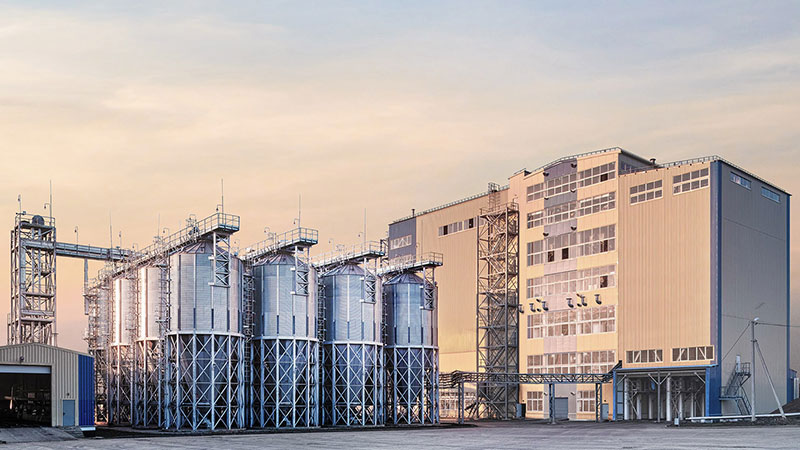
At RICHI, we go beyond project completion. With RICHI Servicee, we’re your dedicated partners in success. Count on us for expert guidance, minimal downtime, and optimized productivity. Choose RICHI for unmatched service and support.
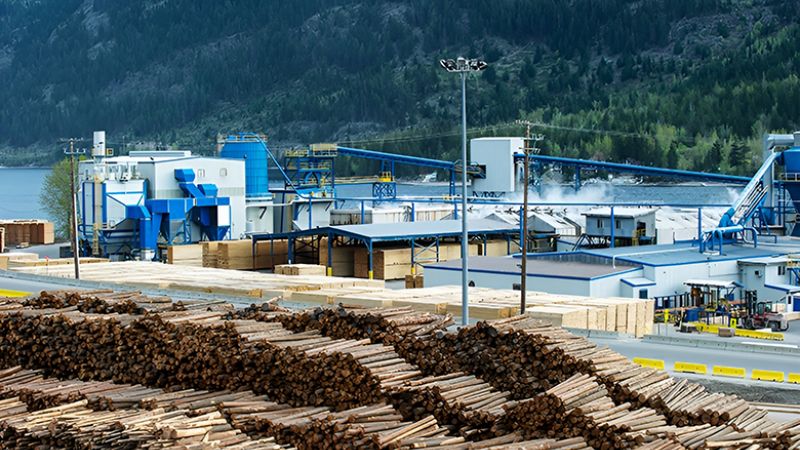


Meet global product demands and quality standards with industry-leading pellet plant design, engineering, equipment, and construction services for pellet processors.


Your Partner Beyond Project Completion
2000+ cases
RICHI is the leading designer, manufacturer and builder of pellet plants in the world, completing over 2000 projects in 140 countries across 6 continents.
Read More
Increase plant productivity, profitability, and safety by integrating high quality equipment into your pellet production line. Over the years, RICHI has become China's top pellet equipment manufacturer. At the same time, RICHI has established valuable partnerships with the world's leading component and raw material manufacturers to bring you the best there is in technology, automation, and efficiency in pelleting plant machinery.

For nearly 30 years, RICHI has been providing best-in-class pellet plant equipment and services to clients across a variety of industries, sizes, and needs. We pride ourselves on the knowledge and skill that each team member possesses – from our technical sales team to our process design engineers. You can count on RICHI Machinery to take your operation to the next level of innovation, quality, and success.
Need help with your pellet manufacturing plant project? Contact us today.
ANIMAL FEED
BIOMASS
WOOD
ORGANIC FERTILIZER
AQUA FEED
CAT LITTER
MUNICIPAL WASTE RECYCLING
SPECIAL PELLET PRODUCTION
RICHI Machinery continues to deliver world class pellet mill equipment, pellet plant engineering and project solutions that add value to our customers in the animal feed, wood waste, agriculture waste, organic fertilizer, cat litter and special pellet products industries. Throughout the years, we RICHI Machinery have built strong brand, becoming industry-leading pellet machine manufacturer. We value integrity, promise quality, and prioritize your success.
Learn MoreWith our expert team, we precisely implement your process engineering requirements in pellet mill and pelletizing plant systems. No matter which industry you’re in – we understand your needs and deliver solutions that meet the highest standards.
At RICHI, quality comes first. Our pellet making machine and related pellet line equipment undergo rigorous quality controls to ensure they meet the highest standards. Rely on products that are durable, safe, and efficient.
With decades of experience in pellet machine and pellet production line production, we have earned a reputation as a trusted partner in various industries. Our expertise allows us to cover a wide range of applications.
Not only do we offer premium pelleting equipment, but we are also experts at designing, building, installing, and maintaining facilities from the ground up. Our expertise is within pellt plant process design, discovering the most efficient, productive, and profitable way to handle your materials in an end-to-end cycle.
○ RICHI MACHINERY
Keeping in touch with us is an effective way to solve all your problems. If you have any needs or questions, please leave your contact information, then RICHI technical consultants will send design, quotation, videos to your mailbox. You can also contact us directly via WhatsApp: +86 13838389622
Copyright©2015-2026 by HENAN RICHI MACHINERY CO., LTD. All rights reserved.