
The Alberta customer did not need a grinder capable of pulverizing every ingredient in a cattle ration. Its commercial feed plant already handled roughage separately and produced several types of cattle concentrate for feedlots and cow-calf operations. The problem was in the grain preparation section: an ageing hammer mill had become unreliable, throughput changed noticeably as screens and hammers wore, and the amount of fines varied from one production run to the next.
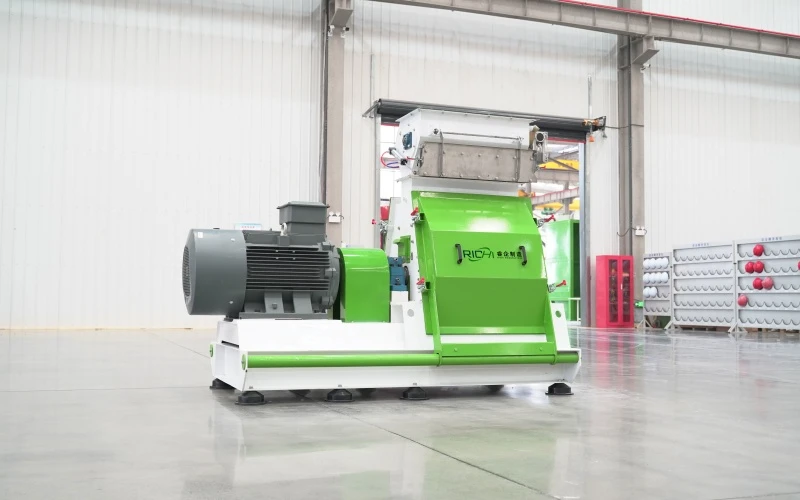
The Alberta customer did not need a grinder capable of pulverizing every ingredient in a cattle ration. Its commercial feed plant already handled roughage separately and produced several types of cattle concentrate for feedlots and cow-calf operations. The problem was in the grain preparation section: an ageing hammer mill had become unreliable, throughput changed noticeably as screens and hammers wore, and the amount of fines varied from one production run to the next.
The customer therefore installed one SFSP66×80 animal feed grinding machine in Canada as a replacement rather than purchasing a complete feed line. The new 110 kW animal feed hammer mill was positioned upstream of the existing batching, mixing and pelleting equipment. Its principal job is grinding cereal grains and suitable dry feed ingredients for compound cattle feed—not processing long hay, wet silage or an entire TMR through one machine.
Name:
Animal Feed Grinder
Country:
Canada
Date:
2025
Capacity:
10–12 T/H
Model:
SFSP66×80
Main Motor Power:
110 kW
Rotating Speed:
2980 rpm
Main Materials:
Barley, wheat, corn and suitable dry feed ingredients
An SFSP66×80 with reference grain output around 10–12 T/H would be substantially oversized for an 800-head beef farm producing only its own daily ration.
The Alberta customer is therefore a regional feed manufacturer supplying multiple cattle operations rather than a single medium-sized ranch.
The mill produces cattle concentrates and pelleted supplements in scheduled campaigns. During busy periods, several formulations may pass through the grinding and mixing sections in one shift, making a 10–12 T/H grain grinder commercially reasonable.
This customer profile also explains why a standalone replacement made sense. Storage bins, ingredient dosing, mixers, pellet mills, coolers and finished-feed handling equipment were still serviceable. Replacing the grinder removed one production bottleneck without rebuilding equipment that did not need to be replaced.
The customer processes several cereal ingredients, but barley is the most important grain in this project.
Alberta cattle feeding has a strong barley base, particularly in western Canadian beef production. Wheat and corn can also enter formulations according to price, nutrient specification and availability, while canola meal, distillers grains and other protein or by-product ingredients can be incorporated downstream during batching and mixing.
The grinder therefore had to perform consistently on barley rather than being specified mainly around corn.
This matters because barley kernels need adequate processing to expose the starch, but excessive grinding produces fines that ferment rapidly in the rumen. The customer wanted controlled particle reduction, not the finest possible meal.
| Project Parameter | Configuration |
|---|---|
| Equipment | Animal feed grinding machine |
| Model | SFSP66×80 |
| Quantity | 1 unit |
| Rotor Diameter | 660 mm |
| Crushing Chamber Width | 800 mm |
| Main Motor Power | 110 kW |
| Rotating Speed | Approximately 2980 rpm |
| Hammer Line Speed | Approximately 103 m/s |
| Reference Grain Capacity | Approximately 10–12 T/H under suitable operating conditions |
| Main Materials | Barley, wheat, corn and suitable dry feed ingredients |
The 10–12 T/H value is treated as reference capacity for suitable grain rather than a guaranteed output for every ingredient.
Actual throughput changes with grain type, kernel hardness, moisture, screen opening, hammer condition, feeding rate and the target particle-size distribution.
Long-stem hay and forage have very different feeding characteristics from cereal grain.
When the customer uses chopped forage or fibre ingredients in a product, those materials are prepared through equipment suited to fibrous feedstocks before entering the batching section.
The SFSP66×80 remains dedicated primarily to dry grain grinding.
This separation improves grinder stability and prevents long fibres from interfering with the feeding and screen system.
Canola meal is an important western Canadian protein ingredient, but commercially produced meal already arrives in a processed form.
The customer therefore does not automatically send canola meal through the SFSP66×80 merely because it appears in a cattle formulation.
Depending on its physical condition and the finished-feed specification, it can move directly to ingredient storage and batching.
The hammer mill is used where actual size reduction creates value.
A narrow 2.5–4 mm range is not treated as a fixed requirement for every cattle-feed product.
In practice, cattle-grain processing is better controlled by evaluating the whole particle distribution and the percentage of fines rather than forcing every particle into one exact millimetre band.
Barley that is ground too aggressively can create excessive fine material. That increases the rate at which starch becomes available in the rumen and can contribute to digestive problems when high-grain diets are not managed correctly.
Under-processing is also undesirable because intact or insufficiently opened kernels can reduce utilization.
The plant therefore uses screen selection and routine sampling to find a workable balance.
Dry rolling is widely used for feedlot barley because the objective is often to crack kernels while minimizing fines.
This customer’s process is different.
The mill manufactures compound and pelleted cattle feeds. For a pelletized product, ingredients eventually need a sufficiently controlled particle size for batching, mixing, conditioning and ring-die pelleting.
A hammer mill therefore makes sense inside this feed-manufacturing process even though a feedlot feeding processed barley directly in a TMR might prefer a roller mill.
The customer selected equipment according to the final feed process rather than assuming one grain-processing technology is best for every Canadian cattle operation.
The SFSP66×80 uses replaceable screens to control the maximum material able to leave the grinding chamber.
The mill does not operate with one screen for every formulation.
A cattle concentrate destined for pelleting can require different grinding conditions from a coarser meal product. Wheat, barley and corn also respond differently to the same screen because kernel structure and hardness differ.
Operators therefore maintain several approved screen specifications and change them according to production schedule.
Screen selection is recorded with each major formulation so that a successful product can be reproduced rather than relying on operator memory.
The machine is designed primarily for dry feed ingredients.
It is not promoted as a grinder for unrestricted “high-moisture grain.”
High-moisture corn or other wet grain requires different storage and processing considerations. Feeding excessively wet material into a screen-type hammer mill can reduce capacity, increase screen loading and create material buildup.
The Alberta customer therefore checks incoming grain moisture as part of receiving quality control.
Loads outside the mill’s normal specification are managed separately rather than forcing the hammer mill to compensate.
Processing performance depends heavily on what arrives at the plant.
The customer checks grain not only for moisture but also for test weight, foreign material and visible quality problems.
Where risk warrants it, grain is also screened for mycotoxin contamination.
A grinder can change particle size. It cannot improve nutrient quality or make contaminated grain safe.
This receiving discipline is particularly important because variation in kernel size and density can also change grinding behavior and actual tonnes per hour.
Feed grain can occasionally contain metal contamination from handling, storage or transport equipment.
The existing feed plant already used magnetic protection ahead of key processing machines, and that system was retained when the SFSP66×80 was installed.
Removing ferrous material before it reaches the high-speed rotor protects hammers, screens and other internal components.
It also reduces the risk of a small contaminant creating a much larger mechanical failure.
A 110 kW hammer mill should not alternate between running nearly empty and receiving sudden surges of grain.
The upstream feeding section was therefore checked during the retrofit.
Consistent feed rate keeps rotor loading more stable and helps maintain a repeatable particle-size distribution.
If the feeder pushes grain too rapidly, motor load rises and the chamber can become overloaded. If feeding is too slow, the machine operates below its useful capacity and energy consumption per tonne can increase.
The hammer mill is connected to an aspiration system that helps move air through the grinding chamber and control dust around the discharge.
Correct airflow can also support material movement through the screen and reduce unnecessary recirculation inside the chamber.
The plant therefore reviewed ducting, cyclone or filter capacity and pressure conditions at the same time as the grinder replacement.
A large hammer mill cannot deliver stable performance if its aspiration system is seriously undersized.
Grinding grain inherently creates fine particles.
The objective is to capture airborne dust and avoid producing more nutritional fines than the feed specification requires.
Those are two different issues.
Dust extraction protects the working environment. Correct screen size and processing intensity control the amount of very fine grain entering the feed.
The customer monitors both rather than claiming that a new grinder produces “almost no dust.”
Once grain leaves the SFSP66×80, it moves to the plant’s batching and mixing section.
Protein ingredients, mineral sources, vitamins and other formulation components are added according to the required cattle-feed specification.
For pelleted feeds, the mixed meal continues to conditioning and pelletizing before cooling and screening.
On the farm, those concentrates can later be combined with silage, hay or other roughage as part of the producer’s complete feeding program.
The grinder therefore prepares one component of the feed system; it does not manufacture a complete cattle TMR by itself.
The previous machine had been repaired repeatedly.
Individual repairs were inexpensive compared with buying a new hammer mill, but the cumulative effect became harder to justify as unscheduled downtime increased.
The customer’s concern was not one catastrophic failure.
It was the gradual loss of predictability: output changed with wear, screen replacement became more frequent and production planning had to allow extra time for the grinding section.
The SFSP66×80 was purchased when the cost of unreliable production became more important than extracting another season from the older machine.
The animal feed grinding machine was not evaluated in isolation.
RICHI reviewed the capacity of the upstream grain feeder and the downstream conveyor or elevator receiving the ground material.
If either side could move only 7 T/H, installing a nominal 10–12 T/H grinder would not make the plant a 12 T/H system.
Discharge elevation, duct connections, motor position and maintenance access were also checked before installation.
This reduced the amount of modification required after the equipment reached Canada.
A 110 kW industrial grinder places very different demands on the electrical system from a small farm hammer mill.
Before shipment, the customer confirmed its three-phase supply, voltage and 60 Hz frequency along with transformer capacity, starter arrangement, cable sizing and motor protection.
The machine was configured for the customer’s actual electrical conditions rather than described simply as “Canadian voltage.”
This was particularly important because starting current and plant load have to be considered alongside normal operating power.
The machine itself operates indoors.
The bigger seasonal issue is maintaining suitable ingredient condition when outside temperatures fluctuate sharply.
Condensation can become a problem when cold grain and warmer indoor air interact, especially around bins and conveying equipment.
The customer therefore manages ventilation, grain condition and indoor housekeeping rather than relying on special “anti-corrosion Canadian steel” as the primary winter solution.
Standard preventive maintenance remains more important than marketing the grinder as climate-specific.
The customer does not evaluate the SFSP66×80 only by hourly tonnage.
Operators track main-motor load, feed rate, screen condition, hammer wear and representative particle-size samples.
A reduction in capacity can mean worn hammers, blocked screen area, wetter grain or a change in incoming kernel characteristics.
An increase in fines can indicate excessive hammer wear patterns, inappropriate screen selection or overly aggressive processing.
Keeping those observations together makes troubleshooting faster than changing one component at random.
“The biggest difference is that we can plan production around the grinder again. We are not trying to make the grain as fine as possible; we are trying to reproduce the same processing result from batch to batch. Once we matched the screen, feeder and aspiration settings to our barley-based products, the grinding section became much more predictable.”
The maintenance team also moved toward condition-based inspection.
Hammers are checked for wear and balance, screens for damaged or enlarged openings, bearings for abnormal temperature or vibration, and the aspiration system for accumulation that could restrict airflow.
The SFSP66×80 animal feed crusher machine was exported from Qingdao Port to the west coast of Canada and then transported inland to Alberta.
For an Alberta project, Vancouver is a practical marine gateway when the confirmed freight schedule and inland arrangement support that route.
RICHI provided equipment dimensions, weight information, electrical drawings, installation interfaces and foundation requirements before shipment so the customer could prepare the replacement position before arrival.
Transit and customs-clearance time depend on carrier schedules and port conditions.
The customer already had the downstream processing equipment needed for its existing feed products.
There was therefore no automatic “next purchase” of a feed pellet mill or batching system.
Future investment will depend on which process becomes the next capacity or reliability constraint.
If mixing, pelleting, cooling or storage eventually limits the plant, that section can be evaluated separately.
This animal feed grinding machine in Canada project is a commercial grain-processing retrofit for an Alberta compound feed mill supplying multiple cattle operations.
The Alberta customer uses one SFSP66×80 with a 660 mm rotor, 800 mm grinding-chamber width, 110 kW main motor and approximately 10–12 T/H reference capacity on suitable grain. Barley is the principal feed grain, with wheat and corn incorporated according to formulation and procurement conditions.
The machine is dedicated primarily to dry cereal grinding. Long hay is prepared separately, canola meal is not automatically re-ground, and high-moisture grain is not forced through a conventional screen hammer mill simply to demonstrate material versatility.
For another customer evaluating an animal feed grinding machine in Canada, RICHI Machinery would first determine whether the operation is an individual farm or commercial feed mill, which grains are being processed, required tonnes per hour, final feed type, preferred processing intensity, acceptable fines level, grain moisture, existing feeder and aspiration system, downstream mixer capacity, electrical supply and available installation space before confirming the grinder model.
That distinction is particularly important for Canadian beef operations. If the objective is simply to crack barley for direct feedlot use, a roller mill may be the better processing technology. If the grain must be reduced for compound or pelleted feed manufacturing at commercial throughput, an SFSP hammer mill can be the more appropriate choice.
Having the right mix of reliable, high-quality pellet machine and pelletizing systems and expert support is essential to your success. Watch how our end-to-end feed pellet plant solutions have helped our customers optimize their performance.
Our customized and future-proofed turnkey pellet plant solutions is designed with you at the core. From vision to reality and beyond, our team stays connected with yours. Giving you peace-of-mind with an expert at your side.
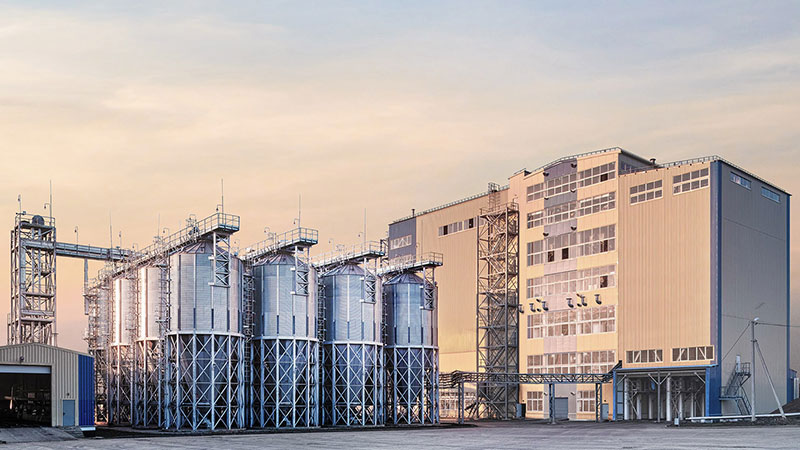
At RICHI, we go beyond project completion. With RICHI Servicee, we’re your dedicated partners in success. Count on us for expert guidance, minimal downtime, and optimized productivity. Choose RICHI for unmatched service and support.
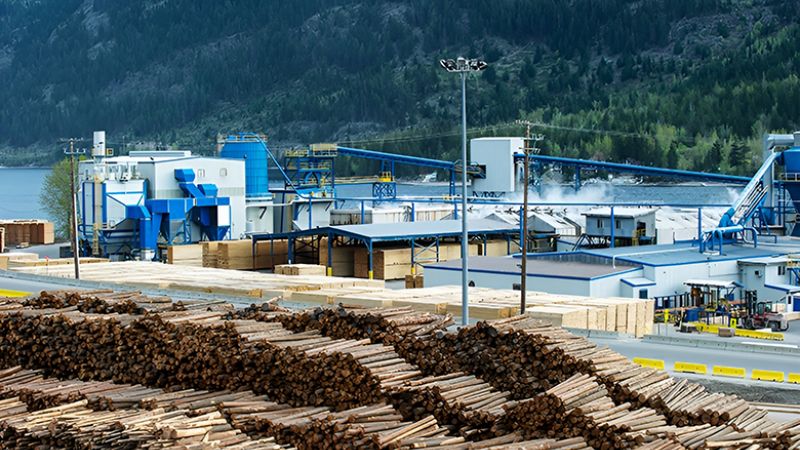


Meet global product demands and quality standards with industry-leading pellet plant design, engineering, equipment, and construction services for pellet processors.

Your Partner Beyond Project Completion
2000+ cases
RICHI is the leading designer, manufacturer and builder of pellet plants in the world, completing over 2000 projects in 140 countries across 6 continents.
Read More
Increase plant productivity, profitability, and safety by integrating high quality equipment into your pellet production line. Over the years, RICHI has become China's top pellet equipment manufacturer. At the same time, RICHI has established valuable partnerships with the world's leading component and raw material manufacturers to bring you the best there is in technology, automation, and efficiency in pelleting plant machinery.

For nearly 30 years, RICHI has been providing best-in-class pellet plant equipment and services to clients across a variety of industries, sizes, and needs. We pride ourselves on the knowledge and skill that each team member possesses – from our technical sales team to our process design engineers. You can count on RICHI Machinery to take your operation to the next level of innovation, quality, and success.
Need help with your pellet manufacturing plant project? Contact us today.
ANIMAL FEED
BIOMASS
WOOD
ORGANIC FERTILIZER
AQUA FEED
CAT LITTER
MUNICIPAL WASTE RECYCLING
SPECIAL PELLET PRODUCTION
RICHI Machinery continues to deliver world class pellet mill equipment, pellet plant engineering and project solutions that add value to our customers in the animal feed, wood waste, agriculture waste, organic fertilizer, cat litter and special pellet products industries. Throughout the years, we RICHI Machinery have built strong brand, becoming industry-leading pellet machine manufacturer. We value integrity, promise quality, and prioritize your success.
Learn MoreWith our expert team, we precisely implement your process engineering requirements in pellet mill and pelletizing plant systems. No matter which industry you’re in – we understand your needs and deliver solutions that meet the highest standards.
At RICHI, quality comes first. Our pellet making machine and related pellet line equipment undergo rigorous quality controls to ensure they meet the highest standards. Rely on products that are durable, safe, and efficient.
With decades of experience in pellet machine and pellet production line production, we have earned a reputation as a trusted partner in various industries. Our expertise allows us to cover a wide range of applications.
Not only do we offer premium pelleting equipment, but we are also experts at designing, building, installing, and maintaining facilities from the ground up. Our expertise is within pellt plant process design, discovering the most efficient, productive, and profitable way to handle your materials in an end-to-end cycle.
○ RICHI MACHINERY
Keeping in touch with us is an effective way to solve all your problems. If you have any needs or questions, please leave your contact information, then RICHI technical consultants will send design, quotation, videos to your mailbox. You can also contact us directly via WhatsApp: +86 13838389622
Copyright©2015-2026 by HENAN RICHI MACHINERY CO., LTD. All rights reserved.