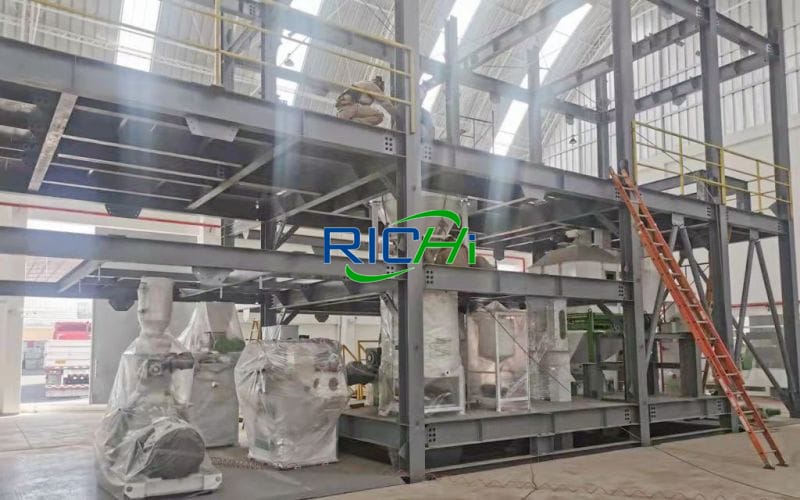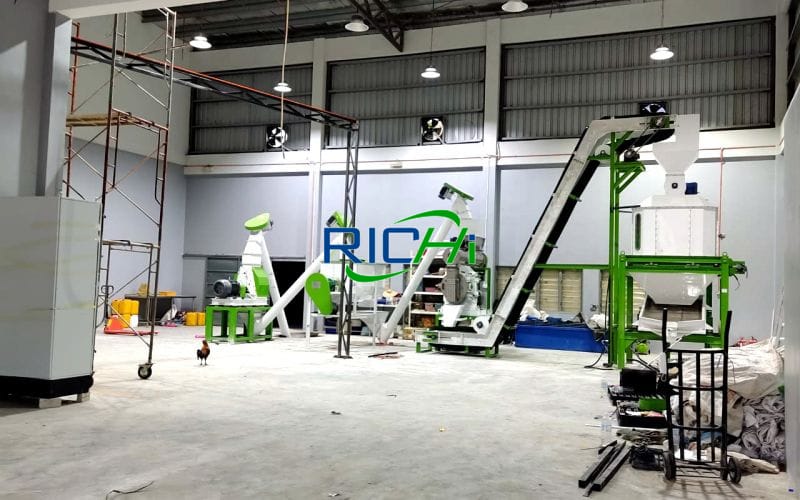
This is where you find all our press releases and news articles.
If you want to know how to make tofu cat litter on a commercial scale, the basic process is straightforward: prepare the plant-based raw materials, weigh and mix the formula, form the mixture into pellets, dry and cool the pellets, remove fines, and package the finished cat litter.
Building a reliable tofu cat litter factory, however, requires more than following this basic process.
A factory making one natural 2 mm product does not face the same production requirements as an OEM plant changing between several colors, fragrances, pellet sizes, and private-label formulas. Raw material moisture, hourly capacity, automation, packaging, factory space, and finished-product requirements all affect how the line should be configured.
For commercial production, the better starting point is therefore not “Which machines should I buy?” but “What tofu cat litter do I want to manufacture, and what production system is needed to make it consistently?”
RICHI is currently working on tofu cat litter projects with different raw materials, product specifications, production capacities, and factory conditions. The examples below show how widely project requirements can vary even within the same tofu cat litter category.
20+ Recent Tofu Cat Litter Projects | 0.5–7 T/H+ | New Plants | Existing Factory Upgrades | Standalone Machines | Multi-SKU Production
| Country | Capacity / Scale | Planned Raw Material Mix | Current Project Requirement |
|---|---|---|---|
| France | 1–5 T/H | Pea fiber + soybean fiber + wheat starch + natural binder | New tofu cat litter factory; evaluating raw material quality, factory space, equipment configuration and CAPEX |
| Thailand | 3–4 tons/day | Soybean residue + cassava starch + guar gum | Cat litter wholesaler moving into own production; existing mixer and dryer to be integrated with the new equipment |
| United Kingdom | 5–7 T/H pelletizing | Soybean fiber + corn starch + wheat fiber + additives | High-capacity pelletizing section required to connect with an existing production system |
| Hong Kong | 0.1–1 T/H | Soybean fiber + pea fiber + corn starch | Compact tofu cat litter line; customer comparing a modified pellet system with a complete dedicated production line |
| Poland | 0.5–1 T/H | Pea fiber + wheat fiber + corn starch + color additives | Multi-color tofu cat litter; several colored pellet batches will be produced and blended |
| Indonesia | 0.5 T/H | Soybean fiber + tapioca starch + coconut-derived plant fiber | Small commercial tofu cat litter plant using locally available plant-based materials |
| Vietnam | 1 T/H | Soybean residue + cassava starch + rice-derived plant fiber | New tofu cat litter production line with emphasis on economical local raw materials |
| Turkey | 1–2 T/H | Soybean fiber + corn starch + wheat bran/fiber + guar gum | Commercial line for standard and scented tofu cat litter products |
| Kazakhstan | 2 T/H | Soybean fiber + wheat starch + corn-derived material | Plant-based clumping tofu cat litter line with relatively simple product specifications |
| Malaysia | 0.6–1 T/H | Soybean residue + tapioca starch + bamboo/plant fiber | Tofu cat litter line requiring pelletizing, drying and finished-product moisture control |
| Romania | 1–2 T/H | Pea fiber + soybean fiber + wheat starch | New commercial line planned around several 2–3 mm tofu litter products |
| Serbia | 1 T/H | Soybean residue + corn starch + grass fiber | Compact line using a plant-fiber blend and natural binder system |
| Hungary | 1–2 T/H | Pea fiber + corn starch + wheat-derived fiber | Multi-formula tofu litter production with interchangeable pellet specifications |
| Bulgaria | 0.5–1 T/H | Soybean fiber + sunflower-derived plant fiber + starch | Small tofu cat litter project using a locally available agricultural fiber as part of the formulation |
| Czech Republic | 1–2 T/H | Pea fiber + soybean fiber + potato/wheat starch | Premium low-dust tofu cat litter with more attention to screening and finished-product quality |
| Philippines | 0.5–1 T/H | Soybean fiber + cassava starch + coconut-derived fiber | Small-scale commercial line with flexible raw material sourcing |
| Saudi Arabia | 1–2 T/H | Imported soybean fiber + corn starch + pea fiber | New tofu cat litter plant with greater emphasis on automatic dosing and enclosed dust control |
| UAE | 2–3 T/H | Pea fiber + soybean fiber + corn starch + deodorizing additives | OEM/private-label tofu cat litter line with multiple formulas and retail packaging formats |
| Australia | 1–2 T/H | Pea fiber + soybean fiber + wheat-derived plant fiber | Premium plant-based tofu litter production with several pellet sizes |
| Spain | 1–2 T/H | Soybean fiber + pea fiber + corn starch + grass/plant fiber | Flexible tofu cat litter line for natural, colored and scented products |
These projects show that there is no single formula or equipment configuration for every tofu cat litter factory. Raw materials may start with soybean residue, pea fiber, starch, or other suitable plant fibers, while finished products can differ in color, fragrance, pellet size, dust level, and other characteristics.
However, most commercial tofu cat litter plants are built around the same core manufacturing stages. Understanding these stages first makes it much easier to determine which equipment your own raw materials, formula, and production target will require.
Commercial tofu cat litter is generally produced from plant-based fibers combined with starch, binders, and other ingredients according to the manufacturer's formulation.
Common raw materials may include:
There is no universal tofu cat litter formula. A manufacturer working mainly with dry soybean fiber and starch has different material-handling requirements from a processor trying to use wet soybean residue. Likewise, a plant producing one standard product can use a simpler dosing arrangement than a private-label factory handling several formulas in one day.
The formulation therefore influences more than the finished cat litter. It also affects weighing accuracy, mixing, liquid or micro-ingredient addition, pelletizing, drying, screening, and other production-line decisions.
If you already have your own formula, RICHI can evaluate the raw material characteristics and finished-product requirements first, then configure the process and equipment around them. If you have multiple formulas, there is no need to worry; we can customize an ingredient dosing system for you that allows for flexible formula switching, meeting the needs of long-term development for various cat litter products.
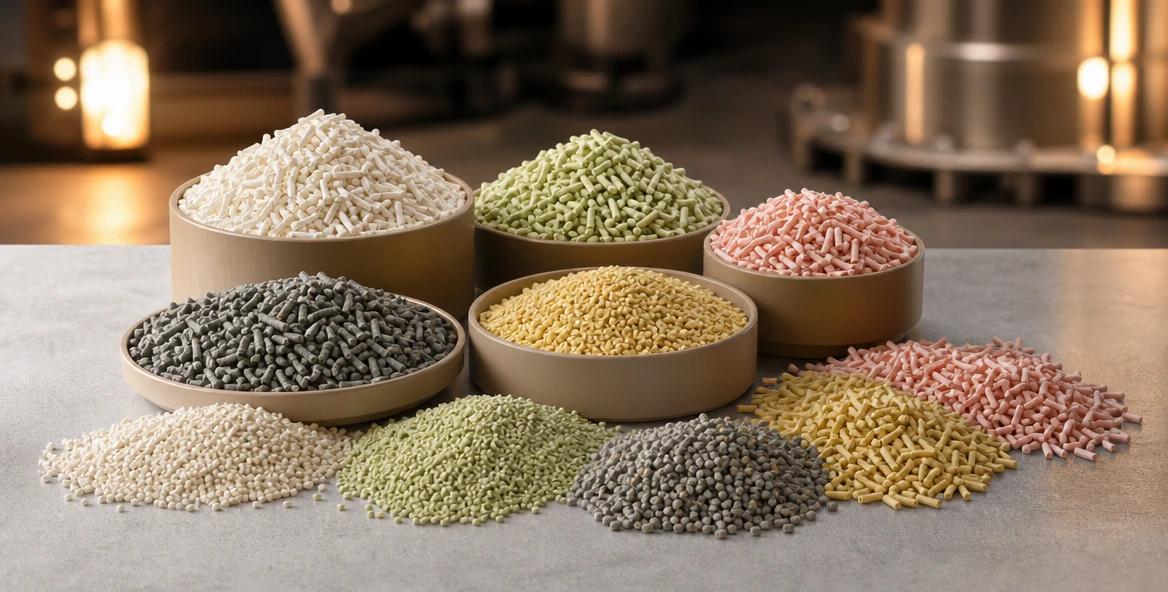
Commercial tofu cat litter is no longer limited to one natural-colored cylindrical product. Brands now differentiate products through color, fragrance, pellet dimensions, plant-fiber combinations, deodorizing functions, dust level, packaging, and other features.
This matters when building a factory because a production line designed for one stable SKU does not need the same flexibility as a line expected to make a broad retail or OEM product range.
For manufacturers producing one or a few stable natural products, the production system can remain relatively straightforward. A typical configuration covers weighing, mixing, pelletizing, drying, cooling, screening, and packaging, with raw material preparation added where necessary.
This type of arrangement can be a practical starting point for a new investor who wants to control initial equipment cost before expanding the product range.
Tofu cat litter can be manufactured in natural, green, pink, brown, and other colors according to the product formulation. Some manufacturers also combine different colored pellets in the same retail product.
If several colors will be produced on one line, the engineering questions are not limited to whether coloring ingredients can be added. The dosing method, mixing uniformity, batch size, production sequence, residual material, and cleaning between product changes also need to be considered.
A factory making many colored SKUs may therefore need a more flexible weighing and mixing section than one making only natural tofu cat litter.
Green tea, coffee, milk, fruit, floral, and other fragrances may be incorporated according to the manufacturer's formulation and market positioning.
The equipment arrangement depends on the physical form and processing requirements of the additive. A powder ingredient may be handled through a small-ingredient dosing system, while a liquid ingredient may require controlled liquid addition or spraying. The stage at which an ingredient is introduced also matters when it is sensitive to subsequent processing conditions.
For factories producing several scented products, product changeover and cleaning should be included in the operating plan from the beginning.
Manufacturers may also develop products targeting lower dust, improved deodorizing performance, different pellet hardness, specific absorption or clumping characteristics, different plant-fiber combinations, or premium retail positioning.
Many of these characteristics begin with formulation. The production line then has to reproduce that formulation consistently under commercial operating conditions.
Equipment does not replace product development. Its job is to dose, mix, form, dry, screen, and package the selected formula with the consistency required for commercial production.
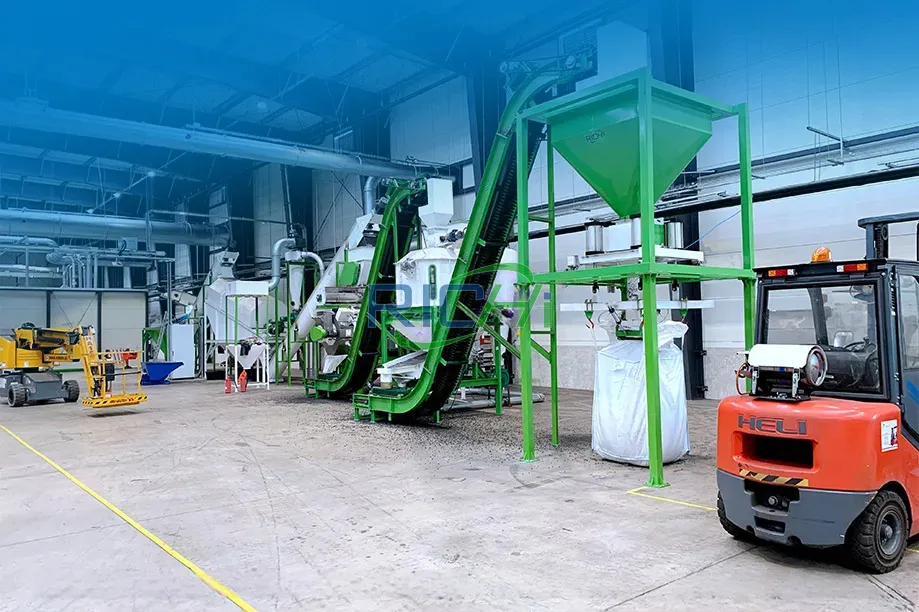
A typical tofu cat litter manufacturing process is:
Raw Material Preparation → Weighing & Dosing → Mixing → Pelletizing → Drying → Cooling → Screening → Packaging
Raw materials are first prepared according to their particle size, moisture, and physical condition. Ingredients are then weighed according to the formula and mixed uniformly. Powder or liquid additives can be introduced through suitable dosing systems where required. The prepared mixture enters the tofu cat litter pellet machine and is formed into the required pellet specification. The fresh pellets then pass through the necessary drying and cooling stages before screening removes fines and off-size material.
Depending on the product and factory standard, polishing, fines recycling, dust collection, automatic conveying, or more advanced packaging can also be added. The basic manufacturing route is not difficult to understand. The real engineering work begins when these individual processes have to be turned into a balanced commercial production line.
Below, we present three common tofu cat litter production schemes, widely used across Asia, Europe, and the Americas. Each is based on real client setups and refined through years of practical operation.
Process flow: feeding - mixing - granulation - drying - cooling - screening - automatic packaging scale
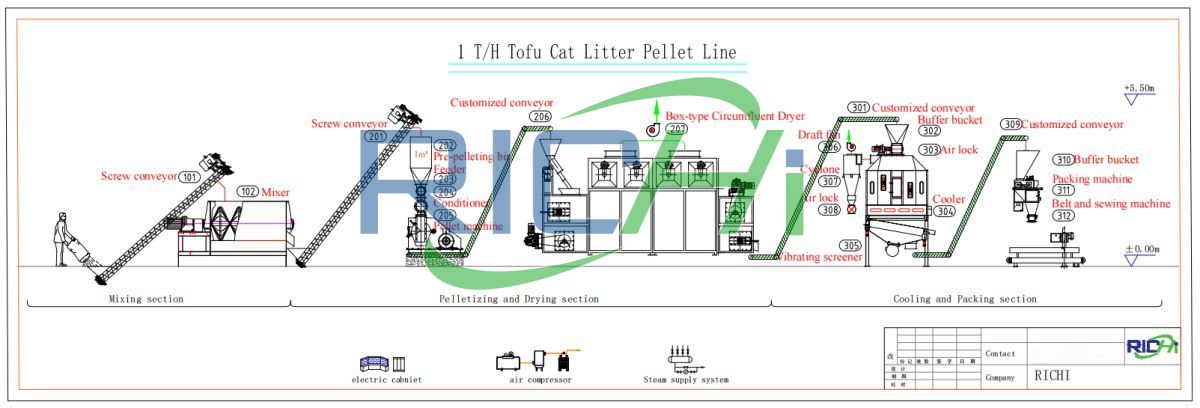
This project adopts a fully automated design, achieving seamless connection from feeding to packaging. The raw materials are mixed with 70% pre-weighed Russian local soybean fiber and 25% Kazakhstan corn starch, which enter the WLDH-1000 horizontal mixer through a 500kg stainless steel hopper and complete uniform mixing in 8 minutes.
The granulation stage uses the SZLH-250 ring die cat litter granulator, equipped with a unique 3.5mmD-type mold, to produce 1.2T/H high-quality granules. The three-layer gas belt dryer reduces the moisture content to 12% through a gradient temperature of 85°C-65°C, and finally after countercurrent cooling and screening, it is accurately filled by a fully automatic packaging machine. The entire line has a special anti-freeze design, and the electrical components meet the GOST-R standard, which perfectly adapts to the severe cold climate in Russia.
Process flow: PLC weighing system - liquid addition - mixing - granulation - drying - cooling - screening - manual packaging
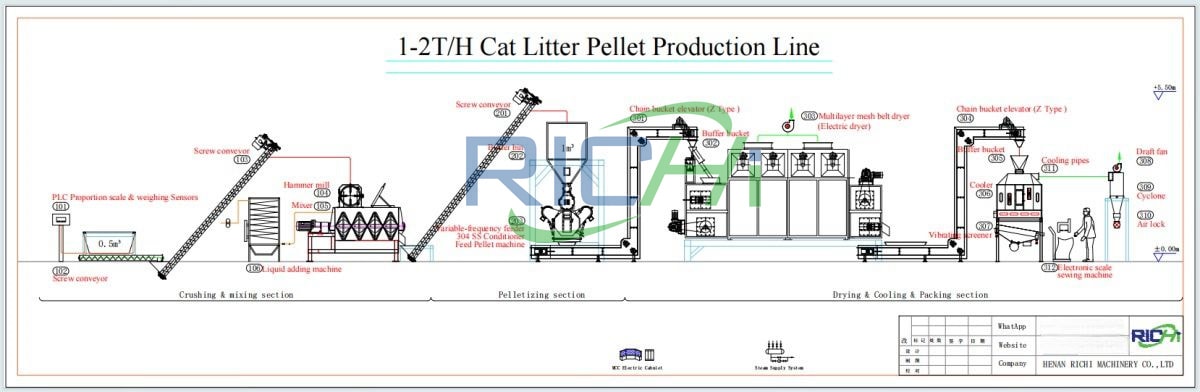
Specially optimized for the high temperature and high humidity environment in Thailand, the production line is equipped with a PLC intelligent weighing system to accurately mix local soybean residue and cassava starch. The SLHY-0.5 double-shaft mixer completes the uniform mixing of raw materials and antibacterial liquid within 6 minutes, and the moisture deviation is controlled at ±0.8%.
The economical SZLH-250 ring die cat litter pellet machine is used with a 4mm mold, with an hourly output of up to 2 tons. The single-layer gas dryer solves the agglomeration problem caused by tropical climate through intelligent temperature control, eliminating the cooler and using a 48-hour natural cooling solution. The final product is bagged manually, which significantly reduces the initial investment cost and is particularly suitable for small and medium-sized investors in Southeast Asia.
Process flow: PLC raw material weighing system - liquid addition & mixing system (1 cubic meter mixing bin) - granulation (1 cubic meter granulation bin) - cooling belt - manual packaging - electric bag sewing machine
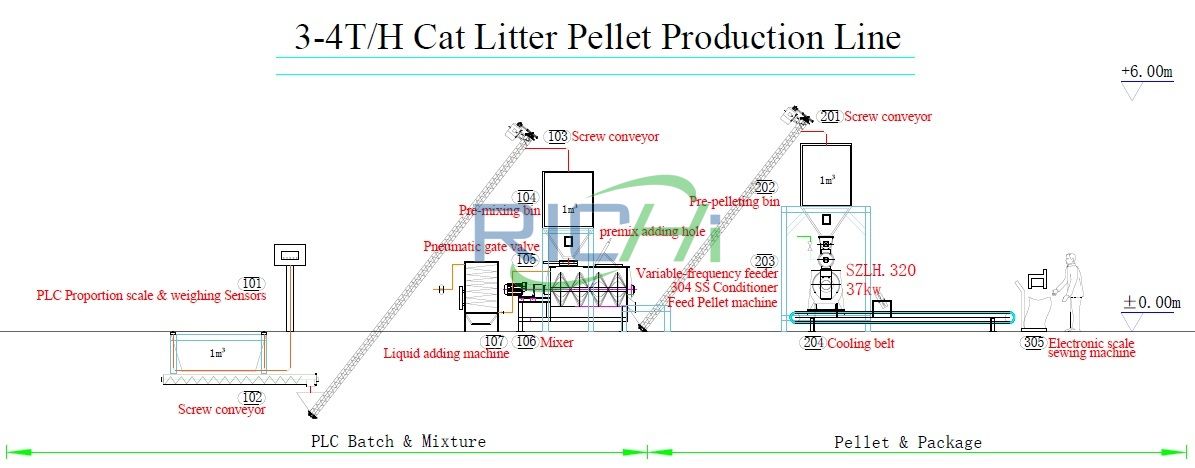
In order to adapt to the customer's 7-meter-high factory building, an innovative sinking PLC weighing system is adopted. The raw material bin and the 1 cubic meter granulation bin form a buffer system to ensure that the SZLH-320 granulator can continuously and stably produce 3.5T/H of 5mm cylindrical particles. The breakthrough use of 6-meter stainless steel cooling belts to replace traditional cooling towers, combined with the factory ventilation system to achieve cost savings.
The manual packaging station is equipped with an electric bag sewing machine, which reduces equipment investment by 35% while ensuring production capacity. The entire line is specially strengthened with anti-rust treatment and uses 220V/60Hz Brazilian standard power supply, which is perfectly adapted to South American market conditions.
Each of these tofu cat litter production schemes is tailored to different factory conditions, business models, and product strategies. Whether you're planning a compact 2t/h startup line or a high-capacity turnkey factory, our team can help you design the best-fit configuration, match the most suitable equipment, and provide detailed cost analysis.
A complete tofu cat litter production line is not simply a pellet machine connected to a dryer. The raw material section, batching system, mixer, pelletizer, dryer, cooler, screener, conveyors, and packaging equipment must work together at compatible capacities.
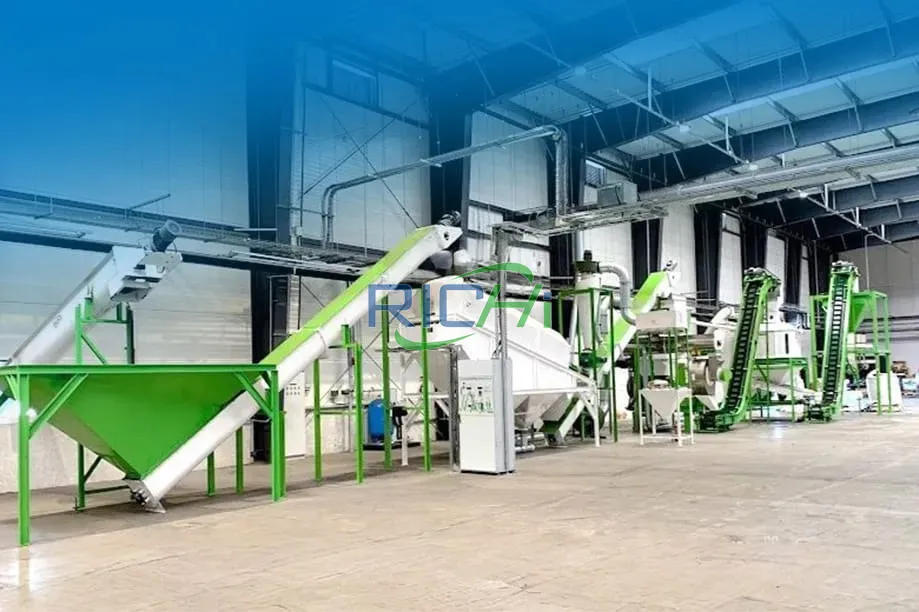
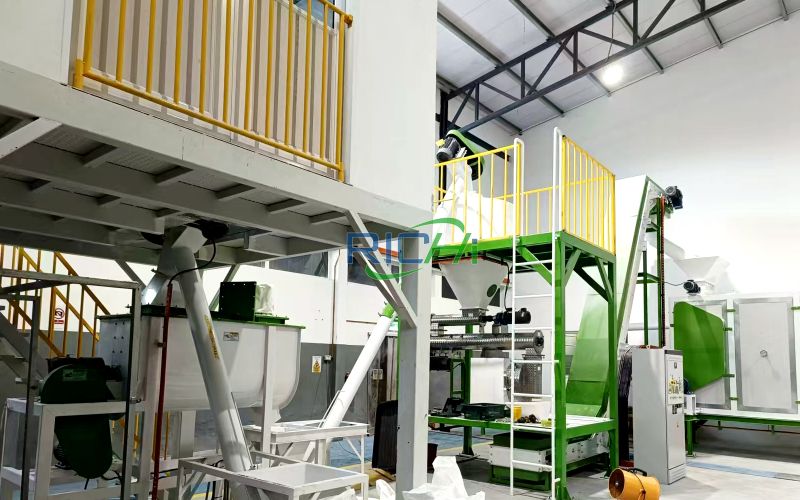
2T/H Cat Litter Pellet Production Line in Poland
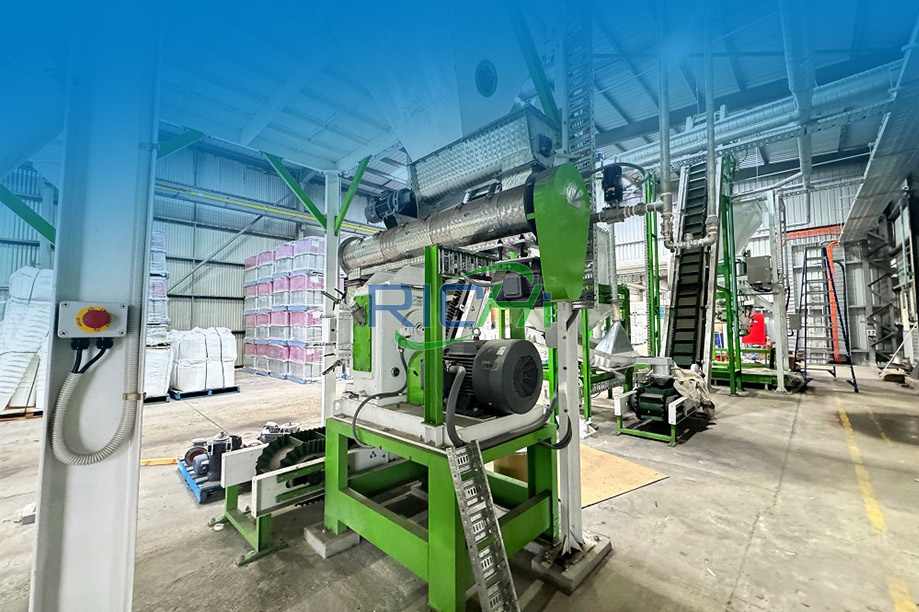
3 T/H Tofu Cat Litter Processing Plant in Australia
The final configuration should be built around six things: the finished product, raw materials, required output, level of automation, factory conditions, and investment plan.
Before choosing equipment, define the product as clearly as possible.
A producer running one natural product every day can keep the line relatively simple. An OEM manufacturer changing formulas, colors, fragrances, pellet specifications, and bag sizes needs much more flexibility in dosing, changeover, storage, and packaging.
Dry soybean fiber and wet soybean-processing materials should not automatically be put through the same production design. Moisture, particle size, flowability, cleanliness, consistency, and the number of ingredients affect how the front end of the plant should be arranged.
This is especially important for tofu factories, soybean processors, starch producers, plant-protein companies, and agricultural processors that already have a potential raw material stream and want to turn it into a higher-value cat litter product.
A 3 t/h pellet machine does not automatically mean that the complete factory will produce 3 t/h.
If the mixing section can supply only 2 t/h continuously, the dryer cannot remove enough moisture, or the packaging machine cannot keep up with the finished product, one of these sections becomes the bottleneck of the entire line.
RICHI therefore matches the capacity of the dosing, mixing, pelletizing, drying, cooling, screening, conveying, and packaging sections as one system rather than selecting each machine independently.
Two factories with the same hourly output can have very different automation levels.
An economical line may use manual bag opening, simpler ingredient weighing, mechanical conveying, and semi-automatic packaging. A standard commercial line can add automatic batching, controlled liquid addition, PLC operation, and more automated material transfer.
For manufacturers with high labor costs, frequent SKU changes, or larger production schedules, more automation can reduce manual handling and improve batch consistency. For a new investor with a limited product range, a simpler arrangement may be the more rational starting point.
Production-line layout cannot be separated from the building. Clear height, column positions, door locations, raw material access, finished-product warehouse location, ventilation, utility connections, and available floor area can all change the equipment arrangement.
If you already have a building, it is usually better to design around its real dimensions before equipment manufacturing begins rather than trying to fit a standard layout into the factory later.
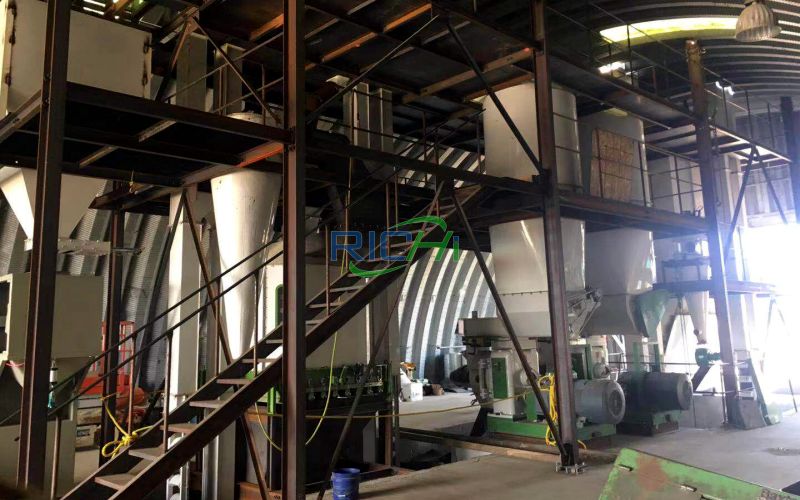
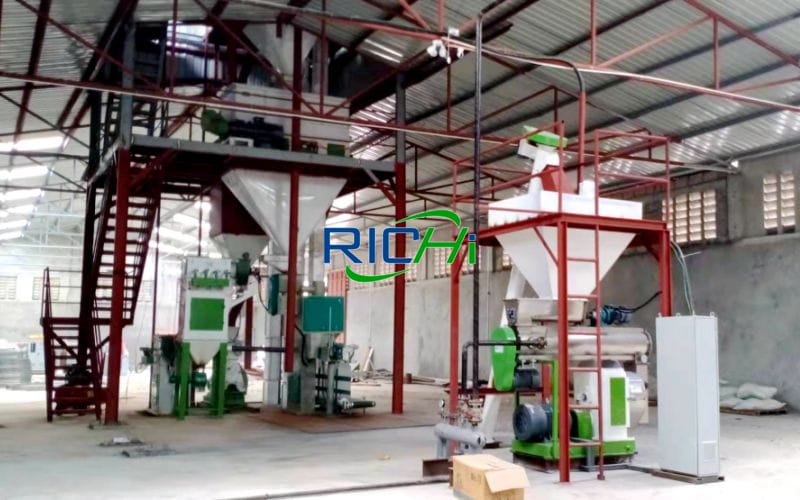
Below are some of the featured cat litter factory projects we have done. You can also go directly to our case center to view more cat litter project information!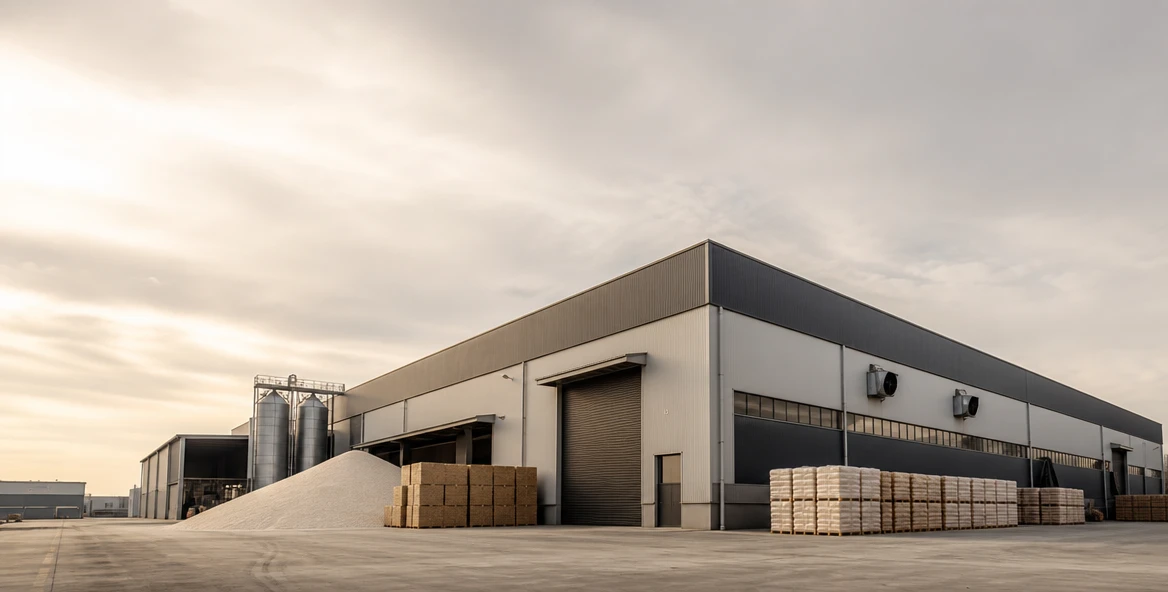
A tofu cat litter plant can include the following equipment. Some systems are essential, while others depend on the raw material, formula, automation level, and finished-product requirement.
| Equipment | Main Purpose | When It Is Needed |
|---|---|---|
| Raw Material Feeding System | Receives and transfers ingredients into the production system | Configured according to feeding method and automation level |
| Cat Litter Crusher | Reduces oversized or fibrous raw materials | Needed when incoming material is too large for downstream processing |
| Weighing & Dosing System | Prepares ingredients according to the formula | Manual, semi-automatic, or automatic depending on production requirements |
| Cat Litter Mixer | Produces a uniform mixture before pelletizing | Core equipment in commercial production |
| Micro-Ingredient / Liquid Addition System | Adds small-dose powders, liquids, or other formula ingredients | Used when the product formula requires controlled minor-ingredient addition |
| Tofu Cat Litter Pellet Machine | Forms the prepared mixture into pellets | Core forming equipment |
| Cat Litter Belt Dryer | Removes moisture from formed pellets | Normally a major part of commercial tofu cat litter production; capacity depends on moisture load |
| Cat Litter Cooling System | Brings product to suitable conditions after thermal processing | Configured according to the drying process and factory design |
| Cat Litter Pellet Screener | Removes fines and off-size material | Recommended for commercial finished-product control |
| Polishing System | Improves product surface and helps control loose fines | Optional for products requiring additional finishing |
| Fines Recycling System | Returns suitable screened material to the production process | Optional according to process design |
| Dust Collection System | Controls dust at feeding, transfer, screening, and other points | Configured according to plant conditions and environmental requirements |
| Conveying Equipment | Transfers material between production sections | Designed as part of the complete line |
| Packaging System | Weighs and packs finished tofu cat litter | Configured according to bag size, capacity, and automation target |
| PLC / Electrical Control System | Coordinates equipment operation and process control | More important as automation and line complexity increase |
A simple product made from a few major ingredients can use a relatively economical feeding and weighing arrangement. Once the factory starts working with several formulas, colors, fragrances, or low-dose functional ingredients, dosing accuracy and repeatability become more important.
The mixer must also be sized to work with the downstream pelletizing capacity. A line loses efficiency if the pelletizer is repeatedly waiting for the next batch or the mixer is continually waiting for downstream equipment to clear.
The tofu cat litter pellet machine is the core forming equipment. Selection depends on required output, formula characteristics, pellet diameter, product shape, and how frequently the factory intends to change products.
Different dies can be prepared for different pellet specifications. Where several product sizes are planned, die changing and production changeover should be considered before the line is finalized.
Drying is one of the sections most likely to change both equipment investment and operating cost.
A belt dryer machine should not be selected only from the hourly tonnage of pellets. What matters is the actual moisture that must be removed. A 2 t/h factory starting with a wetter formula can require substantially more drying duty than another 2 t/h plant working with relatively dry ingredients.
Incoming moisture, final moisture target, throughput, heat source, local energy prices, product characteristics, and available factory space should therefore be considered together.
Screening removes loose fines and off-size material before the product reaches the customer. Where a brand is targeting a particularly clean or premium finished product, additional polishing and dust-control measures can be considered.
The packaging section must also match the commercial model. Filling a limited number of larger bags is quite different from producing several small retail packages for an OEM or private-label business. Packaging speed can become a real line bottleneck if it is treated as an afterthought.
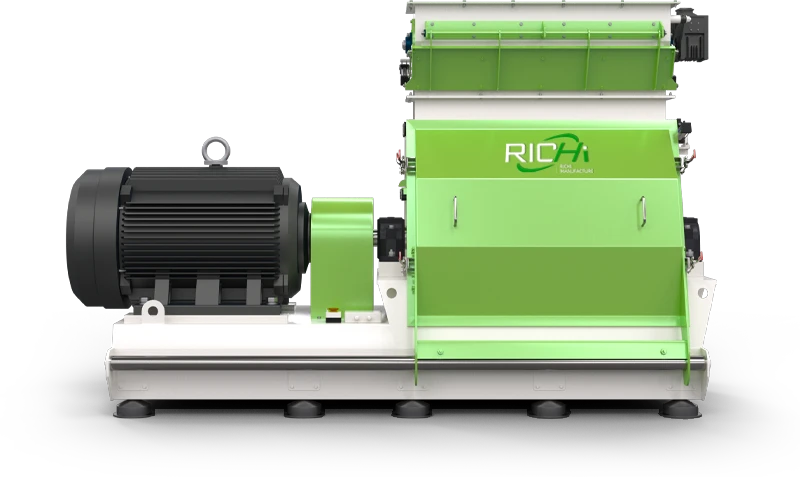
Cat Litter Crusher
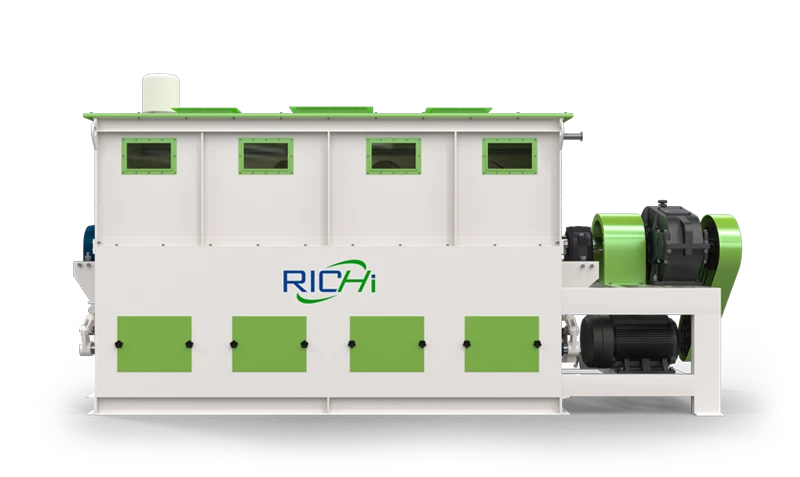
Cat Litter Mixer
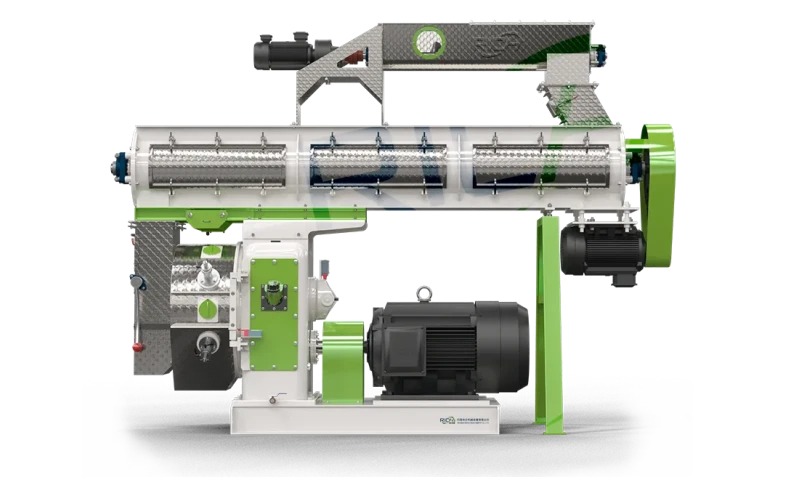
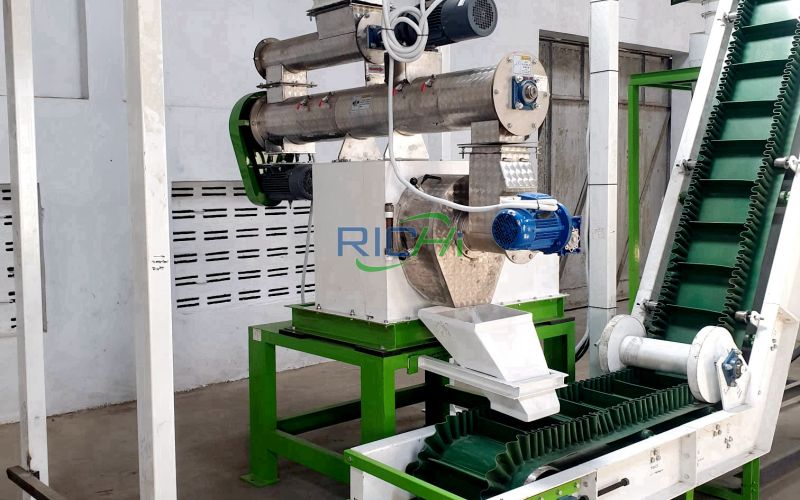
Tofu Cat Litter Pellet Machine
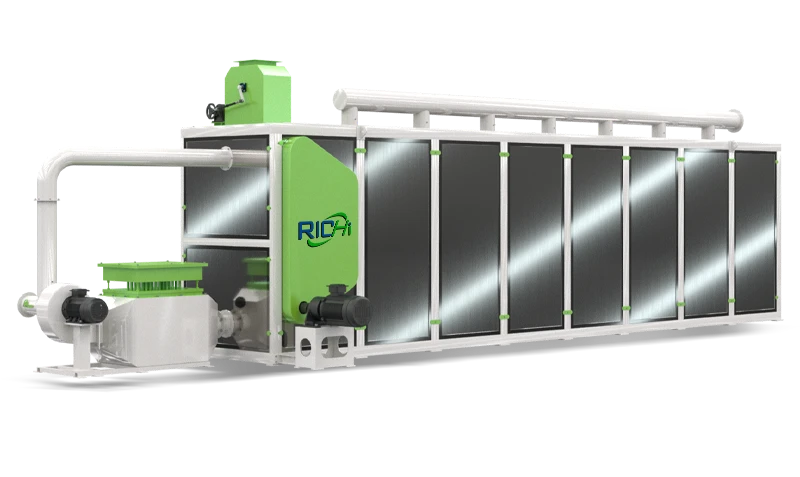
Cat Litter Belt Dryer
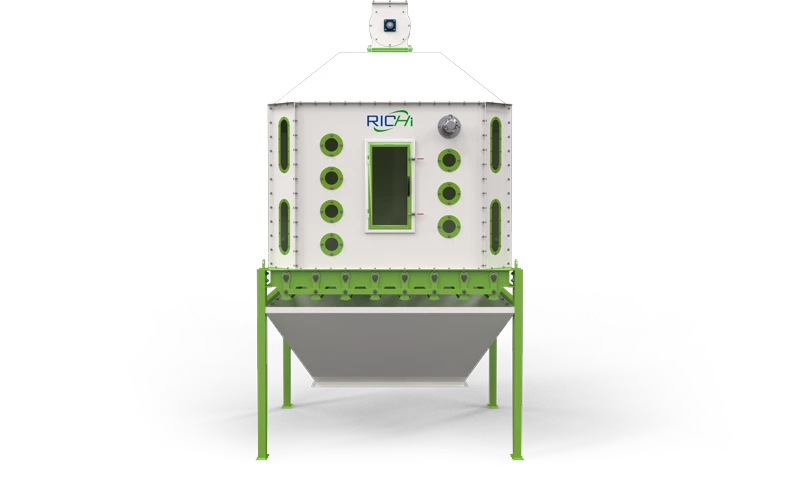
Cat Litter Pellet Cooler
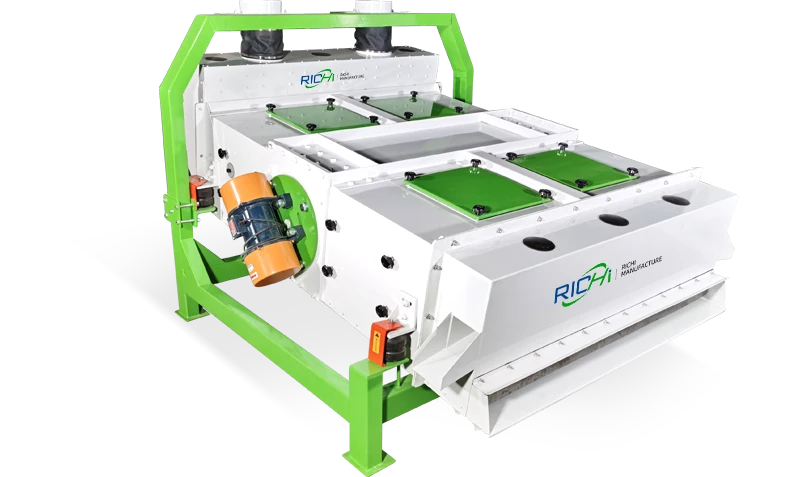
Cat Litter Pellet Screener
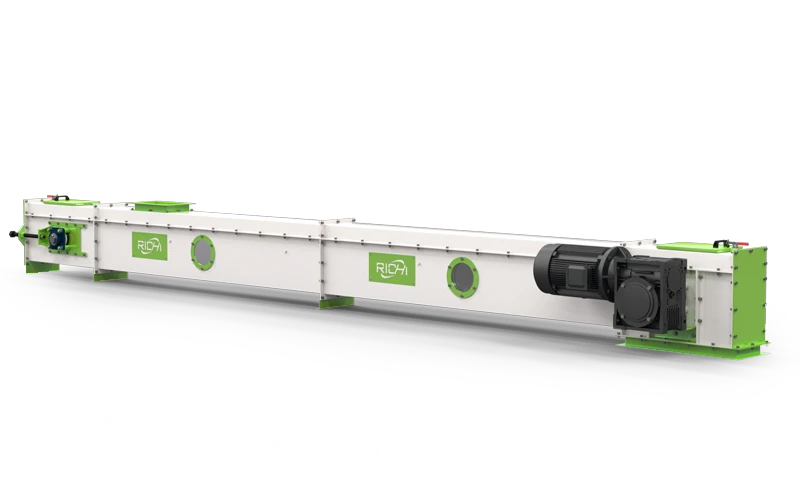
Cat Litter Conveyor Machine
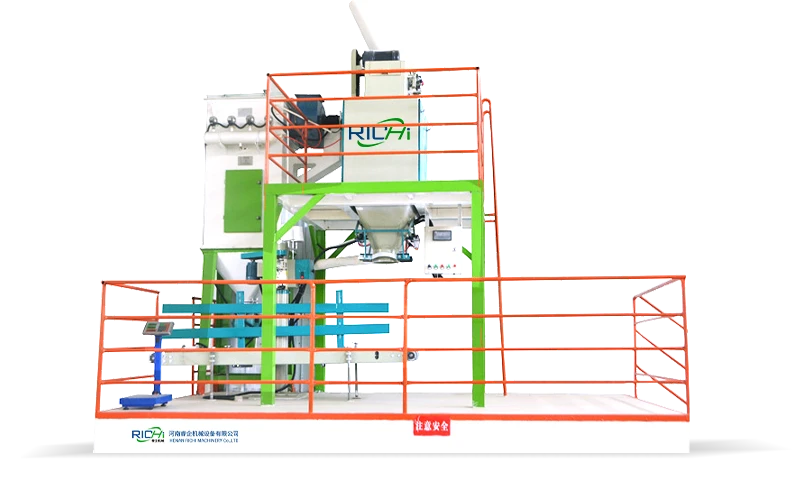
Cat Litter Packaging Machine
The table below shows why two tofu cat litter factories with the same hourly capacity can require different equipment.
| Product or Production Requirement | Possible Equipment / Process Adjustment |
|---|---|
| One standard natural product | Relatively simple dosing and mixing arrangement |
| Multiple colors | More flexible color dosing, mixing, cleaning, and batch-change planning |
| Multiple fragrances | Powder or liquid additive handling according to the actual formula |
| Multiple formulas | More flexible weighing, dosing, recipe control, and production scheduling |
| Different pellet diameters | Interchangeable dies and planned changeover procedure |
| Multiple SKUs | Greater flexibility in dosing, intermediate handling, changeover, and packaging |
| High-moisture raw material | Additional raw material handling and higher drying duty |
| Low-dust premium product | More attention to screening, polishing, conveying, and dust collection |
| Higher automation | Automatic dosing, conveying, PLC control, and automatic packaging |
| Small retail packages | Packaging equipment selected for higher bag counts and accurate small-bag filling |
| OEM / private-label production | More flexible recipes, SKU changeovers, and packaging formats |
| Limited factory height or floor space | Customized conveying route and equipment layout |
The equipment configuration should follow the tofu cat litter you want to manufacture, not the other way around.
This is why RICHI asks about the formula, product range, capacity, packaging, and factory conditions before finalizing a complete equipment list.
Below are several tofu cat litter and cat litter production projects completed for customers in different markets:
These projects should not be read simply as capacity references. Their real value is showing how raw material conditions, factory buildings, automation targets, product specifications, and investment priorities lead to different production solutions.
For some tofu manufacturers, soybean processors, starch plants, plant-protein producers, and agricultural processors, the starting point is not “I want to build a cat litter factory.” It is “I already have this plant-based material—can it become a saleable cat litter product?”
Some soybean-derived and plant-fiber materials can potentially be used in tofu cat litter formulations, but suitability should be evaluated rather than assumed.
Important factors include:
Wet soybean residue is a good example. It cannot simply be treated like dry commercial soybean fiber because the additional water changes storage, feeding, drying load, energy demand, and potentially the whole economic balance of the project.
If you already have a potential raw material, provide its description, moisture content, available quantity, photos or test information, and the cat litter product you want to develop. This gives the engineering team a much better basis for evaluating whether the material is suitable and what processing route would be required.
The right capacity should come from expected sales and production planning, not simply from choosing the largest pellet machine that fits the budget.
| Capacity | Typical Application |
|---|---|
| 1–2 t/h | New commercial projects, local brands, market-entry projects, or an additional tofu cat litter product line |
| 3–5 t/h | Established commercial production, growing regional brands, and medium-scale OEM production |
| 6–10 t/h | Larger brands, export-oriented production, and higher-volume OEM/private-label manufacturing |
| 10 t/h+ | Large industrial projects with stronger demand for integrated automation, storage, drying, and packaging |
Hourly capacity should be checked against annual sales targets, operating days, shifts, operating hours, and realistic utilization.
For larger plants, pelletizing capacity alone becomes less useful as a planning figure. Raw material storage, dryer duty, packaging speed, dust collection, internal logistics, and production scheduling all become increasingly important.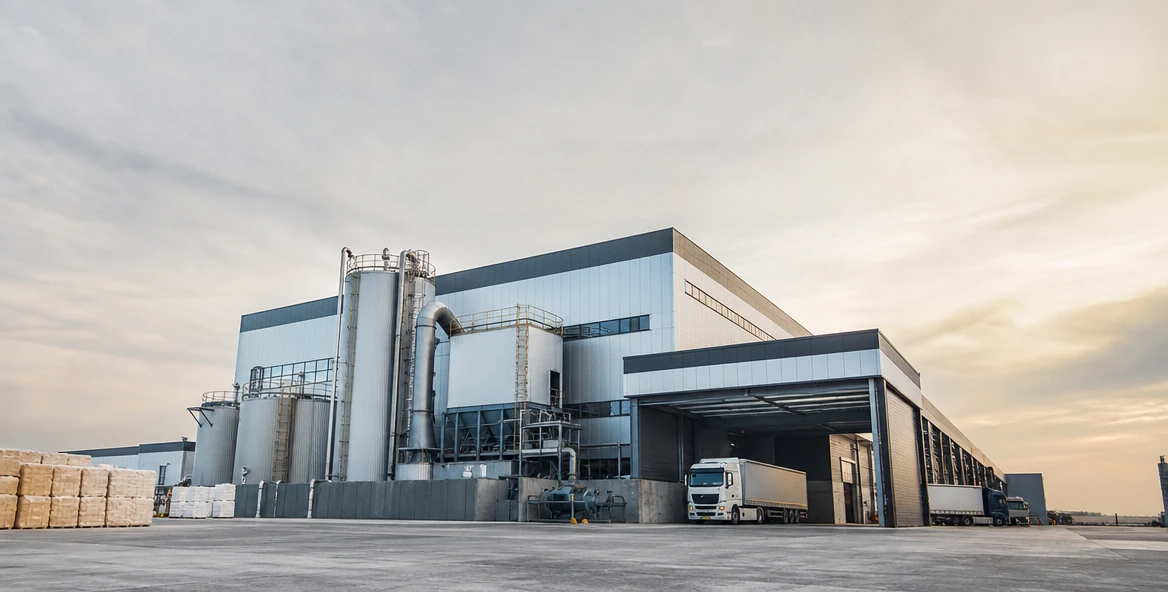
For preliminary budgeting, a complete commercial tofu cat litter production line can range from approximately US$50,000 to US$700,000+, depending on capacity and configuration.
| Capacity | Typical Equipment Investment Range |
|---|---|
| 1–2 t/h | Approximately US$50,000–120,000 |
| 3–5 t/h | Approximately US$80,000–250,000 |
| 6–10 t/h | Approximately US$180,000–450,000 |
| 10 t/h+ | Approximately US$300,000–700,000+ |
These figures are useful for early project budgeting, but they are not fixed quotations.
Consider two 2 t/h factories. One uses dry ingredients, one stable formula, manual feeding, and semi-automatic packaging. The other needs automatic ingredient dosing, several colors and fragrances, liquid addition, more drying capacity, PLC control, enhanced dust collection, and automatic small-bag packaging.
The nominal output is the same. The equipment package is not.
The main factors affecting tofu cat litter production line cost are capacity, raw material moisture, formulation complexity, drying duty and heat source, number of SKUs, automation, dust control, packaging, factory conditions, and local electrical requirements.
The cost of buying equipment and the cost of producing one ton of tofu cat litter are two different calculations.
Operating cost normally includes plant fiber and starch, binders and additives, electricity, drying fuel or heat, labor, packaging, maintenance, and other factory expenses.
A single global “cost per ton” is not particularly useful because soybean fiber, starch, fuel, electricity, labor, and retail packaging can vary greatly from one country to another.
For a practical estimate, start with local prices. If you know the approximate cost of your main raw materials, electricity, heat source, labor, packaging, planned capacity, and operating schedule, these figures can be used to build a preliminary production-cost calculation for the project.
A standard equipment list should not simply be copied from one project to another.
A factory using dry, stable raw materials and producing one standard SKU may prioritize a compact and economical process. Another project using wetter ingredients may put far more emphasis on drying. An OEM factory handling several brands may spend more on batching accuracy, flexible additive handling, product changeover, automatic control, and packaging.
The building can change the solution as well. A low workshop may require a different conveying route from a tall plant that can use more gravity transfer. An existing factory with useful mixers, dust collectors, or packaging equipment may be able to retain some assets after their capacity and compatibility are checked.
The purpose of customization is not to add more equipment. It is to use the equipment the project actually needs and avoid unnecessary investment where a simpler arrangement can achieve the required result.
Yes. If you already have a mature or preliminary tofu cat litter formula, the equipment can be selected around the processing requirements of that formula and the product you plan to sell.
This is relevant to existing tofu cat litter brands, OEM and private-label manufacturers, cat litter factories adding a tofu product range, companies developing colored or scented products, factories making several pellet specifications, soybean-processing businesses looking for a new use for suitable byproducts, and existing plants planning expansion or automation.
You do not need to select every machine before contacting RICHI.
Tell us what you want to produce, what raw materials you have, and what output you need. From there, the engineering team can work backward to determine the appropriate process, equipment, automation level, and layout.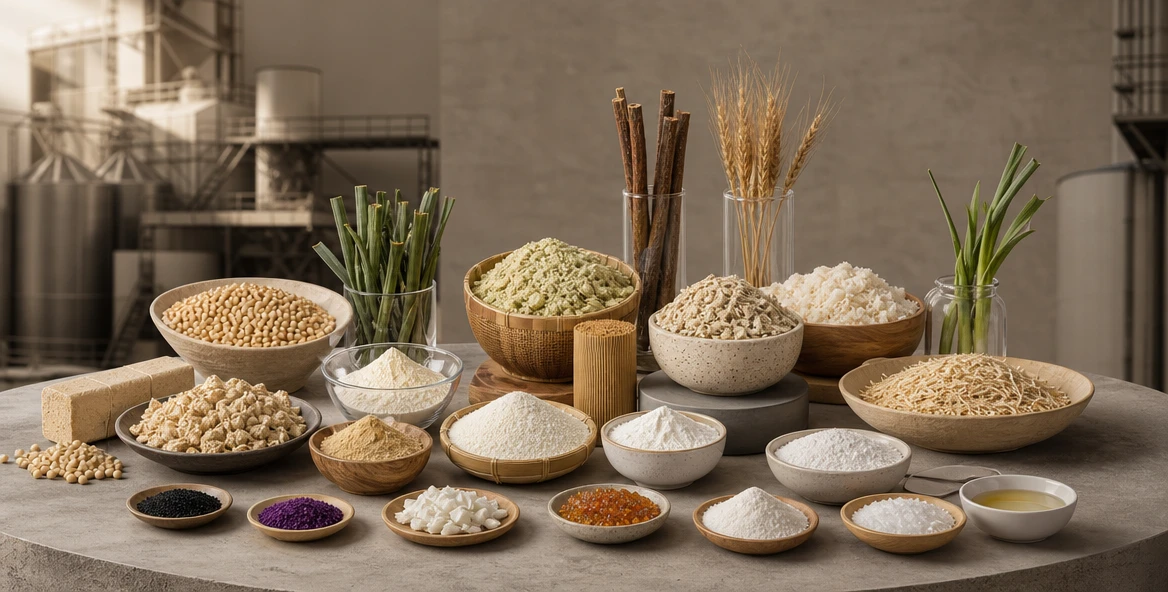
For an initial technical proposal and quotation, provide as much of the following information as possible:
With these details, RICHI can prepare a preliminary process flow, complete equipment list, production-line configuration, factory layout, and equipment quotation for the project.
Commercial tofu cat litter is generally produced through raw material preparation, weighing and dosing, mixing, pelletizing, drying, cooling, screening, and packaging.
Crushing, micro-ingredient dosing, liquid addition, polishing, fines recycling, dust collection, and automatic conveying can be added where the formula or factory requires them. A commercial tofu cat litter manufacturing process is therefore configured around the actual product rather than copied as one fixed flow for every plant.
Typical raw materials include soybean fiber or processed soybean residue, pea or other suitable plant fibers, corn or cassava starch, guar gum or other binders, and optional functional ingredients.
Colored or scented products may also use coloring ingredients, fragrance ingredients, deodorizing materials, or other additives. The exact formula is product-specific, so the production equipment should be selected after the material characteristics and processing requirements are understood.
Potentially yes, but the first issue to check is moisture. Fresh soybean residue can be much wetter than dry commercial soybean fiber, which changes storage, handling, dryer load, and energy consumption.
Before designing a line around tofu waste or soybean-processing residue, provide the moisture content, physical condition, available quantity, and intended product. Wet material should not simply be fed into a standard dry-material line without evaluating the additional moisture-handling requirement.
A commercial tofu cat litter factory normally uses feeding, weighing and dosing, mixing, pelletizing, drying, cooling, screening, conveying, and packaging equipment.
Depending on the project, the line may also include a crusher, micro-ingredient or liquid addition system, polishing equipment, fines recycling, dust collection, automatic batching, and PLC control. The tofu cat litter pellet machine is the core forming machine, but it is only one part of the complete line.
A complete commercial tofu cat litter production line typically requires an equipment budget of about US$50,000–700,000+, depending on capacity and configuration.
As a preliminary reference, a 1–2 t/h line may be around US$50,000–120,000, a 3–5 t/h line around US$80,000–250,000, a 6–10 t/h line around US$180,000–450,000, and a larger or highly automated 10 t/h+ plant around US$300,000–700,000+.
Raw material moisture, drying duty, automation, number of formulas, additive systems, dust control, packaging, and factory conditions can move a project within or beyond these ranges.
For preliminary staffing, a small or medium commercial tofu cat litter factory can reasonably plan for about 4–10 people per operating shift, although the number of direct production-line operators may be lower in a highly automated plant.
The total shift normally includes more than the people standing at the machines. Raw material feeding, production monitoring, bagging, forklift or material movement, warehouse work, quality checks, and basic maintenance all add labor.
In a highly automated line, roughly 3–5 people may handle the core production operation, while factories using more manual feeding, bag handling, and packaging can require considerably more staff. The final staffing plan should therefore be made together with the automation and packaging design.
For most commercial tofu cat litter production systems, drying is an important stage after forming.
The main question is not simply whether a dryer is required, but how much moisture it needs to remove. A line using wetter ingredients needs more drying duty than a line working with a relatively dry formula. Incoming moisture, hourly output, final moisture target, heat source, and product characteristics should therefore be used to size the drying system.
Yes. One properly configured line can manufacture different colored tofu cat litter products.
The main engineering considerations are ingredient dosing, mixing uniformity, production sequence, residual material, and cleaning between batches. If color changes are frequent, the batching and mixing system should be designed for practical changeover rather than only for one permanent recipe.
Yes. The line can be configured for several scented products, but the additive system should match the actual fragrance ingredient.
Powder and liquid additives may require different handling methods, and the preferred addition point may change according to the formulation and processing conditions. Frequent fragrance changes also make cleaning and batch scheduling more important.
Yes. Different pellet specifications can generally be produced by using suitable dies and adjusting the related production settings.
If several sizes will be made regularly, die changing, downtime between products, finished-product screening, and production scheduling should be considered when the plant is designed.
Yes. RICHI can configure the production equipment according to the processing requirements of a customer's existing formula.
The most useful information includes raw material types and approximate ratios, moisture, powder or liquid additives, pellet size, required output, and finished-product requirements. If the formula is confidential, equipment selection can still be discussed around material properties and processing requirements without publishing the formulation.
Yes. A multi-SKU plant can be designed with flexible weighing, dosing, additive handling, die changing, production scheduling, and packaging.
The more frequently formulas and finished products change, the more important changeover time, cleaning, recipe control, intermediate storage, and packaging flexibility become. This is particularly relevant for OEM and private-label factories.
In many cases, yes.
Existing buildings, warehouses, packaging areas, utilities, dust collection, conveyors, or other auxiliary systems may be reusable if their capacity and material compatibility are suitable.
However, tofu cat litter, bentonite cat litter, wood cat litter, and paper cat litter have different processing characteristics. Existing core equipment should be checked machine by machine rather than assuming the entire old line can simply be converted.
Possibly. Existing storage, crushing, mixing, conveying, dust collection, packaging, or utility equipment may be retained if it has suitable capacity, construction, and operating characteristics.
Before replacing everything, provide the model, capacity, photos, and available technical data for the existing machines. The new line can then be designed around equipment that is genuinely worth keeping.
Yes, but future expansion is easier and cheaper when it is considered during the first layout.
Moving from 1–2 t/h to 3–5 t/h may require additional pelletizing capacity, more drying duty, larger raw material storage, faster packaging, upgraded conveying, and more electrical capacity.
If expansion is already part of the business plan, reserve floor space, conveying routes, electrical capacity, and connection points before the first-stage equipment is installed.
For initial planning, a 1–2 t/h commercial project may use roughly 400–1,000 m² of production or workshop space. Once raw material storage, finished-product storage, aisles, utilities, and working areas are included, the total building requirement can reach about 800–1,500 m² or more.
Larger lines need more space, but capacity is not the only factor. A taller workshop can use more vertical conveying and gravity transfer, while a low building may need a more spread-out layout.
If you already have a factory, provide its length, width, clear height, column positions, and door locations. A real layout is more useful than applying a generic square-meter figure.
For preliminary utility planning, a 1–2 t/h tofu cat litter line may require roughly 100–200 kW of installed electrical capacity, excluding the thermal energy required by the dryer. A 3–5 t/h line can move into roughly the 200–400 kW range or higher as pelletizing capacity, conveying, fans, screening, dust collection, and packaging increase.
These are planning allowances rather than fixed consumption figures. Actual connected load depends on the selected machines, and electrical demand should be separated from dryer heat demand because drying may use gas, biomass, steam, electricity, or another heat source.
The final power list is calculated after the complete equipment configuration is fixed.
For many small and medium projects, equipment manufacturing may take approximately 30–60 working days. Shipping, installation, commissioning, and training come after that and vary by destination and project scope.
A practical way to shorten the overall schedule is to prepare the workshop, foundations, electrical supply, heat source, and utilities while the equipment is being manufactured rather than waiting until the machinery arrives.
For a new commercial project or market-entry product line, 1–2 t/h is a practical starting range. An established regional producer may consider 3–5 t/h, while 6–10 t/h and larger systems are more suitable when confirmed sales, OEM orders, or export volumes justify the additional investment.
The capacity decision should come from annual sales, production days, shifts, operating hours, and realistic utilization. Oversizing ties up capital; undersizing can force an early and expensive expansion.
For a useful initial quotation, provide at least the raw materials, raw material moisture, required capacity, pellet specification, packaging size, and destination country.
If available, also provide your formula, color or fragrance requirements, number of SKUs, existing equipment, factory dimensions, required automation level, and investment budget.
With these details, RICHI can prepare a more meaningful process flow, complete equipment configuration, factory layout, and quotation than a generic price based only on hourly capacity.
You may be starting a new tofu cat litter factory, adding tofu litter to an existing cat litter business, developing an OEM production facility, expanding an existing plant, or looking for a higher-value use for suitable soybean or plant-fiber materials. These projects begin in different places, but they all need the same thing before equipment is finalized: a clear understanding of the raw material and the product to be manufactured.
You do not need to have every technical detail ready.
Start with your raw material, moisture, target product, required capacity, packaging, and country. If you already have a formula, factory drawing, existing equipment list, product sample, or target cat litter specification, provide those as well.
RICHI Machinery can use that information to develop the processing route and recommend the required equipment, optional systems, automation level, layout, and preliminary investment range for your tofu cat litter production project.
At present, our main projects are concentrated in the production range of 1-4t/h, but we also have several large-scale tofu cat litter production line projects. Here we will share two of them with you.
This is a tofu cat litter factory in Kazakhstan project. The client is a pet food company. Based on the good development prospects of the pet products industry, the client decided to invest 430,000 US dollars to build a cat litter production line project with an annual output of 50,000 tons. The project produces 10 tons of tofu cat litter per hour.
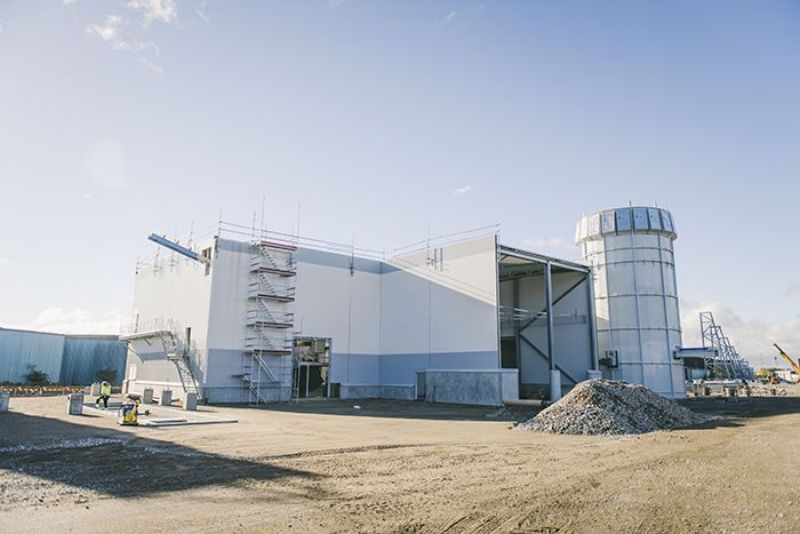
The cat litter factory in Kazakhstan project produces 50,000 tons of cat litter per year. The project covers an area of 2,000 square meters (3 acres) and a total construction area of 2,000 square meters. The main construction area includes 2,000 square meters of factory buildings, 1,000 square meters of raw material and finished product warehouses, and 200 square meters of office areas.
This project will build 2 production lines in two phases. After the project is completed, it will produce 50,000 tons of cat litter per year. The project has a labor quota of 20 people, 300 working days per year, and adopts a two-shift 16-hour work system. The composition of the project is shown in the following table:
| Main engineering | Production workshop 2000 square meters. |
| Storage and transportation engineering | Raw material and finished product warehouse 1000 square meters. |
| Auxiliary engineering | Office area 200 square meters. |
The main raw and auxiliary materials of this cat litter factory in Kazakhstan project are wheat flour, corn flour, tofu residue, etc. The project area has a well-developed transportation network, and raw and auxiliary materials can be purchased locally and in surrounding cities.
The market supply is sufficient to meet the production needs of the project. The consumption of raw and auxiliary materials is shown in the table below.
| No. | Name | Unit | Annual Usage | Storage Method |
| 1 | Wheat middlings | t | 10200 | Bagged, 25kg/bag |
| 2 | Corn middlings | t | 7650 | bag, 20kg/bag |
| 3 | Starch | t | 5100 | Bag, 25kg/bag |
| 4 | Bamboo powder | t | 5100 | Bag, 25kg/bag |
| 5 | Tofu residue | t | 20400 | Bag, 25kg/bag |
| 6 | Other auxiliary materials | t | 2550 | Box, 25kg/box |
The main production equipment of the two phases of this cat litter factory in Kazakhstan project is the same, see the table below for details.
| No. | Equipment name | QTY |
| 1 | Crusher | 2 |
| 2 | Feed hopper | 2 |
| 3 | Pulse dust collector | 2 |
| 4 | 1# Bucket elevator | 2 |
| 5 | Pneumatic tee | 2 |
| 6 | Mixer | 4 |
| 7 | 2# Bucket Elevator | 2 |
| 8 | Permanent Magnetic Cylinder | 2 |
| 9 | Pelletizing Bin | 2 |
| 10 | Controller | 2 |
| 11 | Cat Litter Pelletizing Machine | 2 |
| 12 | Scraper Conveyor | 8 |
| 13 | Air lock | 4 |
| 14 | Flap cooler | 4 |
| 15 | Fan | 4 |
| 16 | Cyclone dust collector | 6 |
| 17 | Air lock | 4 |
| 18 | Drying box | 2 |
| 19 | Flat rotary screen | 4 |
| 20 | Pulse dust collector | 16 |
| 21 | Power distribution cabinet | 2 |
| 22 | Packaging machine | 3 |
| 23 | Air compressor | 2 |
The water used in the cat litter factory in Kazakhstan project is provided by the local water supply system, and the water quality and quantity can meet the needs of the project. The project needs water in the production process, and the water consumption is 1.5m3/d, which is all used in the product, and no production wastewater is generated; no greening water is used.
The project has a labor quota of 20, and the living water consumption is calculated as 40L/person·d, and the water consumption is 0.8m3/d. Therefore, the fresh water consumption of the project is 2.3m3/d.
The electricity used in this project is provided by the local power supply system, and the voltage and power can meet the needs of the project.
The heat used for production in this cat litter factory project is provided by an electric heating furnace, and air conditioning is used for office and living heat in winter. No boiler is installed.
In this cat litter factory in Kazakhstan project, how to process tofu cat litter? According to the customer's raw materials and needs, RICHI engineers designed the cat litter processing process for the customer as follows:
Here is a project report for a large 16-17t/h cat litter factory we have done in Russia. In order to meet market demand, the client invested 650,000 USD to build a new tofu cat litter pellet plant with an annual output of 80,000 tons, using soybean fiber, corn flour, walnut wood, and water as raw materials, through ingredients, mixing, granulating, and drying, screening, packaging and other processes. After the cat litter factory completion, it will produce 40,000 tons of tofu cat litter and 40,000 tons of plant cat litter.
(By bidding, RICHI undertakes the construction of the cat litter pellet production line project with an annual output of 40,000 tons, plant cat litter production line provided by a other cat litter making machine manufacturer. )
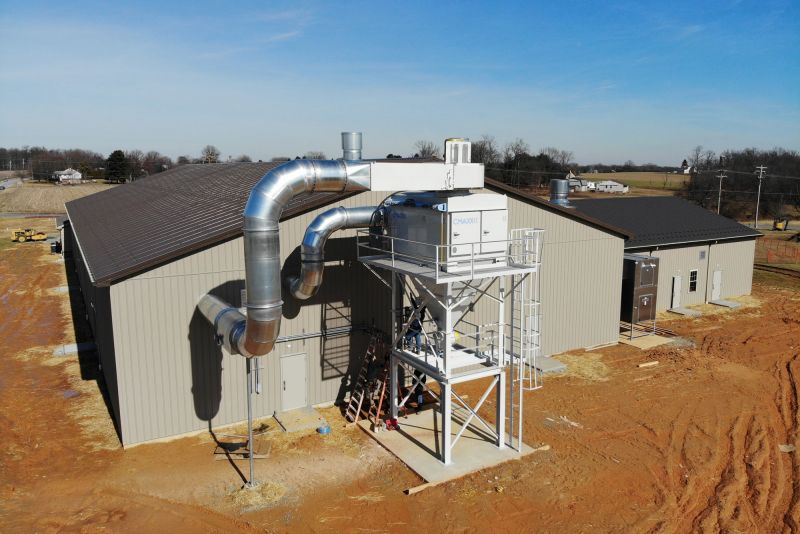
| Items | Engineering composition | Cat Litter Factory Construction Content |
| Structural work |
1# production workshop |
It has 3 floors and covers an area of 3876m². Set up 1 cat litter production line, install elevators, mixers, cat litter pellet machines and other cat litter machines. The warehouse in the northeast corner of the workshop is mainly used to store raw materials and finished products, and the office area (3rd floor) is set on the west side of the workshop |
| # 2 production workshop |
It has 3 floors and covers an area of 3876m². Set up 1 cat litter production line, install elevators, mixers, cat litter making machine and other equipment, and set up an office area (3rd floor) on the west side of the workshop. | |
| # 3 production workshop |
3 floors, covering an area of 6450m². Set up 2 cat litter pellet production lines, install elevators, mixers, cat litter pellet machine and other cat litter manufacturing machine. | |
| Auxiliary engineering |
switch room | 15 m², equipped with 400kVA transformer |
| extinguiser pool | 1500m³, located in the underground of the west side of 1# production workshop | |
| guard room | There are two 1-story buildings, each with a construction area of 20m². | |
| Public works |
water supply | The water for the project is provided by the park's water supply pipe network, and the annual fresh water consumption is 420m³/a. |
| powered by |
The power supply pipe network of the project power park is provided. A 400kVA transformer is installed in the plant area and the annual power consumption is 8 million kW·h. | |
| Heating | The heat source of the pelletizing process and drying process of the project is provided by outsourcing steam; the office area is heated by air conditioning in winter. | |
| Environmental Engineering |
Exhaust |
1# production workshop feed waste gas is collected by the gas hood and sent to the bag filter for treatment, the drying waste gas is collected under negative pressure to the bag filter for treatment, and 2 waste gas is discharged through a 15m high exhaust pipe (P1) |
| 2# production workshop feed waste gas is collected by the gas hood and sent to the bag filter for treatment, the drying waste gas is collected under negative pressure to the bag filter for treatment, and 2 waste gas is discharged through a 15m high exhaust gas cylinder (P2) | ||
| Workshop # 3 each production line by feeding the exhaust gas to the collection hood collecting bag dust collector, and drying the exhaust gas collected in the baghouse vacuum process, two exhaust gas lines 4 via a femoral 15m high exhaust tube ( P3) | ||
| Waste water |
The large scale cat litter factory project wastewater is mainly steam condensate and domestic sewage. Part of the steam condensate is reused in the batching process, and the remaining part is returned to the original heating company for reuse. The domestic sewage plant is splashed with dust to suppress dust. The tofu cat litter manufacturing plant is equipped with anti-seepage dry toilets and cleaned regularly , Used as agricultural fertilizer. | |
| noise | Use low-noise auto cat litter machine, basic vibration reduction, plant sound insulation, fan silencers and other measures. | |
| Solid waste |
Unqualified products: After centralized collection, they are returned to production. | |
| Dust removal ash: After centralized collection, it is reused for production. | ||
| Domestic garbage: After centralized collection, it will be handed over to the local sanitation department for unified disposal. |
| No. | name | Dosage | unit | Remarks | |
|---|---|---|---|---|---|
| 1 |
Tofu cat litter | Soybean fiber |
17000 |
t/a |
100kg / bags, coarse particles with beany gas, temporarily stored in the warehouse |
| 2 |
Walnut |
13000 |
t/a |
100kg/bag, foam wood chips, temporarily stored in the warehouse |
|
| 3 | corn flour | 10000 | t/a | Bagged, temporarily stored in the warehouse | |
| 4 | water | 2000 | m3 / a | Reuse steam condensate | |
| 5 | Electricity | 400 | Million kW · h / a | Provided by the local power supply network | |
| No. | Name of cat litter manufacturing machine | Specification | Unit | Quantity |
| 1 | Hoist | - | station | 16 |
| 2 | Cat litter mixer | - | station | 4 |
| 3 | cat litter pellet making machine | - | station | 8 |
| 4 | Bucket elevator | 4m | station | 8 |
| 5 | Drying warehouse | - | station | 4 |
| 6 | Vibrating screen | 50kw | station | 4 |
| 7 | Finished silo | - | station | 20 |
| 8 | Cat litter bagging machine | - | station | 4 |
| total | 68 | |||
The 16-17tph Russia automatic tofu cat litter pellet production line project uses soybean fiber, walnut wood, corn flour, water, etc. as the main raw materials to produce cat litter through batching, mixing, granulating, drying, screening, and packaging. After the whole cat litter manufacturing palnt project is completed, it will produce 40,000 tons of tofu cat litter and 40,000 tons of plant cat litter.
The production process of tofu cat litter is the same as that of plant cat litter, only the ratio of raw materials is different. This cat litter factory project has a total of 4 kitty litter pellet production lines with the same production process and capacity.
Let’s Build Your Cat Litter Business Together
Choosing RICHI Machinery means gaining a partner who understands the details behind cat litter processing—and who’s committed to helping your business grow from startup to success.
Contact us today for a free consultation, quotation, or 3D layout plan customized to your market.
Having the right mix of reliable, high-quality pellet machine and pelletizing systems and expert support is essential to your success. Watch how our end-to-end feed pellet plant solutions have helped our customers optimize their performance.
Our customized and future-proofed turnkey pellet plant solutions is designed with you at the core. From vision to reality and beyond, our team stays connected with yours. Giving you peace-of-mind with an expert at your side.
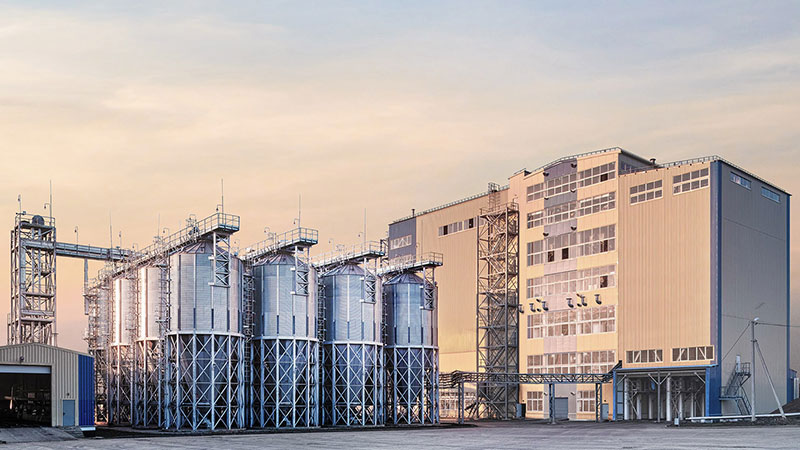
At RICHI, we go beyond project completion. With RICHI Servicee, we’re your dedicated partners in success. Count on us for expert guidance, minimal downtime, and optimized productivity. Choose RICHI for unmatched service and support.
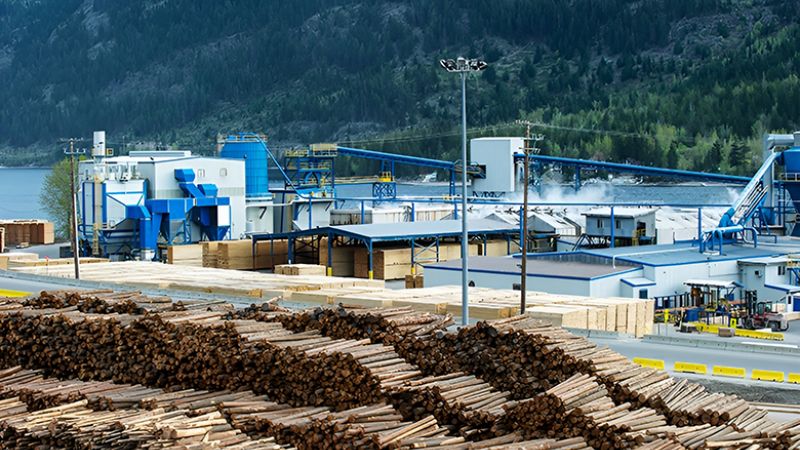


Meet global product demands and quality standards with industry-leading pellet plant design, engineering, equipment, and construction services for pellet processors.

Your Partner Beyond Project Completion
2000+ cases
RICHI is the leading designer, manufacturer and builder of pellet plants in the world, completing over 2000 projects in 140 countries across 6 continents.
Read More
Increase plant productivity, profitability, and safety by integrating high quality equipment into your pellet production line. Over the years, RICHI has become China's top pellet equipment manufacturer. At the same time, RICHI has established valuable partnerships with the world's leading component and raw material manufacturers to bring you the best there is in technology, automation, and efficiency in pelleting plant machinery.

For nearly 30 years, RICHI has been providing best-in-class pellet plant equipment and services to clients across a variety of industries, sizes, and needs. We pride ourselves on the knowledge and skill that each team member possesses – from our technical sales team to our process design engineers. You can count on RICHI Machinery to take your operation to the next level of innovation, quality, and success.
Need help with your pellet manufacturing plant project? Contact us today.
ANIMAL FEED
BIOMASS
WOOD
ORGANIC FERTILIZER
AQUA FEED
CAT LITTER
MUNICIPAL WASTE RECYCLING
SPECIAL PELLET PRODUCTION
RICHI Machinery continues to deliver world class pellet mill equipment, pellet plant engineering and project solutions that add value to our customers in the animal feed, wood waste, agriculture waste, organic fertilizer, cat litter and special pellet products industries. Throughout the years, we RICHI Machinery have built strong brand, becoming industry-leading pellet machine manufacturer. We value integrity, promise quality, and prioritize your success.
Learn MoreWith our expert team, we precisely implement your process engineering requirements in pellet mill and pelletizing plant systems. No matter which industry you’re in – we understand your needs and deliver solutions that meet the highest standards.
At RICHI, quality comes first. Our pellet making machine and related pellet line equipment undergo rigorous quality controls to ensure they meet the highest standards. Rely on products that are durable, safe, and efficient.
With decades of experience in pellet machine and pellet production line production, we have earned a reputation as a trusted partner in various industries. Our expertise allows us to cover a wide range of applications.
Not only do we offer premium pelleting equipment, but we are also experts at designing, building, installing, and maintaining facilities from the ground up. Our expertise is within pellt plant process design, discovering the most efficient, productive, and profitable way to handle your materials in an end-to-end cycle.
○ RICHI MACHINERY
Keeping in touch with us is an effective way to solve all your problems. If you have any needs or questions, please leave your contact information, then RICHI technical consultants will send design, quotation, videos to your mailbox. You can also contact us directly via WhatsApp: +86 13838389622
Copyright©2015-2026 by HENAN RICHI MACHINERY CO., LTD. All rights reserved.