

This is where you find all our press releases and news articles.
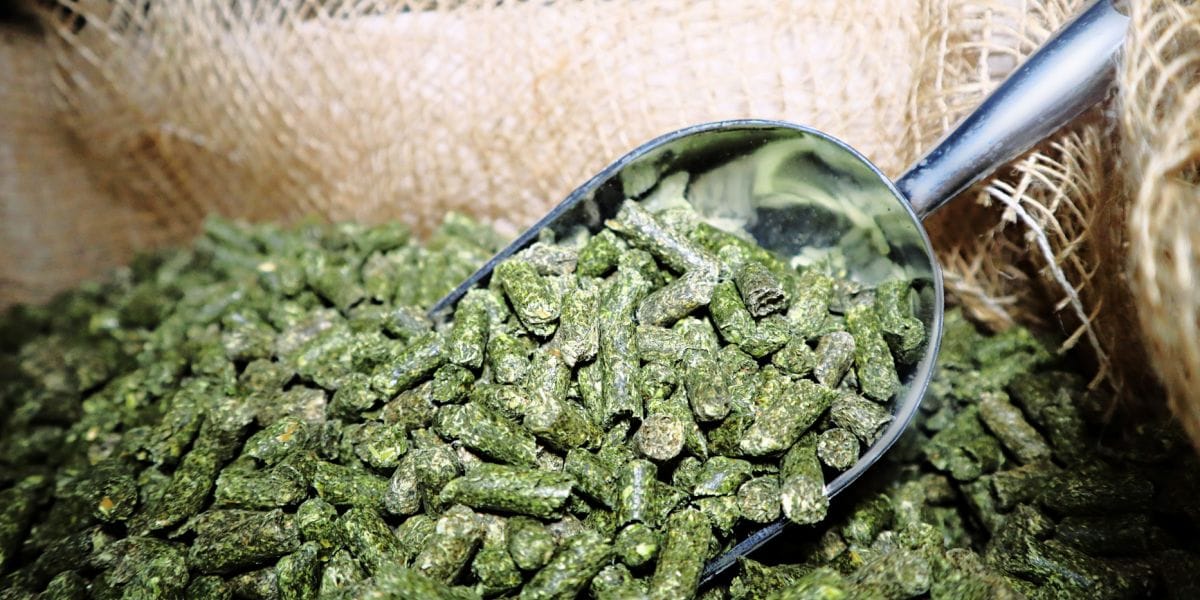
If you want to understand how to make alfalfa pellets on a commercial scale, start with understanding the material—not simply choosing an alfalfa pellet machine.
The alfalfa arriving at a factory may be freshly harvested, partially dried, loose, chopped, ground into meal, or compressed into large round or square bales. Some producers make pellets with a very high percentage of alfalfa or other forage, while feed manufacturers may combine alfalfa with grass, corn, wheat, bran, meals, minerals, premix and other feed ingredients.
These differences determine whether the plant needs bale breaking, coarse crushing, drying, fine grinding, batching, mixing and dosing before pelletizing.
RICHI designs alfalfa pellet production systems for growers, hay processors, forage suppliers, livestock farms, feed mills, agricultural cooperatives and investors. The objective is not to fit every customer into a standard line, but to determine how the material you already have can be converted into the pellet product you want to sell or use.
A commercial alfalfa pellet making process, also referred to as the alfalfa pellet production process, typically follows:
Raw Material Receiving → Bale Breaking/Cutting When Required → Drying When Required → Grinding → Batching & Mixing When Required → Conditioning → Pelletizing → Cooling → Screening → Packaging
Not every alfalfa pellet plant needs every stage.
Fresh or high-moisture forage may require cutting and substantial drying. Dry bales need to be opened and reduced in size before fine grinding. Prepared alfalfa meal can bypass much of the front-end processing. If alfalfa is only one ingredient in an animal feed formula, grain crushing, ingredient dosing and mixing may also become part of the system.
This is why the correct question is not simply “How do I pellet alfalfa?” or “how to pellet alfalfa?” but:
“How should I process the alfalfa and other materials I actually have?”
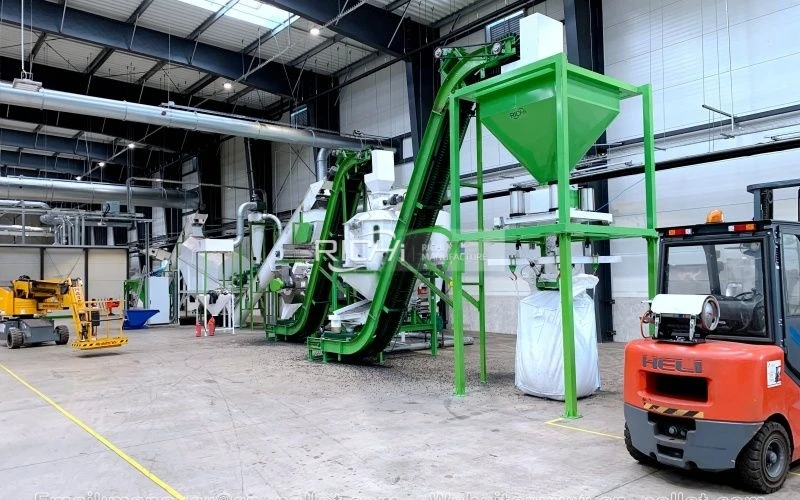
We encounter very different starting conditions when discussing alfalfa and forage pellet projects with customers.
Some customers grow their own alfalfa. Others purchase hay from surrounding farms. Some operate hay-baling businesses and receive large quantities of round or square bales. Feed mills may already receive ground alfalfa meal and only need to incorporate it into existing formulas.
Before designing the line, we normally establish six conditions.
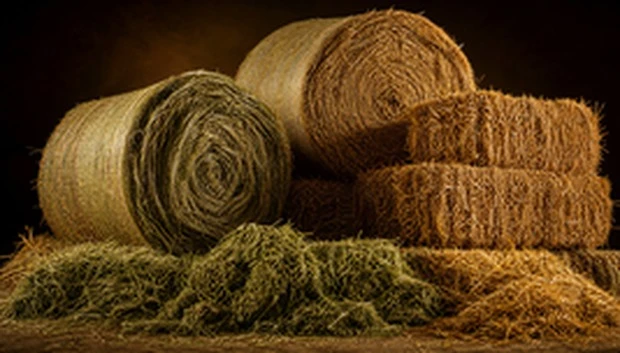
Your material may arrive as:
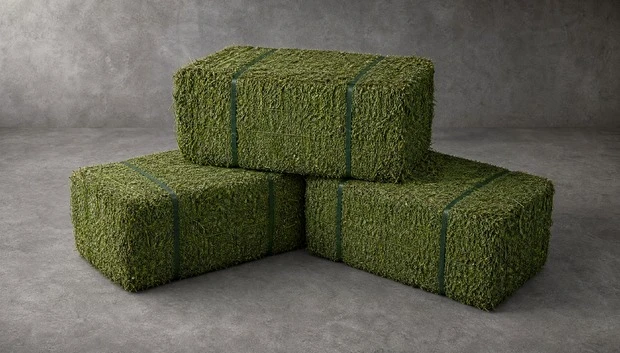
fresh alfalfa, wilted forage, loose dry hay, long grass, chopped forage, round bales, square/rectangular bales, alfalfa meal, powder, or a combination of several materials.
A 500 kg compressed bale and free-flowing alfalfa meal obviously cannot use the same receiving and feeding arrangement.
For bale projects, bale size, density, tying material, handling method and hourly consumption also affect bale-breaking and feeding equipment selection.
Moisture determines whether drying becomes a major part of the project.
As a preliminary project-screening reference, properly dried forage at approximately 20% moisture or below may not require a complete dedicated drying section, depending on its actual condition and formula.
Fresh forage above approximately 25% moisture normally requires moisture reduction before stable commercial pelletizing.
Materials between these conditions need to be evaluated individually rather than automatically classified as “dryer required” or “no dryer required.”
There is no standard alfalfa percentage.
Forage can account for a relatively small part of a compound feed formula or approach 100% in a high-alfalfa pellet.
This also helps explain why one pellet machine can have a wide capacity range. In general, increasing the percentage of fibrous forage tends to reduce achievable throughput, while formulas with a lower forage percentage and more readily pelletized feed ingredients can achieve higher output.
Alfalfa may be combined with other grasses, hay, suitable straw, corn, wheat, barley, bran, soybean meal, agricultural feed by-products, minerals, premix and other feed ingredients.
Each addition can change the process.
Grain may need separate crushing. Long fibrous material may need its own size reduction. Multi-ingredient formulas require batching and mixing, while low-inclusion ingredients may require accurate dosing.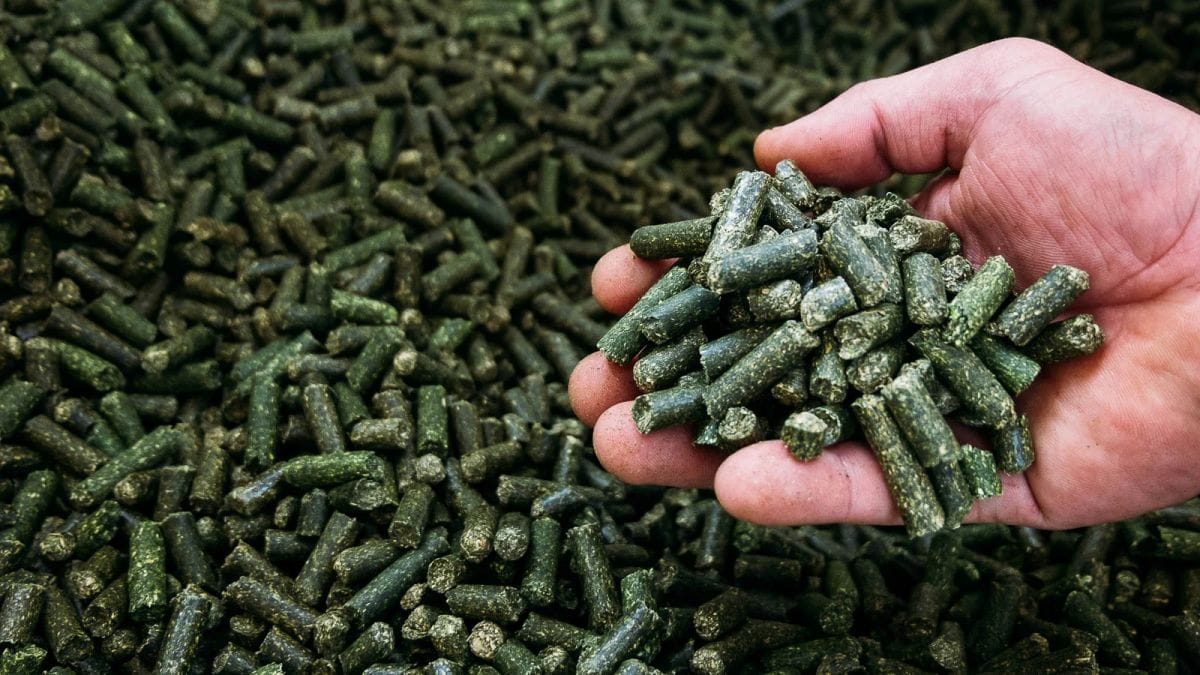
Capacity should be determined from reliable raw material availability, working hours, seasonal supply, finished-product demand and formula—not simply from the largest pellet machine within the budget.
The broad CZLH capacity ranges shown later on this page are based on approximately 6 mm pellets. Actual output depends on the material and formula.
A new project does not always mean a new complete plant.
Customers may already have dryers, hammer mills, mixers, grain crushers, silos, conveyors, dust collectors or packaging equipment.
When technically suitable, these machines can be evaluated and incorporated into the new system so that investment is focused on the sections actually missing.
This is one of the most common questions we receive because drying can substantially change plant investment, energy consumption and factory layout.
For a customer processing freshly harvested green alfalfa, removing water can become one of the largest operations in the entire plant.
A hay processor starting with properly dried bales faces a very different situation. Instead of installing a large fresh-forage drying section, more attention may be required for bale breaking, controlled feeding and grinding.
Prepared alfalfa meal can simplify the front end even further.
The drying decision should therefore be based on measured incoming moisture and required downstream condition, not simply whether the material is called alfalfa or hay.
Physical form matters as much as the name of the material.
Round bales may require mechanical bale breaking and a feeding arrangement capable of continuously handling bulky material.
Large square or rectangular bales can have different dimensions and densities and should be matched to the bale-breaking and feeding system.
Loose hay eliminates the bale-opening stage but still requires controlled feeding and appropriate size reduction.
Chopped forage may already have undergone coarse size reduction, but its actual particle length still needs to be checked.
Alfalfa meal or powder can eliminate several upstream operations if moisture and particle size already meet the requirements of the subsequent process.
This is one reason RICHI asks customers to send raw-material photos or videos in addition to simply giving us the material name.
The following five systems show how an alfalfa pellet production line design or alfalfa pelletizing system changes when an alfalfa pellet line is engineered around an individual customer's material and production objective.
They are not five standard packages. They are examples of how material form, moisture, formula, capacity and product requirements change the alfalfa pellet processing route and equipment configuration.
This project represents a feed producer working with a high-forage formula rather than pure alfalfa pellets. The customer receives loose, already separated alfalfa/forage material and combines it with other feed ingredients to produce pellets for cattle feeding.
The formula contains approximately 50–80% forage depending on the product being produced. The remaining portion can include locally sourced grain and other feed ingredients.
The United States is a logical setting for this type of project because alfalfa has a major role in dairy feeding, while commercial farms and feed producers commonly work with both forage and concentrate ingredients. The U.S. is also a major producer and exporter of alfalfa and hay.
The customer's incoming forage still contains more moisture than desired for the downstream process, so drying is retained. At the same time, the customer does not want to dry every ingredient together.
After drying, the alfalfa is transferred and temporarily stored on the plant floor. It is then metered back into the production system together with the other formula ingredients.
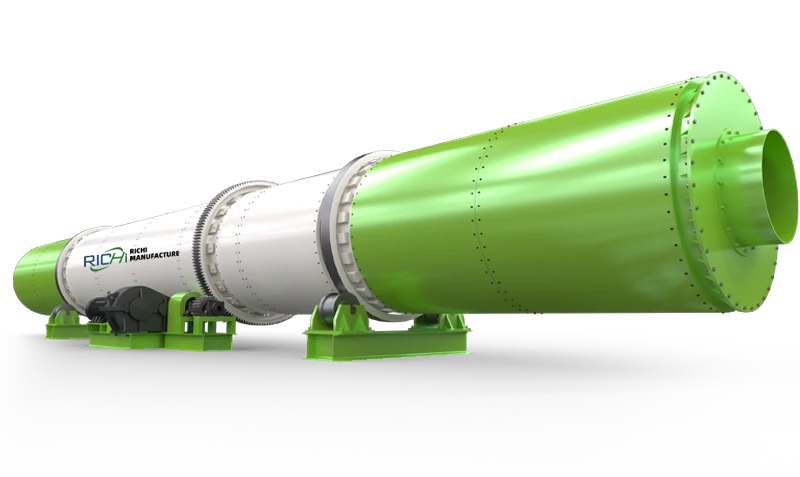
Loose Alfalfa → Alfalfa Crusher → Conveying → Alfalfa Dryer → Conveying → Temporary Ground Storage → Feeding & Conveying + Other Ingredient Addition → Mixer → Conveying → CZLH Alfalfa Feed Pellet Machine → Conveying → Cooler → Vibrating Screen → Conveying → Packaging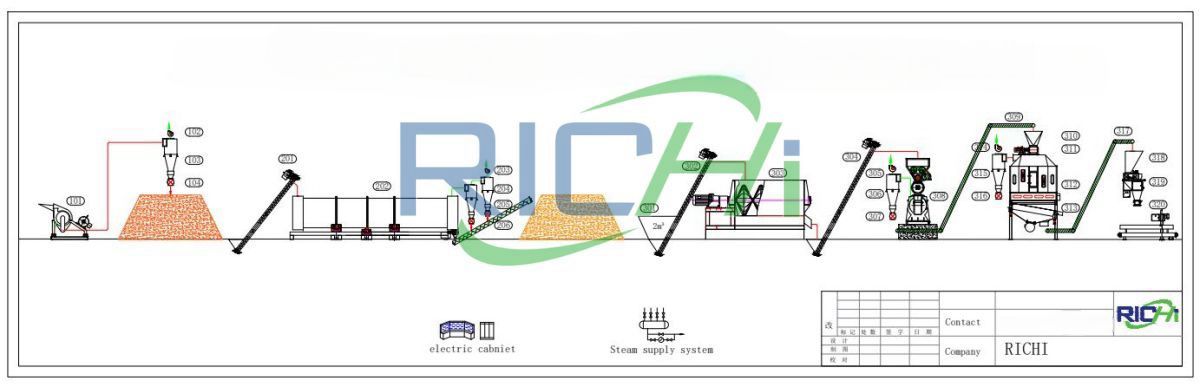
The important feature of this design is the separation between forage moisture preparation and final formula preparation.
The alfalfa is dried first. Other ingredients are introduced later at the feeding/conveying section before mixing, which avoids unnecessarily sending already suitable dry feed ingredients through the forage dryer.
Temporary ground storage also gives the customer a buffer between drying and feed production rather than forcing every section to operate at exactly the same instantaneous rate.
Because the forage content can vary from approximately 50% to 80%, pelletizer capacity must be evaluated against the actual recipe. The same machine will generally produce less per hour on the higher-fiber formulation than on the lower-forage formulation.
Alfalfa crusher, conveyors, alfalfa dryer, feeding system, mixer, CZLH alfalfa feed pellet mill, cooler, vibrating screener and packing machine.
This customer starts with dried baled alfalfa/lucerne, rather than fresh-cut forage.
Australia is particularly suitable for this scenario because lucerne is widely used in grazing and conserved fodder systems, and commercial hay production is an established part of the country's forage sector. Hay is also a major form of conserved fodder.
The customer purchases and processes dry bales and wants to convert part of the hay into a denser commercial pellet product.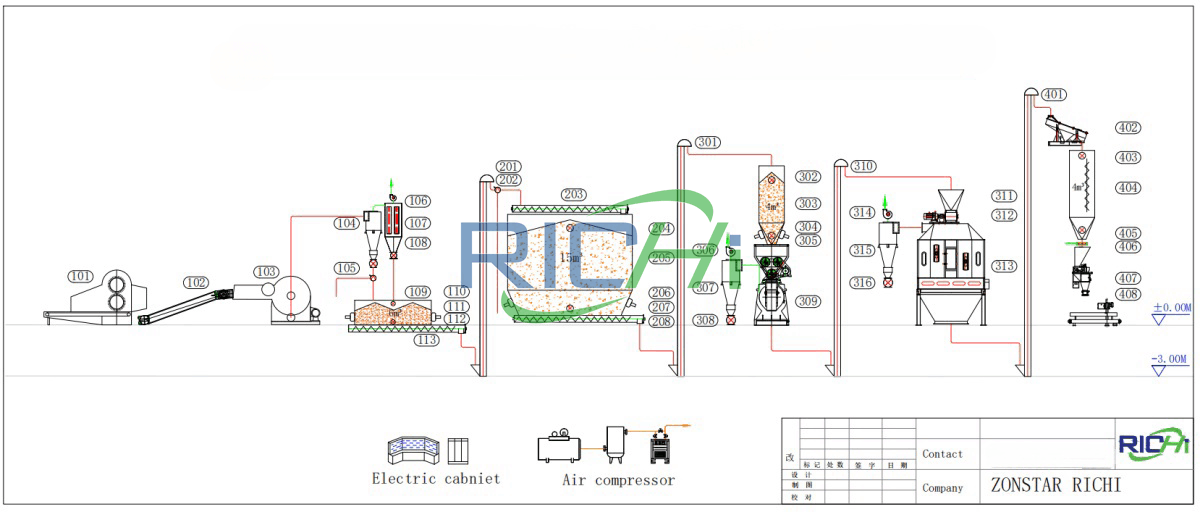
Because the incoming material has already been dried to a suitable storage condition, the customer does not want to invest in another complete drying system unless actual moisture measurements show it is necessary.
The bigger challenge is converting bulky compressed hay into a stable continuous material flow for a 2–3 T/H pellet plant.
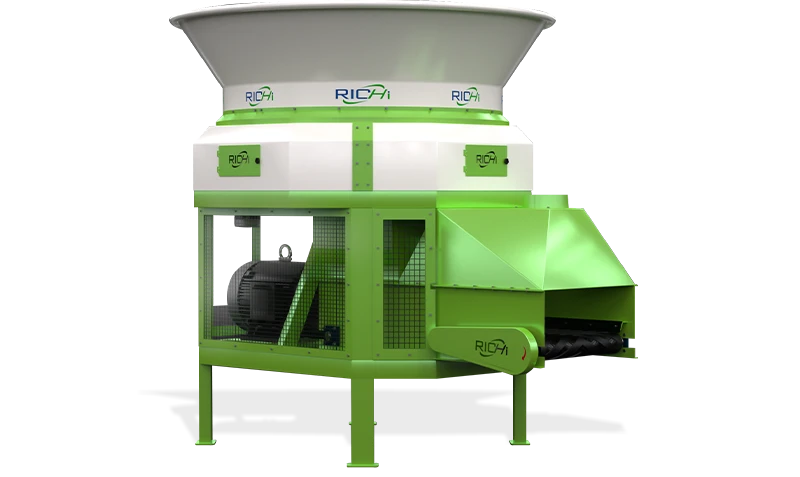
Dry Alfalfa Bales → Bale Breaker → Forage Hammer Mill → Cyclone/Pneumatic Conveying → Two Buffer Bins → Conveying → 15 m³ Storage Silo → Conveying → CZLH Alfalfa Pellet Machine → Conveying → Cooler → Conveying → Vibrating Screen → Packing Scale
The bale breaker is essential because complete compressed bales cannot be continuously fed into the grinding and pelletizing system.
After grinding, pneumatic conveying and two buffer bins help stabilize material flow. The additional 15 m³ silo provides a larger intermediate buffer before pelletizing.
This matters in bale processing because bale opening and grinding do not always deliver material at exactly the same instantaneous rate as the pellet mill consumes it.
The design therefore prioritizes continuous feeding and buffer capacity rather than unnecessary drying.
Bale breaker, forage hammer mill, cyclone pneumatic conveying system, two buffer bins, 15 m³ silo, conveyors, CZLH pellet machine, cooler, vibrating screen and packing scale.
This customer processes prepared alfalfa/forage as the main fibrous ingredient but does not manufacture a single-ingredient pellet.
The factory needs to add premix and other small-dose feed ingredients before pelletizing.
Kazakhstan is a relevant setting for this type of plant because cattle, sheep, goats and horses remain important parts of its livestock economy.
The customer wants a relatively straightforward 5–6 T/H line but requires more accurate formulation than a pure forage pellet plant.
Instead of installing an unnecessarily complex large batching system, the design provides a mixing stage with a dedicated small-ingredient addition point.
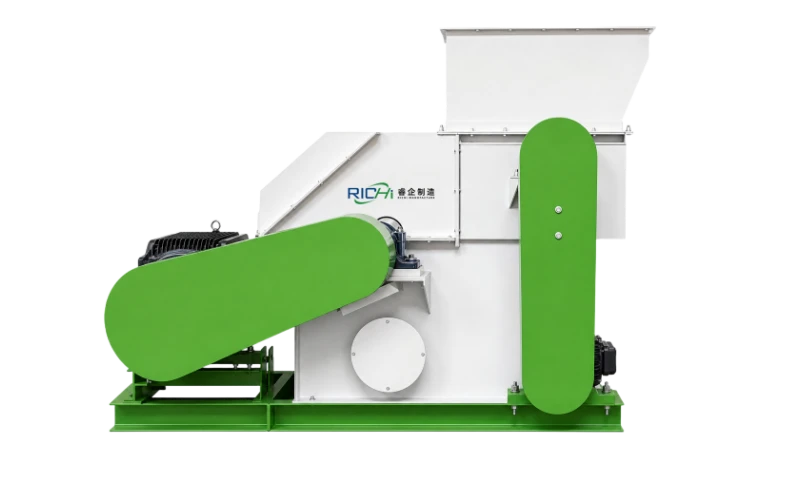
Alfalfa/Forage → Forage Hammer Mill → Pneumatic Conveying → 2.5 m³ Buffer Bin → Mixer + Premix/Small Ingredient Addition → Conveying → CZLH Alfalfa Feed Pellet Machine → Cooler → Conveying → Vibrating Screen → Packing Scale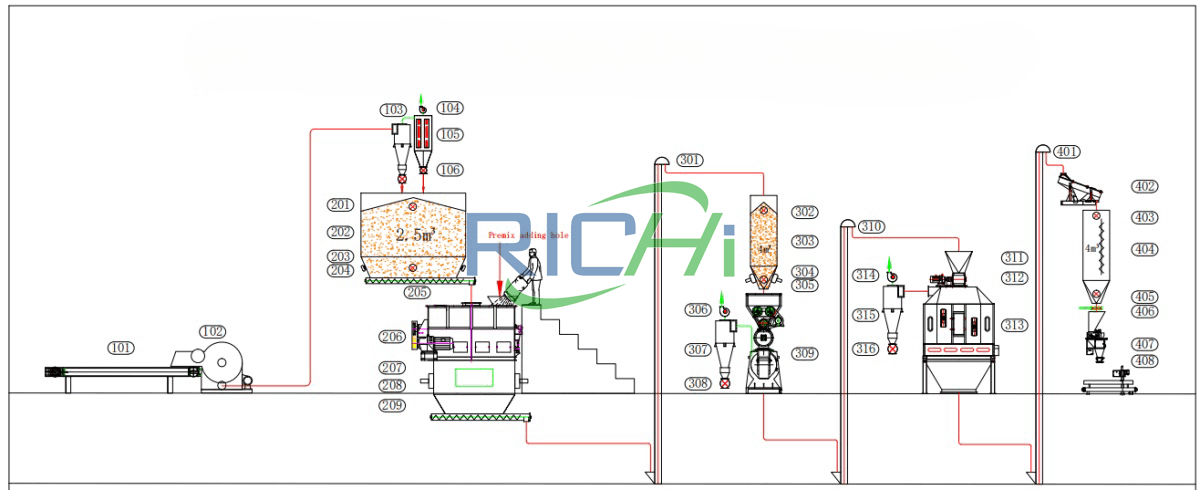
The 2.5 m³ buffer bin separates grinding from mixing and helps provide a steadier material supply.
The mixer is important because the customer adds premix and other ingredients that need to be distributed throughout the forage before pelletizing.
This project therefore sits between a simple pure-alfalfa pellet line and a fully automated compound feed mill.
The customer gets the formulation capability actually required without adding unnecessary processing sections.
Forage grass crusher machine, pneumatic conveying system, 2.5 m³ buffer bin, mixer, small-ingredient dosing/addition system, CZLH pellet machine, cooler, vibrating screen and packing scale.
This project represents a substantially larger operation handling high volumes of forage requiring both moisture reduction and multi-stage size preparation.
Instead of simply installing one oversized processing path, the customer needs parallel front-end systems so that raw material preparation does not become the bottleneck of the 10 T/H pelletizing plant.
The incoming forage requires initial size reduction and drying. After drying and temporary storage, it requires further preparation before entering the pelletizing section.
The customer also needs enough redundancy and processing capacity upstream to continuously support industrial pellet production.
Raw Alfalfa → 2 Forage Crushers → 2 Conveying Lines → 2 Alfalfa Dryers → 2 Conveyors → Temporary Ground Storage → 2 Secondary Forage Grinding Lines → 2 Mixers → Conveying → 3 CZLH Alfalfa Pellet Machines → Conveying → Cooler → Conveying → Vibrating Screen → Packing Scale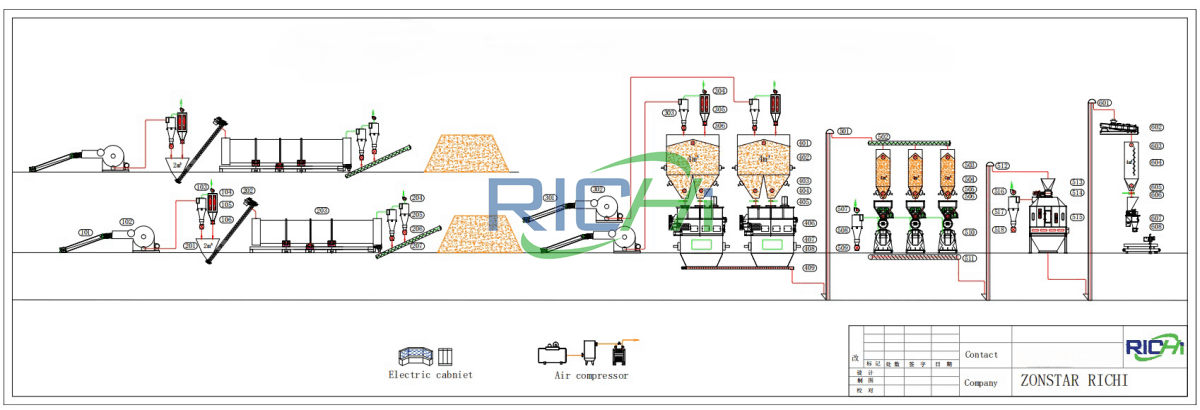
The defining feature is parallel processing.
Two crushing and drying lines increase front-end throughput and allow the drying load to be divided. After drying, temporary storage decouples moisture preparation from subsequent production.
Two secondary grinding/mixing routes then prepare material for three pellet machines.
Using several pelletizers rather than forcing the entire factory through one pellet mill also gives the plant greater operational flexibility. Individual units can be serviced while the rest of the pelletizing section remains available, depending on operating arrangements.
At this scale, the engineering objective is no longer simply selecting a “10 T/H pellet machine.” It is balancing the capacity of every major section.
Two primary forage crushers, two dryers, conveyors, two secondary forage grinding systems, two mixers, three CZLH grass pellet machines, industrial cooler, vibrating screener and packing system.
This customer wants greater product flexibility than a pure alfalfa pellet producer.
Alfalfa/forage is combined with grain and other feed ingredients, and the actual forage percentage can change according to the feed product being manufactured.
The customer needs one production system capable of handling several formulations rather than being locked into a single high-alfalfa recipe.
The material supplied to this particular system has already undergone the necessary upstream preparation, so the line shown here focuses on final forage size reduction, formulation, pelletizing and finished-product handling.
Prepared Alfalfa/Forage → Forage Hammer Mill → Conveying → Mixer + Grain/Other Prepared Ingredients → Conveying → CZLH Feed Pellet Machine → Conveying → Cooler → Vibrating Screen → Conveying → Packaging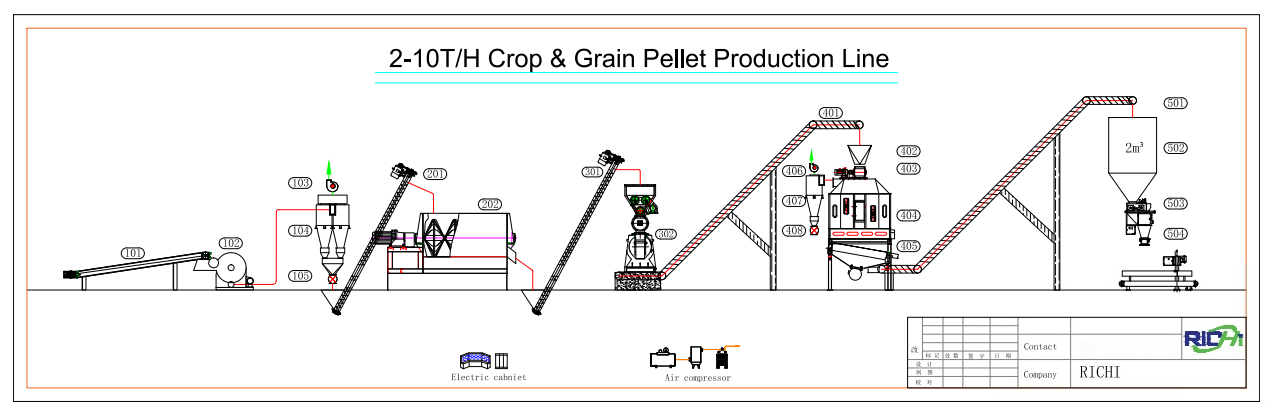
The important point is what the flow diagram does not contain.
There is no dedicated fresh-forage drying system because this customer's material enters this section in a condition suitable for further processing. Grain and other ingredients are also assumed to be prepared before entering the mixer.
That keeps the line compact while still allowing the customer to change formulas.
If another customer starts with whole corn, fresh alfalfa or compressed bales, additional grain crushing, drying or bale-processing sections would need to be added.
Forage hammer mill, conveyors, mixer, ingredient feeding points, CZLH feed pellet machine, cooler, vibrating screen and packaging equipment.
These five systems all process alfalfa or forage, but none is identical.
One requires drying before formula preparation. One starts with dry bales and therefore emphasizes bale breaking and buffering. Another needs premix addition. The 10 T/H plant uses parallel preparation and multiple pelletizers, while the alfalfa-grain system is designed around flexible feed formulation.
That is the real meaning of a customized alfalfa pellet plant and a practical alfalfa pellet manufacturing process.
Raw material form + moisture + forage percentage + other ingredients + capacity + existing equipment + finished product = plant configuration.
A complete plant may include raw material receiving equipment, bale breakers, forage crushers, rotary dryers, hammer mills, pneumatic conveying systems, storage bins, batching systems, mixer machines, small-ingredient dosing systems, conditioners, alfalfa pellet machines, counterflow pellet coolers, screens, conveyors, dust collection and manual/automatic packing machines. Together, these sections form the main alfalfa pelletizing equipment and alfalfa pellet equipment used in a commercial plant.
But a complete equipment catalogue should not be confused with a required equipment list.
For example:
| Starting Condition | Equipment That Becomes Particularly Important |
|---|---|
| Fresh/high-moisture alfalfa | Cutting/crushing + drying |
| Round/square bales | Bale breaker + controlled feeding |
| Long dry forage | Forage size reduction + grinding |
| Prepared alfalfa meal | Front-end equipment can be simplified |
| Alfalfa + grain | Ingredient preparation + mixing |
| Premix-containing feed | Small-ingredient dosing + mixing |
| High-forage formula | Stable feeding + realistic pelletizer sizing |
| Multiple recipes | Batching + mixing + recipe control |
| Large industrial project | Buffer storage + parallel processing + automation |
The correct equipment list therefore comes after the raw material analysis—not before it.
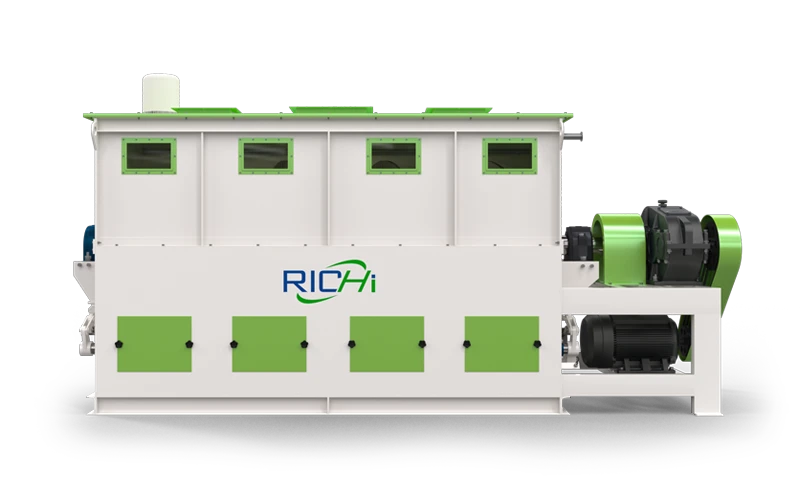
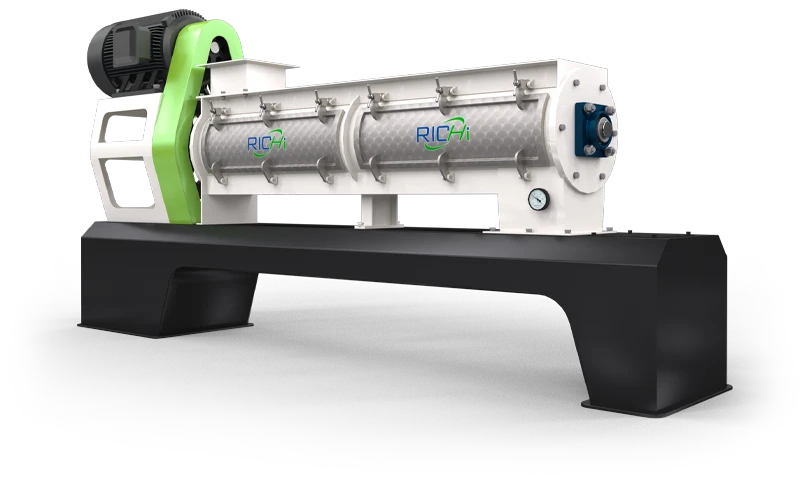
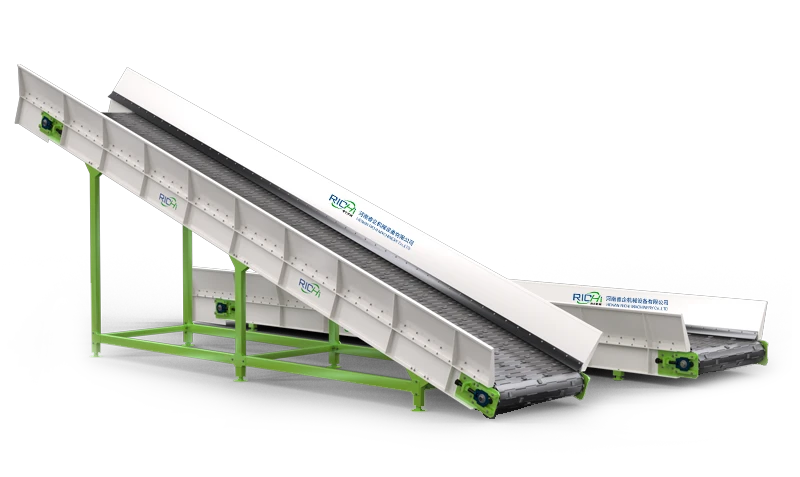
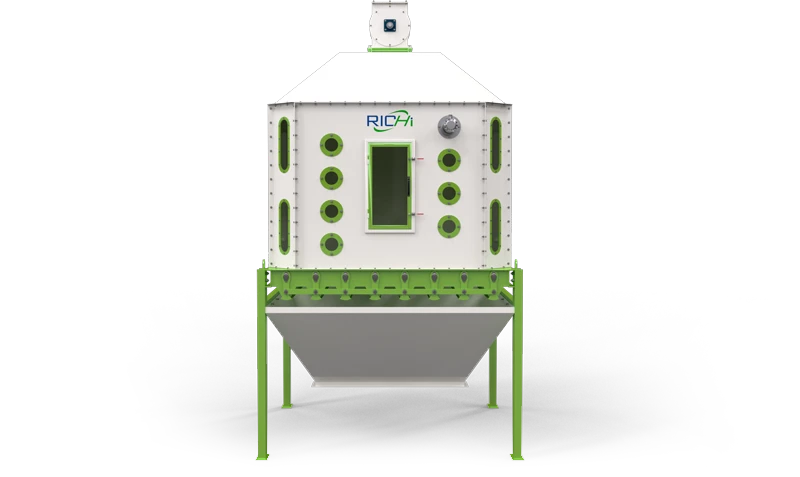
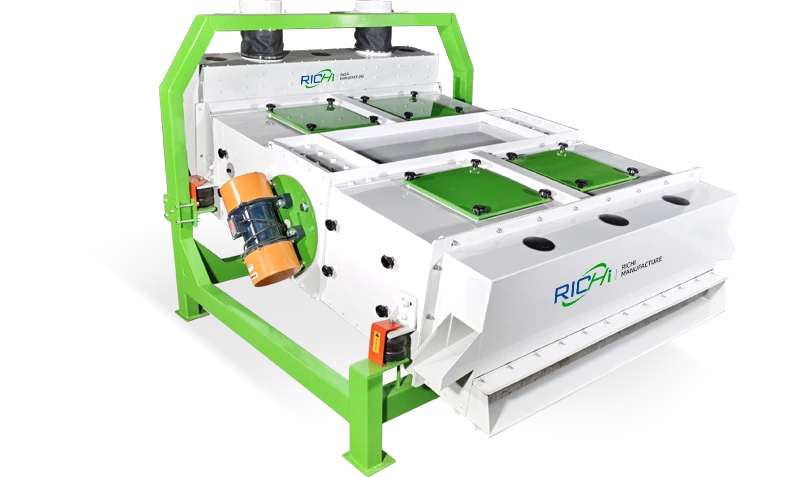
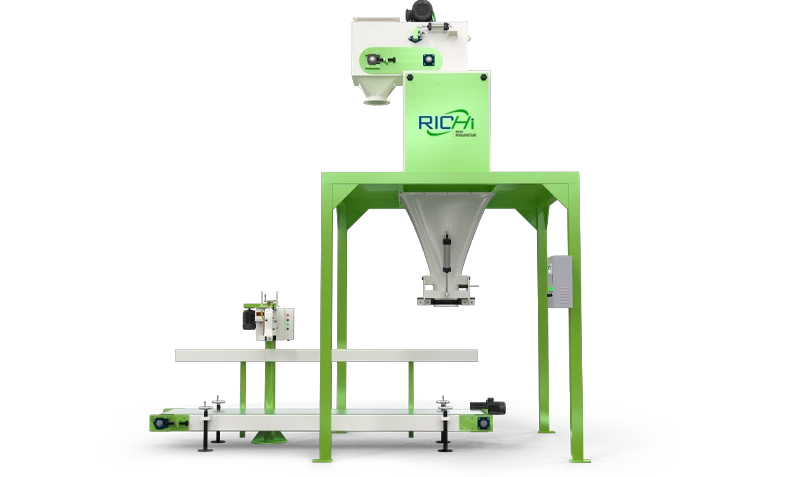
An alfalfa pellet making machine or alfalfa pellet mill must be selected according to the actual forage percentage, material condition and finished pellet requirements.
The alfalfa pellet machine is the core of the production line, but its actual performance depends heavily on what enters it.
RICHI CZLH feed pellet machines are equipped with an anti-arching feeder, conditioner, forced feeding system, pelletizing chamber and electrical control system. For customers producing animal feed, this configuration serves as the core alfalfa feed pellet machine in the production system.
Anti-arching and forced feeding are particularly useful when processing fibrous forage materials because ground alfalfa does not always flow through bins and feeding systems as freely as conventional ground grain.
Ring die selection, compression characteristics, feeding rate and operating parameters should be matched to the formula and pellet specification.
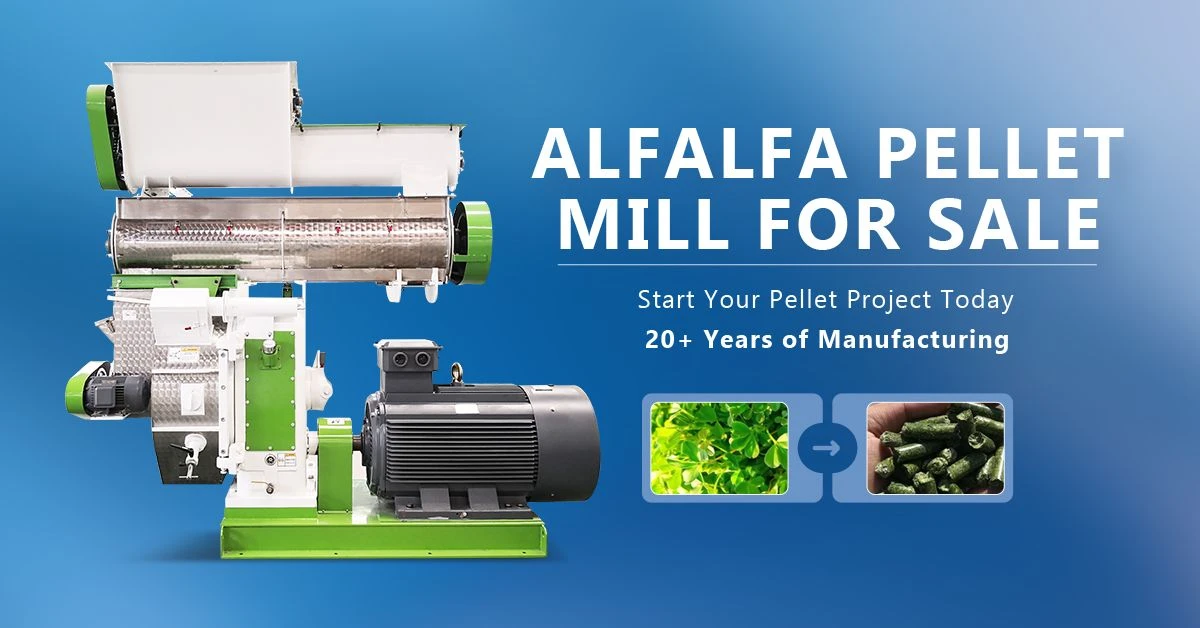
The following broad capacity references are based on approximately 6.0 mm pellets.
| Model | Main Motor | Reference Capacity |
|---|---|---|
| CZLH250 | 22 kW | 0.3–2 T/H |
| CZLH320 | 22 kW | 0.5–4 T/H |
| CZLH350 | 37 kW | 1–6 T/H |
| CZLH420 | 90 kW | 2–10 T/H |
| CZLH520 | 132 kW | 3–12 T/H |
| CZLH678 | 200 kW | 4–20 T/H |
| CZLH768 | 315 kW | 6–30 T/H |
These ranges should not be interpreted as guaranteed output for every formula.
As forage percentage increases, achievable capacity generally decreases. Moisture, fiber structure, particle size, bulk density, other ingredients and pellet diameter also influence throughput.
This explains why RICHI asks for your formula before recommending a model.
Yes. Although alfalfa is the core material discussed on this page, the same feed-production concept can be applied to many suitable forage materials.
Depending on the animal feed formula, customers may process grass hay, mixed pasture forage, suitable straw and other fibrous feed materials together with or instead of alfalfa.
This is especially useful for customers whose forage supply changes by season.
A producer may have abundant alfalfa during one period but use other locally available grasses or forage materials during another. The production line can be designed with this flexibility in mind, provided each intended raw material is suitable for the target animal feed and its processing characteristics are considered.
Different materials still require different operating conditions. Fiber length, moisture, bulk density and grindability can affect feeding, grinding and pelletizing.
Some customers who contact us have grass, straw or other fibrous agricultural materials but have not yet decided whether to produce animal feed or biomass fuel.
The distinction is important.
For animal feed, the core pelletizing section uses a feed-oriented pellet machine such as the CZLH system discussed on this page.
For biomass fuel pellets, RICHI uses a different biomass pellet mill configuration designed for fuel pellet production.
However, parts of the surrounding process can use the same or similar types of equipment depending on the material and project. Crushing, drying, conveying, cooling, screening, dust collection and packaging systems can overlap in function.
Therefore, if you have alfalfa, grass, straw or another fibrous material, tell us the intended final use first. The raw material may be similar, but feed and fuel should not be designed around the same pelletizer.
For customers who already have suitable upstream and downstream equipment, purchasing the pelletizing section alone can be more economical than installing another complete production line.
Current FOB Qingdao reference prices are:
| Model | Reference Capacity | Reference Price |
|---|---|---|
| CZLH250 | 0.3–2 T/H | US$7,000-8,000 |
| CZLH320 | 0.5–4 T/H | US$18,000-20,000 |
| CZLH350 | 1–6 T/H | US$22,000-25,000 |
| CZLH420 | 2–10 T/H | US$28,000-32,000 |
| CZLH520 | 3–12 T/H | US$50,000-54,000 |
| CZLH678 | 4–20 T/H | US$70,000-78,000 |
| CZLH768 | 6–30 T/H | US$80,000-90,000 |
These are reference prices for the main pellet machine configuration rather than complete plant quotations.
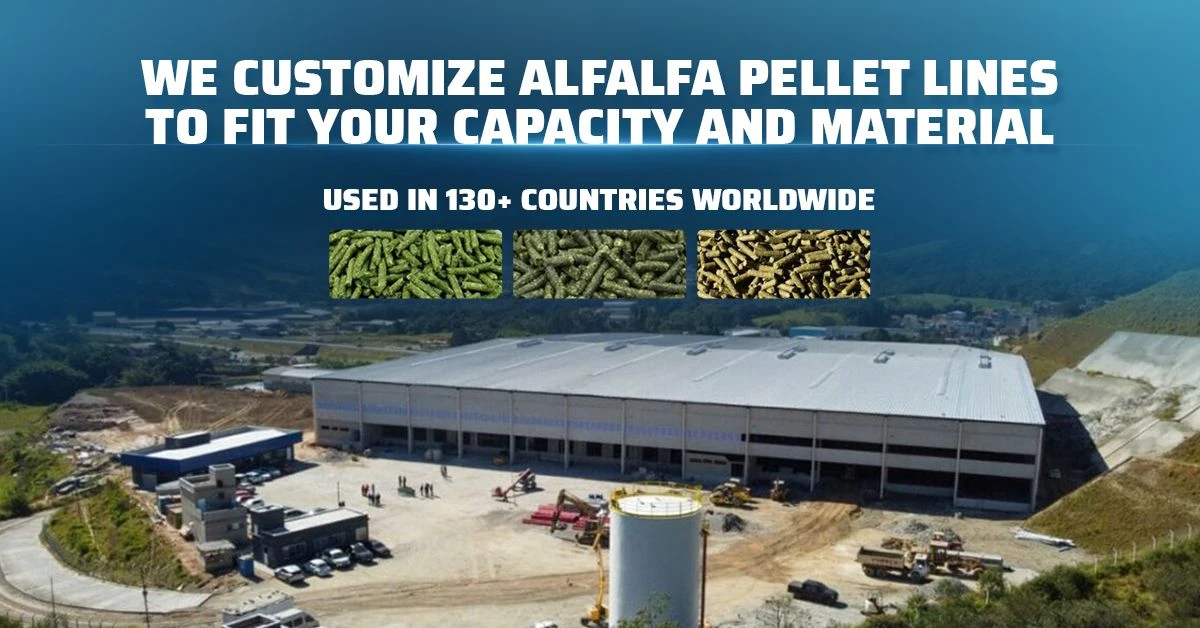
The cost of an alfalfa feed pellet production line depends on how much raw material preparation, formula handling, pelletizing and finished-product processing the project requires.
For initial budget planning:
| Reference Capacity | Complete Line Reference Price |
|---|---|
| 0.3–2 T/H | US$27,000–62,000 |
| 0.5–4 T/H | US$40,000–200,000 |
| 1–6 T/H | US$69,000–220,000 |
| 2–10 T/H | US$90,000–400,000 |
| 3–12 T/H | US$120,000–450,000 |
| 4–20 T/H | US$180,000–620,000 |
The same capacity does not mean the same price.
A 2 T/H plant starting with prepared alfalfa meal can be much simpler than a 2 T/H project receiving fresh green forage.
A dry-bale project may require bale breaking but no large drying system. An alfalfa-grain feed plant can require additional crushing, dosing and mixing. Automation, silos, dust collection, packing, electrical standards and factory conditions also affect investment.
This is why capacity alone is not enough for an accurate quotation.
Plant capacity should be matched to the raw material you can reliably supply.
For example, a nominal 2 T/H finished-pellet plant operating eight production hours targets approximately 16 tons of finished pellets per operating day before utilization and downtime are considered.
But the required quantity of harvested alfalfa depends heavily on moisture and formula.
Fresh alfalfa loses substantial mass when water is removed. A feed containing only part alfalfa obviously consumes less alfalfa per ton of finished pellets than a nearly pure alfalfa product.
For growers and hay processors, we therefore recommend starting capacity calculations from:
available tons/day + seasonal production + incoming moisture + alfalfa percentage + operating hours.
This prevents building a pellet plant larger than the reliable forage supply can support.
Yes, if its capacity and technical condition are suitable.
This is particularly relevant for existing hay processors and feed mills.
A hay processor may already have cutting, drying, bale handling and storage equipment.
An alfalfa meal producer may already have drying and grinding.
A feed mill may already have grain crushing, batching, mixing, silos and packing.
In these situations, RICHI can evaluate the existing machines and design only the missing processing sections.
Send us the model, capacity, photos and available technical information for the equipment you already have. We can then determine what can remain and what needs to be added.
RICHI has supplied alfalfa, hay and forage pellet production equipment to customers in major forage-producing and livestock markets around the world. Our experience ranges from compact 500 kg/h systems for farms and specialized forage businesses to industrial plants reaching 20 T/H.
More importantly, these projects are not repetitions of the same production line at different capacities. We have worked with fresh and dried alfalfa, loose forage, round and square bales, alfalfa meal, mixed grasses, straw, grain and multi-ingredient feed formulas. Some customers start from harvested forage; others already own dryers, hammer mills or feed equipment and only need the missing sections.
The following examples show the range of alfalfa and forage pellet projects we have handled in different markets.
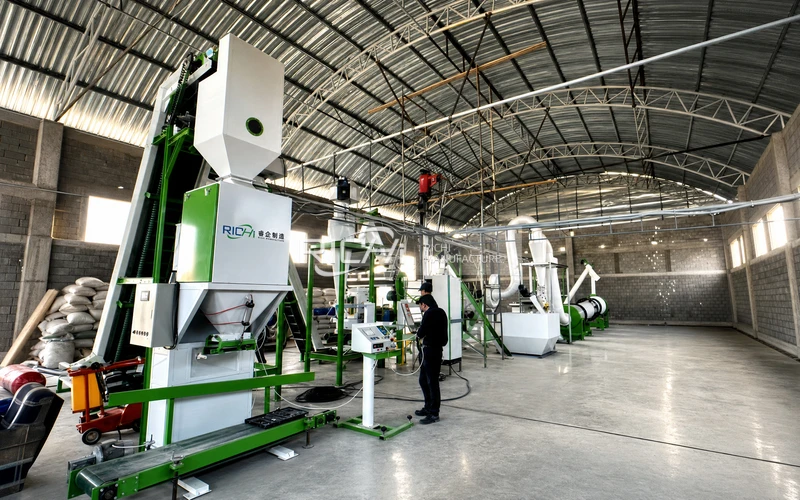
Our U.S. projects cover both forage processing and formulated livestock feed. Customers may start with commercial alfalfa hay or baled forage, while dairy and cattle feed manufacturers often combine alfalfa with grain and other ingredients.
| Project | Customer & Raw Material | Customized Scope |
|---|---|---|
| 1 T/H | Alfalfa grower; dry loose alfalfa and hay | Grinding, pelletizing, cooling and bagging |
| 2–3 T/H | Commercial hay processor; large square alfalfa bales | Bale breaking, grinding, buffer storage and pelletizing |
| 5 T/H | Dairy feed producer; alfalfa + corn + bran + minerals | Separate material preparation, mixing and feed pelletizing |
| 10 T/H | Forage/feed company; alfalfa and mixed hay | Higher-capacity grinding, storage, pelletizing and automated packing |
| 15 T/H | Commercial feed manufacturer; variable high-forage cattle formulas | Multi-bin batching, mixing and multiple pelletizing capacity |
For U.S. projects, existing infrastructure is particularly important. A hay processor may already have bale handling and storage, while an established feed mill may already have grain crushing and batching. We therefore frequently design only the sections that need to be added or expanded.
Our Russian projects include considerably different forage conditions. Some customers process relatively dry stored hay, while others need to handle higher-moisture seasonal forage before pelletizing.
| Project | Customer & Raw Material | Customized Scope |
|---|---|---|
| 1–2 T/H | Livestock farm; dry alfalfa and other hay | Grinding, mixing and pelletizing |
| 3 T/H | Forage processor; baled alfalfa and grass hay | Bale breaking, grinding and buffer feeding |
| 5 T/H | Feed producer; alfalfa + grass + grain | Separate forage preparation and formula mixing |
| 10 T/H | Large agricultural enterprise; higher-moisture alfalfa | Parallel crushing, drying and multiple pelletizing units |
| 20 T/H | Industrial feed/forage processor; several forage and feed ingredients | High-capacity receiving, preparation, drying, batching, pelletizing and packing |
The larger Russian projects require particular attention to seasonal storage, moisture variation and line balance. For high-capacity plants, we may use parallel crushing, drying or pelletizing sections instead of forcing the entire factory through one processing route.
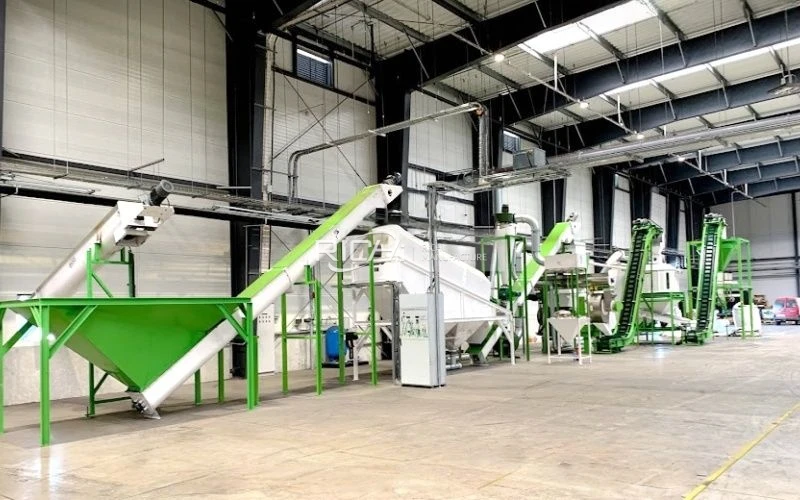
Kazakhstan projects frequently involve livestock producers that have access to both forage and locally available grain ingredients. This creates more formulation diversity than a simple pure-alfalfa pellet plant.
| Project | Customer & Raw Material | Customized Scope |
|---|---|---|
| 0.5 T/H | Livestock operation; dry alfalfa hay | Compact grinding and pelletizing system |
| 1–2 T/H | Sheep/cattle farm; alfalfa + grass hay | Multi-forage grinding and pelletizing |
| 3–4 T/H | Horse and cattle feed producer; alfalfa + other forage + grain | Mixing and flexible formulation |
| 5–6 T/H | Commercial feed producer; alfalfa + grain + premix | 2.5 m³ buffer, mixer, small-ingredient addition and pelletizing |
| 10 T/H | Agricultural enterprise; several forage and concentrate ingredients | Automated batching, mixing and industrial feed pellet production |
For Kazakhstan, we frequently consider not only the alfalfa percentage but also what other forage and grain resources the customer has available throughout the year.
Projects in Uzbekistan range from relatively small livestock-feed systems to commercial forage and compound-feed plants.
| Project | Customer & Raw Material | Customized Scope |
|---|---|---|
| 0.5–1 T/H | Dairy farm; dry alfalfa | Compact grinding, pelletizing and cooling |
| 2 T/H | Cattle farm; alfalfa + corn | Forage preparation, mixing and pelletizing |
| 3 T/H | Agricultural company; chopped alfalfa and other forage | Moisture evaluation, grinding and pelletizing |
| 5 T/H | Feed producer; alfalfa + grain + bran | Batching, mixing and feed pellet production |
| 8 T/H | Commercial livestock-feed plant; multi-ingredient forage formula | Automatic dosing, mixing, pelletizing and packaging |
A major consideration in these projects is whether the customer wants to process only alfalfa or use the equipment throughout the year with several locally available feed materials.
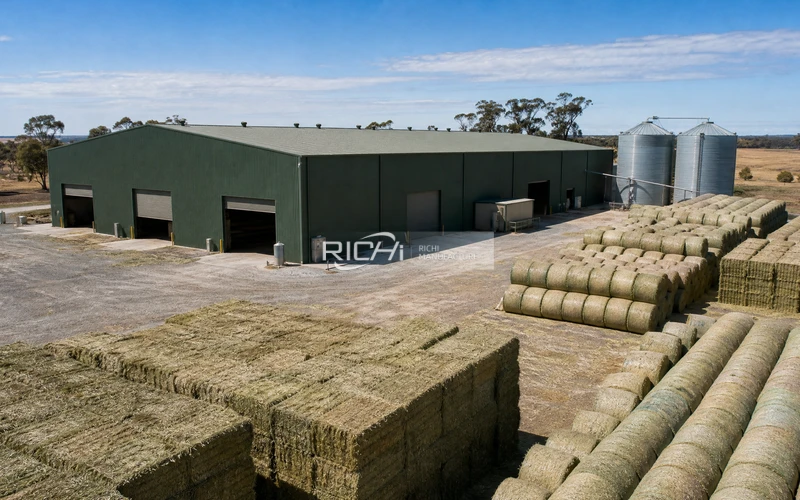
Australian projects often begin from a well-established hay-processing operation rather than fresh green forage.
| Project | Customer & Raw Material | Customized Scope |
|---|---|---|
| 1 T/H | Livestock farm; loose dry lucerne | Grinding and pelletizing |
| 2–3 T/H | Commercial hay processor; dried lucerne bales | Bale breaker, pneumatic conveying, buffer bins, 15 m³ silo and pelletizing |
| 4 T/H | Lucerne grower; square bales and loose hay | Flexible bale/loose-material receiving |
| 6 T/H | Forage supplier; lucerne + other dry hay | Multi-material grinding and pellet production |
| 10 T/H | Large hay-processing business; commercial baled lucerne | Industrial bale handling, grinding, storage and pelletizing |
For properly conserved hay, the key engineering question is often how to eliminate unnecessary drying while maintaining stable feeding. Bale dimensions, density and hourly bale consumption therefore become important design data.
Our New Zealand projects tend to emphasize supplementary feed and the ability to process several forage ingredients rather than only producing a single standardized alfalfa pellet.
| Project | Customer & Raw Material | Customized Scope |
|---|---|---|
| 0.5 T/H | Livestock operation; lucerne and dry grass | Compact multi-forage pellet system |
| 1 T/H | Dairy farm; lucerne + supplementary ingredients | Grinding, mixing and pelletizing |
| 2 T/H | Feed business; grass hay + lucerne | Flexible forage preparation |
| 3–4 T/H | Dairy feed producer; forage + grain | Batching, mixing and pelletizing |
| 5 T/H | Commercial feed supplier; multiple forage/feed recipes | Recipe control, mixing and finished feed handling |
For these customers, the ability to change formulas can be more valuable than optimizing the factory for only one raw material.
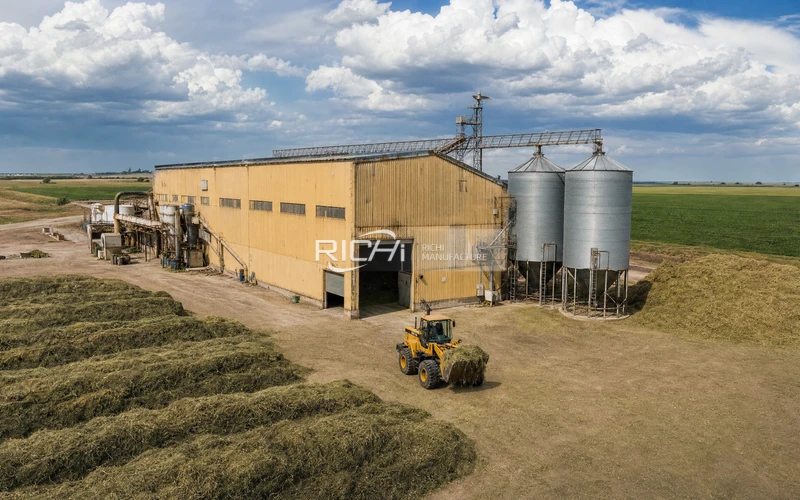
Many of the Mexican projects we encounter are better understood as alfalfa-based feed plants rather than pure alfalfa pellet plants.
| Project | Customer & Raw Material | Customized Scope |
|---|---|---|
| 1 T/H | Dairy farm; alfalfa + corn | Compact grinding and mixing system |
| 2 T/H | Cattle feed producer; prepared alfalfa + grain | Mixer, pelletizer, cooler and packaging |
| 3–5 T/H | Feed manufacturer; alfalfa + corn + bran | Formula preparation and flexible pelletizing |
| 8 T/H | Dairy feed business; several forage/grain recipes | Automatic batching and mixing |
| 10 T/H | Commercial cattle-feed manufacturer; forage + grain + meals + premix | Complete multi-ingredient feed pellet system |
The forage percentage can change substantially between products, so the production line needs enough flexibility to handle both high-forage and more grain-rich formulas.
Brazilian customers may want to process alfalfa, but they may also have access to other grasses, corn and agricultural feed ingredients. Designing exclusively around one material can unnecessarily restrict the plant.
| Project | Customer & Raw Material | Customized Scope |
|---|---|---|
| 0.5–1 T/H | Livestock farm; alfalfa + dry grass | Compact forage pellet system |
| 2 T/H | Cattle operation; forage + corn | Grinding, mixing and pelletizing |
| 4 T/H | Feed producer; alfalfa + grass + grain | Multi-material preparation |
| 6 T/H | Commercial livestock-feed company; forage + grain by-products | Batching, mixing and feed pelletizing |
| 12 T/H | Large feed producer; multiple forage and concentrate ingredients | Automated ingredient handling and industrial pellet production |
For these projects, we normally ask what materials the customer wants to process besides alfalfa, because this can determine whether the investment remains useful throughout the year.
Argentina provides a different type of customer base, including businesses with direct access to commercial alfalfa production.
| Project | Customer & Raw Material | Customized Scope |
|---|---|---|
| 1 T/H | Alfalfa grower; loose dry hay | Grinding and pelletizing |
| 2 T/H | Hay producer; square bales | Bale breaking and forage grinding |
| 5 T/H | Forage processor; high-alfalfa formulation | Commercial pellet production |
| 8 T/H | Hay/feed business; alfalfa + grain | Flexible feed formulation |
| 15 T/H | Large forage processor; baled and loose alfalfa | High-capacity receiving, preparation, pelletizing and bulk/bagged handling |
For growers and hay processors, annual forage availability becomes particularly important. We calculate capacity against the quantity of material that can reliably be supplied rather than simply recommending a larger pellet mill.
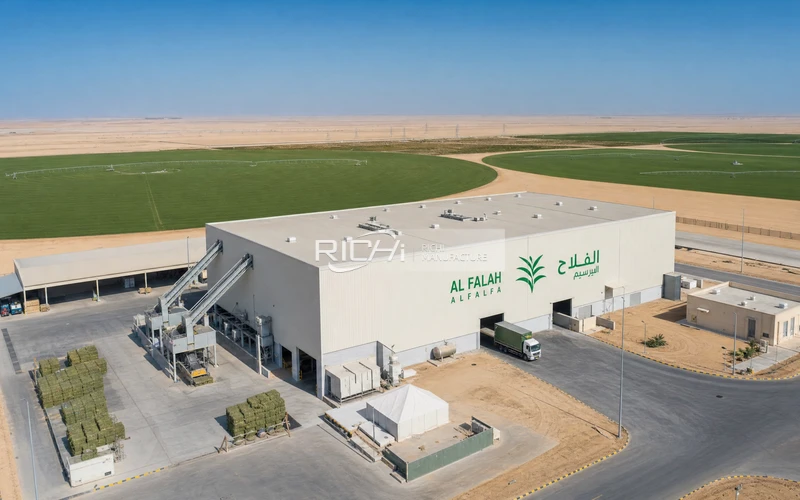
Some Spanish customers already operate upstream forage-processing equipment, which can make their project very different from a greenfield alfalfa plant.
| Project | Customer & Raw Material | Customized Scope |
|---|---|---|
| 1 T/H | Forage business; prepared alfalfa meal | Pelletizing, cooling and packing |
| 2 T/H | Hay processor; dry alfalfa | Grinding and pellet production |
| 4 T/H | Dehydrated forage producer; dried alfalfa meal | Existing dryer integration + pelletizing |
| 6 T/H | Livestock-feed manufacturer; alfalfa + grain | Mixing and feed pelletizing |
| 10 T/H | Commercial forage processor; dehydrated alfalfa | High-capacity pelletizing and finished-product handling |
When drying and grinding already exist, we do not automatically duplicate them. The project can begin from intermediate storage, mixing or pelletizing instead.
Our French projects include customers whose requirements extend beyond simple alfalfa pellet production.
| Project | Customer & Raw Material | Customized Scope |
|---|---|---|
| 0.5 T/H | Small forage processor; alfalfa and grass | Compact pellet production |
| 1–2 T/H | Livestock farm; hay + grain | Grinding, mixing and pelletizing |
| 3 T/H | Agricultural cooperative; several forage materials | Flexible receiving and grinding |
| 5 T/H | Dairy feed producer; alfalfa + grain + premix | Accurate mixing and ingredient addition |
| 8 T/H | Commercial feed manufacturer; multiple formulas | Automation, batching and recipe control |
For projects where labor efficiency is important, automatic feeding, batching and packaging may influence the final configuration as much as nominal pellet capacity.
Italian projects frequently require the forage section to work together with conventional feed ingredients.
| Project | Customer & Raw Material | Customized Scope |
|---|---|---|
| 1 T/H | Dairy farm; alfalfa hay | Grinding and pelletizing |
| 2 T/H | Feed producer; alfalfa meal + grain | Mixing and pellet production |
| 4 T/H | Dairy feed business; alfalfa + corn + bran | Ingredient preparation and batching |
| 6 T/H | Commercial feed mill; forage + meals + premix | Dosing, mixing and pelletizing |
| 10 T/H | Feed manufacturer; several cattle-feed formulas | Automated multi-recipe production |
For these customers, accurate formula preparation can be more important than installing extensive forage pretreatment equipment, particularly when the alfalfa is already dry or ground.
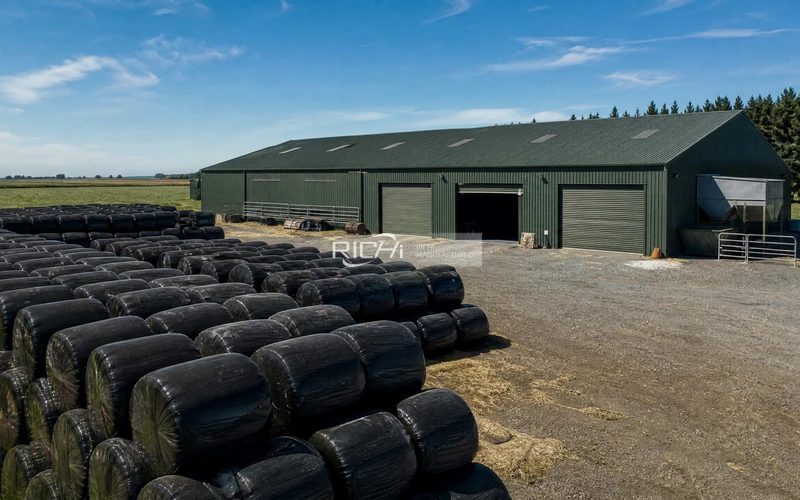
Saudi projects can have a fundamentally different front end because customers may start with dry purchased or imported forage rather than freshly harvested alfalfa.
| Project | Customer & Raw Material | Customized Scope |
|---|---|---|
| 1 T/H | Livestock farm; dry alfalfa hay | Bale/forage preparation and pelletizing |
| 2 T/H | Dairy operation; alfalfa + grain | Mixing and feed pellet production |
| 4 T/H | Feed producer; imported baled alfalfa | Bale breaking, grinding and dust control |
| 8 T/H | Large dairy-feed operation; forage + concentrates | Automated batching and mixing |
| 15 T/H | Commercial feed manufacturer; multiple dry forage and grain ingredients | High-capacity material handling, feed production and packing |
When the forage is already sufficiently dry, adding a large dryer simply because “alfalfa lines need dryers” would be poor engineering. Bale handling, dust control and formula preparation can be more relevant.
Space utilization, dry raw-material handling and automation become more prominent in several of the UAE projects we have handled.
| Project | Customer & Raw Material | Customized Scope |
|---|---|---|
| 0.5 T/H | Livestock business; dry alfalfa | Compact pellet system |
| 1 T/H | Feed supplier; alfalfa + other forage | Flexible grinding and mixing |
| 2–3 T/H | Dairy-feed producer; imported hay + grain | Bale processing and feed formulation |
| 5 T/H | Commercial feed company; alfalfa + grain + premix | Automatic batching and pelletizing |
| 8 T/H | Livestock-feed supplier; multiple dry ingredients | Compact layout, dust control and automated packaging |
For these projects, the question is often how to arrange a practical production system around dry purchased raw materials and the available factory space rather than how to process fresh forage from the field.
Across these projects, the smallest system is around 500 kg/h, while larger alfalfa and forage feed projects reach 20 T/H.
But capacity is only one of the differences.
A 2 T/H Australian dry-bale plant may not need a dryer at all. A Russian plant at a similar or larger capacity may require substantial moisture reduction. A 5–6 T/H Kazakhstan feed plant may need premix addition, while a Mexican plant of comparable capacity may require greater flexibility between alfalfa and grain. A Spanish customer may already have drying and grinding equipment, while a new agricultural investment may require every section from raw-material receiving to packaging.
That is why RICHI does not define an alfalfa pellet plant simply as:
“X tons per hour = X equipment list.”
Our starting point is:
Where are you? What alfalfa or forage do you have? What form is it in? What is its moisture? What percentage will be used? What else is in the formula? What equipment do you already own? And what finished pellet do you want to produce?
The answers determine the production line.
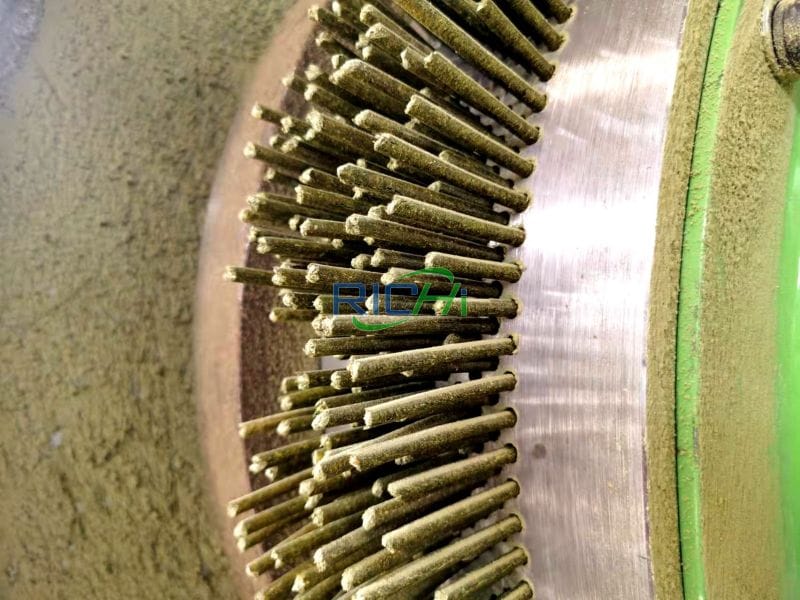
For customers asking how to make alfalfa feed pellets, the finished product should be defined together with the target animal, forage percentage and other feed ingredients.
Alfalfa pellet systems can be configured for different animal feed applications.
Common products include pure or high-alfalfa forage pellets, dairy cattle feed, beef cattle feed, sheep and goat feed, horse feed, rabbit feed and alfalfa-grain compound pellets.
Finished formulation should be determined according to the nutritional requirements of the target animal and the customer's feed strategy.
RICHI's role is to configure the processing system so that the selected formula can be prepared, mixed and pelletized consistently at commercial scale.
You do not need to prepare a complete engineering specification before contacting us.
Send the information you already know:
For bale projects, bale dimensions and photos are also very useful.
Based on this information, RICHI can determine whether your project needs bale breaking, cutting, drying, grinding, batching, mixing, dosing, pelletizing, cooling, screening and packaging, and then prepare the corresponding alfalfa pellet production line design and quotation.
The bale is a storage and transport form, not normally a direct pellet-machine feed. Round or square bales generally need opening/breaking, controlled feeding and size reduction before pelletizing.
Not necessarily. Around 20% or below can be used as an initial screening point for dried forage projects, but the final decision depends on actual material condition, formula and downstream moisture requirements.
A moisture-reduction section will normally need to be considered. Dryer capacity should be calculated from the amount of water that must be removed per hour rather than only the incoming tonnage.
High-alfalfa and nearly pure alfalfa pellets are possible when the raw material and formulation are suitable. Actual pelletizer output will generally be lower than with a formula containing a smaller proportion of fibrous forage.
Yes. Alfalfa content does not have to be high. In compound feed production, it can be one ingredient among grain, bran, meals, minerals and other materials.
Yes, if batching, mixing, feeding and pelletizing are designed for the intended recipe range. Tell us the minimum and maximum forage percentage you expect to use.
Potentially, but bale dimensions, density and handling method need to be checked before selecting the bale-breaking system.
Often yes. The intended forage species should be evaluated for moisture, fiber structure, feeding behavior and grinding requirements.
Yes. Grain normally requires appropriate preparation before batching and mixing with the forage portion.
Because formula has a major effect on throughput. Forage percentage, fiber characteristics, moisture, bulk density and pellet diameter can all change actual output.
The broad CZLH reference capacities on this page are based on approximately Ø6.0 mm pellets. Other pellet specifications should be considered during final machine selection.
Yes. We can evaluate your existing equipment and configure the new system around compatible machines rather than automatically supplying another complete line.
Not as the same core pelletizing solution. Feed and biomass fuel pellets use different pellet mill configurations, although some crushing, drying, conveying, cooling, screening and packing equipment may be similar.
Send your raw material + moisture + approximate formula + required T/H + pellet size + existing equipment + project country. For baled forage, include bale type, approximate dimensions and photos if available.
You do not need to decide first whether you need a CZLH350, CZLH420, a dryer or a bale breaker.
Start with your material.
You may have fresh alfalfa, loose dry hay, round bales, square bales, alfalfa meal, other forage grasses, straw, grain or a formula containing several of them. Your forage percentage may be 20%, 50%, 80% or nearly 100%. You may need a completely new factory, or you may already own half of the equipment required.
Send RICHI Machinery your raw material condition, moisture, formula, available quantity, required pellet output and country.
We can use those conditions to determine the alfalfa pellet making route, equipment configuration, suitable pellet machine, production capacity and budget range—and then prepare a production line design around your actual project rather than asking you to choose from a standard package.
Get Your Alfalfa Pellet Plant Process Design & Quotation
Having the right mix of reliable, high-quality pellet machine and pelletizing systems and expert support is essential to your success. Watch how our end-to-end feed pellet plant solutions have helped our customers optimize their performance.
Our customized and future-proofed turnkey pellet plant solutions is designed with you at the core. From vision to reality and beyond, our team stays connected with yours. Giving you peace-of-mind with an expert at your side.
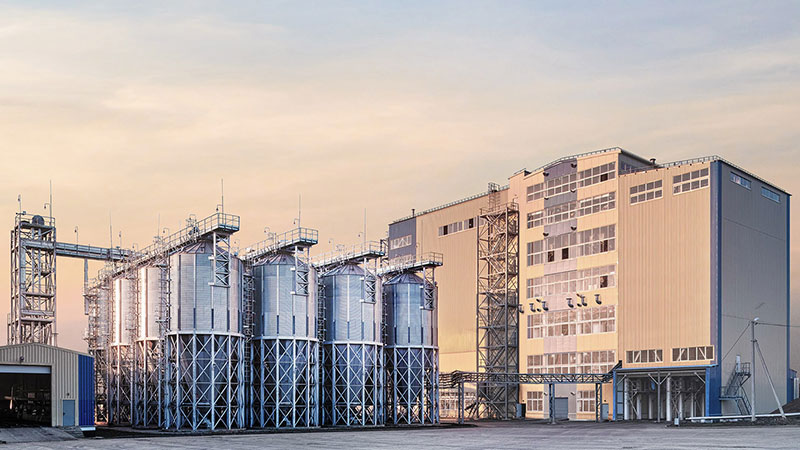
At RICHI, we go beyond project completion. With RICHI Servicee, we’re your dedicated partners in success. Count on us for expert guidance, minimal downtime, and optimized productivity. Choose RICHI for unmatched service and support.
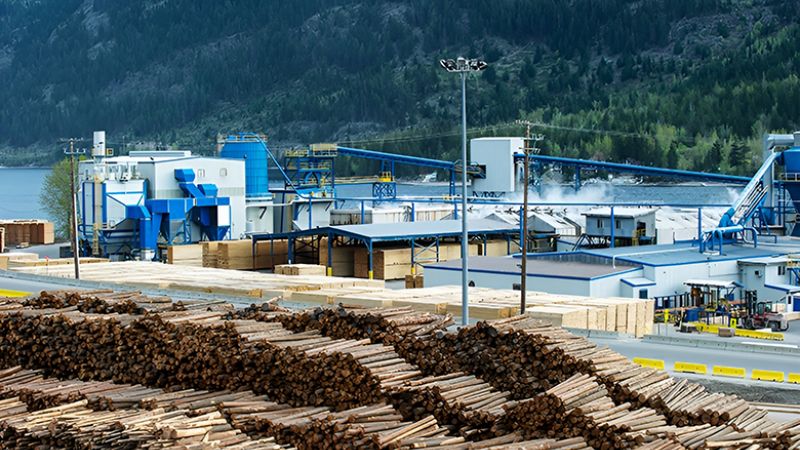


Meet global product demands and quality standards with industry-leading pellet plant design, engineering, equipment, and construction services for pellet processors.

Your Partner Beyond Project Completion
2000+ cases
RICHI is the leading designer, manufacturer and builder of pellet plants in the world, completing over 2000 projects in 140 countries across 6 continents.
Read More
Increase plant productivity, profitability, and safety by integrating high quality equipment into your pellet production line. Over the years, RICHI has become China's top pellet equipment manufacturer. At the same time, RICHI has established valuable partnerships with the world's leading component and raw material manufacturers to bring you the best there is in technology, automation, and efficiency in pelleting plant machinery.

For nearly 30 years, RICHI has been providing best-in-class pellet plant equipment and services to clients across a variety of industries, sizes, and needs. We pride ourselves on the knowledge and skill that each team member possesses – from our technical sales team to our process design engineers. You can count on RICHI Machinery to take your operation to the next level of innovation, quality, and success.
Need help with your pellet manufacturing plant project? Contact us today.
ANIMAL FEED
BIOMASS
WOOD
ORGANIC FERTILIZER
AQUA FEED
CAT LITTER
MUNICIPAL WASTE RECYCLING
SPECIAL PELLET PRODUCTION
RICHI Machinery continues to deliver world class pellet mill equipment, pellet plant engineering and project solutions that add value to our customers in the animal feed, wood waste, agriculture waste, organic fertilizer, cat litter and special pellet products industries. Throughout the years, we RICHI Machinery have built strong brand, becoming industry-leading pellet machine manufacturer. We value integrity, promise quality, and prioritize your success.
Learn MoreWith our expert team, we precisely implement your process engineering requirements in pellet mill and pelletizing plant systems. No matter which industry you’re in – we understand your needs and deliver solutions that meet the highest standards.
At RICHI, quality comes first. Our pellet making machine and related pellet line equipment undergo rigorous quality controls to ensure they meet the highest standards. Rely on products that are durable, safe, and efficient.
With decades of experience in pellet machine and pellet production line production, we have earned a reputation as a trusted partner in various industries. Our expertise allows us to cover a wide range of applications.
Not only do we offer premium pelleting equipment, but we are also experts at designing, building, installing, and maintaining facilities from the ground up. Our expertise is within pellt plant process design, discovering the most efficient, productive, and profitable way to handle your materials in an end-to-end cycle.
○ RICHI MACHINERY
Keeping in touch with us is an effective way to solve all your problems. If you have any needs or questions, please leave your contact information, then RICHI technical consultants will send design, quotation, videos to your mailbox. You can also contact us directly via WhatsApp: +86 13838389622
Copyright©2015-2026 by HENAN RICHI MACHINERY CO., LTD. All rights reserved.