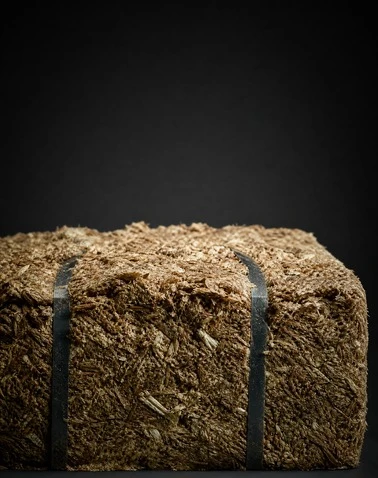
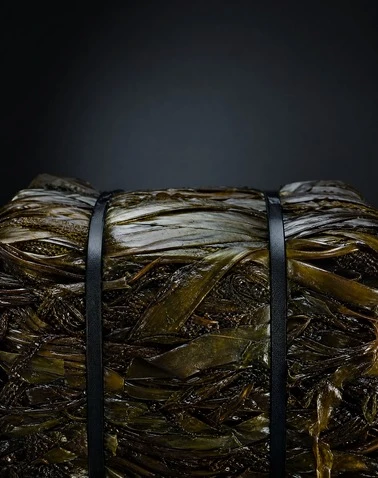
Bale breaker machine opens compact round and square bales of straw, hay, alfalfa and other fibrous biomass into 20–30 mm material, preparing a steady feed for animal feed, grass pellet, straw pellet and biomass pellet production lines.
What matters after a bale is opened? That answer determines how the equipment should be configured. RICHI's bale breaker machine uses continuous mechanical breaking action to open compacted square or round bales and reduce bulky fibrous material into a loose, manageable form for conveying, further crushing, mixing or pellet processing. Instead of offering one configuration for every project, we consider bale dimensions, material type, required throughput and the equipment receiving the material next. Our experience with international feed, forage and biomass projects also means we can address the connections around the bale breaker—not just deliver the machine itself.
○ RICHI MACHINERY
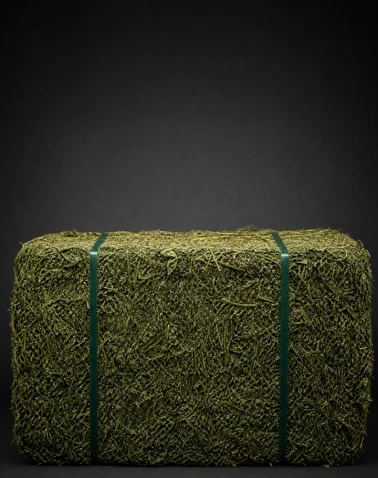
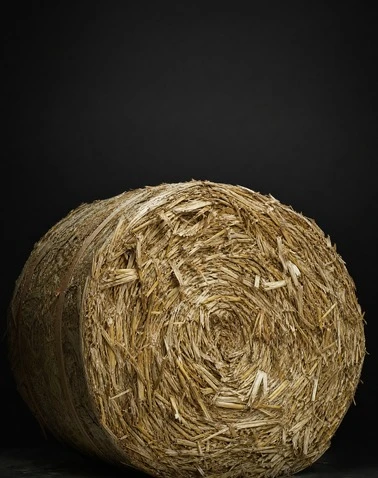
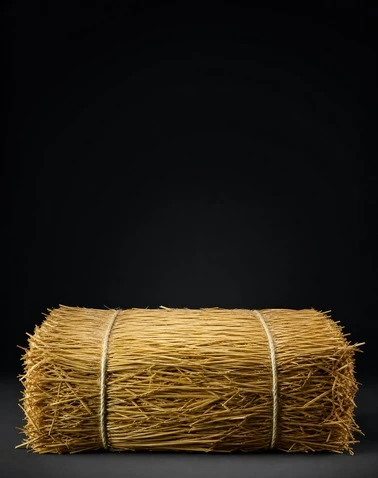
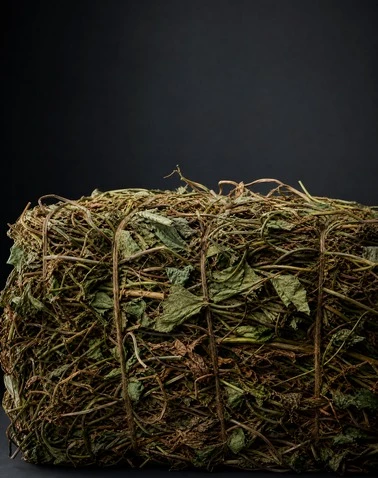
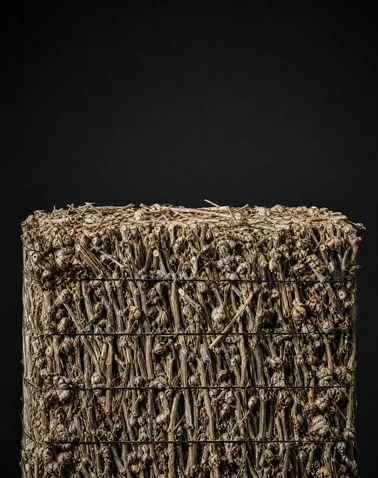
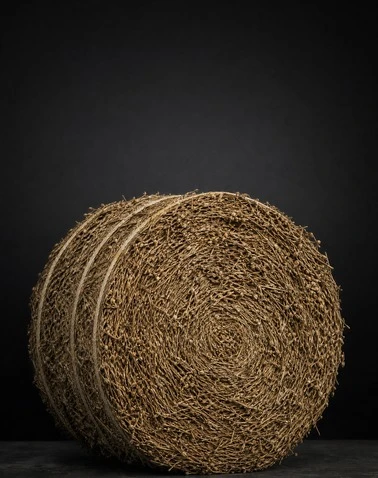
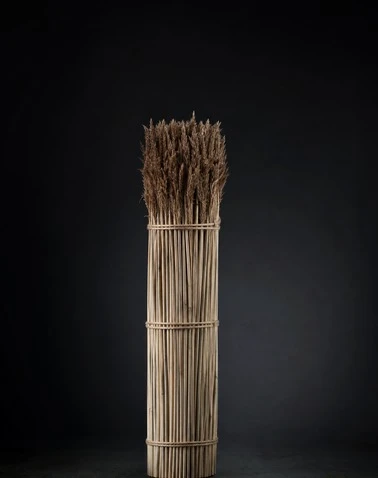
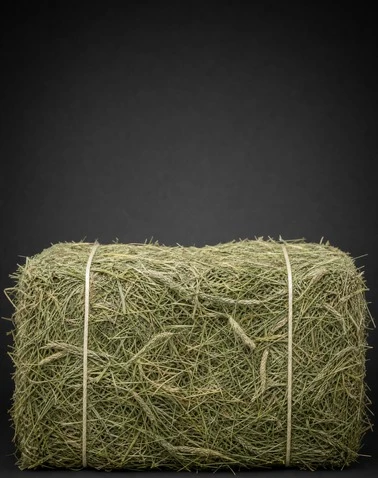
Our bale breaker machine handles major baled agricultural and fibrous materials, including alfalfa, forage, corn stover, wheat and rice straw, peanut and sweet potato vines, soybean stalks, and cotton stalks, preparing them for subsequent feed, pellet, biomass, or other processing.

Alfalfa/Forage Bales
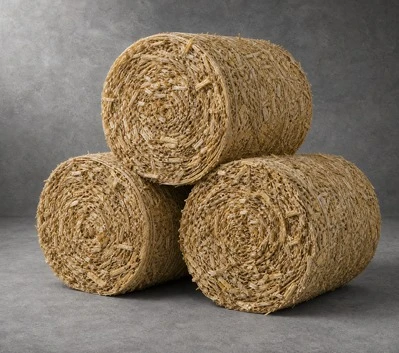
Corn Stalk Bales
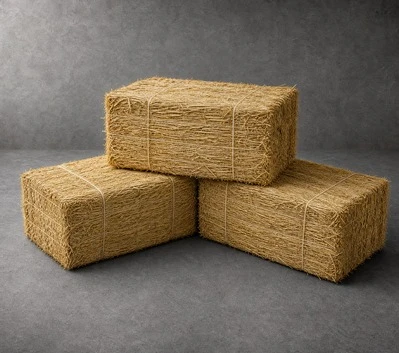
Wheat/Rice Straw Bales
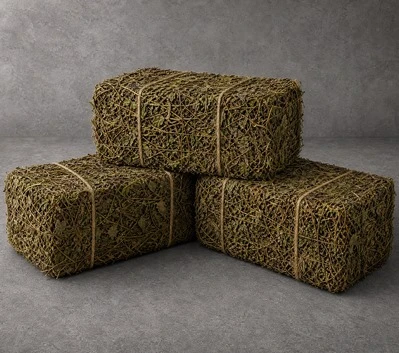
Peanut/Sweet Potato Vines
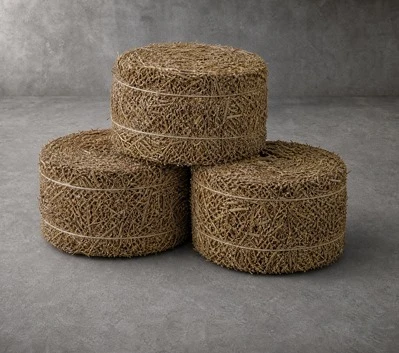
Soybean Stalk Bales
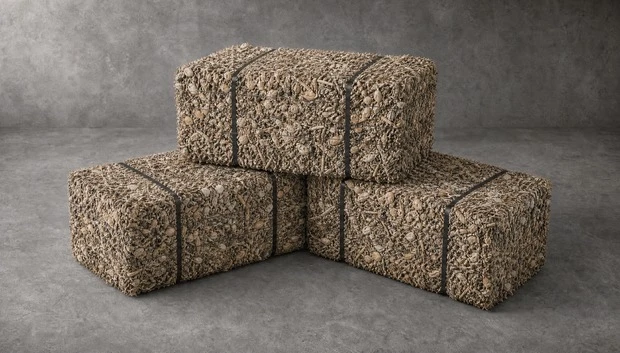
Cotton Stalk Bales
Designed for operations processing substantial volumes of baled fibrous materials, our equipment serves livestock farms, feed and forage processors, biomass energy plants, biogas and biomethane projects, agricultural cooperatives, straw collection centers, and suitable pulp and paper operations worldwide.
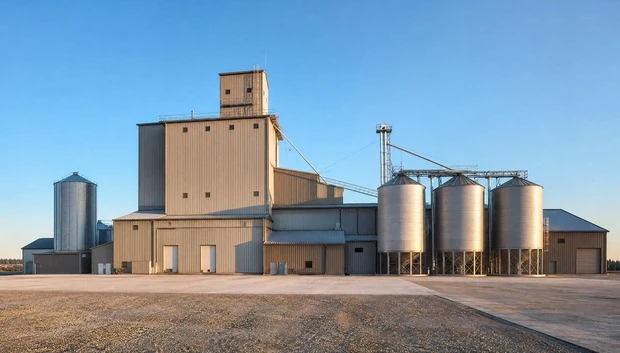
Large Livestock Farms
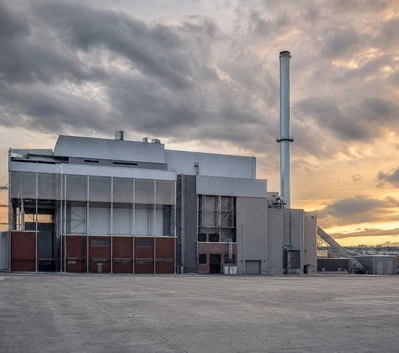
Biomass Power Plants
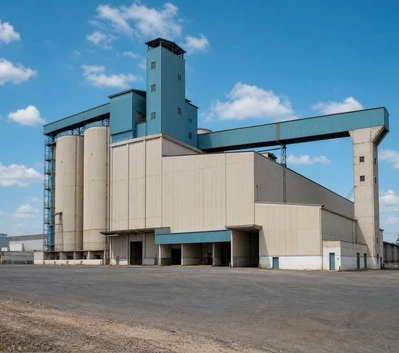
Animal Feed Mills
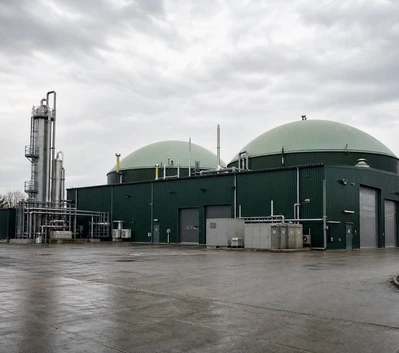
Biogas Production Plants
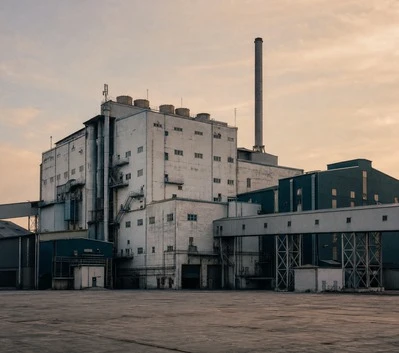
Pulp And Paper Mills
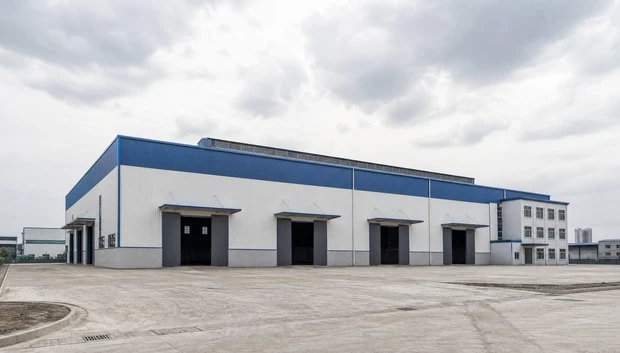
Agricultural Cooperatives
○ RICHI MACHINERY
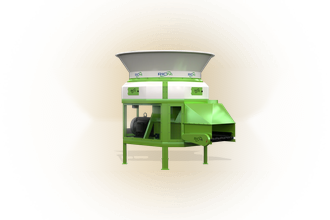
The bale breaker machine is engineered for primary size reduction of compressed or loose fibrous agricultural materials, including straw and alfalfa. Its breaking assembly opens compacted material and reduces long, entangled fibers to approximately 20–30 mm, creating a more manageable feedstock for subsequent processing.
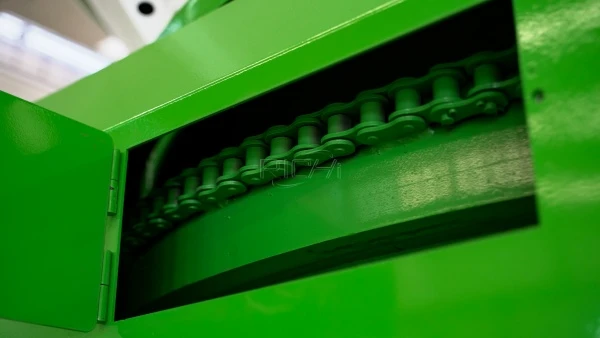
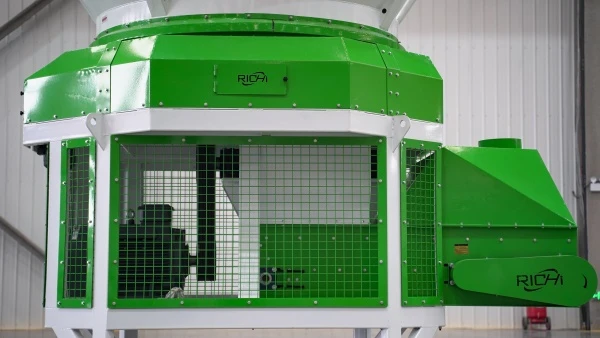
The feeding section is designed to introduce bulky and irregular fibrous material progressively into the breaking zone. A gear-driven transmission and external-chain arrangement provide positive mechanical drive for continuous operation, helping the machine handle large bales and loose material while reducing areas where unprocessed fibers can accumulate.
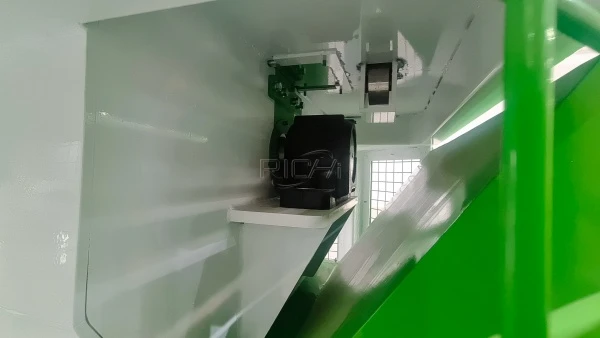
Damping plates are arranged in the shredding zone to restrain and control material as it contacts the rotating working components. This prevents light, springy fibers from moving too freely inside the chamber, improves contact between the material and hammers, and supports more effective bale opening and primary size reduction.
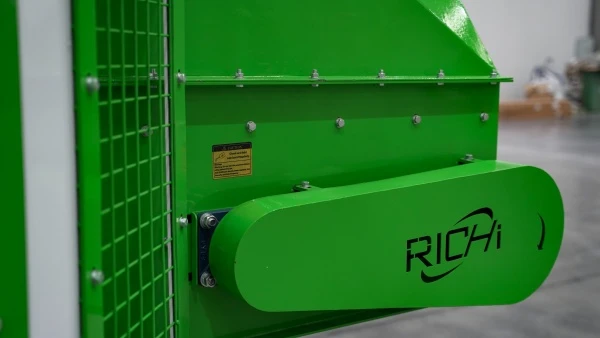
Heavy-duty drive chains are selected for the demanding loads created when dense or uneven bales enter the machine. The robust transmission arrangement provides reliable power transfer under fluctuating operating conditions and, with correct tensioning and lubrication, helps maintain stable operation and a practical service life.
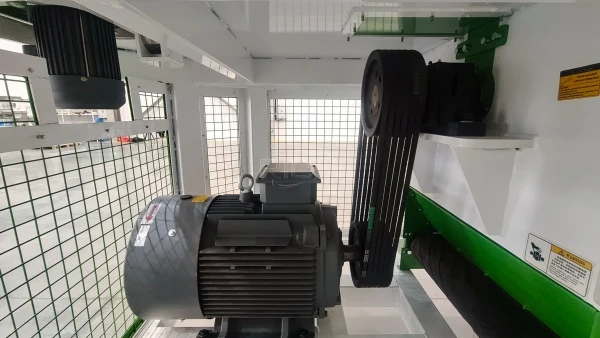
A rigid, reinforced housing supports the main working assembly and withstands the vibration and variable loading associated with bale breaking. The structural design provides a stable base for the rotor and transmission components while retaining practical access for inspection, routine maintenance, wear-part replacement, and equipment servicing.
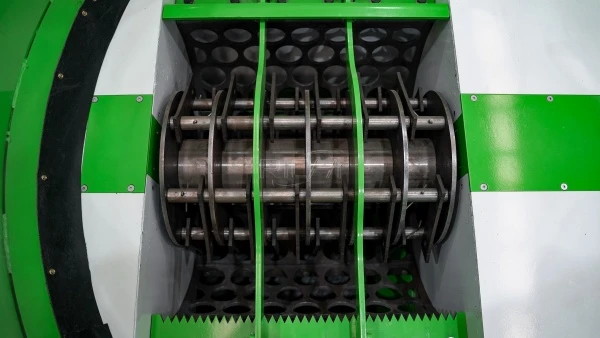
The working hammers are manufactured from 65Mn steel and heat-treated to obtain suitable hardness and wear resistance for fibrous agricultural materials. Wear-prone hammer areas can be hard-faced with tungsten carbide, helping extend service intervals when processing abrasive straw, stalks, forage, and similar baled feedstocks.
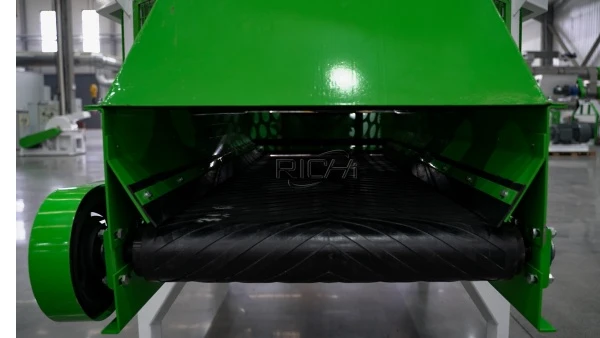
The breaking chamber is designed for the irregular feeding characteristics of agricultural fibers rather than one narrowly defined bale format. It can process suitable round or square bales as well as loose straw, forage, alfalfa, stalks, and similar materials, with the machine configuration selected according to bale dimensions and material condition.
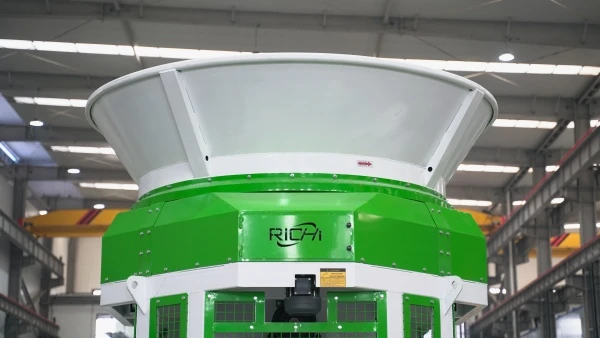
Optional auxiliary equipment includes an infeed slat conveyor, outfeed belt conveyor, and dust-control system. These components allow the bale breaker to be integrated into continuous material-handling systems, reducing manual transfer between stages and providing a practical connection to downstream crushing, mixing, or pellet production equipment.
○ RICHI MACHINERY
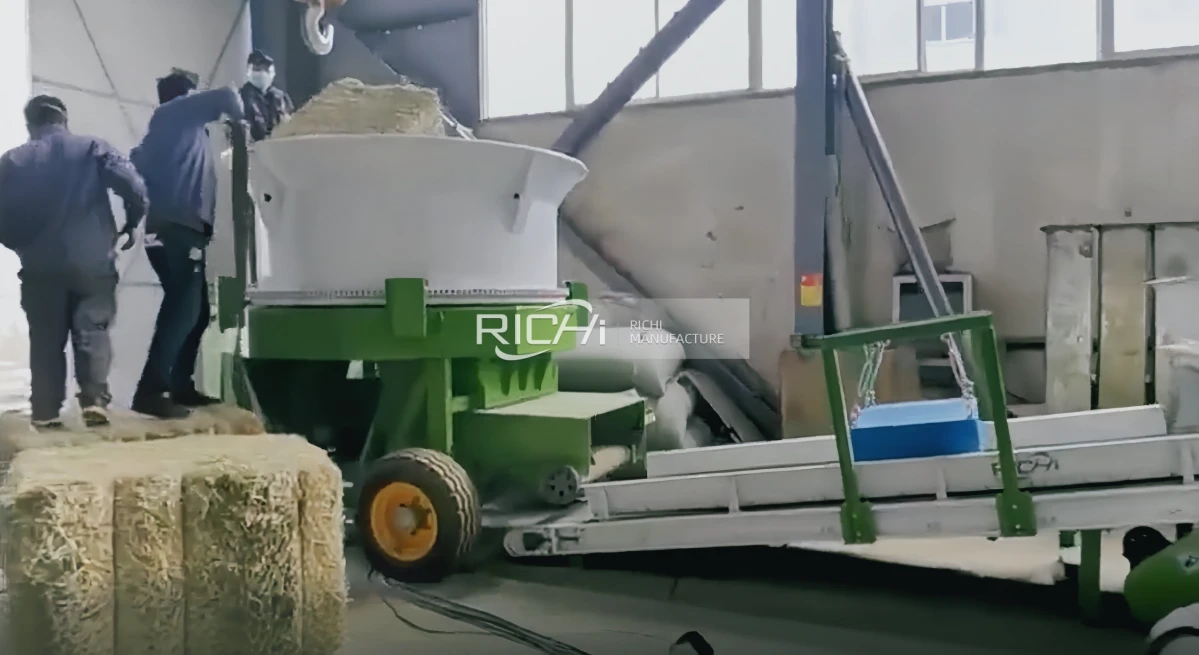
Our bale breaker machine has been applied in multiple feed and pellet production projects worldwide. These videos show real equipment in operation, including project configuration, factory testing, material handling, and preparation for delivery, giving buyers a clearer view of our manufacturing and service capabilities.
Installed in a cattle feed production line, this bale breaker machine processes baled forage for downstream feed preparation. The video shows its role in continuous material feeding and bale opening.

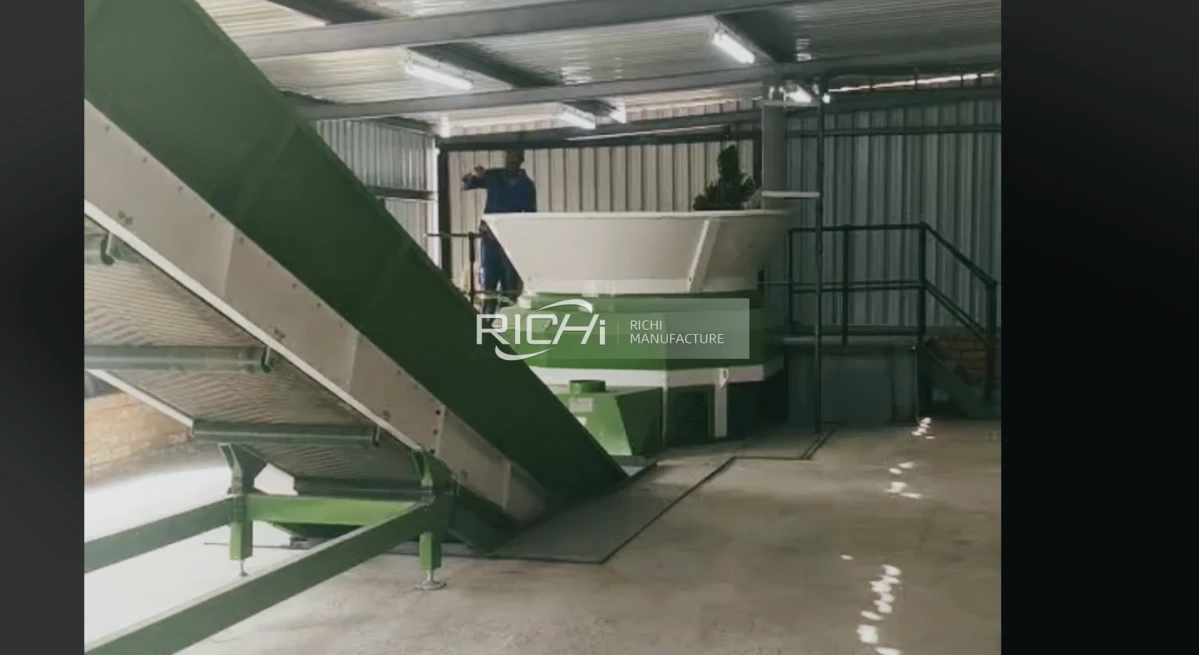
This video shows a hay pellet production line under pre-shipment testing for a French customer. The bale breaker machine and connected equipment are checked for operation, coordination, and delivery readiness.
○ RICHI MACHINERY

Machine configuration can be adjusted according to bale size, fiber type, moisture condition, target output size, and downstream requirements. This helps customers avoid using a standard design that does not match their real operating conditions.

RICHI provides bale-breaking solutions for different project capacities, from independent material preparation to continuous industrial production lines. Equipment selection is based on actual throughput demand rather than a one-size-fits-all approach.

As a pellet plant engineering supplier, RICHI can match the bale breaker with conveying, crushing, mixing, drying, pelletizing, and dust-control equipment, helping maintain smooth material flow between each production stage.

Agricultural bales are rarely identical in density, fiber length, or condition. The bale breaker machine is configured to handle these normal variations while maintaining practical feeding continuity and consistent primary size reduction.

Our equipment design is supported by experience in feed, forage, straw, and biomass processing projects. Manufacturing, assembly, inspection, and testing are coordinated under one engineering system to reduce installation and operating risks.

RICHI supports customers with model selection, layout planning, process matching, installation guidance, commissioning assistance, and after-sales service, giving buyers technical support from project planning through long-term operation.
RICHI combines equipment manufacturing with complete pellet plant engineering, allowing each bale breaker machine to be matched to the customer’s material, bale format, processing target, and downstream system. Our focus is not only on supplying a machine, but on making sure it works reliably within the customer’s actual production process.
○ RICHI MACHINERY
RICHI offers bale breaker machine configurations for different processing scales, from lower-throughput material preparation to continuous industrial bale breaking. Model selection can be customized around bale diameter, material type, required capacity, plant layout, and downstream process requirements.
| Model | YPPK-2600 | YPPK-2800 |
|---|---|---|
| Power (kW) | 55 | 90 |
| Max. Processing Diameter (mm) | 1,800 | 2,050 |
| Number of Hammers | 36 | 48 |
| Machine Dimensions (mm) | 3,800 × 2,600 × 2,650 | 4,100 × 2,800 × 2,650 |
| Machine Weight (t) | 2.2 | 3.1 |
○ RICHI MACHINERY
A bale breaking system goes beyond a standalone bale breaker machine. RICHI designs and manufactures modular systems combining bale opening with conveying, secondary size reduction, optional drying, dust collection, and material transfer. Each configuration is developed around bale type, fiber characteristics, moisture, required particle size, throughput, and the customer’s downstream process. The system can operate as an independent preparation section or connect with an existing feed, forage, straw, or biomass pellet plant.
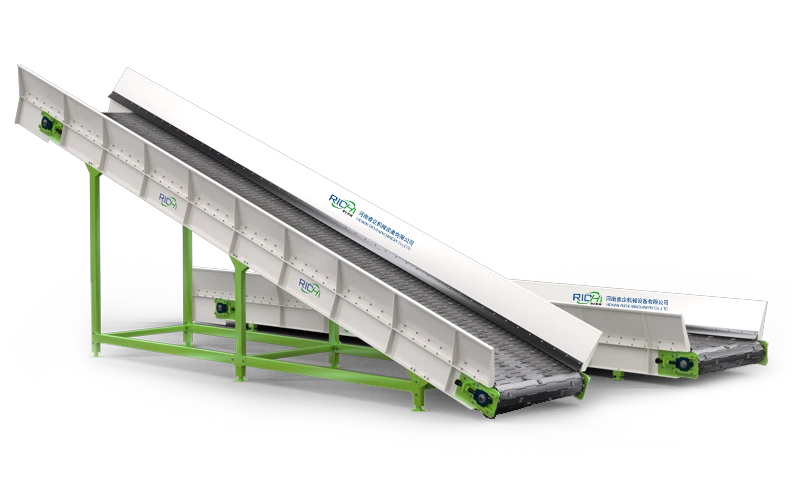
Belt, slat, and screw conveyors handle feeding, discharge, transfer, and connection between processing stages.
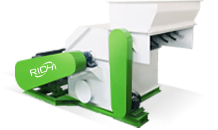
Provides secondary size reduction when opened straw, hay, or forage must be reduced further for downstream processing.
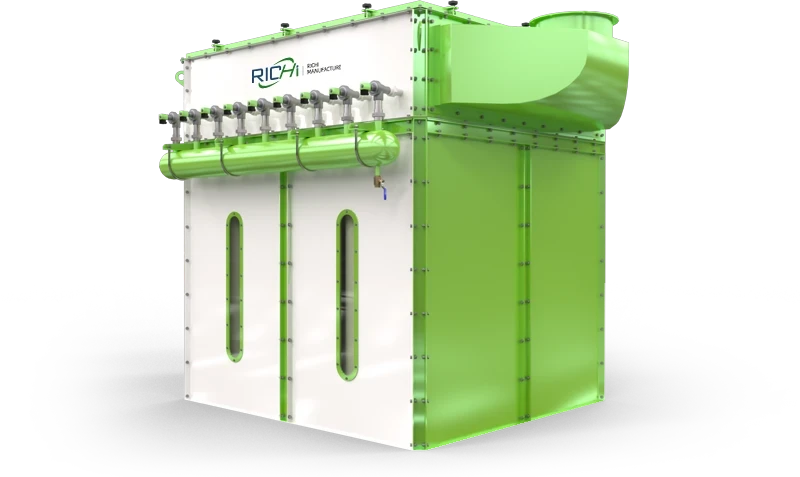
Captures airborne dust at key transfer and processing points using project-matched collection and filtration equipment.
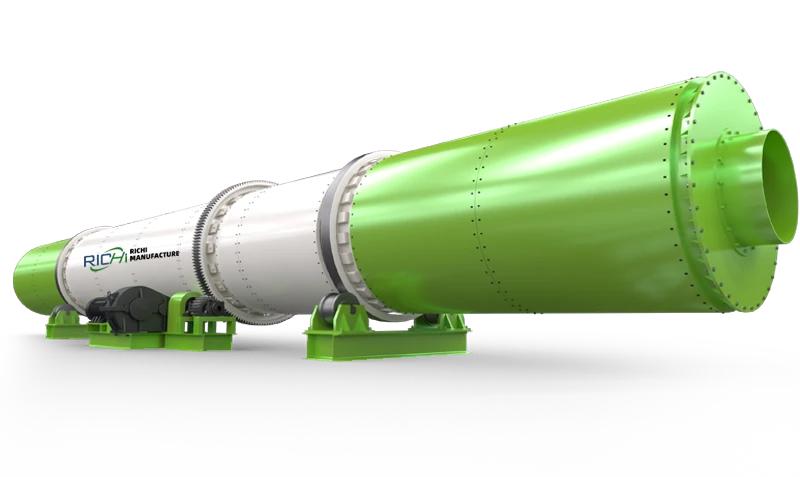
Reduces excess moisture in fibrous material when the required downstream process calls for controlled moisture levels.
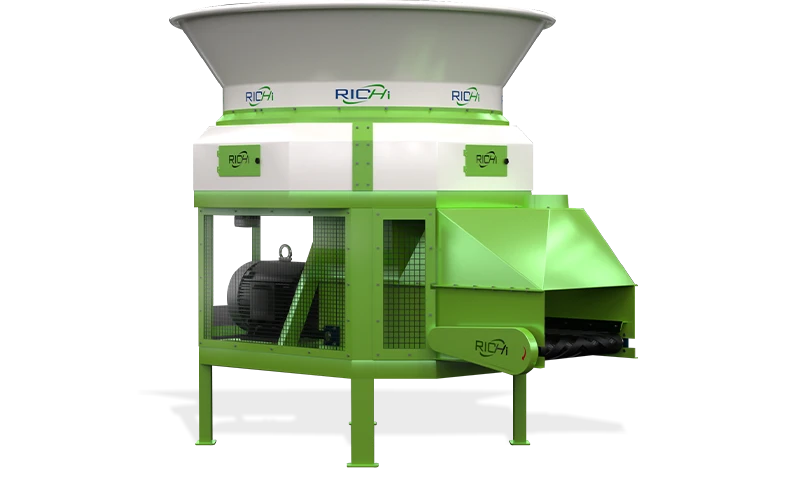
At the center of each system, the bale breaker machine determines how effectively compacted fibers are opened and delivered to the next process. As the manufacturer, RICHI matches this core unit with the surrounding equipment rather than treating each machine as an isolated purchase—giving customers a coordinated bale preparation module built around actual plant conditions.
Customize Your Bale Breaking System○ RICHI MACHINERY
○ RICHI MACHINERY
Yes. Bale density affects instantaneous load, feeding stability, and actual throughput. A bale breaker machine should therefore be selected from bale dimensions, weight, moisture, fiber type, and bales/hour—not diameter alone. Send us several representative bale weights and dimensions for sizing.
Normally, no. A properly configured bale breaker can handle suitable round and square agricultural bales within its dimensional limits. The YPPK-2600 accepts material up to approximately 1,800 mm in processing diameter, while the YPPK-2800 reaches 2,050 mm.
For bale opening, alfalfa around 12–18% moisture is generally much easier to handle than wet forage, provided the bales are free of problematic contaminants. Whether drying is needed afterward depends on the final product—for pellet production, downstream moisture requirements must also be considered.
That needs separate evaluation. Wet, compacted grass behaves very differently from dry hay and may wrap, smear, bridge, or discharge poorly. A conventional hay bale shredder configuration should not automatically be sold as a silage bale chopper without checking moisture, bale density, fiber length, and fermentation condition.
The plastic film and net wrap should be removed before processing. They can contaminate feed or biomass products and may wrap around rotating components. For a silage bale shredder project, we would also evaluate the high-moisture material separately before recommending a configuration.
No—that is not the intended duty of this machine. The bale breaker performs primary opening and typically prepares fibrous material at roughly 20–30 mm. If your feed or pellet process requires approximately 3–5 mm particles, add a suitable grass crusher machine or hammer mill for secondary grinding.
Calculate it from actual bale weight. For example, with 400–500 kg bales, 5 t/h requires roughly 10–13 bales per hour before allowing for operating variation. We then check bale density, moisture and feeding behavior before confirming whether one machine can meet the target.
Use tonnes per hour together with the lightest and heaviest representative bale weights. If bales range from 350 to 500 kg, a target of 6 t/h corresponds to about 12–17 bales/hour. This is more useful for engineering than simply requesting a “6 t/h bale shredder.”
A 1.6 m bale falls within the stated maximum processing diameter of the YPPK-2600, but diameter alone is insufficient for final selection. Bale weight, density, moisture, required t/h and feeding method must also be checked before we recommend the 55 kW model.
Consider the YPPK-2800 when larger bales, higher operating demand, or tougher feeding conditions justify the heavier configuration. It has 90 kW power, 48 hammers and a 2,050 mm maximum processing diameter, versus 55 kW, 36 hammers and 1,800 mm for the YPPK-2600.
Often, yes. The bale breaker opens the compacted bale and performs coarse reduction; the hammer mill then reduces the approximately 20–30 mm fibrous material further. Conveyor capacity and hammer-mill inlet conditions must be matched so the second machine is not overloaded.
The machine bodies are approximately 3.8 × 2.6 m for YPPK-2600 and 4.1 × 2.8 m for YPPK-2800. The actual system footprint must be larger to accommodate feeding, discharge, maintenance access, conveyors and dust collection. Send us your available L × W × H for layout checking.
Yes, provided the existing feeding height, downstream capacity, electrical supply and available space are verified. For retrofit projects, we work from the existing layout and interface dimensions so the new bale chopper can be connected without unnecessarily rebuilding the entire material-preparation section.
Twine, wire, stones and metal should be removed as far as practicable before feeding. They can cause contamination, abnormal wear or equipment damage. A straw bale shredder is designed for fibrous material, not for using foreign objects as part of the normal feed stream.
Potentially. Rice straw can differ considerably from alfalfa in abrasiveness, fiber structure, bulk density and feeding behavior. We therefore review bale density, moisture and downstream use before configuring the bale breaker machine and any secondary grass grinding equipment.
Yes, where both materials fall within the system’s operating envelope. Because alfalfa and corn stover have different density and fiber characteristics, feeding rate and downstream settings may change. We size the system against the more demanding operating condition rather than assuming identical performance.
After primary opening to roughly 20–30 mm, cotton stalk material normally requires further size reduction before pelletizing. Depending on incoming moisture, the system may also require drying. Conveying, secondary crushing, dust collection and pellet-line interfaces should be sized as one process.
Usually yes when their bale dimensions and material conditions are within the selected machine range. For a mixed agricultural-residue operation, we check the highest-density and most difficult feedstock first, then determine suitable feeding and downstream crushing arrangements for both.
Potentially, provided the bagasse is sufficiently dry and structurally suitable for bale breaking. Bagasse moisture and compaction can vary greatly, so we need bale dimensions, weight, moisture and photographs or samples before treating it like conventional straw in equipment selection.
Not automatically. If stored straw or hay is already suitable for the next process, drying adds unnecessary capital and energy cost. A dryer is selected only when incoming moisture exceeds the downstream requirement; pelletizing, feed processing and biomass applications can have different targets.
Dry fibrous materials can generate airborne fines at the breaking chamber, discharge and transfer points. We can incorporate enclosed transfer sections and a project-matched dust collection system. The required airflow and filtration arrangement should be designed from the actual material and system layout.
First confirm what you need the equipment to do. A bale tub grinder or round bale tub grinder can serve different size-reduction duties and should not be treated as an exact synonym for our bale breaker. If your requirement is controlled primary bale opening before a production line, we can compare the processes before recommending replacement.
Not necessarily. Buyers use terms such as round bale buster, bale grinder, hay bale grinder and square bale grinder for equipment with different rotor designs and finished-size targets. Our YPPK machine is positioned for primary bale opening and coarse reduction to approximately 20–30 mm.
Possibly, but do not select it from the search term alone. The YPPK-2600 itself is a 55 kW, 2.2 t machine, so it should not be confused with a small portable farm chopper. For small square bales, we first assess your required t/h and whether industrial continuous processing is justified.
For an isolated duty, the machine may be sufficient. A continuous plant may require an infeed slat conveyor, discharge conveyor, secondary grass crusher, dust collection and, where justified by moisture, drying. We quote only the modules required by the actual process.
Compare the processing-diameter limit, installed power, hammer arrangement, machine weight, wear materials, feeding method, discharge arrangement and supplied auxiliaries—not price alone. Also confirm whether the quoted performance is based on material comparable to your own bales.
As a practical global market reference, a bale breaker machine typically costs about USD 8,000–50,000. The final price depends mainly on machine size, motor power, bale dimensions, required capacity, material type, construction material, and whether conveyors, dust control or other auxiliary equipment are included.
Where material characteristics or hygiene/corrosion requirements justify it, carbon-steel and stainless-steel configurations can be evaluated. We select construction materials according to the actual contact environment rather than recommending stainless steel automatically, which helps avoid unnecessary investment.
Provide material type, round/square bale form, maximum dimensions, typical and maximum bale weight, moisture range, required t/h, target particle size, operating hours, downstream equipment and available plant space. Photos or representative material samples make engineering evaluation more reliable.
Yes. RICHI can develop the complete bale preparation section around your existing or new plant, covering process design, equipment configuration, manufacturing, installation guidance, commissioning support and training. Tell us what you bale, how much you process, and what the material becomes next.
○ RICHI MACHINERY
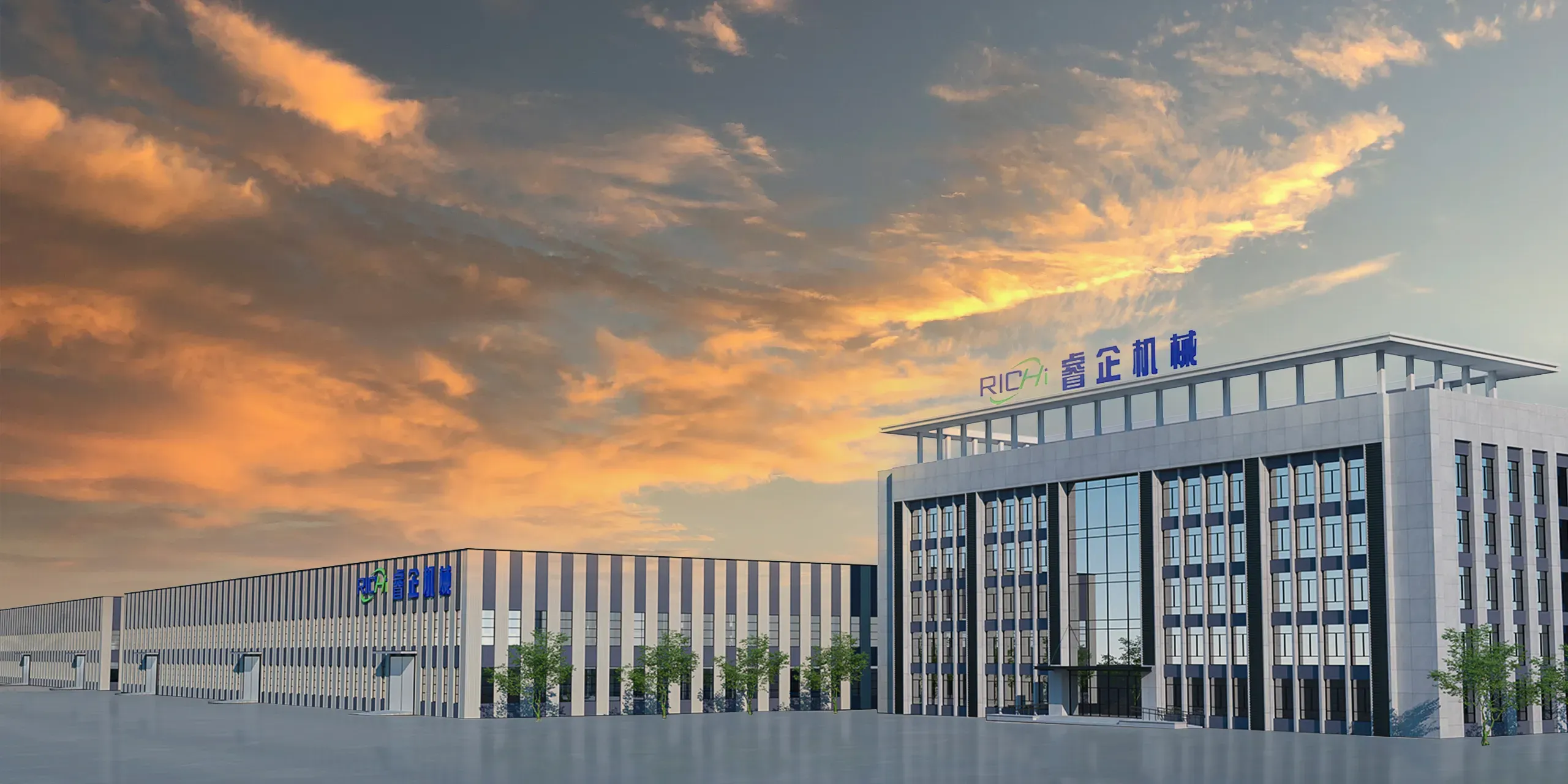
As a global leader in pelletizing solutions, RICHI represents a fully integrated technology partner that masters every dimension of modern production systems. From pioneering research in material science to precision engineering and industrial-scale manufacturing, we build complete production ecosystems that transform raw materials into high-value pellets. Our holistic approach ensures each project is founded on three pillars: engineering precision that guarantees operational efficiency, continuous innovation that adapts to evolving market demands, and uncompromising reliability that sustains production for decades. With vertically controlled manufacturing and end-to-end project management, we deliver not just equipment, but fully optimized production assets that drive profitability across industries worldwide.
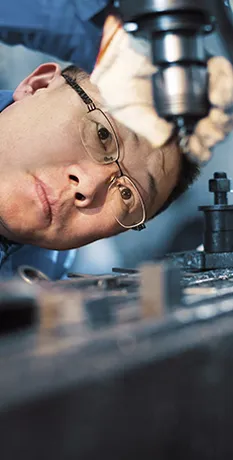
Engineering & Manufacturing
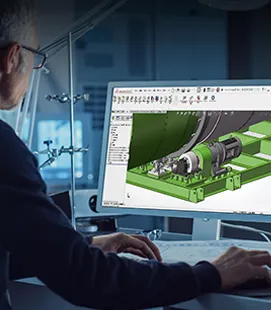
Research & Development

Technical Services

Patents & Certifications
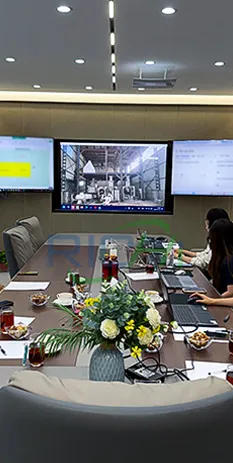
Global Partnerships
Global Headquarters
○ RICHI MACHINERY
Founded in 1995, RICHI Machinery has evolved from a specialized manufacturer into a global engineering provider for complete pelletizing systems. With two major manufacturing bases spanning over 60,000 m², we control every step from design to delivery, ensuring unmatched quality and depth of production. Our commitment to excellence is reflected in our global impact, serving clients in over 140 countries with more than 2,000 successful projects and 10,000+ equipment units delivered worldwide.
Production Area
Countries Served
Global Projects
Equipment Delivered
○ RICHI MACHINERY
For nearly three decades, RICHI has mastered the complexities of diverse materials across global industries. We provide end-to-end pelletizing systems, delivering the complete technological and engineering support needed to transform raw materials into high-value products. From initial concept to operational plant, we are your single partner for launching and scaling a successful pellet processing business.
○ RICHI MACHINERY
○ RICHI MACHINERY
Keeping in touch with us is an effective way to solve all your problems. If you have any needs or questions, please leave your contact information, then RICHI technical consultants will send design, quotation, videos to your mailbox. You can also contact us directly via WhatsApp: +86 13838389622
Copyright©2015-2026 by HENAN RICHI MACHINERY CO., LTD. All rights reserved.