
Looking for a straw chopper for sale in Uruguay? Explore the RICHI YPPK-2800 for processing large straw bales into 20–30 mm material, with a 90 kW motor, 2,050 mm maximum bale diameter and heavy-duty hammer design.
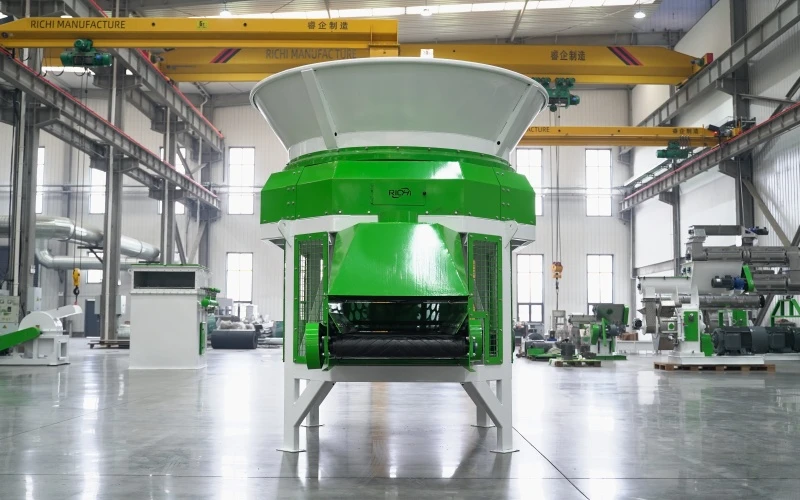
Straw chopper for sale Uruguay was the equipment requirement of an agricultural residue contractor supplying prepared straw and forage materials to cattle farms in the country's interior. The customer needed a practical way to process large round bales of wheat straw and selected cereal residues without investing in an entirely new production line.
A RICHI YPPK-2800 disc-type bale chopper was selected for the proposed project because its 2,050 mm maximum processing diameter accommodates the planned large-bale format, while its 90 kW main motor is suited to a heavy-duty coarse-chopping application. The machine is intended to work as a standalone unit alongside the customer's existing bale-handling equipment.
Name:
Straw Chopper
Country:
Uruguay
Date:
2026
Capacity:
Flexible
Model:
YPPK-2800
Power:
90 kW
Overall dimensions:
4,100 × 2,800 × 2,650 mm
Final product size:
Approximately 20–30 mm
The main objective is to turn compacted straw bales into more manageable material, typically around 20–30 mm, for subsequent handling and use. Uruguay's beef and dairy sectors create demand for agricultural residues in different roles, including suitable roughage preparation, livestock bedding and biomass feedstock.
These applications require different material-quality standards, so the customer plans to process straw in separate batches according to its destination. The YPPK-2800 will handle the initial size-reduction stage; any additional grinding, mixing or pelletizing will remain the responsibility of separate downstream equipment where required.
Uruguay has a strong agricultural economy built around livestock production, grain cultivation and agricultural exports. Cattle farming is particularly important, while wheat and rice production generate crop residues that may be collected, baled and used for different purposes. For agricultural service businesses, the challenge is not simply finding a use for straw. It is handling the material consistently after harvesting and baling, when compressed bales become difficult to feed directly into other machinery.
The customer in this project is a regional agricultural residue processor working with crop growers, cattle operations and local material users. Rather than operating a large integrated biomass factory, the business receives baled residues from several suppliers and prepares them according to customers' handling requirements. Its existing operation already includes a loader, bale storage space and basic material-handling equipment, but the preparation stage relies too heavily on manual intervention.
Whole straw bales are convenient for transport and storage, yet their compact structure creates problems when the material reaches a mixer, conveyor or other processing machine. Long stems can bridge at the feed opening, and an uneven flow of material can interrupt the next operation. Manually separating compressed bales also consumes labor that could be used elsewhere in the yard.
Purchasing one straw chopper addresses that specific bottleneck. The customer can continue using existing bale storage and loading arrangements while adding a dedicated coarse-shredding stage. This is a more focused investment than purchasing a complete straw pellet production line, particularly when the immediate requirement is to prepare raw material rather than manufacture a finished product.
The primary material planned for this project is baled wheat straw collected from grain-producing farms. Wheat straw consists mainly of dry stems and leaves remaining after grain harvesting. Its suitability for further use depends on harvesting conditions, soil contamination, moisture, storage practices and the intended end product.
The customer may also receive suitable barley straw or other cereal residues when local suppliers have material available. These materials will not necessarily be processed together. Keeping batches separate allows the operator to identify differences in stem length, moisture and bulk density and to direct the resulting material toward an appropriate application.
For preliminary equipment planning, the expected round-bale diameter is approximately 1,700–1,950 mm, with bale width and density to be confirmed before final selection. The YPPK-2800 has a stated maximum processing diameter of 2,050 mm, so this proposed range falls within its nominal dimensional limit. The diameter alone, however, does not establish full compatibility: bale width, weight, compression, feeding characteristics and the available loading arrangement must also be checked.
The preliminary moisture assumption is approximately 10–16% for well-dried straw. This is a planning range, not a verified measurement from the customer. Actual moisture will vary with the crop, harvest timing, weather exposure and storage conditions. Material that has become wet during storage may feed differently from dry straw and may be more susceptible to heating or deterioration if stored in unsuitable conditions.
Before processing, the operator should inspect incoming bales for stones, metal, soil, plastic twine and other foreign objects. The machine is designed for agricultural residue size reduction, but it should not be treated as a metal-removal system or as a substitute for raw-material inspection. Bales containing substantial contamination should be separated and assessed before entering the feeding mechanism.
The YPPK-2800 Bale Breaker Machine was selected for the proposed project because the planned bale diameter approaches the upper range of the smaller model. Its larger nominal processing diameter gives the customer more flexibility when receiving different large-bale formats. The decision should still be confirmed against the actual bale dimensions and the customer's expected operating schedule.
| Specification | YPPK-2800 |
|---|---|
| Equipment type | Disc-type straw bale chopper |
| Model | YPPK-2800 |
| Main motor power | 90 kW |
| Maximum processing diameter | 2,050 mm |
| Number of hammers | 48 |
| Overall dimensions | 4,100 × 2,800 × 2,650 mm |
| Equipment weight | 3.1 tonnes |
| Typical coarse output size | Approximately 20–30 mm |
| Purchase quantity | One unit |
| Main raw material | Baled wheat straw |
| Additional potential materials | Suitable barley straw and selected cereal residues |
The 90 kW main drive powers the machine's coarse-chopping operation. The 48-hammer configuration is designed to break down compressed fibrous material after it enters the working area. A heavy-duty machine of this type is useful where the incoming material is delivered in large bales rather than as loose, pre-cut straw.
The manufacturer's supplied specifications do not provide a rated throughput in tonnes per hour for this model. A production capacity should therefore not be invented for the project. The actual working rate will depend on straw variety, bale density, moisture, feeding consistency, operating settings and the downstream handling arrangement. A representative material test or a confirmed manufacturer rating is the appropriate basis for estimating output.
The YPPK-2800 performs the initial size-reduction stage. A suitable bale is positioned at the feeding area, where the feeding mechanism engages the compressed straw and moves it toward the shredding zone. The external-chain feeding arrangement uses a rotary cutting action to help draw the material into the working area.
A damping plate inside the crushing zone is designed to improve material engagement. As the straw enters the working area, the rotating hammers break down the compressed structure and reduce the material into shorter pieces. Under suitable operating conditions, the typical coarse output is around 20–30 mm, although individual pieces will vary in length and shape.
For the customer, the main benefit is improved material handling. Loose, chopped straw is generally easier to transfer, portion and feed into a suitable downstream process than a compacted bale. The operator can collect the discharged material, move it to a designated storage area or transfer it to the next processing stage, depending on the end use.
This is a coarse straw chopper, not a fine grinder. If the customer later needs a smaller particle size for a biomass pellet mill, a separate hammer mill or another suitable grinding machine may be required. The necessary additional equipment depends on the pellet mill's feed requirements and the intended fuel specification. A chopper should not be expected to produce fine, uniform powder directly from whole bales.
One possible use for the chopped material is livestock bedding. Suitable dry straw can be prepared into shorter pieces that are easier to distribute in designated bedding areas. The appropriate particle length depends on the bedding system, the method of spreading and the requirements of the livestock facility.
For cattle operations, straw used as bedding must be assessed differently from straw intended for feed. Bedding material should be reasonably clean, dry and free from harmful contamination. The customer should maintain separate batches and avoid mixing unsuitable residue into material intended for animal contact.
Straw may also be incorporated into certain cattle-feed preparation systems where the formulation and feeding program call for it. However, wheat straw is relatively fibrous and generally has lower digestibility and protein content than good-quality alfalfa hay. It should not automatically be treated as a direct substitute for nutritionally richer forage. The farm's nutritionist must determine the appropriate inclusion rate and whether additional processing is required.
In a feed preparation application, chopping makes the straw easier to handle and can help prepare it for a mixer or a further size-reduction stage. It does not balance the ration or improve nutritional quality by itself. The value of the equipment is mechanical preparation, allowing the downstream operation to work with a more manageable raw material.
Uruguay's agricultural sector generates several types of plant residues, and suitable straw can also be considered for biomass processing. Where the customer has access to a local biomass market, chopped straw may be used as an intermediate feedstock for further size reduction and densification.
For a biomass pellet project, the YPPK-2800 can provide a coarse-chopping stage before fine grinding, moisture adjustment where required, pelletizing and cooling. The correct sequence depends on the incoming material and the specifications of the intended fuel. The bale chopper does not replace the rotary dryer, hammer mill, straw pellet machine or pellet cooler that may be needed in a complete biomass processing system.
Straw moisture and contamination require particular attention when the final product is a fuel pellet. Wet material may need drying, while soil and mineral contamination can increase ash content and affect the performance of downstream equipment. A practical process design should establish the desired final moisture, particle size and fuel quality before deciding which additional machines are necessary.
Other suitable agricultural residues may be considered after evaluation, but their suitability should not be assumed solely because they are plant-based. Different stems, leaves and fibrous residues have different feeding and wear characteristics. The customer should confirm compatibility with RICHI before routinely processing a new material type.
Large round bales can place uneven loads on the feeding and shredding components, particularly when density varies between suppliers. The YPPK-2800 uses a heavy-duty, thickened housing and a reinforced transmission chain intended for agricultural residue processing. These structural features are relevant to operations that receive large bales repeatedly throughout a working season.
The hammers are specified as No. 65 manganese steel and are heat-treated to provide the required hardness. Tungsten-carbide hardfacing is applied to the hammer heads to improve wear resistance. This combination is intended to support service life when the machine handles fibrous materials over extended operating periods.
The design also focuses on feeding performance. The rotary cutting action helps engage material entering the working zone, while the damping plate improves the machine's ability to grip the incoming straw. These features are intended to reduce the difficulty of feeding compressed material compared with relying on manual separation alone.
Wear parts still require inspection and replacement according to the manufacturer's instructions. The useful life of the hammers and other components depends on operating hours, contamination, material abrasiveness and maintenance quality. Stones, metal and other foreign objects can cause damage and should be removed from the raw-material stream wherever possible.
The customer is purchasing one straw chopper, but optional auxiliary equipment can be considered if the existing yard layout makes material handling difficult. A feeding chain conveyor can help position and feed bales, while a discharge belt conveyor can transfer the chopped straw to a collection point or the next processing stage.
These options should be selected according to the actual workflow. If the site already has suitable loading equipment and the operator can safely position bales, a separate feeding conveyor may not be necessary. If the chopper feeds a fixed downstream process, a discharge conveyor may reduce manual handling and make the overall arrangement easier to manage.
Dust control is another practical consideration. Dry straw can release fine particles during feeding and shredding, affecting housekeeping and the working environment. The customer should assess ventilation, extraction and cleaning arrangements as part of the installation plan. Agricultural dust can create fire and combustible-dust hazards, so the site should follow an appropriate risk assessment and applicable safety requirements.
Before dispatch, RICHI can review the feeding direction, discharge height, available floor space, electrical supply and maintenance access. These checks help ensure that the selected machine can be installed in a workable position without interfering with the customer's existing equipment.
The customer's immediate need is to solve a handling problem, not to manufacture finished pellets or build a new processing plant. The existing business already has bale storage and loading equipment, so a complete production line would add investment and complexity beyond the present requirement.
A standalone straw bale shredder allows the business to introduce mechanical coarse chopping while retaining its current operating arrangements. This also gives the customer time to evaluate the volume of straw available, the demand from livestock farms and the suitability of potential biomass applications before making a larger investment.
For a seasonal agricultural contractor, flexibility matters. Workloads change with harvesting schedules, material availability and demand from different customers. A single machine can serve as a dedicated preparation stage without committing the business immediately to a hammer mill, mixer or pellet production system.
Operating records can help guide future decisions. The customer should track the type of straw processed, bale dimensions, moisture, working hours, maintenance requirements and the characteristics of the discharged material. These observations provide a better basis for deciding whether conveyors or additional processing equipment would create a worthwhile improvement.
Before confirming the YPPK-2800, the customer's actual bale dimensions and raw-material conditions should be reviewed. Useful information includes bale diameter and width, typical density, moisture range, straw variety, expected working hours and required output size. Photographs or representative samples can help clarify the material's physical characteristics.
RICHI can provide model-selection guidance and review the need for feeding conveyors, discharge belts and dust-control arrangements. The installation plan should also consider floor or foundation suitability, lifting arrangements, electrical connections, maintenance access and the safe movement of bales around the machine.
During commissioning, the operator should follow the manufacturer's instructions and begin with controlled feeding. Initial checks should cover feeding consistency, output characteristics, abnormal vibration and the behavior of different straw batches. Operators should also be trained to inspect wear parts and safely isolate the machine before maintenance.
For a business receiving agricultural residues from multiple suppliers, ongoing maintenance planning is particularly important. Recording wear trends and operating conditions can help the customer plan replacement parts and reduce the likelihood of unexpected interruptions during busy periods.
The planned export shipment starts at Qingdao Port in China. For delivery to Uruguay, the Port of Montevideo is the principal maritime entry point to consider. The final shipping schedule, container or cargo arrangement and port handling requirements should be confirmed with the freight forwarder before dispatch.
The YPPK-2800 bale crusher machine has a stated equipment weight of 3.1 tonnes and overall dimensions of 4,100 × 2,800 × 2,650 mm. The customer should confirm the shipping configuration, lifting points, unloading equipment and access to the installation site before the machine arrives. The installation area should have enough room for maintenance and safe bale handling.
Electrical requirements and the final installation arrangement should also be confirmed before shipment. Proper preparation helps reduce avoidable delays and gives the operator a clear plan for positioning the machine and integrating it with existing equipment.
The main acceptance criteria for this project are whether the machine can handle the customer's typical large bales, whether the resulting straw is suitable for the intended downstream use and whether the maintenance requirements fit the operating schedule.
No verified customer quotation or commissioning report has been supplied for this case. A direct testimonial should therefore be collected from the actual buyer before publication rather than presented as a confirmed statement. After installation, feedback can be recorded against practical observations such as feeding consistency, output characteristics, operating convenience and the condition of the wear parts.
For this application, the most useful review would compare the handling of wheat straw with any additional cereal residues processed later. If the materials behave differently, the customer can use those observations to refine batch handling and establish appropriate operating procedures for each raw-material type.
This straw chopper for sale Uruguay project is planned for an agricultural residue contractor that needs to prepare large bales of wheat straw and suitable cereal residues. The selected RICHI YPPK-2800 has a 90 kW main motor, 48 hammers and a maximum processing diameter of 2,050 mm. Its purpose is to break down compressed bales into a more manageable coarse material, typically around 20–30 mm.
The project is built around a specific operational need: improving bale preparation without purchasing a complete production line. The machine can support subsequent handling for suitable livestock bedding, forage preparation or biomass processing, provided that each application meets its own material-quality requirements.
Final equipment suitability depends on confirming the actual bale dimensions, moisture, density and required working rate. The supplied specifications do not establish a rated hourly throughput, so production estimates should be based on manufacturer confirmation or representative material testing.
For agricultural businesses facing similar straw-handling problems, RICHI Machinery can help assess the raw material, select an appropriate model and plan the necessary feeding, discharge and dust-control arrangements. A properly matched straw chopper provides a focused way to improve material preparation while leaving room for further investment when the customer's demand justifies it.
Having the right mix of reliable, high-quality pellet machine and pelletizing systems and expert support is essential to your success. Watch how our end-to-end feed pellet plant solutions have helped our customers optimize their performance.
Our customized and future-proofed turnkey pellet plant solutions is designed with you at the core. From vision to reality and beyond, our team stays connected with yours. Giving you peace-of-mind with an expert at your side.

At RICHI, we go beyond project completion. With RICHI Servicee, we’re your dedicated partners in success. Count on us for expert guidance, minimal downtime, and optimized productivity. Choose RICHI for unmatched service and support.



Meet global product demands and quality standards with industry-leading pellet plant design, engineering, equipment, and construction services for pellet processors.


Your Partner Beyond Project Completion
2000+ cases
RICHI is the leading designer, manufacturer and builder of pellet plants in the world, completing over 2000 projects in 140 countries across 6 continents.
Read More
Increase plant productivity, profitability, and safety by integrating high quality equipment into your pellet production line. Over the years, RICHI has become China's top pellet equipment manufacturer. At the same time, RICHI has established valuable partnerships with the world's leading component and raw material manufacturers to bring you the best there is in technology, automation, and efficiency in pelleting plant machinery.

For nearly 30 years, RICHI has been providing best-in-class pellet plant equipment and services to clients across a variety of industries, sizes, and needs. We pride ourselves on the knowledge and skill that each team member possesses – from our technical sales team to our process design engineers. You can count on RICHI Machinery to take your operation to the next level of innovation, quality, and success.
Need help with your pellet manufacturing plant project? Contact us today.
ANIMAL FEED
BIOMASS
WOOD
ORGANIC FERTILIZER
AQUA FEED
CAT LITTER
MUNICIPAL WASTE RECYCLING
SPECIAL PELLET PRODUCTION
RICHI Machinery continues to deliver world class pellet mill equipment, pellet plant engineering and project solutions that add value to our customers in the animal feed, wood waste, agriculture waste, organic fertilizer, cat litter and special pellet products industries. Throughout the years, we RICHI Machinery have built strong brand, becoming industry-leading pellet machine manufacturer. We value integrity, promise quality, and prioritize your success.
Learn MoreWith our expert team, we precisely implement your process engineering requirements in pellet mill and pelletizing plant systems. No matter which industry you’re in – we understand your needs and deliver solutions that meet the highest standards.
At RICHI, quality comes first. Our pellet making machine and related pellet line equipment undergo rigorous quality controls to ensure they meet the highest standards. Rely on products that are durable, safe, and efficient.
With decades of experience in pellet machine and pellet production line production, we have earned a reputation as a trusted partner in various industries. Our expertise allows us to cover a wide range of applications.
Not only do we offer premium pelleting equipment, but we are also experts at designing, building, installing, and maintaining facilities from the ground up. Our expertise is within pellt plant process design, discovering the most efficient, productive, and profitable way to handle your materials in an end-to-end cycle.
○ RICHI MACHINERY
Keeping in touch with us is an effective way to solve all your problems. If you have any needs or questions, please leave your contact information, then RICHI technical consultants will send design, quotation, videos to your mailbox. You can also contact us directly via WhatsApp: +86 13838389622
Copyright©2015-2026 by HENAN RICHI MACHINERY CO., LTD. All rights reserved.