
This project concerns a shrimp feed line crumbler in Myanmar. This customer owns about 120 hectares of shrimp ponds in the Ayeyarwady Delta region of Myanmar – near Pathein, if you know the area. He's been farming black tiger shrimp Penaeus monodon for about 15 years. Good operation. He knows his stuff.
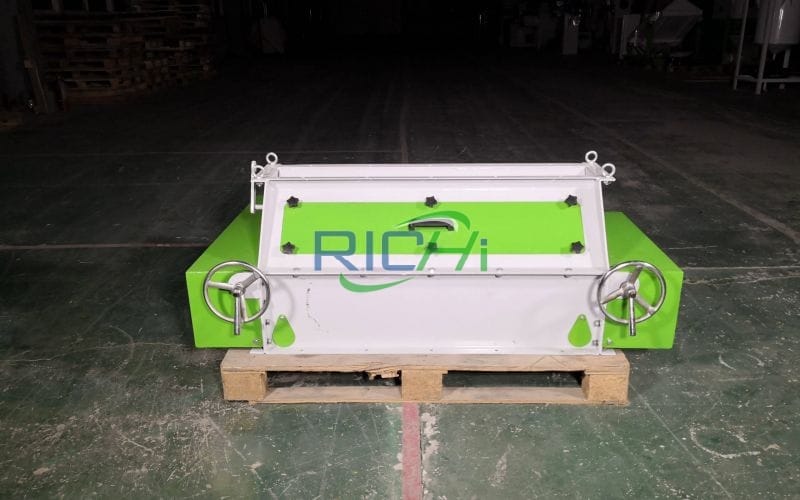
A guy in Yangon who was looking for shrimp feed line crumbler in Myanmar called me last year with a simple question: "Why am I paying three times the ingredient cost for something I could make myself?" That question led to one of my favorite projects – not because it was big, but because it made so much sense for the customer.
I'm a sales manager at RICHI. I cover Southeast Asia. Most of my customers are feed mills expanding their lines. But this one was different. He wasn't a feed miller. He was a shrimp farmer who got tired of being squeezed by his suppliers.
Let me explain what he was doing before, what he bought from us, and how a single crumbler changed his business.
Name:
Shrimp Feed Crumbler
Country:
Myanmar
Date:
2025
Capacity:
3-4 tons per hour
Model:
SSLG25x170X
Main Motor Power:
18.5kW
Raw Materials:
shrimp feed pellets
Final product size:
0.5-1.0mm
This customer owns about 120 hectares of shrimp ponds in the Ayeyarwady Delta region of Myanmar – near Pathein, if you know the area. He's been farming black tiger shrimp Penaeus monodon for about 15 years. Good operation. He knows his stuff.
But he had a problem that every shrimp farmer in Myanmar faces: good quality crumbled feed is expensive and hard to get. Most of the shrimp feed in Myanmar comes from Thailand or Vietnam – imported. The local feed mills make pelleted feed for adults, but fine crumbles for post-larvae and juveniles? Almost nobody makes them locally.
He was buying imported crumbles at about $1.40 per kg. The raw ingredients to make the same crumbles would cost him maybe $0.70 per kg. But he didn't have a crumbler. He had a small pellet mill for making adult feed, but no way to break pellets down into crumbles.
He looked at buying a full shrimp feed production line – pelletizer, belt dryer, coater, pellet feed crumbler, screener, the whole thing. The quotes he got were $150,000 to $200,000. Too much for a pilot project.
Then he asked: What if I just buy the crumbler? I already have a shrimp feed pellet machine that makes 2.5mm pellets. If I can crumble those pellets into 0.5-1.0mm crumbles, that covers 80% of what I need for juvenile shrimp. The really fine stuff 0.2-0.5mm I can still import until I grow into it.
That was smart thinking. He wasn't trying to do everything at once. He was fixing the biggest cost problem first.
Here's what he already had on his farm:
He was already making adult shrimp pellets 2.5mm diameter, about 8mm long for his own ponds. But juvenile shrimp can't eat 2.5mm pellets. They need crumbles. He had been buying those from a trader in Yangon who imported from Thailand.
The missing piece was a machine that could take his 2.5mm pellets and turn them into 0.5-1.0mm crumbles. That's exactly what a shrimp feed line crumbler does – it sits between the dryer and the screener, breaking pellets into smaller pieces.
He didn't need a new extruder. He didn't need a new dryer. He just needed one machine. The rest of his line was fine.
We recommended the SSLG25x170X – the larger X-type three-roll crumbler. Here's why:
He was running about 2.5 tons per hour of pellets through his extruder. The SSLG25x170X can handle that easily with room to grow.
Myanmar has a developing aquaculture industry. Ingredients availability is different from Vietnam or Thailand. Here's what this customer uses for his juvenile shrimp crumbles:
His extruded pellets are 2.5mm diameter, fairly hard – about 8-9% moisture after drying. Target crumble size range: 0.5mm to 1.0mm for juvenile shrimp PL15 to PL40, if you know shrimp stages. He also makes a small amount of 1.2-1.5mm crumbles for larger juveniles.
The SSLG25x170X with its fine X-type rolls can produce that whole range by adjusting the roll gap. Tight gap 0.4-0.5mm gives finer crumbles. Looser gap 0.7-0.8mm gives coarser crumbles.
I wasn't there for the installation – my colleague from our Thailand office went. But I talked to the customer a few weeks after startup. Here's what he said.
The machine arrived in a 40-foot container. The crumbler itself is heavy – about 2.8 tons – so they needed a small forklift to move it. His mill was on a concrete slab, but the slab wasn't perfectly level. They had to shim one corner by about 8mm to get the crumbler level. Without leveling, the rolls don't wear evenly.
He mounted the crumbler directly under his dryer discharge. The dryer outlet was about 1.9 meters high, so he built a simple stand from I-beams. Total fabrication cost: about 500,000 kyat maybe $150 USD at the time. Cheap.
The connection was tricky. His dryer had a 1.5 meter wide outlet, but the crumbler inlet is 1.7 meters wide. He needed an expanding chute. He made one from 2mm stainless steel sheet – not beautiful, but functional. He lined it with UHMW plastic to stop pellets from sticking.
Electrical hookup was straightforward. The machine needs 380V, 50Hz – standard for Myanmar industrial zones. He had an extra 30A breaker in his panel. His electrician wired it in one morning.
The biggest challenge? The V-belts. The crumbler uses B-type V-belts. He tried to buy spares locally in Pathein – nobody had them. He had to drive to Yangon about 5 hours each way to find a supplier. He ordered six spare belts from us with his next spare parts order. Lesson learned.
He kept records because he wanted to know exactly when the machine would pay for itself. Here's what he texted me after 90 days:
He wrote: I paid for the machine in the first two weeks. Everything after that is profit.
Now, I should be honest – those numbers are rough. He didn't account for his own labor, electricity, or depreciation. But even if you cut the value added in half, the payback period is still less than a month. That's the reality of moving from imported feed to in-house production in a market like Myanmar.
I called him about six months after installation. Here's what he told me, as close to his exact words as I can remember translated from Burmese through my colleague:
The machine runs every day. Sometimes 12 hours. No breakdowns yet. I check the roll gap every morning – takes two minutes. The rolls still look sharp. I've processed about 350 tons so far. The spare rolls are still in the box.
My shrimp are growing faster on my own crumbles. I think because they're fresher. Imported crumbles sit in a warehouse for weeks, maybe months. My crumbles go from my mill to my ponds in one day. The difference is visible.
The only thing I don't like – the machine is loud. Not as loud as a hammer mill, but louder than I expected. I built a small enclosure around it with foam panels. Now it's fine.
I'm already planning to add a second line next year. This time I might buy the whole line from you – extruder, dryer, crumbler, everything. But the crumbler was the right place to start. It fixed my biggest cost problem first.
That last part is important. He didn't buy a crumbler because he wanted a crumbler. He bought it because imported crumbles were killing his margins. The machine was just the tool to solve that problem.
Let me explain this clearly because I get asked all the time.
Shrimp feed pellets are small – usually 1.8mm to 2.5mm. They're also hard – extrusion cooking makes them dense and durable. If you try to crumble them with a standard poultry crumbler two rolls, coarse teeth, you get two problems:
The X-type three-roll design solves both problems.
The third roll the feeding roll sits above the two crushing rolls. It turns slowly and spreads pellets evenly across the full width of the crushing rolls. Without it, pellets tend to pile up in the middle of the rolls, causing uneven wear and inconsistent crumbling.
The X-type corrugations are finer – about 12 teeth per inch instead of 4-5 on a standard crumbler. This creates a shearing action rather than a crushing action. The pellets break along natural lines instead of shattering.
The larger roll diameter 250mm vs 150mm on smaller machines gives a longer nip zone. The pellets are in contact with the rolls for more rotations, which produces more uniform crumbles.
For this customer, the SSLG25x170X was the right choice because:
If he had bought a smaller machine – say the SSLG20x140X – he would have been running it near its max capacity from day one. No room for growth. And the 200mm rolls would have worn faster on his hard pellets.
The machine shipped from our Qingdao factory to Thilawa Port in Yangon. Thilawa is Myanmar's main deep-water port, about 25km southeast of downtown Yangon. It's a special economic zone, so customs clearance is faster than the old Yangon port.
Shipping time from Qingdao to Thilawa is about 10-12 days – close, so freight cost was reasonable. We put the crumbler in a 40-foot container with:
He handled customs clearance himself through a broker in Yangon. Total landed cost machine + shipping + customs was about 15% higher than the FOB price. He told me that was lower than he expected – his broker knew how to classify agricultural machinery to get a lower tariff rate.
One thing he appreciated: we put SPARE PARTS FOR AGRICULTURAL MACHINERY – NO COMMERCIAL VALUE on the spare rolls box. That saved him from paying duty on the spares separately. Small thing, but it mattered.
Since this project, I've had several other shrimp farmers in Myanmar and nearby countries ask me about doing the same thing. Here are the questions I get most often.
Can I use a hammer mill instead of a crumbler?
You can, but you won't like the results. A hammer mill produces too many fines – sometimes 30-40% dust. For shrimp feed, dust is waste. Shrimp can't eat it efficiently. A crumbler produces 8-12% fines at most. The difference in yield pays for the crumbler quickly.
Do I need a screener after the crumbler?
Yes. Even the best crumbler produces some fines and some oversized pieces. You need a two-deck screener: bottom deck removes fines send them back to the extruder, top deck removes oversized send them back to the crumbler. This customer bought a small screener locally – cost him about $1,500. It paid for itself in two months.
Can I make crumbles smaller than 0.5mm?
Yes, but you need a tighter roll gap and possibly a different roll profile. The X-type can go down to 0.3mm, but fines increase. For 0.3-0.5mm crumbles for very small post-larvae, you might be better off buying them or using a different process. This customer still imports his finest crumbles. He's okay with that for now.
How long do the X-type rolls last?
On hard shrimp pellets, expect 1,200-1,500 tons before you need to reverse the rolls flip them end-to-end to use the unworn edges. After another 1,200-1,500 tons, you might need to replace them. This customer is at 350 tons and the rolls look new.
I'm not going to pretend we're the only company that makes good crumblers. But for this project, we did a few things that he mentioned specifically.
First, we sent him a video of the exact machine running with 2.5mm pellets – not stock footage from a factory test, but a video of his machine being tested before it was crated. He saw the crumble quality with his own eyes before paying.
Second, we provided a detailed drawing of how to mount the crumbler under his existing dryer. Not a generic installation diagram – a drawing customized to his dryer dimensions. His local welder followed it exactly.
Third, we put together a first year spare parts kit based on what other shrimp feed customers actually used – not what our sales team thought he might need. The kit included belts, bearing housings, a set of roll seals, and a magnetic plate he didn't have one. Total cost: about $600. He told me later: I almost didn't buy the spare parts kit. Now I'm glad I did. The magnetic plate caught a bolt on day three.
Look, I'm not saying every shrimp farmer should buy a crumbler. But if you're already making adult pellets, and you're buying juvenile crumbles from someone else, you should at least run the numbers.
Here's how to think about it:
This customer was in the sweet spot. He had the upstream equipment. He had the volume. He was paying high prices for imports. And he had the technical skill to run the machine himself he's not a feed engineer, but he learned fast.
If you're reading this and wondering if a shrimp feed line crumbler in Myanmar – or wherever you are – makes sense for your operation, reach out. Send me your numbers: what pellets you're making now, what crumbles you're buying, and how much you use per month. I can give you a rough payback calculation. No obligation.
You can contact RICHI Machinery through the website or ask for the Southeast Asia sales team. Mention this article – the one about the shrimp farmer in Myanmar – and I'll know what you're talking about.
Having the right mix of reliable, high-quality pellet machine and pelletizing systems and expert support is essential to your success. Watch how our end-to-end feed pellet plant solutions have helped our customers optimize their performance.
Our customized and future-proofed turnkey pellet plant solutions is designed with you at the core. From vision to reality and beyond, our team stays connected with yours. Giving you peace-of-mind with an expert at your side.
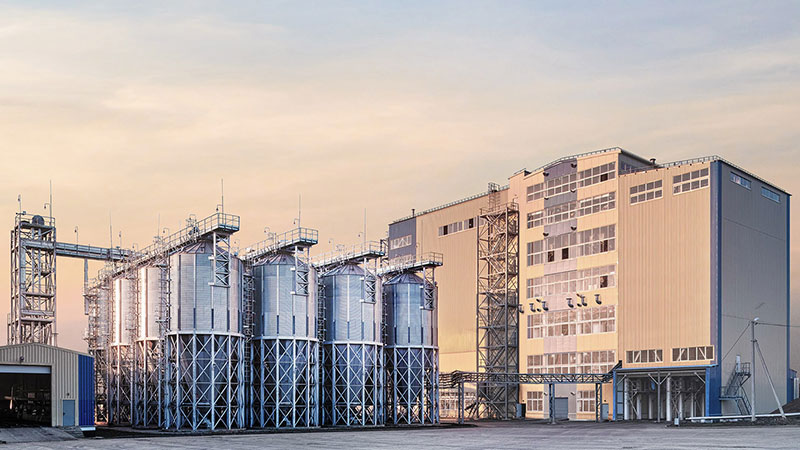
At RICHI, we go beyond project completion. With RICHI Servicee, we’re your dedicated partners in success. Count on us for expert guidance, minimal downtime, and optimized productivity. Choose RICHI for unmatched service and support.
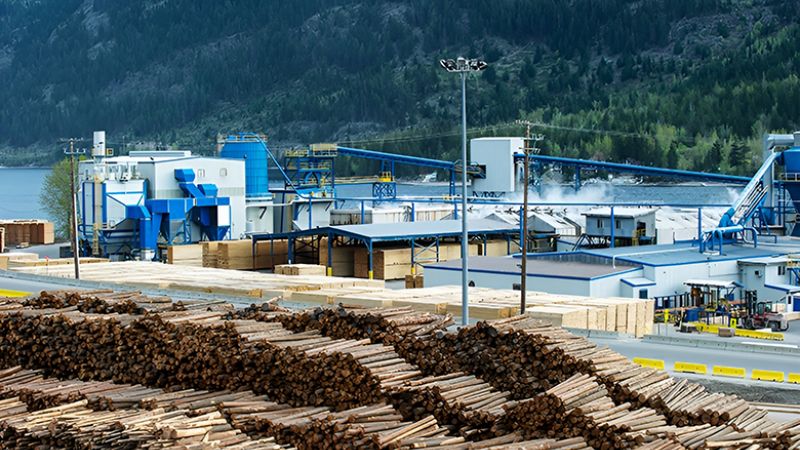


Meet global product demands and quality standards with industry-leading pellet plant design, engineering, equipment, and construction services for pellet processors.

Your Partner Beyond Project Completion
2000+ cases
RICHI is the leading designer, manufacturer and builder of pellet plants in the world, completing over 2000 projects in 140 countries across 6 continents.
Read More
Increase plant productivity, profitability, and safety by integrating high quality equipment into your pellet production line. Over the years, RICHI has become China's top pellet equipment manufacturer. At the same time, RICHI has established valuable partnerships with the world's leading component and raw material manufacturers to bring you the best there is in technology, automation, and efficiency in pelleting plant machinery.

For nearly 30 years, RICHI has been providing best-in-class pellet plant equipment and services to clients across a variety of industries, sizes, and needs. We pride ourselves on the knowledge and skill that each team member possesses – from our technical sales team to our process design engineers. You can count on RICHI Machinery to take your operation to the next level of innovation, quality, and success.
Need help with your pellet manufacturing plant project? Contact us today.
ANIMAL FEED
BIOMASS
WOOD
ORGANIC FERTILIZER
AQUA FEED
CAT LITTER
MUNICIPAL WASTE RECYCLING
SPECIAL PELLET PRODUCTION
RICHI Machinery continues to deliver world class pellet mill equipment, pellet plant engineering and project solutions that add value to our customers in the animal feed, wood waste, agriculture waste, organic fertilizer, cat litter and special pellet products industries. Throughout the years, we RICHI Machinery have built strong brand, becoming industry-leading pellet machine manufacturer. We value integrity, promise quality, and prioritize your success.
Learn MoreWith our expert team, we precisely implement your process engineering requirements in pellet mill and pelletizing plant systems. No matter which industry you’re in – we understand your needs and deliver solutions that meet the highest standards.
At RICHI, quality comes first. Our pellet making machine and related pellet line equipment undergo rigorous quality controls to ensure they meet the highest standards. Rely on products that are durable, safe, and efficient.
With decades of experience in pellet machine and pellet production line production, we have earned a reputation as a trusted partner in various industries. Our expertise allows us to cover a wide range of applications.
Not only do we offer premium pelleting equipment, but we are also experts at designing, building, installing, and maintaining facilities from the ground up. Our expertise is within pellt plant process design, discovering the most efficient, productive, and profitable way to handle your materials in an end-to-end cycle.
○ RICHI MACHINERY
Keeping in touch with us is an effective way to solve all your problems. If you have any needs or questions, please leave your contact information, then RICHI technical consultants will send design, quotation, videos to your mailbox. You can also contact us directly via WhatsApp: +86 13838389622
Copyright©2015-2026 by HENAN RICHI MACHINERY CO., LTD. All rights reserved.