
This is a project regarding a shrimp feed crumble maker in Saudi Arabia. The machine is essential for his target crumble size (0.5-1.0mm). The standard three-roll crumbler (non-X) has coarser teeth and is designed for 1.2-2.5mm crumbles. For 0.5mm crumbles, you need the fine teeth.
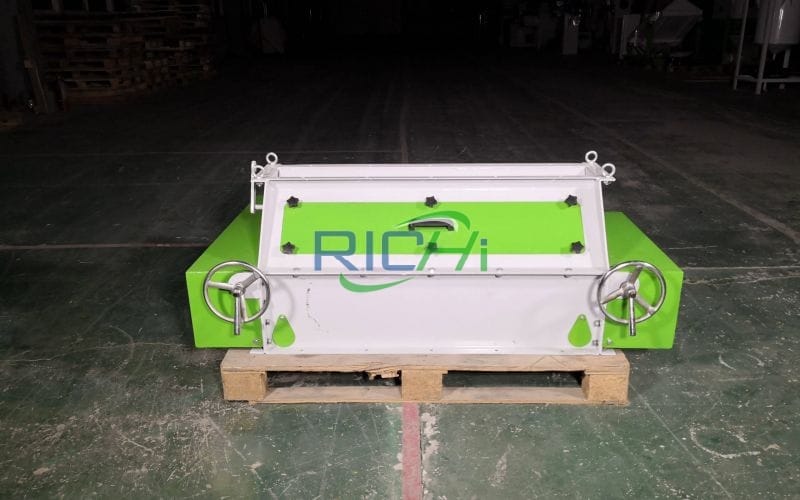
A shrimp feed crumble maker in Saudi Arabia wasn't something I expected to sell to a guy who'd never run a feed mill before.
But that's exactly what happened with a customer in Lith, a small coastal town about 150km south of Jeddah.
We got a call from a shrimp farmer – let me call him Ahmed. He'd been farming shrimp for about six years. Whiteleg shrimp (Litopenaeus vannamei), the same species everyone grows these days. He had 40 ponds, total water area maybe 30 hectares. Not huge by Asian standards, but decent for Saudi Arabia.
His problem was simple: feed cost. He was buying imported crumbles from a trader in Jeddah. The crumbles came from a factory in Thailand or Vietnam – he never knew which. The price kept going up. The quality was inconsistent. Sometimes the crumbles were too big. Sometimes too much dust. And he had no control over any of it.
He asked us: "Can I make my own crumbles? I don't want to build a big factory. I just want to feed my own shrimp."
That's the story we want to tell. Not a big feed mill. Not a factory expansion. Just a farmer who decided to take control of his biggest cost.
Name:
Shrimp Feed Crumbler
Country:
Saudi Arabia
Date:
2025
Capacity:
1.1-1.3 tons per hour
Model:
SSLG25x140X
Main Motor Power:
11kW
Number of Crumb Rolls:
3
Final product size:
1.2-2.5mm
Ahmed is not a feed engineer. He's a farmer. He knows water quality, stocking density, disease management. But he didn't know the first thing about extrusion, drying, or crumbling.
What he did know: he was paying 5.8 Saudi riyals per kg for imported crumbles (about $1.55 USD at the time). He calculated that the raw ingredients – if he bought them himself – would cost him maybe 2.5 riyals per kg. That's a 3.3 riyal spread. On 30 tons per month (his usage for juvenile shrimp), that's 99,000 riyals per month – about $26,000 USD. Every month.
He had a small building on his farm – originally a storage shed, about 100 square meters. He had a 3-phase power connection (most farms in that region do, for the water pumps). He had a water supply.
What he didn't have: any feed equipment. No grinder. No mixer. No extruder. No dryer. No crumbler. Nothing.
So why did he only buy a crumble maker? Why not a whole line?
Because he was smart about it. He didn't want to invest $150,000 in equipment he didn't know how to run. He wanted to start small. Prove the concept. Then expand.
His plan was:
He bought just the crumble maker from us. The rest he sourced elsewhere. That's not typical – most customers want a complete solution. But I respected his approach. He was testing the water before diving in.
Saudi Arabia doesn't have a developed aquaculture feed industry. Most ingredients are imported. Ahmed's initial formula (he worked with a consultant from Egypt to develop it) looked like this:
His extruded pellets were 2.0mm diameter – small because he was targeting juvenile shrimp. Target crumble size: 0.5mm to 1.0mm. He didn't need larger crumbles because he only buys whole pellets for adult shrimp.
The challenge was his extruder. It was a small, single-screw machine – Chinese brand, not high-end. It produced soft pellets, not as hard as pellets from a twin-screw extruder. Soft pellets are harder to crumble cleanly – they tend to squish instead of break.
I warned him about this before he bought the crumble maker. He said: "I know. But I'll upgrade the extruder later. First I want to see if the pellet feed crumbler works with what I have."
Fair enough.
We recommended the SSLG25x140X shrimp feed crumble maker. Here's why, and why not a different model.
First, roll diameter: 250mm. The smaller 150mm or 200mm rolls would have worked, but with his soft pellets, larger rolls are better. Why? Larger rolls have a longer arc of contact. The pellets spend more time between the rolls, which means they're more likely to break cleanly rather than squish. With soft pellets, smaller rolls tend to smear them into a paste.
Second, roll length: 1400mm. His extruder was only making about 1.2 tons per hour – very small. The 1400mm roll length is overkill for that throughput. But he wanted room to grow. He planned to upgrade to a 2.5 t/h extruder within a year. The 1400mm crumbler would handle that easily. The smaller 1000mm or 800mm models would have become bottlenecks.
Third, X-type corrugations: essential for his target crumble size (0.5-1.0mm). The standard three-roll crumbler (non-X) has coarser teeth and is designed for 1.2-2.5mm crumbles. For 0.5mm crumbles, you need the fine teeth.
Fourth, three-roll design: the feeding roll helps distribute his soft pellets evenly. With a two-roll machine, the pellets would tend to clump in the middle, causing uneven wear and inconsistent crumbling.
Power: 11kW main motor + 1.1kW feeder motor. His existing electrical panel could handle that – he had a 60A feed from the farm's main supply.
He paid for the machine. We shipped it. And then the real learning began.
I'm going to be honest. The first month was rough. Not because of the machine – because of everything around it.
Problem 1: The extruder. His shrimp fish feed extruder was making inconsistent pellets. Sometimes 1.8mm, sometimes 2.2mm. The die wasn't heating evenly. So the pellets going into the crumbler were different sizes. That's a disaster for crumbling. You can't set one roll gap that works for two different pellet diameters.
He fixed this by replacing the extruder heater bands – cheap fix, about 500 riyals. Then the pellets were consistently 2.0mm.
Problem 2: Pellet moisture. His dryer was a homemade contraption – a perforated belt with fans blowing hot air. No temperature control. Some pellets came out at 6% moisture (too dry, brittle, crumbled into dust). Others came out at 12% (too wet, squishy, turned into paste in the crumbler).
He fixed this by adding a simple moisture meter (cost him about 200 riyals) and training his guy to adjust the dryer speed based on readings. Took about two weeks to get consistent.
Problem 3: No screener. He thought he could crumble and then bag directly. He was wrong. The crumbler produced about 15% fines and 10% oversized. Without a screener, the fines ended up in the bags. His shrimp didn't eat the fines – they just settled at the bottom of the pond.
He bought a small vibrating screener from a local supplier – about 3,000 riyals. Two decks: 0.3mm bottom, 1.2mm top. The fines (below 0.3mm) went back to the extruder (re-processed). The oversized (above 1.2mm) went back to the crumbler. The acceptable crumbles (0.3-1.2mm) went to bagging.
After these fixes, the system started working.
Once he got the upstream issues sorted, the crumble maker performed well. Here's what Ahmed reported after three months of steady production:
He told me: "I should have done this three years ago. I wasted so much money on imported feed."
Ahmed sent me a voice note on WhatsApp after about four months. I transcribed it (translated from Arabic, cleaned up a bit):
"Look, I'm not a feed expert. I'm a shrimp farmer. But this machine works. My shrimp are eating better. The crumbles are uniform – not like the imported stuff where half is powder and half is too big.
The first month was hard. I didn't know about moisture control. I didn't know about the screener. But your guy on the phone helped me. He told me to buy a moisture meter. He told me I need a screener. He was right.
Now I run the crumbler every morning for about 8 hours. My worker checks the roll gap once a day. That's it. No problems.
I already ordered a bigger extruder. Next month I'll be making 2.5 tons per hour. The crumbler can handle it – that's why I bought the bigger model.
One thing – buy spare belts. My belts stretched after about 100 hours. I didn't have spares. I had to wait three days for a supplier in Jeddah to send me. Now I have four sets on the shelf.
Would I recommend this machine to other farmers? Yes. But tell them they need a screener and a moisture meter. The machine is good, but the stuff around it matters too."
That last line – "the stuff around it matters too" – that's the kind of feedback that comes from real experience.
This is a common question from farmers who are new to feed production. Ahmed asked it too.
A hammer mill can break pellets into smaller pieces. So why not use a hammer mill?
Because a hammer mill uses impact – it smashes the pellets. This creates:
A shrimp feed crumble maker uses shear – it cuts the pellets between two rolls. This creates:
For shrimp feed, uniform crumble size is critical. Shrimp feed by feel and taste, not by sight. If the crumbles are different sizes, the shrimp will eat the bigger pieces first and ignore the smaller ones. That's inefficient. With uniform crumbles, they eat everything.
Ahmed tested this. He took two batches of crumbles – one from his hammer mill (which he used briefly before buying the crumbler) and one from the crumbler. He put them in two feeding trays in the same pond. The crumbler tray was empty in 45 minutes. The hammer mill tray still had dust and small pieces after 2 hours.
That test alone convinced him.
The shrimp feed crumble maker shipped from Qingdao to King Abdullah Port, which is about 100km north of Jeddah. This is a newer port – deeper water, less congestion than the old Jeddah Islamic Port.
Shipping time from Qingdao to Saudi Arabia is about 25-28 days. We put the machine in a 20-foot container with:
Customs clearance in Saudi Arabia took about 10 days – faster than I expected. His broker in Jeddah handled everything. Total landed cost was about 18% higher than the FOB price – mostly shipping and duties.
Ahmed arranged his own trucking from King Abdullah Port to Lith – about 250km, maybe 3 hours. He has a small truck for moving feed around his farm. It worked fine.
If you're a shrimp farmer thinking about making your own crumbles, here's what Ahmed told me he wished he knew from the start.
Ahmed was not our typical customer. He wasn't a feed miller. He was a farmer. So we approached this differently.
First, we didn't try to sell him a whole shrimp feed production line. He asked for just a crumbler. We sold him just a crumbler. Some salespeople would have pushed for a bigger sale. That's not how we work. If a customer knows what they need, we listen.
Second, we provided technical support for things that weren't our equipment. When his extruder was making inconsistent pellets, we helped him troubleshoot – even though we didn't sell him the extruder. Why? Because if his pellets are bad, he'll blame the crumbler. It's in our interest to help him get the whole line working.
Third, we sent him a simple checklist for startup in Arabic – not just English. Things like: check belt tension after 50 hours, clean the magnetic plate daily, measure roll gap weekly. He printed it and taped it to the wall next to the crumbler.
Fourth, we offered a video call during his first production run. I sat in my office and watched on my phone while he ran the machine. I could see the crumbles coming out, hear the motor, see the roll gap indicator. When he had a question about the screener (not our equipment), I couldn't help – but I told him to call the screener supplier. He appreciated that I didn't pretend to know everything.
Here's my honest take, based on Ahmed's experience and others like him.
A shrimp feed crumble maker in Saudi Arabia – or anywhere – makes sense if:
It does NOT make sense if:
For Ahmed, the crumble maker was the right move. He went from paying 5.8 riyals per kg to making his own for 3.2 riyals per kg. On 30 tons per month, that's 78,000 riyals saved every month. The machine paid for itself in less than two weeks. Everything after that is profit.
If you're reading this and you're a shrimp farmer in Saudi Arabia – or anywhere in the Middle East – and you're tired of paying high prices for imported crumbles, think about making your own.
You don't need a big factory. You don't need to be a feed engineer. You need:
Start small. Prove the concept. Then grow.
Ahmed started with a 1.2 t/h extruder. A year later, he upgraded to 2.5 t/h. Two years later, he started selling crumbles to his neighbors. Now he's running two shifts and thinking about a second line.
It all started with one machine – a shrimp feed crumble maker in Saudi Arabia.
If you want to talk about your situation, reach out through the RICHI website (https://www.pellet-richi.com/). Tell me your pond size, your current feed usage, and what you're paying for imported crumbles. I can give you a rough payback calculation. No pressure. Just an honest conversation from someone who's seen this work.
And if you're in Saudi Arabia, I can connect you with Ahmed. He's not a salesperson – just a farmer who figured it out and is happy to share what he learned. Sometimes that's the best advice you can get.
Having the right mix of reliable, high-quality pellet machine and pelletizing systems and expert support is essential to your success. Watch how our end-to-end feed pellet plant solutions have helped our customers optimize their performance.
Our customized and future-proofed turnkey pellet plant solutions is designed with you at the core. From vision to reality and beyond, our team stays connected with yours. Giving you peace-of-mind with an expert at your side.
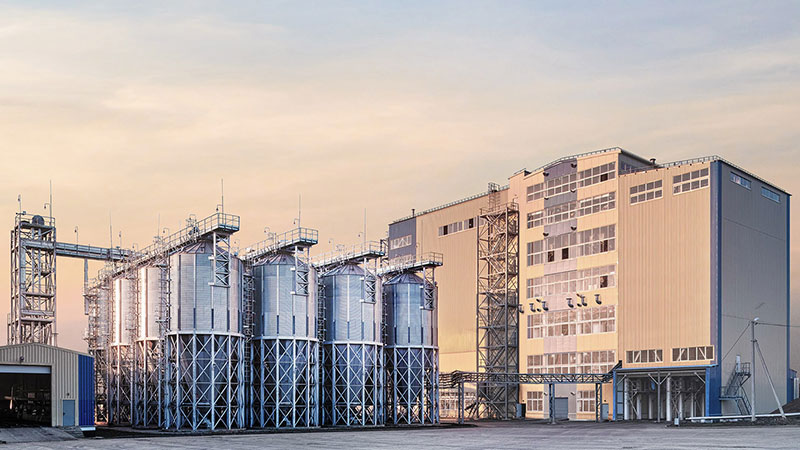
At RICHI, we go beyond project completion. With RICHI Servicee, we’re your dedicated partners in success. Count on us for expert guidance, minimal downtime, and optimized productivity. Choose RICHI for unmatched service and support.
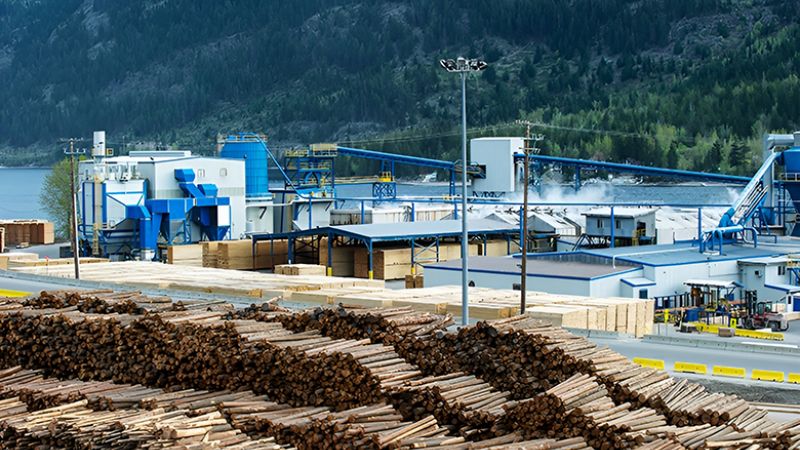


Meet global product demands and quality standards with industry-leading pellet plant design, engineering, equipment, and construction services for pellet processors.

Your Partner Beyond Project Completion
2000+ cases
RICHI is the leading designer, manufacturer and builder of pellet plants in the world, completing over 2000 projects in 140 countries across 6 continents.
Read More
Increase plant productivity, profitability, and safety by integrating high quality equipment into your pellet production line. Over the years, RICHI has become China's top pellet equipment manufacturer. At the same time, RICHI has established valuable partnerships with the world's leading component and raw material manufacturers to bring you the best there is in technology, automation, and efficiency in pelleting plant machinery.

For nearly 30 years, RICHI has been providing best-in-class pellet plant equipment and services to clients across a variety of industries, sizes, and needs. We pride ourselves on the knowledge and skill that each team member possesses – from our technical sales team to our process design engineers. You can count on RICHI Machinery to take your operation to the next level of innovation, quality, and success.
Need help with your pellet manufacturing plant project? Contact us today.
ANIMAL FEED
BIOMASS
WOOD
ORGANIC FERTILIZER
AQUA FEED
CAT LITTER
MUNICIPAL WASTE RECYCLING
SPECIAL PELLET PRODUCTION
RICHI Machinery continues to deliver world class pellet mill equipment, pellet plant engineering and project solutions that add value to our customers in the animal feed, wood waste, agriculture waste, organic fertilizer, cat litter and special pellet products industries. Throughout the years, we RICHI Machinery have built strong brand, becoming industry-leading pellet machine manufacturer. We value integrity, promise quality, and prioritize your success.
Learn MoreWith our expert team, we precisely implement your process engineering requirements in pellet mill and pelletizing plant systems. No matter which industry you’re in – we understand your needs and deliver solutions that meet the highest standards.
At RICHI, quality comes first. Our pellet making machine and related pellet line equipment undergo rigorous quality controls to ensure they meet the highest standards. Rely on products that are durable, safe, and efficient.
With decades of experience in pellet machine and pellet production line production, we have earned a reputation as a trusted partner in various industries. Our expertise allows us to cover a wide range of applications.
Not only do we offer premium pelleting equipment, but we are also experts at designing, building, installing, and maintaining facilities from the ground up. Our expertise is within pellt plant process design, discovering the most efficient, productive, and profitable way to handle your materials in an end-to-end cycle.
○ RICHI MACHINERY
Keeping in touch with us is an effective way to solve all your problems. If you have any needs or questions, please leave your contact information, then RICHI technical consultants will send design, quotation, videos to your mailbox. You can also contact us directly via WhatsApp: +86 13838389622
Copyright©2015-2026 by HENAN RICHI MACHINERY CO., LTD. All rights reserved.