
Sheep feed crusher machine in Turkey for grinding alfalfa hay, barley straw and wheat straw. Explore the SFSP66×60 hammer mill, 55 kW motor, forage grinding capacity and integration with existing feed equipment.
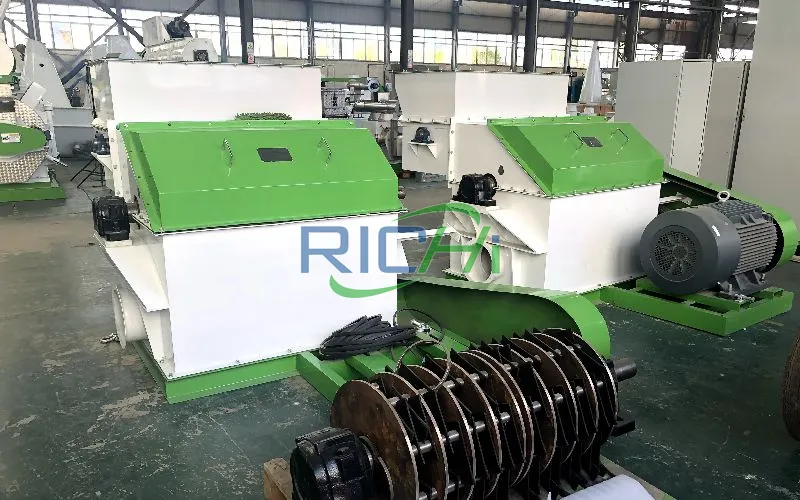
A feed mill near Izmir, Turkey, needed a more dependable way to prepare fibrous ingredients for its sheep feed products. The mill already had a mixer and pellet mill, but its aging crusher was limiting the consistency of the grinding stage. Instead of investing in a complete new production line, the customer chose to replace the existing machine with a standalone sheep feed crusher machine in Turkey.
The main materials handled by the mill include alfalfa hay, barley straw and wheat straw. These ingredients behave differently from cereal grains during grinding: long stems can interfere with feeding, while moisture, fibre content and screen selection affect both throughput and the resulting particle-size distribution. The replacement therefore had to suit the mill's forage-processing requirements rather than rely on grain capacity figures alone.
RICHI Machinery recommended one SFSP66×60 hammer mill with a 55 kW main motor. The machine was selected to prepare suitably dried and pre-processed forage for subsequent mixing and pelleting, allowing the customer to upgrade the most problematic stage while retaining serviceable downstream equipment.
Name:
Sheep feed hammer mill
Country:
Turkey
Date:
2026
Capacity:
1000–1500 KG/H
Model:
SFSP66×60
Main Motor Power:
55 kW
Raw Materials:
Dry alfalfa hay, barley straw and wheat straw
Final product size:
2–4mm
The SFSP66×60 feed crusher machine provides a 600 mm-wide grinding chamber and a 660 mm rotor. Its reference forage capacity is 1,000–1,500 kg/h under suitable operating conditions. This is the relevant capacity range for evaluating the customer's hay and straw grinding duty; grain throughput should not be substituted for fibrous-material performance.
| Equipment Parameter | Specification |
|---|---|
| Equipment | Sheep feed hammer mill crusher |
| Model | SFSP66×60 |
| Quantity | 1 unit |
| Main motor power | 55 kW |
| Rotor diameter | 660 mm |
| Grinding chamber width | 600 mm |
| Rotor speed | Approximately 2,980 rpm |
| Hammer tip speed | Approximately 103 m/s |
| Reference forage capacity | 1,000–1,500 kg/h |
| Main materials | Dry alfalfa hay, barley straw and wheat straw |
| Installation arrangement | Standalone replacement integrated with the existing feed-processing system |
The high-speed rotor and hammers reduce material through repeated impact, while the selected screen helps control the size distribution of the discharged meal. Actual throughput depends on the incoming material, moisture, pre-cut length, screen aperture and required fineness. The feeder, conveying system and dust extraction equipment also need to be sized for the intended operating rate.
For this medium-scale feed mill, the purpose of selecting the SFSP66×60 grass crusher machine was to improve the reliability of forage preparation without automatically replacing the existing mixer and pelletizer. The final production rate still needs to be coordinated with the capacity of those downstream machines.
Alfalfa hay, barley straw and wheat straw can all be relevant ingredients in sheep feeding systems, but their nutritional value and physical properties are not interchangeable. Alfalfa supplies a different nutrient profile from mature cereal straw, and the appropriate inclusion rate depends on forage quality, animal requirements and the complete ration.
Before grinding, the mill needs to prepare each material for stable feeding:
For initial trials, pre-cutting long forage to approximately 20–40 mm can provide a practical starting point, subject to the material and feeder design. This is a preparation guideline, not a fixed requirement for every installation. Fresh or rain-wet forage should not be treated as ready for dry hammer milling; moisture correction or drying may be necessary before grinding.
Cleaning and magnetic protection ahead of the crusher help reduce the risk of stones, metal fragments and other contaminants damaging the machine. These measures are particularly important when agricultural residues are collected from fields and stored in bales.
The customer required a more consistent forage grind for pellet production. A working particle-size target of approximately 2–4 mm was specified for the intended application, with the final setting to be confirmed through grinding trials and sieve analysis.
This range should not be interpreted as a universal particle-size requirement for all sheep feed. The suitable specification depends on whether the material is being incorporated into a pelleted ration or used in another feeding format, as well as the animal category and the overall formulation.
Screen aperture and actual particle size are also different measurements. Fibres can pass through a screen lengthwise, while repeated hammer impacts produce a distribution of smaller particles. For this reason, commissioning should evaluate representative samples rather than assume that the screen opening directly determines every particle's dimensions.
Finer grinding generally increases the work required per tonne and may reduce throughput. The objective is therefore to achieve the required feed specification at a practical production rate, rather than to grind every ingredient as finely as possible.
The new sheep feed grinder in Turkey serves as a dedicated size-reduction stage in the mill's existing process. It does not replace the other machines responsible for weighing, mixing or forming the finished product.
Before commissioning, the feed mill should verify that the receiving hopper, conveyor, dust extraction and discharge arrangements can support the crusher's intended operating rate. The mixer and pellet mill must also be able to accept the resulting material flow. A high crusher output offers little benefit if the downstream process cannot handle it.
Suitable cleaning and batch-management procedures remain necessary when changing between formulations. The hammer mill improves ingredient preparation, but finished sheep feed quality also depends on accurate formulation, weighing, mixing and appropriate processing conditions.
Replacing one machine can reduce the scope of an upgrade, but the new crusher still requires suitable electrical infrastructure, material handling and maintenance access.
| Installation Item | Project Consideration |
|---|---|
| Electrical supply | Provide a compatible supply and motor protection for the 55 kW main motor. Confirm site voltage, frequency, starting method and ancillary loads before installation. |
| Floor space | Reserve space for the crusher, feeder, discharge connections and dust extraction. Final dimensions and maintenance clearances should follow the approved general arrangement drawing. |
| Dust control | Provide suitable extraction and collection equipment to control airborne dust around dry forage grinding. |
| Operator coverage | A trained operator can supervise feeding, operating conditions and routine checks, with material handling and downstream duties assigned according to the mill's staffing arrangement. |
| Maintenance access | Allow safe access for inspection of hammers, screens, bearings and drive components, and for replacing wear parts. |
| Water requirements | Dry grinding normally requires no process water. Any separate cleaning or site-service requirements should be assessed for the installation. |
Routine checks should include screen condition, hammer wear, bearing temperature, vibration and motor load. Changes in material moisture or stem content should also be considered when investigating a sudden drop in throughput. These checks help distinguish a raw-material problem from a mechanical or feeding issue.
RICHI's equipment support can include model selection, installation preparation, operating guidance and spare-parts recommendations. For a standalone sheep feed grinding machine, these details help the customer integrate the new unit into its current operation without committing to an unnecessary plant-wide replacement.
For this project, the shipment was planned by sea, followed by inland transportation from the Port of Mersin to the customer's site near Izmir. The final logistics arrangement depends on the carrier schedule, customs procedures and transport costs.
Mersin is one possible entry point, but it is not automatically the most economical port for every Turkish destination. For similar feed mill equipment orders near Izmir, the buyer and supplier should compare available routes, port handling charges and inland haulage against alternatives such as Izmir or Aliağa, where suitable vessel services are available.
Before dispatch, the customer should confirm the installation dimensions, lifting arrangements, electrical requirements and access for unloading. Preparing these items in advance can reduce delays between delivery and commissioning.
During follow-up discussions, the feed mill manager highlighted the improvement in grinding consistency and the straightforward maintenance of the replacement machine. The customer also valued the technical guidance provided during installation and commissioning.
For a mill producing sheep feed from fibrous ingredients, dependable operation matters because a grinding interruption can affect the timing of subsequent mixing and pelleting batches. The new machine gives the customer a dedicated replacement for the worn crusher while allowing the rest of the production system to remain in service.
Performance should continue to be assessed through practical operating records, including tonnes processed, material moisture, screen selection, motor load and maintenance intervals. These measurements provide a more useful basis for evaluating operating efficiency than relying on nominal capacity alone.
This project demonstrates how a standalone hammer mill can address a specific bottleneck in an existing sheep feed mill. By replacing the old crusher rather than rebuilding the entire plant, the customer could focus its investment on forage grinding and retain equipment that remained suitable for the required production process.
The SFSP66×60 provides a 55 kW grinding configuration with a reference forage capacity of 1,000–1,500 kg/h under suitable conditions. For Turkish sheep feed producers working with alfalfa hay, barley straw and wheat straw, the right selection depends on the incoming material, required particle-size distribution, operating schedule and downstream equipment capacity.
RICHI Machinery supplies hammer mill crushers and other feed-processing equipment for customers upgrading existing mills or planning new installations. If you are evaluating a sheep feed crusher machine in Turkey, share your raw materials, required fineness, hourly feed demand and existing mixer or pellet mill specifications to determine a suitable configuration for your operation.
Having the right mix of reliable, high-quality pellet machine and pelletizing systems and expert support is essential to your success. Watch how our end-to-end feed pellet plant solutions have helped our customers optimize their performance.
Our customized and future-proofed turnkey pellet plant solutions is designed with you at the core. From vision to reality and beyond, our team stays connected with yours. Giving you peace-of-mind with an expert at your side.

At RICHI, we go beyond project completion. With RICHI Servicee, we’re your dedicated partners in success. Count on us for expert guidance, minimal downtime, and optimized productivity. Choose RICHI for unmatched service and support.



Meet global product demands and quality standards with industry-leading pellet plant design, engineering, equipment, and construction services for pellet processors.


Your Partner Beyond Project Completion
2000+ cases
RICHI is the leading designer, manufacturer and builder of pellet plants in the world, completing over 2000 projects in 140 countries across 6 continents.
Read More
Increase plant productivity, profitability, and safety by integrating high quality equipment into your pellet production line. Over the years, RICHI has become China's top pellet equipment manufacturer. At the same time, RICHI has established valuable partnerships with the world's leading component and raw material manufacturers to bring you the best there is in technology, automation, and efficiency in pelleting plant machinery.

For nearly 30 years, RICHI has been providing best-in-class pellet plant equipment and services to clients across a variety of industries, sizes, and needs. We pride ourselves on the knowledge and skill that each team member possesses – from our technical sales team to our process design engineers. You can count on RICHI Machinery to take your operation to the next level of innovation, quality, and success.
Need help with your pellet manufacturing plant project? Contact us today.
ANIMAL FEED
BIOMASS
WOOD
ORGANIC FERTILIZER
AQUA FEED
CAT LITTER
MUNICIPAL WASTE RECYCLING
SPECIAL PELLET PRODUCTION
RICHI Machinery continues to deliver world class pellet mill equipment, pellet plant engineering and project solutions that add value to our customers in the animal feed, wood waste, agriculture waste, organic fertilizer, cat litter and special pellet products industries. Throughout the years, we RICHI Machinery have built strong brand, becoming industry-leading pellet machine manufacturer. We value integrity, promise quality, and prioritize your success.
Learn MoreWith our expert team, we precisely implement your process engineering requirements in pellet mill and pelletizing plant systems. No matter which industry you’re in – we understand your needs and deliver solutions that meet the highest standards.
At RICHI, quality comes first. Our pellet making machine and related pellet line equipment undergo rigorous quality controls to ensure they meet the highest standards. Rely on products that are durable, safe, and efficient.
With decades of experience in pellet machine and pellet production line production, we have earned a reputation as a trusted partner in various industries. Our expertise allows us to cover a wide range of applications.
Not only do we offer premium pelleting equipment, but we are also experts at designing, building, installing, and maintaining facilities from the ground up. Our expertise is within pellt plant process design, discovering the most efficient, productive, and profitable way to handle your materials in an end-to-end cycle.
○ RICHI MACHINERY
Keeping in touch with us is an effective way to solve all your problems. If you have any needs or questions, please leave your contact information, then RICHI technical consultants will send design, quotation, videos to your mailbox. You can also contact us directly via WhatsApp: +86 13838389622
Copyright©2015-2026 by HENAN RICHI MACHINERY CO., LTD. All rights reserved.