
Poultry feed pelleting machine with automated system in Vietnam featuring a 55 kW SZLH350 pellet mill for automated feed production, process control and consistent pellet quality.
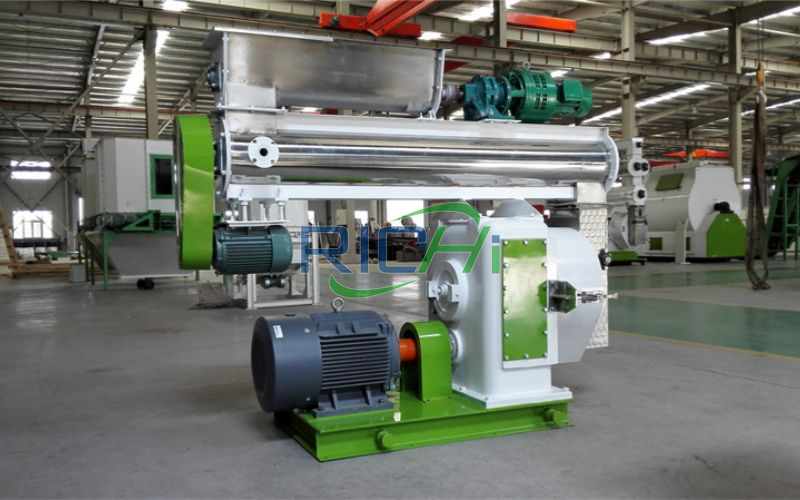
A large feed manufacturer in Dong Nai Province, Vietnam, needed to modernize its pelleting operations without replacing the equipment already serving its production lines. The factory produces broiler and layer feed for commercial poultry farms in southern Vietnam, with annual feed output of approximately 300,000 tons across its manufacturing operations. Although its grinding, mixing, cooling and bulk handling equipment remained in service, the existing pellet mills depended heavily on manual adjustments.
Operators had to monitor feeding conditions, conditioner temperature and motor load while responding to changes between feed formulations. This approach required close supervision and made consistent operation more dependent on individual experience.
The plant therefore decided to purchase a single poultry feed pelleting machine with an automated system, integrating the new equipment into its existing feed mill rather than investing in an entirely new production line.
Name:
Poultry Feed Pelleting Machine
Country:
Vietnam
Date:
2026
Capacity:
5–6 T/H
Model:
SZLH350
Main Motor Power:
55 kW
Control platform:
PLC with touchscreen HMI
Pellet diameter:
3-4.5mm
RICHI Machinery recommended the SZLH350 ring die feed pellet mill with a 55 kW main motor and an automation package configured for the plant's operating requirements. With a nominal capacity of 5–6 tons per hour, the machine was intended to supplement the existing pelleting section and provide more consistent control over the production of starter, grower, finisher and layer feed.
The project combined a conventional ring die pellet mill with electronic monitoring and control functions. The mechanical equipment performs the actual compression and pellet formation, while the automation package helps operators manage feeding, conditioning and operating conditions from a centralized interface.
| Equipment Parameter | Project Specification |
|---|---|
| Pellet mill model | SZLH350 |
| Main motor power | 55 kW |
| Nominal capacity | 5–6 T/H |
| Pellet forming system | Ring die and roller assembly |
| Control platform | PLC with touchscreen HMI |
| Feeder control | Variable-frequency drive |
| Conditioning control | Temperature monitoring and steam regulation |
| Motor monitoring | Current monitoring and feed-rate adjustment |
| Mechanical monitoring | Main-bearing vibration sensors |
| Connectivity | Ethernet-based monitoring, subject to network configuration |
The control system was designed to help maintain stable operating conditions as the plant changed between formulas. The PLC stores production recipes, displays operating information and allows authorized operators to monitor relevant process variables. Where the necessary sensors, actuators and control logic are installed, it can also adjust feeder speed and regulate steam supply in response to operating conditions.
The package was configured with storage for up to 20 feed recipes. Each recipe could contain defined operating targets for a particular product, reducing the need for operators to enter every parameter manually when switching between established formulations.
Automation does not eliminate the need for operator supervision. Ring die replacement, roller inspection, cleaning and mechanical maintenance still require trained personnel. The purpose of the system is to reduce routine manual intervention, improve process visibility and help operators respond to abnormal conditions before they interrupt production.
The factory required different pellet sizes for broiler starter, grower and finisher feed, as well as layer feed. RICHI supplied the pellet mill with four ring die options to accommodate these products. The following table summarizes the plant's initial operating targets.
| Parameter | Broiler Starter | Broiler Grower | Broiler Finisher | Layer Feed |
|---|---|---|---|---|
| Bird age | 0–12 days | 12–28 days | 28–42 days | 18+ weeks |
| Pellet diameter | 3.0 mm | 3.5 mm | 4.0 mm | 4.5 mm |
| Die compression ratio | 1:13 | 1:12 | 1:11 | 1:10 |
| Target production rate | 4–4.5 T/H | 4.5–5 T/H | 5–5.5 T/H | 5–5.5 T/H |
| Conditioning temperature | 88°C | 85°C | 80°C | 72°C |
| Steam addition | 6–7% | 5–6% | 4–5% | 3–4% |
These settings provide a starting point for production trials rather than universal operating rules. Actual throughput and pellet durability depend on the ingredient composition, mash moisture, steam quality, die condition and required finished-feed specifications. The grower and finisher recipes also need to be validated independently rather than relying on a single set of parameters for all products.
The automation package allows the operator to select the relevant recipe and monitor the resulting process conditions. Temperature and motor-load targets must be tuned against actual production data to avoid excessive feeding, inadequate conditioning or unnecessary reductions in throughput.
The plant uses maize, soybean meal, rice bran, fishmeal, vegetable oil and other ingredients to manufacture poultry feed. Maize provides a major energy source, while soybean meal contributes protein. Rice bran and fishmeal contribute additional nutrients, and the premix supplies specified vitamins, minerals and other micronutrients.
Two representative formulations used in the production program are shown below. They illustrate the range of products the pelleting equipment must accommodate; final nutrient specifications should be established by the manufacturer's nutrition team.
| Ingredient | Inclusion Rate |
|---|---|
| Ground maize | 50% |
| Soybean meal | 22% |
| Rice bran | 8% |
| Fishmeal | 6% |
| Vegetable oil | 5% |
| Wheat flour | 4% |
| Premix | 5% |
| Total | 100% |
| Ingredient | Inclusion Rate |
|---|---|
| Ground maize | 45% |
| Soybean meal | 15% |
| Rice bran | 12% |
| Limestone | 10% |
| Fishmeal | 6% |
| Vegetable oil | 5% |
| Premix | 7% |
| Total | 100% |
Changes in raw-material quality can affect moisture absorption, mash flow, conditioning and pellet durability. The plant therefore needs to validate recipe settings when ingredient characteristics change. A stored recipe provides a repeatable starting point, but it should not prevent operators from making controlled adjustments when testing shows that a formulation requires them.
The SZLH350 was added to a factory that already had animal feed hammer mills, twin-shaft paddle mixers with an 8,000 kg batch capacity, pellet coolers and bulk load-out equipment. The project focused on the pelleting stage and its control functions rather than replacing the entire feed manufacturing system.
The factory's annual output of approximately 300,000 tons applies to its overall manufacturing operations, not to the new pellet mill alone. At a nominal rate of 5–6 T/H, the SZLH350 serves as one production unit within a much larger facility. Coordinating feeder control, material distribution and cooler capacity is therefore essential to achieving useful additional output.
After commissioning, the plant reported improvements in process consistency and reduced reliance on continuous manual adjustments. The most important changes concerned how operators monitored the machine and responded to changing production conditions.
The plant also reported an approximately 8% reduction in electricity use per ton after optimizing motor loading. This figure should be treated as a site-specific result rather than a guaranteed saving, since energy consumption depends on production rate, formulation, conditioning requirements, motor loading and the measurement method used.
The control system can shorten the preparation required for a recipe change, but changing a physical ring die remains a mechanical task. Die changes must still follow the manufacturer's isolation, handling and inspection procedures.
"The automated pellet mill has given our operators much better visibility of the production process. We can monitor machine conditions through the network connection, and automatic feeder adjustment has helped us manage changes in motor load more consistently.
The vibration sensors needed calibration during the initial operating period. RICHI's automation engineer worked with our team to establish suitable thresholds, and the monitoring system has become a useful part of our maintenance routine. We have decided to order additional SZLH350 machines with automation for our other facilities."
The plant operates the pellet mill on a regular multi-shift production schedule. Its experience highlights the importance of commissioning the control system with actual feed formulations and training operators to distinguish normal process variation from conditions requiring intervention.
The SZLH350 feed pellet machine was shipped from Qingdao, China, to Cat Lai Port in Ho Chi Minh City, followed by road transport to Dong Nai Province. The reported ocean transit was approximately 12 days, with total transit taking about 18 days. Actual schedules depend on vessel availability, customs clearance and inland transport arrangements.
Before installation, the factory needed to prepare the machine foundation, electrical connections, material-transfer interfaces and control-system connections. The existing feed mill's electrical and automation infrastructure also had to be reviewed to ensure that the new equipment could operate safely alongside the other production units.
RICHI's project support covered several areas:
Remote access should be configured according to the factory's IT security requirements, with appropriate permissions and network controls. Monitoring availability depends on the local network and the final system configuration.
Following the project, the manufacturer ordered two additional SZLH350 pellet mills with the same automation package for other facilities and began evaluating a larger SZLH420 model for a future production line.
The project demonstrates how a poultry feed pelleting machine with automated system can upgrade a specific stage of an established feed mill. The SZLH350 combines a 55 kW ring die pellet mill with configurable process monitoring and control functions, helping the manufacturer manage different poultry feed products without replacing its entire manufacturing infrastructure.
For feed producers in Vietnam considering a similar investment, the main selection criteria include required throughput, pellet diameters, formulation variability, available steam supply, electrical infrastructure and compatibility with existing cooling and conveying equipment. Automation should be specified around the actual production process rather than treated as a standard package with identical functions for every plant.
RICHI Machinery supplies ring die pellet mills, feed processing equipment and configurable automation solutions for commercial feed manufacturers. Contact our technical team to discuss your production capacity, existing equipment and control requirements for a poultry feed pelleting system in Vietnam.
Having the right mix of reliable, high-quality pellet machine and pelletizing systems and expert support is essential to your success. Watch how our end-to-end feed pellet plant solutions have helped our customers optimize their performance.
Our customized and future-proofed turnkey pellet plant solutions is designed with you at the core. From vision to reality and beyond, our team stays connected with yours. Giving you peace-of-mind with an expert at your side.

At RICHI, we go beyond project completion. With RICHI Servicee, we’re your dedicated partners in success. Count on us for expert guidance, minimal downtime, and optimized productivity. Choose RICHI for unmatched service and support.



Meet global product demands and quality standards with industry-leading pellet plant design, engineering, equipment, and construction services for pellet processors.


Your Partner Beyond Project Completion
2000+ cases
RICHI is the leading designer, manufacturer and builder of pellet plants in the world, completing over 2000 projects in 140 countries across 6 continents.
Read More
Increase plant productivity, profitability, and safety by integrating high quality equipment into your pellet production line. Over the years, RICHI has become China's top pellet equipment manufacturer. At the same time, RICHI has established valuable partnerships with the world's leading component and raw material manufacturers to bring you the best there is in technology, automation, and efficiency in pelleting plant machinery.

For nearly 30 years, RICHI has been providing best-in-class pellet plant equipment and services to clients across a variety of industries, sizes, and needs. We pride ourselves on the knowledge and skill that each team member possesses – from our technical sales team to our process design engineers. You can count on RICHI Machinery to take your operation to the next level of innovation, quality, and success.
Need help with your pellet manufacturing plant project? Contact us today.
ANIMAL FEED
BIOMASS
WOOD
ORGANIC FERTILIZER
AQUA FEED
CAT LITTER
MUNICIPAL WASTE RECYCLING
SPECIAL PELLET PRODUCTION
RICHI Machinery continues to deliver world class pellet mill equipment, pellet plant engineering and project solutions that add value to our customers in the animal feed, wood waste, agriculture waste, organic fertilizer, cat litter and special pellet products industries. Throughout the years, we RICHI Machinery have built strong brand, becoming industry-leading pellet machine manufacturer. We value integrity, promise quality, and prioritize your success.
Learn MoreWith our expert team, we precisely implement your process engineering requirements in pellet mill and pelletizing plant systems. No matter which industry you’re in – we understand your needs and deliver solutions that meet the highest standards.
At RICHI, quality comes first. Our pellet making machine and related pellet line equipment undergo rigorous quality controls to ensure they meet the highest standards. Rely on products that are durable, safe, and efficient.
With decades of experience in pellet machine and pellet production line production, we have earned a reputation as a trusted partner in various industries. Our expertise allows us to cover a wide range of applications.
Not only do we offer premium pelleting equipment, but we are also experts at designing, building, installing, and maintaining facilities from the ground up. Our expertise is within pellt plant process design, discovering the most efficient, productive, and profitable way to handle your materials in an end-to-end cycle.
○ RICHI MACHINERY
Keeping in touch with us is an effective way to solve all your problems. If you have any needs or questions, please leave your contact information, then RICHI technical consultants will send design, quotation, videos to your mailbox. You can also contact us directly via WhatsApp: +86 13838389622
Copyright©2015-2026 by HENAN RICHI MACHINERY CO., LTD. All rights reserved.