
The Japanese customer did not buy a pallet crusher because its old machine was simply “too slow.” The real problem was material complexity. Returned wooden pallets, transport skids and shipping-crate timber arrived with nails, staples and occasional metal fittings still embedded in the wood. A conventional wood chipper designed for relatively clean logs and branches was not the right first-stage machine for that feedstock.
The Japanese customer did not buy a pallet crusher because its old machine was simply “too slow.” The real problem was material complexity. Returned wooden pallets, transport skids and shipping-crate timber arrived with nails, staples and occasional metal fittings still embedded in the wood. A conventional wood chipper designed for relatively clean logs and branches was not the right first-stage machine for that feedstock.
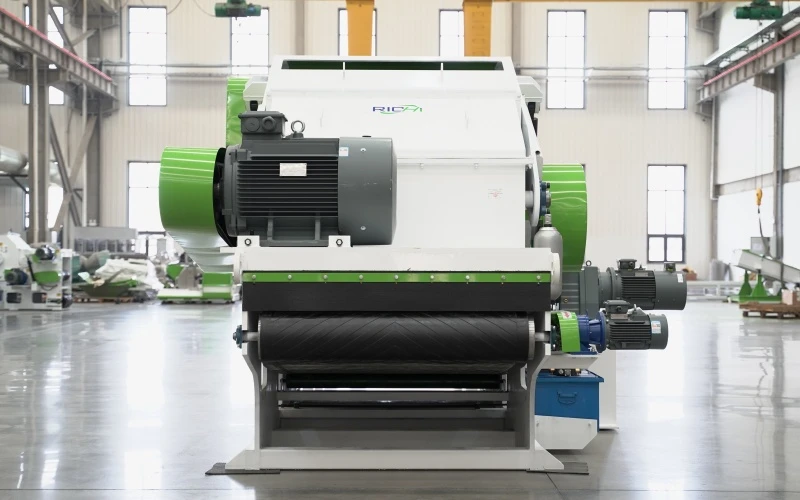
The customer, a wood-recycling and biomass-preparation company in Aichi Prefecture near Nagoya, therefore installed one RIBPC 1250×500a pallet crusher in Japan as a standalone replacement for an aging primary-size-reduction unit. The pallet shredder receives mainly clean industrial pallet and packaging wood, reduces the bulky material to a manageable chip fraction, and sends the crushed stream through downstream metal separation before further processing for biomass fuel preparation.
Name:
Wooden pallets shredder
Country:
Japan
Date:
2026
Capacity:
8–12 T/H
Model:
RIBPC 1250×500a
Main Motor Power:
160 kW
Raw Materials:
Used wooden pallets, skids and clean crate timber
Final product size:
20–40mm
The plant does not describe every piece of waste timber entering the yard as “pallet wood.”
The principal material stream consists of used logistics pallets, skids and wooden shipping supports collected from manufacturers, warehouses and distribution businesses in the Nagoya industrial region.
Some clean crate timber and untreated construction off-cuts can be processed in the same campaign after inspection.
Painted wood, chemically treated timber, laminated panels, plywood with unknown coatings, MDF, particleboard and heavily contaminated demolition wood are separated rather than automatically sent into the biomass route.
The Nagoya and wider Aichi region is one of Japan’s major manufacturing and logistics centers.
Automotive parts, machinery, industrial equipment and other manufactured goods move through a dense network of plants, warehouses and distribution centers.
That type of activity creates a steady flow of transport packaging, including wooden pallets, skids and crates.
For a regional recycler, the business opportunity is not a hypothetical mountain of waste wood. It is a recurring commercial stream that can be collected, inspected, size-reduced and redirected into a controlled recovery route.
The customer also receives selected wood from construction contractors, but this material is handled more carefully than ordinary pallet wood.
Japan’s construction recycling framework specifically requires recycling or other recovery treatment for construction-generated wood from qualifying projects.
That makes Aichi a realistic market for construction wood crushing equipment, but it does not mean every demolition board is suitable for the customer’s final biomass application.
Only clean, untreated timber fractions are blended with the pallet stream.
A conventional chipper performs well when the feed consists of logs, slabs, branches or other relatively clean woody material.
Used pallets create a different mechanical problem.
They are wide, irregular structures assembled from multiple boards and blocks. Fasteners may remain hidden inside the timber, and loose boards can enter the feed opening at unpredictable angles.
The customer therefore needed a machine designed around impact crushing and robust feeding rather than a precision knife system intended for cleaner wood.
The existing single-shaft shredder could reduce pallets, but it was not an ideal high-throughput primary machine for the customer’s operating pattern.
Large pallet frames required repeated engagement with the rotor, and embedded fasteners accelerated wear on cutting components.
The recycler wanted faster bulk breakdown before the material entered downstream separation and finer processing.
This changed the selection from a general waste shredder to a dedicated waste pallet crusher machine.
| Project Parameter | Configuration |
|---|---|
| Equipment | Pallet crusher |
| Model | RIBPC 1250×500a |
| Feed Opening | 1250 × 500 mm |
| Main Motor Power | 160 kW |
| Feeding Motors | 11 kW + 7.5 kW |
| Hydraulic Pump | 2.2 kW |
| Discharge Conveyor | 1.5 kW |
| Hammer Count | 28 |
| Reference Capacity | Approximately 8–12 T/H depending on pallet structure, density and contamination |
| Main Feedstock | Used wooden pallets, skids and clean crate timber |
| Main Downstream Route | Further biomass fuel feedstock preparation |
The model data supplied for this project specify a 1250 × 500 mm feed opening, 160 kW main drive, 28 hammers and approximately 8–12 T/H reference capacity depending on the actual wood stream.
A pallet crusher is not selected only from tonnes per hour.
Feed opening geometry matters because a standard transport pallet is a bulky three-dimensional object rather than a loose pile of chips.
A wider receiving section reduces the amount of manual dismantling required before feeding.
The customer still removes abnormal steel components and unsuitable material, but operators do not have to break every standard wooden pallet into individual boards before crushing.
One of the most important distinctions in this project is the treatment of nails.
The crusher is selected to tolerate the ordinary nails and small fasteners commonly left in used pallets.
That does not mean the machine should be deliberately fed large steel brackets, chains, tools, anchor bolts or heavy metal components.
Large visible metal is removed before feeding whenever practical.
The crusher machine breaks the timber around embedded fasteners, but it does not make steel disappear.
After crushing, nails and ferrous fragments become easier to separate because the pallet structure has already been opened.
The Japanese recycler therefore treats crushing and magnetic separation as two separate process functions.
This is critical when the downstream wood will enter additional grinding or biomass preparation equipment.
A nail locked inside a 90 mm pallet block can be difficult for a simple upstream magnet to recover.
After impact crushing breaks the timber structure, more of the metal is exposed.
A downstream magnetic separator can then remove ferrous fragments from the moving wood stream.
The plant may still use upstream inspection or magnetic protection where appropriate, but post-crusher metal recovery is an essential part of the layout.
The customer’s next processing stage requires cleaner wood.
Residual nails entering a finer hammer mill can increase wear, create sparks and contaminate the finished material.
That means the magnetic separator is not an optional quality accessory.
It protects the complete downstream biomass preparation route.
Primary crushing improves material uniformity, but the discharge should not be described as automatically metal-free.
Wood pieces, fines and exposed fasteners leave the crushing section together.
Only after appropriate separation and inspection does the customer classify the wood as suitable for the next processing stage.
Pallet timber varies in grain direction, thickness and assembly structure.
Impact crushing is useful because the machine does not depend on presenting every board to a precision cutting edge at the same orientation.
The heavy rotor and hammer system breaks boards, pallet blocks and joints as the material passes through the crushing chamber.
This is particularly useful for irregular logistics wood.
Embedded nails increase the severity of the application.
Even a heavy-duty pallet recycling crusher requires regular inspection of hammers, pins, liners, screens and other wear surfaces.
The customer therefore selected the equipment because those parts can be inspected and replaced as part of planned maintenance, not because the machine was presented as immune to metal wear.
Eight to twelve tonnes per hour is a reference range, not a guaranteed output for every waste pallet stream.
Loose softwood pallets, dense hardwood skids and thick machinery crates do not process at the same mass rate.
Moisture, pallet block design, metal content, feed orientation and required discharge size also influence throughput.
The customer therefore measures actual performance by material family instead of using one fixed number for all incoming wood.
Large equipment crates can contain thicker beams, corner reinforcements and heavier fasteners than ordinary warehouse pallets.
The recycler inspects these units before crushing.
Oversized steel fittings are removed, and unusually large timber sections may be separated for another preparation step.
This protects the pallet crusher from being treated like a demolition shear.
This distinction matters for customer qualification.
The machine is intended for wood structures containing ordinary pallet fasteners.
It is not intended to process predominantly metallic loads or heavily reinforced demolition assemblies.
RICHI therefore asks customers to describe both the wood and the metal content before confirming the machine configuration.
Impact-crushed pallet wood is irregular.
The customer does not expect every discharged particle to have the same length and width.
Screen configuration and operating conditions can influence the discharge distribution, but the result is still a crushed wood fraction rather than calibrated knife-cut chips.
For this project, the objective is a manageable coarse fraction suitable for metal separation and downstream processing.
Wood in the roughly 20–40 mm class is still too large for direct ring-die pelletizing.
If the downstream route is biomass pellet production, the crushed pallet wood must undergo finer size reduction after metal removal and, where required, moisture conditioning.
The pallet crusher therefore performs primary crushing.
It does not replace the wood hammer mill used to prepare final pellet-feed particle size.
The customer purchased one crusher rather than a complete turnkey wood recycling line.
The existing facility already had receiving space, sorting equipment, conveyors and downstream material handling.
The new machine was inserted where the old primary size-reduction system had become the bottleneck.
This is why a standalone pallet crusher made more sense than rebuilding the entire plant.
The customer retained usable conveyors and existing downstream biomass preparation equipment.
Only interfaces around the crusher were modified.
This reduced civil work and allowed the plant to focus investment on the stage that was actually limiting production.
For retrofit projects, this integration work can be more important than supplying additional machines that the customer does not need.
Once pallets are crushed, the irregular discharge needs to leave the rotor area continuously.
The conveyor prevents material buildup and creates a controlled stream for downstream magnetic separation.
Its speed and width must therefore be coordinated with actual crusher output and the separator arrangement.
The original project description linked dust-proof bearing design with general workshop dust control.
These are different issues.
Sealed bearing arrangements help protect machine components from contamination, but airborne wood dust must be addressed through enclosure, extraction, housekeeping and site-specific dust-control measures.
A wood pallet crusher processing dry boards can generate significant fines at the feed and discharge points.
Whole pallets have relatively low exposed surface area compared with crushed dry wood.
After size reduction, the resulting chips and fines can become more combustible.
Metal impacts can also be relevant in a process handling nails.
The customer therefore manages combustible dust, accumulated fines and ignition risk throughout the downstream section rather than treating crushing as purely a mechanical problem.
The hydraulic and electrical protection systems help protect the machine when abnormal loads occur.
They are a last layer of protection, not permission to feed anything that fits through the opening.
Operators continue to remove obviously unsuitable objects and inspect unusually heavy crates before processing.
Aichi’s construction recycling system includes facilities permitted to crush and recover construction-generated wood.
That supports a genuine market for construction wood recycling equipment in the region.
But the Japanese customer keeps its clean biomass stream separate from questionable demolition materials.
Paint, preservatives, adhesives and composite-board content can change the acceptable downstream route.
Another important sorting rule comes before the machine.
A pallet that remains structurally sound may have greater value as a reusable transport pallet than as crushed wood.
The customer therefore separates reusable units where economically practical.
The pallet crusher receives damaged, broken or end-of-life units that have already failed the reuse decision.
The machine is not used to destroy reusable wooden packaging merely to create biomass feedstock.
The sequence is reuse where possible, material recovery where appropriate, and size reduction when the pallet has reached the end of its useful logistics life.
This is particularly relevant in a market such as Japan where waste handling and recycling are tightly managed.
Returned indoor pallets can be relatively dry, while pallets stored outside may absorb rainwater.
Construction timber can vary even more.
The crusher can process wood over a reasonable moisture range, but downstream biomass preparation requirements remain different.
If the final feedstock is too wet for grinding or pelletizing, drying remains a separate process.
Temporary surface moisture does not necessarily make pallet wood unusable.
The plant assesses whether the timber is simply wet or genuinely contaminated and degraded.
Material suitable for recovery can be stored and conditioned before later stages.
The crusher is not marketed as a dryer.
The crushed and de-metalled wood from this project is prepared primarily as biomass fuel feedstock.
After magnetic separation, material requiring further particle reduction passes into the customer’s existing secondary grinding section.
This creates a more consistent biomass raw material than attempting to feed whole broken pallets directly into downstream equipment.
Different applications impose different contamination and particle specifications.
A stream suitable for industrial biomass fuel is not automatically suitable for landscaping mulch, and recovered pallet wood should not be described as ready-made particleboard furnish without further processing and quality control.
The project therefore focuses on one actual production route.
The recycler already had downstream wood-processing infrastructure.
Adding the pallet crusher allowed bulky logistics wood to enter that existing system more consistently.
The business value came from expanding the range of end-of-life clean wood that the plant could prepare, rather than inventing several unrelated markets for the same discharge material.
The machine was manufactured and prepared for export in China and shipped from Qingdao toward the Port of Nagoya.
For a customer located in Aichi Prefecture, this is considerably more logical than routing the equipment through Yokohama and then trucking a heavy industrial machine back toward central Japan.
The Port of Nagoya is a major international cargo gateway serving the Chubu manufacturing region and handles containerized industrial cargo on a large scale.
Port selection is part of project realism.
The machine does not need a famous Japanese port; it needs a practical one.
Because the customer operates in the Nagoya industrial area, local port access shortens the inland movement and simplifies delivery planning.
RICHI therefore plans shipping around the actual plant location rather than using Yokohama or Kobe as default destinations for every Japanese project.
Because this was a retrofit, the crusher was integrated into an existing waste-processing workshop.
RICHI reviewed machine footprint, service clearance, feed direction, discharge elevation and conveyor interfaces before installation.
The customer prepared the foundation and electrical connection according to the final installation drawings rather than using a generic concrete-thickness rule.
Electrical planning also includes the 11 kW and 7.5 kW feeding drives, 2.2 kW hydraulic pump, 1.5 kW discharge conveyor and any associated separators or conveyors.
Motor starting method, local voltage, cable size, protection and transformer capacity are determined by the project electrical design.
The case therefore does not invent one breaker rating and present it as a universal requirement.
The first operating campaign used material already familiar to the recycling team: damaged softwood logistics pallets with normal embedded nails.
This gave operators a baseline for feed rate, rotor load, discharge behavior and metal separation.
Heavier crate material was introduced only after the standard pallet stream was running steadily.
If commissioning began with reinforced export crates and mixed construction timber, any blockage or unusual load would have been difficult to diagnose.
Using a known material first allowed the team to establish normal operating conditions.
This same commissioning logic is useful for other wood pallet crusher projects.
Running the machine well is not simply a matter of keeping the inlet completely full.
Operators watch pallet thickness, timber density and visible metal before deciding how quickly the next piece should enter.
A stack of lightweight standard pallets and one heavily reinforced industrial skid can impose very different loads.
The customer no longer needs workers to remove every ordinary pallet nail before crushing.
That is a meaningful labor advantage.
However, operators still sort incompatible wood, remove large metal fittings and separate reusable pallets.
The correct claim is reduced manual dismantling, not “no manual work.”
The customer keeps hammers and other critical wear components in the maintenance plan.
Inspection frequency changes with operating hours, material hardness and metal content.
A recycler processing clean softwood pallets will experience different wear from one handling dense hardwood crates with frequent steel fasteners.
The new machine removed a real primary-processing bottleneck, but the project does not claim an unverified percentage reduction in maintenance cost or labor.
Throughput, wear cost and downtime are tracked internally by the customer.
The commercial benefit comes from processing a broader range of end-of-life pallets more consistently with less manual dismantling.
“We did not need another general wood chipper. Our problem was the pallet structure and the fasteners inside it. The new crusher lets us break damaged pallets without dismantling every board first. Once the wood is opened, the magnetic separator can remove the exposed steel and the remaining material is much easier for our downstream equipment to handle.”
A wood pallet crusher is most useful when the incoming material is too bulky and fastener-rich for a conventional clean-wood chipper but does not justify an extremely slow general-purpose waste shredder.
The correct machine must be selected from pallet dimensions, timber type, metal content, target throughput and downstream use.
Distribution centers, industrial manufacturers and packaging companies can generate damaged pallets that are no longer economical to repair.
A waste pallet crusher machine reduces these structures into a form that is easier to separate, convey and process further.
Customers searching for a nail pallet crusher usually do not mean that metal separation is unnecessary.
They need a crusher robust enough to tolerate ordinary embedded fasteners so that nails can be exposed and removed more efficiently after size reduction.
For an industrial recycler in central Japan, a wood waste crusher can bridge the gap between bulky incoming packaging wood and existing downstream biomass equipment.
The main engineering issue is controlling contamination before the material reaches finer machinery.
A construction wood crusher can also process suitable clean off-cuts and separated structural timber.
However, demolition-derived material must be classified carefully because coatings, preservatives, composites and metal contamination can change the acceptable recovery route.
An industrial pallet shredder may be preferable when the customer processes very mixed waste, requires lower-speed cutting or needs a broader waste-material window.
A pallet crusher becomes attractive when the dominant feedstock is wooden packaging and the priority is faster primary breakdown at commercial throughput.
RICHI therefore does not treat the terms pallet shredder and pallet crusher as technically identical simply because buyers may search for both.
The RIBPC 1250×500a is one part of the recycling process.
A complete pallet recycling machine system may also include sorting, conveyors, magnetic separation, secondary grinding and dust control.
This Japanese customer already owned most of those surrounding functions, which is why only the crusher was purchased.
This pallet crusher in Japan project uses one RIBPC 1250×500a as a standalone primary-size-reduction upgrade at an Aichi Prefecture wood recycling facility near Nagoya.
The customer mainly handles damaged wooden pallets, industrial skids and clean shipping-crate timber generated by regional manufacturing and logistics operations. Selected untreated construction wood can also enter the same recovery route after inspection, while painted, chemically treated and composite wood is segregated.
The RIBPC 1250×500a has a 1250 × 500 mm feed opening, 160 kW main drive, 11 kW + 7.5 kW feeding system, 2.2 kW hydraulic pump, 1.5 kW discharge conveyor and 28 hammers. Reference capacity is approximately 8–12 T/H depending on pallet construction, timber density, moisture, embedded metal and required discharge condition.
Its role is primary crushing rather than finished biomass preparation. The machine breaks pallet structures and exposes embedded nails, after which magnetic separation removes ferrous material. If the wood is destined for pellet production or another fine biomass process, secondary grinding and moisture control are still required.
The customer chose a pallet crusher instead of another conventional wood chipper because the dominant problem was irregular wooden packaging containing ordinary fasteners. It chose the RIBPC 1250×500a instead of rebuilding the complete line because conveyors, sorting and downstream processing equipment were already available at the site.
For another buyer comparing a pallet crusher in Japan, wood pallet crusher, waste pallet crusher machine, nail pallet crusher, pallet recycling machine, industrial pallet shredder, construction wood crusher or wood waste crusher, RICHI Machinery would first review pallet dimensions, hardwood/softwood ratio, nail and metal content, presence of treated wood, hourly feed volume, required discharge size, downstream magnetic separation, secondary grinding requirements and final material use.
The most important qualification question is not simply how many pallets arrive each day. It is what is still attached to those pallets, and what the customer intends to do with the wood after the pallet structure has been broken.
Having the right mix of reliable, high-quality pellet machine and pelletizing systems and expert support is essential to your success. Watch how our end-to-end feed pellet plant solutions have helped our customers optimize their performance.
Our customized and future-proofed turnkey pellet plant solutions is designed with you at the core. From vision to reality and beyond, our team stays connected with yours. Giving you peace-of-mind with an expert at your side.
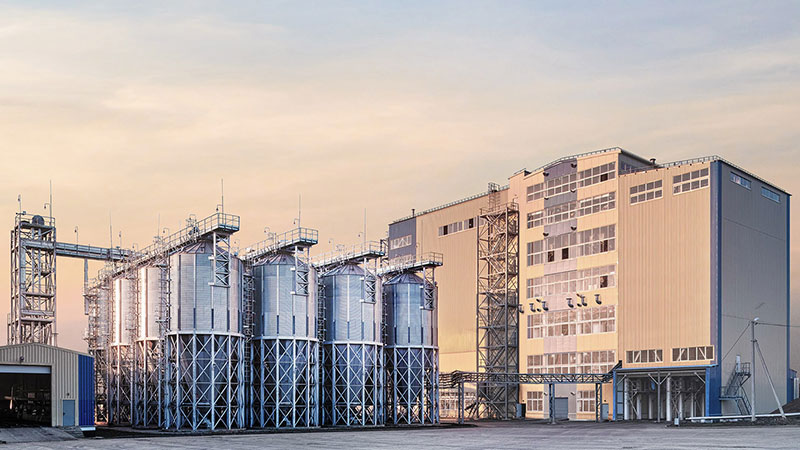
At RICHI, we go beyond project completion. With RICHI Servicee, we’re your dedicated partners in success. Count on us for expert guidance, minimal downtime, and optimized productivity. Choose RICHI for unmatched service and support.
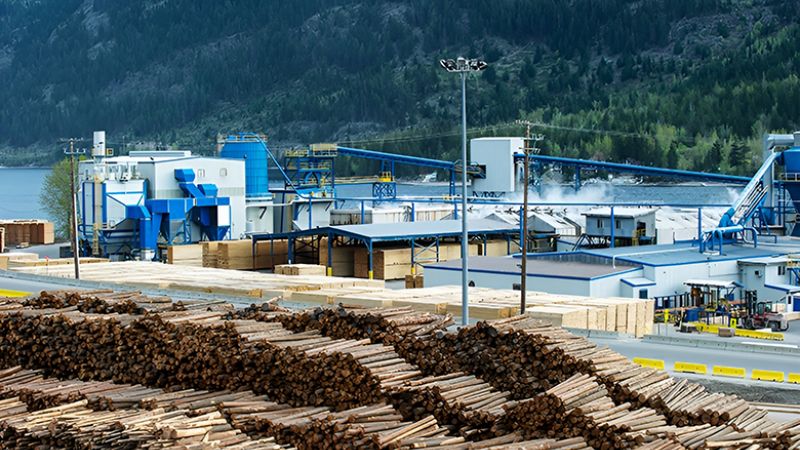


Meet global product demands and quality standards with industry-leading pellet plant design, engineering, equipment, and construction services for pellet processors.


Your Partner Beyond Project Completion
2000+ cases
RICHI is the leading designer, manufacturer and builder of pellet plants in the world, completing over 2000 projects in 140 countries across 6 continents.
Read More
Increase plant productivity, profitability, and safety by integrating high quality equipment into your pellet production line. Over the years, RICHI has become China's top pellet equipment manufacturer. At the same time, RICHI has established valuable partnerships with the world's leading component and raw material manufacturers to bring you the best there is in technology, automation, and efficiency in pelleting plant machinery.

For nearly 30 years, RICHI has been providing best-in-class pellet plant equipment and services to clients across a variety of industries, sizes, and needs. We pride ourselves on the knowledge and skill that each team member possesses – from our technical sales team to our process design engineers. You can count on RICHI Machinery to take your operation to the next level of innovation, quality, and success.
Need help with your pellet manufacturing plant project? Contact us today.
ANIMAL FEED
BIOMASS
WOOD
ORGANIC FERTILIZER
AQUA FEED
CAT LITTER
MUNICIPAL WASTE RECYCLING
SPECIAL PELLET PRODUCTION
RICHI Machinery continues to deliver world class pellet mill equipment, pellet plant engineering and project solutions that add value to our customers in the animal feed, wood waste, agriculture waste, organic fertilizer, cat litter and special pellet products industries. Throughout the years, we RICHI Machinery have built strong brand, becoming industry-leading pellet machine manufacturer. We value integrity, promise quality, and prioritize your success.
Learn MoreWith our expert team, we precisely implement your process engineering requirements in pellet mill and pelletizing plant systems. No matter which industry you’re in – we understand your needs and deliver solutions that meet the highest standards.
At RICHI, quality comes first. Our pellet making machine and related pellet line equipment undergo rigorous quality controls to ensure they meet the highest standards. Rely on products that are durable, safe, and efficient.
With decades of experience in pellet machine and pellet production line production, we have earned a reputation as a trusted partner in various industries. Our expertise allows us to cover a wide range of applications.
Not only do we offer premium pelleting equipment, but we are also experts at designing, building, installing, and maintaining facilities from the ground up. Our expertise is within pellt plant process design, discovering the most efficient, productive, and profitable way to handle your materials in an end-to-end cycle.
○ RICHI MACHINERY
Keeping in touch with us is an effective way to solve all your problems. If you have any needs or questions, please leave your contact information, then RICHI technical consultants will send design, quotation, videos to your mailbox. You can also contact us directly via WhatsApp: +86 13838389622
Copyright©2015-2026 by HENAN RICHI MACHINERY CO., LTD. All rights reserved.