
Hammer mill for feed grinding in Trinidad and Tobago for cattle feed processing. Explore the SFSP66×80, 90 kW motor, grain grinding applications and integration with existing feed equipment.
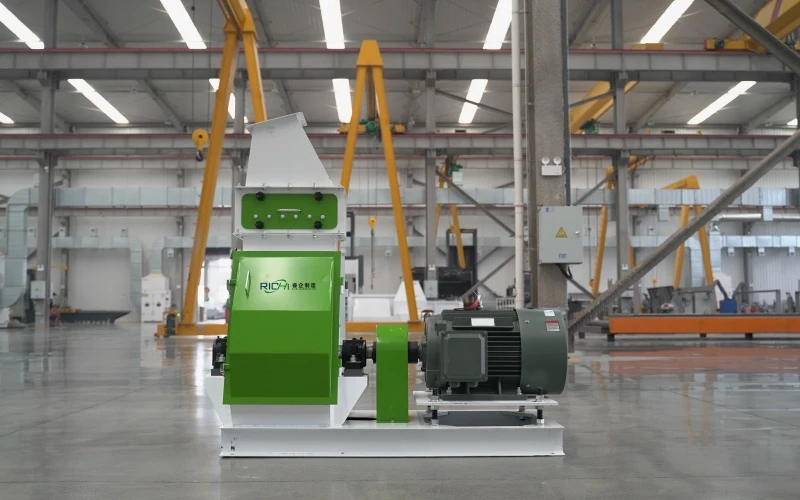
A cattle farm in central Trinidad, Trinidad and Tobago, needed to replace an aging feed grinder that could no longer keep pace with its feed preparation requirements. The farm produced grain-based cattle rations using imported yellow corn, soybean meal, rice bran and locally sourced agricultural ingredients. Although its existing mixer, pellet mill and forage grinding equipment remained usable, inconsistent grinding and recurring maintenance problems were affecting the reliability of the feed preparation process.
Rather than invest in an entirely new feed production line, the farm purchased one SFSP66×80 hammer mill from RICHI Machinery. The objective was to upgrade the grain-grinding stage while retaining the equipment that was already working well. For livestock operations in Trinidad and Tobago, this type of phased investment can provide a practical way to improve feed processing without undertaking a complete facility reconstruction.
Name:
cattle farm hammer mill
Country:
Trinidad and Tobago
Date:
2026
Capacity:
8–10 T/H
Model:
SFSP66×80
Main Motor Power:
90 kW
Raw Materials:
Yellow corn, rice bran and coconut cake
Final product size:
1.5–3.0mm
The farm required a grinder capable of processing cereal ingredients and selected oilseed by-products before they entered the existing mixing and pelleting system. Grass and dry forage were already handled by a separate grinder, so the new machine was selected primarily for grain-based materials rather than long, fibrous forage.
| Project Item | Details |
|---|---|
| Location | Central Trinidad, Trinidad and Tobago |
| Customer type | Medium-sized cattle farm |
| Equipment purchased | One SFSP66×80 hammer mill |
| Main motor power | 90 kW |
| Rated grain throughput | 8–10 T/H |
| Primary materials | Yellow corn, rice bran and coconut cake |
| Existing equipment retained | Forage grinder, feed mixer and pellet mill |
| Project objective | Replace the old grinder and improve feed preparation consistency |
The farm reported a current grain-based feed requirement of approximately 7 tons per day. The selected machine's nominal grain capacity is substantially higher than that daily requirement, so the operating schedule and provision for future expansion should be confirmed when evaluating the economics of this configuration. Actual output also depends on the material being ground, screen size, moisture and downstream handling capacity.
The SFSP66×80 is a water-drop hammer mill designed for grain crushing and feed ingredient size reduction. Its rotor and hammer arrangement support high-speed impact grinding, while the screen controls the particle size of the discharged material.
| Parameter | Specification |
|---|---|
| Model | SFSP66×80 |
| Rotor diameter | 660 mm |
| Crushing chamber width | 800 mm |
| Rotating speed | 2,980 rpm |
| Hammer line speed | 103 m/s |
| Main motor power | 90 kW |
| Rated grain throughput | 8–10 T/H |
For this application, the principal selection factors were the machine's grinding capacity, its compatibility with the farm's existing process and the availability of technical support for installation and maintenance.
The final grinding performance depends on more than motor power. Screen aperture, hammer condition, rotor speed, feed rate and the physical properties of each ingredient all influence particle size distribution and specific energy consumption. These parameters need to be matched to the intended cattle ration rather than using one setting for every material.
The farm uses a combination of imported feed ingredients and materials available through local agricultural supply chains. Each ingredient has a different role in the ration, and not every material needs to pass through the same grinding process.
This division of duties allows the SFSP66×80 feed crusher machine to concentrate on the materials for which impact grinding is appropriate, while the existing forage grinder continues to handle the fibrous fraction.
For cattle feed, grinding requirements depend on the ingredient, animal category and final feed form. The farm's cereal ingredients should be ground to a particle size appropriate for its ration and subsequent processing, with approximately 1.5–3.0 mm serving as a practical starting range for many ruminant feed applications. The actual screen specification should be validated against the nutritional formulation and whether the finished ration will be fed as mash or pellets.
Excessively fine grain is not automatically better for cattle. Particle size must be balanced against rumen function, feed intake, mixing uniformity and the characteristics of the forage fraction. The goal is a consistent, nutritionally appropriate ingredient size rather than maximum fineness.
During commissioning, the farm's grinding checks focused on the following:
The purchase was a single-machine replacement, not a new feed plant project. The farm retained its existing forage grinder, mixer and feed pellet machine, reducing the amount of equipment that needed to be replaced or relocated.
The upgraded process follows this sequence:
Keeping the existing machinery reduced the scope of the upgrade, but successful integration still required checks on electrical connections, material transfer points, dust collection, foundation suitability and the capacity of the downstream mixer. The complete process should be assessed as a system rather than assuming that a higher-capacity grinder automatically increases finished-feed output.
After replacing the old grinder, the farm reported improvements in grinding consistency and fewer interruptions caused by the previous machine's maintenance problems. More uniform ground ingredients also helped the existing mixer produce a more consistent blend.
| Performance Area | Reported Outcome |
|---|---|
| Grinding consistency | More uniform ground ingredients for subsequent mixing |
| Equipment reliability | Fewer interruptions associated with the old grinder |
| Specific electricity consumption | Approximately 15% lower per ton, according to the farm's comparison |
| Cattle performance | The farm reported a 5–8% improvement in average daily weight gain during the first three months |
| Existing equipment | The mixer, forage grinder and pellet mill remained in use |
The reported energy saving depends on the operating conditions and the baseline used for comparison. A valid assessment should compare electricity consumption per ton under equivalent material, screen and throughput conditions.
Likewise, the reported change in average daily weight gain should not be attributed to grinding alone. Cattle performance also depends on ration balance, forage quality, feed intake, animal health and farm management. Consistent grinding can support feed preparation, but it is only one part of the overall feeding system.
The animal feed hammer mill was shipped from China by sea freight to Port of Spain, Trinidad, the country's principal commercial port. The shipment included the equipment documentation and operating information needed for delivery, installation planning and customs processing.
For imported machinery in Trinidad and Tobago, buyers should account for more than ocean freight alone. The complete delivery plan may include port handling, customs clearance, inland transport, unloading equipment and any electrical or civil work required at the farm.
Before installation, the farm needed to confirm the available floor space, foundation conditions, motor supply, material inlet and discharge positions, and provision for dust collection. These checks help prevent avoidable delays when a replacement machine is connected to an operating feed preparation area.
RICHI provided equipment selection guidance based on the farm's raw materials and existing machinery, together with installation documentation and remote technical assistance. Operator guidance covered safe operation, routine inspection and basic maintenance practices.
For a hammer mill operating in a livestock feed preparation facility, maintenance planning should include regular checks of hammer wear, screen condition, bearings, fasteners, rotor balance and the dust collection system. The machine must be isolated from its power supply before internal inspection or maintenance, and appropriate guarding and dust-control measures should be maintained throughout operation.
“We were initially hesitant to invest in equipment from overseas, but RICHI's technical guidance made the process easier to manage. The new hammer mill has improved our feed preparation, and we can continue using our existing mixing and pelleting equipment. Replacing the old grinder allowed us to improve the process without rebuilding the whole system.”
Following the upgrade, the farm began discussing a possible small pelletizing-line investment with RICHI. If that expansion proceeds, the existing grinder may be incorporated into the new arrangement, subject to confirmation of its actual throughput, feed specifications and compatibility with the proposed equipment.
A phased investment can be useful for livestock businesses that want to expand their in-house feed processing over time. However, the capacity of each machine must be matched to the intended daily production volume so that equipment investment, energy consumption and operating hours remain economically justified.
This project demonstrates the role of a standalone hammer mill in upgrading an existing cattle feed preparation system. The SFSP66×80 was selected to replace the farm's old grinder while retaining its functioning forage grinder, mixer machine and feed pellet mill.
For cattle farms and feed producers in Trinidad and Tobago, choosing the right hammer mill requires an assessment of daily grinding demand, raw material types, target particle size, downstream equipment capacity and expected future production. A suitable machine should deliver the required grinding performance without creating unnecessary operating or capital costs.
RICHI Machinery supplies hammer mills and complementary feed processing equipment for livestock farms and commercial feed manufacturers. Contact RICHI with your raw materials, target daily output, required particle size and existing equipment details to discuss a grinding configuration suited to your operation.
Having the right mix of reliable, high-quality pellet machine and pelletizing systems and expert support is essential to your success. Watch how our end-to-end feed pellet plant solutions have helped our customers optimize their performance.
Our customized and future-proofed turnkey pellet plant solutions is designed with you at the core. From vision to reality and beyond, our team stays connected with yours. Giving you peace-of-mind with an expert at your side.

At RICHI, we go beyond project completion. With RICHI Servicee, we’re your dedicated partners in success. Count on us for expert guidance, minimal downtime, and optimized productivity. Choose RICHI for unmatched service and support.



Meet global product demands and quality standards with industry-leading pellet plant design, engineering, equipment, and construction services for pellet processors.


Your Partner Beyond Project Completion
2000+ cases
RICHI is the leading designer, manufacturer and builder of pellet plants in the world, completing over 2000 projects in 140 countries across 6 continents.
Read More
Increase plant productivity, profitability, and safety by integrating high quality equipment into your pellet production line. Over the years, RICHI has become China's top pellet equipment manufacturer. At the same time, RICHI has established valuable partnerships with the world's leading component and raw material manufacturers to bring you the best there is in technology, automation, and efficiency in pelleting plant machinery.

For nearly 30 years, RICHI has been providing best-in-class pellet plant equipment and services to clients across a variety of industries, sizes, and needs. We pride ourselves on the knowledge and skill that each team member possesses – from our technical sales team to our process design engineers. You can count on RICHI Machinery to take your operation to the next level of innovation, quality, and success.
Need help with your pellet manufacturing plant project? Contact us today.
ANIMAL FEED
BIOMASS
WOOD
ORGANIC FERTILIZER
AQUA FEED
CAT LITTER
MUNICIPAL WASTE RECYCLING
SPECIAL PELLET PRODUCTION
RICHI Machinery continues to deliver world class pellet mill equipment, pellet plant engineering and project solutions that add value to our customers in the animal feed, wood waste, agriculture waste, organic fertilizer, cat litter and special pellet products industries. Throughout the years, we RICHI Machinery have built strong brand, becoming industry-leading pellet machine manufacturer. We value integrity, promise quality, and prioritize your success.
Learn MoreWith our expert team, we precisely implement your process engineering requirements in pellet mill and pelletizing plant systems. No matter which industry you’re in – we understand your needs and deliver solutions that meet the highest standards.
At RICHI, quality comes first. Our pellet making machine and related pellet line equipment undergo rigorous quality controls to ensure they meet the highest standards. Rely on products that are durable, safe, and efficient.
With decades of experience in pellet machine and pellet production line production, we have earned a reputation as a trusted partner in various industries. Our expertise allows us to cover a wide range of applications.
Not only do we offer premium pelleting equipment, but we are also experts at designing, building, installing, and maintaining facilities from the ground up. Our expertise is within pellt plant process design, discovering the most efficient, productive, and profitable way to handle your materials in an end-to-end cycle.
○ RICHI MACHINERY
Keeping in touch with us is an effective way to solve all your problems. If you have any needs or questions, please leave your contact information, then RICHI technical consultants will send design, quotation, videos to your mailbox. You can also contact us directly via WhatsApp: +86 13838389622
Copyright©2015-2026 by HENAN RICHI MACHINERY CO., LTD. All rights reserved.