
Grain Mill for Chicken Feed in Ireland: Explore an SFSP56*40 hammer mill for grinding barley, wheat and maize on a poultry farm using existing feed equipment
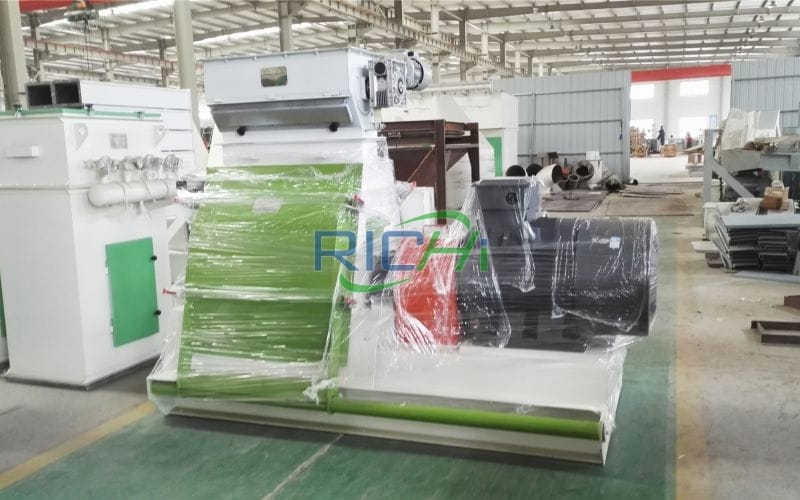
For a broiler farm in western Ireland, the decision to grind grain on-site came down to a practical question: was it worth paying for ingredients that had already been processed elsewhere when the farm could handle part of the work itself? The owner had access to locally traded barley and wheat, purchased maize when required, and already owned basic equipment for preparing feed. What was missing was a reliable way to reduce whole grains to a consistent particle size before mixing.
The farm was not planning to become a commercial feed manufacturer. It needed enough processing capacity to support its own poultry operation, with room to adjust feed batches as bird numbers and ingredient availability changed. After reviewing the required output and the available installation space, the owner purchased an SFSP56*40 hammer mill from RICHI Machinery. This grain mill for chicken feed in Ireland was intended as a targeted upgrade, allowing the farm to retain its existing mixer machine and small feed pellet mill rather than invest immediately in a complete animal feed production line.
Name:
Grain Feed Hammer Mill
Country:
Ireland
Date:
2026
Capacity:
0.8–1.0 T/H
Model:
SFSP56*40
Main Motor Power:
37 kW
Raw Materials:
Barley, wheat and maize
Rotor speed:
2,980 rpm
Previously, the farm purchased finished feed from local suppliers. This arrangement was convenient, but it offered limited flexibility when ingredient prices changed or the owner wanted to adjust the feeding program. Buying whole grain and processing it on-site introduced another option: the farm could separate grain purchasing from feed preparation and decide when to grind according to its actual consumption.
The planned production volume was approximately 3 tons of ground grain per day. That requirement did not justify a large industrial grinding system operating continuously. Instead, the customer needed a machine that could process the daily batch within a manageable working period and leave sufficient time for mixing, pelleting, cleaning and routine maintenance.
A single animal feed hammer mill also reduced the scope of the initial investment. The farm could continue using its existing equipment while gaining control over the grinding stage, which directly affects the consistency of the mash entering the mixer and the pellet mill.
RICHI recommended the SFSP56*40 water-drop-type hammer mill for the customer's grain preparation requirements. Its high-speed rotor drives replaceable hammers against the incoming material, reducing grain size as the particles pass through the selected screen. The machine is suitable for dry cereal ingredients commonly used in poultry feed formulations.
| Technical parameter | Specification |
|---|---|
| Model | SFSP56*40 |
| Machine type | Water-drop-type hammer mill |
| Rotor diameter | 560 mm |
| Grinding chamber width | 400 mm |
| Rotor speed | 2,980 rpm |
| Hammer tip speed | Approximately 88 m/s |
| Main motor power | 37 kW |
| Indicative grain throughput | 0.8–1.0 T/H |
| Primary materials | Barley, wheat and maize |
| Installation type | Standalone machine integrated with existing feed equipment |
Actual throughput depends on the grain being processed, its moisture content, screen aperture and the fineness required. The rated output should therefore be treated as a selection reference rather than a guaranteed rate for every material. For a farm processing around 3 tons daily, an indicative throughput of 0.8–1.0 T/H provides a reasonable basis for planning several hours of grinding, subject to commissioning tests and operating conditions.
Barley and wheat are familiar ingredients in Irish livestock feeding, and both can form part of poultry diets when properly formulated. Maize may also be used, although its availability and price can depend on supply arrangements and imports. The farm's purchasing strategy therefore combines locally available cereals with other ingredients obtained through established feed suppliers.
The hammer mill focuses on these cereal ingredients. Protein meals, oils, mineral sources and vitamin supplements are handled separately and added during mixing. This arrangement avoids unnecessary grinding of materials that are already supplied in a suitable form.
For the farm, the benefit is not that every ingredient becomes cheaper automatically. Rather, the owner gains another purchasing and processing option. Whole grain can be bought when quality and price are favorable, stored under suitable conditions and ground in batches according to the feeding schedule.
The customer initially focused on a particle-size range of approximately 1.5–2 mm for the cereal fraction used in grower and finisher feed. This was a starting target, not a fixed setting for every formulation. Broiler starter diets may require finer grinding in some production systems, while older birds can benefit from different particle distributions depending on the complete ration and whether the feed is supplied as mash, pellets or crumbles.
The SFSP56*40 uses a replaceable screen to control the size of particles leaving the grinding chamber. Selecting a suitable screen requires balancing three factors: the desired particle distribution, the throughput needed and the characteristics of the grain. A finer screen may increase grinding resistance and reduce output, so the smallest possible particle size is not necessarily the best commercial choice.
After grinding, the cereals are mixed with protein ingredients, oils and a properly formulated vitamin-mineral premix. If the mash is subsequently pelleted, particle uniformity can support more consistent mixing and pellet formation. The final diet must still be balanced by a qualified poultry nutritionist; grinding alone does not establish nutritional adequacy.
The farm deliberately retained its mixer and small pellet mill. The new grinder was introduced upstream, giving the operator a more controlled route from whole grain to prepared mash.
This sequence keeps the new machine's role clear. It does not replace mixing, pelleting or cooling equipment, and it does not independently produce complete poultry feed. Instead, it improves the preparation of the grain fraction on which those downstream operations depend.
Before installation, the farm needed to check the available floor space, electrical connection, material-transfer route and dust extraction arrangements. A preliminary layout should allow space for the grinder, inlet and discharge connections, dust-control equipment and access for screen and hammer replacement. The final footprint and foundation details should follow the approved equipment drawings rather than a generic floor-area estimate.
The selected machine has a 37 kW main motor and requires an electrical supply suitable for the motor's starting method and operating load. The farm's electrician needed to verify the existing three-phase supply, protective devices, cabling and control arrangements before commissioning. Any connected conveyors and dust-collection equipment must also be considered when checking the total installation load.
For a small on-farm setup, one trained operator can generally supervise a grinding batch while following the site's material-handling and safety procedures. Depending on the farm's workflow, the same employee may also undertake other feed-preparation tasks when the grinder is not running. Actual staffing depends on how grain delivery, mixing, bagging and poultry-house feeding are organized.
Dry grinding does not normally require process water. Raw-material moisture nevertheless needs attention because excessively wet grain can impair flow, affect grinding performance and create storage problems. The operator should monitor motor current, unusual vibration, bearing temperature, screen condition and hammer wear. Regular inspection helps identify changes in performance before they disrupt the feeding schedule.
Because cereal dust can be combustible under suitable conditions, dust collection, housekeeping, electrical protection and ignition-source control are essential. The installation must comply with the applicable Irish and European workplace and machinery safety requirements.
The main operational improvement was greater control over the timing and consistency of grain preparation. The owner could grind a batch when it was needed rather than depending entirely on deliveries of pre-ground ingredients. This made it easier to coordinate grain purchasing with the farm's consumption and available storage.
The existing mixer and feed pellet machine remained useful, avoiding the cost and disruption of replacing equipment that could still perform its intended functions. The farm also gained the flexibility to test different grinding settings and ingredient combinations without committing to a fully automated feed factory.
The owner estimated that producing part of the feed in-house could reduce costs by around 18% under favorable purchasing and operating conditions. That figure should be assessed against the complete cost of production, including whole-grain prices, electricity, labor, maintenance, storage losses and the costs of other feed ingredients. Savings will vary with market prices, formulation and equipment utilization; they are not guaranteed by the grinder alone.
The equipment was shipped from China by sea, with the Port of Dublin serving as the planned entry point before onward road transport to western Ireland. The customer coordinated local delivery and prepared the installation area in advance, reducing the work required after the machine arrived.
RICHI provided equipment documentation and remote technical guidance to support installation by the farm's technician. The work included checking the machine's position, confirming the motor connection, reviewing the feeding and discharge arrangements and preparing the operating procedures.
Before routine production, the operator needed to run the machine under controlled conditions and verify the resulting particle distribution and throughput using the actual grain supply. This commissioning stage was important because screen selection and material characteristics can affect the result more than a nominal capacity figure alone suggests.
For this Irish poultry farm, the purchase was a measured step toward greater control over feed preparation rather than an attempt to replicate a large commercial mill. The SFSP56*40 gave the farm a dedicated grinding stage while preserving the value of its existing mixing and pelleting equipment.
Other farms may require a different configuration. A smaller operation with limited daily consumption may be better served by a lower-capacity machine, while a commercial feed manufacturer running multiple shifts may need a larger grinder, automated conveying and integrated dust collection. Grain type, target particle size, annual feed demand and operating hours should all be considered before selecting a model.
Investing in a grain mill for chicken feed in Ireland can help poultry producers process cereals on-site, manage ingredient purchasing more flexibly and prepare feed for existing mixing or pelleting equipment. The value of a single-machine installation depends on matching the grinder to the farm's actual workload rather than selecting equipment solely by its maximum rated output.
RICHI Machinery supplies feed hammer mills and related processing equipment for agricultural businesses with different production requirements. For farms considering an on-site grinding upgrade, the key starting points are the daily grain volume, the materials to be processed, the required particle size and the equipment already available. These details provide a sound basis for selecting a practical grinding solution and planning any future expansion.
Having the right mix of reliable, high-quality pellet machine and pelletizing systems and expert support is essential to your success. Watch how our end-to-end feed pellet plant solutions have helped our customers optimize their performance.
Our customized and future-proofed turnkey pellet plant solutions is designed with you at the core. From vision to reality and beyond, our team stays connected with yours. Giving you peace-of-mind with an expert at your side.

At RICHI, we go beyond project completion. With RICHI Servicee, we’re your dedicated partners in success. Count on us for expert guidance, minimal downtime, and optimized productivity. Choose RICHI for unmatched service and support.



Meet global product demands and quality standards with industry-leading pellet plant design, engineering, equipment, and construction services for pellet processors.


Your Partner Beyond Project Completion
2000+ cases
RICHI is the leading designer, manufacturer and builder of pellet plants in the world, completing over 2000 projects in 140 countries across 6 continents.
Read More
Increase plant productivity, profitability, and safety by integrating high quality equipment into your pellet production line. Over the years, RICHI has become China's top pellet equipment manufacturer. At the same time, RICHI has established valuable partnerships with the world's leading component and raw material manufacturers to bring you the best there is in technology, automation, and efficiency in pelleting plant machinery.

For nearly 30 years, RICHI has been providing best-in-class pellet plant equipment and services to clients across a variety of industries, sizes, and needs. We pride ourselves on the knowledge and skill that each team member possesses – from our technical sales team to our process design engineers. You can count on RICHI Machinery to take your operation to the next level of innovation, quality, and success.
Need help with your pellet manufacturing plant project? Contact us today.
ANIMAL FEED
BIOMASS
WOOD
ORGANIC FERTILIZER
AQUA FEED
CAT LITTER
MUNICIPAL WASTE RECYCLING
SPECIAL PELLET PRODUCTION
RICHI Machinery continues to deliver world class pellet mill equipment, pellet plant engineering and project solutions that add value to our customers in the animal feed, wood waste, agriculture waste, organic fertilizer, cat litter and special pellet products industries. Throughout the years, we RICHI Machinery have built strong brand, becoming industry-leading pellet machine manufacturer. We value integrity, promise quality, and prioritize your success.
Learn MoreWith our expert team, we precisely implement your process engineering requirements in pellet mill and pelletizing plant systems. No matter which industry you’re in – we understand your needs and deliver solutions that meet the highest standards.
At RICHI, quality comes first. Our pellet making machine and related pellet line equipment undergo rigorous quality controls to ensure they meet the highest standards. Rely on products that are durable, safe, and efficient.
With decades of experience in pellet machine and pellet production line production, we have earned a reputation as a trusted partner in various industries. Our expertise allows us to cover a wide range of applications.
Not only do we offer premium pelleting equipment, but we are also experts at designing, building, installing, and maintaining facilities from the ground up. Our expertise is within pellt plant process design, discovering the most efficient, productive, and profitable way to handle your materials in an end-to-end cycle.
○ RICHI MACHINERY
Keeping in touch with us is an effective way to solve all your problems. If you have any needs or questions, please leave your contact information, then RICHI technical consultants will send design, quotation, videos to your mailbox. You can also contact us directly via WhatsApp: +86 13838389622
Copyright©2015-2026 by HENAN RICHI MACHINERY CO., LTD. All rights reserved.