
The reason this Bern-region feed mill changed its pelletizer was not that Swiss dairy farms suddenly needed more compound feed. In fact, the opposite consideration shaped the project: Swiss cattle feeding is strongly forage-based, so the mill had to produce a smaller quantity of concentrate pellets with very consistent nutrient density, physical quality, and batch control. Its older pellet press was still running, but variable throughput and increasing maintenance interruptions were making it difficult to supply those concentrates efficiently.
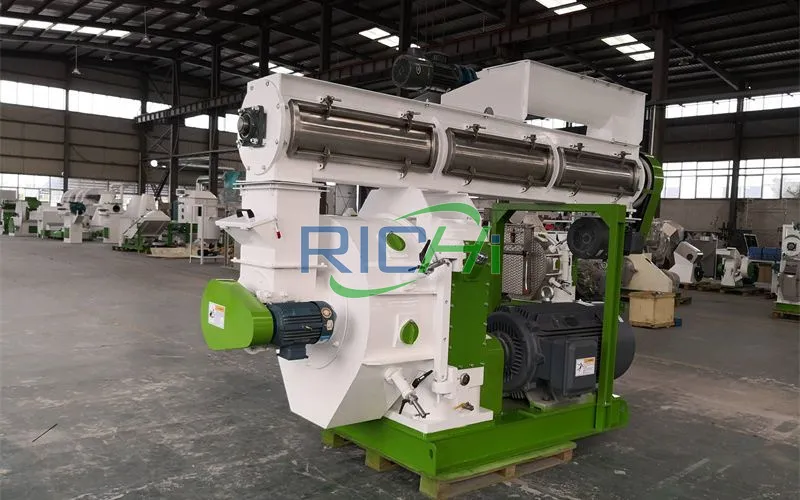
The reason this Bern-region feed mill changed its pelletizer was not that Swiss dairy farms suddenly needed more compound feed. In fact, the opposite consideration shaped the project: Swiss cattle feeding is strongly forage-based, so the mill had to produce a smaller quantity of concentrate pellets with very consistent nutrient density, physical quality, and batch control. Its older pellet press was still running, but variable throughput and increasing maintenance interruptions were making it difficult to supply those concentrates efficiently.
The customer therefore replaced only the pelleting section and installed one SZLH320 Cow Feed Pellet Granulator in Switzerland. Existing grain grinding, batching, mixing, steam supply, cooling, screening, and bagging equipment remained in service. The 37 kW ring-die pelletizer was configured mainly for 5–6 mm dairy cattle concentrate pellets at approximately 3–4 T/H, allowing the feed mill to modernize the most problematic part of its process without rebuilding a line that was otherwise still suitable.
Name:
cow feed pelleting machine
Country:
Switzerland
Date:
2025
Capacity:
3–4 T/H
Model:
SZLH320
Main Motor Power:
37 kW
Raw Materials:
Barley, wheat, maize, beet pulp, rapeseed mea
Pellet diameter:
5–6 mm
The customer is an independent regional feed manufacturer serving dairy and cattle farms in the canton of Bern and surrounding agricultural areas. Its customers are not replacing pasture, hay, silage, or other roughage with pelleted feed. The pellets manufactured at this facility are concentrates used to supplement forage when additional energy, protein, minerals, or vitamins are required.
That distinction is particularly important in Switzerland. Dairy feeding systems typically rely heavily on grassland forage, hay, grass silage, and, where used, maize silage. Concentrates are added according to animal performance and the nutritional value of the basal ration rather than becoming the majority of the diet.
For this reason, the customer did not need a very large 10–20 T/H cattle feed pellet mill. A 3–4 T/H machine matched a regional operation producing specialized concentrate batches for several farm customers much better.
The previous pelletizer had accumulated years of service. Mechanical wear had increased the frequency of roller and transmission maintenance, and production personnel were spending more time adjusting the machine when formulations changed.
The feed mill did not have the same problem in every section. Its hammer mill could still reach the required grinding specification. The mixer was large enough for the current batch size. The cooler and screening system also had sufficient remaining capacity.
Replacing the complete feed line would therefore have created unnecessary capital expenditure.
The new Cow Feed Pellet Granulator in Switzerland was installed at the same process position as the old pelletizer, with modifications made to the inlet, conditioner connection, discharge height, electrical system, and control interface where necessary.
This type of retrofit is often more demanding than supplying a machine for an empty new building because the replacement unit has to match equipment that is already fixed in position. RICHI reviewed the existing layout before finalizing the configuration.
The plant primarily produces pelleted dairy concentrate rather than a pellet intended to replace the complete forage ration.
This positioning changes the formulation considerably from the original concept of a feed containing very high cereal percentages together with a fixed 20% alfalfa component.
The customer's concentrates are formulated around ingredients such as barley, wheat, maize, wheat bran, rapeseed meal, soybean meal where required, beet-pulp-derived ingredients, minerals, vitamins, and other approved feed materials according to the nutritional specification of each product.
Rapeseed meal is particularly relevant as a protein ingredient in European cattle feeding, while cereal proportions change according to energy requirements and commodity availability.
The mill does not add alfalfa simply to make its Swiss feed appear more “natural.” Local farms already obtain much of their structural fiber from forage. If an alfalfa-derived ingredient is used in a specific product, it is included because the formulation requires it, not because every Swiss dairy concentrate is expected to contain a fixed forage percentage.
The mill produces more than one cattle concentrate. A high-producing dairy herd receiving excellent grass silage may require a different supplement from a herd whose basal ration contains more hay. Young cattle and beef animals also have different nutrient requirements.
The formulation department therefore changes cereal, protein, fiber, mineral, and vitamin levels according to the product specification.
The main materials handled by the pelleting section include:
The customer selected the SZLH320 cattle feed pellet making machine partly because it can process these changing concentrate formulations without requiring a separate pellet mill for every cattle-feed product.
| Project Parameter | Configuration |
|---|---|
| Equipment | Cow feed pellet granulator |
| Model | SZLH320 |
| Quantity | 1 unit |
| Main Motor Power | 37 kW |
| Feeder Motor Power | 1.5 kW |
| Conditioner Motor Power | 4 kW |
| Ring Die Inner Diameter | 320 mm |
| Available Pellet Diameter | 2–12 mm |
| Project Pellet Diameter | Mainly 5–6 mm |
| Reference Capacity | Approximately 3–4 T/H, formulation dependent |
| Main Product | Dairy and cattle concentrate pellets |
The 3–4 T/H capacity also provides useful production flexibility. The feed mill can manufacture relatively small batches for different customers without operating a large industrial pellet mill far below its intended load.
Actual throughput varies with formulation, grinding fineness, fat content, conditioning conditions, die compression ratio, and required pellet durability. A cereal-rich concentrate does not necessarily pellet at exactly the same rate as a formula containing more fibrous ingredients.
The SZLH320 cattle ruminant feed pellet machine is equipped with a conditioner ahead of the ring die. Mixed mash enters this section before pellet formation, where steam is introduced under controlled conditions.
Conditioning helps modify the physical characteristics of the feed, supporting pellet formation and reducing unnecessary resistance through the die when correctly managed. It can also contribute to more stable pellet quality across production batches.
The feed mill does not use one permanent conditioning temperature for every formula.
A barley-heavy product, a concentrate with more protein meal, and a formulation containing more fibrous ingredients can respond differently to steam. Initial mash moisture also changes throughout the year.
Operators therefore monitor conditioner discharge condition, pellet-mill amperage, throughput, fines, and finished pellet durability together rather than controlling production from temperature alone.
The customer mainly uses 5–6 mm pellets for its dairy and general cattle concentrate products.
This gives the mill a practical product size for bulk handling, automated farm feeding systems, and bagged concentrate sales. Larger or smaller pellets can be produced by changing the ring die when a particular customer specification requires them.
The plant does not claim that 6 mm pellets automatically improve milk production or feed conversion.
Pellet diameter is a physical product specification. Dairy performance depends on the complete ration, forage quality, nutrient balance, herd management, health, genetics, and many other factors.
What the pelletizer can control is whether the concentrate leaves the factory in a sufficiently uniform and durable physical form.
A significant portion of the customer's production is delivered to farms rather than consumed at the feed mill.
This means pellets pass through conveyors, bins, truck loading, transport, unloading, and farm storage before reaching the animals. Weak pellets can generate excessive fines during these transfers.
The replacement project therefore focused on maintaining adequate physical durability without using unnecessarily aggressive die compression.
If compression is too low, pellets can break during handling. If it is unnecessarily high, electricity consumption may increase and capacity can fall without delivering additional commercial value.
The feed mill evaluates finished product after cooling and screening rather than judging pellet quality directly at the die outlet.
The SZLH320 feed pellet machine does not discharge finished bag-ready feed directly from the ring die.
Fresh pellets are warm and require cooling. The customer's existing cooler therefore remained in operation after the pelletizer was replaced.
Once cooled, the pellets pass through screening to remove excessive fines before entering finished-product storage.
This was one of the reasons a single-machine retrofit made financial sense. The customer already had downstream equipment capable of handling the new pelletizer's 3–4 T/H production rate.
Switzerland has an important dairy sector, but that does not mean every local feed manufacturer needs very high industrial capacity.
The forage-based nature of Swiss cattle feeding means concentrate demand per cow can be significantly lower than in systems where larger quantities of compound feed are used.
A regional manufacturer supplying several farms can therefore operate successfully with a comparatively moderate pelleting capacity, particularly when it produces multiple formulations and short production campaigns.
At 3 T/H, six effective pelleting hours provide around 18 tonnes of product. At 4 T/H, the same net operating time can provide approximately 24 tonnes before accounting for changeovers and production interruptions.
That production level is much more consistent with this project's customer profile than installing a 10 T/H animal feed pellet machine simply because Switzerland has high-value dairy production.
The customer sells feed into a market where consistent formulation and traceability are commercially important.
For that reason, operators do not maximize feeder speed simply to obtain the highest possible hourly number.
Production personnel monitor pellet appearance, fines, machine load, conditioner performance, and the stability of material flow. If a new formulation produces noticeably different operating behavior, the feed rate and conditioning parameters are adjusted before full production continues.
The feed mill also keeps product formulas separated through its established batching and cleaning procedures. Replacing the pelletizer did not change the need for controlled ingredient handling and cross-contamination management elsewhere in the plant.
The purchase decision involved more than comparing the main motor power of different pellet mills.
The Swiss customer needed to know whether the replacement machine could physically integrate with its existing equipment. Foundation position, inlet elevation, discharge height, steam connection, motor specification, maintenance clearance, and control interface all had to be evaluated before manufacturing.
RICHI therefore worked from the customer's existing plant dimensions rather than treating the order as a standard machine placed into an empty building.
Spare and wear-part planning was also discussed before commissioning. The feed mill keeps critical pellet-mill wear components available so routine service can be scheduled around production rather than waiting for international delivery after a failure.
The SZLH320 still requires normal pellet-mill maintenance. A new machine does not eliminate ring-die and roller wear.
Service life depends on formulation, mineral content, die compression, operating load, foreign-material control, and maintenance practices. For this reason, the customer does not use a fixed statement such as one die always lasting a specified number of tonnes.
The maintenance team monitors roller condition, ring-die wear, lubrication, feeder operation, conditioner cleanliness, bearing condition, and motor load.
Changes in output at the same formula and settings can provide an early indication that the pelleting section needs inspection.
Switzerland is landlocked, so the SZLH320 could not be shipped directly to a Swiss seaport.
The machine left China through Qingdao Port and was routed through a major North European maritime gateway before continuing toward Switzerland. For this project, Rotterdam provided a practical ocean entry point, with onward freight connected to the Rhine corridor serving Basel and the Swiss inland logistics network.
The final international routing is confirmed at the time of shipment because ocean services, container rates, rail availability, and inland transport conditions can change.
RICHI supplied the packing documents, machine drawings, electrical information, and installation requirements needed for the Swiss customer to prepare the replacement position before equipment arrival.
“We did not need a new feed factory. Grinding, mixing, cooling and packing were already working well. Pelleting was the section giving us the most maintenance problems, so replacing only that machine was the logical investment. The new pelletizer gives us more stable production across our main dairy concentrate formulas, and the operators have much better control over conditioning and machine load than they had with the old press.”
The customer also valued the ability to continue producing several cattle-feed formulations on the same machine. Instead of attempting to run every product at identical settings, operators now maintain production references for the formulas they manufacture most frequently.
The Cow Feed Pellet Granulator in Switzerland project is not based on the idea that Swiss dairy cows should receive large amounts of pelleted compound feed. It is based on the actual role of concentrate in a forage-oriented cattle feeding system.
The Bern-region manufacturer produces dense, controlled concentrate pellets that supplement grass, hay, silage, and other roughage supplied on the farm. That market does not require an oversized pellet mill, but it does require reliable batch production and the ability to handle changing cereal, protein, and fibrous feed ingredients.
The SZLH320 gives the customer approximately 3–4 T/H of suitable pelleting capacity while allowing the rest of the existing feed plant to remain in use.
For another Swiss feed producer, the appropriate pellet mill should be selected from actual concentrate production rather than total cattle numbers in the surrounding region.
RICHI Machinery would first evaluate the main feed formulas, required tonnes per hour, pellet diameter, number of product changes per day, existing grinder and mixer capacities, steam conditions, cooler capacity, available installation dimensions, and electrical supply.
If the project is a retrofit, drawings and photographs of the existing pelleting section are particularly useful because they allow the replacement machine to be designed around equipment that the customer intends to retain.
For this customer, the SZLH320 Cow Feed Pellet Granulator in Switzerland provided the right balance: commercial feed-mill construction, manageable 3–4 T/H output, steam conditioning, flexible pellet sizes, and compatibility with an existing regional cattle-feed plant.
The result is not a larger factory for the sake of capacity. It is a better-performing pelleting section designed around the way Swiss dairy concentrate is actually produced and used.
Having the right mix of reliable, high-quality pellet machine and pelletizing systems and expert support is essential to your success. Watch how our end-to-end feed pellet plant solutions have helped our customers optimize their performance.
Our customized and future-proofed turnkey pellet plant solutions is designed with you at the core. From vision to reality and beyond, our team stays connected with yours. Giving you peace-of-mind with an expert at your side.
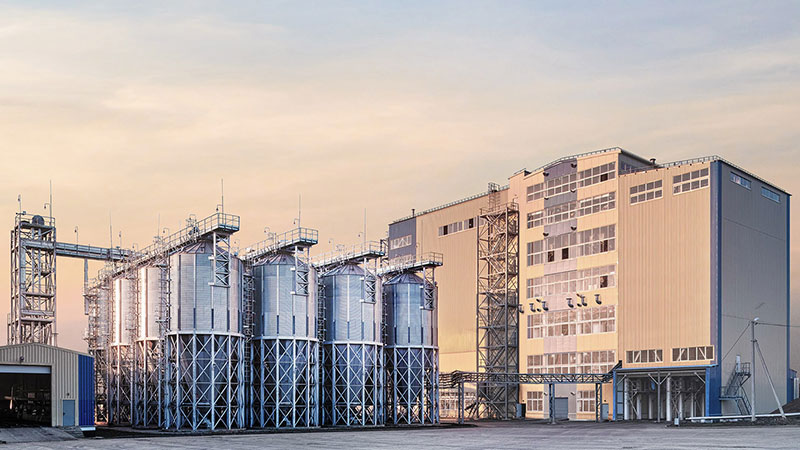
At RICHI, we go beyond project completion. With RICHI Servicee, we’re your dedicated partners in success. Count on us for expert guidance, minimal downtime, and optimized productivity. Choose RICHI for unmatched service and support.
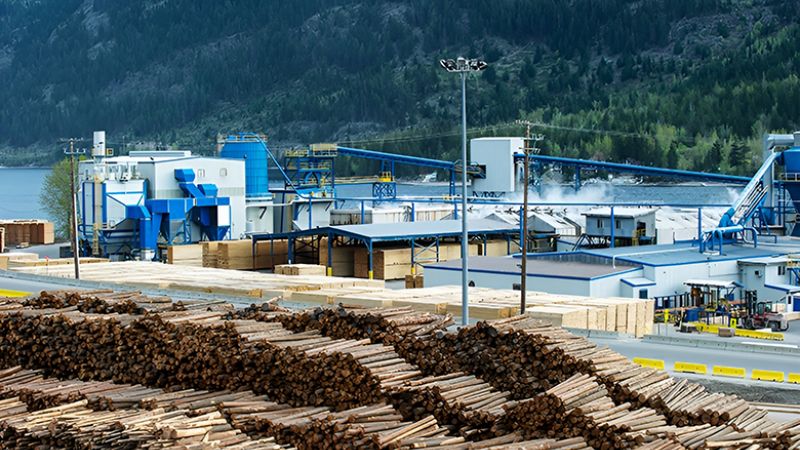


Meet global product demands and quality standards with industry-leading pellet plant design, engineering, equipment, and construction services for pellet processors.


Your Partner Beyond Project Completion
2000+ cases
RICHI is the leading designer, manufacturer and builder of pellet plants in the world, completing over 2000 projects in 140 countries across 6 continents.
Read More
Increase plant productivity, profitability, and safety by integrating high quality equipment into your pellet production line. Over the years, RICHI has become China's top pellet equipment manufacturer. At the same time, RICHI has established valuable partnerships with the world's leading component and raw material manufacturers to bring you the best there is in technology, automation, and efficiency in pelleting plant machinery.

For nearly 30 years, RICHI has been providing best-in-class pellet plant equipment and services to clients across a variety of industries, sizes, and needs. We pride ourselves on the knowledge and skill that each team member possesses – from our technical sales team to our process design engineers. You can count on RICHI Machinery to take your operation to the next level of innovation, quality, and success.
Need help with your pellet manufacturing plant project? Contact us today.
ANIMAL FEED
BIOMASS
WOOD
ORGANIC FERTILIZER
AQUA FEED
CAT LITTER
MUNICIPAL WASTE RECYCLING
SPECIAL PELLET PRODUCTION
RICHI Machinery continues to deliver world class pellet mill equipment, pellet plant engineering and project solutions that add value to our customers in the animal feed, wood waste, agriculture waste, organic fertilizer, cat litter and special pellet products industries. Throughout the years, we RICHI Machinery have built strong brand, becoming industry-leading pellet machine manufacturer. We value integrity, promise quality, and prioritize your success.
Learn MoreWith our expert team, we precisely implement your process engineering requirements in pellet mill and pelletizing plant systems. No matter which industry you’re in – we understand your needs and deliver solutions that meet the highest standards.
At RICHI, quality comes first. Our pellet making machine and related pellet line equipment undergo rigorous quality controls to ensure they meet the highest standards. Rely on products that are durable, safe, and efficient.
With decades of experience in pellet machine and pellet production line production, we have earned a reputation as a trusted partner in various industries. Our expertise allows us to cover a wide range of applications.
Not only do we offer premium pelleting equipment, but we are also experts at designing, building, installing, and maintaining facilities from the ground up. Our expertise is within pellt plant process design, discovering the most efficient, productive, and profitable way to handle your materials in an end-to-end cycle.
○ RICHI MACHINERY
Keeping in touch with us is an effective way to solve all your problems. If you have any needs or questions, please leave your contact information, then RICHI technical consultants will send design, quotation, videos to your mailbox. You can also contact us directly via WhatsApp: +86 13838389622
Copyright©2015-2026 by HENAN RICHI MACHINERY CO., LTD. All rights reserved.