
A corn grinder for chicken feed in Romania helps a 20,000-broiler farm process locally sourced maize, control feed particle size and integrate grinding with existing mixing and pelleting equipment.
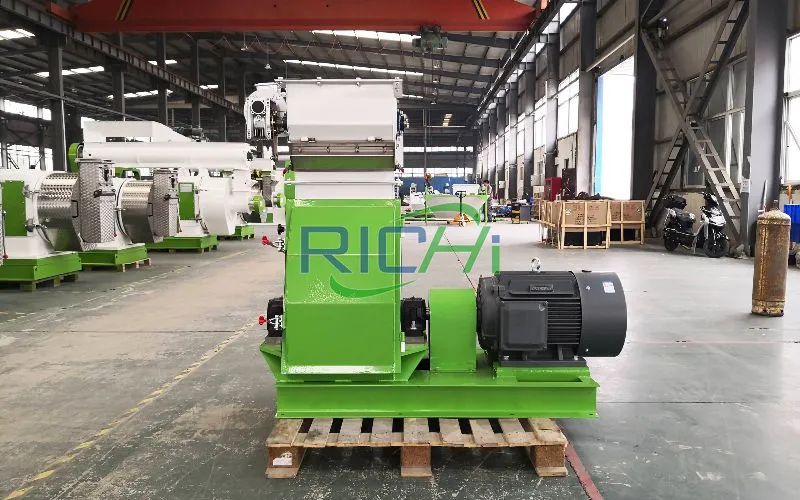
For poultry farms in southern Romania, maize is an important feed ingredient, but purchasing it as ready-ground material adds another processing cost. A broiler farm raising approximately 20,000 birds decided to take greater control of this stage by installing its own corn grinding machine. The farm already had a mixer and a second-hand pellet mill purchased locally, so the owner wanted to improve the existing setup rather than invest immediately in a complete feed production line.
The farm's plan was straightforward: buy whole maize from local suppliers, grind it to a controlled particle size, and incorporate it into formulated chicken feed. After reviewing the available space, expected maize consumption and downstream equipment, the customer selected a RICHI hammer mill as a dedicated grinding unit. The resulting arrangement allowed the farm to test on-site feed production while retaining the option to expand later.
Name:
Corn Grinder
Country:
Romania
Date:
2026
Capacity:
1–2 T/H
Model:
SFSP56×40
Main Motor Power:
37 kW
Rotating speed:
2,980 rpm
Final product size:
2–3 mm
Romania has an established grain-growing sector, making locally sourced maize a practical ingredient for poultry rations. For this customer, the main consideration was not simply the availability of corn. It was the ability to control when the grain was processed, how finely it was ground and how the resulting meal behaved during mixing and pelleting.
Buying whole kernels also gave the farm more flexibility when purchasing grain in batches. Instead of storing large quantities of pre-ground maize, the operator could grind what was needed for the next production run. This helped separate raw-material purchasing decisions from daily feed preparation.
A single corn grinder for chicken feed in Romania was therefore a suitable first step. The farm could retain its existing mixer machine and feed pellet mill, avoid duplicating equipment and evaluate the economics of home-produced feed before committing to a larger installation.
The grinding requirement was centered on dry, whole maize kernels rather than long-fiber forage. RICHI recommended a hammer mill configuration suitable for cereal grinding, with the screen selected according to the desired particle size and the requirements of the existing pelletizing process.
| Parameter | Specification |
|---|---|
| Equipment type | Water-drop hammer mill |
| Selected model | SFSP56×40 |
| Rotor diameter | 560 mm |
| Grinding chamber width | 400 mm |
| Rotating speed | Approximately 2,980 rpm |
| Main motor power | 37 kW |
| Planning throughput on dry maize | Approximately 1–2 T/H, subject to screen size and operating conditions |
| Target ground maize particle size | Approximately 2–3 mm |
The throughput shown is a planning estimate rather than a guaranteed output. Actual capacity depends on maize moisture, screen aperture, kernel characteristics and the required fineness. A material test is the appropriate way to confirm performance before finalizing the production schedule.
For a farm of this scale, a smaller grinding configuration offers a more practical starting point than a high-capacity industrial hammer mill. It allows the operator to prepare maize in manageable batches without creating unnecessary demands on the existing mixer and second-hand pellet mill.
The grinder processes clean, dry maize kernels into meal for subsequent mixing. Before grinding, the operator checks the grain for stones, metal fragments and other foreign material that could damage the hammers or screen. Grain moisture is also monitored because excessively wet maize can reduce grinding efficiency and complicate storage.
The farm's example feed formulation uses maize as the main energy ingredient:
This example totals 100%, but it should not be treated as a universal broiler diet. Nutrient requirements change with bird age, genetics and production objectives. The farm must verify metabolizable energy, crude protein, digestible amino acids, calcium, available phosphorus and other nutritional specifications before using a formulation commercially.
For the grinding stage, the customer initially targeted a maize particle size of approximately 2–3 mm. This range can suit many broiler feed applications, although starter diets may require finer particles or a different finished-feed form. The appropriate screen therefore depends on whether the farm is preparing starter, grower or finisher feed.
The installation was designed around the machinery already available at the farm. The hammer mill handles the maize preparation stage, while the existing mixer combines the ground corn with the remaining ingredients. The second-hand pellet mill then processes the prepared mash into pellets when the farm's formulation and feeding program call for them.
Grinding and pelleting do not necessarily operate at the same hourly rate. The farm can prepare maize in batches, but the actual finished-feed output remains limited by the mixer, pellet mill and any downstream cooling or handling equipment. Coordinating these stages is more important than selecting a grinder solely by its maximum rated capacity.
Consistent grinding helps the mixer distribute ingredients more evenly. If maize particles vary too widely in size, differences in settling and ingredient separation can make the final feed less uniform. Very coarse particles may also affect pellet formation, while unnecessarily fine grinding increases energy demand and can create additional dust.
The farm therefore needs to check ground maize periodically rather than relying on the screen specification alone. Samples can be evaluated with a sieve analysis to confirm whether the target 2–3 mm range is being achieved. If the product is too coarse, the operator can review the screen and operating conditions; if it is too fine, a larger aperture may reduce unnecessary grinding.
The hammer mill can also process other suitable cereal grains, including wheat and barley, when the farm's formulation changes. Each material should be evaluated separately because kernel properties and moisture can affect output. The machine is intended for dry-grain grinding, not for feeding whole bales or wet forage directly into the grinding chamber.
The selected hammer mill has a 37 kW main motor. Before installation, the farm must confirm that the available electrical supply, motor protection, cabling and starting arrangement are appropriate for the equipment. The total connected load will also depend on any conveyors, feeders and dust-collection equipment included in the installation.
Space planning should cover more than the machine's physical dimensions. Operators need safe access to the feed inlet, discharge, screen and hammer inspection points, along with sufficient clearance for maintenance. The grinder should be positioned so that ground maize can reach the mixer without unnecessary manual handling.
Dust extraction and housekeeping are particularly important when handling dry grain. The installation should include suitable dust-control measures, effective grounding and precautions against ignition sources. Operators should follow the equipment manual for maintenance isolation and safe removal of accumulated material.
The animal feed hammer mill was arranged for export from China to Romania, with sea freight through the Port of Constanța followed by inland transportation to the farm. The final route and delivery schedule depend on the shipment arrangement, customs clearance and the customer's location.
Before commissioning, the customer needed to prepare the foundation, electrical connection and material-transfer arrangements. RICHI's technical support covered model selection, screen-size considerations, equipment integration and operating guidance. These details were particularly relevant because the grinder had to work alongside machinery acquired from another supplier.
For a farm introducing feed grinding for the first time, practical operating records are also valuable. Recording maize input, grinding time, screen changes, motor load and finished particle size helps the operator establish a repeatable process and identify changes in performance before they affect the downstream equipment.
The single-machine approach gave the Romanian farm a way to begin processing its own maize without replacing the existing mixing and pelleting equipment. It also provided greater control over the grinding stage, allowing the operator to prepare grain according to the current feed formulation instead of relying entirely on purchased ground ingredients.
The financial result depends on the difference between the cost of whole maize and pre-ground maize, together with electricity use, labor, maintenance, grain losses and the utilization rate of the equipment. Comparing these costs over several production batches gives the farm a more reliable basis for evaluating savings than considering the purchase price alone.
If the farm later increases its broiler population or begins supplying feed to nearby poultry producers, the next investment should be based on the measured throughput of the complete process. A larger mixer, upgraded pelletizing capacity, improved cooling or automated conveying may become more important than increasing grinding capacity alone.
This project illustrates how a corn grinder for chicken feed in Romania can support a poultry farm that wants to process locally sourced maize using existing feed equipment. By adding a dedicated hammer mill, the customer established a more controlled route from whole kernels to ground maize, mixing and pelletizing.
For Romanian broiler farms comparing a maize grinder, chicken feed grinding machine or hammer mill for poultry feed, the key selection criteria are the required particle size, daily grain consumption, available power and capacity of the downstream equipment. A correctly sized grinder can make on-farm feed preparation more manageable without requiring an immediate investment in a complete production line.
RICHI Machinery supplies feed grinding equipment for farms and commercial feed manufacturers. Share your raw materials, target particle size, expected hourly output and existing machinery to determine a suitable corn grinding configuration for your operation.
Having the right mix of reliable, high-quality pellet machine and pelletizing systems and expert support is essential to your success. Watch how our end-to-end feed pellet plant solutions have helped our customers optimize their performance.
Our customized and future-proofed turnkey pellet plant solutions is designed with you at the core. From vision to reality and beyond, our team stays connected with yours. Giving you peace-of-mind with an expert at your side.
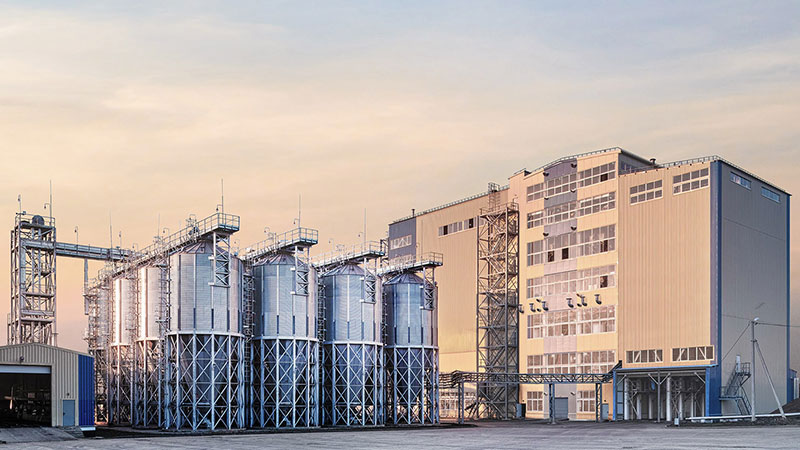
At RICHI, we go beyond project completion. With RICHI Servicee, we’re your dedicated partners in success. Count on us for expert guidance, minimal downtime, and optimized productivity. Choose RICHI for unmatched service and support.
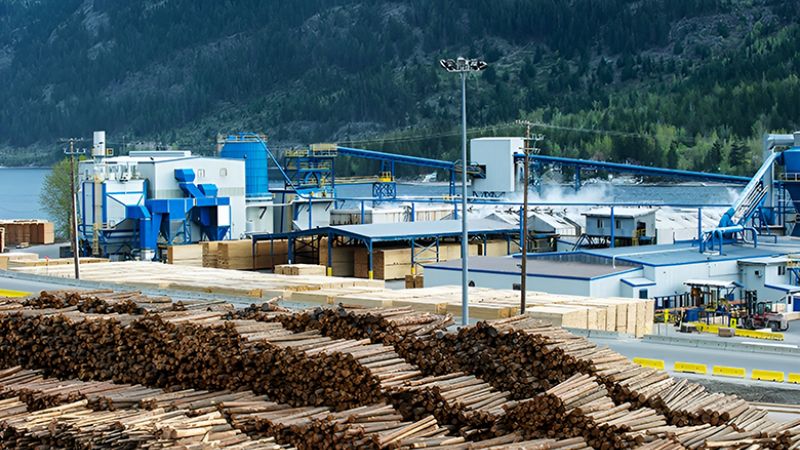


Meet global product demands and quality standards with industry-leading pellet plant design, engineering, equipment, and construction services for pellet processors.


Your Partner Beyond Project Completion
2000+ cases
RICHI is the leading designer, manufacturer and builder of pellet plants in the world, completing over 2000 projects in 140 countries across 6 continents.
Read More
Increase plant productivity, profitability, and safety by integrating high quality equipment into your pellet production line. Over the years, RICHI has become China's top pellet equipment manufacturer. At the same time, RICHI has established valuable partnerships with the world's leading component and raw material manufacturers to bring you the best there is in technology, automation, and efficiency in pelleting plant machinery.

For nearly 30 years, RICHI has been providing best-in-class pellet plant equipment and services to clients across a variety of industries, sizes, and needs. We pride ourselves on the knowledge and skill that each team member possesses – from our technical sales team to our process design engineers. You can count on RICHI Machinery to take your operation to the next level of innovation, quality, and success.
Need help with your pellet manufacturing plant project? Contact us today.
ANIMAL FEED
BIOMASS
WOOD
ORGANIC FERTILIZER
AQUA FEED
CAT LITTER
MUNICIPAL WASTE RECYCLING
SPECIAL PELLET PRODUCTION
RICHI Machinery continues to deliver world class pellet mill equipment, pellet plant engineering and project solutions that add value to our customers in the animal feed, wood waste, agriculture waste, organic fertilizer, cat litter and special pellet products industries. Throughout the years, we RICHI Machinery have built strong brand, becoming industry-leading pellet machine manufacturer. We value integrity, promise quality, and prioritize your success.
Learn MoreWith our expert team, we precisely implement your process engineering requirements in pellet mill and pelletizing plant systems. No matter which industry you’re in – we understand your needs and deliver solutions that meet the highest standards.
At RICHI, quality comes first. Our pellet making machine and related pellet line equipment undergo rigorous quality controls to ensure they meet the highest standards. Rely on products that are durable, safe, and efficient.
With decades of experience in pellet machine and pellet production line production, we have earned a reputation as a trusted partner in various industries. Our expertise allows us to cover a wide range of applications.
Not only do we offer premium pelleting equipment, but we are also experts at designing, building, installing, and maintaining facilities from the ground up. Our expertise is within pellt plant process design, discovering the most efficient, productive, and profitable way to handle your materials in an end-to-end cycle.
○ RICHI MACHINERY
Keeping in touch with us is an effective way to solve all your problems. If you have any needs or questions, please leave your contact information, then RICHI technical consultants will send design, quotation, videos to your mailbox. You can also contact us directly via WhatsApp: +86 13838389622
Copyright©2015-2026 by HENAN RICHI MACHINERY CO., LTD. All rights reserved.