
Cambodia’s large cassava sector gives poultry producers access to a locally available energy ingredient, but using cassava in broiler feed is not simply a matter of replacing maize kilogram for kilogram. Cassava root meal is rich in starch but relatively low in protein and several essential nutrients, so inclusion level, protein supplementation, raw-material preparation, and feed formulation all need to be controlled.
Cambodia’s large cassava sector gives poultry producers access to a locally available energy ingredient, but using cassava in broiler feed is not simply a matter of replacing maize kilogram for kilogram. Cassava root meal is rich in starch but relatively low in protein and several essential nutrients, so inclusion level, protein supplementation, raw-material preparation, and feed formulation all need to be controlled.
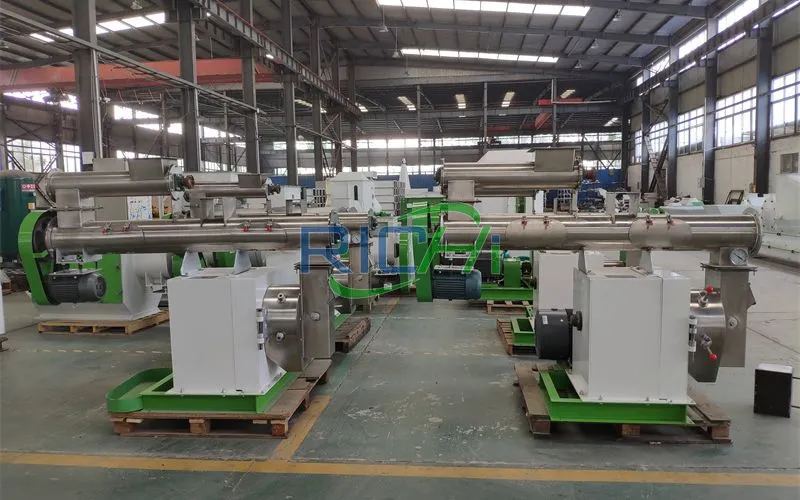
For a poultry farm in Kampong Cham Province, these considerations led to the purchase of one SZLH250 cassava chicken feed pellet machine in Cambodia. The farm already had grinding and mixing equipment and wanted to add pelleting rather than build a complete feed mill. The new machine is used to produce broiler feed based partly on locally sourced cassava meal, with the formulation adjusted for different growth stages.
Name:
Cassava feed pellet machine
Country:
Cambodia
Date:
2025
Capacity:
1.0–1.5 T/H
Model:
SZLH250
Main Motor Power:
22 kW
Raw Materials:
cassava root meal
Pellet diameter:
2.5–4 mm
The customer operates a broiler farm in Kampong Cham, an agricultural province where cassava, rice, maize, and other crops are readily available. Commercial compound feed represented one of the farm’s largest operating expenses, so management began evaluating whether part of its feed requirement could be manufactured on site.
The farm was not trying to eliminate conventional feed ingredients. Its objective was to use locally available cassava as one energy source while purchasing the protein ingredients, minerals, vitamins, amino acids, and other components needed to maintain a nutritionally balanced broiler ration.
This distinction was important. Cassava can reduce dependence on more expensive cereal energy sources under favorable local pricing, but a poultry diet with excessive cassava and inadequate protein or amino-acid correction would compromise bird performance rather than reduce the real cost of production.
The customer already had a small feed hammer mill, batch mixer, ingredient bins, and basic material-handling equipment. Mash feed could therefore be prepared before the new machine arrived.
The missing process was controlled pelleting.
Installing one SZLH250 animal feed pellet machine allowed the customer to retain the existing preparation equipment while upgrading the section that determines pellet formation. This kept the investment proportional to the size of the farm and left the possibility of adding a crumbler, cooler, screening equipment, or additional automation if feed production expands.
The SZLH250 also gave the customer a practical platform for producing different broiler feeds without purchasing an oversized commercial feed-mill system.
| Parameter | Project Configuration |
|---|---|
| Pellet Mill Model | SZLH250 |
| Main Motor Power | 22 kW |
| Feeder Power | 1.1 kW |
| Conditioner Power | 1.5 kW |
| Ring Die Inner Diameter | 250 mm |
| Pellet Diameter | Approximately 2.5–4 mm depending on feed stage |
| Nominal Capacity | Approximately 1.0–1.5 T/H, formulation dependent |
| Main Application | Cassava-containing broiler feed |
The 22 kW SZLH250 was selected as the smallest practical commercial ring-die solution for this application. The project configuration includes a feeder and conditioner, with different ring dies available for different finished-feed specifications.
The stated 1.0–1.5 T/H is a machine capacity range rather than a guarantee that every cassava-based formula will reach the upper value. Small die holes, higher-fiber ingredients, formulation changes, mash particle size, conditioning quality, and required pellet durability can all affect actual throughput.
The customer uses dried cassava root meal rather than feeding freshly harvested roots directly into the pellet mill.
Cassava contributes readily available carbohydrate, but its nutritional profile is very different from soybean meal or other protein ingredients. A practical broiler ration therefore requires cassava to be combined with suitable protein sources and precisely dosed minerals, vitamins, amino acids, and other nutritional components.
The farm works with a feed formulation appropriate to the age and production target of the birds rather than using a permanent “50% cassava formula” for every stage.
This is particularly important for young broilers, whose requirements for digestible amino acids, energy, minerals, and vitamins are demanding. Cassava inclusion has to be determined by formulation calculations, raw-material quality, processing conditions, and bird performance.
Fresh cassava roots contain considerable water and naturally occurring cyanogenic compounds. They are therefore processed before entering the feed system.
The farm cleans the roots and converts them into smaller chips or pieces for drying. Drying reduces moisture for safe storage and also forms part of proper cassava preparation. Once adequately dried, the chips are ground into meal before formulation with the remaining feed ingredients.
The dried cassava chips are prepared to approximately 12–14% moisture before milling.
The customer does not rely on the pellet mill itself as the sole treatment for poorly prepared cassava. Raw-material selection and proper cassava processing take place before feed mixing and pelleting.
Small die openings place greater demands on mash preparation.
If cassava chips, rice bran, maize, or other ingredients contain oversized particles, they can interfere with feeding and increase resistance through the ring die. Very coarse material can also reduce finished-pellet uniformity.
The farm therefore checks grinding before each formulation reaches the pellet mill. Particle-size targets are selected for the overall ration and bird age rather than assuming that every ingredient must simply be ground to one fixed 2–3 mm size.
Uniform grinding also improves mixing, which is especially important for low-inclusion components such as premixes and amino acids.
The SZLH250 includes a conditioner upstream of the pelleting chamber.
Steam conditioning adds heat and moisture to the mixed feed before compression. With cassava-containing formulations, the starch-rich fraction contributes to binding as the material is conditioned and subsequently compressed through the ring die.
However, conditioning is not adjusted solely to maximize starch gelatinization.
Operators must balance feed temperature, moisture addition, residence time, formulation, pellet durability, throughput, and die behavior. Too little conditioning can result in poor pellet formation; excessive moisture can make the material difficult to pellet and may increase the drying or cooling burden downstream.
The appropriate operating point is therefore established during commissioning with the customer's actual formula.
For very young broilers, the farm does not depend on feeding intact 2.5 mm cylindrical pellets directly to day-old chicks.
A more practical commercial approach is to produce adequately conditioned pellets and then crumble them to obtain appropriately sized starter particles. As the birds grow, larger intact pellets can be introduced.
The project therefore uses different physical feed forms according to bird age. A small-diameter die remains useful, but die diameter alone does not determine whether starter feed is suitable.
Particle distribution, crumble quality, fines content, pellet durability, formulation, and feeder management all influence how readily young birds consume the feed.
The farm changes finished-feed specifications as the flock develops.
Starter feed is prepared in a smaller physical form appropriate to young birds. Grower and finisher diets can move toward larger pellets, with approximately 3–4 mm being practical depending on the farm’s feeding program.
The formulation changes at the same time.
That means the SZLH250 is not merely changing pellet diameter. Ingredient proportions and nutrient specifications are recalculated as birds move through their production stages.
This gives the farm much greater control than attempting to manufacture one universal cassava-based feed from placement to market weight.
A farm does not need to operate a pellet mill continuously just because its rated capacity exceeds hourly feed consumption.
Feed can be produced in scheduled batches.
For a farm consuming several dozen tonnes per month, a machine in this range may operate only on designated production days. This approach allows the customer to prepare feed according to flock requirements while leaving time for cleaning, die changes, maintenance, and raw-material preparation.
The farm can also avoid storing excessive quantities of finished feed for long periods.
The correct sizing question is therefore not simply “How many chickens do you have?” It is how much feed must be produced per batch, per production day, and per month, and how many operating hours the customer considers practical.
Cassava can be economically attractive in Cambodia, but the cheapest raw material is not necessarily the cheapest feed if processing or formulation is inadequate.
The customer controls cassava quality before use and does not accept moldy or improperly dried material merely because it is inexpensive.
Finished feed quality also depends on the other ingredients. Protein meals, rice by-products, minerals, vitamins, amino acids, oils, and other components need appropriate storage and accurate dosing.
The pellet machine cannot compensate for a nutritionally deficient formula or contaminated raw material.
The farm evaluates more than whether pellets come out of the die.
Operators monitor pellet appearance, fines, durability, temperature, moisture, and bird acceptance. If excessive fines appear, they check grinding, conditioning, die condition, compression characteristics, and formulation before simply reducing pellet-mill speed.
Smaller die holes can impose greater resistance and may reduce practical output compared with a larger-diameter feed produced from the same machine.
This is one reason the SZLH250’s capacity is treated as a working range rather than a fixed tonnes-per-hour figure.
Feed leaves the ring die warm and with additional moisture introduced during conditioning.
It should not be sealed immediately into bags while still hot.
For this farm-scale installation, post-pelleting handling was designed around the customer's existing production arrangement, with sufficient cooling before feed enters storage or is supplied to the poultry houses.
If production volume increases, a dedicated counterflow cooler and screening section would be logical additions. A crumbler would also be appropriate where substantial quantities of starter feed are required.
Cambodia is a significant cassava-producing country, with the crop grown commercially in several provinces and cassava products moving through domestic processing and export markets.
Rice and its milling by-products are also widely available, while commercial feed producers and larger farms can obtain protein ingredients and premixes through established agricultural supply channels.
That creates a practical environment for evaluating cassava as one component of poultry feed where local ingredient economics justify it.
The important commercial advantage is flexibility. A producer can adjust the energy-source combination when cassava, maize, rice by-products, or other ingredients change in price instead of building the entire feeding program around a single crop.
The cassava chicken feed making machine was dispatched from Qingdao Port, China, for delivery to Cambodia.
For a Kampong Cham destination, logistics can be arranged through an appropriate Cambodian gateway and then completed by inland truck transport to the farm. The exact route is selected according to shipping schedule, container service, freight rate, customs arrangement, and final delivery requirements rather than assuming one port is always optimal.
The shipment included the SZLH250 main machine together with its feeder, conditioner, selected ring dies, and specified spare parts. The configuration includes a 22 kW main motor, 1.1 kW feeder, 1.5 kW conditioner, and ring dies for different feed sizes.
Because this was a standalone-machine project, the installation focused heavily on interface dimensions.
RICHI checked how mixed mash would enter the pellet mill, the available installation height, electrical supply, material discharge arrangement, and how hot pellets would be handled after production.
This is different from designing a complete chicken feed production line from an empty site.
The objective was to make the SZLH250 work with equipment the farm already owned rather than requiring the customer to discard functional machinery simply to accommodate a new pellet press.
During commissioning, particular attention was given to feeder adjustment, steam conditioning, die startup, blockage prevention, roller-die clearance, and production changeovers.
Small die openings require good mash preparation and stable operation. Operators were trained not to force unsuitable wet or coarse mash through the die by simply increasing feed rate.
They were also shown how to observe motor load and pellet appearance together. Rising load accompanied by falling output can indicate a formulation, moisture, feeding, or die problem that should be corrected before production continues.
“The biggest change is that we can decide what goes into our feed. Cassava gives us another local energy ingredient, but we still formulate around what the chickens actually need. Once we learned how to control grinding and conditioning, the pellet mill became much easier to operate. We now make different feed forms for younger and older birds instead of trying to use one pellet for the whole cycle.”
The customer considers formulation flexibility more valuable than simply producing the smallest possible pellet.
When cassava prices are favorable, its inclusion can be increased within the nutritionist’s formulation limits. When another energy ingredient becomes more competitive, the formula can be adjusted without changing the pellet mill.
The SZLH250 is most appropriate when a poultry producer already has access to properly processed cassava and the equipment or supply chain required for grinding, accurate weighing, and mixing.
It is not a shortcut that turns fresh cassava roots directly into complete broiler feed.
A prospective customer should first calculate monthly feed consumption, available cassava quantity, cassava processing method, other ingredient availability, required feed stages, desired pellet or crumble sizes, operating hours, electrical supply, and whether cooling and crumbling equipment already exists.
Those numbers determine whether a standalone pellet mill is sufficient or whether a more complete feed processing system is justified.
This cassava chicken feed pellet machine in Cambodia project uses one SZLH250 to add on-farm pelleting capacity while retaining the customer’s existing feed preparation equipment.
The SZLH250 provides a 22 kW ring-die pelleting platform with approximately 1.0–1.5 T/H nominal capacity and supports different feed sizes through ring-die selection and downstream size control. Its conditioner is particularly important for preparing starch-containing mash for stable pelleting.
More importantly, the project treats cassava correctly: as one potentially economical energy ingredient within a balanced poultry diet, not as a substitute for the protein, amino acids, minerals, vitamins, and other nutrients broilers require.
For another Cambodian poultry project, RICHI Machinery would size the machine around actual monthly feed demand and operating schedule, then evaluate cassava form and moisture, formula composition, grinding size, required starter/grower/finisher feed forms, steam availability, existing equipment, and available installation space before confirming the final configuration.
That approach allows locally available cassava to create genuine feed-cost flexibility while keeping poultry nutrition, feed safety, pellet quality, and production reliability at the center of the project.
Having the right mix of reliable, high-quality pellet machine and pelletizing systems and expert support is essential to your success. Watch how our end-to-end feed pellet plant solutions have helped our customers optimize their performance.
Our customized and future-proofed turnkey pellet plant solutions is designed with you at the core. From vision to reality and beyond, our team stays connected with yours. Giving you peace-of-mind with an expert at your side.
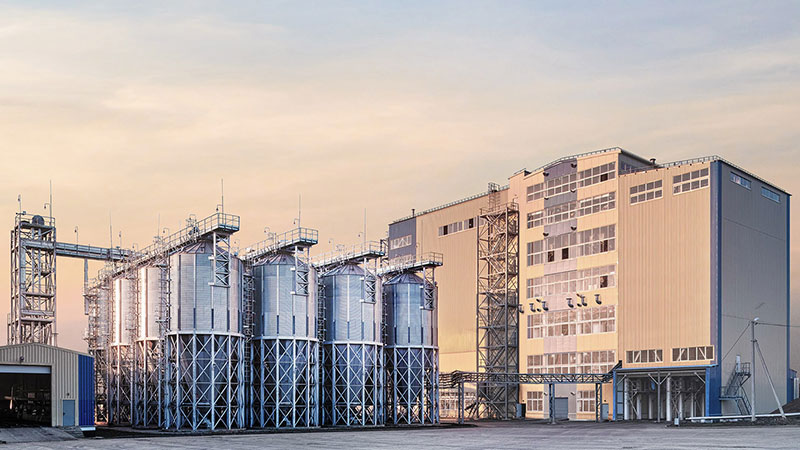
At RICHI, we go beyond project completion. With RICHI Servicee, we’re your dedicated partners in success. Count on us for expert guidance, minimal downtime, and optimized productivity. Choose RICHI for unmatched service and support.
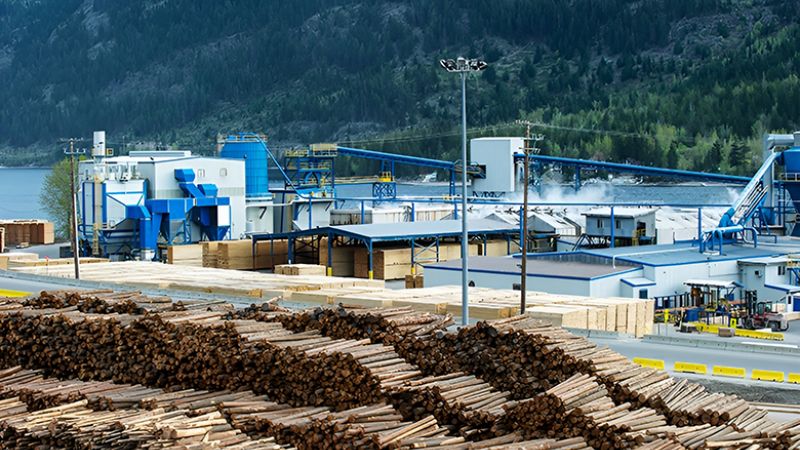


Meet global product demands and quality standards with industry-leading pellet plant design, engineering, equipment, and construction services for pellet processors.


Your Partner Beyond Project Completion
2000+ cases
RICHI is the leading designer, manufacturer and builder of pellet plants in the world, completing over 2000 projects in 140 countries across 6 continents.
Read More
Increase plant productivity, profitability, and safety by integrating high quality equipment into your pellet production line. Over the years, RICHI has become China's top pellet equipment manufacturer. At the same time, RICHI has established valuable partnerships with the world's leading component and raw material manufacturers to bring you the best there is in technology, automation, and efficiency in pelleting plant machinery.

For nearly 30 years, RICHI has been providing best-in-class pellet plant equipment and services to clients across a variety of industries, sizes, and needs. We pride ourselves on the knowledge and skill that each team member possesses – from our technical sales team to our process design engineers. You can count on RICHI Machinery to take your operation to the next level of innovation, quality, and success.
Need help with your pellet manufacturing plant project? Contact us today.
ANIMAL FEED
BIOMASS
WOOD
ORGANIC FERTILIZER
AQUA FEED
CAT LITTER
MUNICIPAL WASTE RECYCLING
SPECIAL PELLET PRODUCTION
RICHI Machinery continues to deliver world class pellet mill equipment, pellet plant engineering and project solutions that add value to our customers in the animal feed, wood waste, agriculture waste, organic fertilizer, cat litter and special pellet products industries. Throughout the years, we RICHI Machinery have built strong brand, becoming industry-leading pellet machine manufacturer. We value integrity, promise quality, and prioritize your success.
Learn MoreWith our expert team, we precisely implement your process engineering requirements in pellet mill and pelletizing plant systems. No matter which industry you’re in – we understand your needs and deliver solutions that meet the highest standards.
At RICHI, quality comes first. Our pellet making machine and related pellet line equipment undergo rigorous quality controls to ensure they meet the highest standards. Rely on products that are durable, safe, and efficient.
With decades of experience in pellet machine and pellet production line production, we have earned a reputation as a trusted partner in various industries. Our expertise allows us to cover a wide range of applications.
Not only do we offer premium pelleting equipment, but we are also experts at designing, building, installing, and maintaining facilities from the ground up. Our expertise is within pellt plant process design, discovering the most efficient, productive, and profitable way to handle your materials in an end-to-end cycle.
○ RICHI MACHINERY
Keeping in touch with us is an effective way to solve all your problems. If you have any needs or questions, please leave your contact information, then RICHI technical consultants will send design, quotation, videos to your mailbox. You can also contact us directly via WhatsApp: +86 13838389622
Copyright©2015-2026 by HENAN RICHI MACHINERY CO., LTD. All rights reserved.