
A specialty shrimp feed producer in the Guayaquil area selected one RICHI SKLF11×11 aqua feed pellet cooler in Ecuador to upgrade the cooling section of an existing small-capacity aquafeed line.

A specialty shrimp feed producer in the Guayaquil area selected one RICHI SKLF11×11 aqua feed pellet cooler in Ecuador to upgrade the cooling section of an existing small-capacity aquafeed production line. The plant produces fine shrimp feed for early production stages and already had extrusion, drying, screening and packaging equipment, so the project focused on replacing a cooler and discharge arrangement that was not well matched to the physical characteristics of the finished product.
The line operates at approximately 1.5 T/H. The SKLF11×11 was selected because its reference capacity of approximately 1–3 T/H provides a practical match for this throughput while leaving operating margin for changes in bulk density, product size and seasonal ambient conditions. The cooler is installed after the drying stage, not as a substitute for the dryer.
Name:
Shrimp Feed Pellet Cooler
Country:
Ecuador
Date:
2026
Capacity:
1–3 T/H
Model:
SKLF11×11
Main Motor Power:
1.5 kW
Main Product:
Shrimp feed
Installation Position:
After drying, before final screening and packaging
Aquafeed cooling is not simply a matter of lowering product temperature.
After extrusion, shrimp feed typically passes through drying to remove excess moisture and stabilize the product. The dried feed then requires cooling before final screening, storage or packaging.
This sequence is particularly important for small-diameter products because the feed has already experienced several mechanical and thermal stages before it reaches the cooler.
If the cooling and discharge section is poorly matched to the product, the feed may generate additional fines or experience uneven final temperature and moisture.
The Ecuador customer therefore needed a cooler that could handle approximately 1.5 T/H without creating another mechanical bottleneck after the belt dryer machine.
| Project Parameter | Configuration |
|---|---|
| Equipment | Aqua feed pellet cooler |
| Model | SKLF11×11 |
| Reference Capacity | Approximately 1–3 T/H |
| Discharge Motor | 1.5 kW |
| Production Line Output | Approximately 1.5 T/H |
| Main Product | Shrimp feed |
| Typical Product Size | Fine shrimp feed / small-diameter pellets according to SKU |
| Installation Position | After drying, before final screening and packaging |
| Project Type | Existing aquafeed cooling-section upgrade |
The 1–3 T/H reference range places the customer’s 1.5 T/H line comfortably inside the cooler’s nominal operating window.
This is preferable to selecting a unit whose maximum rating exactly equals the normal production rate.
Actual cooling performance depends on more than tonnes per hour.
Bulk density, pellet size, incoming temperature, moisture, bed depth, airflow and ambient conditions all influence how the product behaves inside a counterflow cooler.
For this reason, RICHI does not assign one fixed cooling time to every shrimp-feed SKU.
The aquafeed post-processing sequence needs to remain clear.
Extrusion uses heat, pressure, moisture and mechanical shear to create the desired physical structure of the feed.
After leaving the aqua shrimp fish feed extruder, the product normally still contains more moisture than is suitable for stable storage.
The dryer removes the required amount of water.
The cooler then reduces the temperature of the dried product before it moves into downstream handling.
The process is therefore:
ingredient preparation → mixing → extrusion → drying → cooling → screening → coating where required → final handling and packaging.
If oil or other liquid is applied after drying, the exact position of coating relative to cooling depends on the product and process design.
The cooler should not be expected to remove the large water load that belongs to the dryer.
Small-diameter shrimp feed can be more sensitive to mechanical damage than larger feed pellets.
However, pellet size alone does not determine fragility.
Extrusion conditions, formula composition, starch behavior, drying conditions, bulk density, pellet hardness and porosity all affect physical strength.
Research on extruded aquafeed shows that process method, formulation and post-extrusion drying can all significantly change pellet durability, density, hardness, water absorption and water stability.
This means the counterflow pellet cooler should be evaluated as one part of the complete physical-quality system.
A harsh transfer point can create fines, but a weak extrudate cannot be made mechanically durable by the cooler alone.
For the Ecuador project, the engineering goal is therefore to minimize unnecessary impact and compression after drying while maintaining stable product flow through the cooling chamber.
The old installation used a screw-type transfer arrangement at the discharge side, and the customer wanted to reduce unnecessary mechanical stress on the finished feed.
A gravity-based or lower-impact discharge route can be advantageous for fragile products because it avoids some of the continuous shearing action associated with auger transport.
However, it is too simplistic to state that every screw conveyor destroys micro-pellets.
Damage depends on screw diameter, speed, fill level, clearance, pitch, product hardness and transfer geometry.
The new arrangement is therefore selected around gentle product transfer rather than around a claim that one discharge technology always produces zero breakage.
The same principle applies downstream.
Even if the cooler discharge is gentle, high drop heights, narrow chutes, aggressive bucket elevators or poorly selected screens can still generate fines.
Counterflow cooling is strongly influenced by pellet-bed depth and the ratio of cooling air to pellet mass flow.
Published research on counterflow feed-pellet cooling identifies those two variables as among the most important parameters controlling cooling rate and moisture loss.
This is why the customer does not operate the SKLF11×11 according to a fixed rule such as “1 mm feed always needs 6–8 minutes.”
Smaller products can exchange heat quickly because of their surface-area-to-volume relationship, but actual cooling still depends on product structure, bed behavior and air distribution.
Commissioning therefore follows the actual product:
This approach is much more useful than assigning cooling time from pellet diameter alone.
As with other counterflow cooling applications, a final product temperature several degrees above ambient can be used as a practical commissioning reference under suitable conditions.
That does not mean the SKLF11×11 will always discharge feed at exactly 28–30°C.
Guayaquil has warm and humid conditions for much of the year, so ambient air entering the cooler can already be relatively warm.
The achievable product temperature therefore moves with weather, humidity and air supply.
If ambient air is 26°C, an outlet in the high twenties or low thirties may be reasonable under suitable conditions.
If incoming cooling air is substantially hotter or more humid, the product cannot be expected to reach the same fixed number.
The customer therefore monitors the difference between ambient and outlet product temperature rather than operating around one absolute temperature target.
Water stability matters commercially in shrimp feed, but the cooler is not the primary machine that creates it.
Shrimp-feed physical stability depends strongly on formula, ingredient functionality, extrusion or pelleting conditions, starch transformation, binder use, density and drying.
Research comparing shrimp feeds has shown that processing route and formulation can materially affect water stability.
Cooling can influence final physical condition, but it should not be marketed as the machine that guarantees water stability.
In some shrimp-feed processes, post-conditioning and controlled thermal treatment before final cooling are used specifically to influence pellet structure and water stability.
That is a separate process decision from the basic cooling function.
For this Ecuador project, the cooler is responsible for reducing product temperature and stabilizing the feed before downstream handling.
Water stability remains a complete-process quality parameter.
If a plant reports excessive fines, the correct engineering response is to identify where those fines are generated.
The customer should compare samples at several points:
after extrusion, after drying, before cooling, after cooling, after screening and after final conveying.
This reveals whether the main damage is caused by weak extrusion, over-drying, cooler discharge, excessive drop height or downstream transfer.
The same approach prevents unsupported claims such as “15–20% breakage fell to 2–3% because the cooler was replaced.”
If the customer has before-and-after sieve data, that improvement can be quantified.
Without those measurements, RICHI focuses on reducing unnecessary mechanical stress and providing a cooling system sized to the real production rate.
Screen selection is also critical.
A fine shrimp-feed SKU requires screening equipment designed around the actual particle dimensions. It is not appropriate to assume that one universal 0.8 mm mesh belongs inside the cooler or that standard 3 mm openings would automatically lose 10–15% of the product.
This aqua feed pellet cooler in Ecuador project uses one RICHI SKLF11×11 counterflow cooler on an approximately 1.5 T/H shrimp feed production line in the Guayaquil area.
The model has a reference capacity of approximately 1–3 T/H and a 1.5 kW discharge motor.
The cooler is installed after the drying section and before final screening and packaging.
This process position is important because extruded shrimp feed needs moisture removal before final cooling.
The customer produces small-diameter shrimp feed, so mechanical handling is evaluated carefully throughout the downstream system.
RICHI does not guarantee a fixed breakage rate, fixed eight-minute cooling period or fixed 29°C outlet temperature.
Instead, the cooler is commissioned around actual product bulk density, pellet dimensions, dryer outlet temperature, moisture, bed depth, air-to-product flow and ambient conditions.
The discharge arrangement is selected to reduce unnecessary mechanical stress, while downstream transfer points are checked at the same time.
For another buyer searching for an aqua feed pellet cooler in Ecuador, shrimp feed cooler, aquafeed counterflow cooler, 1–3 T/H feed cooler, SKLF11×11 cooler or shrimp pellet cooling machine, RICHI first checks whether the product is extruded or conventionally pelleted.
Useful project information includes extruder or pellet-mill output, dryer output, product diameter and length, bulk density, dryer outlet temperature, dryer outlet moisture, required final product moisture, ambient temperature and humidity, available installation height, airflow system, screen specification and the current discharge or conveying method.
If the plant produces approximately 1.5 T/H, the SKLF11×11 is a logical capacity match.
If the product is extremely fine or fragile, RICHI also evaluates the complete transfer path rather than assuming cooler replacement alone will solve fines generation.
If the line produces multiple shrimp-feed sizes, each SKU may require different airflow, bed-depth and discharge settings.
For an Ecuador shrimp-feed project, send RICHI Machinery the line capacity, feed size range, extrusion method, dryer conditions, current fines percentage at several process points, ambient conditions and downstream handling arrangement. These parameters allow the aqua feed pellet cooler to be selected around the actual physical behavior of the product rather than pellet diameter alone.
Having the right mix of reliable, high-quality pellet machine and pelletizing systems and expert support is essential to your success. Watch how our end-to-end feed pellet plant solutions have helped our customers optimize their performance.
Our customized and future-proofed turnkey pellet plant solutions is designed with you at the core. From vision to reality and beyond, our team stays connected with yours. Giving you peace-of-mind with an expert at your side.
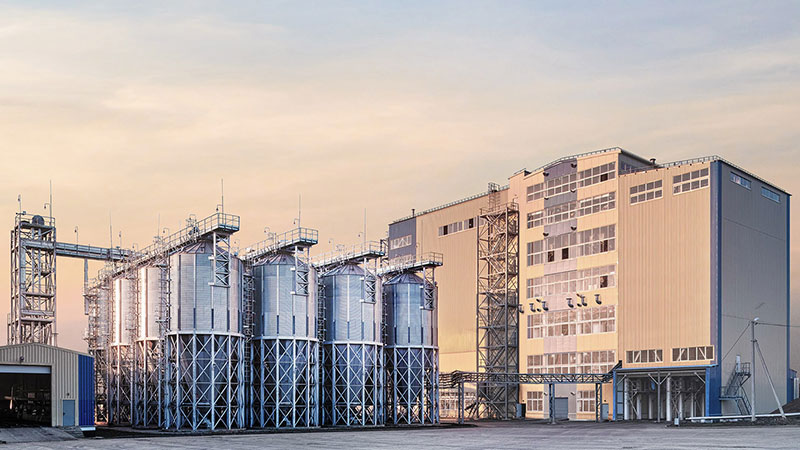
At RICHI, we go beyond project completion. With RICHI Servicee, we’re your dedicated partners in success. Count on us for expert guidance, minimal downtime, and optimized productivity. Choose RICHI for unmatched service and support.
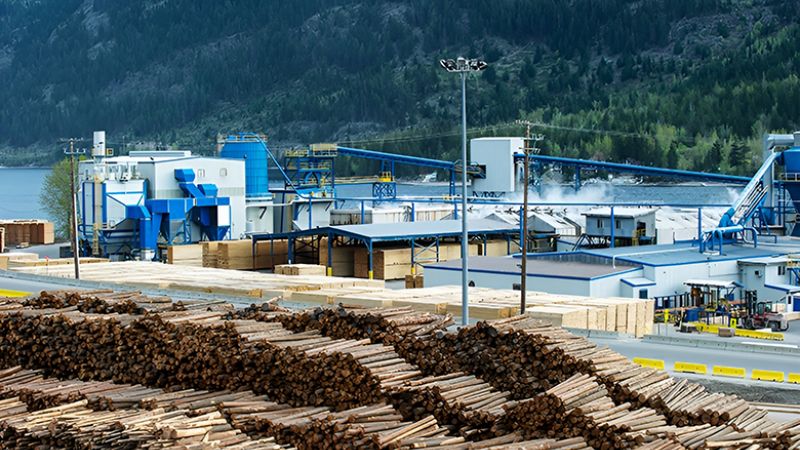


Meet global product demands and quality standards with industry-leading pellet plant design, engineering, equipment, and construction services for pellet processors.

Your Partner Beyond Project Completion
2000+ cases
RICHI is the leading designer, manufacturer and builder of pellet plants in the world, completing over 2000 projects in 140 countries across 6 continents.
Read More
Increase plant productivity, profitability, and safety by integrating high quality equipment into your pellet production line. Over the years, RICHI has become China's top pellet equipment manufacturer. At the same time, RICHI has established valuable partnerships with the world's leading component and raw material manufacturers to bring you the best there is in technology, automation, and efficiency in pelleting plant machinery.

For nearly 30 years, RICHI has been providing best-in-class pellet plant equipment and services to clients across a variety of industries, sizes, and needs. We pride ourselves on the knowledge and skill that each team member possesses – from our technical sales team to our process design engineers. You can count on RICHI Machinery to take your operation to the next level of innovation, quality, and success.
Need help with your pellet manufacturing plant project? Contact us today.
ANIMAL FEED
BIOMASS
WOOD
ORGANIC FERTILIZER
AQUA FEED
CAT LITTER
MUNICIPAL WASTE RECYCLING
SPECIAL PELLET PRODUCTION
RICHI Machinery continues to deliver world class pellet mill equipment, pellet plant engineering and project solutions that add value to our customers in the animal feed, wood waste, agriculture waste, organic fertilizer, cat litter and special pellet products industries. Throughout the years, we RICHI Machinery have built strong brand, becoming industry-leading pellet machine manufacturer. We value integrity, promise quality, and prioritize your success.
Learn MoreWith our expert team, we precisely implement your process engineering requirements in pellet mill and pelletizing plant systems. No matter which industry you’re in – we understand your needs and deliver solutions that meet the highest standards.
At RICHI, quality comes first. Our pellet making machine and related pellet line equipment undergo rigorous quality controls to ensure they meet the highest standards. Rely on products that are durable, safe, and efficient.
With decades of experience in pellet machine and pellet production line production, we have earned a reputation as a trusted partner in various industries. Our expertise allows us to cover a wide range of applications.
Not only do we offer premium pelleting equipment, but we are also experts at designing, building, installing, and maintaining facilities from the ground up. Our expertise is within pellt plant process design, discovering the most efficient, productive, and profitable way to handle your materials in an end-to-end cycle.
○ RICHI MACHINERY
Keeping in touch with us is an effective way to solve all your problems. If you have any needs or questions, please leave your contact information, then RICHI technical consultants will send design, quotation, videos to your mailbox. You can also contact us directly via WhatsApp: +86 13838389622
Copyright©2015-2026 by HENAN RICHI MACHINERY CO., LTD. All rights reserved.