
RICHI supplied an XPJ850×500 3-4 tons per hour wood crusher for sale in Indonesia to process sawmill slabs, branches and wood offcuts into 20–40 mm chips for biomass pellet raw material preparation.
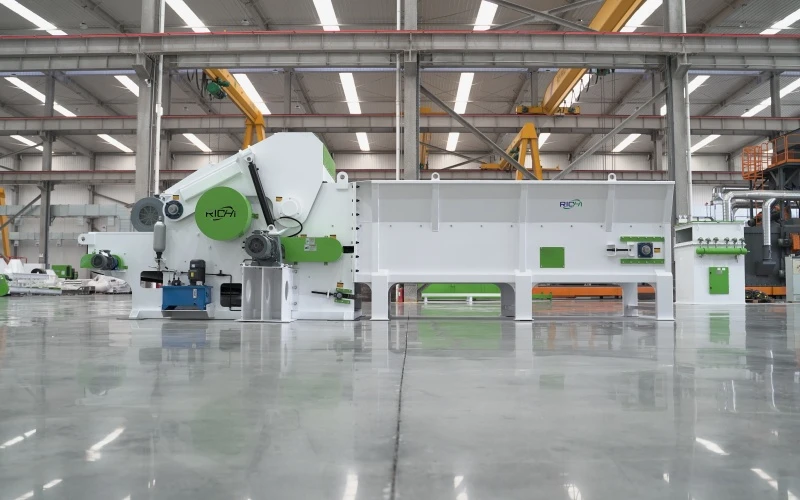
A wood-waste processing company in Central Java purchased a 3-4 Tons Per Hour Wood Crusher for Sale in Indonesia to increase its supply of prepared biomass material to a nearby wood pellet producer. The customer collects sawmill slabs, timber offcuts, rejected boards and branches from wood-processing businesses in the surrounding area. Its previous small chipper had become the main production bottleneck: operators had to cut larger pieces before feeding, throughput changed sharply with material size, and irregular oversized pieces created additional work before the chipped material could be delivered.
The customer was not building a complete wood pellet production line. Its business was upstream raw-material preparation, so the investment was limited to one XPJ850×500 drum-type wood crusher together with the necessary feeding and discharge arrangement. The required product was not finished pellet-mill feed. The machine first converts bulky wood into approximately 20–40 mm chips, which are easier to convey, transport and subsequently reduce in a wood hammer mill before pelletizing. This distinction was important when RICHI selected the machine: the customer needed a primary size-reduction unit, not a fine grinder or wood pellet mill.
Name:
Wood Crusher
Country:
Indonesia
Date:
2025
Capacity:
3–4 T/H
Model:
XPJ850×500
Main Motor Power:
132 kW
Cutting Arrangement:
10 flying knives + 3 fixed knives
Final Chip Size:
20–40 mm
The customer had already established collection relationships with local sawmills and woodworking businesses. As the volume of recovered wood increased, the older machine could no longer keep pace with incoming material. Simply adding more manual cutting labor would not solve the problem because the real bottleneck was the rate at which irregular wood could be converted into a reasonably consistent chip.
A 3–4 T/H machine also matched the customer's current business better than a much larger industrial chipper. At this stage, the company wanted to process one defined wood-waste stream and supply chipped biomass to its pellet-producing customer. Buying a standalone machine allowed it to upgrade the bottleneck while retaining its existing material yard, loading equipment and transport arrangements.
The feedstock is predominantly solid wood residue rather than demolition waste or mixed municipal wood. The customer receives sawmill slabs and edging strips, rejected timber sections, furniture-production offcuts and suitable branches from nearby wood-processing operations. Teak offcuts are present because of the local furniture sector, while plantation and sawmill residues provide additional material when available.
Material condition varies considerably. Fresh branches and recently processed timber can contain substantially more moisture than workshop offcuts that have been stored under cover. RICHI therefore did not use one fixed moisture value such as 10–25% to define the crusher's operating capability. Moisture influences cutting behavior, chip weight and especially the downstream drying requirement, but primary chipping can take place before the material reaches the final moisture required for biomass pellet production.
The receiving yard also separates unsuitable contaminants before feeding. Stones, steel pieces, wire and heavily contaminated waste wood should not be intentionally sent through the cutting chamber. A large feed opening means the machine can accept bulky material; it does not mean every object that physically fits into the opening is suitable for continuous processing.
| Project Item | Selected Configuration |
|---|---|
| Machine | Drum-type wood crusher/chipper |
| Model | XPJ850×500 |
| Target Capacity | 3–4 T/H |
| Main Motor | 132 kW |
| Feed Opening | 850×500 mm |
| Feed Motor | 4 + 3 kW |
| Hydraulic Pump | 1.5 kW |
| Discharge Conveyor Motor | 2.2 kW |
| Cutting Arrangement | 10 flying knives + 3 fixed knives |
| Project Chip Size | Approximately 20–40 mm |
| Primary Application | Pre-chipping wood for downstream biomass pellet raw-material preparation |
The 3–4 T/H figure is a rated project capacity rather than a guarantee that every wood species and feed shape will continuously produce exactly the same tonnes per hour. A tonne of dense hardwood represents a different cutting load and material volume from a tonne of lighter wood. Long branches, flat slabs and compact timber sections also enter the rotor differently. Actual output therefore depends on wood species, moisture, dimensions, feeding continuity, knife condition and the required chip specification.
The original requirement included logs, branches and irregular timber residues, but RICHI did not define the XPJ850×500 as a machine that can automatically process 500 mm-diameter round logs simply because its feed opening is 850×500 mm. The opening dimensions describe the physical inlet envelope. Safe continuous feed size also depends on material geometry, hardness, rotor loading and the way the hydraulic feeding mechanism grips the wood.
For this project, unusually thick or awkward sections are evaluated before feeding and can be split when necessary. This prevents the customer from treating the inlet dimensions as a maximum-log-diameter specification and protects both production stability and the cutting system. Buyers processing predominantly large-diameter round logs should provide actual minimum, average and maximum log diameters before model selection rather than selecting a crusher from inlet dimensions alone.
The XPJ850×500 Drum Wood Chipper performs primary size reduction. Its approximately 20–40 mm output is suitable for bulk handling and for feeding the next preparation stage, but those chips are still too large to enter a biomass ring-die pellet mill directly.
At the downstream pellet plant, the chips are dried when their moisture is above the required range and then reduced further with a hammer mill. The fine material entering a biomass pellet mill is normally only a few millimeters in size, with the exact screen and particle distribution selected according to raw material and pellet specification.
This two-stage size-reduction logic is particularly useful for bulky timber waste. Trying to feed long slabs, branches or large offcuts directly into a fine hammer mill creates an unnecessary burden on the grinding stage. Primary chipping first creates a controlled feedstock that can be conveyed and metered much more effectively.
Drum wood chippers can serve several wood-processing industries, but this Indonesian customer's machine has one defined role: preparing wood chips for a biomass pellet raw-material supply business. RICHI therefore did not design the project around simultaneous production for pellet plants, MDF factories, particleboard plants and pulp mills.
Those industries do not automatically require identical chip specifications. Pulp producers, panel manufacturers and biomass processors can impose different requirements for chip dimensions, fines, bark, contaminants, wood species and moisture. A machine may be technically applicable to more than one industry, but that is different from claiming that one 20–40 mm product is automatically an ideal finished raw material for all of them.
The customer's raw material does not arrive as uniform factory-cut blocks. Some pieces are long and narrow; others are flat sawmill slabs or irregular branches. Stable feeding is therefore almost as important as rotor power.
The hydraulic-assisted feeding arrangement helps maintain contact between the incoming wood and the feed mechanism so material enters the cutting zone more consistently. It is particularly useful when the shape and cross-section change from piece to piece. Feed speed can be coordinated with cutting load instead of relying on workers to push difficult material manually toward the rotor.
This does not eliminate the need for controlled loading. Operators still avoid feeding excessive bundles at once, and very irregular pieces are positioned so that they can enter the opening safely. The objective is stable utilization of the 132 kW cutting system rather than forcing as much wood as possible into the inlet.
Knife wear is one of the operating factors that the customer monitors closely. A sharp cutting edge slices through wood with less resistance. As the edge becomes dull, cutting load rises, chip geometry becomes less consistent and electricity consumption per tonne can increase.
Maintenance intervals cannot realistically be stated as one fixed number of hours for every Indonesian wood processor. Clean plantation timber and abrasive, dirty recovered wood create very different wear conditions. Teak and other harder materials also place a different load on the cutting system from lighter wood.
The customer's maintenance routine therefore focuses on inspection rather than an invented universal replacement interval. Operators watch chip quality, motor load, vibration and cutting behavior and service the knives when these indicators show deterioration. Replacement and sharpening planning is also based on the actual feedstock mix.
The 132 kW main motor gives the XPJ850×500 the power required for its intended cutting duty, but motor size alone does not determine whether a customer will obtain 3 or 4 tonnes per hour.
RICHI evaluates several variables before confirming a wood-crusher model:
This is especially important for buyers comparing machines only by advertised T/H. Two suppliers can quote the same nominal capacity while assuming completely different raw materials. For this Central Java project, the 3–4 T/H target applies to the customer's defined clean wood-residue stream under appropriate feeding and knife conditions.
Because this was a single-machine purchase, RICHI's engineering work focused on the interfaces around the crusher. The customer did not need an entirely new pellet production line. Incoming wood continues to use the existing storage and loading area, while the XPJ850×500 forms the new primary processing station.
The discharge conveyor moves chips away from the machine so the outlet remains clear during continuous operation. From there, material can be accumulated for transport to the downstream biomass processor. The layout leaves adequate access around the cutting chamber, drive and feeding mechanism because maintenance space is more important than squeezing the machine into the smallest possible footprint.
Electrical capacity was another part of the retrofit review. A 132 kW main drive plus the feeding, hydraulic and conveyor motors represents a substantial connected load. The customer therefore had to confirm the available plant power and protection arrangement before installation rather than assuming that an existing small shredder's electrical connection could simply be reused.
The XPJ850×500 crusher machine was prepared for export from Qingdao, China, with the machine and associated components secured for sea transport. The destination seaport was Tanjung Priok Port in Jakarta, after which the equipment continued by road to the customer's site in Central Java.
Before shipment, the project team confirmed the machine configuration, motor requirements, feeding arrangement and installation information. RICHI also supplied the technical documentation required for assembly and commissioning. Support during startup focused on correct feeding direction, knife and fixed-knife clearance, conveyor operation, hydraulic feeding adjustment and no-load/load testing.
The operator does not judge performance from tonnes per hour alone. Stable operation requires watching the relationship between feed condition, motor load and discharged chip quality.
If throughput drops, the first response is not automatically to increase feed speed. Operators check whether knives have become dull, whether a new batch contains denser or larger timber, whether material is entering unevenly or whether the required chip specification has changed. This diagnostic approach helps distinguish a genuine machine problem from normal variation in wood feedstock.
The customer also keeps the receiving area cleaner than before because mineral contamination can accelerate knife wear. Recovering inexpensive wood residue loses its economic advantage quickly if stones, metal or dirty demolition material repeatedly damage cutting components.
The business case for this customer was based on its position in the biomass supply chain. It already had access to wood residue but did not need to manufacture finished pellets itself. Its immediate opportunity was to convert bulky, low-density residues into a more manageable chipped material that could be supplied to an established downstream processor.
A standalone 3-4 Tons Per Hour Wood Crusher for Sale in Indonesia therefore solved the current bottleneck without forcing the company to invest in drying, fine grinding, pelletizing, cooling, screening and packing equipment before it had a reason to enter those stages.
The layout nevertheless leaves room for expansion. If the company later decides to manufacture pellets internally, the XPJ850×500 can remain as the primary chipping stage while dryers, hammer mills, MZLH biomass pellet mills, coolers and other equipment are added according to the future material balance and required finished capacity.
This 3-4 Tons Per Hour Wood Crusher for Sale in Indonesia project is a practical example of equipment selection based on an actual preprocessing bottleneck rather than an oversized complete-line investment. The Central Java customer uses one XPJ850×500 drum-type wood crusher to convert sawmill slabs, timber offcuts, suitable branches and woodworking residues into approximately 20–40 mm chips for downstream biomass-pellet raw-material preparation.
The machine is configured with a 132 kW main motor, 850×500 mm feed opening, hydraulic-assisted feeding and a discharge conveyor. Its 3–4 T/H project capacity should be interpreted against the specified wood stream: actual throughput changes with density, moisture, feed dimensions, knife condition, feeding continuity and required chip size. Likewise, the 850×500 mm opening should not be interpreted as proof that every 500 mm-diameter log can be continuously processed.
For Indonesian sawmills, furniture factories, forestry-residue processors, biomass raw-material suppliers and wood pellet producers considering a 3–4 T/H wood crusher, the most useful quotation information is not simply “I need 4 tons per hour.” Send RICHI photos or videos of the actual wood, species, moisture, average and maximum dimensions, percentage of branches versus slabs or offcuts, required chip size, operating hours per day, available electrical supply and the next process after chipping. RICHI Machinery can then determine whether the XPJ850×500 is appropriately sized or whether a different wood crusher configuration would provide a more stable production match.
Having the right mix of reliable, high-quality pellet machine and pelletizing systems and expert support is essential to your success. Watch how our end-to-end feed pellet plant solutions have helped our customers optimize their performance.
Our customized and future-proofed turnkey pellet plant solutions is designed with you at the core. From vision to reality and beyond, our team stays connected with yours. Giving you peace-of-mind with an expert at your side.
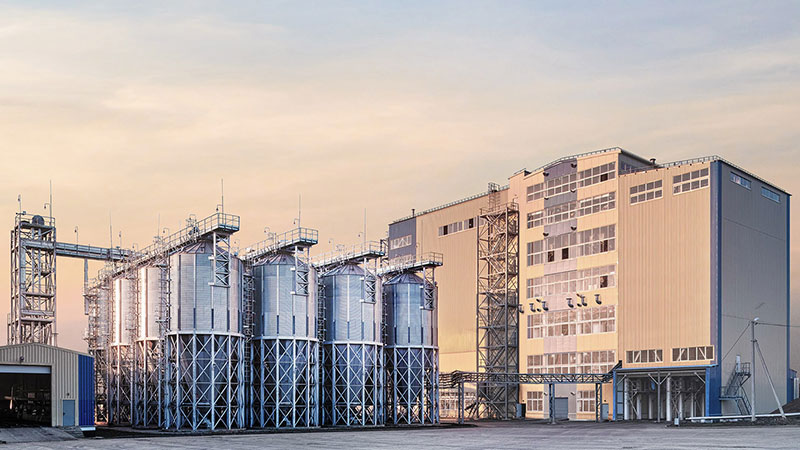
At RICHI, we go beyond project completion. With RICHI Servicee, we’re your dedicated partners in success. Count on us for expert guidance, minimal downtime, and optimized productivity. Choose RICHI for unmatched service and support.
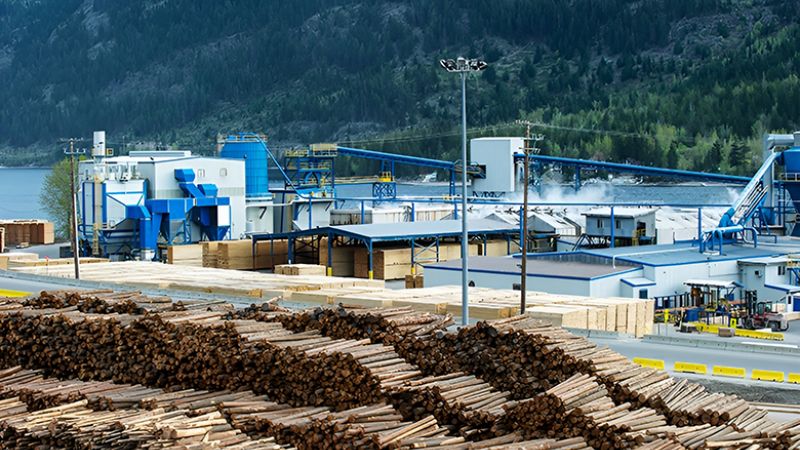


Meet global product demands and quality standards with industry-leading pellet plant design, engineering, equipment, and construction services for pellet processors.


Your Partner Beyond Project Completion
2000+ cases
RICHI is the leading designer, manufacturer and builder of pellet plants in the world, completing over 2000 projects in 140 countries across 6 continents.
Read More
Increase plant productivity, profitability, and safety by integrating high quality equipment into your pellet production line. Over the years, RICHI has become China's top pellet equipment manufacturer. At the same time, RICHI has established valuable partnerships with the world's leading component and raw material manufacturers to bring you the best there is in technology, automation, and efficiency in pelleting plant machinery.

For nearly 30 years, RICHI has been providing best-in-class pellet plant equipment and services to clients across a variety of industries, sizes, and needs. We pride ourselves on the knowledge and skill that each team member possesses – from our technical sales team to our process design engineers. You can count on RICHI Machinery to take your operation to the next level of innovation, quality, and success.
Need help with your pellet manufacturing plant project? Contact us today.
ANIMAL FEED
BIOMASS
WOOD
ORGANIC FERTILIZER
AQUA FEED
CAT LITTER
MUNICIPAL WASTE RECYCLING
SPECIAL PELLET PRODUCTION
RICHI Machinery continues to deliver world class pellet mill equipment, pellet plant engineering and project solutions that add value to our customers in the animal feed, wood waste, agriculture waste, organic fertilizer, cat litter and special pellet products industries. Throughout the years, we RICHI Machinery have built strong brand, becoming industry-leading pellet machine manufacturer. We value integrity, promise quality, and prioritize your success.
Learn MoreWith our expert team, we precisely implement your process engineering requirements in pellet mill and pelletizing plant systems. No matter which industry you’re in – we understand your needs and deliver solutions that meet the highest standards.
At RICHI, quality comes first. Our pellet making machine and related pellet line equipment undergo rigorous quality controls to ensure they meet the highest standards. Rely on products that are durable, safe, and efficient.
With decades of experience in pellet machine and pellet production line production, we have earned a reputation as a trusted partner in various industries. Our expertise allows us to cover a wide range of applications.
Not only do we offer premium pelleting equipment, but we are also experts at designing, building, installing, and maintaining facilities from the ground up. Our expertise is within pellt plant process design, discovering the most efficient, productive, and profitable way to handle your materials in an end-to-end cycle.
○ RICHI MACHINERY
Keeping in touch with us is an effective way to solve all your problems. If you have any needs or questions, please leave your contact information, then RICHI technical consultants will send design, quotation, videos to your mailbox. You can also contact us directly via WhatsApp: +86 13838389622
Copyright©2015-2026 by HENAN RICHI MACHINERY CO., LTD. All rights reserved.