

This is where you find all our press releases and news articles.
A complete waste tire recycling line manufactured by RICHI Machinery has been prepared for shipment to a customer in Poland. Before the equipment entered the delivery stage, the Polish customer visited RICHI, inspected our manufacturing facilities and equipment, and discussed the tire recycling project with our team.
The project is designed to process used tires through shredding, steel separation, granulation, textile separation, screening and dust collection. Instead of simply reducing whole tires into large pieces, the system is configured to progressively process waste tires into cleaner and more uniform rubber granules for subsequent recycling applications.
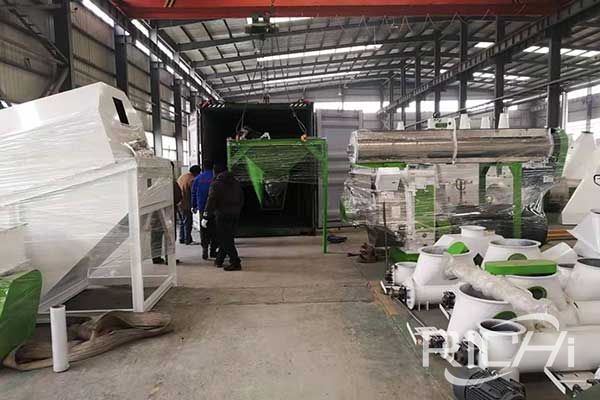
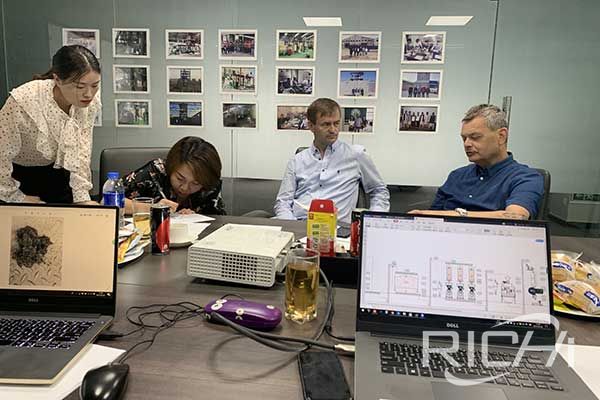
This Poland project records more than the final shipment of a set of recycling machinery. The cooperation progressed through several practical stages, including the customer's visit to RICHI Machinery, equipment inspection, technical communication, production preparation and final delivery.
During the visit, the Polish customer had the opportunity to see RICHI's workshop and equipment at close range. For a complete tire recycling project, this type of factory visit allows the customer to understand not only individual machines but also how shredding, separation, granulation and material handling equipment can be combined into one processing system.
The project subsequently moved into equipment preparation and manufacturing according to the required waste tire processing route. After the relevant work was completed, the tire recycling equipment was prepared for shipment to Poland.
For RICHI Machinery, this project represents a complete process from technical communication and equipment inspection to manufacturing and overseas delivery rather than a simple transaction involving an individual shredder or granulator.
Waste tires contain rubber as well as steel reinforcement and textile components. Effective tire recycling therefore requires more than size reduction. The processing system needs to gradually open the tire structure, reduce the rubber fraction to the required size and separate unwanted steel and textile materials from the finished rubber product.
The Polish customer's waste tire recycling line follows this principle. Whole tires enter the system and pass through several size-reduction and separation stages. Large tire pieces are first produced by shredding, followed by further reduction and steel liberation. Subsequent granulation, screening and classification produce smaller rubber granules while removing remaining textile and metallic fractions.
This staged processing approach is important because attempting to reduce a complete tire directly to fine rubber granules would place unnecessary demands on downstream equipment. Progressive size reduction allows different machines to perform specific tasks within the complete recycling process.
The tire recycling system is configured around progressive shredding, material separation and rubber granulation. Each section has a specific role in converting used tires into recyclable rubber material.
The complete process is therefore not simply tire shredding. It combines several mechanical operations to achieve controlled particle-size reduction and the separation of rubber, steel and textile fractions.
A used tire is a composite product, which makes separation one of the most important parts of a complete tire recycling line.
Primary shredding reduces the tire to a size suitable for further processing, but steel and textile components remain mixed with the rubber. Additional rasping and granulation expose and liberate these materials so they can be separated more effectively.
Magnetic separation is used at different stages because steel may be liberated progressively as tire pieces become smaller. Textile separation is also integrated into the downstream process to reduce fiber contamination in the rubber granules.
This combination of size reduction and separation allows the system to recover rubber as the main recyclable fraction while also separating steel for appropriate downstream handling.
The required particle size of recycled tire rubber depends on its downstream application. A tire recycling plant should therefore be designed around the customer's intended finished material rather than simply targeting the smallest possible particle size.
Coarser recycled rubber in approximately the 8–20 mesh range can be considered for applications such as running tracks, sports surfaces and cushioning layers, depending on the technical requirements of the final product.
Rubber material around 30–40 mesh may be used in applications including reclaimed rubber production, rubber sheets and certain paving products. Finer material in the 40–60 mesh range can be used for rubber filling and some polymer modification applications.
Very fine recycled rubber, such as material in the 60–80 mesh range, can enter more demanding rubber-product and building-material applications where suitable processing technology and product quality requirements are met.
These downstream requirements affect more than screening. As the target rubber particle size becomes finer, the size-reduction process, classification requirements, separation efficiency and dust-control demands also change. For this reason, finished-product specifications should be established before the complete waste tire processing line is configured.
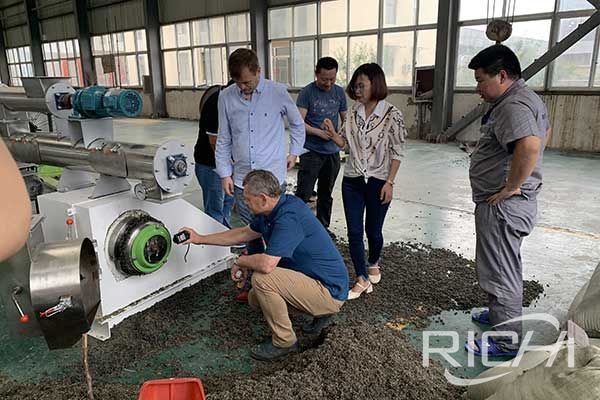
Equipment testing and inspection are important stages before overseas recycling machinery leaves the manufacturing facility. For the Poland project, the available project records also document the customer visit and equipment preparation before shipment.
Testing provides an opportunity to observe machine operation and check the relationship between the equipment and the intended material-processing requirements. For a multi-stage waste tire recycling system, attention needs to extend beyond whether an individual motor or machine can operate.
Material feeding, shredding performance, discharge condition, equipment connections and the coordination of downstream processing sections all contribute to the performance of the complete system.
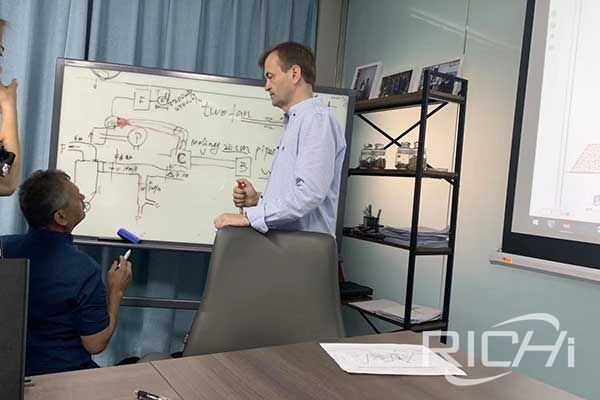
Customer visits also provide a direct environment for discussing practical project issues. Raw tire conditions, target rubber granule size, required separation level, plant layout and downstream applications can all influence the final equipment configuration.
Following project communication, equipment preparation and inspection, the recycling line equipment reached the shipment stage. The delivery photos record another important milestone for the Polish waste tire recycling project.
For an overseas recycling plant, shipment is the point at which months of equipment configuration, manufacturing and preparation begin moving toward actual project implementation at the customer's location.
Because a complete rubber granule production line contains multiple processing and auxiliary machines, delivery preparation also needs to consider equipment identification and the subsequent installation sequence. The objective is to make the transition from factory manufacturing to on-site installation as organized as possible.
After the equipment reaches Poland, the project can proceed into its subsequent installation and commissioning stages according to the customer's implementation schedule.
Customers entering the tire recycling industry sometimes begin their equipment search with a waste tire shredder. However, the required machinery depends heavily on what the customer intends to sell after processing.
If the objective is only to produce larger tire shreds, the processing route can be relatively short. Producing smaller rubber chips requires additional size reduction and steel separation. Producing cleaner 1–4 mm rubber granules requires further granulation, screening, textile separation and fine-metal removal.
Projects targeting fine rubber powder require still further processing beyond conventional rubber granulation.
This distinction is important when comparing tire recycling equipment quotations. Two systems described as tire recycling lines may contain substantially different machinery because they are designed for different finished-product specifications.
RICHI Machinery therefore starts project configuration from the customer's input material and required output product. Tire type, target particle size, required cleanliness, expected capacity, available factory space and downstream application all need to be considered before the final equipment list is determined.
The Poland project illustrates how individual machines can be combined around a specific waste tire processing objective. Primary shredding, secondary size reduction, steel separation, rubber granulation, textile removal, screening and dust collection each solve a different processing problem.
RICHI Machinery can configure waste tire processing and rubber recycling equipment according to the customer's material conditions and required finished products. The solution can cover individual size-reduction equipment or a more complete recycling system incorporating conveying, shredding, separation, granulation, screening and dust control.
For investors evaluating a new tire recycling project, the most useful starting information includes the types and sizes of tires to be processed, expected input capacity, required rubber particle size, finished-product application, working hours, available workshop dimensions and local power conditions.
With these project details, the processing route can be developed around the actual recycling objective instead of selecting equipment first and trying to adapt the finished product to the machinery later.
The shipment of this waste tire recycling line to Poland marks another stage in the cooperation between the Polish customer and RICHI Machinery. From the customer's factory visit and technical discussions to equipment preparation, inspection and final shipment, the project demonstrates the practical steps behind an overseas recycling equipment order.
Waste tires can become a source of recoverable rubber and steel when they are processed through an appropriate recycling system. The commercial value of the project depends not only on reducing waste volume but also on producing recycled materials with particle sizes and cleanliness levels suited to downstream markets.
If you are planning a waste tire recycling plant, rubber granule production line or tire shredding and separation system, tell RICHI Machinery what tires you plan to process, your required capacity and the size and application of the finished rubber material. Our team can configure the processing equipment according to your actual recycling project requirements.
Having the right mix of reliable, high-quality pellet machine and pelletizing systems and expert support is essential to your success. Watch how our end-to-end feed pellet plant solutions have helped our customers optimize their performance.
Our customized and future-proofed turnkey pellet plant solutions is designed with you at the core. From vision to reality and beyond, our team stays connected with yours. Giving you peace-of-mind with an expert at your side.
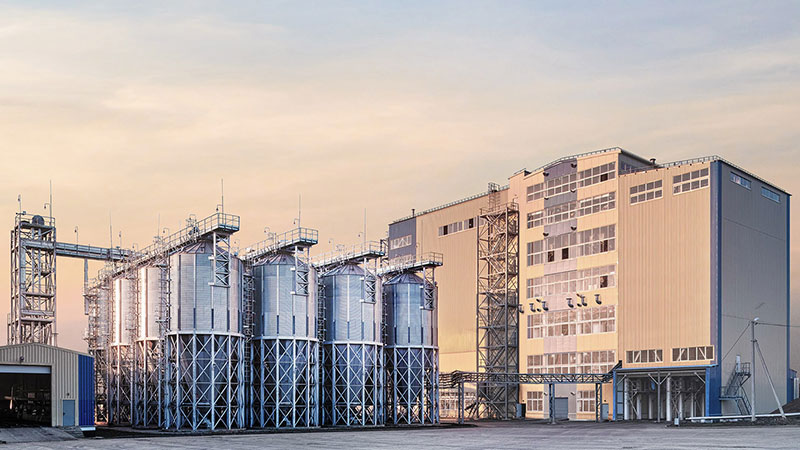
At RICHI, we go beyond project completion. With RICHI Servicee, we’re your dedicated partners in success. Count on us for expert guidance, minimal downtime, and optimized productivity. Choose RICHI for unmatched service and support.
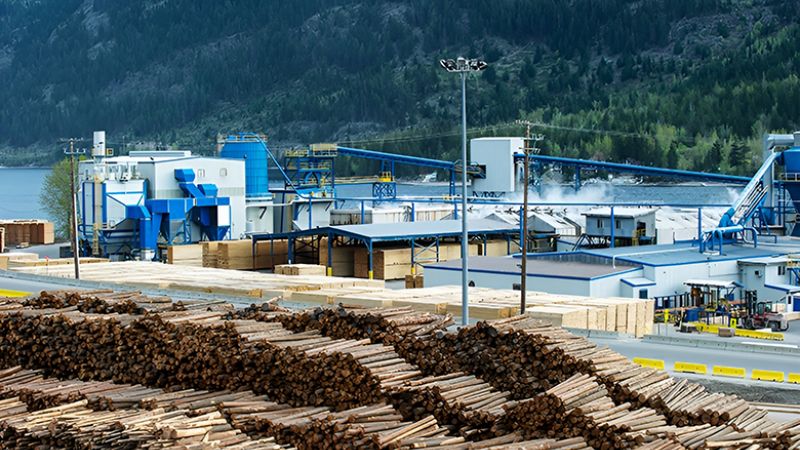


Meet global product demands and quality standards with industry-leading pellet plant design, engineering, equipment, and construction services for pellet processors.

Your Partner Beyond Project Completion
2000+ cases
RICHI is the leading designer, manufacturer and builder of pellet plants in the world, completing over 2000 projects in 140 countries across 6 continents.
Read More
Increase plant productivity, profitability, and safety by integrating high quality equipment into your pellet production line. Over the years, RICHI has become China's top pellet equipment manufacturer. At the same time, RICHI has established valuable partnerships with the world's leading component and raw material manufacturers to bring you the best there is in technology, automation, and efficiency in pelleting plant machinery.

For nearly 30 years, RICHI has been providing best-in-class pellet plant equipment and services to clients across a variety of industries, sizes, and needs. We pride ourselves on the knowledge and skill that each team member possesses – from our technical sales team to our process design engineers. You can count on RICHI Machinery to take your operation to the next level of innovation, quality, and success.
Need help with your pellet manufacturing plant project? Contact us today.
ANIMAL FEED
BIOMASS
WOOD
ORGANIC FERTILIZER
AQUA FEED
CAT LITTER
MUNICIPAL WASTE RECYCLING
SPECIAL PELLET PRODUCTION
RICHI Machinery continues to deliver world class pellet mill equipment, pellet plant engineering and project solutions that add value to our customers in the animal feed, wood waste, agriculture waste, organic fertilizer, cat litter and special pellet products industries. Throughout the years, we RICHI Machinery have built strong brand, becoming industry-leading pellet machine manufacturer. We value integrity, promise quality, and prioritize your success.
Learn MoreWith our expert team, we precisely implement your process engineering requirements in pellet mill and pelletizing plant systems. No matter which industry you’re in – we understand your needs and deliver solutions that meet the highest standards.
At RICHI, quality comes first. Our pellet making machine and related pellet line equipment undergo rigorous quality controls to ensure they meet the highest standards. Rely on products that are durable, safe, and efficient.
With decades of experience in pellet machine and pellet production line production, we have earned a reputation as a trusted partner in various industries. Our expertise allows us to cover a wide range of applications.
Not only do we offer premium pelleting equipment, but we are also experts at designing, building, installing, and maintaining facilities from the ground up. Our expertise is within pellt plant process design, discovering the most efficient, productive, and profitable way to handle your materials in an end-to-end cycle.
○ RICHI MACHINERY
Keeping in touch with us is an effective way to solve all your problems. If you have any needs or questions, please leave your contact information, then RICHI technical consultants will send design, quotation, videos to your mailbox. You can also contact us directly via WhatsApp: +86 13838389622
Copyright©2015-2026 by HENAN RICHI MACHINERY CO., LTD. All rights reserved.