

This is where you find all our press releases and news articles.
RICHI Machinery has completed the shipment preparation for a 1-2 T/H chicken feed pellet production line destined for a farm customer in Turkey. The equipment was sourced through a buyer from Iraq who was selecting feed machinery on behalf of his Turkish customer. After finding RICHI online and comparing several equipment suppliers, he ultimately chose RICHI for the project.
The end user operates a relatively small chicken farm and required a feed production system capable of producing up to approximately 2 tons of pellet feed per hour. As a new operator entering animal feed pellet production, the customer needed more than a feed pellet machine quotation. The project required a production route that could match the farm's actual feed demand, raw material condition, operating schedule and future production plans without unnecessarily overbuilding the plant.
This project began when the Iraqi buyer found RICHI Machinery through our website while sourcing feed processing equipment for his customer in Turkey. He compared several suppliers before deciding which manufacturer would be responsible for the chicken feed production equipment.
For a first-time feed mill investor, comparing suppliers can be difficult because quotations that appear to describe the same 1-2 T/H poultry feed line may actually cover very different equipment scopes.
One supplier may quote only crushing, mixing and pelletizing equipment. Another may include raw material feeding, batching, cooling, screening, conveying, dust control and packing. Automation level, electrical control, spare-parts scope and installation support can also vary.
The Iraqi buyer therefore needed to evaluate not only the quoted price but also whether the proposed equipment could form a practical complete feed processing system for the Turkish farm customer.
The project capacity is 1-2 tons of feed pellets per hour. For a farm producing feed mainly for its own poultry operation, this capacity range can provide considerably more control over feed production than purchasing finished feed while avoiding the raw material and infrastructure requirements of a much larger commercial feed factory.
At 1 T/H, an eight-hour production period corresponds to approximately 8 tons of feed. At 2 T/H, the same operating period corresponds to approximately 16 tons. If the line operates for 10 hours, theoretical output is approximately 10-20 tons per day.
Actual production depends on formula changes, pellet specifications, operator experience, raw material condition, equipment utilization and maintenance. The important point is that a farm-scale 1-2 T/H line should be matched to actual feed consumption rather than selected simply because a larger machine appears to offer better value.
For a chicken farm, excessive capacity can leave equipment idle for long periods and increase unnecessary investment. Insufficient capacity can force the farm to operate too many hours or continue purchasing outside feed. Correct sizing therefore begins with daily flock feed demand and the number of days per week the farm intends to produce feed.
A 1-2 T/H feed pellet line is not normally intended for a very small backyard poultry operation. Even at the lower end of the capacity range, several hours of production can generate multiple tons of feed in one day.
For example, if the farm operates the line at around 1.5 T/H for six hours, theoretical daily production is approximately 9 tons. If it runs three production days per week, that already represents approximately 27 tons of feed.
This means the economics of the project depend on the farm's actual flock size, feed consumption, production schedule and whether excess feed will be stored or supplied to additional farms.
For first-time investors, RICHI therefore recommends calculating required feed output from actual consumption before confirming pellet mill capacity. This approach is more reliable than simply choosing a standard model and adjusting the farm operation around the machine later.
The original project information confirms that this is a chicken feed pellet project but does not provide the Turkish customer's actual feed formula. RICHI therefore does not present a specific ingredient percentage as a confirmed fact about this farm.
In practical poultry feed production, common energy and protein ingredients can include maize, wheat, barley, soybean meal and other locally available feed materials, together with vegetable oil, minerals, premixes and amino-acid supplements according to the formulation. Turkish feed manufacturers also commonly work with ingredients such as corn, soybean meal, sunflower meal, barley and wheat bran, depending on availability and price.
Different ingredients require different handling. Whole maize, wheat or barley normally needs to be ground before mixing. Soybean meal, bran and other meal ingredients may not require the same crushing route. Premixes and minerals are added at much lower inclusion rates and therefore require more controlled weighing.
This is why a customer searching for a 2 T/H chicken feed pellet machine may ultimately need a complete system consisting of grinding, batching, mixing, pelletizing and cooling equipment rather than one machine.
The exact configuration depends on the farm's raw materials and desired level of automation, but a complete poultry feed pellet line at this capacity can be organized around raw material preparation, formula control, mixing, pelletizing and finished-feed handling.
For a 1-2 T/H farm feed mill, the objective is not to add as many machines as possible. It is to include every process that the raw materials and finished feed genuinely require while keeping the system practical for the customer's production scale.
First-time feed plant operators often focus most of their attention on the pelletizer. In practice, pellet quality and stable line output also depend heavily on upstream material preparation.
If grain particle size is inconsistent, mixing and pellet formation can become less stable. If formula ingredients are not weighed correctly, the problem cannot be corrected by the pellet mill. Similarly, poor mixing can cause nutritional variation even if the finished pellets look acceptable.
For poultry production, this is particularly relevant because commercial feed formulas commonly combine energy ingredients, protein meals, mineral sources and small-dose additives. University of Mosul poultry-feeding guidance, for example, describes poultry diets as mixtures of numerous energy, protein, mineral, vitamin and additive ingredients rather than a single grain feed.
RICHI therefore treats grinding, batching, mixing and pelletizing as connected parts of the same production system.
The finished feed requirement should be confirmed before the pelletizing section is finalized. Chicken feed is not necessarily produced in one pellet specification throughout the entire production cycle.
Different growth stages can require different physical feed forms. Depending on the customer's feeding program, starter feed may be supplied in finer form or as crumbles, while later-stage feeds may use larger pellets.
If the farm needs both pellets and crumbled feed, additional downstream processing may be required. A customer intending to produce only one straightforward pellet specification may not need the same arrangement.
This illustrates why a quotation for a "1-2 T/H chicken feed line" should always clarify the finished feed form instead of assuming that every poultry farm requires exactly the same equipment.
The Turkish end user in this project operates a chicken farm, so the production logic differs from that of a commercial feed manufacturer selling many feed products to external customers.
A farm-use feed line can often prioritize straightforward formula management, manageable labor requirements and reliable production around the farm's feeding schedule. A commercial feed factory of the same nominal capacity may need more raw material bins, more formulas, more frequent changeovers, greater packaging flexibility and additional finished-product storage.
This distinction can significantly change the equipment quotation even when both customers request 1-2 T/H.
For a farm project, RICHI can evaluate whether existing buildings, raw material storage, manual handling or other available infrastructure can be sensibly incorporated rather than automatically configuring the project as a fully independent commercial feed factory.
The original project information states that the customer was a new operator in animal feed pellet production. This is an important part of the equipment configuration because a first-time user should not receive an unnecessarily complicated plant merely because additional automation is technically possible.
A practical system needs to balance labor, control accuracy and operating convenience. The farm may benefit from automated control in processes where consistency matters most while retaining simpler material handling where production volume and labor conditions make that approach reasonable.
Operator access, cleaning, routine lubrication, die and roller maintenance, screen replacement and troubleshooting should also be considered during layout planning.
For new operators, RICHI's technical support can include guidance on installation, equipment operation, process adjustment and routine maintenance according to the scope of the project.
The Iraqi buyer compared several suppliers before choosing RICHI Machinery. For other first-time investors doing the same, the most useful comparison is not simply the final total shown on the quotation.
A quotation that appears cheaper may simply exclude systems that will later need to be purchased separately. Comparing equipment boundaries first makes supplier quotations much easier to evaluate.
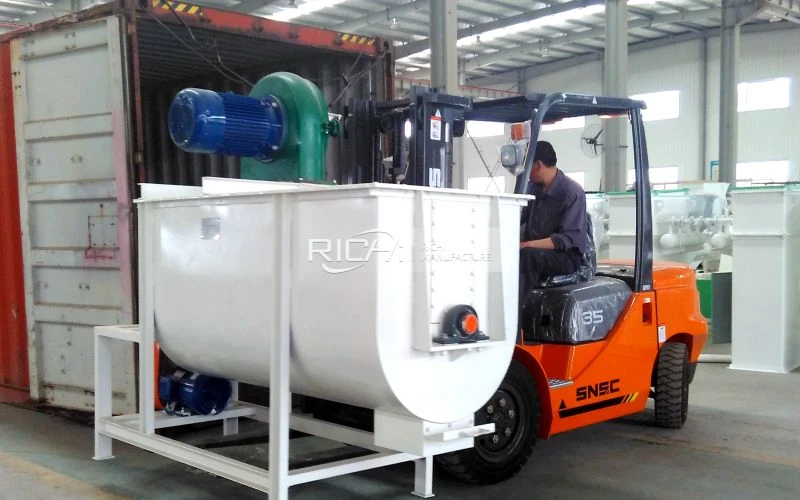
After supplier comparison, technical communication, equipment selection and manufacturing, the 1-2 T/H chicken feed line reached the shipment stage.
The delivery photos show parts of the equipment prepared for the Turkish customer's project. For a complete line, shipment means that several separate processing machines and supporting components will later need to be assembled into one coordinated system at the end user's site.
Clear equipment identification and installation planning are therefore important even for a relatively compact 1-2 T/H farm feed plant.
After arrival, the next project stages can include equipment positioning, mechanical and electrical installation, system checks, commissioning and operator familiarization according to the final project scope.
The feed pellet machine is the central forming equipment in this project, but selecting it without considering the surrounding process would not create a functional animal feed production line.
For a 1-2 T/H system, feed pellet mill capacity needs to match the rate at which the grinding and mixing sections can supply prepared material. The downstream cooler and screening equipment also need to accept the pellet output without creating a bottleneck.
The formula itself also affects real pellet mill performance. Grain ratio, fiber level, fat addition, particle size and conditioning conditions can all influence throughput and pellet quality. This means nominal equipment capacity should always be considered together with the customer's actual formula.
This project progressed from an online equipment search to supplier comparison, equipment selection, manufacturing and shipment. The Iraqi buyer acted on behalf of the Turkish farm customer, while RICHI Machinery provided the feed processing equipment required for the planned 1-2 T/H chicken feed operation.
The project also shows why relatively small feed lines still require careful engineering. A 1-2 T/H plant may be compact compared with a large commercial feed mill, but the relationship between daily feed demand, raw material supply, formula control, pellet specifications and operating labor still determines whether the investment is practical.
If you are sourcing chicken feed making machines for your own farm or purchasing machinery on behalf of another customer, provide RICHI Machinery with the poultry type, flock scale, daily feed consumption, main raw materials, approximate formula, required feed form, working hours and available building conditions. These details allow the equipment configuration to be built around actual farm demand instead of simply quoting a standard pellet mill package.
Having the right mix of reliable, high-quality pellet machine and pelletizing systems and expert support is essential to your success. Watch how our end-to-end feed pellet plant solutions have helped our customers optimize their performance.
Our customized and future-proofed turnkey pellet plant solutions is designed with you at the core. From vision to reality and beyond, our team stays connected with yours. Giving you peace-of-mind with an expert at your side.
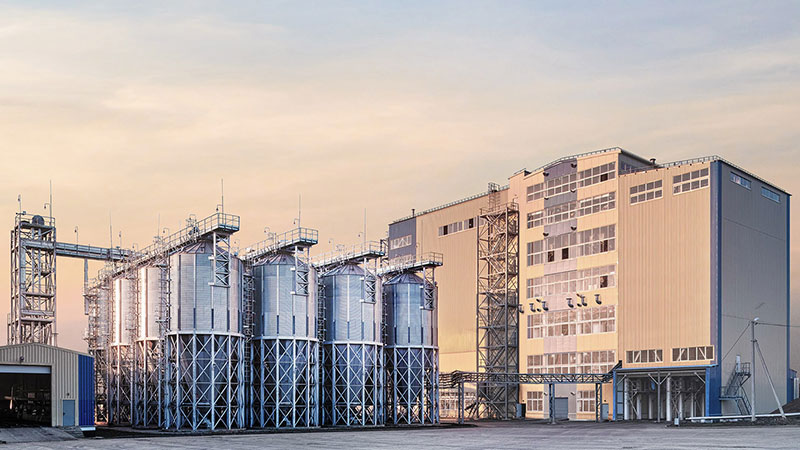
At RICHI, we go beyond project completion. With RICHI Servicee, we’re your dedicated partners in success. Count on us for expert guidance, minimal downtime, and optimized productivity. Choose RICHI for unmatched service and support.
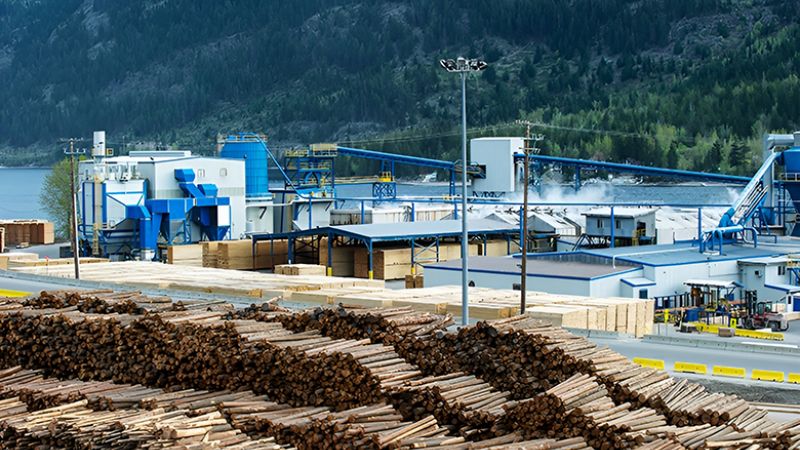


Meet global product demands and quality standards with industry-leading pellet plant design, engineering, equipment, and construction services for pellet processors.


Your Partner Beyond Project Completion
2000+ cases
RICHI is the leading designer, manufacturer and builder of pellet plants in the world, completing over 2000 projects in 140 countries across 6 continents.
Read More
Increase plant productivity, profitability, and safety by integrating high quality equipment into your pellet production line. Over the years, RICHI has become China's top pellet equipment manufacturer. At the same time, RICHI has established valuable partnerships with the world's leading component and raw material manufacturers to bring you the best there is in technology, automation, and efficiency in pelleting plant machinery.

For nearly 30 years, RICHI has been providing best-in-class pellet plant equipment and services to clients across a variety of industries, sizes, and needs. We pride ourselves on the knowledge and skill that each team member possesses – from our technical sales team to our process design engineers. You can count on RICHI Machinery to take your operation to the next level of innovation, quality, and success.
Need help with your pellet manufacturing plant project? Contact us today.
ANIMAL FEED
BIOMASS
WOOD
ORGANIC FERTILIZER
AQUA FEED
CAT LITTER
MUNICIPAL WASTE RECYCLING
SPECIAL PELLET PRODUCTION
RICHI Machinery continues to deliver world class pellet mill equipment, pellet plant engineering and project solutions that add value to our customers in the animal feed, wood waste, agriculture waste, organic fertilizer, cat litter and special pellet products industries. Throughout the years, we RICHI Machinery have built strong brand, becoming industry-leading pellet machine manufacturer. We value integrity, promise quality, and prioritize your success.
Learn MoreWith our expert team, we precisely implement your process engineering requirements in pellet mill and pelletizing plant systems. No matter which industry you’re in – we understand your needs and deliver solutions that meet the highest standards.
At RICHI, quality comes first. Our pellet making machine and related pellet line equipment undergo rigorous quality controls to ensure they meet the highest standards. Rely on products that are durable, safe, and efficient.
With decades of experience in pellet machine and pellet production line production, we have earned a reputation as a trusted partner in various industries. Our expertise allows us to cover a wide range of applications.
Not only do we offer premium pelleting equipment, but we are also experts at designing, building, installing, and maintaining facilities from the ground up. Our expertise is within pellt plant process design, discovering the most efficient, productive, and profitable way to handle your materials in an end-to-end cycle.
○ RICHI MACHINERY
Keeping in touch with us is an effective way to solve all your problems. If you have any needs or questions, please leave your contact information, then RICHI technical consultants will send design, quotation, videos to your mailbox. You can also contact us directly via WhatsApp: +86 13838389622
Copyright©2015-2026 by HENAN RICHI MACHINERY CO., LTD. All rights reserved.