

This is where you find all our press releases and news articles.
Some company news is about a new machine, a shipment or a completed project. This one is different.
In early 2020, COVID-19 rapidly developed from a public-health emergency into a crisis affecting countries across the world. On March 11, 2020, the World Health Organization characterized COVID-19 as a pandemic. At that moment, factories, transport networks, hospitals, governments and ordinary families were all facing pressures that few had experienced before.
RICHI Machinery was also operating through that period in China. Looking back, what remains especially memorable is not only the disruption caused by the pandemic, but also how quickly assistance crossed national borders. When China was under the greatest pressure, governments, companies, airlines and communities in other countries sent protective equipment and other support. As outbreaks later intensified elsewhere, assistance began moving in the opposite direction.
RICHI usually sees international cooperation through machinery projects. A customer sends raw material information from another country, our engineers develop a production solution in China, equipment is manufactured and then shipped overseas.
During the first months of 2020, international cooperation took a very different form.
Aircraft that normally carried passengers transported masks and medical supplies. Logistics networks were used for emergency shipments. Governments exchanged testing materials and protective equipment. Medical specialists shared technical experience across borders.
The pandemic demonstrated something familiar to companies working internationally: no country, supply chain or business operates completely in isolation.
Pakistan was among the countries that expressed support for China during the early stage of the outbreak. The relationship took on another dimension in March 2020, when Pakistan was simultaneously confronting a serious desert locust threat to agriculture.
On March 9, the first batch of Chinese locust-control assistance arrived in Karachi. Contemporary records describe 50,000 liters of malathion and 14 high-efficiency spraying units among the materials delivered. COVID-19 testing kits were also sent as cooperation between the two countries expanded across different emergency needs.
The significance of this episode was larger than the equipment itself. One country was dealing with a public-health emergency while another was facing both an emerging epidemic and an agricultural threat. Support therefore moved across more than one field.
During the period when Chinese hospitals and medical workers faced severe pressure, Canada supported the response with personal protective equipment.
Canadian government records document the dispatch of approximately 16 tonnes of protective equipment, including clothing, face shields, masks, goggles and gloves, through humanitarian-response arrangements.
At a time when protective supplies were becoming strategically important around the world, the shipment represented the type of practical assistance that could immediately support frontline personnel.
Indonesia had supported China in different ways during the early outbreak. As COVID-19 cases later increased in Indonesia, medical assistance began moving from China to Indonesia.
On March 24, 2020, medical supplies were dispatched from Shanghai. The shipment included testing reagents, N95 masks, surgical masks, protective clothing and portable ventilators.
This change in direction captured one of the defining characteristics of the pandemic. A country providing support at one point could become the country needing support only weeks later.
That made international cooperation less about a permanent distinction between "donor" and "recipient" and more about responding to where the pressure was greatest at a particular moment.
Not every contribution was measured in hundreds of tonnes.
On February 5, 2020, Ghana urgently donated 10,000 N95 masks for Wuhan. The quantity was modest compared with some later international shipments, but the gesture attracted attention precisely because protective supplies were already becoming difficult to obtain.
For RICHI, this is one of the most important lessons from that period: the value of assistance cannot always be measured only by its monetary amount or physical weight.
Timing, available resources and willingness to act matter too.
Aviation was another important part of international cooperation during the early outbreak.
While global passenger traffic was beginning to contract sharply, Ethiopian Airlines continued operating scheduled services to Chinese destinations with safety adjustments and public-health precautions.
That connection mattered far beyond passenger travel. Addis Ababa later became an important logistics point for the distribution of medical materials to African countries, demonstrating how existing transport networks could be repurposed during an emergency.
For an export-oriented manufacturer such as RICHI Machinery, this was particularly striking. International trade normally depends quietly on airlines, ports, freight companies and logistics hubs operating in the background. During the pandemic, the importance of those networks became visible to everyone.
Qatar provides another clear example of how commercial infrastructure could be used for emergency support.
Qatar Airways created a free cargo channel for medical relief supplies destined for China. In February 2020, five cargo aircraft transported approximately 300 tonnes of medical supplies to Beijing, Shanghai and Guangzhou, alongside medical materials donated by the airline itself.
The aircraft, cargo capacity, international route network and logistics staff already existed for normal commercial activity. During the crisis, those same resources became part of an emergency-response system.
This is one reason the events of 2020 cannot be understood only through government actions. Airlines, manufacturers, logistics companies, hospitals, charities and individuals all became part of the response.
The countries and examples were different, but the pattern was remarkably consistent.
| Country | Example of Cooperation | What It Demonstrated |
|---|---|---|
| Pakistan | Emergency cooperation involving locust control and COVID-19 response | Support can extend across multiple crises at the same time |
| Canada | Protective equipment sent to China | Practical frontline assistance during shortages |
| Indonesia | Medical supplies later sent from China as Indonesia faced growing cases | Assistance can change direction as conditions change |
| Ghana | 10,000 N95 masks donated for Wuhan | Timing and willingness can matter as much as scale |
| Ethiopia | Air connections maintained during major disruption | Transport networks are part of international resilience |
| Qatar | Cargo aircraft and logistics capacity used for medical relief | Commercial infrastructure can support humanitarian action |
RICHI Machinery is not a medical company. Our work is designing and manufacturing equipment for feed, biomass, organic fertilizer and other material-processing projects.
But our business has always been international.
Our daily work connects engineers in China with farms, feed manufacturers, biomass processors, agricultural businesses and industrial investors in different parts of the world. Equipment manufacturing may happen in one country, while the raw materials, installation site, operators and final market are thousands of kilometers away.
The events of 2020 made the importance of those international connections much more visible.
A disruption in one country could affect transport somewhere else. Restrictions at a port could alter a project schedule on another continent. A shortage of one component could move through an entire supply chain.
At the same time, the crisis showed that the same connections could also carry solutions: protective equipment, medical expertise, testing materials, humanitarian aid and practical experience.
For industrial companies, responsibility during a crisis is not limited to making public statements.
It also means protecting employees, maintaining communication with overseas customers, explaining possible project delays honestly, coordinating shipments carefully and avoiding promises that cannot be fulfilled under changing conditions.
During an international disruption, customers may be thousands of kilometers away but still depend on the manufacturer for project information. Clear communication becomes part of project responsibility.
The same principle continues to influence how RICHI approaches international projects: explain what can be confirmed, identify risks early and remain available when conditions become difficult.
Years later, COVID-19 is no longer the emergency it was in early 2020. The World Health Organization ended the COVID-19 public-health emergency of international concern in May 2023, although the effects of the pandemic continue to be studied around the world.
RICHI keeps this story in our company news archive for a different reason from our equipment shipments, factory visits or project installations.
It records a period when international relationships were tested under extraordinary pressure and when assistance moved repeatedly across borders.
Pakistan, Canada, Indonesia, Ghana, Ethiopia and Qatar represent only a small part of a much larger global story. Different countries contributed in different ways, according to their resources and circumstances.
For a company whose customers and partners are located around the world, that experience reinforced a simple principle: international cooperation matters most when conditions are difficult.
RICHI Machinery remains grateful to the customers, partners and friends who maintained communication, understanding and trust during that exceptional period.
Having the right mix of reliable, high-quality pellet machine and pelletizing systems and expert support is essential to your success. Watch how our end-to-end feed pellet plant solutions have helped our customers optimize their performance.
Our customized and future-proofed turnkey pellet plant solutions is designed with you at the core. From vision to reality and beyond, our team stays connected with yours. Giving you peace-of-mind with an expert at your side.
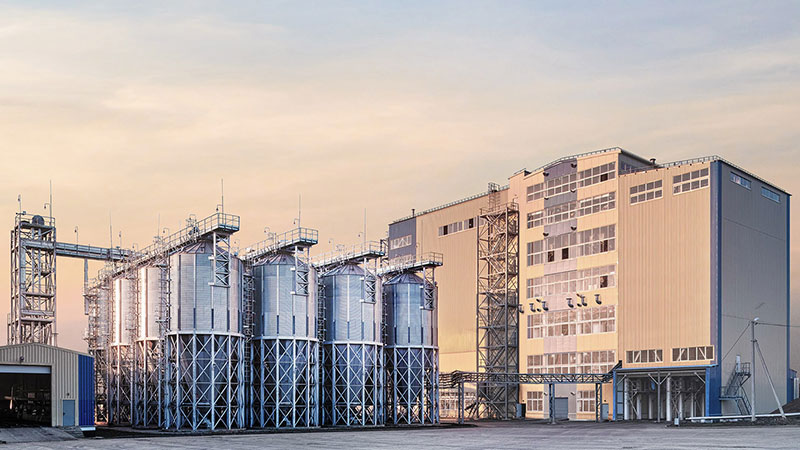
At RICHI, we go beyond project completion. With RICHI Servicee, we’re your dedicated partners in success. Count on us for expert guidance, minimal downtime, and optimized productivity. Choose RICHI for unmatched service and support.
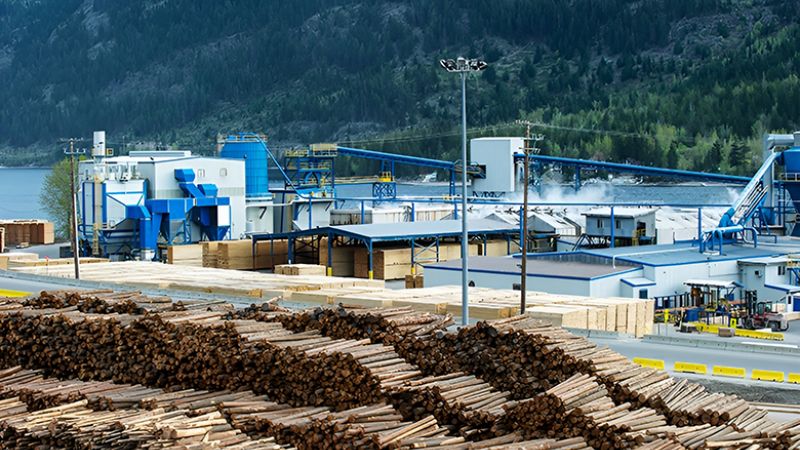


Meet global product demands and quality standards with industry-leading pellet plant design, engineering, equipment, and construction services for pellet processors.

Your Partner Beyond Project Completion
2000+ cases
RICHI is the leading designer, manufacturer and builder of pellet plants in the world, completing over 2000 projects in 140 countries across 6 continents.
Read More
Increase plant productivity, profitability, and safety by integrating high quality equipment into your pellet production line. Over the years, RICHI has become China's top pellet equipment manufacturer. At the same time, RICHI has established valuable partnerships with the world's leading component and raw material manufacturers to bring you the best there is in technology, automation, and efficiency in pelleting plant machinery.

For nearly 30 years, RICHI has been providing best-in-class pellet plant equipment and services to clients across a variety of industries, sizes, and needs. We pride ourselves on the knowledge and skill that each team member possesses – from our technical sales team to our process design engineers. You can count on RICHI Machinery to take your operation to the next level of innovation, quality, and success.
Need help with your pellet manufacturing plant project? Contact us today.
ANIMAL FEED
BIOMASS
WOOD
ORGANIC FERTILIZER
AQUA FEED
CAT LITTER
MUNICIPAL WASTE RECYCLING
SPECIAL PELLET PRODUCTION
RICHI Machinery continues to deliver world class pellet mill equipment, pellet plant engineering and project solutions that add value to our customers in the animal feed, wood waste, agriculture waste, organic fertilizer, cat litter and special pellet products industries. Throughout the years, we RICHI Machinery have built strong brand, becoming industry-leading pellet machine manufacturer. We value integrity, promise quality, and prioritize your success.
Learn MoreWith our expert team, we precisely implement your process engineering requirements in pellet mill and pelletizing plant systems. No matter which industry you’re in – we understand your needs and deliver solutions that meet the highest standards.
At RICHI, quality comes first. Our pellet making machine and related pellet line equipment undergo rigorous quality controls to ensure they meet the highest standards. Rely on products that are durable, safe, and efficient.
With decades of experience in pellet machine and pellet production line production, we have earned a reputation as a trusted partner in various industries. Our expertise allows us to cover a wide range of applications.
Not only do we offer premium pelleting equipment, but we are also experts at designing, building, installing, and maintaining facilities from the ground up. Our expertise is within pellt plant process design, discovering the most efficient, productive, and profitable way to handle your materials in an end-to-end cycle.
○ RICHI MACHINERY
Keeping in touch with us is an effective way to solve all your problems. If you have any needs or questions, please leave your contact information, then RICHI technical consultants will send design, quotation, videos to your mailbox. You can also contact us directly via WhatsApp: +86 13838389622
Copyright©2015-2026 by HENAN RICHI MACHINERY CO., LTD. All rights reserved.