
Discover a water resistant pallet shredder machine in Ghana for processing weather-resistant wooden pallets, nailed timber boards and reusable wood waste into 2–4 cm chips.
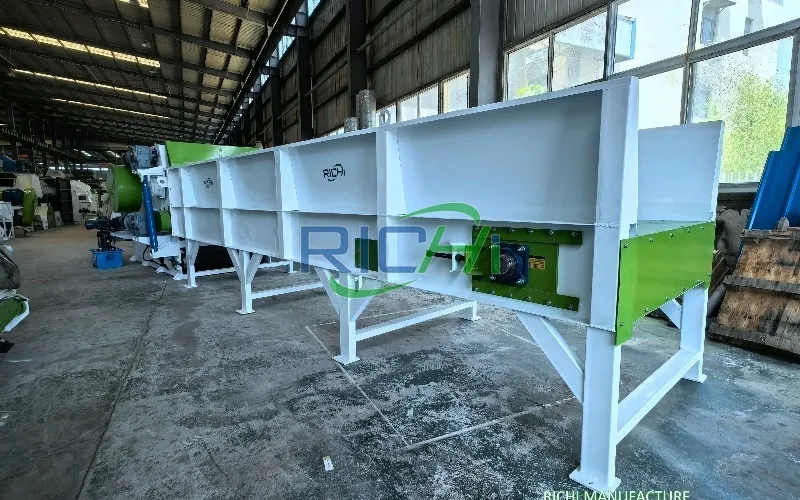
At a logistics and building-materials recovery operation in Ghana, wooden pallets were becoming a handling problem rather than a useful secondary resource.
Pallets arrived with imported goods, moved between storage areas and delivery vehicles, and were eventually taken out of service when their decks split, their blocks loosened or their frames could no longer carry a reliable load. Some had been used outdoors and had water-resistant surface treatments intended to help them withstand damp conditions during storage and transport.
Repairable pallets were still worth keeping. The difficulty was the damaged stock: broken deck boards, cracked stringers, loose blocks and pallets with too many missing fasteners to justify another repair.
The operator also received damaged timber packaging and short lengths of used wooden boards from nearby construction and warehouse activities. Leaving these materials in piles occupied working space and created repeated handling work.
Name:
wood-waste crusher
Country:
Ghana
Date:
2026
Capacity:
Flexible
Model:
RIBPC 1000×350
Main Motor Power:
90 kW
Raw Materials:
wooden pallets, nailed boards
Final product size:
2–4cm
Rather than purchase an entire wood-processing plant, the business chose to investigate a single heavy-duty pallet shredder. The intended machine was the RICHI RIBPC 1000×350, a coarse wood-waste crusher designed to process suitable wooden pallets, nailed boards and other compatible wood waste into approximately 2–4 cm pieces. The objective was to reduce the volume and improve the handling of rejected timber, while keeping the initial investment focused on the stage that the operation needed most.
For businesses researching a water resistant pallet shredder machine in Ghana, this project illustrates an important distinction: a machine can reduce damaged pallet wood into smaller pieces, but the commercial value of the output still depends on the wood's condition, the presence of coatings or preservatives, metal contamination and the requirements of the intended receiving facility.
Ghana's port logistics, warehousing, construction and distribution activities generate demand for reliable material-handling systems. Wooden pallets help move packaged goods through these operations, but they do not remain serviceable indefinitely. Heavy loads, repeated forklift handling, moisture exposure and accidental impacts can damage the boards and blocks long before the wood itself has lost all potential value.
For a pallet recovery operator, the first choice is normally whether a damaged pallet can be repaired safely. A pallet with a small number of replaceable boards may be worth rebuilding. One with extensive structural damage, contamination or an uneconomical repair requirement may need to be dismantled or rejected. The latter group creates a steady stream of irregular wood pieces that are difficult to stack neatly and inconvenient to move with ordinary warehouse equipment.
The business needed a machine that could handle the rejected timber after basic sorting. A conventional saw would require more deliberate preparation of each piece, while a chipper designed primarily for long branches and roundwood would not necessarily be the most suitable choice for mixed pallet frames, blocks and boards containing nails. A heavy-duty pallet shredder with a suitable crushing chamber and hammer arrangement was a more relevant option for this duty.
The purchase was therefore planned as a standalone equipment investment, not a replacement for an existing complete production line. The operator already had access to the facilities required for receiving, inspecting, separating and storing pallet waste. What was missing was a dedicated coarse-crushing stage. Starting with one machine also made it possible to record actual feed volumes and output quality before deciding whether screening, metal separation or further size reduction would be justified.
The intended feedstock consists of rejected wooden pallets and compatible timber packaging collected from logistics and warehousing operations. The material mix may include broken deck boards, pallet stringers, solid timber blocks, short lengths of nailed wood and damaged wooden supports. Some items may have been exposed to rain or damp warehouse floors, while others may have surface coatings designed to improve resistance to moisture during use.
The term "water resistant" needs to be interpreted carefully in a recycling project. It does not establish that a pallet is made entirely from a special material, nor does it identify the chemical composition of a coating or preservative. A water-resistant wooden pallet may be constructed from ordinary timber with a surface treatment, or it may use a material or manufacturing process that differs from conventional pallets. Each incoming category must therefore be identified before processing.
For this project, the preferred material is wood-based pallet waste that has been inspected and accepted for the intended recycling route. Repairable pallets are removed from the crushing stream. Pallets containing substantial plastic components, rubber, fabric, foam or other non-wood materials require separate handling. Metal fittings such as nails and screws may remain in otherwise suitable feedstock where the shredder is configured for nailed wood, but their presence must be considered in downstream handling.
Water-resistant coatings and chemical treatments require additional attention. The machine's ability to crush a material does not establish that the resulting chips are suitable for fuel, animal bedding, composting or unrestricted reuse. Treated, painted, contaminated or chemically preserved timber must be assessed against applicable environmental rules and the acceptance criteria of the intended end user. Material that is not approved for a proposed application must be kept out of that product stream.
The feedstock inspection process is therefore part of the operating plan, not an optional administrative task. A practical sorting arrangement should distinguish reusable pallets, clean rejected timber, treated or painted wood, and material containing excessive non-wood components. This separation helps the operator avoid contaminating an otherwise suitable wood-chip batch and provides more dependable information about the actual volume available for processing.
The selected model is the RICHI RIBPC 1000×350 template and pallet shredder. Its nominal feed opening measures 1000 × 350 mm. The main motor is rated at 90 kW, with two feeding motors rated at 5.5 kW each. A 1.1 kW motor drives the hydraulic pump, and the discharge conveyor uses a 1.5 kW motor. The crushing system has 24 hammers.
This configuration was selected for a mixed stream of pallet boards, blocks and other compatible timber pieces rather than for large whole logs. The opening dimensions are relevant to material preparation, but they do not mean that every object fitting within the opening can be fed safely. The operator must follow the manufacturer's limits for material dimensions, feeding conditions and foreign objects.
The project targets wood chips measuring approximately 2–4 cm after coarse crushing. This is an intermediate material size intended to make the rejected wood easier to handle and potentially suitable for an approved downstream recycling process. It is not fine sawdust, and it is not a finished product such as a wood pellet or composite board.
| Parameter | Specification |
|---|---|
| Equipment type | Heavy-duty wooden pallet and wood-waste crusher |
| Model | RIBPC 1000×350 |
| Feed opening dimensions | 1000 × 350 mm |
| Main motor power | 90 kW |
| Feeding motor power | 5.5 + 5.5 kW |
| Hydraulic pump motor power | 1.1 kW |
| Discharge conveyor motor power | 1.5 kW |
| Hammer quantity | 24 |
| Target output size | Approximately 2–4 cm |
| Primary feedstock | Suitable rejected wooden pallets, nailed boards and compatible wood waste |
| Purchase configuration | One standalone machine |
The supplied model specifications do not state a rated hourly capacity. A numerical throughput figure should therefore not be assigned without further technical confirmation. Actual processing performance depends on the wood species, moisture condition, pallet construction, board dimensions, proportion of metal fasteners, feeding consistency, screen configuration and operating conditions.
Before finalizing the machine selection, the operator should provide representative photographs and dimensions of the pallets, details of any water-resistant treatments, the expected daily volume and the required downstream application. Where necessary, material testing or a technical review can help determine whether the proposed model is appropriate for the actual feedstock.
The RIBPC crusher machine is designed for coarse crushing of wood waste such as wooden pallets, nailed boards and discarded furniture components. Its hammer-based crushing arrangement is intended to break down the material into smaller pieces. The internal screen can be customized, allowing the finished size to be matched more closely to the intended use, subject to the machine's technical configuration.
For the Ghana project, the normal target is approximately 2–4 cm. The operator's objective is not to produce perfectly uniform particles from every incoming piece, but to obtain a manageable wood-chip stream suitable for the next handling or recycling stage. If a receiving facility requires a tighter particle-size distribution, further screening may be necessary.
The machine uses high-strength alloy-steel hammers that undergo quenching treatment. The design is intended to withstand the demanding conditions associated with processing suitable nailed wood. However, this does not mean that nails, screws or metal pieces can never cause damage. Large metal objects, reinforcing bars, chains, stones and other unsuitable contaminants must be removed before feeding.
The hammers are installed using a detachable fastening arrangement to simplify inspection and replacement. This is useful in pallet recycling, where incoming materials can vary considerably and the condition of wear components affects both operating stability and product consistency.
The housing uses a heavy-duty, reinforced construction. Carbon dioxide gas-shielded welding and overall annealing are specified to help reduce welding-related stress and improve structural stability. Sealed bearings and dust- and water-resistant design features support operation in demanding industrial environments, while automatic overload protection is intended to help protect the equipment when abnormal loading occurs.
These features contribute to the machine's suitability for industrial wood-waste processing, but routine maintenance remains essential. The operator should inspect wear components, monitor abnormal noise or vibration, follow lubrication requirements and isolate the machine before carrying out maintenance or clearing a blockage.
The first objective for the Ghanaian operator is to convert rejected pallet wood into a more manageable intermediate material. The next application must be selected according to the feedstock's composition and the receiving facility's requirements. This is especially important when pallets have been treated for moisture resistance or have been exposed to unknown substances during their service life.
One potential route is supply to a wood-recycling facility that accepts coarse chips for further mechanical processing. Such a facility may use additional screening, metal removal or size reduction before incorporating the material into an approved manufacturing process. The commercial terms would depend on the receiving plant's specifications and the quality of the delivered chips.
Another possible route is further processing into smaller wood particles. A hammer mill may be suitable when the material has first been reduced to an appropriate size and meets the mill's feed requirements. Depending on the final product, a downstream process may also require drying, separation and additional quality checks. The RIBPC pallet shredder itself performs coarse crushing; it does not replace these later stages.
Some clean wood chips may be suitable for biomass applications, but the decision cannot be based on particle size alone. The wood must meet the applicable fuel specifications, and treated or contaminated pallets must not be directed into a fuel stream unless the material and application have been specifically assessed and approved. A surface described as water-resistant is not sufficient evidence that the wood is safe for combustion.
For a pallet recycling operator, this separation of responsibilities is commercially important. It prevents the business from assuming that every tonne of crushed material can be sold for the same price or sent to the same destination. Sorting, traceability and confirmation of the end user's requirements help establish the actual recoverable value of the waste stream.
The single-machine purchasing decision reflects the immediate need at the recovery site. The operator does not initially need to manufacture pellets or produce a finely graded wood powder. The main problem is the accumulation of damaged pallets and timber components that can no longer be returned to service.
Installing one RIBPC 1000×350 allows the business to establish a dedicated coarse-crushing stage without committing to a dryer, hammer mill, pellet mill and complete conveying system at the same time. It also creates an opportunity to measure the real operating conditions before expanding the process.
Useful operating records include the quantity of incoming pallets, the proportion accepted for crushing, the volume rejected during sorting, machine operating hours, maintenance intervals and the amount of finished chips accepted by downstream buyers. Electricity consumption and labour requirements should be recorded as well, so the operator can calculate the actual cost of producing a tonne of usable material.
These figures will help determine whether additional equipment is justified. If buyers require finer particles, a secondary crusher or hammer mill may be considered. If the intended product needs lower moisture, a dryer may become necessary. If a consistent market exists for a more processed wood product, the business can assess a larger system based on confirmed demand rather than assumptions.
RICHI Machinery supplies individual wood-waste processing machines as well as equipment for more extensive processing systems. Technical support can help buyers review material dimensions, machine configuration, screen requirements, electrical supply, maintenance access and possible future processing stages. The purpose is to make the first investment appropriate to the current operation while retaining a practical basis for later expansion.
Wooden pallet waste can contain more than timber. Nails, screws, metal plates, plastic straps, labels, dirt and broken packaging may be mixed together during collection. Before crushing, the operator should establish a sorting procedure that identifies acceptable feedstock and removes objects that could damage the machine or contaminate the finished material.
Water-resistant or treated pallets need an additional identification step. Where the coating, preservative or previous use is unknown, the material should be assessed before assigning it to a product stream. Crushing does not neutralize chemicals, remove coatings or make unsuitable wood safe for unrestricted reuse.
Safe operation also requires controlled feeding, suitable guarding, emergency-stop arrangements and access restrictions around moving parts. Workers should not attempt to push material into the feed opening by hand or clear a jam while the machine is running. Maintenance and cleaning must follow the manufacturer's isolation procedures.
Dust and noise should be managed according to the site conditions and applicable requirements. The discharge area should be arranged so that crushed material can be collected without creating unnecessary congestion around the machine. A clear working layout reduces avoidable handling and supports more consistent operation.
For this type of pallet-recycling application, the most useful operator feedback concerns the consistency of feeding, the condition of the hammers, the ease of removing worn components and the suitability of the finished chips for the intended recipient. These points are more meaningful than an unsupported statement that a machine has increased output by a specific percentage.
The Ghana project should be reviewed against several practical measures: whether the accepted pallet stream can be processed without excessive interruption, whether the output meets the receiving facility's size requirements, how often wear components need attention and whether the recovered material generates enough value to cover operating costs.
A project-specific customer testimonial should be added only after the operator has confirmed the actual experience. For example, the final approved feedback could address the handling of mixed pallet boards, the maintenance arrangement or the usefulness of the selected screen size. Any quotation, measured throughput, downtime figure or cost saving must come from project records or an authorized customer statement.
This approach gives prospective buyers a more dependable basis for assessing the investment. A pallet shredder should be evaluated against the real material stream, the demands of the receiving market and the costs of operating the machine—not simply by its motor power or the nominal size of its feed opening.
The planned shipping route is from Qingdao Port in China to Tema Port in Ghana. Before dispatch, the machine configuration, packing list, electrical requirements, agreed spare parts and shipping documentation should be checked against the order.
The receiving site should prepare adequate installation space, suitable foundation support, lifting access, electrical infrastructure and a safe area for collecting the crushed wood. The installation arrangement should also allow sufficient room for feeding equipment, inspection and routine maintenance.
Because the feedstock includes rejected pallets and potentially treated wood, the storage arrangement should keep uninspected materials separate from accepted feedstock and finished chips. This reduces the risk of mixing unsuitable wood into a batch intended for a particular recycling application.
For businesses comparing a water resistant pallet shredder machine in Ghana, the right starting point is the actual pallet construction and its condition. The decision should account for board dimensions, fasteners, moisture exposure, surface treatments, contamination risks and the intended destination of the crushed material.
The RICHI RIBPC 1000×350 provides a heavy-duty coarse-crushing configuration with a 1000 × 350 mm feed opening, a 90 kW main motor, two 5.5 kW feeding motors, a 1.1 kW hydraulic pump motor, a 1.5 kW discharge conveyor motor and 24 hammers. Its target output for this project is approximately 2–4 cm wood chips.
The machine is intended to address a defined problem: reducing suitable damaged pallet wood and compatible timber waste into smaller pieces that are easier to handle and potentially suitable for further recycling. It does not automatically make every water-resistant pallet suitable for fuel, composite manufacturing or another end use. Material inspection and downstream acceptance remain essential parts of the process.
RICHI Machinery can assist prospective buyers with equipment selection, feedstock assessment and discussions about future processing requirements. To evaluate the project accurately, useful information includes photographs of representative pallets, dimensions of the largest pieces, details of surface treatments, expected daily volume and the specification required by the intended recipient of the wood chips.
Starting with one appropriately selected shredder gives the operator a way to establish the practical value of the waste stream before investing in additional processing stages. Once operating data and buyer requirements are available, the next investment can be based on demonstrated needs rather than an unnecessarily large initial system.
Having the right mix of reliable, high-quality pellet machine and pelletizing systems and expert support is essential to your success. Watch how our end-to-end feed pellet plant solutions have helped our customers optimize their performance.
Our customized and future-proofed turnkey pellet plant solutions is designed with you at the core. From vision to reality and beyond, our team stays connected with yours. Giving you peace-of-mind with an expert at your side.

At RICHI, we go beyond project completion. With RICHI Servicee, we’re your dedicated partners in success. Count on us for expert guidance, minimal downtime, and optimized productivity. Choose RICHI for unmatched service and support.



Meet global product demands and quality standards with industry-leading pellet plant design, engineering, equipment, and construction services for pellet processors.


Your Partner Beyond Project Completion
2000+ cases
RICHI is the leading designer, manufacturer and builder of pellet plants in the world, completing over 2000 projects in 140 countries across 6 continents.
Read More
Increase plant productivity, profitability, and safety by integrating high quality equipment into your pellet production line. Over the years, RICHI has become China's top pellet equipment manufacturer. At the same time, RICHI has established valuable partnerships with the world's leading component and raw material manufacturers to bring you the best there is in technology, automation, and efficiency in pelleting plant machinery.

For nearly 30 years, RICHI has been providing best-in-class pellet plant equipment and services to clients across a variety of industries, sizes, and needs. We pride ourselves on the knowledge and skill that each team member possesses – from our technical sales team to our process design engineers. You can count on RICHI Machinery to take your operation to the next level of innovation, quality, and success.
Need help with your pellet manufacturing plant project? Contact us today.
ANIMAL FEED
BIOMASS
WOOD
ORGANIC FERTILIZER
AQUA FEED
CAT LITTER
MUNICIPAL WASTE RECYCLING
SPECIAL PELLET PRODUCTION
RICHI Machinery continues to deliver world class pellet mill equipment, pellet plant engineering and project solutions that add value to our customers in the animal feed, wood waste, agriculture waste, organic fertilizer, cat litter and special pellet products industries. Throughout the years, we RICHI Machinery have built strong brand, becoming industry-leading pellet machine manufacturer. We value integrity, promise quality, and prioritize your success.
Learn MoreWith our expert team, we precisely implement your process engineering requirements in pellet mill and pelletizing plant systems. No matter which industry you’re in – we understand your needs and deliver solutions that meet the highest standards.
At RICHI, quality comes first. Our pellet making machine and related pellet line equipment undergo rigorous quality controls to ensure they meet the highest standards. Rely on products that are durable, safe, and efficient.
With decades of experience in pellet machine and pellet production line production, we have earned a reputation as a trusted partner in various industries. Our expertise allows us to cover a wide range of applications.
Not only do we offer premium pelleting equipment, but we are also experts at designing, building, installing, and maintaining facilities from the ground up. Our expertise is within pellt plant process design, discovering the most efficient, productive, and profitable way to handle your materials in an end-to-end cycle.
○ RICHI MACHINERY
Keeping in touch with us is an effective way to solve all your problems. If you have any needs or questions, please leave your contact information, then RICHI technical consultants will send design, quotation, videos to your mailbox. You can also contact us directly via WhatsApp: +86 13838389622
Copyright©2015-2026 by HENAN RICHI MACHINERY CO., LTD. All rights reserved.