
When an Abidjan-area feed producer began reviewing the grinding section of its poultry feed plant, the problem was not simply that the existing hammer mill could not grind finely enough. The larger issue was control: particle-size distribution changed with raw material, screen condition and operating load, making it difficult to maintain a repeatable fine-ground fraction for formulas that required tighter grinding specifications.
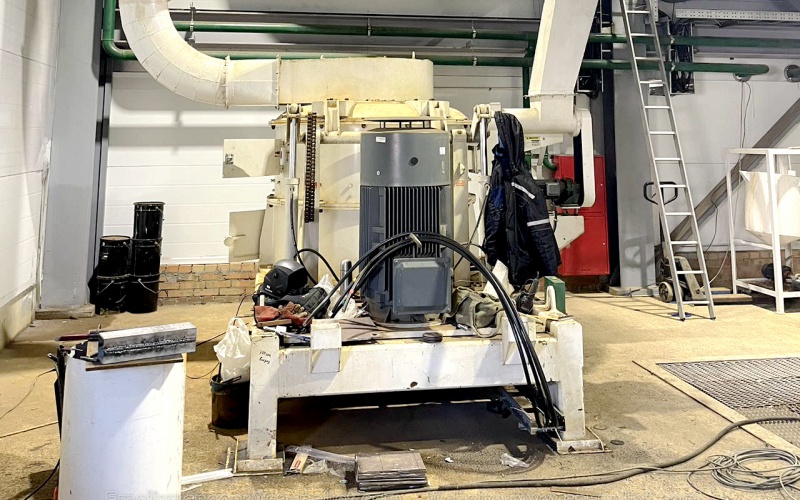
When an Abidjan-area feed producer began reviewing the grinding section of its poultry feed plant, the problem was not simply that the existing hammer mill could not grind finely enough. The larger issue was control: particle-size distribution changed with raw material, screen condition and operating load, making it difficult to maintain a repeatable fine-ground fraction for formulas that required tighter grinding specifications.
The company therefore added one SWFL110 ultra fine feed grinding machine in Ivory Coast as a standalone upgrade to its existing feed production system. The grinder was installed downstream of preliminary grinding and upstream of batching and mixing, giving the plant a dedicated fine-grinding stage without replacing equipment that was still performing effectively elsewhere in the process.
Name:
2–3 T/H Ultra Fine Feed Grinder
Country:
Côte d’Ivoire
Date:
2025
Capacity:
2–3 T/H
Model:
SWFL110
Main Motor Power:
110 kW
Grinding fineness (mesh):
80-200
Application:
poultry feed production
The customer operates a commercial feed mill serving broiler and layer farms around Abidjan and other poultry-producing areas of Ivory Coast. Annual feed production is approximately 15,000 tons, but not every tonne requires ultrafine grinding. The plant continues to use its existing animal feed hammer mill for conventional grain reduction and routes selected ingredients or formulas through the SWFL system when finer and more controlled grinding is required.
This distinction was important when sizing the machine. Selecting grinding equipment solely from the plant’s total annual feed output would have resulted in unnecessary capacity. RICHI instead considered the hourly amount actually entering the fine-grinding section, the required fineness, raw-material characteristics and the operating schedule.
The SWFL110 was selected with a 110 kW main motor and a reference processing capacity of approximately 2–3 T/H under suitable feed-grinding conditions. Actual output, however, depends strongly on the material, incoming particle size, moisture, required fineness and operating parameters, so the rated range should not be treated as identical for every formula.
A conventional hammer mill remains useful equipment in a poultry feed plant. It is economical, robust and capable of efficiently reducing maize and other ingredients to normal feed-grinding sizes. The customer therefore had no reason to eliminate hammer milling completely.
The limitation appeared when the plant attempted to obtain a much finer product while maintaining stable throughput. Using progressively smaller screen openings increases resistance through a conventional hammer mill, can increase power consumption per tonne and may generate excessive fines without necessarily giving the customer the distribution required for a particular formulation.
The new ultra fine feed grinding machine was consequently assigned a different role. Preliminary size reduction remained with the existing hammer mill, while the SWFL110 handled the finer grinding duty. This two-stage approach also prevents large kernels and coarse foreign material from unnecessarily loading the fine grinder.
The feed mill uses maize as an important energy ingredient together with protein materials, milling by-products and micro-ingredients. A representative formulation may include maize, soybean meal, wheat bran, fish meal and vitamin-mineral premixes, although actual percentages change with species, age, ingredient price and nutritional formulation.
The original project specification considered maize at approximately 50–60%, soybean meal at 20–25%, wheat bran at 10–15%, fish meal at 3–5%, plus vitamins and minerals. These figures are better treated as a representative customer formulation rather than a universal formula for poultry feed in Ivory Coast.
More importantly, not all ingredients should automatically be sent through the ultrafine grinder. Premixes, minerals and other micro-ingredients are normally dosed according to the process design rather than being unnecessarily subjected to intensive grinding. Fibrous ingredients can also behave very differently from maize and may substantially affect capacity.
| Project Item | Configuration |
|---|---|
| Country | Ivory Coast (Côte d’Ivoire) |
| Client | Commercial poultry feed manufacturer |
| Equipment | SWFL110 ultra fine feed grinding machine |
| Main motor | 110 kW |
| Reference capacity | Approximately 2–3 T/H, material and fineness dependent |
| Main application | Fine grinding of selected feed ingredients |
| Production arrangement | Standalone machine integrated with existing feed equipment |
| Export port | Qingdao Port, China |
| Destination port | Port of Abidjan |
The original equipment package also specified a feeding system and pneumatic conveying or collection components associated with the fine-grinding process. These auxiliary systems matter because an ultrafine grinder should be evaluated as part of an airflow-controlled grinding system rather than only as a 110 kW main machine.
Material entering the SWFL110 has already undergone preliminary cleaning and size reduction. Controlled feeding keeps the load on the grinding chamber relatively stable. High-speed grinding components then subject the particles to repeated impact, shear and friction until they reach the required fineness.
Airflow is particularly important in fine grinding. It helps move sufficiently reduced material away from the active grinding zone, carries ground particles toward the collection system and assists with heat removal. If airflow is poorly matched to feed rate and target fineness, capacity and particle-size stability can both suffer.
For this reason, operators do not control finished fineness by changing only one setting. Feed rate, airflow, wear condition, raw-material moisture and grinding intensity must be considered together.
The customer's original proposal called for a 300–500 micron target range. That can be used as a project-specific fine-grinding specification, but it should not be presented as the universally correct particle size for all broiler or layer feeds.
Poultry responds to feed structure as well as nutrient composition. Depending on bird age, feed form and subsequent pelleting conditions, excessively fine grinding is not automatically beneficial. Broilers in particular can benefit from appropriate structural particles because gizzard development and gastrointestinal function are influenced by feed particle size.
The customer's reason for installing the SWFL110 was therefore not based on the assumption that “the finer the feed, the faster the bird grows.” Instead, the machine gave the mill greater control over ingredients and formulas for which a finer specification was required.
During commissioning, representative samples were collected and subjected to sieve analysis. Operators used these results to establish practical settings rather than assuming that a nominal machine setting would automatically produce exactly the same distribution every day.
Average particle size alone can hide important differences between two batches. Two samples can have a similar geometric mean diameter while one contains a much broader mixture of fine and coarse particles.
However, the original claim that 600-micron maize particles simply “pass through chickens undigested” is too absolute. Likewise, 200-micron particles should not automatically be described as causing one group of birds to digest feed faster and another to grow more slowly.
In practice, poultry performance is affected by feed formulation, pellet quality, particle-size distribution, bird health, genetics, environmental conditions, feeder management and many other factors. Grinding control can contribute to feed consistency, but a grinder alone cannot guarantee uniform flock growth or a particular feed conversion ratio.
This was also why the customer treated particle-size testing as a feed-mill quality-control parameter rather than using bird growth as the only measure of grinder performance.
The 2–3 T/H capacity used for this SWFL110 crusher machine project is a reference range rather than an unconditional output guarantee. Grinding economics change quickly as the requested particle size becomes finer.
If the customer changes from a relatively moderate grind to substantially finer material, the machine must perform more size-reduction work per tonne. Throughput may fall while specific energy consumption increases. Fibrous ingredients can further reduce capacity compared with clean cereal grains.
Incoming particle size also matters. Feeding whole maize directly into equipment configured for fine grinding is generally less efficient than carrying out appropriate preliminary grinding first. The customer therefore retained the existing hammer mill as the first reduction stage.
One reason the project was economically attractive was that the customer did not need another complete feed line. Storage, preliminary grinding, batching, mixing, pelleting, cooling and packing equipment were already available.
The upgraded process can be summarized as:
Raw Material Receiving → Cleaning → Preliminary Grinding → SWFL Fine Grinding for Selected Materials → Batching → Mixing → Conditioning → Pelleting → Cooling → Screening → Packing
A bypass arrangement allows materials that do not require fine grinding to avoid the SWFL110. This reduces unnecessary electricity consumption and wear while preserving production flexibility.
Fine grinding creates considerably more airborne powder than coarse crushing. Dust control was therefore treated as part of the process design rather than an optional accessory.
The project incorporated pneumatic material handling and collection equipment so that fine particles could be separated from the conveying air and returned to the production stream. Proper negative-pressure control also helps prevent dust from escaping around feeding and discharge points.
This has three practical benefits for the customer: a cleaner production environment, lower loss of valuable feed material and more stable airflow through the grinding system.
Operators were trained to inspect the air system whenever grinding capacity unexpectedly declined. A blocked filter, restricted duct or incorrectly adjusted airflow can appear to be a grinder problem even when the grinding chamber itself is operating normally.
Every additional stage of particle-size reduction consumes energy, and part of that energy becomes heat. This becomes increasingly important as the target fineness decreases.
For maize and protein ingredients, excessive temperature rise can affect material handling and increase the risk of condensation later in the system if warm ground material meets cooler surfaces. Stable airflow assists in removing part of this heat.
The customer therefore monitors bearing condition, grinding-chamber load and discharge-material temperature as part of routine operation. Sudden temperature changes can indicate excessive feed rate, restricted airflow, worn grinding components or another process problem that should be investigated.
Grinding components are wear parts. Their service life cannot reliably be stated as a fixed number such as exactly 700 or 800 operating hours because wear varies substantially with raw-material cleanliness, mineral contamination, grinding fineness, operating load and the metallurgy of the wear components.
Instead of replacing components solely according to elapsed operating hours, the Ivory Coast customer established condition-based inspections. The maintenance team checks wear patterns, machine vibration, output stability and energy consumption.
A gradual loss of capacity at the same target fineness can indicate worn grinding components. An unexplained change in particle distribution may also justify inspection before the problem becomes serious enough to interrupt production.
The customer keeps a set of critical wear parts in stock so routine replacement does not have to wait for an international shipment.
The most useful change for the feed mill was the ability to establish a repeatable grinding-control procedure.
Samples are collected at scheduled intervals and checked by sieve analysis. Rather than merely recording “fine enough,” the quality team records the proportion retained at different sieve sizes and compares the result with the formula specification.
This data is then compared with operating conditions. Over time, the plant can identify how maize moisture, incoming particle size, feed rate and component wear affect the finished product.
The original project specification proposed a particularly tight 300–500 micron distribution and reported test results around that target. For commercial operation, however, the acceptance range should be determined from the mill’s actual feed formulation and nutritional requirements rather than turning one commissioning result into a universal machine guarantee.
Before installation, RICHI supplied the customer with foundation and equipment arrangement information so that the site could be prepared while the machine was in transit.
Commissioning did not end when the motor started. The technical work focused on establishing stable feeding, checking rotor operation, balancing the pneumatic system, verifying collection efficiency and obtaining representative ground-material samples.
Operators were trained to recognize the relationship between fineness and capacity. This prevents a common operating mistake: reducing particle size while continuing to demand the same throughput regardless of the additional grinding load.
Training also covered inspection of wear parts, abnormal vibration, bearing temperature, dust-control equipment and safe shutdown procedures.
The SWFL110 ultra fine feed grinding machine was exported from Qingdao Port in China to the Port of Abidjan, the natural gateway for a customer located in the Abidjan industrial area.
Because the customer was purchasing a standalone grinding system rather than a complete feed plant, shipment planning centered on the grinder and its required auxiliary components. RICHI prepared the equipment for ocean transport and supplied the technical documentation required for subsequent installation.
French-language technical support is particularly useful for an Ivorian project. The original project configuration therefore included French operating and electrical documentation to make installation and daily maintenance easier for the local team.
“The biggest difference is that we now have much better control over the grinding stage. Before, when we wanted a finer product, we mainly changed the hammer-mill screen and accepted whatever capacity and distribution resulted. With the SWFL system, we can establish a target, test the material and adjust the operating conditions. We still use the old hammer mill where it makes sense, but fine grinding is now a separate controlled process.”
The production team also appreciated that the investment did not force the mill to abandon its existing equipment. The SWFL110 filled a specific process gap while the hammer mill continued performing the coarse and intermediate grinding duties for which it was better suited.
A customer considering an ultra fine feed grinding machine in Ivory Coast should first determine how much material actually requires fine grinding. Total feed-mill capacity alone is not enough.
RICHI normally needs the raw-material list, moisture range, incoming particle size, required finished fineness, hourly fine-grinding requirement, daily operating hours and available electrical supply. If the grinder is being added to an existing mill, the capacity of the upstream hammer mill and downstream batching system must also be considered.
These figures determine whether the SWFL110 is appropriate or whether another machine size would provide a better balance between power consumption, capacity and grinding requirement.
This ultra fine feed grinding machine in Ivory Coast project was ultimately not about making every poultry-feed ingredient as fine as technically possible. It was about giving an established feed manufacturer another level of process control.
By integrating one SWFL110 into the existing plant, the customer retained conventional hammer milling for normal size reduction while creating a dedicated route for materials requiring finer grinding. The 110 kW machine provides a reference capacity of approximately 2–3 T/H under suitable conditions, but actual production is determined by raw material and target fineness rather than motor power alone.
For other feed mills considering the same upgrade, RICHI Machinery can evaluate raw-material samples and existing process conditions before equipment selection. The useful starting information is straightforward: what material you are grinding, its current particle size and moisture, the particle-size specification you need, and how many tonnes per hour must pass through the fine-grinding section. From those figures, the grinding system and its airflow, collection and feeding configuration can be matched to the actual production requirement.
Having the right mix of reliable, high-quality pellet machine and pelletizing systems and expert support is essential to your success. Watch how our end-to-end feed pellet plant solutions have helped our customers optimize their performance.
Our customized and future-proofed turnkey pellet plant solutions is designed with you at the core. From vision to reality and beyond, our team stays connected with yours. Giving you peace-of-mind with an expert at your side.
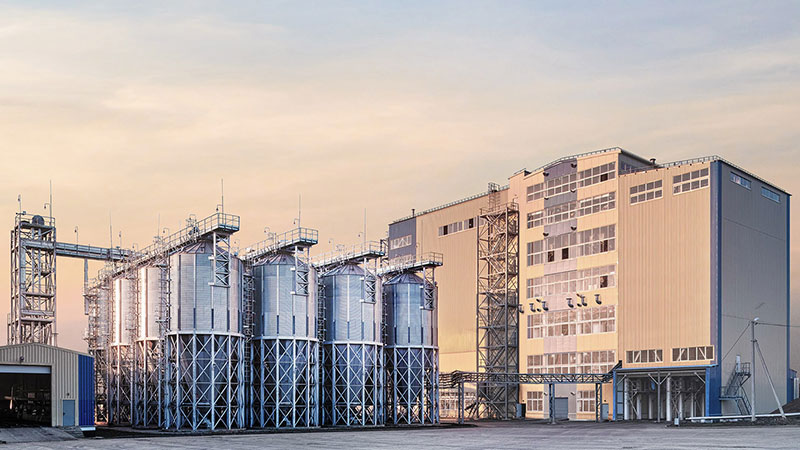
At RICHI, we go beyond project completion. With RICHI Servicee, we’re your dedicated partners in success. Count on us for expert guidance, minimal downtime, and optimized productivity. Choose RICHI for unmatched service and support.
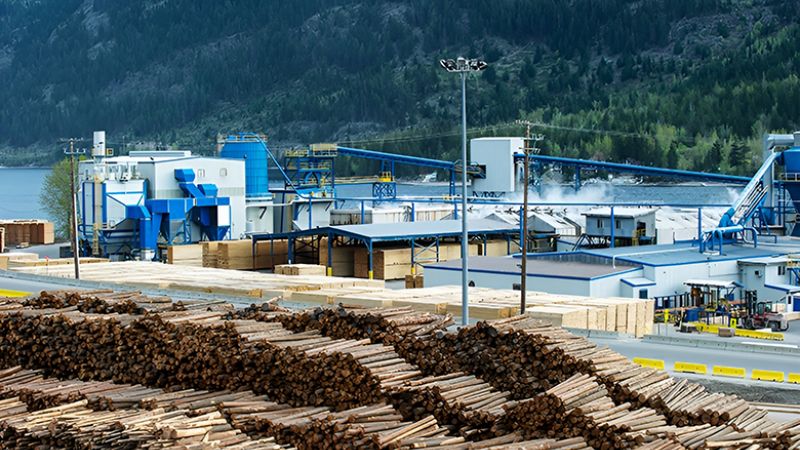


Meet global product demands and quality standards with industry-leading pellet plant design, engineering, equipment, and construction services for pellet processors.

Your Partner Beyond Project Completion
2000+ cases
RICHI is the leading designer, manufacturer and builder of pellet plants in the world, completing over 2000 projects in 140 countries across 6 continents.
Read More
Increase plant productivity, profitability, and safety by integrating high quality equipment into your pellet production line. Over the years, RICHI has become China's top pellet equipment manufacturer. At the same time, RICHI has established valuable partnerships with the world's leading component and raw material manufacturers to bring you the best there is in technology, automation, and efficiency in pelleting plant machinery.

For nearly 30 years, RICHI has been providing best-in-class pellet plant equipment and services to clients across a variety of industries, sizes, and needs. We pride ourselves on the knowledge and skill that each team member possesses – from our technical sales team to our process design engineers. You can count on RICHI Machinery to take your operation to the next level of innovation, quality, and success.
Need help with your pellet manufacturing plant project? Contact us today.
ANIMAL FEED
BIOMASS
WOOD
ORGANIC FERTILIZER
AQUA FEED
CAT LITTER
MUNICIPAL WASTE RECYCLING
SPECIAL PELLET PRODUCTION
RICHI Machinery continues to deliver world class pellet mill equipment, pellet plant engineering and project solutions that add value to our customers in the animal feed, wood waste, agriculture waste, organic fertilizer, cat litter and special pellet products industries. Throughout the years, we RICHI Machinery have built strong brand, becoming industry-leading pellet machine manufacturer. We value integrity, promise quality, and prioritize your success.
Learn MoreWith our expert team, we precisely implement your process engineering requirements in pellet mill and pelletizing plant systems. No matter which industry you’re in – we understand your needs and deliver solutions that meet the highest standards.
At RICHI, quality comes first. Our pellet making machine and related pellet line equipment undergo rigorous quality controls to ensure they meet the highest standards. Rely on products that are durable, safe, and efficient.
With decades of experience in pellet machine and pellet production line production, we have earned a reputation as a trusted partner in various industries. Our expertise allows us to cover a wide range of applications.
Not only do we offer premium pelleting equipment, but we are also experts at designing, building, installing, and maintaining facilities from the ground up. Our expertise is within pellt plant process design, discovering the most efficient, productive, and profitable way to handle your materials in an end-to-end cycle.
○ RICHI MACHINERY
Keeping in touch with us is an effective way to solve all your problems. If you have any needs or questions, please leave your contact information, then RICHI technical consultants will send design, quotation, videos to your mailbox. You can also contact us directly via WhatsApp: +86 13838389622
Copyright©2015-2026 by HENAN RICHI MACHINERY CO., LTD. All rights reserved.