
For a tomato processor in Emilia-Romagna, drying tomato puree is not simply a matter of removing water. The drying method affects color, aroma, dispersibility, final powder quality, cleaning frequency, and the amount of water that must be evaporated per kilogram of finished product. These factors became important when an Italian tomato processor decided to develop a tomato powder ingredient for seasoning blends, dry sauce bases, soup mixes, and other food formulations.
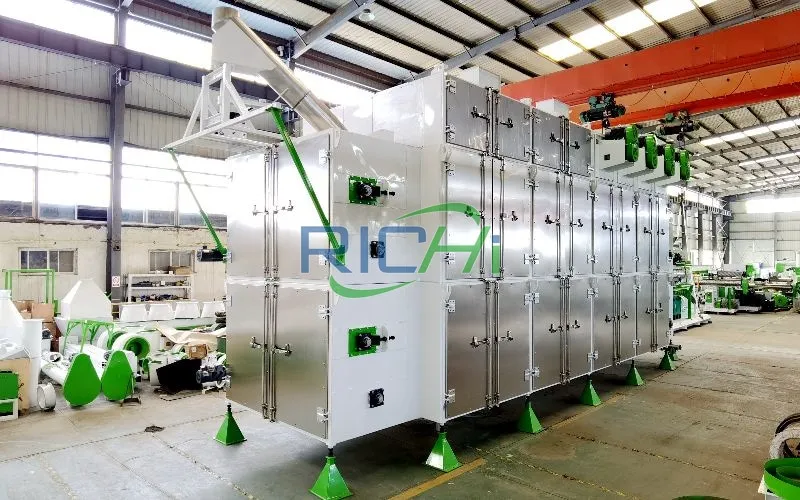
For a tomato processor in Emilia-Romagna, drying tomato puree is not simply a matter of removing water. The drying method affects color, aroma, dispersibility, final powder quality, cleaning frequency, and the amount of water that must be evaporated per kilogram of finished product. These factors became important when an Italian tomato processor decided to develop a tomato powder ingredient for seasoning blends, dry sauce bases, soup mixes, and other food formulations.
The company therefore evaluated a tomato puree belt dryer in Italy as a dedicated drying solution for a new product rather than as a replacement for its conventional tomato paste operation. RICHI configured a DHG-1000 multi-layer belt dryer around a concentrated tomato feed, controlled low-temperature drying, hygienic product-contact surfaces, and a feeding system capable of distributing a sticky tomato material uniformly across the belt.
Name:
Tomato Puree Dryer
Country:
Italy
Date:
2025
Capacity:
Flexible
Model:
DHG-1000
Belt Arrangement:
5-layer
Raw Materials:
Tomato Puree
Drying Area:
43 m²
The customer operates in Emilia-Romagna, one of Italy’s important tomato-processing regions. Its established business handles industrial tomatoes during the seasonal campaign and produces conventional tomato products for food manufacturers.
Tomato powder created a different processing requirement.
Rather than sending ordinary low-solids tomato puree directly into a dryer, the company could take advantage of its existing evaporation equipment. Concentrating the tomato material before belt drying substantially reduces the quantity of water that the dryer must remove and makes much better use of the available drying surface.
This became one of the central engineering decisions in the project. The tomato puree belt dryer would operate as part of a process that already included tomato preparation and concentration, not as an isolated machine expected to economically evaporate almost all the water contained in fresh puree.
Tomato products can be extremely wet. A puree containing only about 14–16% total solids still contains approximately 84–86% water.
That distinction has a major impact on dryer sizing.
For example, if 1,000 kg of tomato material enters the drying process at 15% solids, it contains only about 150 kg of dry matter. If the finished dried product contains approximately 5% moisture, those 150 kg of solids correspond to only about 158 kg of dried material. More than 840 kg of water must therefore be removed.
For an industrial tomato processor that already owns evaporators, using valuable belt-dryer area for this entire evaporation duty would generally be inefficient.
In this Italian project, the upstream concentration stage is therefore used to raise solids before final belt drying. The precise feed solids are adjusted according to viscosity and the selected spreading system. The objective is a material concentrated enough to reduce evaporation load but still capable of being deposited as a controlled, relatively thin layer.
Tomato material behaves very differently from sliced vegetables, grains, pellets or other free-flowing products commonly processed in belt dryers.
It contains soluble solids and pectin and develops a sticky surface as water is removed. Its acidity also affects material selection. The supplied project information identifies stickiness and a pH around 4.0–4.5 as important processing characteristics.
A conventional open mesh and ordinary gravity feeder would therefore not be the preferred configuration.
The RICHI design uses a dedicated paste-distribution system to meter the concentrated tomato material across the drying surface. Depending on the tested viscosity, the feed can be formed into thin strips or deposited as a controlled layer rather than allowed to accumulate in thick pools.
Uniform thickness matters because drying time is strongly controlled by the distance moisture must travel from the interior of the product to its exposed surface.
| Project Item | Configuration |
|---|---|
| Application | Concentrated tomato material for dried tomato ingredient production |
| Dryer | DHG-1000 multi-layer belt dryer |
| Drying Area | Approximately 43 m² |
| Belt Arrangement | 5-layer configuration |
| Typical Drying-Air Range | Approximately 65–75°C during initial product trials, adjustable by zone and material condition |
| Feeding Method | Customized paste spreading / forming system |
| Product-Contact Design | Food-compatible, corrosion-conscious configuration |
| Final Product | Dried tomato material for subsequent milling into powder |
The DHG-1000 reference configuration provides approximately 43 m² of drying area with a five-layer arrangement. The final evaporation rate and dry-product output, however, cannot be determined from belt area alone.
Feed solids, layer thickness, inlet and exhaust air conditions, air volume, belt residence time and target final moisture all affect real capacity. For this reason, RICHI treats tomato drying capacity as an evaporation calculation based on the customer’s actual material rather than assigning a universal powder-output figure to the dryer.
The project uses moderate drying-air temperatures because tomato color and flavor are important commercial attributes.
However, drying quality cannot be reduced to a simple rule such as “anything above 80°C destroys lycopene.” Lycopene stability depends on temperature, oxygen exposure, processing time, matrix conditions and other factors, while the actual product temperature can also differ from the temperature of the drying air.
The operating strategy therefore balances temperature and residence time.
If drying temperature is too high, unnecessary thermal exposure can affect color and sensory characteristics. If it is too low, residence time becomes excessive, capacity declines and prolonged exposure to circulating air may create its own quality disadvantages.
The customer consequently begins with a moderate air-temperature window and optimizes individual drying zones through product trials rather than relying on one supposedly universal tomato-drying temperature.
The company selected belt drying according to its product requirements and existing upstream processing conditions.
Spray drying remains an established industrial technology for producing many food powders and offers very short drying times despite high inlet-air temperatures. Tomato powder production by spray drying may also involve carrier materials because tomato solids can be difficult to dry into a free-flowing powder.
The Italian customer had a different objective. It wanted a dried tomato ingredient with a formulation and physical character that suited its particular customers, and it already had upstream tomato concentration equipment available.
Belt drying allowed the processor to dry a concentrated tomato feed as a continuous layer or formed material and then mill the dried product afterward. This process route also gave the company greater flexibility in experimenting with solids concentration, drying profile and final powder characteristics.
The tomato puree belt dryer in Italy is only one part of the conversion process.
After primary tomato processing, the material is concentrated to a viscosity suitable for the selected feeding system. It is then continuously metered onto the first drying belt.
Controlled heated air removes moisture while the product travels through successive drying zones. The multi-layer arrangement provides drying area without requiring the same floor length as a single-pass belt with equivalent residence time.
Once the material reaches the required final moisture, it leaves the dryer as a dry sheet, strip, flake or broken dried material depending on the feeding and discharge arrangement.
It is then cooled before entering the downstream milling system.
This distinction is important: the belt dryer does not directly produce fine tomato powder. It produces sufficiently dry tomato solids that can subsequently be ground, classified and packed according to the customer’s powder specification.
The project targets a low final moisture suitable for stable dried tomato ingredients, with approximately 5–6% used as the reference target.
In actual commercial production, the customer does not rely on moisture percentage alone.
Final product stability also depends on water activity, packaging barrier properties, storage temperature and the hygroscopic behavior of the powder. These become especially important after milling because fine powder has substantially more exposed surface area than the dried material leaving the belt.
The finished product is therefore cooled before milling and packaging rather than being sealed while still warm.
A useful advantage of the multi-layer system is the ability to treat drying as a progression rather than exposing the tomato material to identical conditions throughout its residence time.
At the beginning, the product contains more free moisture and can tolerate a different airflow and thermal load. As moisture falls, the drying rate changes and surface characteristics become increasingly important.
RICHI can therefore configure temperature, airflow and belt speed according to different drying sections.
This helps the operator find a workable balance among evaporation rate, surface condition, color and final moisture instead of solving every production problem simply by increasing temperature.
Tomato’s acidity and the hygienic expectations of a food-processing facility make construction details especially important.
Product-contact surfaces are selected with food hygiene and corrosion resistance in mind. The dryer design also needs practical access to belts, feed-distribution components and areas where sticky material may accumulate.
This is more important for tomato puree than for many dry agricultural materials.
Residue allowed to remain on the feeding system or belt can dry into hard deposits, interfere with subsequent distribution and create sanitation problems. Cleaning access was therefore considered during equipment layout rather than treated as an afterthought.
A non-stick belt arrangement was evaluated because conventional metallic mesh can be problematic when processing sticky tomato concentrates.
The supplied configuration specifically uses a PTFE-coated mesh surface to improve release of the dried material.
But belt selection is still made according to operating temperature, product loading, airflow requirement, food-contact requirements and cleaning procedure.
The goal is not merely preventing sticking. The belt must also permit sufficient heat and mass transfer while supporting the product throughout several drying stages.
RICHI’s DHG equipment can be configured for different drying applications, but a tomato puree belt dryer requires a distinctly different sanitation approach from equipment processing biomass or feed materials.
The tomato configuration prioritizes accessible food-contact zones, controlled residue accumulation and a cleaning procedure compatible with the selected belt and construction materials.
The paste feeder receives particular attention because material can remain inside narrow passages after shutdown.
The operator therefore removes residual product and cleans the feeding section as part of the production shutdown procedure rather than allowing tomato concentrate to dry inside the equipment overnight.
The heat source for a commercial belt dryer should be selected around the factory’s utilities and operating economics.
Electric heating can provide straightforward temperature control, but electricity-intensive evaporation may not always be the most economical solution for a large food plant. Where suitable utilities are available, steam-based heat exchangers, hot water, heat pumps or other indirect heating arrangements may be evaluated.
For tomato products, keeping combustion gases away from direct product contact may also be desirable depending on the plant’s food-safety design.
The final choice therefore depends on required water evaporation, local energy prices, existing boiler capacity, available electrical power and the customer’s sanitation requirements.
For this application, asking only “How many tons per hour can the DHG-1000 produce?” does not provide enough information.
Suppose the concentrated feed contains 35% solids and the required dried product contains 5% moisture. Producing approximately 350 kg/h of finished dry material would require roughly 950 kg/h of wet feed and removal of about 600 kg/h of water.
If the same finished output were attempted directly from material containing only 15% solids, the wet-feed requirement would rise to more than 2.2 T/H and the water-removal duty would exceed 1.8 T/H.
The final powder output might be similar, but the dryer requirement would be completely different.
This is why RICHI asks tomato processors for inlet solids and target outlet moisture before selecting a dryer.
The customer already had the major upstream stages required to prepare tomato material.
The DHG-1000 was therefore integrated downstream of the concentration section and upstream of cooling, milling and final powder handling.
Equipment arrangement also accounted for product transfer, operator access, cleaning space, exhaust-air handling and the location of the electrical and thermal utilities.
Because tomato processing is highly seasonal, cleaning and shutdown procedures were considered alongside production capacity. The machine must be maintainable during the campaign and thoroughly cleaned before extended shutdown after the processing season.
The equipment was exported from Qingdao Port in China for delivery to Italy.
For this Emilia-Romagna project, Ravenna provides a logical Adriatic gateway for industrial equipment entering the region and was selected as the destination port.
RICHI prepared the equipment modules and associated components for sea transportation, while final inland delivery and installation scheduling were coordinated around the customer’s factory preparation.
The first objective during commissioning was not maximum throughput.
The team established whether the concentrated tomato material could be deposited evenly, remain stable on the belt and release properly after drying. Belt speed and air conditions were then adjusted while samples were taken at the discharge.
Product color, residual moisture, texture before milling and ease of belt release were evaluated together.
Once a stable operating window was established, feed rate could be increased gradually until either drying capacity or the required product quality became the limiting factor.
This approach provides more useful commissioning data than immediately operating the feeder at maximum speed.
“The important point for us was not simply getting the tomato dry. We needed a process we could control. Changing the feed thickness or belt speed gives us a visible difference in the dried product, so our operators can adjust the dryer around the tomato concentrate we receive that day. It has given us a practical route from our existing tomato operation into dried ingredients.”
The customer’s development work also showed why the upstream concentration stage could not be separated from dryer operation. Changes in solids concentration alter viscosity, spreading behavior, drying load and residence-time requirements.
The plant consequently records inlet solids together with dryer settings for each production batch instead of treating every tonne of tomato material as identical.
After drying, cooling and milling, the tomato ingredient is intended primarily for B2B food manufacturing rather than retail sale.
Potential applications include dry soup formulations, seasoning blends, sauce premixes, snack seasonings, bakery and convenience-food formulations, and other products requiring concentrated tomato solids in dry form.
Different customers may require different powder specifications, so particle size after milling, color specification, bulk density, moisture, water activity and microbiological requirements can all become part of the finished-product standard.
A belt dryer is particularly worth evaluating when the processor already has tomato concentration capability, requires a continuously dried intermediate suitable for milling, and wants greater control over drying conditions than some other methods provide.
It is not automatically the best choice for every tomato powder factory.
A processor targeting very large powder volumes, a particular instant-powder characteristic or a formulation designed specifically for spray drying may reach a different conclusion. Likewise, feeding very dilute puree directly into a relatively small belt dryer can result in an uneconomically high evaporation requirement.
RICHI therefore evaluates inlet solids, kilograms of water to be evaporated per hour, required dry output, final moisture, available heat source and product specification before determining the dryer size.
This tomato puree belt dryer in Italy project represents a logical extension of an established Emilia-Romagna tomato-processing operation into higher-value dried ingredients. Instead of treating the DHG-1000 as a generic dryer, the system was configured around the characteristics that actually matter for tomato processing: high moisture, variable viscosity, stickiness, acidity, controlled layer formation, sanitation and final powder quality.
The multi-layer DHG-1000 provides approximately 43 m² of drying area, while the customized feeding arrangement distributes concentrated tomato material onto the drying surface. After controlled drying, the material is cooled and milled to obtain the required tomato powder specification.
For tomato processors considering the same route, dryer selection should begin with three numbers: inlet solids, required finished-product moisture and desired dry-product output. Once these are known, RICHI Machinery can calculate the actual water evaporation requirement and configure the tomato puree belt dryer, feeding system, heat source and downstream milling section around the real process rather than relying on a generic tons-per-hour figure.
Having the right mix of reliable, high-quality pellet machine and pelletizing systems and expert support is essential to your success. Watch how our end-to-end feed pellet plant solutions have helped our customers optimize their performance.
Our customized and future-proofed turnkey pellet plant solutions is designed with you at the core. From vision to reality and beyond, our team stays connected with yours. Giving you peace-of-mind with an expert at your side.
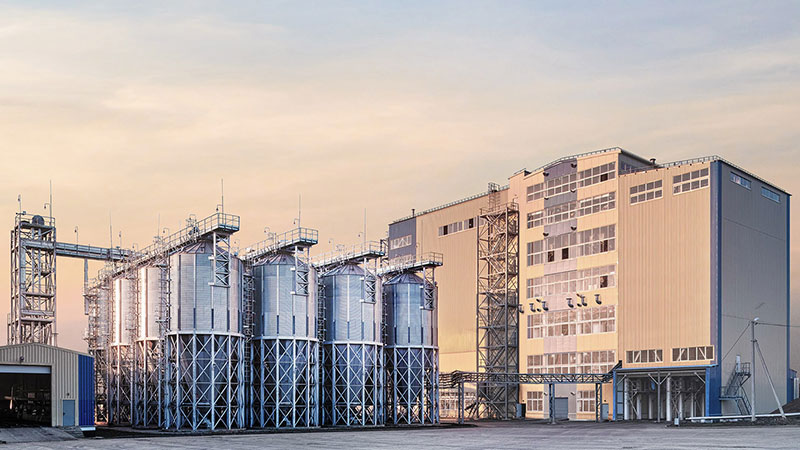
At RICHI, we go beyond project completion. With RICHI Servicee, we’re your dedicated partners in success. Count on us for expert guidance, minimal downtime, and optimized productivity. Choose RICHI for unmatched service and support.
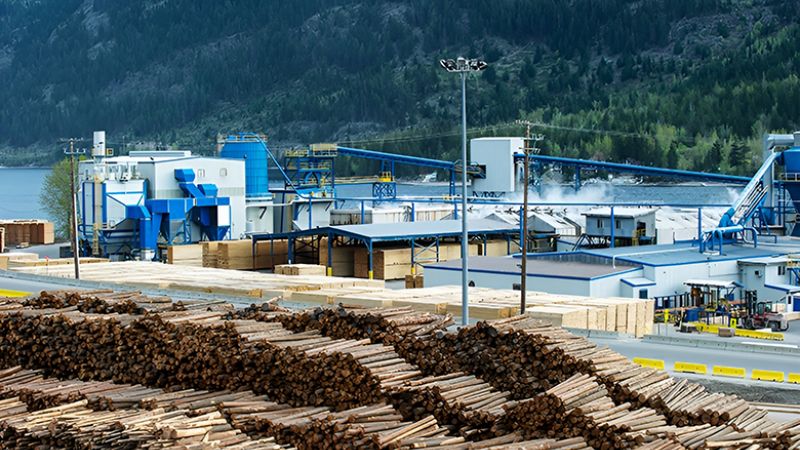


Meet global product demands and quality standards with industry-leading pellet plant design, engineering, equipment, and construction services for pellet processors.


Your Partner Beyond Project Completion
2000+ cases
RICHI is the leading designer, manufacturer and builder of pellet plants in the world, completing over 2000 projects in 140 countries across 6 continents.
Read More
Increase plant productivity, profitability, and safety by integrating high quality equipment into your pellet production line. Over the years, RICHI has become China's top pellet equipment manufacturer. At the same time, RICHI has established valuable partnerships with the world's leading component and raw material manufacturers to bring you the best there is in technology, automation, and efficiency in pelleting plant machinery.

For nearly 30 years, RICHI has been providing best-in-class pellet plant equipment and services to clients across a variety of industries, sizes, and needs. We pride ourselves on the knowledge and skill that each team member possesses – from our technical sales team to our process design engineers. You can count on RICHI Machinery to take your operation to the next level of innovation, quality, and success.
Need help with your pellet manufacturing plant project? Contact us today.
ANIMAL FEED
BIOMASS
WOOD
ORGANIC FERTILIZER
AQUA FEED
CAT LITTER
MUNICIPAL WASTE RECYCLING
SPECIAL PELLET PRODUCTION
RICHI Machinery continues to deliver world class pellet mill equipment, pellet plant engineering and project solutions that add value to our customers in the animal feed, wood waste, agriculture waste, organic fertilizer, cat litter and special pellet products industries. Throughout the years, we RICHI Machinery have built strong brand, becoming industry-leading pellet machine manufacturer. We value integrity, promise quality, and prioritize your success.
Learn MoreWith our expert team, we precisely implement your process engineering requirements in pellet mill and pelletizing plant systems. No matter which industry you’re in – we understand your needs and deliver solutions that meet the highest standards.
At RICHI, quality comes first. Our pellet making machine and related pellet line equipment undergo rigorous quality controls to ensure they meet the highest standards. Rely on products that are durable, safe, and efficient.
With decades of experience in pellet machine and pellet production line production, we have earned a reputation as a trusted partner in various industries. Our expertise allows us to cover a wide range of applications.
Not only do we offer premium pelleting equipment, but we are also experts at designing, building, installing, and maintaining facilities from the ground up. Our expertise is within pellt plant process design, discovering the most efficient, productive, and profitable way to handle your materials in an end-to-end cycle.
○ RICHI MACHINERY
Keeping in touch with us is an effective way to solve all your problems. If you have any needs or questions, please leave your contact information, then RICHI technical consultants will send design, quotation, videos to your mailbox. You can also contact us directly via WhatsApp: +86 13838389622
Copyright©2015-2026 by HENAN RICHI MACHINERY CO., LTD. All rights reserved.