
Timber waste cat litter pelletizer in Estonia for processing clean spruce sawdust, pine shavings and untreated wood residues into wood-based cat litter. Explore the RICHI MZLH350 pelletizer, technical specifications and alternative biomass applications.
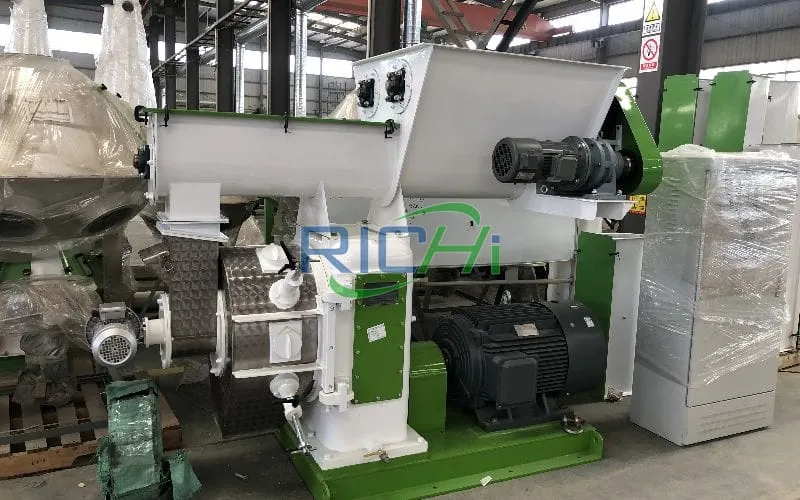
Timber waste cat litter pelletizer in Estonia is the equipment selected for a wood-processing business that plans to turn clean timber residues into a marketable wood-based cat litter product. The customer is a wooden packaging and joinery by-product processor with access to spruce and pine offcuts, planer shavings and sawdust from local woodworking operations.
Rather than investing in a complete new production line, the business intends to add one RICHI MZLH350 ring die pelletizer to its existing material preparation operation. The initial target is a 6 mm wood pellet for cat litter, with absorption, dust generation and durability to be verified through product trials.
Name:
Wood Cat Litter Pelletizer
Country:
Estonia
Date:
2026
Capacity:
0.3–0.5 T/H
Model:
MZLH350
Main Motor Power:
37 kW
Raw Materials:
spruce sawdust, pine planer shavings
Pellet diameter:
6 mm
The investment is driven by a practical production issue: timber offcuts and fine wood residues do not all have the same handling requirements or commercial outlets. Clean sawdust is easy to collect but occupies considerable storage space, while irregular offcuts need further size reduction before they can be processed consistently.
By introducing a dedicated pelletizing stage, the customer wants to evaluate whether selected wood-processing residues can be converted into uniform cylindrical pellets for the pet care market. The MZLH350 wood pellet mill for cat litter is intended for this initial production stage, using the business's existing preparation equipment wherever it is technically suitable.
The customer in Estonia operates in the wooden packaging and joinery supply chain. Its regular work involves processing timber into components and finished wooden products, generating smaller quantities of sawdust, planer shavings and clean offcuts as part of routine production. These residues are not necessarily unusable waste. Their potential value depends on cleanliness, moisture, particle size, available storage and the requirements of a suitable downstream market.
Estonia is a reasonable location for this type of project because forestry and wood processing form part of the country's established economic activity. The country's forest resources and forestry-sector performance are tracked by Statistics Estonia, providing a credible industrial context for a business seeking additional uses for wood-processing by-products.
Unlike a large timber producer seeking to install several high-capacity machines, this customer is approaching cat litter as an additional product category. The objective is to begin with a manageable production volume, evaluate the finished pellets and determine whether the available residue streams can support a repeatable manufacturing process. A single pelletizer provides a way to test the concept without replacing machinery that already performs useful functions.
The project also has a clear raw material boundary. Only clean, untreated wood from traceable woodworking operations will be considered. Painted timber, pressure-treated wood, demolition waste, laminated boards and particleboard containing adhesives are excluded from the proposed cat litter feedstock. Such materials can introduce contaminants that are inappropriate for a product intended for use around household pets.
The customer is therefore not attempting to pelletize every material leaving the workshop. Instead, it is separating suitable wood residues from other by-products and assigning them to an application with its own product requirements. This distinction matters because the suitability of a timber residue for general industrial use does not automatically make it appropriate for cat litter.
The proposed feedstock combines three clean wood residue streams: spruce sawdust, pine planer shavings and untreated softwood offcuts that can be reduced to a suitable particle size. This arrangement reflects the types of by-products that can arise in woodworking and wooden packaging production, while keeping the initial formulation within a relatively narrow group of materials.
The starting formulation is 55% spruce sawdust, 30% pine planer shavings and 15% prepared softwood offcut particles by dry feedstock weight. This is a proposed trial blend, not a validated commercial recipe. The proportions may need adjustment after checking particle distribution, moisture, feeding stability and finished pellet performance.
Spruce sawdust supplies the fine fraction of the mixture. Pine planer shavings provide a different particle structure, while the prepared offcut fraction allows the customer to evaluate the use of clean solid-wood residues that would otherwise require additional size reduction. The purpose of combining these streams is to investigate whether they can be processed consistently together, not to assume that a mixed feedstock will automatically produce better pellets than a single material.
The offcuts must be chipped or ground before entering the pelletizer. Long strips and irregular pieces cannot be treated as equivalent to fine sawdust, and they should not be fed directly into the machine without suitable preparation. Screening after grinding can help remove oversized particles and reduce variation in the material delivered to the forced feeder.
For the initial trial, a prepared particle size of approximately 2–4 mm is a reasonable starting point. The actual distribution should be checked with a screen analysis, and the grinding settings adjusted if the material contains excessive oversized particles or an unnecessarily large proportion of very fine dust. The best preparation setting will depend on the characteristics of the timber residues and the desired finished product.
Moisture is another variable that needs to be controlled. A preliminary target of approximately 10–15% moisture can be used when preparing the first trial batches, subject to the results of pellet formation tests. Incoming material above 20% moisture would generally require suitable drying before pelletizing, while sufficiently dry material may be able to bypass an additional drying stage. Moisture should be measured rather than estimated by touch or appearance.
Before processing, the operator should inspect the material for metal, stones, plastic and other foreign matter. A magnet and suitable screening arrangements can help reduce contamination risks, but they do not replace proper source control. The business should also keep records of where each batch originated so that a change in feedstock quality can be investigated if the pellet results change.
The selected machine is the RICHI MZLH350 ring die cat litter pellet machine without a conditioner. This configuration is intended for suitable wood-based and other biomass materials that have already undergone the required preparation. For this project, the machine's role is to compress the prepared timber residue mixture into cylindrical pellets without adding a conditioning stage to the equipment package.
| Technical Item | Selected Specification |
|---|---|
| Machine model | RICHI MZLH350 |
| Purchase quantity | 1 unit |
| Equipment type | Ring die cat litter pelletizer without conditioner |
| Main motor power | 37 kW |
| Anti-bridging feeder motor power | 2.2 kW |
| Forced feeder motor power | 0.75 kW |
| Ring die inner diameter | 350 mm |
| Reference capacity | 0.3–0.5 T/H |
| Available pellet diameter range | 4–12 mm |
| Initial product target | Approximately 6 mm diameter |
The MZLH350 has a reference capacity of 0.3–0.5 T/H. This range is the model's stated capacity, not a guarantee that every timber residue formulation will reach the same output. Actual production depends on feedstock moisture, particle-size distribution, bulk density, feeding stability, die configuration and the quality standards applied to the finished pellets.
A nominal diameter of approximately 6 mm is proposed for the initial cat litter trials. The machine's stated 4–12 mm range provides room to evaluate other diameters if market feedback or product testing supports a change. Pellet length, fines content, breakage resistance and the condition of the cooled product should also be considered when establishing the final specification.
The no-conditioner configuration is appropriate for evaluating this prepared wood residue mixture, but it does not remove the need for careful material preparation. The operator must still control the particle size and moisture of the incoming material. If the blend does not feed evenly or forms weak pellets, the cause should be investigated rather than assuming that changing the machine alone will resolve the problem.
The machine's electrical requirements must be considered alongside the main motor and feeder motors. Before installation, the customer should confirm the available power supply, electrical protection, cable sizing, foundation, lifting access and maintenance clearances against the final equipment documentation and site conditions. Dust extraction and suitable housekeeping procedures should also be considered for the wood-processing area.
The purchase is an addition to an existing woodworking operation, not a replacement for an existing cat litter pellet mill. The business already has equipment for handling and preparing timber residues. Its immediate need is a dedicated pelletizing stage that can turn a prepared material stream into a compact product suitable for further screening, cooling, packaging and evaluation.
Buying one machine allows the customer to keep the first investment focused. There is no reason to duplicate a grinder if the existing unit can consistently produce the required particle size. Likewise, a separate dryer should only be included if the actual incoming moisture requires it. The customer needs to assess the condition and capacity of the existing equipment before deciding which additional components are necessary.
Cooling and finished-product screening are important considerations. Freshly formed pellets may be warm and can be more susceptible to damage during handling. Screening helps remove loose fines, while suitable cooling and storage arrangements support more consistent packaging. If the workshop's existing equipment cannot perform these functions at the required rate, additional equipment may be needed even though the pelletizer itself is purchased as a single machine.
The staged approach also helps the customer establish a realistic production record. Each trial should record the quantity of prepared feedstock, incoming moisture, operating time, finished output, rejected material and the proportion of fines. These measurements can help distinguish a raw material problem from a feeding issue or a change in pelletizing performance.
For a business moving from timber components into pet care products, this distinction is important. Cat litter is not judged solely by whether the machine forms pellets. The final product needs to perform consistently during packaging, transport and use. Establishing that quality standard before investing in a larger production arrangement is a practical way to manage technical uncertainty.
The ring die pelletizer compresses prepared wood particles through the openings in a rotating ring die, producing cylindrical pellets. In this project, the machine transforms a loose mixture of spruce sawdust, pine shavings and prepared softwood particles into a denser material that can be handled and packaged more conveniently than loose residues.
The feeding system is important because wood residues do not always flow in the same way. Fine sawdust can behave differently from curled planer shavings, while a poorly ground offcut fraction may contain particles that are too large for consistent feeding. The anti-bridging feeder helps reduce material accumulation, and the forced feeder supports controlled delivery into the pelletizing chamber. These components assist the process but cannot compensate for unsuitable raw material.
Stable operation begins before the material reaches the machine. The prepared blend should have a reasonably consistent particle distribution and moisture level. If the feeder receives alternating batches of very fine dust and coarse particles, the material may not enter the pelletizing chamber uniformly. The resulting pellets can vary in appearance, length and durability.
Operators should observe the feed flow, listen for unusual changes in operation and inspect the pellets produced during the first trial batches. If the pellets break easily or the amount of fines increases, the first checks should cover raw material preparation, moisture, feeding conditions and the condition of the working components. Changes should be made methodically so that their effect can be measured.
Routine maintenance should include lubrication according to the manufacturer's instructions, inspection of the ring die and rollers, checking wear parts and maintaining suitable access around the machine. Foreign matter must be kept out of the feedstock, and accumulated dust should be managed using appropriate industrial housekeeping and extraction arrangements.
The first trial is intended to establish whether the proposed blend can produce a consistent wood-based cat litter pellet. The customer should not treat a cylindrical shape or an acceptable diameter as proof that the product is ready for sale. Absorption, dust generation, pellet durability and storage stability all require evaluation.
Absorption testing should use a consistent method and measured quantities of liquid. The operator should record the time required for liquid uptake, the behavior of the pellets after contact and whether the material retains its structure or breaks down. Repeating the same test across different batches makes it easier to compare formulations and identify changes associated with moisture or particle size.
Durability should be assessed after cooling and handling. A useful procedure is to compare the quantity of intact pellets and fines before and after a representative handling cycle. If the finished pellets break readily, the customer should investigate the raw material blend, particle size, moisture and operating conditions before deciding whether a different diameter or formulation is required.
Dust is especially important for wood-based cat litter. Fine particles can be released while filling a tray, transferring the product or emptying a package. Screening can remove loose fines, but if the pellets break again during handling, the underlying durability issue must be addressed. A low initial fines level is not enough if the pellets deteriorate later.
The natural aroma of spruce and pine may be noticeable in the finished product, but odor control should not be assumed from the species alone. The customer should evaluate how the product behaves during use and determine whether its performance meets the intended market's expectations. Claims about biodegradability, compostability, flushability or environmental benefits should only be made when they are supported by appropriate testing and compatible with the product's intended use.
Finished pellets should be cooled and screened before packaging, then stored in conditions that protect them from moisture. Packaging trials should check whether the pellets retain their shape during filling, handling and transport. These checks are particularly useful when the business is moving from selling timber components to supplying a packaged consumer product.
Cat litter is the main product planned for this project, but clean timber residues may also be suitable for other applications. The same general category of ring die pellet mill can process different prepared biomass materials, although the operating conditions and finished-product requirements vary by application.
These applications should be treated as separate product opportunities, not interchangeable uses for the same batch without testing. Cat litter is evaluated for absorption, dust and behavior during use. Fuel pellets require appropriate combustion-related characteristics, while animal bedding needs to meet the requirements of the intended animal and management system.
The customer may consider fuel pellets as a separate outlet for suitable timber residues in the future, depending on local demand and the availability of the required raw material. However, the initial project should remain focused on cat litter so that the formulation and operating conditions can be evaluated without introducing several different product specifications at once.
Wood waste should also be classified correctly before being directed to an alternative application. Clean untreated timber residues are different from treated wood, painted boards and composite materials. Material unsuitable for cat litter should not be redirected into another product without confirming that the new application and applicable requirements permit its use.
RICHI's equipment selection process can begin with the actual feedstock rather than a machine model alone. For this project, the relevant information includes the species and condition of the timber residues, the proportion of sawdust and shavings, incoming moisture, the existing grinding and screening equipment, and the target pellet diameter.
Material trials can help identify whether the proposed blend needs additional grinding, screening or moisture adjustment. They can also provide observations about feeding stability, pellet formation, fines generation and the condition of the cooled product. These results are more useful for equipment planning than relying solely on a nominal capacity figure.
Technical planning should also cover the main motor and feeder motor requirements, foundation preparation, electrical protection, maintenance access and dust management. The customer should confirm how the prepared material will reach the pelletizer and how the finished pellets will be cooled, screened and stored.
Because the purchase is for one machine, the equipment scope should be clearly defined. The pelletizer forms pellets; it does not automatically replace the functions of grinding, drying, cooling, screening or packaging equipment. A review of the existing workshop can help identify which operations can be reused and which require additional investment.
RICHI offers cat litter pelletizing equipment for different raw materials and production requirements. The appropriate configuration depends on the material's physical characteristics, the desired finished product and the results of practical testing. A configuration suitable for spruce and pine residues should not automatically be assumed to perform identically with paper fibers, straw, starch mixtures or mineral-based materials.
RICHI has reported exporting cat litter pelletizing equipment to 80 countries. Its equipment range covers multiple cat litter product categories and a variety of feedstocks, including wood residues, paper-based materials, plant fibers, starch-based formulations and selected mineral-based materials.
These raw materials differ in moisture response, flow behavior, compression characteristics and finished-product requirements. Wood sawdust and shavings are not processed in exactly the same way as paper fibers or starch mixtures, and mineral-based formulations have their own handling and equipment considerations. Material testing and suitable configuration remain important regardless of the chosen machine model.
For the Estonia project, the selected MZLH350 is intended for a trial blend of 55% spruce sawdust, 30% pine planer shavings and 15% prepared untreated softwood particles by dry weight. The formulation is a starting point for testing rather than a guarantee of a particular absorption level or commercial performance.
For single-material applications, the main task is to establish a consistent feedstock specification. For mixed-material products, the customer also needs to understand how each component affects feeding, pellet formation, durability, dust and finished-product performance. This approach allows machine selection to be based on the actual material instead of assuming that every feedstock will behave identically.
The equipment shipment will depart from Qingdao Port in China. The Port of Tallinn is the proposed Estonian port of arrival, subject to confirmation of the final shipping service and cargo arrangements. The Port of Tallinn is an established port authority serving Estonia and the wider Baltic Sea region.
Before the machine arrives, the customer should confirm that the installation area, electrical supply, lifting access and raw material preparation equipment are ready. The timber residues should be prepared to the agreed feed specification before commissioning. If grinding, drying or screening is required, those operations should be available before continuous pelletizing is attempted.
During initial operation, the operator should monitor feeding stability, pellet appearance, fines generation and the condition of the working components. Recording each trial batch will help identify changes in feedstock quality and show whether process adjustments improve the results. Maintenance should follow the machine documentation, including lubrication and inspection of wear parts.
No verified post-installation customer statement or production record has been supplied for this project. The following summarizes the proposed buyer's evaluation priorities and should not be presented as a direct customer quotation.
The priority is to establish whether clean spruce and pine residues from the existing woodworking operation can be prepared consistently and formed into cat litter pellets with suitable absorption, manageable dust and adequate durability. The business intends to introduce the pelletizing stage first and reuse its existing preparation equipment where possible. Any further machinery investment will depend on trial results and the quality requirements of the finished product.
This approach keeps the investment decision tied to measurable results. It does not assume that the machine has already achieved a particular production rate, that the proposed blend has been commercially validated or that the finished product has been accepted by buyers. Those conclusions should follow repeatable trials and product evaluation.
For a timber-processing business, the practical value of the project lies in identifying which residues can meet a new product specification and which should remain in their existing outlets. The pelletizer creates an additional processing option, while the raw material controls and finished-product tests determine whether the cat litter application is technically suitable.
The timber waste cat litter pelletizer in Estonia gives a woodworking business a way to investigate a new use for selected clean timber residues. The RICHI MZLH350 provides a reference capacity of 0.3–0.5 T/H, a 37 kW main motor and a ring die configuration without a conditioner. Actual output and product quality will depend on the prepared feedstock and the operating conditions established during trials.
The first priority is to maintain consistent material preparation. Clean untreated wood, controlled moisture, a suitable particle-size distribution and stable feeding provide a more reliable starting point than mixed or contaminated timber waste. The resulting pellets must then be assessed for absorption, durability, fines and storage stability before a commercial specification is established.
For businesses considering a similar investment, the process starts with a clear picture of the available timber residues and the equipment already installed. RICHI Machinery can use those details to discuss a suitable pelletizer configuration and the practical requirements for material testing. Starting with one machine allows the customer to evaluate the product before committing to a larger manufacturing arrangement.
Having the right mix of reliable, high-quality pellet machine and pelletizing systems and expert support is essential to your success. Watch how our end-to-end feed pellet plant solutions have helped our customers optimize their performance.
Our customized and future-proofed turnkey pellet plant solutions is designed with you at the core. From vision to reality and beyond, our team stays connected with yours. Giving you peace-of-mind with an expert at your side.
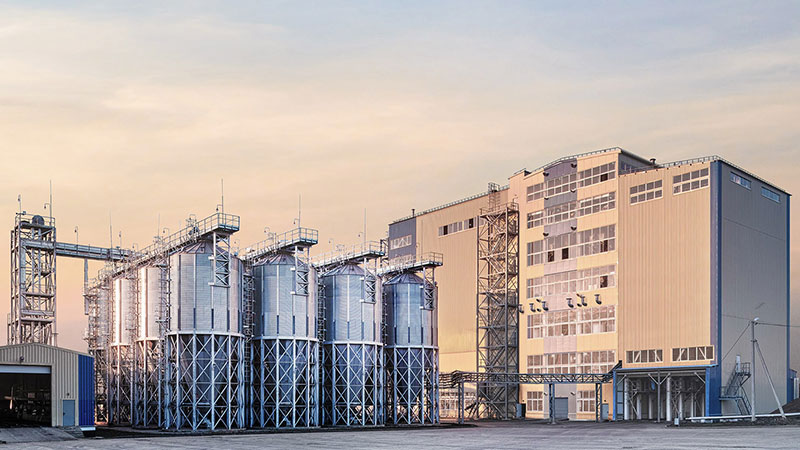
At RICHI, we go beyond project completion. With RICHI Servicee, we’re your dedicated partners in success. Count on us for expert guidance, minimal downtime, and optimized productivity. Choose RICHI for unmatched service and support.
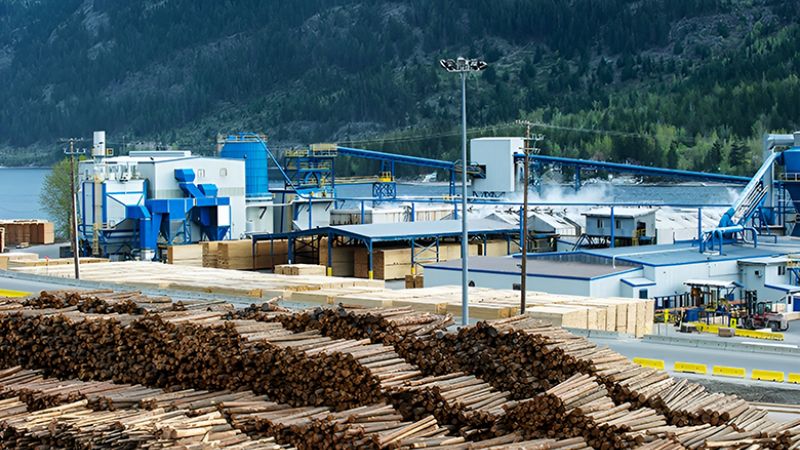


Meet global product demands and quality standards with industry-leading pellet plant design, engineering, equipment, and construction services for pellet processors.


Your Partner Beyond Project Completion
2000+ cases
RICHI is the leading designer, manufacturer and builder of pellet plants in the world, completing over 2000 projects in 140 countries across 6 continents.
Read More
Increase plant productivity, profitability, and safety by integrating high quality equipment into your pellet production line. Over the years, RICHI has become China's top pellet equipment manufacturer. At the same time, RICHI has established valuable partnerships with the world's leading component and raw material manufacturers to bring you the best there is in technology, automation, and efficiency in pelleting plant machinery.

For nearly 30 years, RICHI has been providing best-in-class pellet plant equipment and services to clients across a variety of industries, sizes, and needs. We pride ourselves on the knowledge and skill that each team member possesses – from our technical sales team to our process design engineers. You can count on RICHI Machinery to take your operation to the next level of innovation, quality, and success.
Need help with your pellet manufacturing plant project? Contact us today.
ANIMAL FEED
BIOMASS
WOOD
ORGANIC FERTILIZER
AQUA FEED
CAT LITTER
MUNICIPAL WASTE RECYCLING
SPECIAL PELLET PRODUCTION
RICHI Machinery continues to deliver world class pellet mill equipment, pellet plant engineering and project solutions that add value to our customers in the animal feed, wood waste, agriculture waste, organic fertilizer, cat litter and special pellet products industries. Throughout the years, we RICHI Machinery have built strong brand, becoming industry-leading pellet machine manufacturer. We value integrity, promise quality, and prioritize your success.
Learn MoreWith our expert team, we precisely implement your process engineering requirements in pellet mill and pelletizing plant systems. No matter which industry you’re in – we understand your needs and deliver solutions that meet the highest standards.
At RICHI, quality comes first. Our pellet making machine and related pellet line equipment undergo rigorous quality controls to ensure they meet the highest standards. Rely on products that are durable, safe, and efficient.
With decades of experience in pellet machine and pellet production line production, we have earned a reputation as a trusted partner in various industries. Our expertise allows us to cover a wide range of applications.
Not only do we offer premium pelleting equipment, but we are also experts at designing, building, installing, and maintaining facilities from the ground up. Our expertise is within pellt plant process design, discovering the most efficient, productive, and profitable way to handle your materials in an end-to-end cycle.
○ RICHI MACHINERY
Keeping in touch with us is an effective way to solve all your problems. If you have any needs or questions, please leave your contact information, then RICHI technical consultants will send design, quotation, videos to your mailbox. You can also contact us directly via WhatsApp: +86 13838389622
Copyright©2015-2026 by HENAN RICHI MACHINERY CO., LTD. All rights reserved.