
Explore a timber recycling crusher project in Bulgaria. The RICHI XPJ680×300 drum wood chipper processes suitable timber offcuts into 20–40 mm wood chips for further biomass utilization.
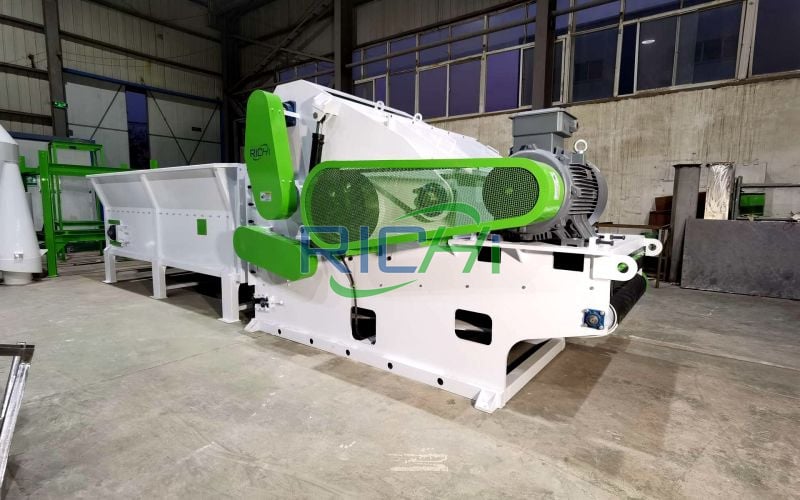
A wood-processing business in Bulgaria was looking for a better way to handle the timber residues accumulating around its cutting and preparation area. The company worked with solid hardwood and softwood materials, producing sawn components for local manufacturing and construction-related customers. Even with careful cutting plans, short timber ends, irregular offcuts and pieces unsuitable for further machining continued to accumulate.
These residues were not necessarily unusable. Some were clean, solid wood with sufficient material value for further processing, but their dimensions made them inconvenient to store, handle and sell in their existing form. The business therefore decided to introduce a dedicated wood chipper rather than expand its main sawing operation or immediately invest in a complete biomass processing line.
Name:
Timber Chipper Crusher
Country:
Bulgaria
Date:
2026
Capacity:
Flexible
Model:
XPJ680×300
Power:
90 kW
Raw Materials:
Hardwood And Sawmill Offcuts
Final product size:
20–40mm
The selected equipment was one RICHI XPJ680×300 drum wood chipper. Its role was straightforward: process suitable, sorted timber residues into approximately 20–40 mm wood chips. The resulting material could then be assessed against the requirements of potential industrial biomass users.
For buyers researching a timber recycling crusher in Bulgaria, this project illustrates how a standalone machine can address a specific material-handling problem without requiring a complete plant investment from the beginning.
The purchase was driven by a practical issue inside the workshop. Timber offcuts were generated throughout the working day, but the business did not have a dedicated machine to convert them into a consistent intermediate product. Leaving the pieces in piles consumed storage space and created additional handling work whenever the cutting area needed to be cleared.
The operator considered adding more equipment to the existing workshop, but a full biomass production line would have required decisions about drying, fine grinding, pelletizing, storage and finished-product handling. Those stages were not all necessary to solve the immediate problem. The first requirement was simply to reduce suitable wood residues to a manageable chip size.
A standalone timber recycling crusher machine offered a more controlled starting point. It allowed the business to introduce mechanical size reduction while retaining flexibility over the final application of the chips. Depending on customer requirements, the material could be sold as a suitable intermediate biomass feedstock or sent for further processing by another facility.
This approach also made it easier to evaluate the economics of the recycling operation. The business could measure the quantity of suitable wood available, record operating hours, assess chip quality and determine whether the material generated enough commercial value to justify additional equipment in the future.
The proposed feedstock consisted primarily of clean timber residues from wood-processing activities. Suitable batches could include beech and oak offcuts, solid sawn-wood ends, short sections of timber and compatible softwood pieces. These materials are relevant to Bulgaria's woodworking and forest-products sectors, although the actual mix depends on the operator's suppliers and production schedule.
Beech and oak behave differently from lighter softwoods during cutting. Their density, grain characteristics and moisture content can affect feeding and the condition of the finished chips. For that reason, the operator needed to assess each material stream instead of assuming that all wood residues would produce identical results.
The initial processing plan focused on clean, solid wood. Material containing metal fittings, stones, soil or other foreign objects was excluded from the accepted feedstock. If used timber came from pallets, packaging or dismantled products, it required inspection and appropriate removal of nails, screws and other contaminants before entering the chipper.
Painted, chemically treated or otherwise contaminated timber also required separate assessment. Chipping such material does not remove hazardous substances, and the resulting chips should not automatically be treated as suitable biomass fuel. Their handling and destination must comply with applicable environmental requirements and the receiving facility's acceptance criteria.
The business did not need a fixed recipe or an artificial mixture of wood species. Its operating priority was to keep the feedstock consistent enough for reliable chipping and to separate unsuitable materials before processing. This is particularly important in recycling operations, where the quality of incoming timber can vary from one delivery to the next.
The XPJ680×300 was selected for the planned stream of relatively small timber pieces and workshop offcuts. The model has a nominal inlet dimension of 680 × 300 mm and a listed feed diameter of up to 300 mm. Its configuration provides a practical option for processing compatible wood pieces without automatically moving to a larger machine intended for substantially bigger material.
The main motor is rated at 90 kW. The feeding system uses two motors rated at 4 kW and 3 kW, while the hydraulic pump is driven by a 1.1 kW motor. The discharge conveyor has a 1.5 kW motor. The cutting arrangement consists of two flying knives and one fixed knife.
The choice was based on the intended material and operating requirements rather than an assumption that a particular motor rating guarantees a particular hourly output. Actual throughput depends on wood species, moisture, cross-section, length, feeding consistency, knife condition and the operator's working practices. A reliable production estimate requires representative material testing or an agreed technical assessment.
| Parameter | Specification |
|---|---|
| Equipment type | Drum wood chipper |
| Model | XPJ680×300 |
| Nominal inlet dimensions | 680 × 300 mm |
| Listed feed diameter | 300 mm |
| Feeding motor power | 4 + 3 kW |
| Main motor power | 90 kW |
| Hydraulic pump power | 1.1 kW |
| Discharge conveyor motor power | 1.5 kW |
| Flying knives | 2 |
| Fixed knives | 1 |
| Target wood chip size | Approximately 20–40 mm |
| Primary feedstock | Sorted, compatible timber offcuts and solid wood residues |
| Purchase quantity | One machine |
The listed feed diameter is a reference for model selection, not a guarantee that every piece of that diameter can be fed safely. The material must also fit the inlet, comply with the manufacturer's limits and be presented in a suitable manner. Long, awkwardly shaped or unstable pieces may require preparation before feeding.
The XPJ series uses a rotating drum fitted with flying knives working against fixed knives to cut suitable wood into chips. For this Bulgarian project, the target product was approximately 20–40 mm wood chips, not fine sawdust or finished pellets.
Reducing the dimensions of timber residues makes the material easier to collect and handle in bulk. It also creates a more practical intermediate feedstock for downstream equipment or industrial users whose systems are designed for wood chips. However, the suitability of the product depends on more than its nominal size.
Wood species, moisture, grain direction, feed dimensions and knife condition all influence the finished material. The target size should therefore be treated as an operating objective rather than a guarantee that every chip will have identical dimensions. If a buyer requires a narrow particle-size distribution, additional screening or another size-control step may be necessary.
The distinction between chipping and grinding is important. A drum chipper cuts solid wood into chips. A hammer mill then reduces suitably prepared material to smaller particles through impact. If the eventual goal is pellet production, the material may also require moisture adjustment, further size reduction, pelletizing and cooling. Each stage performs a different function, so the process should be designed around the final product rather than treating every wood-processing machine as interchangeable.
The first commercial route considered for this project was the supply of suitable wood chips to an industrial biomass user. Bulgaria has wood-processing businesses and facilities that use wood-based materials, but acceptance depends on the specific buyer's equipment and fuel requirements. The operator therefore needed to confirm the required chip dimensions, moisture range, acceptable contamination level and delivery specifications before committing to a supply arrangement.
Clean chips may be suitable for certain biomass boilers or other thermal applications when the receiving system is designed for that fuel and the material meets its specifications. Hardwood and softwood chips can differ in density, moisture and energy characteristics, so a buyer may require separate batches or additional quality checks.
Another option is to supply the chips to a downstream processor. A facility producing finer wood particles may use compatible chips as an intermediate feedstock, subject to its own requirements. Where pellet production is commercially justified, a further processing route could include drying when necessary, hammer milling, pelletizing, cooling and screening.
None of those downstream operations is performed by the XPJ680×300 itself. The chipper is the first size-reduction stage. It does not dry wet wood, remove chemical contamination or manufacture finished fuel pellets. Keeping these distinctions clear helps the operator calculate investment costs realistically and avoid buying equipment that is not required for the initial business objective.
A timber recycling crusher must cope with material that is not always uniform. The XPJ series uses hydraulic-assisted feeding to help the feeding rollers grip and advance compatible wood pieces into the cutting chamber. This supports a more controlled feeding process and helps reduce slipping when the material is presented within the machine's operating limits.
The feeding arrangement does not remove the need for material preparation. Pieces that exceed the permitted dimensions, contain foreign objects or cannot be gripped safely must not be forced into the machine. Operators should follow the manufacturer's instructions for feeding, clearing blockages and maintaining safe distances from moving components.
The machine body is made from welded high-strength steel plate. The flying and fixed knives are specified as 6GrW2Si material and undergo heat treatment intended to improve hardness and wear resistance. Special fastening components secure the flying knives to the rotor, while dynamic balancing is used to help control vibration during high-speed operation.
These features support structural stability and cutting-system reliability, but they do not eliminate normal wear. Knife inspection, correct fastening, appropriate feeding and scheduled maintenance remain necessary. Foreign objects can damage cutting components, while unsuitable operating practices may increase downtime and repair costs.
The decision to buy one chipper instead of a complete production line reflected the scale of the immediate requirement. The business already had a working timber-processing operation and a regular stream of residues. It did not yet need to manufacture a finished biomass product, and it wanted to establish the practical value of chipping before committing capital to additional stages.
With a standalone machine, the operator can collect meaningful operating data. Records of incoming wood volume, accepted feedstock, rejected material, working hours, chip quality, maintenance and electricity consumption can help determine the real cost of producing each tonne of chips.
Those figures also provide a basis for deciding whether downstream processing is worthwhile. If buyers require lower moisture content, a dryer may be considered. If the material must be reduced to a finer particle size, a hammer mill could be added. If there is dependable demand for finished pellets, a wood pellet production line may become a separate investment decision.
RICHI Machinery supplies individual wood-processing machines as well as equipment for broader biomass processing systems. Technical discussions can cover the feedstock, target chip size, expected working schedule, site layout, electrical supply and possible future processing requirements. This allows the initial machine selection to remain focused while leaving room for expansion when the business case supports it.
For this type of recycling project, the most useful feedback comes from actual operating conditions. The operator needs to know whether the feeding system handles the accepted timber consistently, whether the chips meet the receiving customer's specification and whether routine knife maintenance fits the working schedule.
Material recovery is another important measure. The quantity of wood collected at the yard is not the same as the quantity that can be processed into saleable chips. Reusable timber, unsuitable material, contaminated pieces and sorting losses must be accounted for separately. Keeping these figures helps prevent the business from overstating its potential output or expected revenue.
For the Bulgarian operator, the practical assessment should therefore focus on the consistency of the finished chips, ease of handling and the proportion of incoming timber that can be accepted. Actual throughput, energy consumption, operating savings and product revenue should be calculated from recorded results rather than inferred from the motor rating alone.
Any direct customer quotation or claim of measured performance should be confirmed against project records or approved by the customer before publication. This ensures that the case remains technically credible and that illustrative operating expectations are not presented as independently verified results.
The planned shipping route is from Qingdao Port in China to the Port of Varna in Bulgaria. Before dispatch, the equipment configuration, packing arrangement, electrical requirements and any agreed spare parts should be checked against the order documentation.
The receiving site should prepare suitable foundation support, installation clearance, lifting access and a safe working area for feeding and chip collection. Electrical supply and protection arrangements must be confirmed against the final machine configuration, and the installation and commissioning plan should be agreed before the equipment arrives.
Site preparation also includes planning where accepted timber will be stored and where the finished chips will be collected. A clear separation between clean feedstock, reusable timber and rejected material helps reduce contamination risks and makes the chipping operation easier to manage.
For businesses comparing a timber recycling crusher in Bulgaria, the starting point should be the material itself. Wood species, dimensions, moisture, contamination risks and the required chip specification all influence model selection. The expected operating schedule and the receiving customer's requirements are equally important.
The RICHI XPJ680×300 offers a drum-chipping configuration with a nominal inlet of 680 × 300 mm, a 90 kW main motor, two flying knives and one fixed knife. Its suitability depends on the actual timber stream and the way the machine will be operated. A larger model is not automatically a better investment if the incoming material and required output can be handled effectively by a more appropriately sized configuration.
RICHI Machinery can help prospective buyers assess their feedstock, compare suitable machine configurations and determine whether a standalone chipper meets the immediate need or whether additional equipment should be considered. Useful information for an initial assessment includes representative material dimensions, wood species, moisture condition, expected daily volume and the intended destination of the finished chips.
For this Bulgarian timber-processing business, the purpose of the investment is to turn suitable wood offcuts into approximately 20–40 mm chips, reduce the handling burden around the workshop and create a practical intermediate product. Beginning with one machine keeps the initial investment focused and allows future expansion to be based on operating records and confirmed customer demand.
Having the right mix of reliable, high-quality pellet machine and pelletizing systems and expert support is essential to your success. Watch how our end-to-end feed pellet plant solutions have helped our customers optimize their performance.
Our customized and future-proofed turnkey pellet plant solutions is designed with you at the core. From vision to reality and beyond, our team stays connected with yours. Giving you peace-of-mind with an expert at your side.
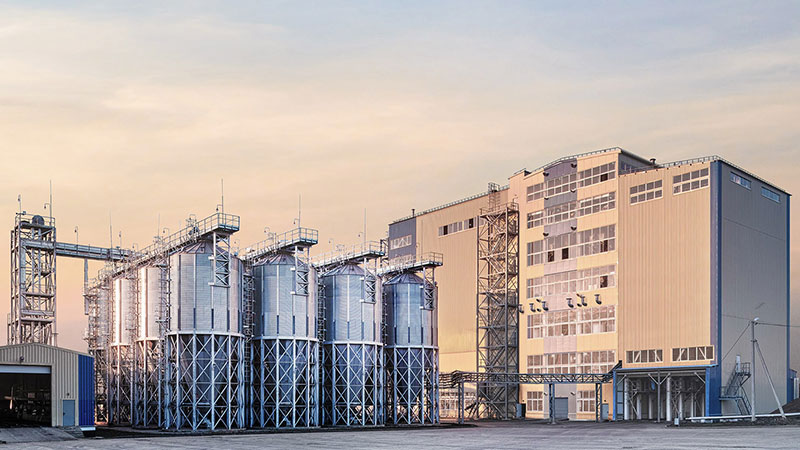
At RICHI, we go beyond project completion. With RICHI Servicee, we’re your dedicated partners in success. Count on us for expert guidance, minimal downtime, and optimized productivity. Choose RICHI for unmatched service and support.
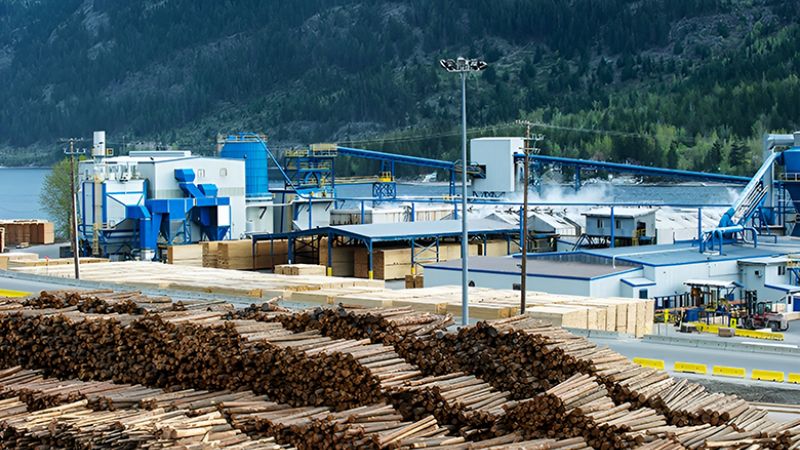


Meet global product demands and quality standards with industry-leading pellet plant design, engineering, equipment, and construction services for pellet processors.


Your Partner Beyond Project Completion
2000+ cases
RICHI is the leading designer, manufacturer and builder of pellet plants in the world, completing over 2000 projects in 140 countries across 6 continents.
Read More
Increase plant productivity, profitability, and safety by integrating high quality equipment into your pellet production line. Over the years, RICHI has become China's top pellet equipment manufacturer. At the same time, RICHI has established valuable partnerships with the world's leading component and raw material manufacturers to bring you the best there is in technology, automation, and efficiency in pelleting plant machinery.

For nearly 30 years, RICHI has been providing best-in-class pellet plant equipment and services to clients across a variety of industries, sizes, and needs. We pride ourselves on the knowledge and skill that each team member possesses – from our technical sales team to our process design engineers. You can count on RICHI Machinery to take your operation to the next level of innovation, quality, and success.
Need help with your pellet manufacturing plant project? Contact us today.
ANIMAL FEED
BIOMASS
WOOD
ORGANIC FERTILIZER
AQUA FEED
CAT LITTER
MUNICIPAL WASTE RECYCLING
SPECIAL PELLET PRODUCTION
RICHI Machinery continues to deliver world class pellet mill equipment, pellet plant engineering and project solutions that add value to our customers in the animal feed, wood waste, agriculture waste, organic fertilizer, cat litter and special pellet products industries. Throughout the years, we RICHI Machinery have built strong brand, becoming industry-leading pellet machine manufacturer. We value integrity, promise quality, and prioritize your success.
Learn MoreWith our expert team, we precisely implement your process engineering requirements in pellet mill and pelletizing plant systems. No matter which industry you’re in – we understand your needs and deliver solutions that meet the highest standards.
At RICHI, quality comes first. Our pellet making machine and related pellet line equipment undergo rigorous quality controls to ensure they meet the highest standards. Rely on products that are durable, safe, and efficient.
With decades of experience in pellet machine and pellet production line production, we have earned a reputation as a trusted partner in various industries. Our expertise allows us to cover a wide range of applications.
Not only do we offer premium pelleting equipment, but we are also experts at designing, building, installing, and maintaining facilities from the ground up. Our expertise is within pellt plant process design, discovering the most efficient, productive, and profitable way to handle your materials in an end-to-end cycle.
○ RICHI MACHINERY
Keeping in touch with us is an effective way to solve all your problems. If you have any needs or questions, please leave your contact information, then RICHI technical consultants will send design, quotation, videos to your mailbox. You can also contact us directly via WhatsApp: +86 13838389622
Copyright©2015-2026 by HENAN RICHI MACHINERY CO., LTD. All rights reserved.