
A commercial equine forage processor in Idaho added one RICHI SFSP56×40 teff grass hammer mill in USA to produce controlled-particle-size teff hay for horse-feed products. The business manages its own horses and also supplies processed forage to boarding facilities, specialty horse owners and regional equine customers, giving the grinding section enough commercial throughput to justify an industrial 37 kW hammer mill.
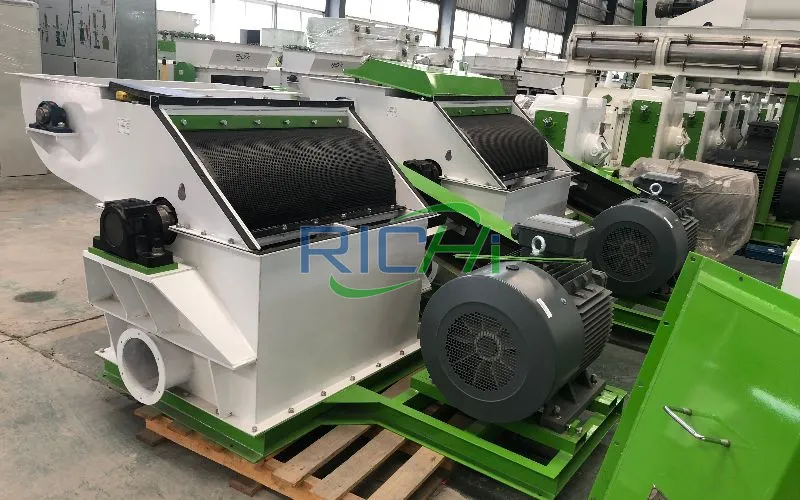
A commercial equine forage processor in Idaho added one RICHI SFSP56×40 teff grass hammer mill in USA to produce controlled-particle-size teff hay for horse-feed products. The business manages its own horses and also supplies processed forage to boarding facilities, specialty horse owners and regional equine customers, giving the grinding section enough commercial throughput to justify an industrial 37 kW hammer mill.
The customer already had bale-opening equipment, material conveying, dust collection and a small downstream mixing section. The new investment therefore focused on one job: converting dry, pre-opened teff hay into a more uniform forage material that could be supplied as ground forage or incorporated into customer-specific equine feed blends.
Name:
Country:
USA
Date:
2026
Capacity:
Flexible
Model:
SFSP56×40
Main Motor Power:
37 kW
Available Screens:
3 - 5 mm
Main Application:
Commercial equine forage processing
Teff is a warm-season annual grass with relatively fine stems and leaves compared with many conventional hay crops. It can be grown for hay in the western United States, including the Pacific Northwest and Idaho, where irrigation and summer conditions can support annual forage production.
For this customer, teff hay had become a valuable specialty forage because equine buyers were looking for consistent, analyzed forage options rather than relying only on traditional long-stem hay.
The processing problem was physical rather than nutritional.
Baled teff is bulky, variable in length and difficult to meter consistently into a mixer. Fine leaves and stems can also separate during bale handling, while long strands can bridge in hoppers or distribute unevenly when the customer wants to manufacture a ground-forage product.
Grinding reduces and standardizes particle size so the forage is easier to meter, blend, bag and handle.
It does not reduce the sugar content of the hay, change its NSC concentration or make an unsuitable forage suitable for a metabolically sensitive horse.
For customers purchasing teff specifically for low-NSC feeding programs, forage analysis remains essential. Teff often tests lower in nonstructural carbohydrates than many cool-season grasses, but harvest stage, weather, fertilization, drying conditions and individual lot characteristics can all affect the final analysis.
The Idaho processor therefore treats forage testing and mechanical grinding as two separate quality-control steps.
| Project Parameter | Configuration |
|---|---|
| Equipment | Teff grass hammer mill |
| Model | SFSP56×40 |
| Main Motor | 37 kW |
| Available Screens | 3 mm, 4 mm and 5 mm |
| Main Raw Material | Dry teff hay |
| Raw Material Form | Opened and pre-separated baled forage |
| Main Application | Commercial equine forage processing |
| Downstream Use | Ground forage and equine feed blending |
| Existing Equipment Retained | Bale opener, conveying, dust collection and mixing equipment |
| Project Type | Standalone grinding-section addition |
The SFSP56×40 grass crusher machine was selected because the customer needed considerably more than occasional farm-scale bale grinding.
A 37 kW hammer mill is intended for continuous commercial processing where forage enters at a reasonably stable rate and the downstream system can receive the ground product.
For this application, the customer keeps multiple screen sizes because screen aperture changes the resistance inside the grinding chamber and influences the resulting particle distribution.
A smaller screen generally requires more grinding work and can reduce throughput, particularly with fibrous forage. A larger screen can increase output but allows a coarser finished distribution.
The correct screen is therefore selected according to the customer’s product requirement rather than according to the horse’s medical diagnosis.
A grass hammer mill should not be treated as a bale breaker.
Dense square or round bales can contain long, compressed forage that does not feed evenly into a conventional hammer-mill inlet. Feeding whole sections of bale directly into the grinder can cause unstable loading, bridging and excessive motor-current fluctuations.
The Idaho plant therefore prepares the hay before fine grinding.
This sequence is especially important for lightweight forage.
Teff hay has a much lower bulk density than maize or other cereal grains, so a hammer mill that handles several tonnes per hour of grain should not automatically be assigned the same mass throughput on dry forage.
Volumetric feeding, stem structure, leaf fraction, moisture and screen opening all influence actual performance.
The customer purchased 3 mm, 4 mm and 5 mm screens so that product structure could be adjusted for different commercial orders.
A 4 mm screen does not mean every finished particle is exactly 4 mm.
Inside a hammer mill, material is repeatedly struck and circulated until it is small enough to pass through the screen openings. Some particles can therefore be significantly smaller than the screen aperture, while elongated fibrous pieces can pass differently depending on orientation.
The resulting product should be described as a particle-size distribution rather than a single dimension.
For teff hay, this distinction matters because excessive fine grinding can increase airborne dust and reduce the proportion of physically effective long fibre.
Commercial horse-feed processors therefore need to define what they want the grinder to achieve.
If the goal is simply to make teff easier to meter and blend, there is no benefit in reducing it more finely than necessary.
The 4 mm and 5 mm screens provide useful trial points for this type of processing, while the 3 mm screen is available where a finer product specification is required. Final selection is based on the processor’s actual particle-distribution test, dust generation, downstream mixer behavior and customer product specification.
RICHI does not define 4 mm as a universal “ideal screen for metabolic horses.”
Teff has attracted interest in the equine market because warm-season grasses often contain lower nonstructural carbohydrate levels than many cool-season grass hays.
That makes teff a useful forage option for some horse owners seeking a lower-NSC diet under veterinary or nutrition guidance.
But the species name alone is not enough to qualify a bale as low-NSC feed.
The Idaho processor purchases and segregates teff hay by lot and can use laboratory forage analysis when a customer requires a defined nutritional specification.
This is particularly important for products marketed to owners managing horses with insulin dysregulation, equine metabolic syndrome or PPID.
Grinding does not lower NSC. It also does not stabilize blood insulin, prevent laminitis or treat endocrine disease.
The hammer mill’s role is mechanical:
it reduces forage length, improves flow through bins and mixers, creates a more repeatable physical product and makes commercial packaging or blending easier.
Any nutritional claim belongs to the analyzed forage and complete ration, not to the SFSP56×40.
The same principle applies to digestibility. Finer grinding increases surface area and changes physical form, but it should not be marketed as automatically improving forage digestibility or feed efficiency in horses.
Dry, storage-stable hay is much easier to grind consistently than damp forage.
The Idaho processor therefore measures or monitors hay condition before material enters the grinding section.
No single moisture percentage is treated as an absolute cutoff for all teff hay.
As forage moisture increases, stems become more flexible, screen passage can become more difficult and material may begin to accumulate inside the grinding chamber. Damp hay also presents separate storage and microbial-quality concerns before it ever reaches the machine.
For commercial grinding, the customer prefers dry hay that has already reached an appropriate storage condition.
Soil contamination is another important consideration.
Teff itself should not be described as having inherently “very low silica wear.” Hammer and screen wear can be strongly influenced by ash and soil picked up during harvesting, raking and baling.
Sand and mineral contamination can be far more abrasive than clean forage tissue.
For this reason, RICHI asks about harvesting method and ash contamination when evaluating forage-grinding projects.
Keeping windrows clean and minimizing soil pickup can benefit both forage quality and grinder wear.
Even a clean, fine-stemmed forage produces airborne particles when processed through a high-speed hammer mill.
The SFSP56×40 therefore works with an aspiration system rather than discharging ground material into an uncontrolled open area.
In the Idaho layout, ground material is pneumatically or mechanically transferred through a cyclone and filtration arrangement before moving downstream.
This performs several functions.
It helps maintain airflow through the grinding chamber, separates transport air from product, reduces uncontrolled dust around the machine and improves housekeeping in the processing building.
Filter sizing must match the actual air volume and pressure requirement.
A statement such as “99% dust capture” should not be assumed without a specified filter, test method and operating condition.
Forage processors also need to consider combustible-dust management.
Dry organic dust can burn under suitable conditions, so the plant design should address ignition sources, housekeeping, electrical installation, foreign metal and dust accumulation according to the customer’s applicable US safety requirements.
The grinder should also be located so operators can inspect screens, hammers, bearings and conveying connections without dismantling surrounding equipment.
The customer already had a small blending section used for specialty equine products.
This meant the SFSP56×40 did not need to be supplied as part of a complete feed factory.
The main engineering task was to connect the new grinder with existing material handling while preventing the hammer mill from overwhelming a lower-capacity downstream mixer.
This is an important line-balance issue.
If a hammer mill produces ground forage faster than the mixer can consume it, the process needs an intermediate storage or buffer bin. Otherwise operators are forced to stop and start the grinder according to each mixing cycle.
For lightweight material such as teff, bin geometry also matters because finely processed forage can bridge or flow irregularly.
The customer therefore uses controlled transfer between the grinder, intermediate handling and the existing mixer rather than feeding the mixer directly from the hammer mill discharge.
This arrangement also allows ground teff to be sold as a standalone forage product without sending every batch through the mixing system.
That commercial flexibility is one reason the larger SFSP56×40 makes sense for this customer. The machine supports a regional forage-processing business, not simply the daily forage demand of the horses kept at one property.
The SFSP56×40 was prepared in Qingdao for shipment to the western United States and then moved inland to the customer’s Idaho processing site through an appropriate West Coast logistics route. Final port selection, sailing schedule and inland freight arrangement depend on carrier availability and the actual delivery plan.
For the customer, purchasing one teff grass hammer mill in USA provided a focused way to expand specialty forage processing without replacing existing bale-opening, dust-control and mixing equipment.
The 37 kW crusher machine handles dry, pre-opened teff hay and can operate with 3 mm, 4 mm or 5 mm screens depending on the required finished-particle distribution.
The project is designed around physical forage processing rather than medical claims.
Teff can be an attractive equine forage because it often has lower NSC than many cool-season grasses, but each hay lot still needs testing when a defined low-NSC specification matters. The hammer mill does not reduce sugar content or convert ordinary hay into a therapeutic feed.
Its value is in creating a more controllable commercial material.
Ground teff is easier to meter into mixers, portion into packaged products and integrate with other equine feed ingredients. Particle size can be adjusted with screen selection, while the bale opener, controlled feeder and aspiration system stabilize operation around the hammer mill.
For another buyer searching for a teff grass hammer mill in USA, teff hay grinder, horse feed hammer mill, forage grinding machine, dry grass hammer mill or commercial equine forage processing equipment, RICHI first needs to know what form of material actually reaches the machine.
Bale size, bale density, hay moisture, stem and leaf condition, soil contamination, incoming forage length and required finished-particle distribution all affect equipment selection.
Hourly capacity also needs to be defined on the real forage rather than borrowed from grain-grinding data. Low-density teff occupies considerable volume, and a finer screen can reduce mass throughput even when the main motor remains the same.
Downstream equipment matters as well. A customer with an existing bale breaker and mixer may only need the grinder, feeder, cyclone and dust-control interface. A processor starting from intact bales may require bale opening, foreign-material removal, controlled feeding and intermediate storage in addition to the hammer mill.
RICHI Machinery can evaluate these conditions before confirming the final configuration. Useful project information includes bale dimensions, moisture, laboratory forage analysis where relevant, required tonnes per hour, target screen size or particle distribution, daily operating hours, dust-control system, available three-phase power and the equipment already installed before and after the grinder.
This allows the SFSP56×40 to be integrated as a practical commercial grinding section rather than oversized, undersized or promoted around assumptions that do not match the customer’s actual teff forage business.
Having the right mix of reliable, high-quality pellet machine and pelletizing systems and expert support is essential to your success. Watch how our end-to-end feed pellet plant solutions have helped our customers optimize their performance.
Our customized and future-proofed turnkey pellet plant solutions is designed with you at the core. From vision to reality and beyond, our team stays connected with yours. Giving you peace-of-mind with an expert at your side.
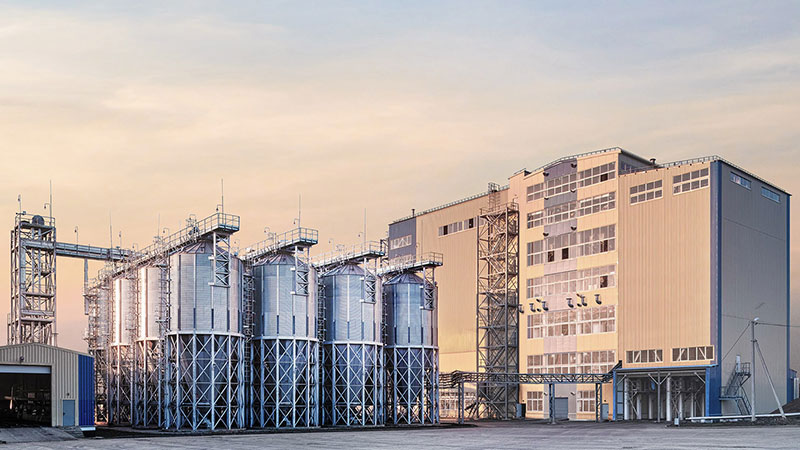
At RICHI, we go beyond project completion. With RICHI Servicee, we’re your dedicated partners in success. Count on us for expert guidance, minimal downtime, and optimized productivity. Choose RICHI for unmatched service and support.
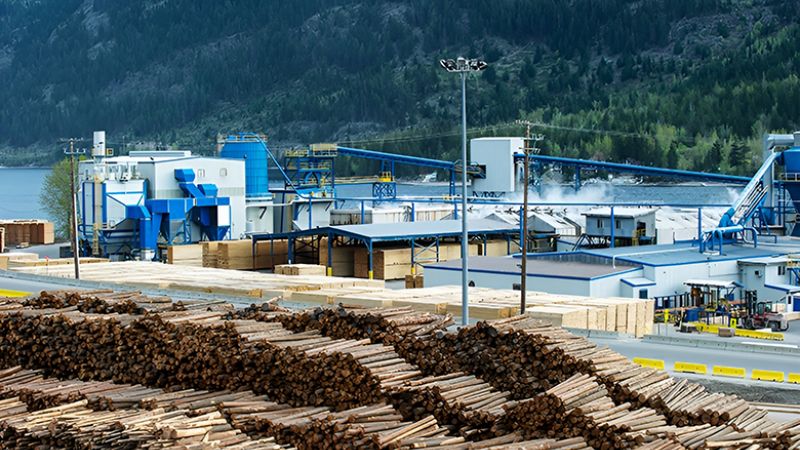


Meet global product demands and quality standards with industry-leading pellet plant design, engineering, equipment, and construction services for pellet processors.

Your Partner Beyond Project Completion
2000+ cases
RICHI is the leading designer, manufacturer and builder of pellet plants in the world, completing over 2000 projects in 140 countries across 6 continents.
Read More
Increase plant productivity, profitability, and safety by integrating high quality equipment into your pellet production line. Over the years, RICHI has become China's top pellet equipment manufacturer. At the same time, RICHI has established valuable partnerships with the world's leading component and raw material manufacturers to bring you the best there is in technology, automation, and efficiency in pelleting plant machinery.

For nearly 30 years, RICHI has been providing best-in-class pellet plant equipment and services to clients across a variety of industries, sizes, and needs. We pride ourselves on the knowledge and skill that each team member possesses – from our technical sales team to our process design engineers. You can count on RICHI Machinery to take your operation to the next level of innovation, quality, and success.
Need help with your pellet manufacturing plant project? Contact us today.
ANIMAL FEED
BIOMASS
WOOD
ORGANIC FERTILIZER
AQUA FEED
CAT LITTER
MUNICIPAL WASTE RECYCLING
SPECIAL PELLET PRODUCTION
RICHI Machinery continues to deliver world class pellet mill equipment, pellet plant engineering and project solutions that add value to our customers in the animal feed, wood waste, agriculture waste, organic fertilizer, cat litter and special pellet products industries. Throughout the years, we RICHI Machinery have built strong brand, becoming industry-leading pellet machine manufacturer. We value integrity, promise quality, and prioritize your success.
Learn MoreWith our expert team, we precisely implement your process engineering requirements in pellet mill and pelletizing plant systems. No matter which industry you’re in – we understand your needs and deliver solutions that meet the highest standards.
At RICHI, quality comes first. Our pellet making machine and related pellet line equipment undergo rigorous quality controls to ensure they meet the highest standards. Rely on products that are durable, safe, and efficient.
With decades of experience in pellet machine and pellet production line production, we have earned a reputation as a trusted partner in various industries. Our expertise allows us to cover a wide range of applications.
Not only do we offer premium pelleting equipment, but we are also experts at designing, building, installing, and maintaining facilities from the ground up. Our expertise is within pellt plant process design, discovering the most efficient, productive, and profitable way to handle your materials in an end-to-end cycle.
○ RICHI MACHINERY
Keeping in touch with us is an effective way to solve all your problems. If you have any needs or questions, please leave your contact information, then RICHI technical consultants will send design, quotation, videos to your mailbox. You can also contact us directly via WhatsApp: +86 13838389622
Copyright©2015-2026 by HENAN RICHI MACHINERY CO., LTD. All rights reserved.