
The Nakhon Ratchasima customer did not build this project around the idea that wet cassava pulp could be poured directly into a pellet mill. The material coming from nearby tapioca starch processors contained roughly 75–80% moisture, which made it useful as a low-cost cattle feed ingredient but completely unsuitable for direct ring-die pelleting.
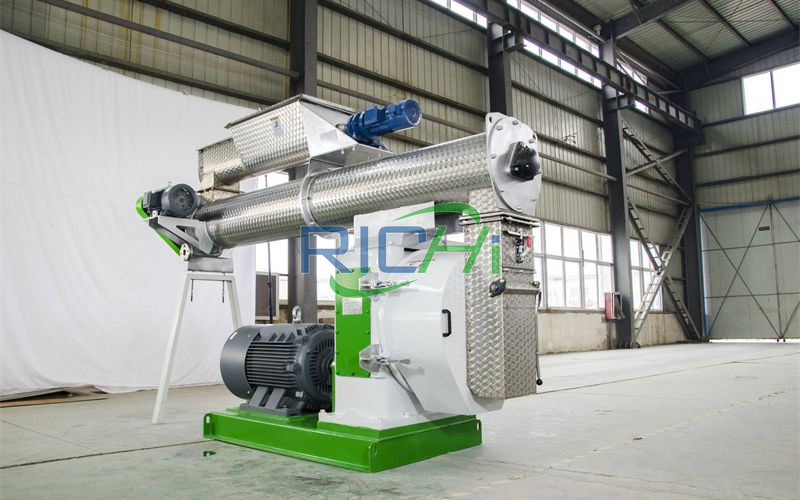
The Nakhon Ratchasima customer did not build this project around the idea that wet cassava pulp could be poured directly into a pellet mill. The material coming from nearby tapioca starch processors contained roughly 75–80% moisture, which made it useful as a low-cost cattle feed ingredient but completely unsuitable for direct ring-die pelleting.
The real investment decision was therefore broader: the feedlot wanted to create a stable dry concentrate pellet from locally available cassava by-products while continuing to feed roughage separately.
One SZLH420 tapioca cattle feed pellet machine in Thailand was installed in the feedlot’s existing feed center. The customer already had ingredient storage, grinding, batching, mixing and finished-feed handling equipment, while a separate cassava pulp drying section prepared the wet by-product before it entered the dry-feed system.
The new pellet mill replaced an undersized older unit and gave the operation enough capacity to manufacture cassava-based cattle feed pellets for its own finishing program without rebuilding the entire feed plant.
Name:
Tapioca Pellet Machine
Country:
Thailand
Date:
2026
Capacity:
10–12 T/H
Model:
SZLH420
Main Motor Power:
110 kW
Application:
Cassava-based concentrate pellets
Pellet diameter:
8 mm
The location is important to this project.
Nakhon Ratchasima is one of Thailand’s most important cassava-producing provinces and a major center for the country’s cassava processing chain. The feedlot can therefore source cassava pulp from starch processors within a practical trucking radius rather than transporting a wet, low-density by-product over several hundred kilometers.
That matters because fresh cassava pulp contains so much water that transport cost can quickly erase its apparent price advantage.
The feedlot’s opportunity was not simply “cheap tapioca.” It was access to a nearby source of cassava starch residue that could be dried, formulated and converted into a higher-density cattle feed product.
Thailand’s cassava industry produces several feed materials that are often mixed together in equipment descriptions.
This project uses cassava pulp, the fibrous and starch-containing residue remaining after cassava roots are processed for starch.
It is different from dried cassava chips, cassava root meal and tapioca pellets produced directly from root material.
Fresh cassava pulp normally has a very low dry-matter content. Research on Thai cattle diets has reported cassava pulp at approximately 19.5% dry matter, equivalent to around 80% moisture. It also contains residual fermentable carbohydrate but much more fibre than cassava chips.
The customer does not grind all of its rice straw, roughage and cassava pulp into one dense 8 mm product and call it a complete cattle diet.
The SZLH420 feed pellet machine mainly produces a cassava-based concentrate pellet.
That pellet is later combined on the farm with appropriate long-fibre roughage such as rice straw, silage or other available forage in the final feeding program.
This distinction is important for feedlot cattle because pelleting should not eliminate the physically effective fibre required for normal rumen function.
Fresh starch-industry pulp arriving at approximately 75–80% moisture cannot be sent to the hammer mill or ring-die pelletizer.
The customer first dewaters and dries the material.
The drying section reduces moisture to a condition compatible with dry mixing and pelleting. The exact target is adjusted according to the other ingredients in the formula and the amount of steam added during conditioning rather than applying one fixed figure to every production batch.
In routine operation, dried cassava pulp entering the dry-feed system is generally controlled around the low-teens moisture range.
A tonne of fresh cassava pulp is mostly water.
At approximately 20% dry matter, 1 tonne of fresh material contains only about 200 kg of dry solids.
This means the customer never compares the purchase price of one wet tonne of cassava pulp directly with one tonne of maize or one tonne of dried cassava meal.
The real comparison uses cost per tonne of dry matter after adding transport, dewatering, drying, electricity, labor and storage.
That calculation determines whether the cassava pulp cattle feed project remains economical at any particular time.
The formula changes with cattle stage, ingredient analysis and market prices, but the pellet is built around ingredients that are realistic for Thai beef production.
Thai feeding studies confirm that cassava pulp can make up a substantial dry-matter fraction of beef-cattle diets when the overall ration is correctly formulated. Experimental Thai feedlot diets have used cassava pulp at 10%, 30% and even 50% of diet dry matter together with rice straw, rice bran, palm meal, soybean meal and other ingredients.
A technically possible inclusion rate is not automatically the best commercial formula.
The feedlot normally uses a more moderate amount of dried cassava pulp in the concentrate pellet and adjusts the percentage according to protein requirement, fibre level, energy density and ingredient price.
If cassava pulp becomes too dominant, the pellet may become unnecessarily fibrous and the nutritionist must compensate more heavily with protein and energy ingredients.
The machine therefore gives the feedlot formulation flexibility rather than locking production into one cassava percentage.
Urea can be used as a non-protein nitrogen source in properly formulated ruminant feeds, particularly where rapidly fermentable cassava carbohydrate is available.
But it must be dosed and mixed accurately.
The customer does not automatically add 1–2% urea to every cassava pellet formula. Some Thai cattle studies have used approximately 0.5% urea in total mixed diets or around 1% in concentrate formulations, illustrating why actual inclusion must be established by a qualified nutrition formulation rather than by a generic equipment recipe.
| Project Parameter | Configuration |
|---|---|
| Equipment | Tapioca cattle feed pellet machine |
| Model | SZLH420 |
| Quantity | 1 unit |
| Main Motor Power | 110 kW |
| Feeder Power | 1.5 kW |
| Conditioner Power | 7.5 kW |
| Ring Die Inner Diameter | 420 mm |
| Main Pellet Diameter | 8 mm |
| Reference Capacity | Approximately 10–12 T/H for suitable cattle feed formulations |
| Main Application | Cassava-based concentrate pellets for beef cattle |
The SZLH420 configuration follows the machine data supplied for this project: 110 kW main motor, 7.5 kW conditioner and approximately 10–12 T/H reference cattle-feed capacity.
The feedlot uses approximately 80 tonnes of total feed per day, but that does not mean all 80 tonnes must pass through the pellet mill.
Long-fibre roughage remains outside the pelletizing section.
The SZLH420 produces the dry concentrate portion in scheduled production runs. This gives the feed center spare hourly capacity and allows several days of concentrate pellets to be manufactured in advance instead of forcing the machine to operate continuously for the entire feeding day.
This is a more realistic match between herd demand and the 10–12 T/H machine than describing 80 tonnes of total TMR as 80 tonnes of daily pellet output.
Dried cassava pulp has a lower and more variable bulk density than conventional grain-heavy feed.
If material entering the conditioner fluctuates, main-motor load and pellet density fluctuate as well.
The batching and mixing system therefore has to produce a uniform mash before the SZLH420 feeder meters it into the conditioner.
Stable feeding became one of the most important operating parameters for this cassava pulp feed pellet machine in Thailand.
Cassava-based ingredients contain substantial residual carbohydrate, and their starch can contribute useful binding behavior.
However, good pellet quality still depends on the complete feed matrix.
Protein level, fibre, molasses, fat, particle size, moisture and die compression all influence the result.
The feedlot therefore does not assume that the presence of cassava eliminates every pellet-quality problem.
The 7.5 kW conditioner adds controlled steam before the mash enters the ring die.
This raises temperature and moisture, softens the mixture and improves the conditions for compression.
Steam also affects cassava starch behavior, which can contribute to pellet cohesion.
The plant adjusts conditioning according to the actual formula rather than permanently fixing the system at 65°C.
The required conditioning temperature depends on ingredient composition, residence time, incoming moisture, hygiene target, steam quality and pellet specification.
Higher temperature does not automatically destroy the protein value of a normal cattle formulation, just as a lower temperature does not automatically guarantee better feed.
The operator therefore uses pellet quality, mash condition, main-motor current and finished-feed specifications to establish the working range during commissioning.
The project does not claim that a standard conditioner automatically gelatinizes exactly 30–40% of cassava starch.
Gelatinization depends on temperature, available water, time, particle structure and mechanical conditions.
Without laboratory measurement, quoting a precise percentage would create false accuracy.
For this feedlot, the practical goal is stable conditioning and pellet formation, not chasing an unsupported gelatinization number.
The feedlot uses an 8 mm die for its principal finishing-cattle concentrate pellet.
This gives a robust product that can be conveyed, stored and dosed into the farm’s feeding system.
The machine can produce other diameters if the feeding program changes, but 8 mm is the current commercial specification.
The project does not claim that 6 mm causes cattle to eat dangerously fast or that 10 mm is inherently too difficult to chew. Pellet diameter is selected from animal category, feeding system, formulation and customer preference.
The customer does not use a universal 1:10 compression ratio simply because the pellet diameter is 8 mm.
Dried cassava pulp, rice bran, soybean meal and molasses create different friction and compression behavior from a corn-soy cattle formula.
Effective die thickness and compression are therefore selected after evaluating the formulation and desired pellet durability.
This is especially important when the percentage of cassava pulp changes seasonally.
Dried cassava pulp does not automatically need extremely fine grinding.
If the dried material already meets the particle-size requirement for mixing and pelletizing, unnecessary regrinding wastes electricity and produces more dust.
Oversized agglomerates are reduced where required, while rice bran and meal ingredients may enter mixing directly.
The process is designed around particle uniformity rather than the smallest possible particle size.
Dry cassava-based ingredients can create considerable dust during unloading and transfer.
Pelletizing reduces loose fines in the finished product, but it does not solve dust generated upstream.
The feed center therefore uses enclosed conveying and aspiration at the main transfer points.
This improves housekeeping and reduces product loss before the mash reaches the ring die.
The 8 mm cassava-based cattle pellets are incorporated into the feedlot’s final ration with roughage.
Rice straw and other forage provide the fibre structure required for rumination.
This arrangement also gives the nutritionist freedom to change concentrate allocation as cattle move through different finishing stages.
The pelletizer therefore densifies the concentrate portion without forcing the farm to abandon TMR feeding.
Before pelletizing, dry cassava meal, rice bran, soybean meal, minerals and other fine ingredients have different densities and particle characteristics.
Repeated conveying and feeding can allow a poorly designed mash to segregate.
Pelletizing binds the formulated ingredients into one physical unit and reduces the opportunity for cattle to selectively consume individual concentrate components.
This is a genuine advantage of cassava-based cattle feed pellets, but the project does not claim that cattle inevitably waste 8–10% of every unpelleted cassava ration.
The storage advantage appears only after proper water removal and pellet production.
Fresh cassava pulp remains highly perishable because of its moisture content.
The customer therefore coordinates incoming pulp volume with drying capacity and avoids accumulating large quantities of untreated material outdoors.
This part of the process is just as important as selecting the tapioca cattle feed pellet machine itself.
A cassava pulp dryer cannot be specified simply by saying the pellet mill needs 10 tonnes per hour.
At roughly 20% dry matter, producing one tonne of dried material requires several tonnes of fresh wet pulp before water removal.
The drying system must therefore be calculated from wet feed rate, incoming moisture, final moisture and water evaporation per hour.
This mass balance prevents the common mistake of pairing a high-capacity pelletizer with a dryer that can supply only a fraction of its required dry solids.
Only high-moisture cassava pulp requires the dedicated drying step.
Rice bran, soybean meal, mineral premix and other normally dry feed ingredients enter through the conventional storage and batching system.
This keeps thermal energy focused on the material that actually needs moisture reduction.
The feed center is not limited permanently to starch-factory pulp.
Thailand has a mature cassava supply chain that includes cassava chips, dried cassava products and tapioca-processing by-products.
Thailand remained a major global cassava exporter in 2024, while Thai industry data show more than 24.9 million tonnes of cassava production in the 2024/2025 crop year.
If the delivered economics of dried cassava chips become more attractive than drying wet pulp, the nutritionist can reformulate the concentrate without replacing the SZLH420.
Cassava chips are much drier and more starch-rich.
Cassava pulp retains considerably more fibre after starch extraction.
Thai cattle research illustrates this difference clearly: one analyzed cassava pulp contained about 38.9% NDF on a dry-matter basis, compared with approximately 13.7% for cassava chips.
The feed mill therefore recalculates energy density and fibre whenever it switches between tapioca by-products.
International buyers searching for this equipment use several terms for closely related applications.
In Thailand, tapioca is especially associated with cassava starch processing, while cattle-feed customers may search using either cassava or tapioca terminology.
The project therefore naturally covers tapioca cattle feed pellet machine, cassava cattle feed pellet machine, cassava pulp feed pellet machine, tapioca residue pelletizer and cassava-based cattle feed pellet production without pretending that these raw materials are technically identical.
The SZLH420 is not restricted to one cassava formula.
Within the same cattle-feed application, the feedlot can reformulate around rice bran, palm kernel meal, cassava chips, soybean meal, molasses and other approved ingredients as availability changes.
This flexibility is commercially important in Thailand, where both crop-processing by-products and imported protein prices can change substantially during the year.
The cattle livestock feed pellet mill was exported from Qingdao Port and delivered through a major Thai seaport before inland transport to Nakhon Ratchasima.
The equipment package included the SZLH420 main unit, feeder, conditioner, selected ring die and recommended commissioning and wear parts.
RICHI supplied installation drawings, electrical requirements and equipment interfaces in advance so the customer could prepare the existing feed center before the machine arrived.
The case does not fix ocean transit time, customs clearance duration or landed-cost percentage because those values change with vessel schedule, freight conditions and import arrangements.
During initial production, the cassava-rich formula showed more variation in feeder load than the customer’s grain-heavy feed.
The first response was therefore to check batch uniformity, dried pulp particle condition and feeder rate.
After the mash entered the conditioner at a more stable mass flow, the team optimized steam and die loading.
This avoided changing expensive ring-die specifications before confirming that the upstream process was stable.
The pellets leave the die warm and with elevated moisture after steam conditioning.
They pass through the feedlot’s existing cooler before storage.
Cooling reduces pellet temperature and removes part of the added moisture so the product can be stored more safely under Thailand’s warm conditions.
Finished-feed moisture is checked after cooling rather than immediately at the pellet-mill outlet.
Moving from an inconsistent feeding system to a controlled pellet concentrate can reduce segregation and improve feed handling.
That does not justify claiming that the SZLH420 itself changes FCR from exactly 8.5 to 7.8 or increases daily gain by exactly 14%.
Feed conversion depends on cattle genetics, starting weight, forage quality, concentrate level, diet energy, health, environment and management.
The equipment is responsible for physical feed quality; the cattle-response data belong to the complete feeding program.
Cassava pulp has genuine value in Thai beef systems.
Recent work with Thai crossbred cattle has evaluated diets containing 10%, 30% and 50% cassava pulp on a dry-matter basis. Other recent research on cassava-derived products also shows that increasing cassava fractions can change intake, digestibility and rumen fermentation, particularly at high replacement levels.
For the feedlot, the conclusion is not “use as much cassava as possible.”
It is “use the amount that gives the best combination of nutrient value, ingredient cost and cattle performance.”
The economic advantage of cassava pulp can be substantial when a starch plant is nearby.
But a credible calculation has to include fresh-pulp price, actual dry matter, trucking, dewatering, thermal drying, electricity, formulation changes, pelletizing cost, labor and storage.
It also has to compare those costs with the current price of alternative energy ingredients on an equivalent dry-matter and nutrient basis.
The project therefore does not claim an EUR 88,000 machine automatically pays for itself in six weeks.
The feedlot tracks the delivered cost of the finished cassava-based concentrate rather than quoting a dramatic difference between wet pulp and imported corn.
This is especially important because 1 tonne of wet pulp and 1 tonne of dry grain contain very different amounts of usable dry matter.
The purchasing team updates the formulation when the relative economics change.
That makes the pellet plant an ingredient-flexibility tool as well as a production machine.
“The biggest change for us was learning to treat cassava pulp as a process, not just as a cheap ingredient. We have to know how much dry matter arrives, what it costs to remove the water and how the dried pulp behaves in the mixer. Once those conditions are stable, the SZLH420 gives us a consistent 8 mm concentrate pellet that is much easier to store, convey and include in the cattle ration.”
The feedlot now evaluates each new cassava supplier by material analysis and delivered dry-matter cost rather than simply accepting the lowest wet-tonne price.
A customer planning a similar project should not begin with herd size alone.
RICHI would first determine whether the cassava material is fresh pulp, dried pulp, cassava chip, cassava meal or another tapioca-processing residue.
From there, the engineering calculation covers incoming moisture, dry-matter availability, drying capacity, formulation percentage, required concentrate output, existing mixer capacity, roughage feeding method, steam supply, pellet diameter, cooler capacity and electrical system.
A 10–12 T/H SZLH420 is appropriate only when the upstream drying and batching systems can actually supply enough prepared material.
The same project answers several high-intent equipment searches without turning the page into a keyword list.
Buyers using terms such as cassava pulp cattle feed pellet machine in Thailand are usually concerned about processing a wet starch-industry by-product. A buyer searching for a tapioca residue feed pelletizer may be comparing several cassava processing residues. Searches for cassava-based cattle feed pellet production normally involve formulation, drying and pellet durability, while cattle feed pellet mill Thailand often starts from capacity and feedlot scale.
These are different entry points to the same engineering decision, so the page addresses each through the actual process rather than repeating the same keyword sentence.
This tapioca cattle feed pellet machine in Thailand project uses one SZLH420 as the central pelletizing unit for a cassava-based cattle concentrate.
The customer is located in Nakhon Ratchasima, a major Thai cassava-producing province. The feedlot obtains wet cassava pulp from regional tapioca starch processing, reduces the material’s moisture in a separate preparation section and combines the dried pulp with protein, mineral and other energy ingredients before steam conditioning and ring-die pelletizing.
The selected SZLH420 uses a 110 kW main motor, 1.5 kW feeder, 7.5 kW conditioner and 420 mm ring die, with approximately 10–12 T/H reference capacity for suitable cattle-feed formulations. The principal product is an 8 mm cassava-based concentrate pellet, which is later combined with long-fibre forage in the feedlot’s actual ration.
The complete production logic is wet cassava pulp receiving, dewatering and drying, material preparation, batching, accurate mixing, steam conditioning, pelletizing, cooling, screening and storage. The project does not attempt to push 75–80% moisture cassava pulp directly through the die, nor does it treat the pellet machine as a substitute for balanced cattle nutrition.
For cattle producers or commercial feed companies searching for a tapioca cattle feed pellet machine, cassava pulp feed pellet machine, cassava cattle feed pellet mill, tapioca residue pelletizer or cassava-based cattle feed production solution in Thailand, the first engineering question should be the same: how many tonnes of dry cassava solids are actually available after water is removed?
Once that number is known, RICHI Machinery can match drying capacity, batching, conditioning and pelletizing capacity around the real feedstock rather than around the much larger and misleading weight of fresh wet pulp.
Having the right mix of reliable, high-quality pellet machine and pelletizing systems and expert support is essential to your success. Watch how our end-to-end feed pellet plant solutions have helped our customers optimize their performance.
Our customized and future-proofed turnkey pellet plant solutions is designed with you at the core. From vision to reality and beyond, our team stays connected with yours. Giving you peace-of-mind with an expert at your side.
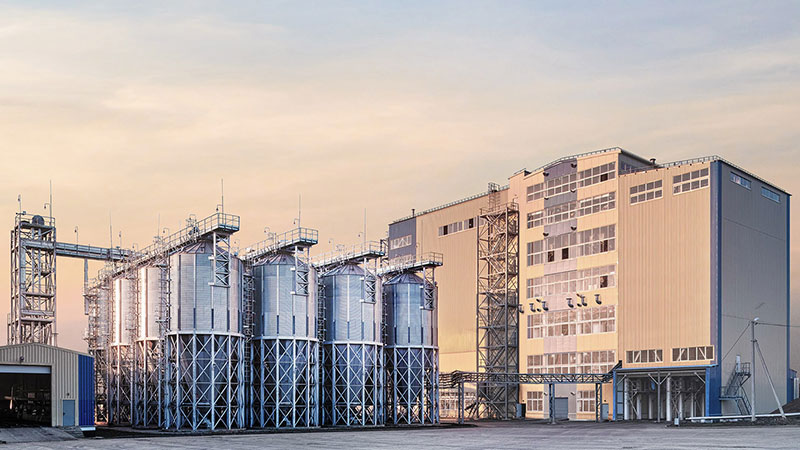
At RICHI, we go beyond project completion. With RICHI Servicee, we’re your dedicated partners in success. Count on us for expert guidance, minimal downtime, and optimized productivity. Choose RICHI for unmatched service and support.
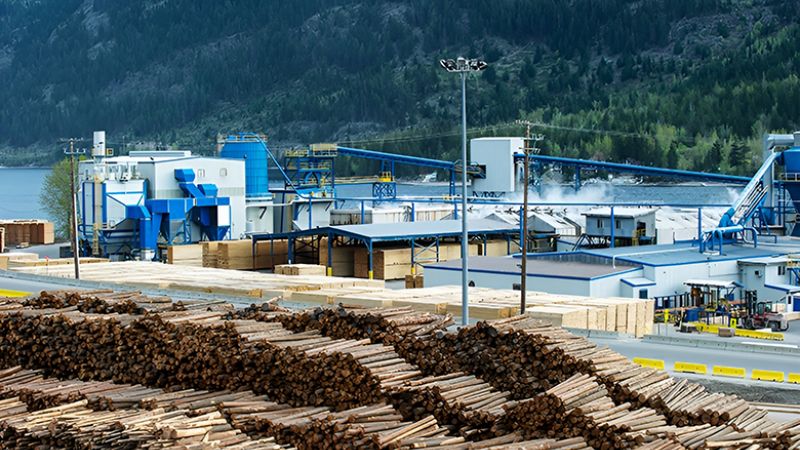


Meet global product demands and quality standards with industry-leading pellet plant design, engineering, equipment, and construction services for pellet processors.


Your Partner Beyond Project Completion
2000+ cases
RICHI is the leading designer, manufacturer and builder of pellet plants in the world, completing over 2000 projects in 140 countries across 6 continents.
Read More
Increase plant productivity, profitability, and safety by integrating high quality equipment into your pellet production line. Over the years, RICHI has become China's top pellet equipment manufacturer. At the same time, RICHI has established valuable partnerships with the world's leading component and raw material manufacturers to bring you the best there is in technology, automation, and efficiency in pelleting plant machinery.

For nearly 30 years, RICHI has been providing best-in-class pellet plant equipment and services to clients across a variety of industries, sizes, and needs. We pride ourselves on the knowledge and skill that each team member possesses – from our technical sales team to our process design engineers. You can count on RICHI Machinery to take your operation to the next level of innovation, quality, and success.
Need help with your pellet manufacturing plant project? Contact us today.
ANIMAL FEED
BIOMASS
WOOD
ORGANIC FERTILIZER
AQUA FEED
CAT LITTER
MUNICIPAL WASTE RECYCLING
SPECIAL PELLET PRODUCTION
RICHI Machinery continues to deliver world class pellet mill equipment, pellet plant engineering and project solutions that add value to our customers in the animal feed, wood waste, agriculture waste, organic fertilizer, cat litter and special pellet products industries. Throughout the years, we RICHI Machinery have built strong brand, becoming industry-leading pellet machine manufacturer. We value integrity, promise quality, and prioritize your success.
Learn MoreWith our expert team, we precisely implement your process engineering requirements in pellet mill and pelletizing plant systems. No matter which industry you’re in – we understand your needs and deliver solutions that meet the highest standards.
At RICHI, quality comes first. Our pellet making machine and related pellet line equipment undergo rigorous quality controls to ensure they meet the highest standards. Rely on products that are durable, safe, and efficient.
With decades of experience in pellet machine and pellet production line production, we have earned a reputation as a trusted partner in various industries. Our expertise allows us to cover a wide range of applications.
Not only do we offer premium pelleting equipment, but we are also experts at designing, building, installing, and maintaining facilities from the ground up. Our expertise is within pellt plant process design, discovering the most efficient, productive, and profitable way to handle your materials in an end-to-end cycle.
○ RICHI MACHINERY
Keeping in touch with us is an effective way to solve all your problems. If you have any needs or questions, please leave your contact information, then RICHI technical consultants will send design, quotation, videos to your mailbox. You can also contact us directly via WhatsApp: +86 13838389622
Copyright©2015-2026 by HENAN RICHI MACHINERY CO., LTD. All rights reserved.