
Silage Grass Rotary Dryer in Sri Lanka became the key equipment investment for a livestock feed contractor located in the country’s North Central Province, where seasonal grass harvesting and silage preparation have been expanding rapidly over the last few years.
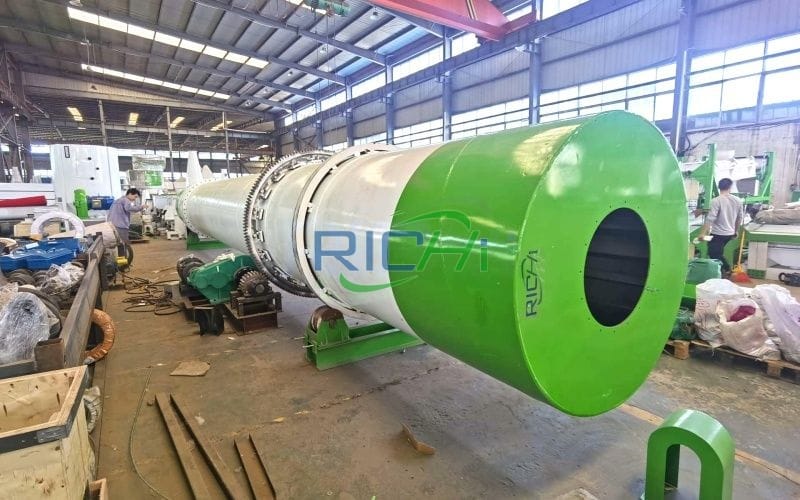
Silage Grass Rotary Dryer in Sri Lanka became the key equipment investment for a livestock feed contractor located in the country’s North Central Province, where seasonal grass harvesting and silage preparation have been expanding rapidly over the last few years.
The customer was not building a complete new factory. Instead, the investment focused on adding a dedicated rotary drum drying system to improve the stability of processed forage materials during the rainy season and reduce storage losses caused by high moisture content.
The client operates as a regional forage supply contractor serving dairy farms and cattle cooperatives across several agricultural districts. Before purchasing this silage grass rotary dryer in Sri Lanka, the customer relied mainly on sun drying and temporary covered storage.
During the monsoon period, harvested elephant grass, guinea grass, and mixed silage grass materials often stayed above safe moisture levels, leading to mold growth, inconsistent fermentation quality, and transportation difficulties. The customer had already installed a forage crushing and baling line two years earlier, so this project focused specifically on integrating a biomass rotary dryer machine into the existing workflow.
Name:
Silage Grass Dryer
Country:
Pakistan
Date:
2025
Capacity:
2-3 tons/hour
Model:
φ1.5×15
Inlet Air Temperature:
400-500℃
Outlet Air Temperature:
70-80℃
Raw Material:
Silage grass and forage materials
Unlike large industrial investors building full pellet plants or feed mills, this customer had a very practical problem to solve. Fresh-cut silage grass in Sri Lanka contains high moisture, especially after mechanical harvesting during humid weather. Even after partial field wilting, moisture levels frequently remained between 55% and 70%, which was too high for stable long-distance transport and commercial forage storage.
The customer originally tested several local drying solutions, including concrete floor drying and simple hot-air chambers, but none of them could handle continuous daily processing during rainy weeks. After comparing several systems, the customer specifically searched for a silage grass rotary dryer in Sri Lanka that could operate continuously, handle fibrous materials smoothly, and fit into an already limited workshop layout.
The final goal was not simply “drying grass.” The customer wanted to achieve several operational improvements:
This is also why the client selected a standalone rotary dryer rather than investing immediately in a complete forage pellet production line. The drying stage was the biggest bottleneck in the existing operation.
Sri Lanka’s dairy sector has been pushing for higher local feed production in recent years. Imported feed prices increased significantly, while local cattle farms started relying more on domestically produced forage crops such as napier grass, maize silage, hybrid grass, and legume mixtures.
However, forage handling in tropical climates creates major moisture management problems. In areas with frequent rainfall and high humidity, silage grass often absorbs moisture again even after field drying. This reduces nutritional quality and creates fungal contamination risks.
The customer in this project mainly processes:
These materials are supplied to medium-sized dairy farms and livestock cooperatives. Part of the dried forage is also used as raw material for compressed forage blocks and grass pellets for cattle feeding applications.
Because of this, the customer needed a heavy-duty biomass rotary dryer capable of handling fibrous agricultural materials without frequent clogging. Standard grain dryers were unsuitable for this type of long-fiber forage material.
After evaluating the customer’s daily throughput requirements, workshop size, fuel availability, and power conditions, RICHI engineers recommended the following rotary drying solution.
The selected model was:
This model matched the customer’s medium-scale forage processing capacity while remaining energy efficient for seasonal agricultural operation.
| Item | Specification |
|---|---|
| Model | φ1.5×15 |
| Drum Diameter | 1.5m |
| Drum Length | 15m |
| Drum Layers | Single Layer |
| Drum Speed | 3-12 rpm |
| Inlet Air Temperature | 400-500℃ |
| Outlet Air Temperature | 70-80℃ |
| Raw Material | Silage grass and forage materials |
| Moisture Reduction | From 60% to around 15% |
| Heating Source | Biomass furnace using coconut shell and wood waste |
| Estimated Capacity | 2-3 tons/hour |
The customer selected a biomass heating solution because coconut shell and small wood offcuts are widely available locally. This significantly reduced fuel operating costs compared with diesel heating systems.
One important aspect of this project was that the customer did not want a complicated reconstruction of the existing forage yard. The drying system therefore had to fit into the established workflow.
Fresh forage arrives daily from contracted grass growers. After preliminary chopping, the material enters the rotary drum dryer through a controlled feeding conveyor. Inside the drum, the lifting plates continuously scatter and rotate the forage material through high-temperature airflow.
Unlike direct open-air drying, the silage grass rotary dryer in Sri Lanka provides controlled moisture reduction with much more stable final quality. The drying temperature is carefully managed so that the forage does not scorch or lose excessive nutritional value.
After drying, the material is either:
This flexibility was another reason the customer selected a rotary dryer rather than a specialized single-purpose drying system.
Over the last few years, more forage contractors and feed processors have started looking for rotary dryer machines in Sri Lanka because weather conditions are becoming less predictable. Traditional drying methods are increasingly difficult during extended rainy periods.
Compared with fixed chamber dryers, rotary drum dryers offer several operational advantages:
For forage applications specifically, rotary dryers can process many materials beyond silage grass. In Sri Lanka, similar biomass rotary dryers are also used for:
Because of this versatility, many customers consider rotary drum dryers a long-term infrastructure investment rather than a single-purpose machine.
Before production started, RICHI engineers spent several weeks communicating with the customer about material characteristics and operating conditions. The customer initially worried that grass fibers might wrap inside the drum or create uneven drying zones.
To address this, detailed material analysis was carried out based on:
RICHI also adjusted the internal lifting plate structure to improve movement of lightweight forage material inside the drum. This customization became one of the reasons the customer finally decided to proceed with the order.
Additionally, airflow calculations and combustion matching were optimized specifically for tropical forage applications rather than standard wood sawdust drying.
The complete silage grass rotary dryer in Sri Lanka was shipped from Qingdao Port.
The destination port for this project was:
Port of Colombo
Because Colombo is Sri Lanka’s primary industrial import hub, it offered the most efficient logistics arrangement for oversized rotary drying equipment and auxiliary components.
After the equipment arrived, installation work moved relatively quickly because the customer already had a prepared foundation and existing workshop utilities.
RICHI Machinery provided:
During the initial startup phase, the customer tested several different forage mixtures to determine the best drying parameters. Elephant grass required slower feeding speeds because of its thicker stem structure, while guinea grass could be processed at higher throughput.
Within the first month, the system reached stable operation and significantly reduced weather-related storage losses.
According to the customer, the biggest improvement was operational predictability. Before installing the rotary dryer, forage quality depended heavily on weather conditions. Now the business can maintain more stable supply contracts with dairy farms throughout the year.
The customer especially mentioned three points during follow-up communication:
“The moisture consistency became much better than expected.”
“Transportation costs dropped because wet grass weight was reduced.”
“The rotary dryer runs more steadily than the older local equipment previously tested.”
The customer also appreciated that RICHI engineers did not simply recommend the largest machine available. Instead, the equipment was matched carefully to actual production requirements and fuel conditions.
This project has also attracted attention from nearby livestock operators. In many tropical agricultural regions, interest in forage drying systems is growing quickly because livestock farms are under pressure to improve feed preservation and reduce dependence on imported feed materials.
As a result, search interest for terms such as:
continues to increase among agricultural investors looking for more stable forage processing solutions.
For customers dealing with high-moisture agricultural materials, a properly configured rotary dryer often becomes one of the most important machines in the entire processing chain.
Having the right mix of reliable, high-quality pellet machine and pelletizing systems and expert support is essential to your success. Watch how our end-to-end feed pellet plant solutions have helped our customers optimize their performance.
Our customized and future-proofed turnkey pellet plant solutions is designed with you at the core. From vision to reality and beyond, our team stays connected with yours. Giving you peace-of-mind with an expert at your side.
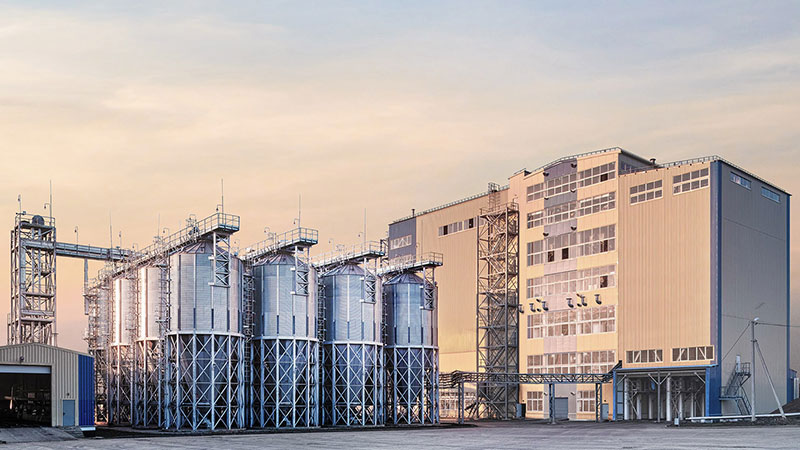
At RICHI, we go beyond project completion. With RICHI Servicee, we’re your dedicated partners in success. Count on us for expert guidance, minimal downtime, and optimized productivity. Choose RICHI for unmatched service and support.
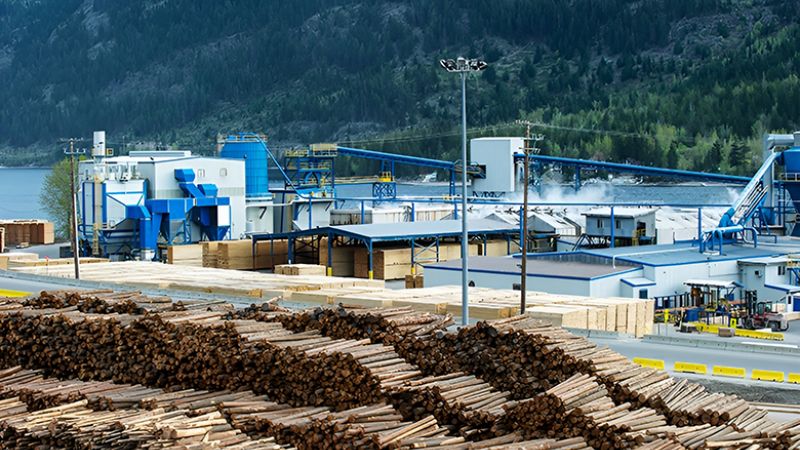


Meet global product demands and quality standards with industry-leading pellet plant design, engineering, equipment, and construction services for pellet processors.


Your Partner Beyond Project Completion
2000+ cases
RICHI is the leading designer, manufacturer and builder of pellet plants in the world, completing over 2000 projects in 140 countries across 6 continents.
Read More
Increase plant productivity, profitability, and safety by integrating high quality equipment into your pellet production line. Over the years, RICHI has become China's top pellet equipment manufacturer. At the same time, RICHI has established valuable partnerships with the world's leading component and raw material manufacturers to bring you the best there is in technology, automation, and efficiency in pelleting plant machinery.

For nearly 30 years, RICHI has been providing best-in-class pellet plant equipment and services to clients across a variety of industries, sizes, and needs. We pride ourselves on the knowledge and skill that each team member possesses – from our technical sales team to our process design engineers. You can count on RICHI Machinery to take your operation to the next level of innovation, quality, and success.
Need help with your pellet manufacturing plant project? Contact us today.
ANIMAL FEED
BIOMASS
WOOD
ORGANIC FERTILIZER
AQUA FEED
CAT LITTER
MUNICIPAL WASTE RECYCLING
SPECIAL PELLET PRODUCTION
RICHI Machinery continues to deliver world class pellet mill equipment, pellet plant engineering and project solutions that add value to our customers in the animal feed, wood waste, agriculture waste, organic fertilizer, cat litter and special pellet products industries. Throughout the years, we RICHI Machinery have built strong brand, becoming industry-leading pellet machine manufacturer. We value integrity, promise quality, and prioritize your success.
Learn MoreWith our expert team, we precisely implement your process engineering requirements in pellet mill and pelletizing plant systems. No matter which industry you’re in – we understand your needs and deliver solutions that meet the highest standards.
At RICHI, quality comes first. Our pellet making machine and related pellet line equipment undergo rigorous quality controls to ensure they meet the highest standards. Rely on products that are durable, safe, and efficient.
With decades of experience in pellet machine and pellet production line production, we have earned a reputation as a trusted partner in various industries. Our expertise allows us to cover a wide range of applications.
Not only do we offer premium pelleting equipment, but we are also experts at designing, building, installing, and maintaining facilities from the ground up. Our expertise is within pellt plant process design, discovering the most efficient, productive, and profitable way to handle your materials in an end-to-end cycle.
○ RICHI MACHINERY
Keeping in touch with us is an effective way to solve all your problems. If you have any needs or questions, please leave your contact information, then RICHI technical consultants will send design, quotation, videos to your mailbox. You can also contact us directly via WhatsApp: +86 13838389622
Copyright©2015-2026 by HENAN RICHI MACHINERY CO., LTD. All rights reserved.