
Discover a shrimp feed fine grinding machine in Honduras for ultrafine grinding of soybean meal, fishmeal, corn and other shrimp feed ingredients. Explore the SWFL90 specifications, 60–300 mesh grinding applications, equipment features and integration into an existing aquafeed production line.
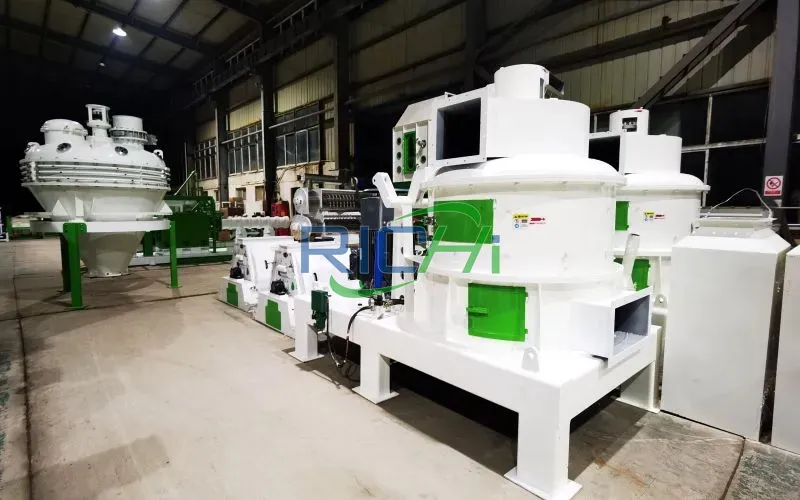
A shrimp feed fine grinding machine in Honduras was selected for an aquafeed manufacturer looking to improve the preparation of fine powder ingredients for commercial shrimp feed. The project involved purchasing one RICHI SWFL90 ultrafine pulverizer to supplement the manufacturer's existing grinding and mixing equipment, rather than replacing the entire production line.
The main objective was to establish a dedicated secondary grinding stage for selected protein meals, soybean meal and cereal ingredients used in shrimp feed formulations. The manufacturer needed better control over fine particle preparation while keeping its existing production arrangements in service. By adding a specialized shrimp feed fine grinding machine, the plant could process ingredients requiring finer specifications separately from materials that only needed conventional grinding, giving the production team greater flexibility when preparing different feed formulations.
Name:
Shrimp Feed Fine Grinder
Country:
Honduras
Date:
2026
Capacity:
1–2 T/H
Model:
SWFL90
Main Motor Power:
90 kW
Classifier wheel motor power:
7.5 kW
Final product size:
80–200 mesh
The customer in this project profile is a medium-sized aquafeed manufacturer serving shrimp farmers and regional feed distributors in Honduras. The country's shrimp farming industry is particularly associated with the Gulf of Fonseca, where commercial shrimp production creates demand for formulated feeds suitable for different stages of shrimp growth.
As the manufacturer's product range expanded, ingredient preparation became an increasingly important part of production planning. Shrimp feed formulations commonly combine protein-rich ingredients, cereal-derived energy sources, plant proteins, oils, minerals and other nutritional additives. These materials do not all have the same physical properties, and their particle sizes can influence mixing uniformity, conditioning behavior and the formation of stable feed pellets.
The existing primary grinding equipment remained useful for reducing ordinary raw materials to a suitable size. However, some ingredients required additional size reduction before entering the mixer. Sending every material through the same grinding route was not the most practical option, particularly when different formulations called for different particle-size specifications.
The customer therefore chose to purchase one ultrafine grinding machine as an independent processing unit. The SWFL90 would handle selected ingredients after primary grinding, while the existing equipment would continue performing its established functions. This approach limited the scope of the investment and allowed the manufacturer to improve a specific processing stage without rebuilding the entire feed mill.
The proposed application focuses on ingredients commonly used in compound shrimp feed, including soybean meal, fishmeal, corn-based ingredients and selected wheat-derived materials. The actual ingredient combination depends on the customer's formula, raw-material purchasing arrangements and the nutritional specifications required for its finished feed.
Soybean meal is an important protein source in many aquafeed formulations. Its grinding characteristics depend on factors such as moisture, residual oil, particle size and the condition of the incoming material. When the formula calls for a finer soybean meal fraction, the material can be pre-ground and then processed through the SWFL90 to achieve the required particle-size specification.
Fishmeal can provide concentrated protein and other nutrients in shrimp feed. Its physical behavior varies with the raw fish, processing method, residual oil and moisture content. Fine grinding may be appropriate when the ingredient specification requires it, but the operating settings should be selected according to the actual fishmeal rather than assumed to be identical to those used for soybean meal.
Corn-based ingredients and wheat-derived materials can also require controlled grinding before mixing. Their role in the formula differs from that of protein meals, and their grinding resistance may vary. A shrimp feed manufacturer should therefore establish the incoming particle-size limits and target fineness separately for each ingredient group.
Before entering the ultrafine pulverizer, raw materials should be inspected and cleaned as appropriate. Oversized material must first pass through the primary grinding stage, while unsuitable foreign objects must be removed. The SWFL90 is intended for secondary fine grinding rather than the direct processing of unprepared bulk raw materials.
One RICHI SWFL90 ultrafine pulverizer was selected for the project. This model is intended for fine grinding applications in which the incoming material has already been reduced to a suitable size. Its configuration provides a dedicated grinding and classification stage for ingredients that require finer powder preparation before they enter the mixing process.
| Technical Parameter | SWFL90 Specification |
|---|---|
| Equipment type | Ultrafine pulverizer for shrimp feed ingredients |
| Main motor power | 90 kW |
| Classifier wheel motor power | 7.5 kW |
| Feeder motor power | 1.5 kW |
| Reference grinding fineness | 80–200 mesh |
| Reference secondary-grinding capacity | 1–2 T/H |
| Reference incoming material condition | Material pre-ground through a 2.0 mm screen |
| Purchase quantity | One machine |
| Installation arrangement | Integration into an existing aquafeed production process |
The reference capacity of 1–2 T/H applies to the specified secondary-grinding condition. It should not be interpreted as a guaranteed output for every raw material or every fineness setting. Actual throughput depends on the material's hardness, moisture, oil content, incoming particle size, target fineness and operating conditions. A raw-material test and technical review are recommended before finalizing the expected production rate.
The 90 kW main motor provides the primary grinding power, while the 7.5 kW classifier wheel motor supports particle classification and the 1.5 kW feeder motor controls material delivery into the grinding chamber. Together, these components form the main drive configuration for the selected machine.
The SWFL90 is positioned after primary size reduction and before ingredient mixing. Incoming soybean meal, fishmeal or cereal ingredients are first checked against the agreed material requirements. Material that is suitable for secondary grinding is then conveyed to the machine at a controlled feed rate.
Inside the grinding chamber, the grinding components reduce the size of the particles. The classifier wheel helps regulate the separation of fine particles from material that requires further processing. This arrangement provides greater control over the resulting powder than a grinding stage that relies solely on a fixed screen opening.
After fine grinding, the material can be transferred to the existing batching and mixing system, provided the downstream conveying equipment and dust collection arrangements are suitable. The resulting powder is then combined with the other ingredients according to the shrimp feed formulation.
The fine-grinding stage is especially relevant when producing feed for smaller shrimp or early growth stages, where particle-size control is important. Nevertheless, grinding fineness alone does not determine pellet quality. Formula composition, mixing uniformity, conditioning, moisture control, pellet formation and water stability all contribute to the performance of the finished shrimp feed.
For this reason, the final grinding specification should be established together with the feed formulation and downstream processing requirements. The aim is to produce a suitable particle-size distribution without consuming unnecessary energy by grinding every ingredient more finely than required.
Fine grinding places considerable demands on components exposed to repeated impact and abrasion. The SWFL series incorporates alloy protection at areas of the hammers subject to greater wear. The wear plates also use an arrangement designed to improve grinding performance while supporting longer component service life.
The grinding ring uses staggered, wave-shaped alloy elements to increase the effective shearing edge length and disrupt the circulation layer inside the grinding chamber. Depending on the application, angled-tooth configurations can be used to improve material discharge. These design features are intended to help the machine process selected feed ingredients efficiently, although the actual result depends on material characteristics and operating settings.
For a shrimp feed manufacturer, wear resistance matters because the machine may process different ingredient batches over an extended production schedule. A practical maintenance plan should track wear-part condition, grinding performance and changes in throughput. Replacement intervals should be based on operating experience and inspection rather than a fixed assumption that every material causes the same degree of wear.
Airflow inside an ultrafine pulverizer influences how material moves through the grinding chamber and how particles reach the classification area. The SWFL design uses a multi-point air inlet arrangement at the bottom of the machine, with the airflow direction aligned with the upward movement of the material. This is intended to support more uniform airflow distribution and improve grinding efficiency.
An automatically adjustable air damper allows the airflow to be regulated according to operating requirements. Together with the classifier wheel, this arrangement helps the operator manage the grinding process and work toward the specified fineness.
The supplied technical information gives a reference fineness range of 80–200 mesh. The broader application description for the SWFL series also identifies fine grinding duties in the 60–300 mesh range, depending on the application and configuration. These figures should not be treated as interchangeable guarantees for every raw material. The required fineness and achievable distribution must be confirmed for the customer's actual ingredients.
For shrimp feed production, a controlled particle-size distribution can support consistent mixing and downstream pellet processing. However, excessively fine grinding may increase energy consumption and should only be adopted where the formulation or production requirements justify it.
The SWFL series Ultrafine Pulverizer incorporates monitoring features intended to help operators observe important machine conditions. These include main-bearing temperature measurement, body vibration detection, classifier wheel speed monitoring and a maintenance-door interlock.
These functions help the production and maintenance teams identify operating conditions that may require attention. Changes in bearing temperature, vibration or classifier speed can indicate that inspection is needed. Monitoring does not eliminate routine maintenance, but it provides additional information for making maintenance decisions.
The rotor assembly is adjusted through a high-precision balancing process. The supplied technical information specifies an overall machine vibration level below 4 mm/s. This is a manufacturer-provided specification; the actual vibration level should be checked during installation and commissioning under the agreed operating conditions.
A heavy-duty frame can be fitted with vibration dampers where appropriate. The machine also features a hydraulic cover-opening arrangement to facilitate inspection and maintenance, together with a compact internal silencer design that helps save installation space.
Because the machine handles fine organic powders, dust management must be considered as part of the installation. The customer should confirm the dust collection system's capacity, the required connection points and the applicable combustible-dust precautions. Proper grounding, housekeeping, electrical protection and safe maintenance practices remain essential to reliable operation.
The customer did not need a complete new shrimp feed production line. The primary grinding, mixing and other existing process stages remained available for use, so replacing them would have increased the scope of the investment without directly addressing the identified requirement.
Adding one SWFL90 allowed the manufacturer to introduce a dedicated ultrafine grinding stage for selected ingredients. It also provided an opportunity to compare the performance of the new process with the previous arrangement using practical production indicators.
These indicators include throughput at the agreed fineness, energy consumption per tonne, particle-size distribution, wear-part life, cleaning time and the behavior of the ground material during mixing and pellet formation. Such measurements provide a sounder basis for evaluating the investment than relying on nominal motor power or a general productivity claim alone.
RICHI Machinery can assist with reviewing the raw materials, incoming particle size, target fineness, expected operating hours and existing plant layout. The assessment should also cover electrical supply, foundation requirements, feeding and discharge arrangements, dust collection and access for maintenance. Checking these interfaces before delivery helps reduce avoidable modifications during installation.
The planned shipment is from Qingdao Port in China to Puerto Cortés, Honduras. The final shipping arrangement should be confirmed against the agreed delivery terms, packing dimensions, gross weight and the freight forwarder's requirements.
Before the equipment arrives, the customer should prepare the installation area, electrical connections, material transfer route and dust collection connections. Sufficient clearance should be provided for opening the machine cover, inspecting the grinding components and replacing wear parts. These preparations help make installation more straightforward and reduce interruptions to the existing production process.
After installation, the most important acceptance step is to evaluate the SWFL90 using representative shrimp feed ingredients. Soybean meal, fishmeal and cereal ingredients may behave differently during grinding, so testing should cover the materials that will actually be processed at the plant.
The operating team should record throughput at the agreed fineness, check the resulting particle-size distribution and observe machine vibration, bearing temperature and discharge performance. The maintenance team should also review access for inspection, cleaning and wear-part replacement.
These results can then be compared with the customer's initial requirements. If a particular ingredient does not achieve the required output or particle-size distribution, the feed rate, operating conditions or raw-material preparation may need to be reviewed before the production settings are finalized.
For this project profile, the key evaluation points are whether the additional grinding stage provides the required fineness, whether it can maintain a stable feed rate and whether the resulting powder integrates consistently with the existing shrimp feed process.
No verified customer quotation or commissioning report has been supplied for this project. Accordingly, no direct testimonial is presented as an authenticated customer statement. Once actual acceptance records and approved customer comments are available, this section can be updated with specific feedback on production performance, operating convenience and maintenance experience.
The shrimp feed fine grinding machine in Honduras represents a targeted equipment investment for an aquafeed manufacturer seeking better control over selected fine ingredients. By installing one SWFL90 after primary grinding, the plant can introduce a dedicated secondary grinding stage while retaining its existing production equipment.
The selected machine has a 90 kW main motor, a 7.5 kW classifier wheel motor and a 1.5 kW feeder motor. Its reference secondary-grinding capacity is 1–2 T/H when processing material pre-ground through a 2.0 mm screen. The final capacity and fineness should be confirmed using the actual raw materials and the required production specification.
For shrimp feed manufacturers considering a similar upgrade, the best starting point is to identify which ingredients require finer grinding, define the incoming particle size and target fineness, and estimate the quantity of material that will pass through the ultrafine grinding stage. RICHI Machinery can then assess the appropriate machine configuration and the interfaces required for integration into the existing plant.
This approach keeps the investment focused on a specific production need and gives the manufacturer a measurable basis for evaluating the machine's long-term value. For a project involving fine shrimp feed ingredients, the right equipment selection begins with the material itself, followed by the required output and the actual conditions of the production line.
Having the right mix of reliable, high-quality pellet machine and pelletizing systems and expert support is essential to your success. Watch how our end-to-end feed pellet plant solutions have helped our customers optimize their performance.
Our customized and future-proofed turnkey pellet plant solutions is designed with you at the core. From vision to reality and beyond, our team stays connected with yours. Giving you peace-of-mind with an expert at your side.
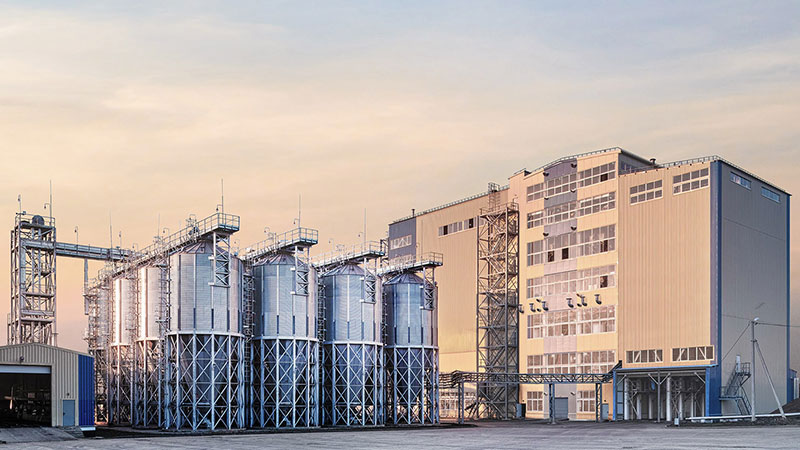
At RICHI, we go beyond project completion. With RICHI Servicee, we’re your dedicated partners in success. Count on us for expert guidance, minimal downtime, and optimized productivity. Choose RICHI for unmatched service and support.
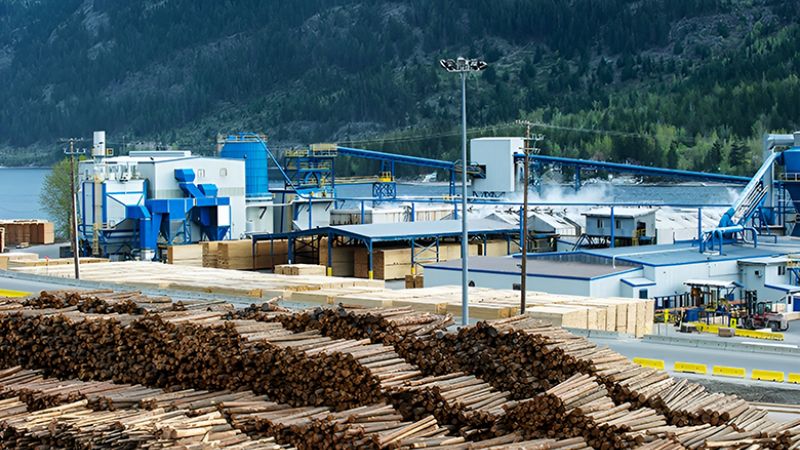


Meet global product demands and quality standards with industry-leading pellet plant design, engineering, equipment, and construction services for pellet processors.


Your Partner Beyond Project Completion
2000+ cases
RICHI is the leading designer, manufacturer and builder of pellet plants in the world, completing over 2000 projects in 140 countries across 6 continents.
Read More
Increase plant productivity, profitability, and safety by integrating high quality equipment into your pellet production line. Over the years, RICHI has become China's top pellet equipment manufacturer. At the same time, RICHI has established valuable partnerships with the world's leading component and raw material manufacturers to bring you the best there is in technology, automation, and efficiency in pelleting plant machinery.

For nearly 30 years, RICHI has been providing best-in-class pellet plant equipment and services to clients across a variety of industries, sizes, and needs. We pride ourselves on the knowledge and skill that each team member possesses – from our technical sales team to our process design engineers. You can count on RICHI Machinery to take your operation to the next level of innovation, quality, and success.
Need help with your pellet manufacturing plant project? Contact us today.
ANIMAL FEED
BIOMASS
WOOD
ORGANIC FERTILIZER
AQUA FEED
CAT LITTER
MUNICIPAL WASTE RECYCLING
SPECIAL PELLET PRODUCTION
RICHI Machinery continues to deliver world class pellet mill equipment, pellet plant engineering and project solutions that add value to our customers in the animal feed, wood waste, agriculture waste, organic fertilizer, cat litter and special pellet products industries. Throughout the years, we RICHI Machinery have built strong brand, becoming industry-leading pellet machine manufacturer. We value integrity, promise quality, and prioritize your success.
Learn MoreWith our expert team, we precisely implement your process engineering requirements in pellet mill and pelletizing plant systems. No matter which industry you’re in – we understand your needs and deliver solutions that meet the highest standards.
At RICHI, quality comes first. Our pellet making machine and related pellet line equipment undergo rigorous quality controls to ensure they meet the highest standards. Rely on products that are durable, safe, and efficient.
With decades of experience in pellet machine and pellet production line production, we have earned a reputation as a trusted partner in various industries. Our expertise allows us to cover a wide range of applications.
Not only do we offer premium pelleting equipment, but we are also experts at designing, building, installing, and maintaining facilities from the ground up. Our expertise is within pellt plant process design, discovering the most efficient, productive, and profitable way to handle your materials in an end-to-end cycle.
○ RICHI MACHINERY
Keeping in touch with us is an effective way to solve all your problems. If you have any needs or questions, please leave your contact information, then RICHI technical consultants will send design, quotation, videos to your mailbox. You can also contact us directly via WhatsApp: +86 13838389622
Copyright©2015-2026 by HENAN RICHI MACHINERY CO., LTD. All rights reserved.