
This is a project about shrimp feed crumbler equipment in Vietnam. The customer runs a feed mill that makes only shrimp feed. No poultry, no pig feed, just shrimp. His main market is small farms in Bac Lieu, Ca Mau, and Soc Trang itself – provinces where shrimp farming is a big deal.
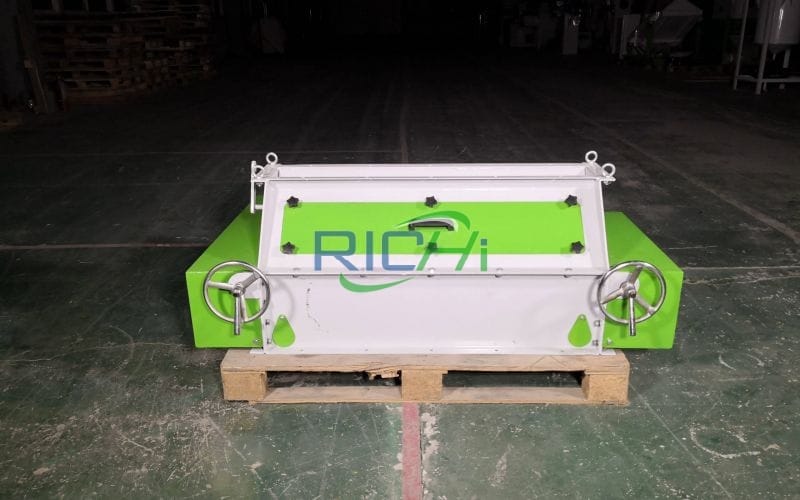
When someone asks me about shrimp feed crumbler equipment in Vietnam, I think of a specific visit I made last year to a feed mill in Soc Trang province. Not a huge factory – medium-sized, maybe 15,000 tons a year of shrimp feed. But the guy running it knew exactly what he wanted. He wasn't guessing.
I'm an application engineer at RICHI. I don't do sales calls normally. But this customer had bought a single crumbler from us – just one machine – and our local agent asked if I could stop by during a trip to Ho Chi Minh City to see how it was running. So I went.
This article is about what I found there. Not a polished case study. Just real observations from a real mill in the Mekong Delta.
Name:
Shrimp Feed Crumbler
Country:
Vietnam
Date:
2025
Capacity:
3 t/h
Model:
SSLG25x140X
Main Motor Power:
11+1.1 KW
Initial pellet size:
2.0mm
Final product size:
0.3-1.2mm
The customer runs a feed mill that makes only shrimp feed. No poultry, no pig feed, just shrimp. His main market is small farms in Bac Lieu, Ca Mau, and Soc Trang itself – provinces where shrimp farming is a big deal.
He's been in business since 2018, started with a small hammer mill and mixer, then added a shrimp feed pellet machine in 2020. By 2023, he had a decent shrimp feed production line: grinder, mixer, twin-screw shrimp fish feed extruder. Shrimp feed is often extruded, not just pelleted, belt dryer, and a coating drum for adding oils and attractants.
But he had a problem with crumbles.
See, shrimp feed comes in different sizes depending on the age of the shrimp. Post-larvae need tiny particles – like dust almost. Juvenile shrimp need 0.5mm to 0.8mm crumbles. Sub-adults can take 1.0mm to 1.2mm. Adults eat whole pellets, usually 1.8mm or 2.0mm.
He had been buying crumbled shrimp feed from a larger mill and repackaging it – not ideal for his margins. He wanted to make his own crumbles. But his extruder made pellets 2.0mm diameter for adults, not crumbles. He needed a machine to break those 2.0mm pellets down into 0.6mm to 1.0mm crumbles for juvenile shrimp.
His first thought was to buy a standard double-roll crumbler. The same kind poultry feed mills use. But I'll explain later why that would have been a mistake.
He didn't need a whole new line. His extruder worked fine. His dryer worked fine. His coating drum worked fine. He even had a screener – a small two-deck unit for grading pellets.
What he needed was one machine that could sit between the dryer and the screener. Pellets come out of the dryer about 8% moisture, 35°C, fall into the crumbler, and come out as crumbles. Then the screener separates fines and oversized pieces.
He considered buying a used crumbler from a poultry feed mill that was shutting down. But those machines have wider roll gaps and coarser teeth. They're designed for 4mm or 5mm broiler pellets, not 2mm shrimp pellets. The crumbles would have been too big and uneven.
So he asked us: What's the right shrimp feed crumbler equipment in Vietnam for a mill my size?
We recommended the SSLG25x140X. That's the X-type – shrimp-specific. Three rolls, not two. Roll diameter 250mm, length 1400mm. Two motors: 11kW for the main rolls, 1.1kW for the feeder roll. The X means finer corrugations, tighter gap range, and a different roll surface finish compared to the standard poultry crumbler.
Vietnam's shrimp feed industry uses a mix of local and imported ingredients. His formula for juvenile feed the crumbles looked roughly like this:
His extruded pellets were 2.0mm diameter, about 8-10mm long. Pretty hard pellets – extrusion cooking gelatinizes the starch and makes them durable. That's good for shipping but harder to crumble.
He wanted crumbles in the 0.6mm to 1.0mm range. Not too many fines below 0.3mm is basically dust and shrimp won't eat it efficiently, and nothing above 1.2mm juvenile shrimp can't handle bigger pieces.
The SSLG25x140X with its fine teeth and three-roll design can produce that size range consistently. The three rolls create a more uniform feed across the roll width compared to two-roll machines – less material going to one side, better wear pattern.
The mill was in an industrial zone outside Soc Trang city. Not fancy. Concrete floor, metal roof, good ventilation because shrimp feed has a strong smell – fish meal and squid meal are pungent.
The crumbler was mounted on a steel platform about 1.5 meters off the ground. Above it, the dryer discharged onto a vibratory conveyor that fed into the crumbler's inlet hopper. Below the crumbler, a chute dropped the crumbles onto a bucket elevator that went up to the screener.
The installation wasn't perfect. I noticed a few things right away.
First, the inlet chute was too steep. The pellets were hitting the back of the chute and bouncing, then falling unevenly into the rolls. That caused uneven wear – the middle of the rolls was doing most of the work. I suggested adding a small deflection plate to spread the material more evenly. He had his local welder make one the next week.
Second, the roll gap was set at 0.7mm. That's fine for 0.8-1.0mm crumbles, but he was also trying to make 0.5mm crumbles for smaller shrimp. The machine can go down to 0.3mm, but he hadn't tried it because he was worried about over-crushing. We adjusted it to 0.5mm on the spot and ran a test. The crumbles came out smaller – maybe 0.6mm average – but fines increased from 8% to 12%. He decided to keep it at 0.7mm for most runs and only go tighter for special orders.
Third, the magnet. He had removed the magnetic plate because he said it was blocking the flow. I explained why that's a bad idea – shrimp feed sometimes has metal fragments from the extruder or dryer. Without the magnet, a small bolt or washer can damage the roll corrugations badly. He put it back in.
He kept a logbook – handwritten, but accurate. Here's what he showed me for the previous month of production about 400 tons of crumbles:
He said his previous method – buying whole pellets and using a hammer mill to break them – gave him about 55% acceptable crumbles and 30% fines. The rest was oversized that he had to run again. So the crumbler roughly doubled his yield of saleable product from the same raw pellets.
He also mentioned something interesting. The shrimp farmers he supplies started giving him feedback. They said the crumbles from his new machine stayed intact longer in the water – didn't break apart as fast as the crumbles he used to sell which he bought from another mill. I think that's because the crumbler doesn't generate as much heat or mechanical stress as a hammer mill. The crumbles keep their structural integrity better.
Let me explain the difference because this is important if you're looking at shrimp feed crumbler equipment in Vietnam or anywhere else.
A standard double-roll crumbler like our SSLG15 or SSLG20 series has two rolls turning toward each other at different speeds. That works fine for poultry feed – 4mm or 5mm pellets, target crumble size 1.5-3mm. The rolls have coarse corrugations, maybe 4-5 teeth per inch.
But shrimp feed pellets are smaller – 1.8mm or 2.0mm. And the target crumble size is much smaller – down to 0.3mm. You need finer teeth on the rolls, maybe 10-12 teeth per inch. You also need a tighter gap control because 0.3mm is very small – a tiny variation in gap size changes the output significantly.
The three-roll design adds a feeding roll. This roll sits above the two main crushing rolls and rotates slowly. It pulls material from the hopper and spreads it evenly across the full width of the crushing rolls. That's critical for shrimp feed because the pellets are small and tend to flow unevenly. With a two-roll machine, you often get more material going down the middle and less at the edges. The three-roll setup eliminates that.
The X-type rolls also have a different surface hardness – slightly higher than standard rolls, because shrimp feed often contains abrasive ingredients like shrimp shell meal. Standard rolls might wear out after 800-1000 tons. The X-type rolls on this customer's machine had done 1,200 tons and still looked good. He estimated they'd last another 800-1000 tons before needing to be reversed or replaced.
The machine shipped from our Qingdao factory in a 40-foot container. Why 40-foot and not 20-foot? The SSLG25x140X is long – 1400mm rolls mean the machine body is about 2.2 meters wide including frames and motors. It barely fit in a 40-footer along with some spare parts.
The vessel went to Cat Lai Port in Ho Chi Minh City. That's the main container port for southern Vietnam. From Qingdao, the sailing time is about 12-14 days – much shorter than shipping to Africa or South America. Vietnam is close. Customs clearance took another 5 days, which is normal. He arranged his own trucking from Cat Lai to Soc Trang – about 230km, maybe 5-6 hours with good roads.
One thing he appreciated: we sent a detailed packing list in Vietnamese as well as English. His customs broker said that saved him a day of translation. Small thing, but it matters.
I wrote down his words in my notebook. He was standing next to the crumbler, wiping dust off the control box. Here's roughly what he said, translated from Vietnamese:
Before I bought this machine, I talked to three other suppliers. One said I should buy a double-roll machine from China – cheaper, but the rolls were too coarse. Another said I needed a full crumbling line with a sifter and return system – too expensive, maybe $25,000 more than I wanted to spend. The third said my extruded pellets were too hard for any crumbler and I should change my formula – which is nonsense because my formula works fine.
Your agent in HCMC listened to what I actually needed. He didn't try to sell me a bigger machine. He asked about my pellet size, my target crumble size, my throughput. Then he recommended this X-type. When it arrived, the installation manual was clear – not perfect English, but clear enough. My guys had it running in two days.
The only problem we had was the V-belts. They stretched after about 100 hours. But your manual said that would happen. We tightened them and it's been fine since. I ordered spare belts with the machine – good thing I did, because the local supplier here doesn't carry that size.
Would I buy another one? Yes. I'm thinking about adding a second line for larger shrimp feed – 2.5mm pellets broken down to 1.2-1.5mm crumbles. For that, I might not need the X-type. Maybe a standard three-roll would work. But for the fine crumbles, the X-type is the right tool.
That last part is important. He's not just saying the machine is good. He's thinking about his next purchase. That's the kind of feedback you want.
After seeing this installation and a few others, I've noticed some patterns. If you're looking at shrimp feed crumbler equipment in Vietnam or anywhere else, avoid these mistakes.
Mistake 1: Using a poultry crumbler for shrimp feed. The roll gap on a standard machine might not go below 0.8mm. Even if it does, the coarse teeth will crush some pellets into dust while leaving others almost whole. You'll get uneven crumbles and too many fines.
Mistake 2: Not sifting after crumbling. You need a screener after the crumbler. Even the best crumbler produces some fines and some oversized pieces. If you don't remove them, your customers the shrimp farmers will complain. This customer uses a simple two-deck screener with 0.3mm and 1.2mm screens. The fines go back to the extruder re-processed into pellets, and the oversized go back to the crumbler.
Mistake 3: Feeding warm pellets. Pellets should be cooled below 40°C before crumbling. Warm pellets are softer and don't break cleanly – they squish and smear, creating more fines and less uniform crumbles. This customer's dryer had a cooling section, but the pellets were sometimes still warm. He added a small holding bin with forced air – a simple fan blowing through a perforated floor – to cool them further before crumbling. That reduced fines by about 3%.
Mistake 4: Ignoring roll wear. The X-type rolls last a long time, but they don't last forever. You should measure the roll gap periodically and check for flat spots or dull corrugations. This customer marks the roll position with paint and checks it every week. He also rotates the rolls flipping them end-for-end after about 800 tons to even out wear.
I'm not going to pretend we're perfect. But for this project, we did a few things that he mentioned specifically.
First, we sent him a sample of the roll corrugation pattern – an actual piece of roll material with the teeth cut into it. He could feel the fineness and compare it to his old hammer mill screen. That physical sample helped him decide.
Second, we provided a list of other shrimp feed mills in Southeast Asia using the same X-type machine. He called a mill in Thailand and talked to their production manager for 20 minutes. That conversation convinced him more than any brochure could.
Third, we included a spare set of roll bearings and seals. Not because we expected them to fail quickly, but because bearings in tropical climates high humidity, sometimes salty air near the coast can corrode faster. He hasn't needed them yet, but he said he sleeps better knowing they're on the shelf.
I can't answer that without knowing your specific situation. But here's how I think about it.
If you're making shrimp feed crumbles from 2mm or smaller pellets, and you need crumbles down to 0.5mm or even 0.3mm, the X-type three-roll machine is probably your best option. It's not the cheapest crumbler on the market – but the cheap ones don't work well for this application.
If you're making larger crumbles 1.2mm to 2.0mm from bigger pellets 3mm or 4mm, a standard three-roll or even a double-roll might be fine. You don't always need the X-type.
The customer in Soc Trang needed the X-type because his target crumble size was small and his pellets were hard. He made the right choice.
If you're reading this and wondering what you need, send me your numbers. Pellet diameter, pellet hardness or just tell me what extruder you're using, target crumble size range, and hourly throughput. I can give you a recommendation. No obligation, no sales pitch. Just an engineer who's seen a few of these installations and knows what works.
You can reach me through the RICHI website (https://www.pellet-richi.com/) or ask for the application engineering team. Mention this article – the one about shrimp feed crumbler equipment in Vietnam – and I'll know what you're talking about.
Having the right mix of reliable, high-quality pellet machine and pelletizing systems and expert support is essential to your success. Watch how our end-to-end feed pellet plant solutions have helped our customers optimize their performance.
Our customized and future-proofed turnkey pellet plant solutions is designed with you at the core. From vision to reality and beyond, our team stays connected with yours. Giving you peace-of-mind with an expert at your side.
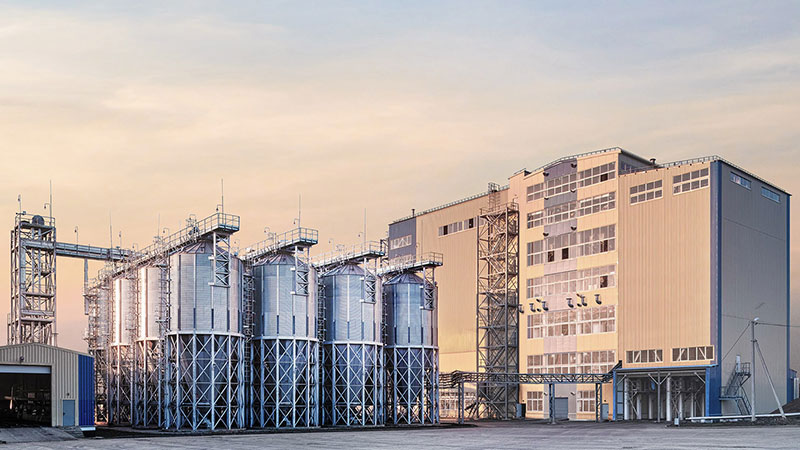
At RICHI, we go beyond project completion. With RICHI Servicee, we’re your dedicated partners in success. Count on us for expert guidance, minimal downtime, and optimized productivity. Choose RICHI for unmatched service and support.
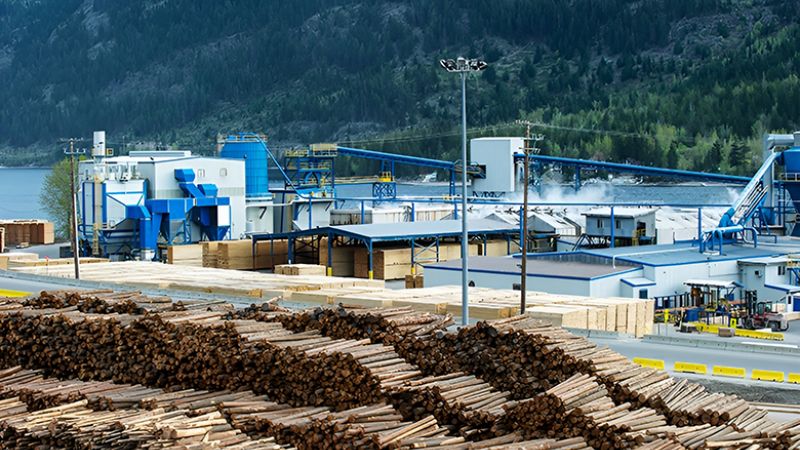


Meet global product demands and quality standards with industry-leading pellet plant design, engineering, equipment, and construction services for pellet processors.

Your Partner Beyond Project Completion
2000+ cases
RICHI is the leading designer, manufacturer and builder of pellet plants in the world, completing over 2000 projects in 140 countries across 6 continents.
Read More
Increase plant productivity, profitability, and safety by integrating high quality equipment into your pellet production line. Over the years, RICHI has become China's top pellet equipment manufacturer. At the same time, RICHI has established valuable partnerships with the world's leading component and raw material manufacturers to bring you the best there is in technology, automation, and efficiency in pelleting plant machinery.

For nearly 30 years, RICHI has been providing best-in-class pellet plant equipment and services to clients across a variety of industries, sizes, and needs. We pride ourselves on the knowledge and skill that each team member possesses – from our technical sales team to our process design engineers. You can count on RICHI Machinery to take your operation to the next level of innovation, quality, and success.
Need help with your pellet manufacturing plant project? Contact us today.
ANIMAL FEED
BIOMASS
WOOD
ORGANIC FERTILIZER
AQUA FEED
CAT LITTER
MUNICIPAL WASTE RECYCLING
SPECIAL PELLET PRODUCTION
RICHI Machinery continues to deliver world class pellet mill equipment, pellet plant engineering and project solutions that add value to our customers in the animal feed, wood waste, agriculture waste, organic fertilizer, cat litter and special pellet products industries. Throughout the years, we RICHI Machinery have built strong brand, becoming industry-leading pellet machine manufacturer. We value integrity, promise quality, and prioritize your success.
Learn MoreWith our expert team, we precisely implement your process engineering requirements in pellet mill and pelletizing plant systems. No matter which industry you’re in – we understand your needs and deliver solutions that meet the highest standards.
At RICHI, quality comes first. Our pellet making machine and related pellet line equipment undergo rigorous quality controls to ensure they meet the highest standards. Rely on products that are durable, safe, and efficient.
With decades of experience in pellet machine and pellet production line production, we have earned a reputation as a trusted partner in various industries. Our expertise allows us to cover a wide range of applications.
Not only do we offer premium pelleting equipment, but we are also experts at designing, building, installing, and maintaining facilities from the ground up. Our expertise is within pellt plant process design, discovering the most efficient, productive, and profitable way to handle your materials in an end-to-end cycle.
○ RICHI MACHINERY
Keeping in touch with us is an effective way to solve all your problems. If you have any needs or questions, please leave your contact information, then RICHI technical consultants will send design, quotation, videos to your mailbox. You can also contact us directly via WhatsApp: +86 13838389622
Copyright©2015-2026 by HENAN RICHI MACHINERY CO., LTD. All rights reserved.