
RICHI supplied an SZLH250 Quail Feed Pellet Machine for Small Poultry Species in Nigeria to produce 2.5–3.0 mm quail feed at about 1.0–1.2 T/H.
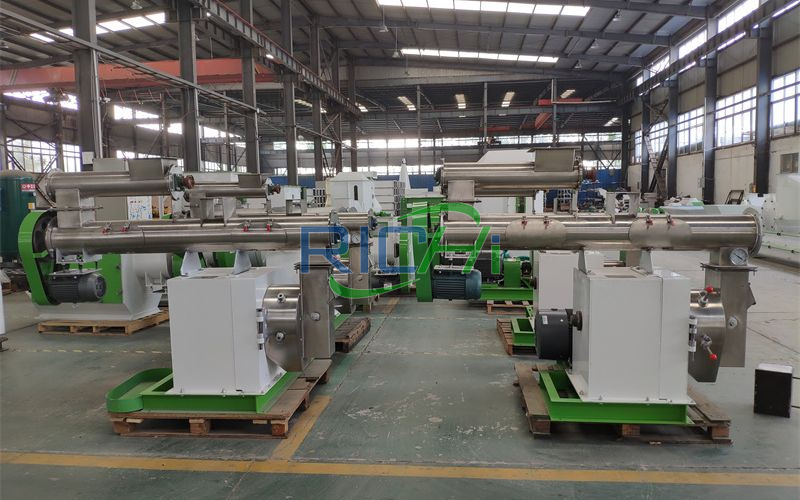
A specialty poultry feed producer in Ogun State selected one RICHI SZLH250 Quail Feed Pellet Machine for Small Poultry Species in Nigeria to add a dedicated pelleting stage to an existing feed-preparation workshop. The business operates its own laying-quail farm and also supplies feed to other small poultry farms in southwestern Nigeria. It already had a hammer mill, ingredient weighing equipment and a small mixer, so the immediate requirement was a ring die pellet mill rather than another complete feed production line.
The SZLH250 uses a 22 kW main motor, 1.1 kW feeder and 1.5 kW conditioner. Its general reference capacity is approximately 1–1.5 T/H, while the customer plans around approximately 1.0–1.2 T/H for the smaller 2.5–3.0 mm quail pellet specification used in this project. Main ingredients are ground to approximately 0.8–2 mm before batching and mixing. The finished commercial product is a small-diameter laying-quail pellet designed for the customer's own birds and regional specialty-feed sales.
Name:
Quail Feed Pellet Machine
Country:
Nigeria
Date:
2026
Capacity:
1–1.5 T/H
Model:
SZLH250
Main Motor Power:
22 kW
Application:
Laying-quail compound feed
Pellet diameter:
2.5–3.0 mm
The customer's own flock does not by itself justify a 1–1.5 T/H commercial ring die machine operating continuously. The equipment selection becomes practical because the farm also manufactures feed for nearby quail producers and maintains production reserve for seasonal orders.
The project targets approximately 1,200 tonnes of quail feed per year. At an actual planning rate of around 1.0–1.2 T/H for small-diameter pellets, this requires roughly 1,000–1,200 effective pelleting hours annually. Across 250 production days, the machine operates around four to five effective hours per day on average.
This gives the customer enough capacity for its own feed program while allowing batch production for outside buyers without forcing a much larger commercial feed line into a relatively specialized market.
| Project Parameter | Specification |
|---|---|
| Equipment | Ring die quail feed pellet machine |
| Model | SZLH250 |
| Main Motor | 22 kW |
| Feeder Motor | 1.1 kW |
| Conditioner Motor | 1.5 kW |
| General Reference Capacity | Approximately 1–1.5 T/H |
| Project Planning Capacity | Approximately 1.0–1.2 T/H |
| Prepared Mash Size | Approximately 0.8–2 mm |
| Project Pellet Diameter | Approximately 2.5–3.0 mm |
| Annual Feed Target | Approximately 1,200 T/Y |
| Required Pelleting Time | Approximately 1,000–1,200 h/year |
| Main Application | Laying-quail compound feed |
The smaller pellet diameter is important when evaluating practical output. A 2.5 mm die generally creates more resistance than a larger poultry-feed die, so the customer does not simply assume that every quail formula will continuously reach the upper 1.5 T/H reference value. Formula composition, oil level, mash moisture, die specification and conditioning all influence actual production.
Quail consume much smaller feed particles than conventional finishing chickens, particularly during early growth. This does not mean every age group should receive one fixed 2.5 mm intact pellet. Starter feed may be produced as a small parent pellet followed by crumbling or otherwise prepared into a particle size that young birds can consume easily.
For the customer's main laying-quail product, the project uses approximately 2.5–3.0 mm pellets. Major cereal and protein ingredients are ground to approximately 0.8–2 mm before mixing so coarse particles do not dominate a very small finished pellet.
Research on quail feed physical form has also used processed feed subsequently reduced to a small particle size acceptable to quail, reinforcing the need to match finished feed form to the bird rather than copying normal broiler pellet dimensions.
The Ogun producer uses ingredients commonly available through the Nigerian poultry-feed market. Maize provides an important energy source, while soybean meal and properly tested groundnut cake can contribute protein. Wheat offal, vegetable oil, limestone, phosphate, salt, amino acids and vitamin-mineral premixes are added according to the nutrient specification of the laying-quail formula.
The plant does not use one permanent recipe such as 45% maize, 25% soybean meal and 10% fishmeal. Ingredient quality and prices change, and laying quail have specific protein, amino-acid, calcium, phosphorus and energy requirements. A feed nutritionist therefore formulates the complete diet before it reaches the poultry feed pellet machine.
The SZLH250 controls feed form. It does not compensate for a formula with incorrect nutrient balance.
One reason the customer moved beyond loosely mixed mash feed was the need to distribute small-dose ingredients consistently. Vitamins, trace minerals, amino acids and other micro-components represent only a small percentage of a batch but can be nutritionally important.
These ingredients are weighed separately and, where necessary, first blended with a suitable carrier before entering the main mixer machine. Major ingredients are then combined until the required mixing uniformity is achieved.
Pelleting can reduce physical segregation after mixing, but it cannot correct poor batching accuracy. If a premix is unevenly distributed before conditioning, pressing the mash through a ring die does not automatically make the formula correct.
The 1.5 kW conditioner introduces steam before the mash reaches the ring die. This changes the physical condition of the feed and helps prepare the mixture for compression through the small die openings.
The project does not use one universal conditioning temperature, moisture level or steam percentage. A 2.5 mm quail feed formula can behave differently from a larger broiler pellet because the die resistance is higher and the formula may contain different levels of oil, minerals and protein meals.
Operators therefore establish the working condition from mash moisture, steam quality, pellet-mill amperage and finished pellet quality rather than using a fixed 80–85°C value for every production batch.
The customer uses approximately 2.5–3.0 mm holes for the main quail product. Hole diameter alone, however, does not define the complete ring die specification. Effective compression length also needs to match the feed formulation and required pellet characteristics.
The project therefore does not assign a permanent 1:10 compression ratio to a 2.5 mm die or promise a fixed die life in operating hours. Small holes can create higher resistance, and actual wear depends on mineral contamination, formula abrasiveness, roller adjustment, production rate and die metallurgy.
When another feed form is required, die selection is reviewed against the actual product rather than assuming that one small-poultry species automatically requires one universal diameter.
Maize, groundnut-derived materials and other protein ingredients are checked before entering production for moisture, mold and storage condition. This matters because poultry-feed raw materials in southwestern Nigeria can face significant mycotoxin risk under poor handling and storage conditions.
The pellet mill is not a substitute for raw-material control. Feed ingredients that fail the customer's acceptance criteria are not made suitable merely by heating and compressing them into pellets.
Sampling and supplier control therefore sit upstream of grinding, mixing and pelleting.
Hot pellets leaving the SZLH250 move into the existing cooling section. After cooling, screening removes excessive fines before the finished feed enters storage or packaging.
This downstream stage is particularly important for small pellets because excessive conveying impact can create fines even when the feed pellet mill initially forms a satisfactory product. The customer therefore checks transfer heights, cooler capacity and screen settings together with the pellet machine.
The complete process is ingredient inspection → grinding to approximately 0.8–2 mm → batching → mixing → steam conditioning → SZLH250 pelletizing → cooling → screening → finished quail-feed handling.
Quail farming has an established, although much smaller, presence within southwestern Nigeria's poultry sector. Research conducted specifically in Ogun State has documented commercial Japanese-quail farmers, while broader surveys across southwestern Nigeria have found quail production focused on egg and table-bird markets.
This makes a specialty feed producer serving a regional quail customer base more realistic than presenting the SZLH250 as equipment purchased solely for a small household flock.
The Quail Feed Pellet Machine for Small Poultry Species in Nigeria is prepared for export from Qingdao, China, with Lagos Port Complex at Apapa used as the container gateway before inland delivery to Ogun State.
Before shipment, RICHI reviews the customer's grinder output, mixer capacity, steam supply, electrical system, mash-bin elevation, cooler throughput and maintenance space. These checks confirm that the existing preparation equipment can support the approximately 1.0–1.2 T/H project operating rate.
This Quail Feed Pellet Machine for Small Poultry Species in Nigeria project uses one RICHI SZLH250 with a 22 kW main motor to produce approximately 2.5–3.0 mm laying-quail pellets in Ogun State. Feed ingredients are ground to approximately 0.8–2 mm before batching and mixing, while the project plans around approximately 1.0–1.2 T/H of small-diameter pellet production.
For another quail or specialty-poultry feed producer, RICHI Machinery needs the bird type and age, annual feed tonnage, formula, ground particle size, required pellet or crumble form, daily operating hours, steam availability and capacities of the existing grinder, mixer and cooler. These parameters determine whether an SZLH250 is justified or whether a smaller production system would be more economical.
Having the right mix of reliable, high-quality pellet machine and pelletizing systems and expert support is essential to your success. Watch how our end-to-end feed pellet plant solutions have helped our customers optimize their performance.
Our customized and future-proofed turnkey pellet plant solutions is designed with you at the core. From vision to reality and beyond, our team stays connected with yours. Giving you peace-of-mind with an expert at your side.
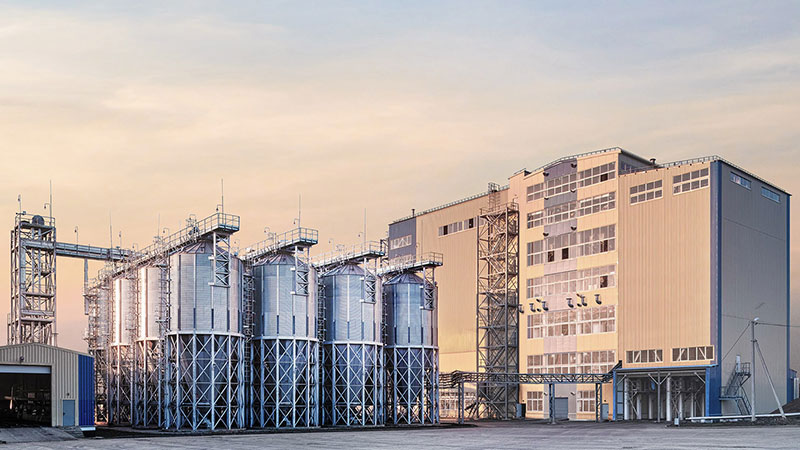
At RICHI, we go beyond project completion. With RICHI Servicee, we’re your dedicated partners in success. Count on us for expert guidance, minimal downtime, and optimized productivity. Choose RICHI for unmatched service and support.
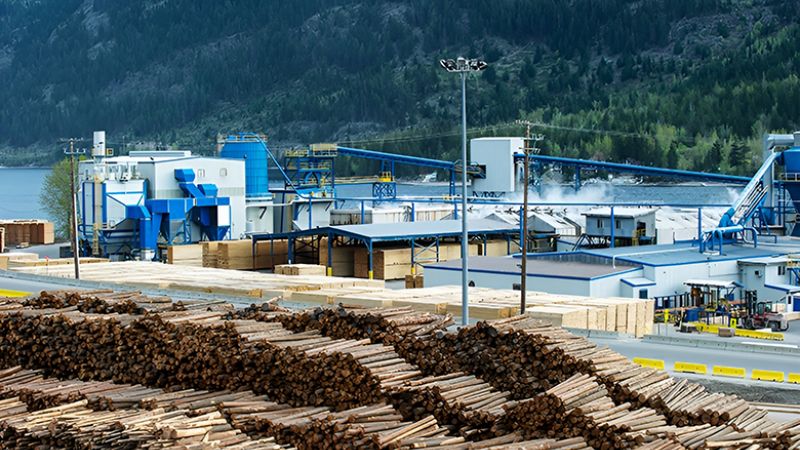


Meet global product demands and quality standards with industry-leading pellet plant design, engineering, equipment, and construction services for pellet processors.


Your Partner Beyond Project Completion
2000+ cases
RICHI is the leading designer, manufacturer and builder of pellet plants in the world, completing over 2000 projects in 140 countries across 6 continents.
Read More
Increase plant productivity, profitability, and safety by integrating high quality equipment into your pellet production line. Over the years, RICHI has become China's top pellet equipment manufacturer. At the same time, RICHI has established valuable partnerships with the world's leading component and raw material manufacturers to bring you the best there is in technology, automation, and efficiency in pelleting plant machinery.

For nearly 30 years, RICHI has been providing best-in-class pellet plant equipment and services to clients across a variety of industries, sizes, and needs. We pride ourselves on the knowledge and skill that each team member possesses – from our technical sales team to our process design engineers. You can count on RICHI Machinery to take your operation to the next level of innovation, quality, and success.
Need help with your pellet manufacturing plant project? Contact us today.
ANIMAL FEED
BIOMASS
WOOD
ORGANIC FERTILIZER
AQUA FEED
CAT LITTER
MUNICIPAL WASTE RECYCLING
SPECIAL PELLET PRODUCTION
RICHI Machinery continues to deliver world class pellet mill equipment, pellet plant engineering and project solutions that add value to our customers in the animal feed, wood waste, agriculture waste, organic fertilizer, cat litter and special pellet products industries. Throughout the years, we RICHI Machinery have built strong brand, becoming industry-leading pellet machine manufacturer. We value integrity, promise quality, and prioritize your success.
Learn MoreWith our expert team, we precisely implement your process engineering requirements in pellet mill and pelletizing plant systems. No matter which industry you’re in – we understand your needs and deliver solutions that meet the highest standards.
At RICHI, quality comes first. Our pellet making machine and related pellet line equipment undergo rigorous quality controls to ensure they meet the highest standards. Rely on products that are durable, safe, and efficient.
With decades of experience in pellet machine and pellet production line production, we have earned a reputation as a trusted partner in various industries. Our expertise allows us to cover a wide range of applications.
Not only do we offer premium pelleting equipment, but we are also experts at designing, building, installing, and maintaining facilities from the ground up. Our expertise is within pellt plant process design, discovering the most efficient, productive, and profitable way to handle your materials in an end-to-end cycle.
○ RICHI MACHINERY
Keeping in touch with us is an effective way to solve all your problems. If you have any needs or questions, please leave your contact information, then RICHI technical consultants will send design, quotation, videos to your mailbox. You can also contact us directly via WhatsApp: +86 13838389622
Copyright©2015-2026 by HENAN RICHI MACHINERY CO., LTD. All rights reserved.