
Poultry pellet mill for sustainable feed production in Uganda, processing local maize, rice bran, sunflower cake and cassava into poultry feed pellets.
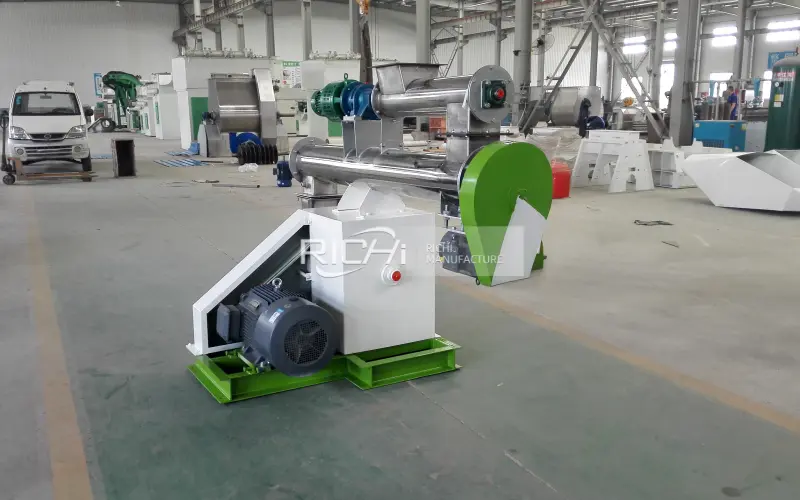
For a poultry farming cooperative in Mukono District, east of Kampala, the cost of buying commercial feed had become a growing concern. Its 200 member farms each kept approximately 100–500 birds, creating a shared demand for affordable broiler and layer feed. Maize, rice bran, sunflower cake and cassava were available through local agricultural supply networks, yet the cooperative had limited control over how these ingredients were processed into finished feed.
The cooperative had already acquired a 22 kW hammer mill and a 250 kg vertical mixer through a development grant. Grinding and mixing were possible, but the absence of a pelletizing machine prevented members from producing their own uniform pellets. Rather than purchase an entire feed production line, the cooperative added one SZLH250 ring die pellet mill. The equipment provided a practical starting point for local feed manufacturing, with the option to increase capacity if more farmers joined the program.
Name:
Poultry Pellet Mill
Country:
Uganda
Date:
2026
Capacity:
1–1.5 T/H
Model:
SZLH250
Main Motor Power:
22 kW
Ring die:
Pelletizing system
Pellet diameter:
3-4mm
The project was designed around the cooperative's existing equipment and locally available ingredients. Members supplied maize from their farms, while rice bran came from nearby rice mills and sunflower cake from local oil processors. Cassava flour provided another locally sourced energy ingredient. Fishmeal, prepared from suitable small fish sourced through Lake Victoria's fish supply chain, supplied additional protein when available and economically viable.
This sourcing strategy reduced dependence on purchasing complete commercial feed, although actual savings depended on ingredient prices, processing losses, labor and electricity costs. The cooperative's longer-term objective was to coordinate ingredient purchasing, standardize feed preparation and distribute finished feed among member farms.
The first installation focused on broiler starter, broiler finisher and layer pellets. These products have different particle-size and nutritional requirements, so the production team needed interchangeable dies and a process that could accommodate changes in formulation without rebuilding the facility.
The SZLH250 poultry feed pellet machine was selected for its suitability for relatively small-scale compound feed production. Its 22 kW main motor matched the cooperative's planned production level, while the ring die design allowed the team to manufacture several pellet sizes using the same machine.
| Parameter | Specification |
|---|---|
| Model | SZLH250 |
| Main motor power | 22 kW |
| Pelletizing system | Ring die |
| Rated production capacity | 1–1.5 T/H |
| Broiler starter die | 3 mm |
| Broiler finisher die | 3.5 mm |
| Layer feed die | 4 mm |
| Primary application | Compound poultry feed |
Actual output depends on formulation, grinding fineness, conditioning, die compression ratio and operating conditions. The rated capacity should therefore be treated as a selection reference rather than a guaranteed production rate for every feed type.
The cooperative developed separate trial formulations for different poultry groups. The following examples illustrate how locally available ingredients could be combined; final recipes require nutritional analysis and adjustment by a qualified poultry nutritionist.
This example emphasizes maize for energy, with sunflower cake, fishmeal and soybean meal contributing protein. The cooperative adjusts ingredient availability and nutrient balance before producing each batch. Starter feed requires particular attention to protein quality, amino acids, minerals and the physical form that young chicks can consume readily.
The layer formulation includes limestone as a major calcium source. Its final calcium concentration, available phosphorus, amino acid profile and energy level must be verified rather than inferred from the ingredient percentages alone. Ingredient quality can vary between suppliers, especially for rice bran and sunflower cake, so batch inspection is important for maintaining consistent feed quality.
The cooperative purchased three ring dies to produce different pellet diameters. The 3 mm die was assigned to broiler starter feed, the 3.5 mm die to broiler finisher feed and the 4 mm die to layer feed. These sizes gave the production team a straightforward way to organize its initial product range.
The trial operating settings varied with the formulation and die:
| Feed type | Pellet diameter | Indicative production rate | Conditioning temperature |
|---|---|---|---|
| Broiler starter | 3 mm | 0.8–1 T/H | 80–85°C |
| Broiler finisher | 3.5 mm | 0.9–1.1 T/H | 75–80°C |
| Layer feed | 4 mm | 1–1.2 T/H | 70–75°C |
These figures are initial operating targets, not universal settings. The appropriate conditioning temperature and production rate depend on ingredient composition, moisture, steam quality and the die being used. Operators need to assess pellet durability and fines after each trial before fixing the production settings.
One feature of the project was the use of a biomass-fired boiler intended to burn suitable rice husks and sunflower husks. Instead of relying exclusively on conventional fuel for steam generation, the cooperative could make use of locally available agricultural byproducts where their moisture content and combustion characteristics were appropriate.
The boiler supplied process steam for feed conditioning. Steam helps soften ingredients and improve pellet formation before the mash passes through the ring die. Its performance depends on fuel preparation, boiler control and the consistency of the steam supplied to the conditioner.
During initial operation, the cooperative found that wet rice husks made stable steam production more difficult. Adjusting fuel preparation and maintaining a more consistent fuel condition helped improve boiler operation. This experience reinforced the importance of treating the boiler and pellet mill as connected but separate parts of the process.
Biomass steam generation does not itself power the 22 kW feed pellet machine motor. The mill still requires a suitable electrical supply, with any solar or backup-generation arrangement designed to meet the motor's starting and running requirements.
The new pellet mill was added after the cooperative's hammer mill and mixer. Maize and other dry ingredients are first ground to the required fineness, weighed according to the selected formulation and mixed into a uniform mash. The prepared material then passes through conditioning and pelletizing.
After leaving the die, hot pellets need to be cooled before storage or bagging. Screening removes loose fines, which can be returned to the process where appropriate. This sequence allows the cooperative to use its existing grinding and mixing equipment while adding the missing pellet-forming stage.
Before installation, the site team needed to check the foundation, electrical supply, feed inlet, discharge arrangement and space for die changes and maintenance. Dust extraction and safe handling of fine grain ingredients were also important considerations in the small-scale facility.
During its first year, the cooperative operated the pellet mill for approximately four hours per day, five days per week, accumulating around 1,000 operating hours. This schedule allowed production to follow the availability of ingredients and the feed requirements of participating farms.
At a practical average throughput of approximately 1–1.2 T/H, that operating schedule corresponds to roughly 1,000–1,200 tons of finished feed annually before accounting for downtime and production losses. The cooperative's wider demand was higher, so the first phase focused on establishing a reliable local production routine rather than attempting to serve every member's requirements immediately.
The manager reported that the 3 mm starter die remained in service after producing approximately 500 tons, while the 4 mm layer die had processed around 600 tons. Die life varies with ingredient abrasiveness, operating practices, maintenance and the condition of the material entering the machine; these figures describe the cooperative's reported experience rather than a guaranteed service interval.
“The pellet mill has given our cooperative more control over feed preparation. We can use ingredients sourced by our members and produce different pellet sizes for broilers and layers. We also learned that consistent raw materials and steady steam supply are essential to obtaining durable pellets. Our next priority is to increase production so that we can serve more farmers.”
The SZLH250 was shipped from Qingdao, China, to the Port of Mombasa in Kenya. From there, the equipment travelled overland to the Mukono area through established freight routes serving Kampala and central Uganda.
Because Uganda is landlocked, delivery planning needed to account for port handling, customs clearance, inland transport and safe unloading at the cooperative's facility. Before shipment, the installation team prepared the site and reviewed the electrical and mechanical requirements. Remote commissioning guidance helped the operators check the machine and begin trial production with the available feed ingredients.
The Mukono project illustrates the value of upgrading one production stage at a time. A cooperative does not necessarily need to purchase every machine at the beginning of a feed manufacturing project. Where grinding, mixing and ingredient handling are already available, a suitably sized poultry feed pellet mill can provide the next step toward local feed production.
However, the economic result depends on more than pelletizing capacity. Buyers need to compare local ingredient prices with the cost of commercial feed, account for grinding and mixing losses, include electricity and boiler fuel, and consider labor, packaging, maintenance and storage. Ingredient testing and appropriate feed formulation remain essential if locally produced feed is to meet the nutritional requirements of different poultry groups.
For this cooperative, the SZLH250 established a practical foundation for producing broiler and layer feed with locally available resources. A second machine could be considered when demand, ingredient supply and the performance of the first installation justify the additional investment.
This poultry pellet mill for sustainable feed production in Uganda was selected to complement existing equipment rather than replace an entire feed preparation system. By adding the SZLH250, the Mukono cooperative gained the ability to turn locally sourced ingredients into several types of poultry pellets while developing its own operating experience with grinding, conditioning and die selection.
For Ugandan poultry cooperatives, small commercial feed mills and farmer groups considering a similar investment, the starting point is to establish realistic daily feed demand, identify reliable local ingredients and confirm that the grinder, mixer, boiler, pellet mill and cooling arrangements can work together.
RICHI Machinery supplies pelletizing equipment for poultry feed production. The appropriate machine configuration should be selected according to the target output, formulation, pellet diameter, available utilities and the equipment already installed at the site.
Having the right mix of reliable, high-quality pellet machine and pelletizing systems and expert support is essential to your success. Watch how our end-to-end feed pellet plant solutions have helped our customers optimize their performance.
Our customized and future-proofed turnkey pellet plant solutions is designed with you at the core. From vision to reality and beyond, our team stays connected with yours. Giving you peace-of-mind with an expert at your side.
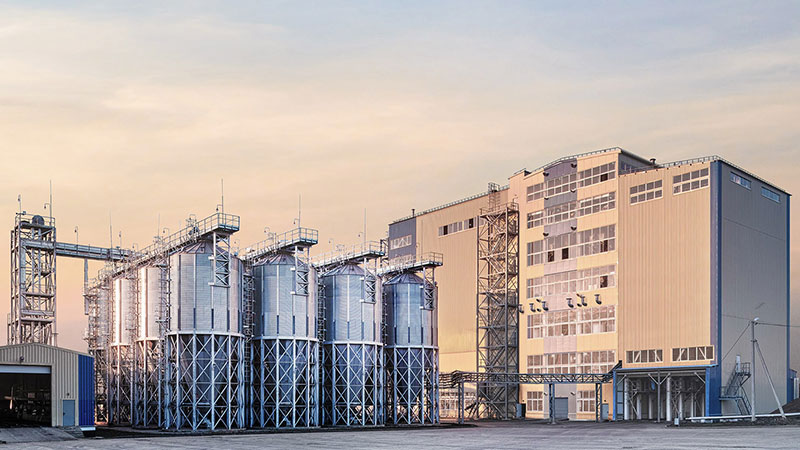
At RICHI, we go beyond project completion. With RICHI Servicee, we’re your dedicated partners in success. Count on us for expert guidance, minimal downtime, and optimized productivity. Choose RICHI for unmatched service and support.
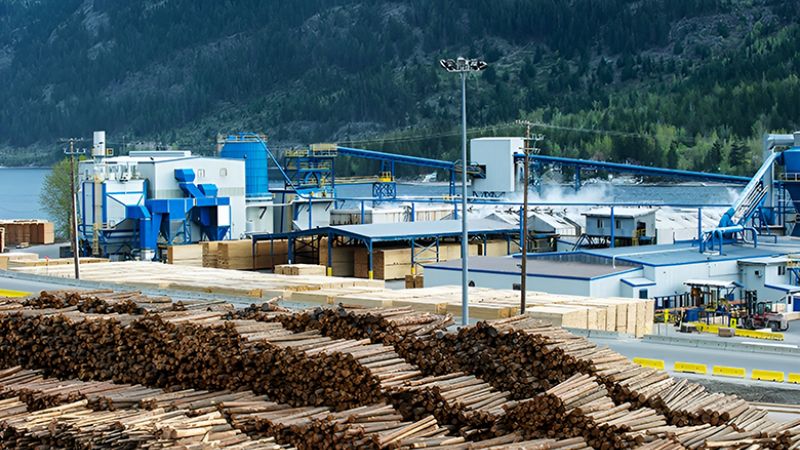


Meet global product demands and quality standards with industry-leading pellet plant design, engineering, equipment, and construction services for pellet processors.


Your Partner Beyond Project Completion
2000+ cases
RICHI is the leading designer, manufacturer and builder of pellet plants in the world, completing over 2000 projects in 140 countries across 6 continents.
Read More
Increase plant productivity, profitability, and safety by integrating high quality equipment into your pellet production line. Over the years, RICHI has become China's top pellet equipment manufacturer. At the same time, RICHI has established valuable partnerships with the world's leading component and raw material manufacturers to bring you the best there is in technology, automation, and efficiency in pelleting plant machinery.

For nearly 30 years, RICHI has been providing best-in-class pellet plant equipment and services to clients across a variety of industries, sizes, and needs. We pride ourselves on the knowledge and skill that each team member possesses – from our technical sales team to our process design engineers. You can count on RICHI Machinery to take your operation to the next level of innovation, quality, and success.
Need help with your pellet manufacturing plant project? Contact us today.
ANIMAL FEED
BIOMASS
WOOD
ORGANIC FERTILIZER
AQUA FEED
CAT LITTER
MUNICIPAL WASTE RECYCLING
SPECIAL PELLET PRODUCTION
RICHI Machinery continues to deliver world class pellet mill equipment, pellet plant engineering and project solutions that add value to our customers in the animal feed, wood waste, agriculture waste, organic fertilizer, cat litter and special pellet products industries. Throughout the years, we RICHI Machinery have built strong brand, becoming industry-leading pellet machine manufacturer. We value integrity, promise quality, and prioritize your success.
Learn MoreWith our expert team, we precisely implement your process engineering requirements in pellet mill and pelletizing plant systems. No matter which industry you’re in – we understand your needs and deliver solutions that meet the highest standards.
At RICHI, quality comes first. Our pellet making machine and related pellet line equipment undergo rigorous quality controls to ensure they meet the highest standards. Rely on products that are durable, safe, and efficient.
With decades of experience in pellet machine and pellet production line production, we have earned a reputation as a trusted partner in various industries. Our expertise allows us to cover a wide range of applications.
Not only do we offer premium pelleting equipment, but we are also experts at designing, building, installing, and maintaining facilities from the ground up. Our expertise is within pellt plant process design, discovering the most efficient, productive, and profitable way to handle your materials in an end-to-end cycle.
○ RICHI MACHINERY
Keeping in touch with us is an effective way to solve all your problems. If you have any needs or questions, please leave your contact information, then RICHI technical consultants will send design, quotation, videos to your mailbox. You can also contact us directly via WhatsApp: +86 13838389622
Copyright©2015-2026 by HENAN RICHI MACHINERY CO., LTD. All rights reserved.