
Plant Fiber Cat Litter Pellet Machine in Colombia for mixed agricultural fibers, featuring a 37 kW MSZLH320, 4–6 mm pellets and flexible production capacity.
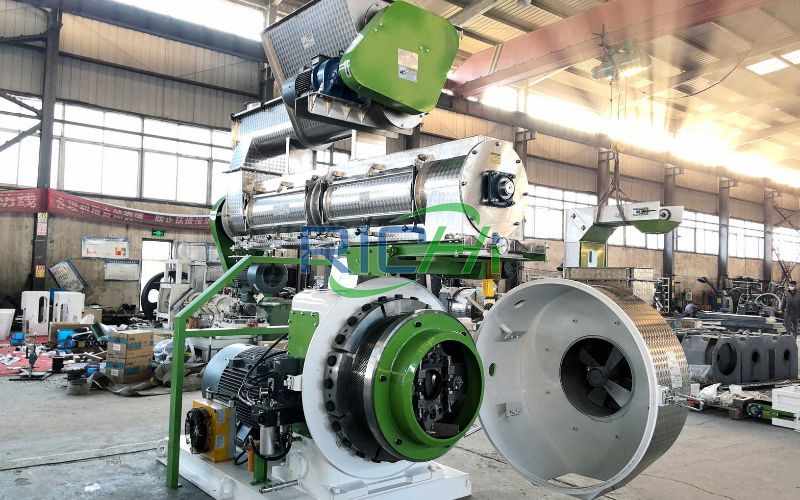
A pet product supplier in central Colombia decided to enter the biodegradable cat litter market by converting locally available agricultural residues into commercial pellet products. The company had previously focused on collecting and handling agricultural byproducts for composting and biomass applications.
As it explored opportunities in the domestic pet care market, the management team identified plant fiber cat litter as a potential way to create higher-value products from materials that were otherwise sold at relatively low prices.
Rather than investing in a complete cat litter factory immediately, the customer chose a phased approach. It purchased a customized ring die plant fiber cat litter pellet machine from RICHI Machinery to serve as the core of a pilot production operation.
The project was designed around mixed agricultural fibers, including rice husks, sugarcane bagasse and corn stalks, with additional ingredients used to improve binding and absorption. The initial objective was to establish a repeatable pelletizing process, test different retail product formulations and build a foundation for future capacity expansion.
Name:
Plant Fiber Cat Litter Pellet Machine
Country:
Colombia
Date:
2026
Capacity:
3–4 T/H
Model:
MSZLH320
Power:
37 kW
Raw Materials:
Mixed plant fiber
Pellet diameter:
4 & 6mm
The customer already had several auxiliary machines and did not need a complete production line from RICHI. The main requirement was a pelletizing unit capable of handling variations in fiber composition while producing reasonably uniform pellets for retail packaging.
| Project Item | Specification |
|---|---|
| Project location | Central Colombia |
| Equipment supplied | Plant fiber cat litter pellet machine |
| Model | MSZLH320 |
| Main motor power | 37 kW |
| Ring die diameter | 320 mm |
| Rated capacity | 3–4 T/H |
| Target pellet diameters | 4 mm and 6 mm |
| Primary application | Mixed plant fiber cat litter production |
| Supply scope | Single pelletizing machine with customized configuration |
The MSZLH320 was selected to balance production capacity with the customer's initial investment and future expansion plans. Its nominal capacity provides a reference for equipment selection, while actual output depends on fiber characteristics, formulation, moisture, die specifications and the required pellet quality. Production trials are therefore important before establishing commercial output targets.
Colombia has established agricultural and food-processing industries that generate a variety of fibrous byproducts. For businesses already involved in residue collection, these materials can offer an alternative feedstock for non-food products when their properties and processing costs are suitable.
The customer saw an opportunity to develop a plant-based cat litter range for pet shops, supermarkets and online retailers serving urban markets such as Bogotá, Medellín and Cali. The proposed products were intended to compete in the lightweight, plant-based litter segment rather than directly replicate the characteristics of conventional bentonite litter.
Several commercial considerations influenced the project:
The project was not simply a matter of compressing waste into pellets. The finished product needed sufficient mechanical strength for handling, an acceptable level of dust, appropriate water absorption and consistent dimensions. These properties depend on the complete formulation and processing route, not on the pellet machine alone.
The proposed formula combined several plant-derived materials with different physical characteristics. Some fibers are relatively coarse and difficult to feed uniformly, while others are abrasive or require additional preparation to achieve suitable binding and absorption.
| Raw Material | Processing Consideration | Role in the Cat Litter Formula |
|---|---|---|
| Rice husk powder | Requires controlled grinding and attention to abrasive wear because of its silica content. | Provides a locally available fibrous component. |
| Sugarcane bagasse | Long fibers require size reduction and uniform feeding; wet material may need dewatering or drying. | Supplies plant fiber for the pellet structure. |
| Corn stalk powder | Requires chopping, grinding and moisture adjustment according to its incoming condition. | Provides an additional agricultural fiber source. |
| Cassava starch | Inclusion and conditioning must be tested to establish suitable binding performance. | Acts as a natural binder in the proposed formulation. |
| Recycled paper fiber | Fiber size and moisture must be controlled to prevent inconsistent mixing and feeding. | Was included to help adjust water absorption. |
| Natural deodorizing mineral additives | Particle size, compatibility and uniform distribution require evaluation. | Supports the intended product functionality. |
The customer tested several combinations before selecting a working formula. The objective was to balance pellet strength, absorption, dust generation and biodegradability without making the pellets so dense that they performed poorly during use.
The planned moisture content of the prepared mixture entering the pelletizing stage was approximately 14–18%. This is a project-specific starting range, not a universal setting for all plant fiber cat litter. The correct value must be established through trials using the actual blend, binder and ring die. Excess moisture can affect pellet strength and finished-product stability, while insufficient moisture may increase friction, impair binding or reduce throughput.
Fiber length also matters. Oversized particles can interfere with uniform feeding and pellet formation, while excessive grinding can increase power consumption and produce unnecessary fines. For this reason, the customer's existing grinding equipment remained an important part of the overall process.
The customer had already invested in several auxiliary machines through local suppliers. Its main equipment gap was the pelletizing section, so replacing the entire preparation and packaging system would have increased the initial investment without directly addressing the most important production requirement.
The equipment already available at the site included:
RICHI supplied the MSZLH320 pellet machine as the core forming unit. This arrangement allowed the customer to retain its existing equipment while focusing the imported machinery investment on pellet quality and production stability.
For a phased project of this type, compatibility must be checked before installation. The grinding and mixing equipment must deliver a consistent feed to the pelletizer, and the downstream cooling, screening and packaging stages must be able to handle its actual output. Otherwise, a higher-capacity pellet mill may simply transfer the production bottleneck to another part of the process.
The production arrangement was developed around the MSZLH320 and the customer's existing auxiliary equipment. The workflow needs to accommodate differences in incoming moisture, fiber length and material flow characteristics.
During initial production, the customer also identified a need for better dust management around the grinding area. A dust collection system was subsequently added to improve housekeeping and reduce airborne particles. Appropriate extraction, filtration and combustible-dust risk controls should be selected according to the actual material properties and plant layout.
The customer planned to sell two main pellet sizes. The smaller format was intended for lightweight premium products, while the larger format offered another option for retail testing.
| Product Specification | 4 mm Pellets | 6 mm Pellets |
|---|---|---|
| Intended application | Smaller-format cat litter products | Standard-size plant fiber litter products |
| Ring die configuration | Dedicated 4 mm die | Dedicated 6 mm die |
| Main quality checks | Pellet uniformity, fines, strength and absorption | Pellet uniformity, fines, strength and absorption |
| Production considerations | Fine particle preparation and stable feeding | Fiber flow, compression and consistent pellet dimensions |
Changing pellet diameter requires the appropriate ring die and a corresponding review of operating conditions. The final pellet size alone does not determine product performance. Compression ratio, fiber composition, binder concentration, conditioning moisture and cooling conditions all influence the finished litter.
The customer therefore approached the two sizes as separate product specifications rather than assuming that one set of settings would deliver identical results across both formulations.
Rice husks, sugarcane bagasse and corn stalks do not behave identically during pelletizing. The machine configuration needed to account for their differences in abrasiveness, fiber length, bulk density and feeding behavior.
The ring die configuration was selected for the mixed plant fiber application rather than copied directly from a wood pellet or animal feed specification. Die-hole geometry and compression ratio influence throughput, pellet density, mechanical strength and the load imposed on the machine. These parameters should be validated against the actual formula instead of assuming that a single ratio suits every agricultural residue.
Long or irregular plant fibers can bridge inside hoppers and create uneven material flow. The feeding arrangement therefore needs to accommodate the prepared mixture and deliver it consistently to the conditioning and pelletizing sections. Uniform upstream grinding and mixing remain important even when the pelletizer includes an improved feeding structure.
Rice husks contain silica, which can contribute to wear on surfaces exposed to repeated material contact. The machine was configured with additional wear protection in key contact areas. Maintenance intervals should still be based on inspection and actual operating hours, since wear rates vary with raw material composition and contamination.
Excessive fines can reduce packaging efficiency and affect the appearance of the retail product. The pelletizing process, cooling conditions and screening setup must work together to limit breakage. Pellet durability should be measured during trials and after transport rather than judged solely by surface appearance.
During follow-up after commissioning, the customer reported that the MSZLH320 produced a more consistent pellet appearance than the flat die equipment it had previously evaluated. The smoother pellet surface was particularly useful for the company's retail packaging plans, where visible differences between batches could affect product presentation.
The customer also reported that the reinforced wear protection helped maintain operating stability when processing rice husk-containing blends. The ability to use different ring die configurations supported product testing without requiring a completely different pelletizing machine for each target diameter.
These observations were useful for the customer's next stage of development, but they do not establish a universal capacity or durability guarantee. Final performance still depends on the selected formula, raw material preparation, maintenance practices and the required finished-product specifications.
Although this project focused on cat litter, some of the same agricultural residues can be considered for other products when the required material properties and equipment configuration are suitable.
| Material | Potential Alternative Application | Important Consideration |
|---|---|---|
| Sugarcane bagasse | Biomass fuel pellets | Moisture, ash content and fuel specifications must be evaluated. |
| Corn stalks | Organic fertilizer products | Pelletizing requirements depend on the complete fertilizer formulation. |
| Rice husk fiber | Industrial absorbent products | Absorption capacity and abrasive characteristics require testing. |
| Recycled paper fiber | Animal bedding pellets | Cleanliness, absorbency and end-use safety requirements must be met. |
| Mixed agricultural fibers | Selected composting and soil-amendment applications | Feedstock suitability and the intended end use must be verified. |
These are alternative application possibilities, not products that can automatically be manufactured to specification with an unchanged setup. Fuel pellets, fertilizer products, absorbents and cat litter have different performance requirements and may need different dies, formulations or auxiliary equipment.
The MSZLH320 and its associated components were arranged for sea freight from Qingdao, China, to the Port of Cartagena, Colombia. Reinforced wooden packaging was specified for the shipment, which included spare rollers, ring dies and electrical control components.
Because the customer was entering a new product category, pre-sale and commissioning support focused on practical operating requirements rather than simply supplying the machine.
The customer retained its existing auxiliary equipment and planned additional production space for future growth. This staged investment approach allowed the business to evaluate product quality, production costs and market acceptance before deciding whether to expand the pelletizing section.
For Colombian agricultural processors considering plant fiber cat litter, the most important early decision is whether locally available residues can consistently meet the requirements of a saleable litter product. Abundant raw materials alone do not guarantee an economical project. Collection costs, seasonal availability, moisture, grinding energy, binder requirements, wear parts and finished-product packaging all influence the final production cost.
A practical equipment evaluation should address the following points before a machine is selected:
The Plant Fiber Cat Litter Pellet Machine in Colombia project demonstrates how a single ring die pelletizing unit can form the core of a phased investment in agricultural residue utilization. By combining the MSZLH320 with existing preparation and packaging equipment, the customer established a starting point for developing plant-based cat litter products while retaining flexibility for future adjustments.
RICHI Machinery supplies cat litter pelletizing equipment and customized configurations for different raw materials and product specifications. If you are evaluating rice husks, sugarcane bagasse, corn stalks, recycled paper fiber or other suitable plant-based materials, share your raw material conditions, target pellet size and required capacity with our technical team. These details provide the basis for assessing equipment configuration, process requirements and the next steps toward a commercially viable cat litter production project.
Having the right mix of reliable, high-quality pellet machine and pelletizing systems and expert support is essential to your success. Watch how our end-to-end feed pellet plant solutions have helped our customers optimize their performance.
Our customized and future-proofed turnkey pellet plant solutions is designed with you at the core. From vision to reality and beyond, our team stays connected with yours. Giving you peace-of-mind with an expert at your side.
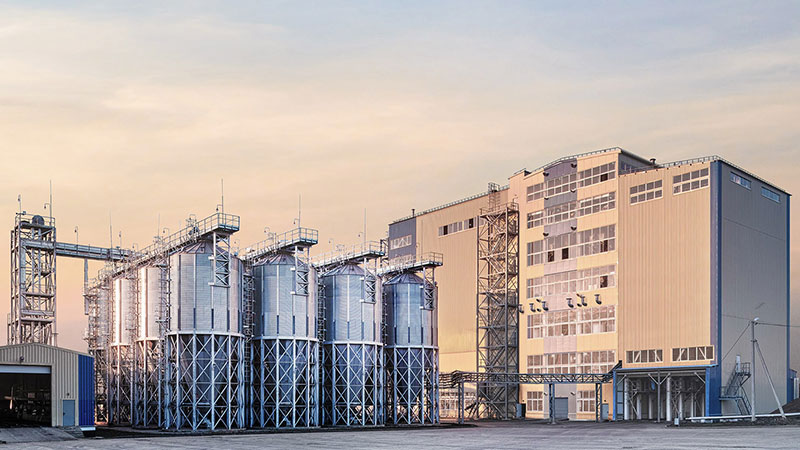
At RICHI, we go beyond project completion. With RICHI Servicee, we’re your dedicated partners in success. Count on us for expert guidance, minimal downtime, and optimized productivity. Choose RICHI for unmatched service and support.
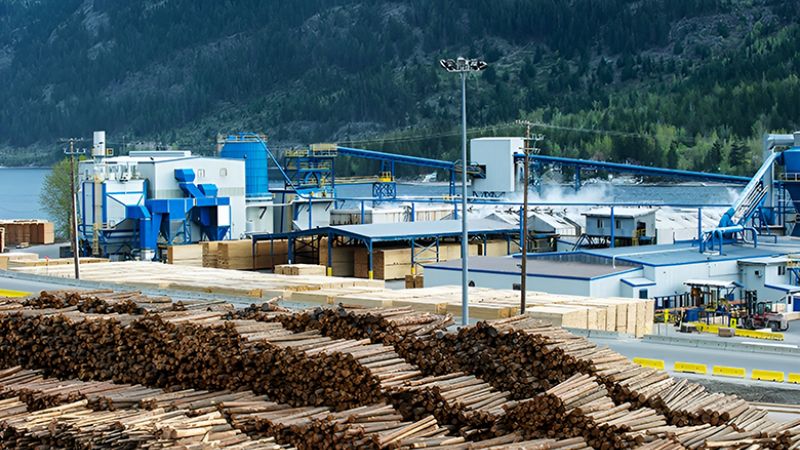


Meet global product demands and quality standards with industry-leading pellet plant design, engineering, equipment, and construction services for pellet processors.


Your Partner Beyond Project Completion
2000+ cases
RICHI is the leading designer, manufacturer and builder of pellet plants in the world, completing over 2000 projects in 140 countries across 6 continents.
Read More
Increase plant productivity, profitability, and safety by integrating high quality equipment into your pellet production line. Over the years, RICHI has become China's top pellet equipment manufacturer. At the same time, RICHI has established valuable partnerships with the world's leading component and raw material manufacturers to bring you the best there is in technology, automation, and efficiency in pelleting plant machinery.

For nearly 30 years, RICHI has been providing best-in-class pellet plant equipment and services to clients across a variety of industries, sizes, and needs. We pride ourselves on the knowledge and skill that each team member possesses – from our technical sales team to our process design engineers. You can count on RICHI Machinery to take your operation to the next level of innovation, quality, and success.
Need help with your pellet manufacturing plant project? Contact us today.
ANIMAL FEED
BIOMASS
WOOD
ORGANIC FERTILIZER
AQUA FEED
CAT LITTER
MUNICIPAL WASTE RECYCLING
SPECIAL PELLET PRODUCTION
RICHI Machinery continues to deliver world class pellet mill equipment, pellet plant engineering and project solutions that add value to our customers in the animal feed, wood waste, agriculture waste, organic fertilizer, cat litter and special pellet products industries. Throughout the years, we RICHI Machinery have built strong brand, becoming industry-leading pellet machine manufacturer. We value integrity, promise quality, and prioritize your success.
Learn MoreWith our expert team, we precisely implement your process engineering requirements in pellet mill and pelletizing plant systems. No matter which industry you’re in – we understand your needs and deliver solutions that meet the highest standards.
At RICHI, quality comes first. Our pellet making machine and related pellet line equipment undergo rigorous quality controls to ensure they meet the highest standards. Rely on products that are durable, safe, and efficient.
With decades of experience in pellet machine and pellet production line production, we have earned a reputation as a trusted partner in various industries. Our expertise allows us to cover a wide range of applications.
Not only do we offer premium pelleting equipment, but we are also experts at designing, building, installing, and maintaining facilities from the ground up. Our expertise is within pellt plant process design, discovering the most efficient, productive, and profitable way to handle your materials in an end-to-end cycle.
○ RICHI MACHINERY
Keeping in touch with us is an effective way to solve all your problems. If you have any needs or questions, please leave your contact information, then RICHI technical consultants will send design, quotation, videos to your mailbox. You can also contact us directly via WhatsApp: +86 13838389622
Copyright©2015-2026 by HENAN RICHI MACHINERY CO., LTD. All rights reserved.