
Pellet cooling machine in Ukraine for 13–15 T/H sunflower husk pellets: SKLF24×24 selection, 8 mm pellets, winter air control and silo integration.
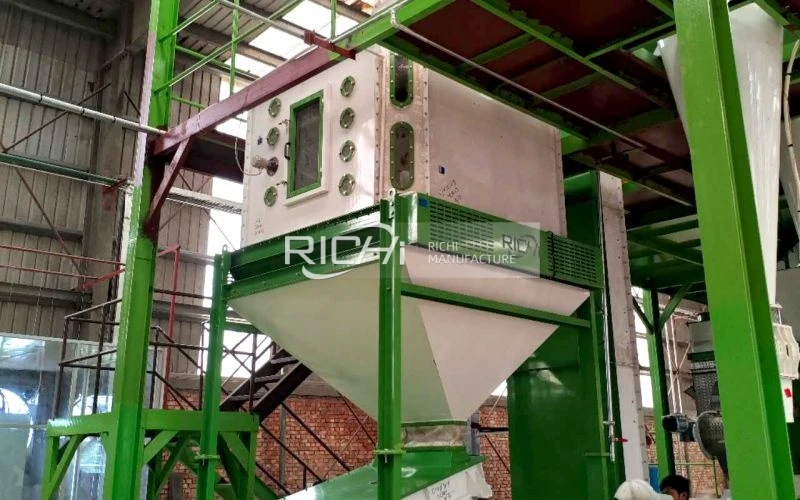
An oilseed processor in central Ukraine needs to move sunflower husk pellets from several existing presses into storage without carrying excessive process heat into the silo. This application example examines one pellet cooling machine in Ukraine for that shared duty, with particular attention to seasonal air conditions and the existing handling system.
The cooperative’s fuel operation supplies its own suitable biomass boilers and regional industrial customers. Its pellet mills, screening equipment and storage facilities remain in place. The proposed purchase is a single SKLF24×24 counterflow cooler replacing an open cooling conveyor. The working requirement is 13–15 T/H of hot pellets, rather than a new pellet production line.
Name:
Pellet Cooler
Country:
Ukraine
Date:
2026
Capacity:
13–15 T/H
Model:
SKLF24×24
Main Motor Power:
2.2 kW
cooling-time:
6–15 minutes
Main Product:
sunflower pellet
The material is pelletized sunflower husk from oilseed processing. The example product specification is 8 mm diameter with a target length of 10–25 mm, formed by the upstream pellet mills. The cooler removes heat while preserving those dimensions; it does not reshape the pellets.
Incoming temperatures of 80–90°C form the proposed cooling duty. The discharge benchmark is 3–5°C above the measured cooling-air inlet temperature under agreed test conditions. Product temperature must also suit the receiving storage environment. A single weather-station reading cannot establish those conditions.
A maximum finished moisture of 10% on a wet basis is used as a project storage target, subject to the fuel specification and material trials. Upstream material preparation must support that target. Cooling can remove some moisture, but cannot be relied on to dry unsuitable wet feedstock.
Storage monitoring, dust control and site fire protection remain necessary after cooling. Reaching a discharge-temperature target does not establish that bulk pellets cannot self-heat or ignite later.
The SKLF24×24 Counterflow Pellet Cooler has a published reference capacity of 13–20 T/H. Selection for sunflower husk pellets still requires checking the actual bulk density, fines content, pellet temperature and available airflow. The smaller SKLF20×20 is listed at 8–13 T/H, which does not cover the proposed 15 T/H peak duty.
| Parameter | Specification or project basis |
|---|---|
| Model and quantity | One SKLF24×24 |
| Cooling principle | Counterflow air cooling |
| Discharge arrangement | Flap discharge; actuation confirmed in the technical agreement |
| Published capacity reference | 13–20 T/H |
| Application operating target | 13–15 T/H, subject to sunflower-pellet trials |
| Published cooler power | 2.2 kW; external air-system loads assessed separately |
| Published cooling-time reference | 6–15 minutes |
| Incoming pellet dimensions | 8 mm diameter; target length 10–25 mm |
| Design inlet temperature | 80–90°C |
| Discharge-temperature benchmark | Cooling-air inlet temperature +3–5°C under agreed conditions |
| Finished-moisture project target | 10% maximum, wet basis, pending verification |
The fan, separator, filter, ducting and any discharge airlock are separate engineering items. Their loads must be included in the installed-power calculation. Hydraulic or pneumatic flap actuation is specified with the final configuration, together with any compressed-air requirement.
Hot pellets enter through the top distributor and move down through the bed. Cooling air passes upward, meeting progressively hotter material before leaving through the exhaust connection. Maintaining an even bed helps prevent some areas receiving excessive airflow while others remain warm.
At 15 T/H, a ten-minute residence-time calculation requires approximately 2,500 kg of pellets in the working bed. The necessary volume depends on measured bulk density. This calculation checks the chamber requirement; it does not prove cooling performance without airflow and temperature measurements.
Level control regulates discharge as press output changes. Start-up, reduced production and interruptions all need defined settings. A cooler or downstream-conveyor fault must initiate the agreed response from the upstream equipment, preventing uncontrolled accumulation of hot pellets.
For annual planning, an average inlet throughput of 13 T/H over 16 productive hours on 250 days gives 52,000 tonnes handled. This is cooler inlet throughput before moisture loss and downstream screenings. The husk supply, pellet mills and fuel sales plan must support that quantity; the cooler’s peak rating is not an annual production forecast.
Very cold outdoor air is not automatically the correct intake condition. Pellets cooled below the dew point of the receiving room can collect condensation when they enter warmer, humid surroundings. Winter settings therefore consider both the cooling-air intake and the environment after discharge.
The intake arrangement may require air tempering, together with adjusted airflow and discharge control. These settings are established from temperature and humidity measurements. Moist, dusty exhaust is not assumed suitable for recirculation without a separate assessment.
Exhaust ducting also needs review where warm, moisture-laden air meets cold surfaces. Condensation can wet collected fines and restrict separators or filters. Inspection access, appropriate insulation and condensate management are considered in the layout.
The acceptance run should use representative sunflower husk pellets at normal production and the proposed peak rate. Measurements cover actual throughput, inlet and discharge temperatures, air temperature and humidity, finished moisture, fines and electrical consumption. Sampling across the discharged material helps identify warm pockets.
The practical result to demonstrate is a steady flow of pellets meeting the agreed silo-entry conditions. Cooling does not establish the fuel’s calorific value or a percentage reduction in natural-gas consumption. Those require separate fuel, boiler and operating records.
Screened fines return through controlled reprocessing, while qualified pellets proceed to storage or dispatch. Cooler supervision can be included in the existing pellet-line operator’s duties, with specific time allowed for inspections, sampling and cleaning.
Support drawings must account for machine weight, the working pellet bed and maintenance loads. The layout checks feeding height, discharge clearance, duct routes and access to the flap mechanism. Existing conveyor supports are reused only after their load capacity is verified.
The electrical design uses a 400 V, 50 Hz, three-phase basis, confirmed against the actual Ukrainian site supply. Controls, motor starting, sensors and discharge actuation are coordinated with the existing line.
A delivery quotation can compare shipment from Qingdao through Gdańsk or Constanța, followed by inland transport to Ukraine. The carrier confirms current routing, border arrangements and packing requirements before booking. No fixed Black Sea service is assumed.
For a pellet cooling machine in Ukraine, provide the combined press output, pellet dimensions, hottest inlet temperature, moisture results and measured bulk density. Add the cooler-room conditions, silo arrangement and existing fan details. RICHI Machinery can use this information to assess the SKLF24×24 duty and prepare a quotation with the required air system and plant connections.
Having the right mix of reliable, high-quality pellet machine and pelletizing systems and expert support is essential to your success. Watch how our end-to-end feed pellet plant solutions have helped our customers optimize their performance.
Our customized and future-proofed turnkey pellet plant solutions is designed with you at the core. From vision to reality and beyond, our team stays connected with yours. Giving you peace-of-mind with an expert at your side.
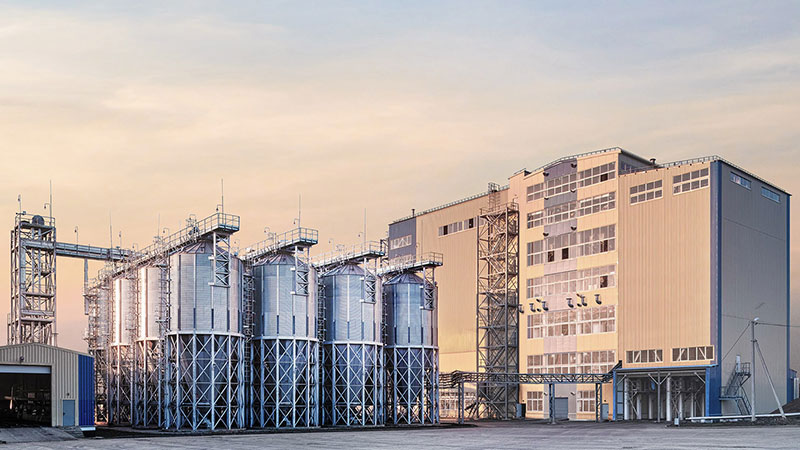
At RICHI, we go beyond project completion. With RICHI Servicee, we’re your dedicated partners in success. Count on us for expert guidance, minimal downtime, and optimized productivity. Choose RICHI for unmatched service and support.
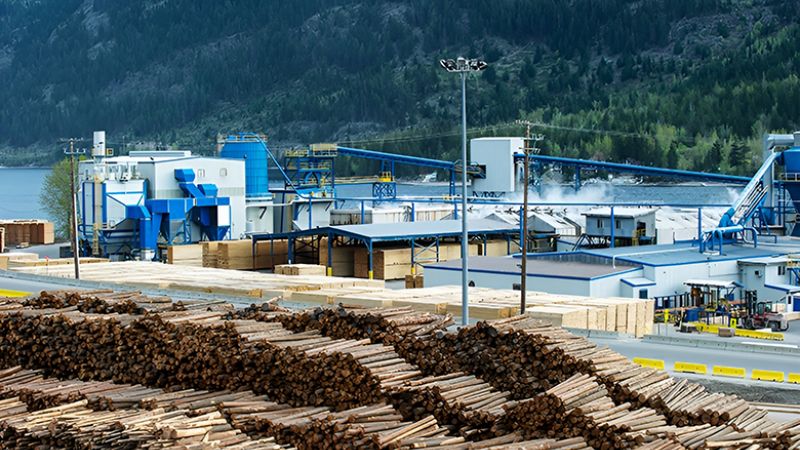


Meet global product demands and quality standards with industry-leading pellet plant design, engineering, equipment, and construction services for pellet processors.


Your Partner Beyond Project Completion
2000+ cases
RICHI is the leading designer, manufacturer and builder of pellet plants in the world, completing over 2000 projects in 140 countries across 6 continents.
Read More
Increase plant productivity, profitability, and safety by integrating high quality equipment into your pellet production line. Over the years, RICHI has become China's top pellet equipment manufacturer. At the same time, RICHI has established valuable partnerships with the world's leading component and raw material manufacturers to bring you the best there is in technology, automation, and efficiency in pelleting plant machinery.

For nearly 30 years, RICHI has been providing best-in-class pellet plant equipment and services to clients across a variety of industries, sizes, and needs. We pride ourselves on the knowledge and skill that each team member possesses – from our technical sales team to our process design engineers. You can count on RICHI Machinery to take your operation to the next level of innovation, quality, and success.
Need help with your pellet manufacturing plant project? Contact us today.
ANIMAL FEED
BIOMASS
WOOD
ORGANIC FERTILIZER
AQUA FEED
CAT LITTER
MUNICIPAL WASTE RECYCLING
SPECIAL PELLET PRODUCTION
RICHI Machinery continues to deliver world class pellet mill equipment, pellet plant engineering and project solutions that add value to our customers in the animal feed, wood waste, agriculture waste, organic fertilizer, cat litter and special pellet products industries. Throughout the years, we RICHI Machinery have built strong brand, becoming industry-leading pellet machine manufacturer. We value integrity, promise quality, and prioritize your success.
Learn MoreWith our expert team, we precisely implement your process engineering requirements in pellet mill and pelletizing plant systems. No matter which industry you’re in – we understand your needs and deliver solutions that meet the highest standards.
At RICHI, quality comes first. Our pellet making machine and related pellet line equipment undergo rigorous quality controls to ensure they meet the highest standards. Rely on products that are durable, safe, and efficient.
With decades of experience in pellet machine and pellet production line production, we have earned a reputation as a trusted partner in various industries. Our expertise allows us to cover a wide range of applications.
Not only do we offer premium pelleting equipment, but we are also experts at designing, building, installing, and maintaining facilities from the ground up. Our expertise is within pellt plant process design, discovering the most efficient, productive, and profitable way to handle your materials in an end-to-end cycle.
○ RICHI MACHINERY
Keeping in touch with us is an effective way to solve all your problems. If you have any needs or questions, please leave your contact information, then RICHI technical consultants will send design, quotation, videos to your mailbox. You can also contact us directly via WhatsApp: +86 13838389622
Copyright©2015-2026 by HENAN RICHI MACHINERY CO., LTD. All rights reserved.