
Explore a pallet and furniture shredding system in Croatia featuring an industrial wood crusher, feeding and discharge conveyors, and dust collection equipment for processing suitable bulky wood waste.
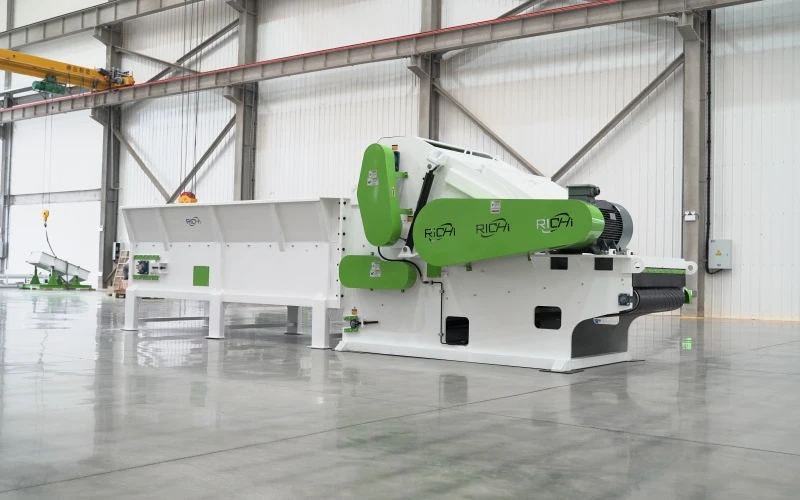
Broken pallets and discarded furniture create different problems for a recycling business, even though both contain recoverable wood. Pallets arrive in relatively predictable shapes but may have split boards, damaged blocks and protruding nails. Furniture waste is less uniform. A dismantled wardrobe, a damaged table, a solid-wood bed frame and a cabinet made from engineered board can behave very differently inside a crusher.
A recycling operator in Croatia planned to handle these two waste streams through one organized wood-processing area. The business needed more than a machine that could break timber into smaller pieces. It needed a feeding arrangement, a heavy-duty crusher, a discharge conveyor and dust collection equipment that could work together without creating unnecessary handling points around the workshop.
Name:
Pallet and Furniture Shredder
Country:
Croatia
Date:
2026
Capacity:
Flexible
Model:
RIBPC 1250×400
Power:
110 kW
Hammer quantity:
24
Final product size:
2–4cm
The resulting project was a pallet and furniture shredding system in Croatia, built around a RICHI RIBPC 1250×400 wood crusher. The primary machine was selected for preliminary crushing of suitable discarded wooden pallets, boards and furniture components. Conveyors were included to improve material movement, while a dust collection system was specified to manage airborne particles around the crushing and transfer areas.
The project was intended to give the operator greater control over bulky wood waste before it moved to storage or further processing. Rather than sending every damaged wooden item elsewhere for size reduction, the business could establish an in-house crushing stage and decide which materials were suitable for recovery, which required further sorting and which should be directed to a different treatment route.
Croatia's economy includes tourism, hospitality, food distribution, manufacturing, construction and logistics. These sectors generate different kinds of wooden waste. Warehouses and distribution facilities receive and discard transport pallets, while hotels, restaurants, shops and property refurbishment contractors periodically replace damaged furniture and interior fittings.
The supply is not necessarily consistent throughout the year. A distribution warehouse may generate pallets steadily, whereas furniture waste can arrive in larger batches following a hotel renovation, commercial refurbishment or building clearance. For a recycling operator serving several customer groups, this variation makes flexible material handling more useful than a process designed exclusively around one uniform feedstock.
The buyer's main concern was the time spent dealing with bulky, mixed wood waste. Intact pallets occupy considerable storage space relative to their recoverable wood content. Furniture frames can be awkward to move, and broken cabinets often need dismantling before they can be fed safely into industrial equipment. Leaving these materials in separate piles for too long can also complicate traffic management and the organization of the receiving area.
A dedicated pallet crusher would have addressed only part of the problem. The operator wanted the option to process suitable furniture components as well, provided that non-wood materials were removed first and the remaining pieces fell within the machine's operating limits.
This requirement shaped the equipment choice. The project was not designed as an automated line that accepts every item exactly as received. Instead, it combines an industrial crushing machine with conveying and dust collection equipment, while keeping inspection, dismantling and material sorting as defined upstream tasks.
The incoming material is expected to consist mainly of damaged wooden pallets, discarded boards, solid-wood furniture components and selected dismantled cabinet parts. Pallets may come from warehouses, distribution centres, manufacturing facilities and commercial deliveries. Furniture components may be collected through refurbishment contractors, commercial property maintenance operations and waste-recovery services.
These sources create a mixed but manageable stream only when the operator establishes clear acceptance rules. Clean solid wood, pallet boards and wooden frames can often be considered for crushing. However, a furniture item cannot automatically be treated as wood waste simply because its outer structure is wooden.
Before crushing, workers need to remove or separate unsuitable components such as glass, mirrors, loose metal fittings, electrical parts, foam, upholstery fabric and plastic panels. Mattresses, sofas and upholstered seating require particular care because their construction includes several materials that are not suitable for direct feeding into this wood crusher.
Engineered wood products also need to be assessed according to their composition and intended destination. Plywood, particleboard and medium-density fibreboard may contain adhesives or surface coatings. Painted, laminated, preservative-treated or chemically contaminated pieces should not be mixed indiscriminately with clean timber intended for a sensitive recycling application.
This preparation stage is important for both equipment protection and output quality. The crusher can reduce suitable wood components to smaller pieces, but it cannot separate every contaminant or make mixed waste suitable for every downstream use. The buyer therefore treats sorting as part of the recycling process rather than expecting the crusher to perform all waste-management tasks by itself.
The main machine selected for the Croatian project is the RICHI RIBPC 1250×400. It is a heavy-duty wood-waste crusher designed for preliminary size reduction of materials such as wooden pallets, boards and suitable furniture wood. The machine has a 1250 × 400 mm feed opening and a 110 kW main motor.
The feeding arrangement uses two 7.5 kW motors, while the hydraulic pump motor is rated at 1.1 kW. The discharge conveyor motor is rated at 1.5 kW, and the crushing assembly contains 24 hammers. This configuration provides the principal size-reduction stage for the line, with the feeding and discharge equipment supporting the movement of material through the working area.
The model was selected to provide a substantial industrial crushing unit without moving immediately to the largest machines in the available range. For a mixed-waste operator, model selection should reflect the dimensions and construction of incoming materials, expected operating hours, available floor space and the capacity of the equipment before and after the crusher.
The pallet shredder machine is intended to produce wood chips in the approximate 2–4 cm range, with the actual output depending on the screen configuration, feedstock characteristics and operating conditions. The target is a coarse intermediate material suitable for subsequent assessment, storage or further size reduction where required.
| Parameter | Selected Specification |
|---|---|
| Equipment model | RIBPC 1250×400 |
| Feed opening | 1250 × 400 mm |
| Main motor power | 110 kW |
| Feeding motor power | 7.5 + 7.5 kW |
| Hydraulic pump motor power | 1.1 kW |
| Discharge conveyor motor power | 1.5 kW |
| Hammer quantity | 24 |
| Target chip size | Approximately 2–4 cm |
| Supporting equipment | Feeding conveyor, discharge conveyor and dust collection system |
| Project configuration | Integrated wood-waste crushing and material-handling system |
The available specifications do not provide a verified hourly throughput for this model or the complete system. The actual processing rate will depend on the mix of pallet boards, blocks and furniture components, the amount of preparation required, wood moisture, feed consistency, screen selection and operating conditions. A rated capacity should therefore be confirmed against the buyer's actual feedstock rather than inferred from motor power alone.
The process begins at the receiving area, where workers inspect incoming materials and decide whether each item can be reused, repaired, dismantled or sent for crushing. Reusable pallets and furniture should be removed from the waste stream before they reach the crusher. This prevents recoverable products from being unnecessarily destroyed and keeps the recycling process focused on material that genuinely requires size reduction.
Suitable pallets and prepared furniture components are then transferred to the feeding section. The feeding conveyor creates a defined route toward the crusher and reduces the need to carry every piece directly to the machine. Operators must still control the feed so that oversized, unsuitable or poorly prepared items are not introduced into the crushing chamber.
Inside the crusher, the hammer assembly breaks the wooden material into smaller pieces. The internal screen can be selected according to the desired output, with approximately 2–4 cm chips specified as the project's target. A mixed feedstock will not necessarily produce perfectly uniform particles, so the finished material should be inspected during commissioning to determine whether it meets the intended downstream requirements.
Once crushed, the wood chips leave the machine through the discharge arrangement and are carried away by the discharge conveyor. This reduces accumulation directly beneath the crusher and helps maintain a more orderly working area. The chips can then be collected in a designated storage location for inspection, loading or further processing.
The dust collection equipment serves the crushing and material-transfer stages where airborne particles may be released. Its layout should account for the crusher, conveyor transfer points and the final discharge area. The collection system needs to be properly sized and maintained; it should not be assumed to eliminate all dust under every operating condition.
Furniture waste is more variable than pallet waste, so the operator needs a preparation procedure that reflects the material being processed. A solid-wood table frame, for example, may be suitable after the removal of metal fittings and other non-wood parts. A wardrobe containing glass doors, mirrors, laminated panels and metal tracks needs more extensive dismantling before its wooden components can be considered for crushing.
Upholstered furniture requires a separate decision. Fabric, leather, foam, springs and other internal materials should not be fed into a wood crusher as though they were ordinary timber. Where the operator accepts sofas or chairs, they should first be dismantled using an appropriate process, and only suitable wooden components should enter this line.
Wooden packaging from commercial deliveries may also be included if it is clean and compatible with the intended output. In contrast, treated timber, heavily painted boards or material contaminated with chemicals should be identified and separated according to the receiving facility's requirements.
These controls help reduce avoidable wear and blockage risks. Although the crusher is designed for demanding wood waste and can handle suitable nailed timber, it is not intended to process unrestricted quantities of metal or other foreign materials. Oversized metal pieces, stones, concrete fragments and other hard contaminants should be removed before feeding.
For a recycling operator, this approach makes the line more versatile without compromising the distinction between wood crushing and mixed-waste treatment. It also gives the business better information about the quality and likely destination of each recovered material stream.
The immediate objective is to reduce bulky wood waste to a manageable intermediate size. Intact pallets and large furniture components are awkward to store and transport, while coarse wood chips can be collected in designated containers or storage areas and evaluated for further use.
One possible route is secondary size reduction. If a downstream buyer requires smaller particles, the 2–4 cm material can be assessed for further grinding or screening. Whether another machine is worthwhile depends on the required particle size, the demand for the finished product and the additional cost of processing.
Suitable, uncontaminated wood chips may also be considered for selected wood-recycling applications, including industrial users that accept the relevant material specification. Acceptance will depend on particle size, cleanliness, moisture, the presence of coatings or adhesives and the receiving plant's process requirements.
Some clean wood streams may be suitable for approved biomass applications, but this must be determined from the actual feedstock and applicable regulations. Painted, treated or chemically contaminated furniture wood should not automatically be routed to fuel use. Crushing reduces particle size; it does not remove chemical contaminants or guarantee that the material meets fuel-quality requirements.
For this project, the operator's first priority is a stable coarse-chip output that can be inspected and directed to an appropriate downstream route. A more specific finished-product specification can be developed once the receiving buyers and their acceptance criteria are known.
The project includes supporting equipment because a crusher machine alone does not create an organized recycling process. Without suitable conveying arrangements, workers may need to move material manually before and after crushing, while finished chips can accumulate around the machine and interfere with routine operation.
The feeding conveyor helps organize material delivery to the crusher. Its layout should account for the height and width of incoming pieces, operator access, the available floor area and the need to prevent unsuitable material from entering the machine. The discharge conveyor then moves the chips to a collection point where the material can be inspected or loaded.
Dust collection was included to address particles generated when wood breaks apart and when crushed material falls between equipment stages. Extraction points should be positioned according to the actual layout, with particular attention to the crusher outlet and conveyor transfer areas.
The system needs to be selected as a coordinated installation. Conveyor dimensions and transfer heights influence material flow, while the dust collector's airflow, duct arrangement and filter selection influence its effectiveness. The final design should also provide access for filter maintenance, cleaning and inspection.
Dust management does not replace housekeeping or appropriate worker protection. Wood dust can accumulate on equipment and surrounding surfaces, and combustible-dust risks should be assessed as part of the installation's safety review. The operator needs procedures for cleaning, safe shutdown and maintenance that suit the specific plant layout.
RICHI's RIBPC wood crusher uses high-strength alloy-steel hammers that undergo quenching treatment to improve wear resistance. This is relevant when processing recovered timber because the feedstock can vary in hardness, thickness and construction. The hammer arrangement is detachable, allowing worn parts to be inspected and replaced during scheduled maintenance.
The machine's heavy-duty housing is designed to withstand the impact loads associated with wood-waste crushing. Carbon dioxide gas-shielded welding and overall annealing are specified to help reduce residual stresses from fabrication and support structural stability during continued operation.
Sealed bearings and the specified dust- and water-resistant design features help protect critical components. The machine also incorporates automatic overload protection, which can help protect the equipment when abnormal loading occurs. These features do not remove the need to identify the cause of repeated overloads, however, or to follow the prescribed safe operating procedures.
For a mixed-material recycling business, regular inspection is especially important. Operators should monitor hammer wear, fasteners, bearing condition, conveyor alignment, screen condition and any unusual noise or vibration. Maintenance should be carried out only after the machine and associated equipment have been safely isolated in accordance with the operating instructions.
RICHI can provide technical guidance on machine selection, wear-part planning, screen requirements and routine maintenance. The aim is to help the buyer understand the equipment's operating limits and prepare a realistic maintenance plan before the line enters regular service.
The decision was based on the way the business wanted to handle its wood waste, not simply on the rated power of the crusher. The operator needed a defined sequence from receiving and preparation through crushing and discharge, with dust collection incorporated into the processing area.
Purchasing the main crusher together with the necessary conveying and dust collection equipment made it possible to plan these stages as one installation. It also allowed the buyer to review the arrangement of the working area, collection points and maintenance access before the equipment was installed.
RICHI's technical support can help review feedstock dimensions, the proportion of pallets versus furniture wood, the largest components to be processed, the required output size and the proposed downstream use. These details influence model selection and whether additional equipment, such as a secondary crusher or screening unit, is justified.
For a buyer handling variable material, this assessment is more useful than selecting machinery from motor ratings alone. It helps define the intended operating scope and reduces the risk of specifying a line that is unsuitable for the actual feedstock.
The most meaningful feedback for this type of installation concerns everyday operation. The buyer needs to assess whether prepared pallets and furniture components can be fed consistently, whether the discharge conveyor keeps the collection area organized, whether the dust collection system performs adequately and whether the finished chips meet the intended size range.
Post-commissioning records should also cover blockages, hammer wear, cleaning requirements, maintenance access and the amount of manual handling still required. These observations help determine whether adjustments to feeding practice, collection arrangements or the dust extraction layout are necessary.
No verified customer quotation, measured capacity or quantified labour saving has been supplied for this project, so none is presented as an established result. A formal customer testimonial should be added only after the buyer has confirmed the actual operating experience and authorized the statement for publication.
The equipment is planned for shipment from Qingdao Port in China. For the Croatian project, the Port of Rijeka is the proposed maritime destination. The final route, shipping service and arrival arrangements should be confirmed by the freight forwarder before dispatch.
Because the purchase includes a coordinated equipment arrangement, the packing list and order documents should identify the crusher, feeding and discharge conveyors, dust collection equipment and the associated electrical components. This helps the buyer check the delivered equipment against the approved configuration before installation.
Before the shipment arrives, the site should be prepared with adequate equipment access, suitable foundations or support structures where required, the specified electrical supply, lifting arrangements and space for incoming waste and finished chips. The layout should also provide safe access for operating staff and maintenance personnel.
The pallet and furniture shredding system in Croatia is designed to address a particular challenge: handling two bulky but different wood-waste streams through a coordinated crushing process. The RIBPC 1250×400 provides the main size-reduction stage, while the conveyors support material movement and the dust collection equipment helps control airborne particles around the processing area.
Its 110 kW main motor, 7.5 + 7.5 kW feeding motors, 1.1 kW hydraulic pump motor, 1.5 kW discharge conveyor motor and 24-hammer assembly define the selected machine configuration. The target output is approximately 2–4 cm wood chips, subject to confirmation of the screen arrangement and actual material characteristics.
The success of the installation will depend on more than the crusher itself. Proper separation of reusable materials, removal of non-wood components, control of contaminated timber, suitable conveying arrangements and a realistic maintenance plan all influence the result. The intended downstream application must also be considered before the final output specification is fixed.
For recycling businesses evaluating a pallet and furniture shredding system, RICHI Machinery can review representative feedstock photographs, component dimensions, material composition, required chip size and the proposed use of the recovered wood. With these details, the equipment configuration can be assessed against the actual project rather than an assumed standard feedstock.
A well-planned crushing system gives a recycling operator a practical starting point for converting suitable discarded wooden products into a more manageable intermediate material. The next step is to match the equipment and operating procedures to the real waste stream, so that the system remains useful as the business handles different types of pallets, furniture components and other accepted wood waste.
Having the right mix of reliable, high-quality pellet machine and pelletizing systems and expert support is essential to your success. Watch how our end-to-end feed pellet plant solutions have helped our customers optimize their performance.
Our customized and future-proofed turnkey pellet plant solutions is designed with you at the core. From vision to reality and beyond, our team stays connected with yours. Giving you peace-of-mind with an expert at your side.
At RICHI, we go beyond project completion. With RICHI Servicee, we’re your dedicated partners in success. Count on us for expert guidance, minimal downtime, and optimized productivity. Choose RICHI for unmatched service and support.


Meet global product demands and quality standards with industry-leading pellet plant design, engineering, equipment, and construction services for pellet processors.


Your Partner Beyond Project Completion
2000+ cases
RICHI is the leading designer, manufacturer and builder of pellet plants in the world, completing over 2000 projects in 140 countries across 6 continents.
Read More
Increase plant productivity, profitability, and safety by integrating high quality equipment into your pellet production line. Over the years, RICHI has become China's top pellet equipment manufacturer. At the same time, RICHI has established valuable partnerships with the world's leading component and raw material manufacturers to bring you the best there is in technology, automation, and efficiency in pelleting plant machinery.

For nearly 30 years, RICHI has been providing best-in-class pellet plant equipment and services to clients across a variety of industries, sizes, and needs. We pride ourselves on the knowledge and skill that each team member possesses – from our technical sales team to our process design engineers. You can count on RICHI Machinery to take your operation to the next level of innovation, quality, and success.
Need help with your pellet manufacturing plant project? Contact us today.
ANIMAL FEED
BIOMASS
WOOD
ORGANIC FERTILIZER
AQUA FEED
CAT LITTER
MUNICIPAL WASTE RECYCLING
SPECIAL PELLET PRODUCTION
RICHI Machinery continues to deliver world class pellet mill equipment, pellet plant engineering and project solutions that add value to our customers in the animal feed, wood waste, agriculture waste, organic fertilizer, cat litter and special pellet products industries. Throughout the years, we RICHI Machinery have built strong brand, becoming industry-leading pellet machine manufacturer. We value integrity, promise quality, and prioritize your success.
Learn MoreWith our expert team, we precisely implement your process engineering requirements in pellet mill and pelletizing plant systems. No matter which industry you’re in – we understand your needs and deliver solutions that meet the highest standards.
At RICHI, quality comes first. Our pellet making machine and related pellet line equipment undergo rigorous quality controls to ensure they meet the highest standards. Rely on products that are durable, safe, and efficient.
With decades of experience in pellet machine and pellet production line production, we have earned a reputation as a trusted partner in various industries. Our expertise allows us to cover a wide range of applications.
Not only do we offer premium pelleting equipment, but we are also experts at designing, building, installing, and maintaining facilities from the ground up. Our expertise is within pellt plant process design, discovering the most efficient, productive, and profitable way to handle your materials in an end-to-end cycle.
○ RICHI MACHINERY
Keeping in touch with us is an effective way to solve all your problems. If you have any needs or questions, please leave your contact information, then RICHI technical consultants will send design, quotation, videos to your mailbox. You can also contact us directly via WhatsApp: +86 13838389622
Copyright©2015-2026 by HENAN RICHI MACHINERY CO., LTD. All rights reserved.