
Discover a packaging wood recycling machine in Estonia for processing discarded wooden crates, damaged pallets and industrial packaging timber into reusable wood chips with RICHI machinery.
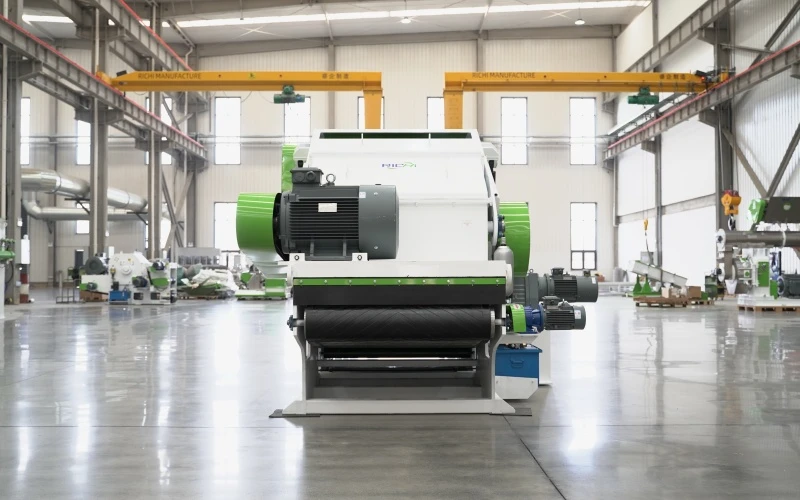
In Estonia, wooden packaging plays an important role in moving industrial goods, machinery, building materials and other products through warehouses and distribution facilities. Wooden crates, pallet bases and protective timber frames are useful during transportation, but they eventually become damaged, obsolete or unsuitable for another shipment. For companies handling a steady flow of incoming and outgoing cargo, these items can quickly turn into a separate waste-management problem.
An industrial packaging recovery operator serving customers around the Tallinn area faced this challenge as its timber waste stream grew. The material came from several sources rather than one production line: damaged transport pallets returned from customers, dismantled wooden crates, broken packaging frames and short timber sections left after repair work. Some pieces could still be reused, but others were too badly split, nailed together or irregularly sized to justify manual recovery.
Name:
Packaging Wood Recycling Machine
Country:
Estonia
Date:
2026
Capacity:
Flexible
Model:
RIBPC 1000×350
Main Motor Power:
90 kW
Hammer quantity:
24
Final product size:
2–4 cm
The operator needed a reliable way to reduce the volume of this unsuitable wood before sending it for further recovery. Instead of investing in a complete automated recycling plant, the business chose one RICHI RIBPC 1000×350 wood waste crusher as an additional machine for its existing material-handling operation.
The purpose of this packaging wood recycling machine in Estonia was straightforward: process suitable discarded packaging timber into smaller wood chips, normally around 2–4 cm, while keeping reusable components separate. The investment focused on the crushing stage rather than replacing the company's existing collection, sorting and storage arrangements.
That distinction matters. A packaging recycling business does not necessarily need a new production line whenever its waste volume increases. Sometimes the main constraint is the time and space required to manage bulky timber. A correctly selected wood packaging crusher can address that specific problem while leaving room for further investment if the business expands.
The customer is an industrial packaging recovery and materials-handling operator that collects and processes wooden transport packaging from warehouses, manufacturing facilities and commercial distribution sites. Its activities include sorting incoming timber, identifying reusable packaging components, preparing damaged wooden structures for recovery and arranging suitable outlets for the processed material.
Estonia's role in Baltic trade makes this a practical application for a packaging wood recycling machine. Warehousing, manufacturing, construction supply and international cargo handling all generate wooden packaging that eventually requires repair, reuse or disposal. The volume and composition of waste vary with the customers served, so the recycling operator cannot assume that every delivery contains the same timber dimensions or condition.
For example, a batch collected from an industrial equipment distributor may contain relatively thick crate panels, wooden skids and reinforced support blocks. Another delivery may consist mainly of broken pallet boards, short timber offcuts and lightweight packaging frames. The second batch is generally easier to handle mechanically, while thick or unusually shaped pieces may require preliminary dismantling.
The operator's working method therefore begins with sorting, not crushing. Wooden components that remain structurally sound are set aside for reuse. Damaged but recoverable boards are assessed separately. Timber with no practical reuse value is directed toward the crusher, provided it meets the machine's feed requirements and is suitable for the intended recovery route.
This arrangement helps preserve the value of usable wood. Crushing an intact crate component simply because a crusher is available would eliminate an opportunity for reuse and create material that needs further processing. By separating the reusable fraction first, the business can direct the machine toward the wood that genuinely needs size reduction.
The RICHI machine was selected as a new addition to this operation, rather than as a replacement for an entire packaging line. Existing equipment continues to support collection, sorting and handling, while the crusher takes responsibility for the preliminary processing of the rejected timber fraction.
The customer's main concern was not the lack of equipment across the entire facility. It was the growing amount of bulky wood that remained after packaging inspection and repair. Broken crates and rejected pallet sections occupied valuable storage space, took time to move and were difficult to stack efficiently.
Manual dismantling remained useful for selected materials, but it was not economical to recover every damaged component by hand. Some boards were split around their nail holes, while others had broken ends, multiple fasteners or dimensions that no longer matched standard packaging requirements. These pieces were better suited to mechanical size reduction than to another round of repairs.
The RIBPC 1000×350 was purchased as a standalone wood packaging crusher to handle this rejected fraction. Its installation added a new processing capability without requiring the operator to replace existing handling equipment or reorganize every part of the facility.
The investment also gave the business a more controlled way to prepare timber for downstream recovery. Rather than storing large quantities of broken wooden packaging indefinitely, the operator could process suitable batches as space and operating schedules allowed. The resulting chips could be collected and assessed against the requirements of the intended recipient.
For a business with fluctuating waste arrivals, this approach offers practical flexibility. The crusher can be incorporated into the existing workflow, while decisions about additional conveyors, screening equipment or automated sorting can be based on actual operating experience.
The equipment selection was therefore guided by three considerations: the dimensions of the incoming timber, the need to reduce bulky waste and the ability to integrate the crusher into an existing packaging recovery operation.
The material handled in this project consists primarily of discarded wooden transport packaging. Although these items share a common purpose, their construction and condition can differ considerably.
The wood species are not restricted to a single type. Depending on the packaging supplier and original application, the material may include pine, spruce and other commonly used softwoods, as well as mixed timber components. The actual species distribution should be established from the customer's incoming material rather than assumed in advance.
Softwood packaging can be relatively easy to handle when it consists of straight, dry boards. Thick crate panels, heavy skids and reinforced support members place different demands on the crusher because they require more substantial size reduction. Moisture content also affects the way wood behaves during processing and may influence the condition of the finished chips.
The operator must pay particular attention to nails and other fasteners. Wooden crates and pallets commonly use nails, screws, metal brackets or protective fittings. The RIBPC series is designed for demanding wood-waste applications, including nailed timber, but the presence of metal does not eliminate the need for inspection and appropriate separation.
Large metal fittings, loose hardware, plastic straps and other non-wood materials should be removed where practical before crushing. Any residual metal in the output must be considered when deciding whether the chips are suitable for further processing.
Painted, chemically treated or contaminated packaging also requires separate assessment. Wood that has been exposed to chemicals or unsuitable coatings should not automatically be mixed with clean timber intended for biomass recovery or other recycling applications.
This sorting procedure helps protect the equipment, improve the consistency of the output and avoid transferring contamination problems to the next stage.
The selected model is the RICHI RIBPC 1000×350, a heavy-duty wood waste crusher designed for preliminary crushing of wooden pallets, boards, packaging frames and similar timber waste.
The 1000 × 350 mm feed opening provides the specified entry dimensions for the machine. The main drive uses a 90 kW motor, supported by a powered feeding arrangement, hydraulic assistance and a discharge conveyor.
The configuration selected for the Estonian project is shown below.
| Technical Parameter | Specification |
|---|---|
| Equipment model | RIBPC 1000×350 |
| Feed opening | 1000 × 350 mm |
| Main motor power | 90 kW |
| Feeding motor power | 5.5 × 2 kW |
| Hydraulic pump motor power | 1.1 kW |
| Discharge conveyor motor power | 1.5 kW |
| Hammer quantity | 24 |
| Typical target output size | Approximately 2–4 cm |
| Screen configuration | Customizable, subject to technical confirmation |
| Purchase configuration | One standalone machine |
The supplied model specifications do not establish a verified hourly capacity for this particular feedstock. Therefore, a fixed tonnes-per-hour figure should not be assigned without a material assessment or confirmed performance data. Actual throughput depends on timber thickness, moisture, feed consistency, the proportion of bulky pieces, the selected screen and the required output specification.
This is especially important for packaging waste because a tonne of thin boards does not behave like a tonne of thick crate sections. Irregular pieces can also require more careful feeding than uniform timber. A realistic capacity assessment should use representative material and the intended operating conditions.
The selected model provides a defined equipment configuration, while the screen and operating arrangement can be discussed in relation to the customer's actual requirements. This avoids choosing a machine solely by its nominal dimensions without considering the material that will pass through it.
The crusher is one stage in a wider packaging recovery workflow. It does not replace the inspection, sorting or final material management required by the business.
Incoming wooden packaging is first unloaded and inspected. Reusable crates, pallet boards and support members are separated for repair or reuse. Damaged items are then dismantled where necessary, and suitable timber is prepared for the crushing stage.
Once accepted, the material is fed into the RIBPC 1000×350. The crushing assembly reduces the size of the timber, and the discharged chips are collected for further handling. The screen configuration influences the resulting particle size, so it should be matched to the receiving facility's requirements rather than selected on the assumption that every application needs the same output.
This arrangement allows the business to preserve useful wood before processing the rejected fraction. It also helps distinguish the crusher's responsibility from the functions of other equipment.
If the operator later decides to increase automation, a feeding conveyor could reduce manual handling, while an additional discharge conveyor could improve chip collection. Dust extraction may be appropriate depending on the installation layout and operating conditions. Metal separation may also be needed if the output specification requires it.
Those additions are not assumed to be part of the present order. The current project is based on one crusher, and any future expansion can be evaluated after the operator has established its actual material flow and operating requirements.
The normal target output for this type of wood waste crusher is approximately 2–4 cm chips. That size reduction makes bulky packaging waste easier to handle, but the particle size alone does not determine the final application.
For clean, untreated packaging timber, one possible destination is a biomass processing facility that accepts this type of wood waste. Depending on the recipient's process, the chips may require further screening, drying or size reduction before they can be used as fuel. Moisture, contamination, ash-related properties and the receiving facility's specifications must be checked before the material is approved.
Another possible route is transfer to a wood recycling business that uses recovered timber as a secondary raw material. The suitability of the chips depends on the intended process and the consistency of the material. Engineered wood panel production, for example, may require more tightly controlled feedstock than a preliminary crushing operation can provide on its own.
The customer therefore needs to confirm the intended use before finalizing the processing specification. A receiving facility may specify a particle-size range, maximum moisture level, contamination limits or other acceptance criteria. The machine's screen should be selected with these requirements in mind.
Not all recovered wood belongs in the same stream. Painted, treated or contaminated packaging may need a separate management route, depending on its characteristics and local requirements. Mixing such material with clean wood chips could reduce the value of the clean fraction or make the entire batch unacceptable to the recipient.
For the Estonian operator, the immediate benefit is a more manageable intermediate material. The crusher reduces the size of suitable wood waste, while final recovery decisions remain tied to the quality and origin of each batch.
Wooden packaging presents a different challenge from clean, uniform timber. A crusher may encounter split boards, broken blocks, uneven edges and sections held together with nails. These variations place demands on the crushing assembly and the machine structure.
The RIBPC series crusher machine uses high-strength alloy-steel hammers that undergo quenching treatment to improve hardness and wear resistance. The hammer design is intended for demanding wood-waste processing, where the material may contain ordinary packaging fasteners.
The hammers use a detachable mounting arrangement. This makes inspection and replacement more practical during planned maintenance. Wear should be monitored according to operating hours, the condition of the incoming timber and the observed performance of the machine rather than an assumed universal replacement interval.
The machine's housing is constructed from heavy-duty steel plate, with carbon dioxide gas-shielded welding and overall annealing specified for the series. These manufacturing processes support structural integrity and help reduce residual stresses associated with welding. Actual service life still depends on how the machine is operated, maintained and loaded.
Sealed bearings and dust- and water-resistant design features help protect components in an industrial environment. The equipment also includes automatic overload protection, providing an additional safeguard when abnormal loading occurs.
These features are relevant to packaging recycling because the feedstock is rarely perfectly uniform. Nevertheless, the crusher must operate within its permitted feed dimensions and instructions. Oversized items, large metal components and materials unsuitable for crushing should be removed or prepared before entering the machine.
Irregular wooden packaging can be awkward to feed. A stack of thin boards behaves differently from a thick pallet base or a heavy crate support. If pieces are presented inconsistently, the operator may experience interruptions or uneven loading.
The RIBPC 1000×350 Pallet Shredder incorporates a hydraulic feeding arrangement to assist material feeding into the crushing chamber. The feeding system supports controlled engagement with the wood, helping the machine handle compatible pieces more consistently.
The hydraulic system does not eliminate the need for sorting or preliminary preparation. Long, oversized or awkwardly shaped members may still need to be dismantled, and materials that exceed the machine's permitted dimensions should not be forced into the feed opening.
For the Estonian installation, the feeding area should be planned around the actual mix of crate boards, pallet sections and support blocks. Operators need sufficient access to position material safely, inspect the feed area and prevent unsuitable items from entering the machine.
The discharge conveyor, powered by a 1.5 kW motor, transfers the processed material away from the crushing chamber. The collection arrangement should provide enough room for the expected batch size and allow the operator to remove chips without interfering with feeding or maintenance.
This is a practical point in a recycling facility: the crusher may reduce the size of the waste, but an undersized collection area can simply move the congestion from one part of the workshop to another. Material flow should therefore be considered on both sides of the machine.
Wood crushing can release airborne particles, especially when dry timber is processed or chips fall between conveyors and collection points. The appropriate dust-control arrangement depends on the machine location, the material's moisture content, the transfer points and the applicable workplace requirements.
Dust extraction should be considered as part of the installation design. Wood dust can present respiratory and combustible-dust hazards, so the operator should prevent excessive accumulation, maintain extraction equipment and assess fire and explosion risks under the applicable regulations.
Electrical preparation is equally important. The main drive, feeding motors, hydraulic pump and discharge conveyor must be included in the electrical review. The available supply, protection devices, cabling and starting arrangements should be confirmed before installation.
The site also needs suitable access for maintenance and safe material handling. Space should be provided for inspection of the feed area, removal of collected chips and servicing of the crushing assembly. The foundation or supporting structure must be suitable for the machine and its operating loads.
RICHI's technical coordination can help the buyer review these requirements before dispatch. Useful information includes photographs of the intended installation area, the dimensions of representative packaging waste, the desired chip size and the planned collection arrangement. These details allow the equipment configuration and site preparations to be discussed against the actual application rather than a generic layout.
The decision to purchase the RIBPC 1000×350 was based on the need for a dedicated crushing stage that could work alongside existing packaging recovery activities.
For this application, the equipment had to handle a varied timber stream, provide a practical output size and allow routine inspection of wear components. The operator also needed a solution that did not require an immediate investment in a complete automated plant.
RICHI Machinery can support this type of decision by reviewing the material before finalizing the equipment arrangement. Representative photographs, board and block dimensions, estimated operating hours, the proportion of nailed timber and the intended destination of the chips all help clarify the application.
The technical discussion should also cover the feed opening, drive configuration, screen requirements, electrical supply, discharge collection and maintenance access. Where the customer's waste stream includes substantial quantities of thick crate supports or heavily contaminated timber, those conditions should be identified early because they can influence the suitability of the machine and the processing procedure.
The aim is to match the equipment to the task, not to add machinery that the operator does not yet need. In this project, the standalone crusher addresses the immediate size-reduction requirement. Conveyors, dust collection, screening or metal separation can be considered separately if the measured material flow justifies them.
For an industrial packaging recovery operator, the practical test of a wood recycling machine is whether it fits the daily workflow. Smaller output pieces are useful only if the machine can process the accepted material consistently, the discharge can be handled efficiently and maintenance can be completed without unnecessary disruption.
The main performance indicators for this application are the amount of timber processed during a working period, the time spent preparing the feed, the consistency of the discharged chips, the condition of the hammers and the amount of residual metal or other contamination in the output.
These observations also help the customer assess whether the current standalone configuration remains appropriate as the business grows. If the crusher becomes the main bottleneck, additional feeding or conveying equipment may be considered. If incoming material varies widely, improved sorting and preparation may deliver more value than simply installing a larger machine.
No authenticated customer quotation or commissioning record has been supplied for this case. Accordingly, no direct quotation or measured operating result is presented as a verified customer statement. Actual feedback can be added when the operator's comments, project photographs and performance records are available.
The equipment is planned for sea shipment from Qingdao Port in China. For cargo destined for Estonia, Muuga Harbour, part of the Port of Tallinn system, is a relevant port option for confirming the shipment arrangements.
The final route, service availability and destination-port details should be verified with the freight forwarder before dispatch. The buyer should also confirm the packing list, machine model, motor configuration and included components against the order.
Before the machine arrives, the installation site should be prepared for unloading and positioning. Electrical capacity, access for lifting equipment, maintenance clearance and the discharge collection area should be checked in advance. If dust extraction or metal separation is planned for a later stage, the layout can also allow for potential expansion.
These preparations reduce the risk of avoidable delays between delivery and commissioning.
The packaging wood recycling machine in Estonia was selected to address a specific operational need: reducing the volume of rejected wooden packaging without replacing the customer's existing collection and sorting arrangements.
The RICHI RIBPC 1000×350 provides a preliminary crushing stage with a 90 kW main motor, two 5.5 kW feeding motors, a 1.1 kW hydraulic pump motor, a 1.5 kW discharge conveyor motor and 24 hammers. Its typical target output is approximately 2–4 cm wood chips, subject to the selected screen and the characteristics of the accepted feedstock.
The machine allows suitable discarded crates, pallet components and packaging timber to be processed into a more manageable intermediate material. Reusable components can remain in the repair stream, while the crushed output can be directed toward an appropriate recovery route after its composition and quality have been assessed.
For businesses handling similar packaging waste, the most useful starting point is to identify the timber that needs crushing, the material that can still be reused and the specification required by the downstream recipient. RICHI Machinery can then help review the equipment model, feeding arrangement and output requirements for the intended application.
A well-planned packaging recycling operation does not depend on the crusher alone. It depends on matching the machine to the incoming wood, preparing the feed correctly and ensuring that the finished chips have a defined and suitable destination.
Having the right mix of reliable, high-quality pellet machine and pelletizing systems and expert support is essential to your success. Watch how our end-to-end feed pellet plant solutions have helped our customers optimize their performance.
Our customized and future-proofed turnkey pellet plant solutions is designed with you at the core. From vision to reality and beyond, our team stays connected with yours. Giving you peace-of-mind with an expert at your side.

At RICHI, we go beyond project completion. With RICHI Servicee, we’re your dedicated partners in success. Count on us for expert guidance, minimal downtime, and optimized productivity. Choose RICHI for unmatched service and support.



Meet global product demands and quality standards with industry-leading pellet plant design, engineering, equipment, and construction services for pellet processors.


Your Partner Beyond Project Completion
2000+ cases
RICHI is the leading designer, manufacturer and builder of pellet plants in the world, completing over 2000 projects in 140 countries across 6 continents.
Read More
Increase plant productivity, profitability, and safety by integrating high quality equipment into your pellet production line. Over the years, RICHI has become China's top pellet equipment manufacturer. At the same time, RICHI has established valuable partnerships with the world's leading component and raw material manufacturers to bring you the best there is in technology, automation, and efficiency in pelleting plant machinery.

For nearly 30 years, RICHI has been providing best-in-class pellet plant equipment and services to clients across a variety of industries, sizes, and needs. We pride ourselves on the knowledge and skill that each team member possesses – from our technical sales team to our process design engineers. You can count on RICHI Machinery to take your operation to the next level of innovation, quality, and success.
Need help with your pellet manufacturing plant project? Contact us today.
ANIMAL FEED
BIOMASS
WOOD
ORGANIC FERTILIZER
AQUA FEED
CAT LITTER
MUNICIPAL WASTE RECYCLING
SPECIAL PELLET PRODUCTION
RICHI Machinery continues to deliver world class pellet mill equipment, pellet plant engineering and project solutions that add value to our customers in the animal feed, wood waste, agriculture waste, organic fertilizer, cat litter and special pellet products industries. Throughout the years, we RICHI Machinery have built strong brand, becoming industry-leading pellet machine manufacturer. We value integrity, promise quality, and prioritize your success.
Learn MoreWith our expert team, we precisely implement your process engineering requirements in pellet mill and pelletizing plant systems. No matter which industry you’re in – we understand your needs and deliver solutions that meet the highest standards.
At RICHI, quality comes first. Our pellet making machine and related pellet line equipment undergo rigorous quality controls to ensure they meet the highest standards. Rely on products that are durable, safe, and efficient.
With decades of experience in pellet machine and pellet production line production, we have earned a reputation as a trusted partner in various industries. Our expertise allows us to cover a wide range of applications.
Not only do we offer premium pelleting equipment, but we are also experts at designing, building, installing, and maintaining facilities from the ground up. Our expertise is within pellt plant process design, discovering the most efficient, productive, and profitable way to handle your materials in an end-to-end cycle.
○ RICHI MACHINERY
Keeping in touch with us is an effective way to solve all your problems. If you have any needs or questions, please leave your contact information, then RICHI technical consultants will send design, quotation, videos to your mailbox. You can also contact us directly via WhatsApp: +86 13838389622
Copyright©2015-2026 by HENAN RICHI MACHINERY CO., LTD. All rights reserved.