
In Arkhangai, the value of a dryer is measured before winter arrives. The customer behind this mixed grass hay dryer in Mongolia project manages a commercial cashmere-goat operation that depends on a short summer haymaking window to build winter forage reserves. Natural meadow grass is available, but rainfall during cutting and field drying can make it difficult to bring every harvested batch down to a safe storage moisture before the weather changes.
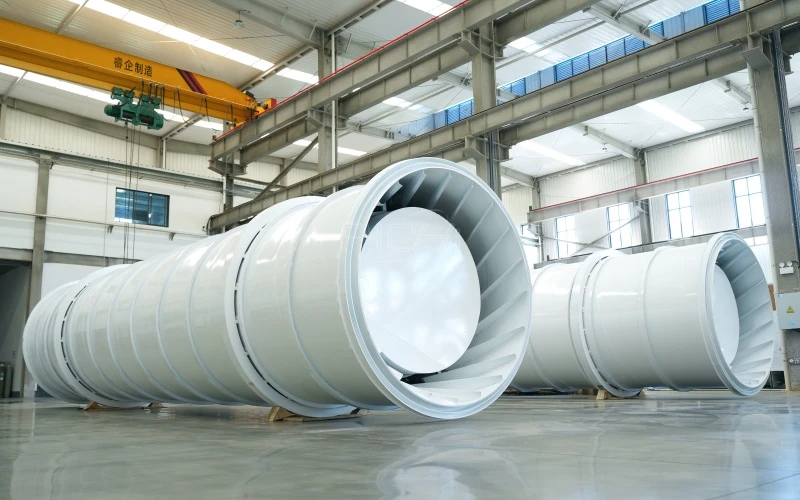
In Arkhangai, the value of a dryer is measured before winter arrives. The customer behind this mixed grass hay dryer in Mongolia project manages a commercial cashmere-goat operation that depends on a short summer haymaking window to build winter forage reserves. Natural meadow grass is available, but rainfall during cutting and field drying can make it difficult to bring every harvested batch down to a safe storage moisture before the weather changes.
Instead of mechanizing the entire forage operation, the customer added one φ1.2×12 single-pass rotary dryer after an existing harvesting system and a separate forage chopper. The dryer is used mainly for mixed native grass harvested from local meadows, with a target final moisture of approximately 12–14% when the material is intended for longer-term winter storage. The project gives the herder another preservation route when natural hay drying is unreliable rather than replacing grazing or conventional haymaking completely.
Name:
Grass Dryer
Country:
Mongolia
Date:
2026
Capacity:
Flexible
Model:
φ1.2×12
Raw material:
mixed-grass hay
Initial Moisture:
65–75%
Final Moisture:
12–14%
Mongolian livestock production still depends heavily on natural pasture, but winter feeding conditions are very different from summer grazing. Arkhangai has a short growing season and established natural-meadow haymaking, while winter and spring forage shortages remain an important constraint for livestock operations.
That makes harvested hay a strategic reserve rather than merely another feed ingredient.
The customer cuts mixed meadow vegetation during the summer when forage growth is strongest. The harvested material includes native grasses with different stem and leaf characteristics, so drying is naturally uneven. Fine leaves can lose moisture relatively quickly, while thicker stems retain water for longer.
Traditional field drying remains part of the farm’s forage system. On clear, dry days, there is little reason to send every tonne of grass through a mechanical dryer. The problem appears when several days of cutting coincide with unsettled weather and the customer has more fresh forage on the ground than can be safely dried outside.
The mixed grass hay dryer in Mongolia was therefore purchased as a weather-risk management tool for the most vulnerable part of the harvest.
The original project was built around a cashmere-goat operation in Arkhangai rather than a large commercial forage plant.
This distinction influenced equipment selection.
A very large dryer would have required more fuel, larger feeding equipment and much greater seasonal raw-material volume to justify the investment. The customer instead needed a unit that could operate intensively during a relatively short haymaking period and then remain idle for much of the year.
The φ1.2×12 matched that operating pattern better than a high-capacity industrial model.
The customer also already had access to harvesting equipment and did not need a turnkey feed factory. Only grass chopping, controlled drying and subsequent hay handling had to be added around the existing forage operation.
The raw material is natural mixed meadow forage rather than a monoculture such as pure alfalfa.
Arkhangai grasslands include a mixture of grasses and broad-leaved species, with fescues, wheatgrass/wild-rye-type grasses and other native pasture species occurring across the mountain-steppe environment. Broad-leaved plants and legumes can also occur in areas with favorable moisture conditions.
The exact botanical composition changes from field to field and from one harvest period to another.
This matters for drying.
A leafy batch has a different bulk density and moisture-release pattern from material containing more mature stems. The customer therefore does not assume that one drum speed and one thermal setting will produce identical results throughout the season.
Fresh mixed grass can contain long stems approaching a meter in length. Feeding that material directly into a rotary dryer can create tangling and balling, reducing air contact and producing an uneven final moisture.
The project therefore includes a forage chopper ahead of the dryer.
The customer typically reduces the grass to approximately 40–60 mm before drying. This length is short enough to improve material movement through the drum while remaining suitable for later forage handling and feeding.
Uniform chopping also stabilizes the feed rate. Instead of alternating between loose leaf material and long stem bundles, the dryer receives a more predictable biomass stream.
| Project Parameter | Configuration |
|---|---|
| Equipment | Mixed grass hay rotary dryer |
| Model | φ1.2×12 |
| Quantity | 1 unit |
| Dryer Type | Single-pass rotary dryer |
| Drum Diameter | 1.2 m |
| Drum Length | 12 m |
| Typical Pre-Chopped Length | Approximately 40–60 mm |
| Project Initial Moisture | Approximately 65–75% for freshly cut material |
| Target Final Moisture | Approximately 12–14% |
| Main Product | Stored mixed-grass hay for winter livestock feeding |
The original project specification uses a 1.2 m diameter and 12 m long drum together with chopped forage preparation. It also identifies approximately 65–75% initial moisture and 12–14% final moisture as the working range for the mixed grass.
These figures are useful for understanding the project, but they do not mean every grass batch enters at 70% moisture. Material that has already wilted in the field can enter much drier and therefore place a substantially smaller evaporation load on the system.
The original project described approximately 1.5–2 T/H of dried hay output. That figure requires careful interpretation when the incoming grass contains 65–75% moisture.
For example, one tonne of fresh grass at 70% moisture contains approximately 300 kg of dry matter and 700 kg of water. If the same dry matter leaves the dryer at 13% moisture, the finished hay mass is only about 345 kg.
This means producing one tonne of finished hay from very wet grass can require close to three tonnes of fresh material and the evaporation of a large quantity of water.
For a relatively compact φ1.2×12 dryer, it is therefore safer to size the project from actual incoming moisture and required evaporation duty rather than automatically claiming 1.5–2 T/H of finished dry hay under every condition.
If the customer field-wilts the grass before mechanical drying, capacity can improve substantially because much of the water has already been removed at almost no thermal cost.
The customer does not deliberately send dripping-wet grass into the dryer whenever weather allows some preliminary wilting.
Field wilting reduces the amount of water that must be evaporated mechanically and therefore lowers fuel demand per tonne of finished hay.
This gives the project a hybrid operating strategy.
On stable sunny days, forage can be dried conventionally. When the weather window is shorter, grass can be wilted for several hours and then finished mechanically. If rain risk is immediate, wetter material can be moved toward the dryer earlier, accepting the higher thermal load in exchange for avoiding prolonged exposure in the field.
This flexibility is more relevant to an Arkhangai herder than operating one fixed drying recipe throughout the season.
Chopped forage enters the rotating drum together with controlled hot air.
Internal lifting elements repeatedly raise and redistribute the material, increasing contact between the grass and drying medium. Moisture is progressively removed while the forage travels through the drum.
Drum speed affects residence time. If the material moves too quickly, thicker stems may leave above the required moisture. Slower movement increases drying time but reduces throughput.
The customer therefore checks discharge moisture rather than relying only on nominal residence time.
The original project used approximately 14–16 minutes as an initial operating reference, with longer residence used when stem-heavy batches dried less evenly. Those values are commissioning references, not universal settings for every Mongolian grass species.
The project specification uses relatively high hot-gas inlet temperatures, around 400–420°C, with much lower exhaust temperatures at the dryer outlet.
This can look alarming if the inlet gas temperature is mistaken for the temperature of the hay itself.
Fresh forage contains a large amount of water. Evaporation absorbs substantial thermal energy, and the wet plant material does not simply reach the same temperature as the entering hot gas.
Nevertheless, thermal input still has to be controlled carefully. Excessive heat combined with a low material feed rate can damage leaves, darken the forage and increase dry-matter losses.
The customer therefore coordinates furnace output with feed rate, incoming moisture and drum speed instead of running continuously at the maximum inlet temperature.
The customer needed a heat source that could operate away from a large urban utility network.
The original project considered locally available solid fuel for the hot-air generator. For an actual installation, fuel selection should be based on current local availability, delivered price, ash handling, emissions requirements and the ability to control combustion reliably.
RICHI therefore does not treat one historical coal price or one fixed kilograms-per-ton consumption value as a permanent project specification.
Fuel consumption changes substantially with incoming moisture.
Grass entering at 45% moisture after field wilting requires much less thermal energy than fresh forage entering at 70% moisture. Insulation quality, outdoor temperature and furnace efficiency also change actual consumption.
Parts of Arkhangai lie at significant elevation, and thinner air can influence combustion equipment and fan performance.
For this reason, the hot-air generator and airflow system should be configured for the actual installation elevation rather than copied directly from a sea-level project.
The original project description used approximately 1,900 meters as the site reference. At that elevation, air density is lower, so combustion-air and induced-draft performance deserve attention during commissioning.
However, the solution is not a universal instruction such as always reducing primary air and increasing secondary air by a fixed amount. Combustion settings depend on the actual burner or furnace design, fuel and measured exhaust condition.
The purpose of the dryer is to produce forage that can be stored with lower spoilage risk.
For this project, approximately 12–14% final moisture is used as the working target for mechanically dried hay intended for storage.
Final moisture should be reasonably uniform, not merely correct on average.
Leaf material can appear dry while thicker stem portions still contain considerably more water. Operators therefore sample from several positions in the discharged material and allow the hay to equilibrate before long-term storage decisions are made.
The customer also avoids packing or stacking hot material immediately after drying. Cooling before dense storage reduces the risk of condensation and local moisture accumulation.
The primary value of mechanical drying is preservation.
It cannot convert over-mature or nutritionally poor grass into premium forage. Harvest timing, botanical composition and field contamination continue to determine much of the feed value.
This is particularly important for cashmere goats, whose winter nutritional requirements cannot be addressed solely by drying technology.
The mechanically dried hay forms part of a winter feeding strategy and can be supplemented with other feeds and minerals according to animal condition and local management practice.
The original suggestion that hot drying breaks lignin bonds enough to make the hay inherently more digestible is therefore not used as a project claim.
Dzud events can severely restrict livestock access to pasture through extreme cold, snow, ice or combinations of difficult climatic conditions.
A dryer obviously cannot prevent dzud.
What it can do is improve the customer’s ability to secure part of the summer forage harvest before winter.
The more hay that reaches an appropriate storage condition during the short production season, the larger the reserve available when animals cannot obtain enough forage from pasture.
This makes the investment fundamentally different from a normal industrial dryer project. The commercial return is tied not only to tonnes of hay sold but also to the value of having a more predictable winter feed reserve.
Dried grass becomes brittle, particularly the leaf fraction.
As material moves through the dryer and subsequent handling equipment, some fines are inevitably generated. An exhaust-separation system is therefore required to control lightweight particles leaving with the airflow.
The original project specified a cyclone in the drying system. The actual collection efficiency should be evaluated from system design rather than expressed as a guaranteed fixed percentage.
Collected forage fines can still have feed value if they remain clean, but they should be handled according to the customer’s feeding practice rather than automatically returned to every ration.
The φ1.2×12 does not have to run all year to justify its role.
Its highest utilization occurs during the summer forage harvest when weather conditions threaten conventional haymaking. Outside that period, maintenance can be carried out and the equipment remains available for the following season.
The customer therefore evaluates capacity according to the tonnes of forage that must be rescued or finished during critical weather windows, not annual livestock feed consumption alone.
This is why one smaller machine is more appropriate for the project than a large continuous industrial drying system.
Mongolia has no seaport, so the equipment leaves China through the inland logistics network rather than following a conventional ocean route to a domestic Mongolian port.
For this project, RICHI shipped the equipment from the company’s production base toward the China–Mongolia transport corridor for onward delivery into Mongolia.
The exact border terminal and routing should be confirmed when the equipment is dispatched because freight arrangements can change with rail availability, truck transport and the customer’s final location.
For the Arkhangai installation, RICHI supplied foundation drawings and installation requirements in advance so the site could be prepared before the dryer arrived.
The biggest lesson during startup was that “mixed grass” is not one uniform raw material.
Leaf-heavy loads dried faster than batches containing more coarse wild-grass stems. Feed rate and drum speed therefore had to be adjusted according to what was entering the machine.
Operators also learned that cutting consistency mattered. When the chopper produced uneven lengths, longer stems tended to retain moisture and made the dryer discharge less uniform.
The team consequently began checking forage preparation before changing thermal settings. In many cases, improving chopping and feed distribution solved the drying problem more effectively than simply increasing furnace temperature.
The main benefit was a new option during difficult haymaking weather.
The herder no longer had to choose only between leaving cut grass outside and accepting whatever weather arrived or abandoning the harvest. When a suitable weather window was too short for complete field drying, the material could be mechanically finished and moved into storage sooner.
This reduced dependence on perfect summer weather and gave the operation more confidence when planning winter forage reserves.
The revised project does not claim that annual hay losses automatically fell from 40% to below 5%, that the dryer paid back in exactly 18 months, or that it guarantees enough feed for every possible dzud. Those results would require verified farm records and depend heavily on the severity of each season.
A rotary forage dryer is unlikely to be economical for every small nomadic household.
The investment becomes more realistic for larger livestock operators, hay contractors, cooperatives or groups of herders that harvest enough forage during a concentrated summer period to use the machine effectively.
The most important figure is not livestock head count by itself.
RICHI needs to know how many tonnes of fresh grass need mechanical drying during the harvest window, what moisture the grass normally has after cutting or wilting, how many hours per day the dryer can operate and what heat source is locally available.
A customer who can field-wilt most of the crop and use mechanical drying only as a finishing step may require a very different dryer capacity from a project that expects to process freshly cut grass directly.
This mixed grass hay dryer in Mongolia project is built around a simple but demanding requirement: preserve more of a short seasonal forage harvest before the long winter begins.
The φ1.2×12 single-pass dryer gives the Arkhangai customer additional control over grass that would otherwise remain exposed to uncertain drying weather. A separate chopper prepares long native forage before the material enters the drum, while moisture testing determines when the hay is ready for cooling and storage.
For another Mongolian project, RICHI Machinery would first evaluate grass type, fresh and wilted moisture, hourly harvest volume, available haymaking days, chopping equipment, fuel availability, site elevation and required final moisture.
With those figures, the company can calculate the actual evaporation load and determine whether a φ1.2×12 dryer is appropriate or whether the project requires another size.
The objective is not to replace Mongolia’s pasture-based livestock system. It is to give livestock producers another way to secure part of the forage they already harvest when weather makes traditional hay drying too uncertain.
Having the right mix of reliable, high-quality pellet machine and pelletizing systems and expert support is essential to your success. Watch how our end-to-end feed pellet plant solutions have helped our customers optimize their performance.
Our customized and future-proofed turnkey pellet plant solutions is designed with you at the core. From vision to reality and beyond, our team stays connected with yours. Giving you peace-of-mind with an expert at your side.
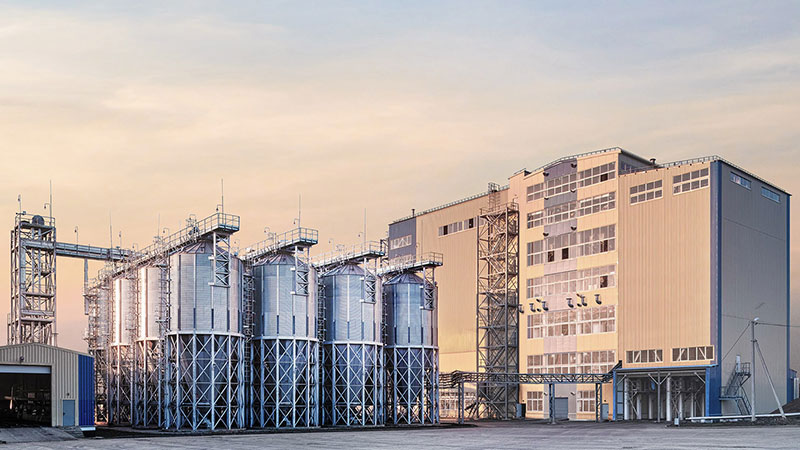
At RICHI, we go beyond project completion. With RICHI Servicee, we’re your dedicated partners in success. Count on us for expert guidance, minimal downtime, and optimized productivity. Choose RICHI for unmatched service and support.
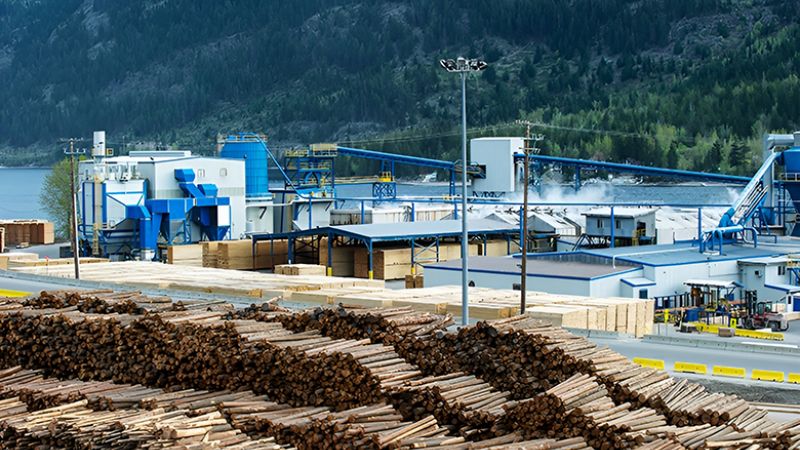


Meet global product demands and quality standards with industry-leading pellet plant design, engineering, equipment, and construction services for pellet processors.


Your Partner Beyond Project Completion
2000+ cases
RICHI is the leading designer, manufacturer and builder of pellet plants in the world, completing over 2000 projects in 140 countries across 6 continents.
Read More
Increase plant productivity, profitability, and safety by integrating high quality equipment into your pellet production line. Over the years, RICHI has become China's top pellet equipment manufacturer. At the same time, RICHI has established valuable partnerships with the world's leading component and raw material manufacturers to bring you the best there is in technology, automation, and efficiency in pelleting plant machinery.

For nearly 30 years, RICHI has been providing best-in-class pellet plant equipment and services to clients across a variety of industries, sizes, and needs. We pride ourselves on the knowledge and skill that each team member possesses – from our technical sales team to our process design engineers. You can count on RICHI Machinery to take your operation to the next level of innovation, quality, and success.
Need help with your pellet manufacturing plant project? Contact us today.
ANIMAL FEED
BIOMASS
WOOD
ORGANIC FERTILIZER
AQUA FEED
CAT LITTER
MUNICIPAL WASTE RECYCLING
SPECIAL PELLET PRODUCTION
RICHI Machinery continues to deliver world class pellet mill equipment, pellet plant engineering and project solutions that add value to our customers in the animal feed, wood waste, agriculture waste, organic fertilizer, cat litter and special pellet products industries. Throughout the years, we RICHI Machinery have built strong brand, becoming industry-leading pellet machine manufacturer. We value integrity, promise quality, and prioritize your success.
Learn MoreWith our expert team, we precisely implement your process engineering requirements in pellet mill and pelletizing plant systems. No matter which industry you’re in – we understand your needs and deliver solutions that meet the highest standards.
At RICHI, quality comes first. Our pellet making machine and related pellet line equipment undergo rigorous quality controls to ensure they meet the highest standards. Rely on products that are durable, safe, and efficient.
With decades of experience in pellet machine and pellet production line production, we have earned a reputation as a trusted partner in various industries. Our expertise allows us to cover a wide range of applications.
Not only do we offer premium pelleting equipment, but we are also experts at designing, building, installing, and maintaining facilities from the ground up. Our expertise is within pellt plant process design, discovering the most efficient, productive, and profitable way to handle your materials in an end-to-end cycle.
○ RICHI MACHINERY
Keeping in touch with us is an effective way to solve all your problems. If you have any needs or questions, please leave your contact information, then RICHI technical consultants will send design, quotation, videos to your mailbox. You can also contact us directly via WhatsApp: +86 13838389622
Copyright©2015-2026 by HENAN RICHI MACHINERY CO., LTD. All rights reserved.