
A compound feed producer in northern Bulgaria selected one RICHI DCS-50F mash feed filling machine in Bulgaria to upgrade the bagging section of its existing feed mill.

A compound feed producer in northern Bulgaria selected one RICHI DCS-50F mash feed filling machine in Bulgaria to upgrade the bagging section of its existing feed mill. The plant manufactures approximately 25,000 tonnes of animal feed annually, but the new filling machine is dedicated to the bagged mash-feed stream rather than being treated as the packaging solution for every tonne produced by the factory.
The customer already had finished-feed bins, conveyors, sewing equipment and warehouse handling systems. The main problem was the weighing and filling stage. Coarse mash containing ground cereals, bran and protein meals did not always flow consistently through the previous manual arrangement, while dust and repeated handling made the packing station difficult to operate efficiently. The DCS-50F was therefore selected as a controlled auger-fed weighing and filling machine for the plant’s mash-feed products.
Name:
Mash feed bagging machine
Country:
Bulgaria
Date:
2026
Capacity:
Flexible
Model:
DCS-50F
Main Bag Sizes:
25 kg and 40 kg
Main Product:
Dry compound mash feed
Main Feed Market:
Pig and dairy-cattle customers
Mash feed does not behave like screened feed pellets.
Pellets are comparatively dense and often flow readily under gravity. Mash is a mixture of ground particles with different shapes, densities and surface characteristics.
Ground wheat or maize can flow relatively well, while wheat bran, sunflower meal and other fibrous ingredients can make the mixture lighter and less predictable.
Small amounts of oil or molasses can change the behavior again.
For this Bulgarian customer, the selected pig and cattle mash feeds showed enough bridging and inconsistent free flow that a simple gravity-fed filler was not the preferred configuration.
An auger feeder provides positive mechanical movement from the hopper toward the weighing section.
This gives the packing system more control when the product does not descend consistently under its own weight.
However, RICHI does not state that gravity filling can never work for mash or that every mash product requires an auger.
The feeding method is selected from the actual product’s flow behavior.
| Project Parameter | Configuration |
|---|---|
| Equipment | Mash feed weighing and filling machine |
| Model | DCS-50F |
| Feeding Method | Auger feeding |
| Reference Dynamic Accuracy | Approximately ±0.2% under suitable product and calibration conditions |
| Main Bag Sizes | Approximately 25 kg and 40 kg |
| Main Product | Dry compound mash feed |
| Main Feed Market | Pig and dairy-cattle customers |
| Bag Closing | Existing sewing equipment retained |
| Project Type | Existing feed-mill packing-section retrofit |
The auger-fed arrangement is particularly useful when the product requires controlled mechanical feeding rather than unrestricted free fall.
As the target bag weight approaches, the filling system can reduce material feed so that the weighing process is easier to control.
The approximately ±0.2% dynamic accuracy should be understood as a reference machine-performance value.
For a 25 kg bag, 0.2% corresponds to approximately 50 grams.
For a 40 kg bag, it corresponds to approximately 80 grams.
This does not mean every bag will always remain within those exact deviations.
Actual performance depends on mash flowability, auger cut-off behavior, product bulk density, vibration, scale calibration and filling settings.
The feed mill produces approximately 25,000 tonnes annually, but equipment selection should use actual bagged tonnage rather than total mill production.
Some customers may receive feed in bags, while larger farms can justify bulk delivery depending on the mill’s distribution system.
The automatic packing machine therefore serves a defined product stream.
This distinction matters when calculating machine capacity.
If all 25,000 tonnes were packed into 25 kg bags, the plant would need to handle approximately one million bags per year.
If all 25,000 tonnes were packed into 40 kg bags, the annual quantity would still be approximately 625,000 bags.
Those are very different operating requirements from a plant where only one-third or one-half of annual feed output is bagged.
RICHI therefore asks for peak bagged tonnes per hour and bags per hour rather than choosing a filling machine solely from the factory’s annual production figure.
Filling-machine cycle rate needs to be converted into tonnes per hour using the actual bag weight.
For example, five 25 kg bags per minute correspond theoretically to 7.5 T/H.
The same five cycles with 40 kg bags correspond to 12 T/H.
But the complete packaging line may not sustain the maximum filler cycle rate.
Bag placement, weighing, discharge, sewing, conveyor movement and pallet handling all consume time.
Heavier bags also create different ergonomic and downstream handling demands.
A 40 kg bag should therefore not be treated simply as a faster way to increase tonnes per hour.
The customer also needs to consider who handles the filled bags and whether the existing conveyor and palletizing arrangement is suitable.
The northern Bulgarian plant produces compound mash based on locally and regionally available feed materials.
Bulgaria has a strong cereal sector, with wheat and barley remaining particularly important crops.
Maize is also used in animal feeding, although domestic availability and quality can change considerably between crop years.
The customer’s mash formulas can therefore include cereal grains such as wheat, barley and maize together with protein meals, bran, oilseed by-products, minerals, vitamins and other approved feed ingredients.
The exact formula changes according to whether the feed is intended for pigs or dairy cattle and according to ingredient economics.
This variation affects the packing machine.
A wheat-barley pig mash may have a different bulk density and flow behavior from a dairy concentrate containing more fibrous bran or meal.
The operator therefore verifies filling performance when switching between substantially different product families.
The term “mash” covers a wide range of particle distributions.
Some feeds are relatively fine, while others contain visibly coarse cereal fragments and fibrous ingredients.
RICHI does not define every mash product as a fixed 3–5 mm material.
The feed mill grinds ingredients according to the nutrition and production requirements first.
The packing system then has to accommodate the resulting finished product.
Very fine mash can become dusty and aerated.
Coarse fibrous mash can interlock and bridge.
Large differences in particle density can also influence segregation during storage and handling before the product reaches the bagger.
The DCS-50F therefore works best when the upstream finished-feed bin provides stable product supply and the auger receives a reasonably consistent material rather than alternating between empty flow and sudden collapses of bridged feed.
Positive screw feeding is useful, but the auger itself cannot solve every hopper-flow problem.
If material forms a stable arch high above the auger inlet, the screw cannot pull down feed that never reaches it.
This is why hopper geometry and product flow assistance are part of the installation review.
Depending on the mash behavior, agitation or other anti-bridging measures may be required above the feeder.
The plant also avoids excessively wet or sticky feed entering the finished-product bin.
If molasses or liquid addition is high enough to create strong adhesion, RICHI would reassess feeder design instead of simply increasing auger speed.
This makes the DCS-50F a controlled feeding solution, not a guarantee of “no bridging, no clogging” under every formula.
One of the customer’s major concerns was dust in the manual packing area.
An enclosed auger helps contain material during part of the transfer process, but it does not make a mash-feed bagging station dust-free.
Dust can still escape when feed enters the packing hopper, when an empty bag is attached, during filling and when the filled bag is released.
The packing point therefore needs suitable local extraction and good housekeeping.
Dry feed dust can also accumulate around motors, bearings, electrical cabinets and structural surfaces if cleaning is neglected.
For an EU feed-mill environment, dust management is both an occupational issue and a plant-safety consideration because fine organic dust can be combustible under suitable conditions.
The new filler therefore needs to connect with the customer’s broader aspiration and cleaning system rather than being marketed as a standalone dust-control device.
The customer wanted to reduce dependence on repetitive manual bag filling, but the DCS-50F should not be described as a machine that automatically replaces exactly two or three employees.
Labor requirement depends on how automated the entire packaging section is.
If an operator still positions each empty bag, another station closes the bag, and workers manually palletize the finished product, significant labor remains.
The main improvement is that weighing and controlled product filling no longer need to be performed manually.
This reduces one repetitive task and allows the plant to organize operators around bag placement, sewing, quality checks and pallet handling.
If labor availability becomes more restrictive, the customer can later evaluate automatic bag placement or robotic palletizing without replacing the weighing filler itself.
The weighing system needs verification during production.
Operators periodically remove filled bags and compare them on an appropriate reference scale.
This helps identify drift before a large packing run is affected.
Check weighing is especially useful when the plant changes from a 25 kg pig-feed product to a 40 kg cattle-feed product or switches to a formula with substantially different bulk density.
The operator does not recalibrate after every bag.
Instead, the plant uses production checks to determine whether adjustment is actually required.
Overfilling and underfilling also need to be treated separately.
Persistent overfill creates unnecessary product giveaway.
Underweight packaging creates a different commercial and regulatory risk.
The filling machine supports weight control, but compliance depends on the feed producer’s complete weighing, verification, labeling and quality-management system.
Replacing a manual filler with a faster machine can expose limitations elsewhere in the packaging area.
The Bulgarian customer therefore retains existing sewing equipment only where it can support the required production rate.
If the DCS-50F fills bags faster than operators can close and remove them, material begins accumulating after the filling station.
The same issue applies to palletizing.
Increasing filler speed provides little value if heavy 40 kg bags have to wait on the conveyor for manual handling.
RICHI Machinery therefore checks the complete packaging path:
This allows the customer to automate the actual bottleneck rather than simply buying the fastest filling machine available.
This mash feed filling machine in Bulgaria project uses one RICHI DCS-50F auger-fed weighing and filling system at an established compound feed mill in northern Bulgaria.
The plant produces approximately 25,000 tonnes of feed annually, but the DCS-50F is selected for the bagged mash-feed portion of that production rather than the entire factory output.
The main products handled by the machine are dry pig and dairy-cattle mash feeds packed in approximately 25 kg and 40 kg bags according to customer requirements.
Auger feeding was selected because the customer’s coarse mash does not flow as consistently as dry pellets.
The screw feeder provides controlled mechanical movement toward the weighing system, while the existing sewing and downstream handling equipment can be retained where their capacities remain adequate.
The approximately ±0.2% reference dynamic accuracy is verified with the actual Bulgarian feed during commissioning and routine check weighing.
The equipment does not guarantee zero bridging or dust.
Hopper geometry, mash moisture, particle distribution, liquid content and dust extraction remain part of the complete packing-system design.
For another buyer searching for a mash feed filling machine in Bulgaria, mash feed bagging machine, animal feed filling machine, auger feed packing machine, 25 kg feed packing machine, 40 kg cattle feed bagger or DCS-50F feed packing machine, RICHI first evaluates the physical behavior of the finished mash.
Useful information includes feed type, particle-size distribution, bulk density, moisture, oil or molasses inclusion, tendency to bridge, target bag weights, bags per hour, annual bagged tonnage, existing finished-feed bin, dust extraction, sewing equipment and palletizing method.
If the product is dry and sufficiently free-flowing, a simpler gravity configuration may be possible.
If it is coarse or poorly flowing mash, auger or belt feeding can be evaluated from material trials and plant layout.
If the product is extremely fine powder or a specialty premix, dust containment, cleanability and product-contact material requirements become more important than those of ordinary compound mash.
For a northern Bulgarian feed-mill retrofit, send RICHI representative mash information or product samples, 25 kg and 40 kg production percentages, peak bags per hour, bulk density, moisture, current hopper dimensions and the existing bag-closing arrangement. These parameters allow the mash feed filling machine to be selected around the actual flow and packing bottleneck rather than the plant’s 25,000 T/Y total capacity.
Having the right mix of reliable, high-quality pellet machine and pelletizing systems and expert support is essential to your success. Watch how our end-to-end feed pellet plant solutions have helped our customers optimize their performance.
Our customized and future-proofed turnkey pellet plant solutions is designed with you at the core. From vision to reality and beyond, our team stays connected with yours. Giving you peace-of-mind with an expert at your side.
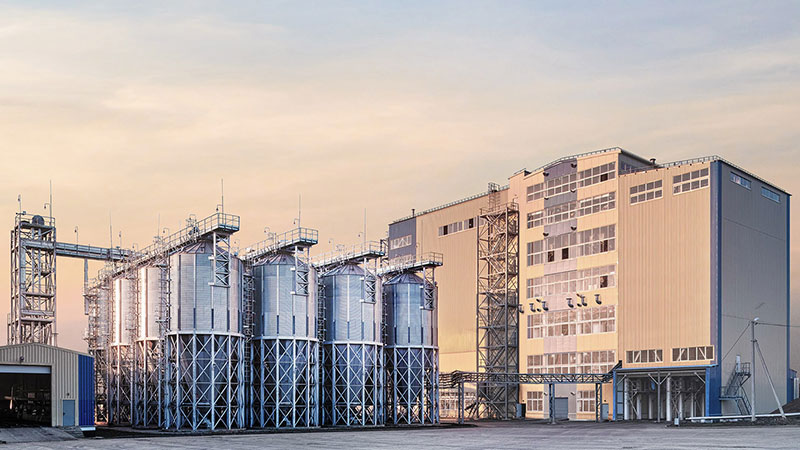
At RICHI, we go beyond project completion. With RICHI Servicee, we’re your dedicated partners in success. Count on us for expert guidance, minimal downtime, and optimized productivity. Choose RICHI for unmatched service and support.
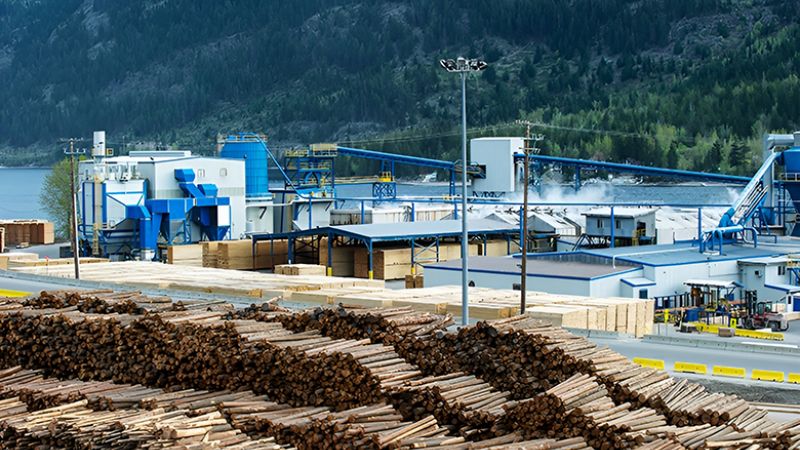


Meet global product demands and quality standards with industry-leading pellet plant design, engineering, equipment, and construction services for pellet processors.


Your Partner Beyond Project Completion
2000+ cases
RICHI is the leading designer, manufacturer and builder of pellet plants in the world, completing over 2000 projects in 140 countries across 6 continents.
Read More
Increase plant productivity, profitability, and safety by integrating high quality equipment into your pellet production line. Over the years, RICHI has become China's top pellet equipment manufacturer. At the same time, RICHI has established valuable partnerships with the world's leading component and raw material manufacturers to bring you the best there is in technology, automation, and efficiency in pelleting plant machinery.

For nearly 30 years, RICHI has been providing best-in-class pellet plant equipment and services to clients across a variety of industries, sizes, and needs. We pride ourselves on the knowledge and skill that each team member possesses – from our technical sales team to our process design engineers. You can count on RICHI Machinery to take your operation to the next level of innovation, quality, and success.
Need help with your pellet manufacturing plant project? Contact us today.
ANIMAL FEED
BIOMASS
WOOD
ORGANIC FERTILIZER
AQUA FEED
CAT LITTER
MUNICIPAL WASTE RECYCLING
SPECIAL PELLET PRODUCTION
RICHI Machinery continues to deliver world class pellet mill equipment, pellet plant engineering and project solutions that add value to our customers in the animal feed, wood waste, agriculture waste, organic fertilizer, cat litter and special pellet products industries. Throughout the years, we RICHI Machinery have built strong brand, becoming industry-leading pellet machine manufacturer. We value integrity, promise quality, and prioritize your success.
Learn MoreWith our expert team, we precisely implement your process engineering requirements in pellet mill and pelletizing plant systems. No matter which industry you’re in – we understand your needs and deliver solutions that meet the highest standards.
At RICHI, quality comes first. Our pellet making machine and related pellet line equipment undergo rigorous quality controls to ensure they meet the highest standards. Rely on products that are durable, safe, and efficient.
With decades of experience in pellet machine and pellet production line production, we have earned a reputation as a trusted partner in various industries. Our expertise allows us to cover a wide range of applications.
Not only do we offer premium pelleting equipment, but we are also experts at designing, building, installing, and maintaining facilities from the ground up. Our expertise is within pellt plant process design, discovering the most efficient, productive, and profitable way to handle your materials in an end-to-end cycle.
○ RICHI MACHINERY
Keeping in touch with us is an effective way to solve all your problems. If you have any needs or questions, please leave your contact information, then RICHI technical consultants will send design, quotation, videos to your mailbox. You can also contact us directly via WhatsApp: +86 13838389622
Copyright©2015-2026 by HENAN RICHI MACHINERY CO., LTD. All rights reserved.