
A cattle farm near Hargeisa uses an SFSP56×40a machine for grinding corn for feed to prepare maize and sorghum in scheduled batches for its existing mixer.
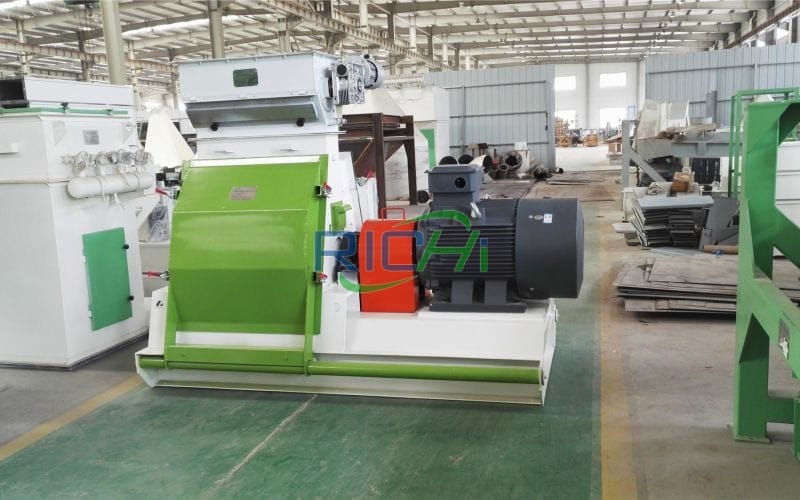
A medium-sized dairy cattle operation near Hargeisa selected an SFSP56×40a Machine for Grinding Corn for Feed in Somalia to prepare part of its grain concentrate on site. The farm keeps approximately 200 cattle and already had a small batch mixer for combining ground grain with purchased protein ingredients, bran, minerals and other ration components, but whole maize still had to be processed outside the farm.
The customer purchased only the hammer mill because grinding was the missing process. With a 30 kW main motor and a reference capacity of approximately 3–5 T/H under suitable feed-grain conditions, the SFSP56×40a allows maize and similar cereal ingredients to be processed in short production campaigns rather than requiring a large continuous feed mill. This scale also fits the farm more realistically than installing a 75 kW grinder designed for substantially higher commercial throughput.
Name:
Feed grain hammer mill
Country:
Somalia
Date:
2026
Capacity:
3–5 T/H
Model:
SFSP56×40a
Power:
30 kW
Rotating Speed:
2980 r/min
Raw Materials:
Dry maize
The cattle operation was already able to weigh and mix dry feed ingredients. Purchasing another mixer, storage system or complete pellet line would not have solved the specific processing gap.
The missing capability was controlled reduction of whole grain.
Instead of buying ground maize in every delivery, the farm can purchase suitable whole grain, store it under controlled conditions and grind quantities according to its feeding schedule.
This gives the customer more flexibility in grain purchasing without suggesting that owning a hammer mill automatically makes the complete ration cheaper. Delivered grain price, storage losses, electricity, labour and maintenance still have to be included in the feed-cost calculation.
| Project Parameter | Configuration |
|---|---|
| Equipment | Feed grain hammer mill |
| Model | SFSP56×40a |
| Quantity | 1 unit |
| Main Motor Power | 30 kW |
| Rotating Speed | Approximately 2980 r/min |
| Reference Capacity | Approximately 3–5 T/H under suitable feed-material conditions |
| Primary Material | Dry maize for cattle concentrate preparation |
| Secondary Grain | Sorghum when formulation and availability make it suitable |
| Particle Control | Interchangeable screens selected according to the required grain distribution |
| Downstream Equipment | Existing batch mixer |
| Installation Type | Standalone grain-grinding machine for on-farm feed preparation |
The 3–5 T/H figure is a reference machine range rather than a guaranteed corn output under every screen setting. Grain moisture, kernel hardness, feeder stability, hammer condition and required fineness all affect practical throughput.
The feed crusher machine does not need to operate for a full shift every day.
The farm uses campaign grinding. Several tonnes of grain can be prepared during a relatively short operating period and stored temporarily in a clean grain-meal bin for subsequent mixer batches.
This is different from sizing a hammer mill for a commercial compound-feed factory where grain passes continuously through the grinding section for many hours.
For an on-farm system, a faster short campaign can be practical if the customer has enough storage before and after the machine and if the existing mixer can consume the prepared grain over the following feeding period.
This also keeps the hammer mill available when a larger grain delivery needs to be processed without requiring it to run continuously at a small fraction of its motor load.
Maize is a realistic feed ingredient in the Hargeisa and Gabiley agricultural zone, but cereal production in Somaliland is not based on maize alone.
Sorghum is also an important rain-fed crop and can be relevant to livestock feeding when price, quality and formulation make it competitive.
The customer therefore does not build the feeding program around the assumption that locally grown corn will be abundant and inexpensive throughout the year.
Whole maize can be purchased when suitable material is available, while other cereal ingredients can be evaluated according to delivered cost and nutritional requirements.
This purchasing flexibility is more realistic in a dryland feed market where crop output can vary substantially between seasons.
The SFSP56×40a is not used simply because every ingredient appears in the cattle formula.
Whole maize and sorghum need mechanical size reduction before they can be mixed effectively. Other materials may already arrive in a usable physical form.
This separation reduces unnecessary processing and keeps the machine focused on the material for which it was selected.
The cattle still require appropriate fibrous feed in addition to concentrate ingredients.
Crop residues, stored fodder, hay and other roughage materials have very different physical characteristics from maize kernels. Long stems can bridge above a grain grinder and create unstable feeding.
If the farm later wants to process long dry forage mechanically, bale opening or chopping should be evaluated separately before any secondary fine grinding.
The corn hammer mill therefore does not become a universal machine for maize, hay, straw and every other ingredient on the farm.
The farm does not use a permanent 2–3 mm target for every batch of cattle grain.
Hammer-milled corn leaves the screen as a particle distribution rather than as identical particles of one diameter. Screen opening, hammer condition and grain properties all influence the proportion of coarse particles and fines.
For cattle feeding, making the grain as fine as possible is not the objective.
Excessively fine corn increases the amount of rapidly available starch and can contribute to an undesirable rumen fermentation pattern when a high-concentrate ration is not properly managed.
Material that remains too coarse can also reduce consistency in mixing and may leave inadequately processed kernels.
The farm therefore evaluates the complete particle distribution and adjusts the screen according to how the grain will be used in the ration.
For coarse cattle-feed grain preparation, a screen in approximately the 4–6 mm range can provide a practical starting point for testing.
This does not mean that every particle leaving a 5 mm screen measures exactly 5 mm. Corn fractures into a range of pieces and fines as the hammers repeatedly impact the kernels.
The customer checks the actual ground sample before confirming its routine screen.
If too much fine material appears, a larger screen or another grinding adjustment can be evaluated. If too many large kernel fragments remain for the intended mixer and ration, the grinding condition can be tightened.
A Machine for Grinding Corn for Feed in Somalia should not be expected to separate stones, metal and storage contamination while simultaneously performing fine grinding.
Whole grain is inspected before it reaches the hammer mill.
A magnetic separation point ahead of the high-speed rotor is useful for reducing the risk of ferrous metal entering the grinding chamber. Stones and non-magnetic foreign material require appropriate cleaning or screening.
This matters for both feed safety and machine wear. A small piece of metal entering a high-speed hammer mill can damage screens or hammers and create unnecessary downtime.
Purchasing maize in larger lots only makes sense when the farm can store it without significant moisture or pest damage.
Incoming grain is therefore checked before it enters long-term storage.
Material that is visibly mouldy, heated or otherwise unsuitable for cattle feed should not be made acceptable simply by grinding it into smaller particles.
The grain store needs protection from rain and ground moisture, along with reasonable ventilation and stock rotation.
This is particularly important when the farm purchases grain during periods of better availability and expects to process it over several weeks or months.
The animal feed hammer mill changes physical size. It does not increase the energy or protein content of maize and it cannot remove mycotoxins or other feed-quality problems.
Feed quality therefore begins with grain purchasing and storage.
The customer evaluates corn condition before grinding rather than judging the ingredient only by how easily it passes through the machine.
This distinction becomes more important when grain is sourced from multiple traders or production areas and quality varies between deliveries.
After grinding, maize moves to the farm's existing mixer.
There it can be combined with appropriate protein ingredients, bran or other by-products, mineral-vitamin supplementation and other components according to the feeding program.
The hammer mill does not determine those proportions.
A lactating dairy cow, a dry cow and a growing animal do not have identical nutrient requirements. The amount of ground corn used in their rations therefore needs to follow nutritional formulation rather than a permanent farm recipe.
Increasing corn inclusion simply because the farm can now grind it economically would not be sound ration management.
The SFSP56×40a can prepare grain faster than a small batch mixer machine may consume it.
That difference is handled through buffering rather than by forcing both machines to have identical hourly capacities.
A suitable bin or protected holding point can receive ground grain from the hammer mill. The mixer then draws the required amount for each batch.
The useful buffer size depends on the mixer batch weight, cycle time, daily feed demand and how frequently the grinder is operated.
This is why a standalone grain grinder can be integrated successfully with smaller downstream equipment when production is planned in campaigns.
Stable hammer-mill operation requires controlled material delivery.
Dumping grain into the machine faster than the selected screen can release it increases chamber load and motor current. Starving the grinder for long periods also wastes installed capacity.
The inlet arrangement therefore regulates corn flow so the grinding chamber receives a reasonably steady load.
Operators monitor motor behavior together with throughput and ground-product condition instead of treating feeder speed as a fixed setting for every grain batch.
Dry corn grinding produces dust and fine particles.
The farm therefore needs an enclosed discharge and suitable aspiration or dust-separation arrangement rather than allowing powder to escape freely inside the feed room.
Good airflow also helps material leave the grinding chamber after it passes through the screen.
Dust management is especially relevant in a dry operating environment because settled organic dust can accumulate rapidly on motors, floors and structural surfaces.
Routine housekeeping remains necessary even when mechanical dust collection is installed.
The value of corn grinding is not dependent on installing a pellet mill.
Ground grain can be incorporated into a mixed concentrate or another on-farm ration according to the feeding program.
If the customer later chooses to produce pellet feed, the mash would require appropriate formulation, mixing, steam conditioning, pelletizing and cooling equipment.
The hammer mill would remain the grain-preparation stage rather than becoming a complete pellet-feed system.
A 30 kW hammer mill creates a significant motor load for a farm installation.
Site preparation therefore includes verification of the available three-phase electrical supply, transformer or generator capacity where applicable, cable size, motor protection and starting arrangement.
The machine should not be selected on grinding capacity alone if the farm's electrical system cannot support motor startup reliably.
Where power conditions are restrictive, the electrical design needs to be confirmed before shipment rather than assuming one export-market voltage configuration will work at every Somali site.
The principal wear components in a feed hammer mill include hammers and screens.
Their service interval cannot be defined by one universal number of operating hours.
Clean maize produces a different wear pattern from grain containing sand and mineral contamination. Smaller screens and finer grinding also influence workload and wear.
The operator therefore checks hammer edges, screen condition, rotor balance and bearings according to machine condition and tonnes processed.
A rise in power consumption together with declining throughput can be one indication that the grinding section needs inspection.
The SFSP56×40a is prepared for sea transport from Qingdao to Berbera before inland road delivery toward Hargeisa.
For equipment destined for this part of Somaliland, Berbera provides the practical container and general-cargo gateway and connects inland through the regional road corridor.
Before shipment, the customer receives the information required to prepare the equipment position, including installation dimensions, electrical requirements, material inlet and outlet arrangement, aspiration interfaces and maintenance clearance.
Ocean schedules, port handling and inland delivery are coordinated from the confirmed shipment plan rather than presented as a fixed number of transport days.
If the project were a regional commercial feed mill processing many tonnes of grain throughout each shift, a larger SFSP model could be appropriate.
RICHI's feed hammer mill range extends through 37 kW, 55 kW, 75 kW and larger configurations with progressively higher reference capacities.
That does not mean a farm should automatically select the next larger model to create expansion reserve.
An oversized grinder increases installed power and requires more upstream and downstream capacity while spending more operating time underloaded.
For this Hargeisa cattle farm, expansion should first be measured through actual daily grain demand, mixer utilization and storage capacity.
A Machine for Grinding Corn for Feed in Somalia should be selected from the actual tonnes of whole grain requiring size reduction, not from total cattle-feed consumption alone. Hay, bran, premix and other ingredients may bypass the corn-grinding section entirely.
For another cattle or livestock-feed project, RICHI Machinery would first review animal numbers, daily concentrate requirement, percentage of maize and sorghum in the ration, annual grain volume, grain moisture, required particle distribution, operating hours, mixer batch size, storage capacity, dust-control arrangement and available electrical supply.
Those details determine whether an SFSP56×40a provides sufficient capacity or whether a larger grinder is justified. The right machine is the one that can prepare the required grain efficiently without forcing a farm-scale mixer and electrical system to support unnecessary installed capacity.
Having the right mix of reliable, high-quality pellet machine and pelletizing systems and expert support is essential to your success. Watch how our end-to-end feed pellet plant solutions have helped our customers optimize their performance.
Our customized and future-proofed turnkey pellet plant solutions is designed with you at the core. From vision to reality and beyond, our team stays connected with yours. Giving you peace-of-mind with an expert at your side.
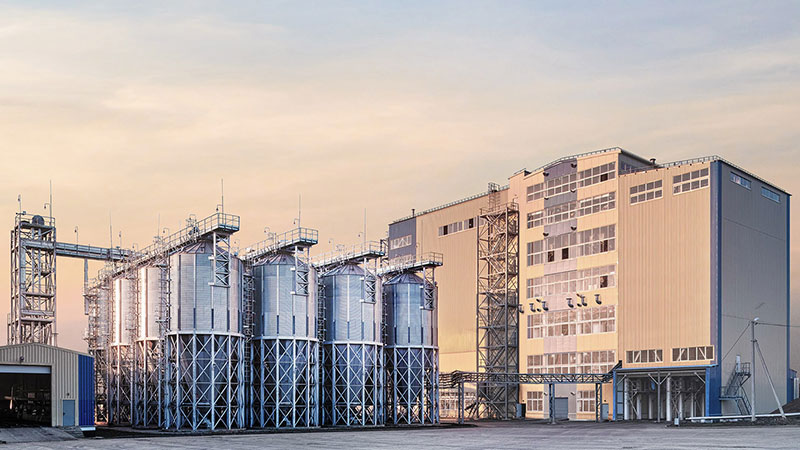
At RICHI, we go beyond project completion. With RICHI Servicee, we’re your dedicated partners in success. Count on us for expert guidance, minimal downtime, and optimized productivity. Choose RICHI for unmatched service and support.
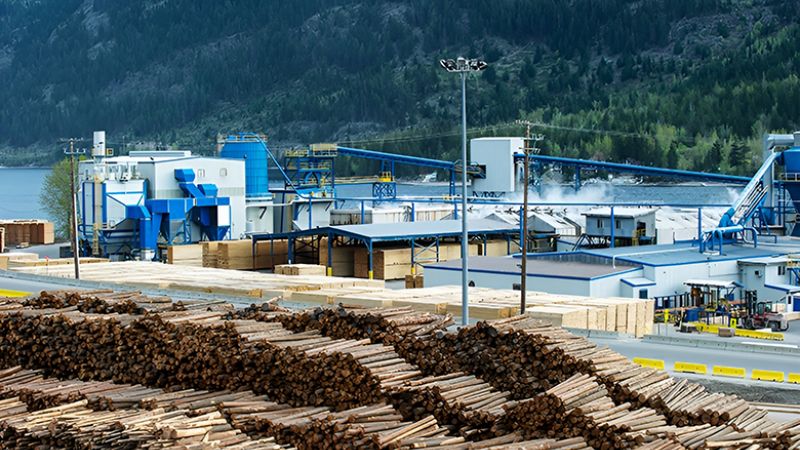


Meet global product demands and quality standards with industry-leading pellet plant design, engineering, equipment, and construction services for pellet processors.

Your Partner Beyond Project Completion
2000+ cases
RICHI is the leading designer, manufacturer and builder of pellet plants in the world, completing over 2000 projects in 140 countries across 6 continents.
Read More
Increase plant productivity, profitability, and safety by integrating high quality equipment into your pellet production line. Over the years, RICHI has become China's top pellet equipment manufacturer. At the same time, RICHI has established valuable partnerships with the world's leading component and raw material manufacturers to bring you the best there is in technology, automation, and efficiency in pelleting plant machinery.

For nearly 30 years, RICHI has been providing best-in-class pellet plant equipment and services to clients across a variety of industries, sizes, and needs. We pride ourselves on the knowledge and skill that each team member possesses – from our technical sales team to our process design engineers. You can count on RICHI Machinery to take your operation to the next level of innovation, quality, and success.
Need help with your pellet manufacturing plant project? Contact us today.
ANIMAL FEED
BIOMASS
WOOD
ORGANIC FERTILIZER
AQUA FEED
CAT LITTER
MUNICIPAL WASTE RECYCLING
SPECIAL PELLET PRODUCTION
RICHI Machinery continues to deliver world class pellet mill equipment, pellet plant engineering and project solutions that add value to our customers in the animal feed, wood waste, agriculture waste, organic fertilizer, cat litter and special pellet products industries. Throughout the years, we RICHI Machinery have built strong brand, becoming industry-leading pellet machine manufacturer. We value integrity, promise quality, and prioritize your success.
Learn MoreWith our expert team, we precisely implement your process engineering requirements in pellet mill and pelletizing plant systems. No matter which industry you’re in – we understand your needs and deliver solutions that meet the highest standards.
At RICHI, quality comes first. Our pellet making machine and related pellet line equipment undergo rigorous quality controls to ensure they meet the highest standards. Rely on products that are durable, safe, and efficient.
With decades of experience in pellet machine and pellet production line production, we have earned a reputation as a trusted partner in various industries. Our expertise allows us to cover a wide range of applications.
Not only do we offer premium pelleting equipment, but we are also experts at designing, building, installing, and maintaining facilities from the ground up. Our expertise is within pellt plant process design, discovering the most efficient, productive, and profitable way to handle your materials in an end-to-end cycle.
○ RICHI MACHINERY
Keeping in touch with us is an effective way to solve all your problems. If you have any needs or questions, please leave your contact information, then RICHI technical consultants will send design, quotation, videos to your mailbox. You can also contact us directly via WhatsApp: +86 13838389622
Copyright©2015-2026 by HENAN RICHI MACHINERY CO., LTD. All rights reserved.