
Large tree chipper in Latvia for processing pine, spruce and clean forestry residues into 20–40 mm wood chips. Explore the XPJ850×500 drum chipper, technical specifications, wood-chip applications and RICHI Machinery equipment support.
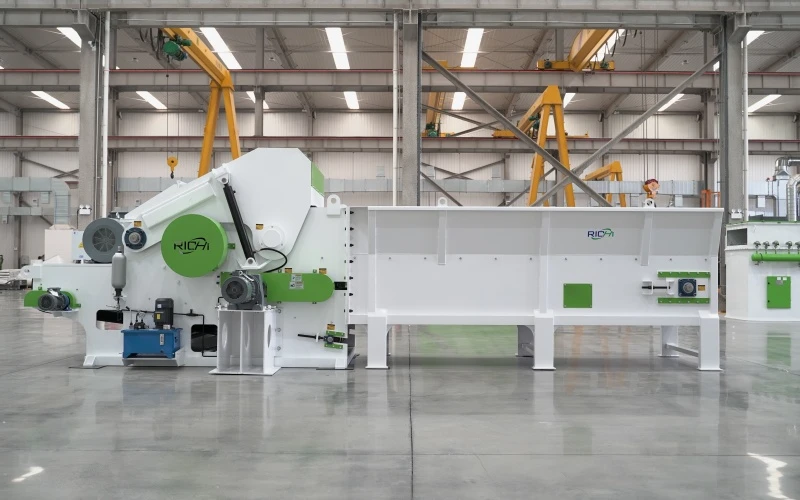
The large tree chipper in Latvia is intended for a wood-processing business that needs to handle larger timber offcuts, pine branches and spruce harvesting residues more efficiently. The project focuses on converting clean, recoverable wood into 20–40 mm wood chips for downstream biomass fuel preparation. Rather than purchasing a complete new processing line, the customer plans to add one XPJ850×500 drum chipper to an existing material-handling setup, making better use of the conveyors and screening equipment already available on site.
The customer is a regional forestry and wood-residue processor serving sawmills, timber contractors and local biomass users. Its incoming material varies from straight small-diameter logs to branching tops, trimming residues and slabwood. The main reason for purchasing a larger wood chipper is to handle thicker pieces that are inconvenient for the existing preparation arrangement. The XPJ850×500 provides a maximum stated feed diameter of 500 mm, a 132 kW main motor and a hydraulic-assisted feeding system. Its intended output is wood chips around 20–40 mm, with final chip quality depending on the feedstock and screen configuration.
Name:
Tree Chipper
Country:
Latvia
Date:
2026
Capacity:
Flexible
Model:
XPJ850×500
Main Motor Power:
132 kW
Feeding motor power:
4 + 3 kW
Final product size:
20–40 mm
Latvia has a well-established forestry and wood-processing sector. Timber harvesting, sawmilling and the handling of wood-processing residues create several potential sources of material for a wood chipper, including branches, treetops, small-diameter timber and clean offcuts. Latvia's official forestry statistics track industrial roundwood, wood chips, wood particles and residues, reflecting the importance of these material streams in the national wood industry.
For a processor operating in this environment, the commercial opportunity is not simply to produce as many chips as possible. The more immediate task is to convert irregular incoming wood into a consistent intermediate product that can be handled by existing conveyors, screened to a buyer's specification and supplied to a suitable downstream user.
The project is based on material collected from forestry contractors and nearby timber-processing operations. The proposed feedstock includes pine and spruce branches, clean treetops and selected small-diameter logs, together with untreated slabwood and trimming offcuts from sawmilling. The exact mix changes with harvesting schedules and sawmill production, so the business needs a chipper that can accommodate variation in timber diameter without requiring every piece to be reduced manually beforehand.
This application suits Latvia's wood-processing context because the customer can source forestry residues and sawmill by-products through established local supply relationships. It does not depend on an assumed supply of exotic timber or imported agricultural waste. Before commercial operation, the customer would still need to confirm seasonal volumes, supplier quality, transport costs and the quantity of material available after existing uses have been accounted for.
The customer is not starting from an empty site. The operation already has material reception space, timber-handling equipment and downstream conveying and screening arrangements. The immediate investment is intended to strengthen the chipping stage, where larger pieces of wood need to be reduced before they can enter the existing handling route.
Purchasing one large tree chipper is a more focused decision than replacing the entire production setup. The customer can retain usable equipment, keep the material flow familiar to the operating team and concentrate the new investment on the machine that determines the initial chip size. The existing conveyor arrangement can be connected to the new chipper after the interface heights, discharge direction and required clearances have been checked.
The incoming wood is inspected before chipping. Clean branches, tops and suitable timber offcuts can enter the preparation process, while pieces containing stones, metal, wire or excessive soil are separated for inspection. Root balls and heavily contaminated stumps are not treated as routine feedstock for this project because embedded soil and stones can damage cutting components and compromise chip quality.
This distinction matters in forestry work. A large tree chipper is designed to process suitable wood, not to act as a universal machine for every material pulled from the forest. By defining what can enter the machine, the customer can make better use of the cutting system and avoid unnecessary wear caused by unsuitable material.
The selected XPJ850×500 chipper crusher machine is the largest-feed-diameter option in the supplied XPJ model list that uses a 500 mm maximum feed diameter. It is suited to a project where larger branches, clean timber offcuts and selected small logs need to be processed without first cutting every piece into short sections. The model also has a more substantial cutting arrangement than the smaller XPJ configurations.
The equipment specification for this project is as follows:
The above motor ratings and knife configuration follow the supplied XPJ850×500 specifications. A guaranteed hourly throughput cannot be established from the model table alone because no capacity figure was provided. Actual output will depend on the wood species, log diameter, branch structure, moisture condition, feeding rate, screen configuration and the way the incoming material is presented to the cutting rotor.
The planned feedstock consists mainly of pine and spruce residues, with selected birch offcuts accepted when the material is clean and suitable for the intended chip specification. Pine and spruce are relevant choices for a Latvian forestry and sawmilling scenario, while birch is a familiar deciduous timber in the region. The customer does not need every delivery to contain the same species, but it does need to identify the material type and keep unsuitable waste out of the production stream.
Forestry residues arrive in different forms. Some deliveries consist of long branches and treetops left after harvesting; others contain small-diameter stems collected during stand management. The sawmill supplies a separate stream of slabwood, edging offcuts and short timber pieces. These materials differ in shape, diameter and how easily they can be gripped by the feed rollers, so the operator needs to monitor how each batch enters the machine.
Clean sawmill offcuts can be especially useful because they may be more uniform than irregular branches. However, their dimensions still need to fit the machine's inlet and feeding arrangement. Material that is too long or awkwardly shaped may need to be cut or repositioned before feeding, even when its diameter is within the stated limit.
Moisture is also recorded, although the chipper itself is not a drying machine. Fresh forestry residues may be wetter than stored timber offcuts, and this can influence bulk density, storage behavior and the suitability of the resulting chips for different buyers. If the downstream customer requires a controlled moisture level, drying must be handled separately after chipping or through another suitable preparation stage.
The drum chipper's role is to reduce the size of suitable timber so that the resulting chips can be conveyed, screened and supplied to the next process. The planned chip range for this project is 20–40 mm. That range provides a clear starting specification for handling and storage, but the actual size distribution must be checked during commissioning and adjusted to suit the buyer's requirements.
Once the wood is positioned at the inlet, the hydraulic-assisted feeding system helps the feed rollers grip material of different diameters and guide it toward the cutting chamber. This is useful when the feedstock includes a mix of branches and thicker timber. Controlled feeding reduces reliance on manual pushing and helps the operator maintain a more consistent flow into the machine.
Inside the cutting chamber, the flying knives work against the fixed knives to cut the wood into chips. The screen configuration can be selected according to the required product specification. Since the screen size is customizable, the final setup should be confirmed with the intended end use in mind rather than chosen solely on the basis of the machine model.
After discharge, the chips can move onto the existing belt conveyor and through the site's screening arrangement. Oversized pieces may require recirculation or separate handling, depending on the plant layout. Fines can also be separated where necessary. The resulting product should be sampled regularly so that the customer can identify whether a change in incoming timber, knife condition or feeding behavior is affecting the chip-size distribution.
The primary planned outlet for this project is biomass fuel preparation. The 20–40 mm chips will be evaluated as an intermediate raw material for a downstream process that may include further size reduction, drying or screening before fuel production. The exact route depends on the final buyer's specification and the requirements of the equipment used downstream.
For biomass fuel applications, chip size is only one part of product quality. Moisture, bark content, fines, ash-forming contamination and the species mix may all influence the next processing stage. If the chips are intended for a pellet mill, they will generally require further size reduction and moisture adjustment to meet that mill's feed requirements. The large tree chipper therefore serves as the first size-reduction stage, not as a machine that produces finished wood pellets.
Suitable wood chips can also serve other established industrial purposes, including selected pulp and panel-board processes, where the buyer's raw-material specifications permit the supplied species and chip dimensions. Those markets have their own requirements for cleanliness, chip geometry, bark content and size distribution. The processor should agree on the specification with each buyer before changing the screen or mixing different wood streams.
The project is not based on claiming that every 20–40 mm chip is acceptable for every application. Instead, the customer can produce a defined chip range and then qualify the material for the intended market. That approach reduces uncertainty when discussing product quality and makes it easier to establish repeatable supply terms with downstream users.
The XPJ850×500 Drum Wood Chipper uses a welded body made from high-strength steel plate to provide structural support for the cutting system. For a machine handling thick timber, the frame and housing need to withstand repeated operating loads while maintaining the alignment of key components. The machine's construction is therefore an important part of the overall equipment selection.
The flying knives are secured to the rotor with specially designed bolts and a pressure-tightening arrangement. This fixing system is intended to hold the knives firmly in position during operation. The supplied knife material is 6GrW2Si, with heat treatment used to improve hardness and wear resistance. Knife life will still depend on the timber species, contamination level, cutting conditions and maintenance practice.
The rotor is checked using dynamic balancing equipment to help control vibration during high-speed operation. Proper rotor balance supports smoother running and reduces unnecessary mechanical stress. It does not remove the need for routine inspection: the operator still needs to check knife condition, fasteners, bearing areas and other maintenance points according to the equipment manual.
The hydraulic-assisted feed arrangement is another relevant feature for this application. Branches and small logs do not all have the same diameter or surface shape. Adjustable feed-roller engagement helps the system grip the incoming wood and maintain forward movement. The operator must nevertheless follow the permitted feeding procedure and avoid placing oversized or unsuitable material into the machine.
The discharge belt provides a direct route for moving chips away from the cutting area. This reduces the need for repeated manual collection and allows the machine to work as part of a more continuous handling process. The conveyor interface and discharge height should be checked against the existing line before installation so that the new chipper fits the site's actual material flow.
The equipment decision is based on the required feed diameter, the target chip size and the need to integrate the machine with existing equipment. The XPJ850×500 offers a 500 mm stated feed diameter and a ten-knife cutting arrangement, making it a relevant candidate for the customer's mixture of branches, tops and selected timber offcuts.
Before finalizing the order, RICHI Machinery can review photographs and dimensions of the customer's typical feedstock, confirm the intended chip-size range and check the required screen configuration. This review helps establish whether the material is suitable for the selected model and whether the customer needs additional preparation steps for unusually long or irregular pieces.
RICHI can also assist with the equipment layout, including inlet access, discharge direction, conveyor height, maintenance clearance and the position of the electrical control system. These details matter when adding a single machine to an operating site because the new equipment must fit the existing workflow without obstructing timber handling or routine service work.
Before shipment, the customer can confirm the motor ratings, feeder arrangement, hydraulic system and discharge conveyor specifications against the final order. Operating and maintenance documentation can be supplied for installation planning and staff training. The commissioning process should cover safe feeding practices, routine knife inspection, cleaning, lubrication and the steps required before any maintenance work begins.
The planned shipment originates at Qingdao Port in China. The Port of Riga is the proposed destination port for the machinery. Located on the Gulf of Riga at the mouth of the Daugava River, it is a major Latvian cargo port with facilities for timber, containerized goods and other general cargo.
The final shipping arrangement should be confirmed with the freight forwarder based on the packed machine dimensions, loading method, vessel schedule and the selected terminal. Before dispatch, the receiving site should prepare the unloading area and verify the access route for the machine and its components.
Installation planning should also account for the machine's main motor, feeder motors, hydraulic pump and discharge belt. The electrical supply and protective devices must be checked against the final equipment documentation, and the interfaces with the existing conveyor system should be confirmed before the machine arrives.
For this project scenario, the customer's main evaluation points are the ability to handle thicker timber, the consistency of the discharged chips and the ease of integrating the chipper with existing conveyors. These points can be measured during commissioning without relying on general claims about output or savings.
After processing representative batches of pine, spruce and clean sawmill offcuts, the operator should record the material type, approximate diameter range, moisture condition, screen configuration and chip-size distribution. These records will help establish whether different feedstock streams can be processed under the same settings or whether separate operating procedures are needed.
Any customer testimonial should be collected after the machine has been installed and used under actual working conditions. The most useful feedback would address practical matters such as feeding behavior, chip consistency, maintenance access and how well the machine connects to the existing material-handling arrangement. A verified quotation can then be added to the published case without inventing performance results.
The large tree chipper in Latvia is planned as a single-machine investment for a forestry and wood-residue processor that already has a downstream handling setup. By selecting the XPJ850×500, the customer is focusing on the stage where larger branches, clean treetops and timber offcuts need to be converted into manageable wood chips.
The machine's 132 kW main motor, 500 mm stated maximum feed diameter, hydraulic-assisted feeding system and ten flying knives provide the core configuration for the intended application. The planned 20–40 mm chip range gives the customer a defined intermediate product for biomass preparation, subject to confirmation of the final screen and material trials.
For forestry contractors, sawmills and biomass processors considering a large tree chipper, drum wood chipper or industrial wood chipping machine, RICHI Machinery can review the actual timber dimensions, wood species, target chip size and existing equipment before recommending a configuration. Matching the machine to the feedstock and the site's handling system is the starting point for a reliable investment and a practical production workflow.
Having the right mix of reliable, high-quality pellet machine and pelletizing systems and expert support is essential to your success. Watch how our end-to-end feed pellet plant solutions have helped our customers optimize their performance.
Our customized and future-proofed turnkey pellet plant solutions is designed with you at the core. From vision to reality and beyond, our team stays connected with yours. Giving you peace-of-mind with an expert at your side.

At RICHI, we go beyond project completion. With RICHI Servicee, we’re your dedicated partners in success. Count on us for expert guidance, minimal downtime, and optimized productivity. Choose RICHI for unmatched service and support.



Meet global product demands and quality standards with industry-leading pellet plant design, engineering, equipment, and construction services for pellet processors.


Your Partner Beyond Project Completion
2000+ cases
RICHI is the leading designer, manufacturer and builder of pellet plants in the world, completing over 2000 projects in 140 countries across 6 continents.
Read More
Increase plant productivity, profitability, and safety by integrating high quality equipment into your pellet production line. Over the years, RICHI has become China's top pellet equipment manufacturer. At the same time, RICHI has established valuable partnerships with the world's leading component and raw material manufacturers to bring you the best there is in technology, automation, and efficiency in pelleting plant machinery.

For nearly 30 years, RICHI has been providing best-in-class pellet plant equipment and services to clients across a variety of industries, sizes, and needs. We pride ourselves on the knowledge and skill that each team member possesses – from our technical sales team to our process design engineers. You can count on RICHI Machinery to take your operation to the next level of innovation, quality, and success.
Need help with your pellet manufacturing plant project? Contact us today.
ANIMAL FEED
BIOMASS
WOOD
ORGANIC FERTILIZER
AQUA FEED
CAT LITTER
MUNICIPAL WASTE RECYCLING
SPECIAL PELLET PRODUCTION
RICHI Machinery continues to deliver world class pellet mill equipment, pellet plant engineering and project solutions that add value to our customers in the animal feed, wood waste, agriculture waste, organic fertilizer, cat litter and special pellet products industries. Throughout the years, we RICHI Machinery have built strong brand, becoming industry-leading pellet machine manufacturer. We value integrity, promise quality, and prioritize your success.
Learn MoreWith our expert team, we precisely implement your process engineering requirements in pellet mill and pelletizing plant systems. No matter which industry you’re in – we understand your needs and deliver solutions that meet the highest standards.
At RICHI, quality comes first. Our pellet making machine and related pellet line equipment undergo rigorous quality controls to ensure they meet the highest standards. Rely on products that are durable, safe, and efficient.
With decades of experience in pellet machine and pellet production line production, we have earned a reputation as a trusted partner in various industries. Our expertise allows us to cover a wide range of applications.
Not only do we offer premium pelleting equipment, but we are also experts at designing, building, installing, and maintaining facilities from the ground up. Our expertise is within pellt plant process design, discovering the most efficient, productive, and profitable way to handle your materials in an end-to-end cycle.
○ RICHI MACHINERY
Keeping in touch with us is an effective way to solve all your problems. If you have any needs or questions, please leave your contact information, then RICHI technical consultants will send design, quotation, videos to your mailbox. You can also contact us directly via WhatsApp: +86 13838389622
Copyright©2015-2026 by HENAN RICHI MACHINERY CO., LTD. All rights reserved.