
A Bulgarian feed-ingredient processor uses one industrial rotary dryer to reduce pressed sugar beet pulp from about 74–76% moisture to approximately 10–12% for cattle-feed distribution.
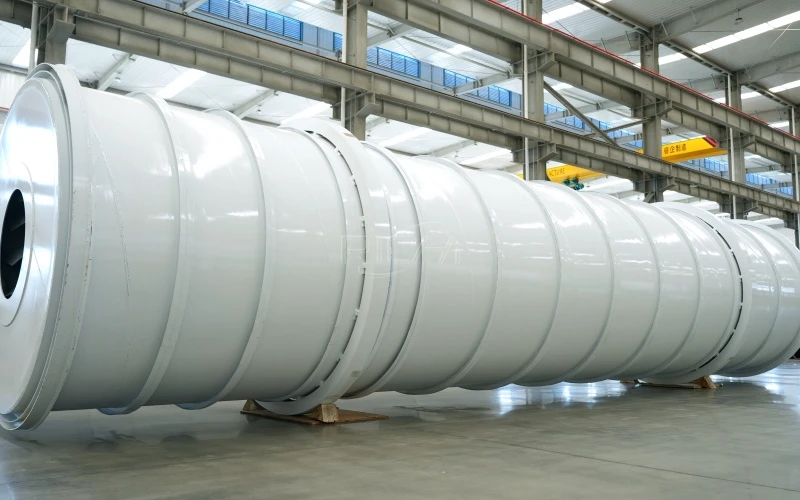
A feed-ingredient processor in northern Bulgaria selected one Industrial Beet Pulp Dryer in Bulgaria to dry seasonally purchased pressed sugar beet pulp for cattle-feed customers. The company already operated wet-material receiving, conveying, dry-product cooling, storage and bagging equipment, so the project focused on one rotary drying section rather than a complete feed production line.
The customer does not depend on a large local sugar-beet factory. Pressed pulp is purchased under seasonal contracts from regional suppliers and handled in short campaigns because its high water content makes long storage and long-distance transport costly. The dryer is therefore sized around water evaporation, incoming dry matter and realistic campaign hours instead of a headline wet-feed tonnage.
Name:
Single-pass rotary beet pulp dryer
Country:
Bulgaria
Date:
2026
Capacity:
1.0–1.3 T/H
Model:
φ1.8 × 20 m
Main Motor Power:
30 kW
Raw Materials:
sugar beet pulp
Target Dried-Pulp Moisture:
10–12%
Bulgaria is not one of Europe's large sugar-beet processing bases, so the project uses a regional procurement model rather than claiming continuous pulp output from a nearby sugar mill. The customer schedules deliveries when pressed pulp is available from neighboring markets, keeps wet inventory low and moves each lot into drying quickly to limit heating, fermentation and material loss before processing.
This business model also explains why the dryer is used as multi-season feed byproduct drying equipment in Bulgaria. Beet pulp is the priority material during its campaign, while compatible wet feed ingredients can occupy other operating windows after separate process trials. The plant does not blend unrelated byproducts into beet pulp automatically; each material is run only when its moisture, thermal behavior and feed-use status are suitable.
Dried beet pulp is marketed mainly as a fibrous feed ingredient for dairy and beef cattle compound feeds. The dryer does not formulate a ration or create nutritional value; it reduces water so the pulp can be stored and transported more practically. Protein, fibre, ash and sugar values still depend on the incoming pulp and are declared from representative product analysis rather than from dryer settings.
| Project Parameter | Configuration |
|---|---|
| Equipment | Single-pass rotary beet pulp dryer |
| Dryer Size | φ1.8 × 20 m |
| Drum Diameter | 1.8 m |
| Drum Length | 20 m |
| Rotational Speed Range | Approximately 3–10 rpm |
| Inlet Hot-Gas Range | Approximately 350–500°C, set according to material trials |
| Outlet Gas Range | Approximately 70–85°C |
| Main Drum Drive | 30 kW |
| Water Evaporation Capacity | Approximately 2.5–3.5 T/H |
| Practical Wet Pulp Feed | Approximately 3.5–4.5 T/H at about 74–76% moisture |
| Target Dried-Pulp Moisture | Approximately 10–12% |
| Approximate Dried Output | About 1.0–1.3 T/H, depending on incoming dry matter |
| Main Product | Loose dried sugar beet pulp for feed use |
The practical wet-feed range is lower than a generic 5–7 T/H claim because pressed beet pulp can contain roughly three quarters water. At 74–76% moisture, drying 3.5–4.5 T/H to about 10–12% moisture requires roughly 2.5–3.3 T/H of water evaporation. This mass balance fits the selected dryer far better than quoting wet-feed capacity without checking the amount of water that must actually leave the drum.
The 30 kW figure applies to the drum drive only. Fans, fuel handling, wet-feed conveyors, discharge conveying, cooling and dust separation add their own electrical demand, while the thermal duty is much larger than the mechanical drive load. The customer therefore plans the sugar beet pulp drying machine in Bulgaria around evaporation energy, airflow and fuel supply rather than using motor power as a proxy for total energy demand.
Pressed beet pulp typically contains only about one quarter dry matter, so incoming moisture is checked for every delivery. A wetter load can push the evaporation system to its limit even when the conveyor is feeding fewer tonnes per hour. A drier load may allow a higher wet-feed rate, but only if outlet moisture, exhaust temperature and product condition remain stable across the full drum residence period.
The plant uses a buffer hopper and controlled feeder so dense wet lumps do not surge into the drum. Large agglomerates are opened before drying because a thick wet core can leave the dryer above specification while the outer surface appears dry. The pressed beet pulp dryer in Bulgaria is therefore operated as a moisture-removal system with controlled feed presentation, not as a machine that can correct any incoming physical condition.
Operators avoid over-drying as well. Product that leaves far below the intended moisture range can create more dust, consume unnecessary heat and reduce saleable mass. The operating target is a stable feed ingredient that can be cooled and stored safely, with final moisture verified by routine sampling rather than inferred only from inlet temperature, burner setting or drum speed.
The RICHI beet pulp rotary dryer in Bulgaria performs drying only. It does not pelletize the material, balance a cattle ration or guarantee a specific nutrient profile. If a buyer later wants beet pulp pellets, cooling and any required size conditioning take place before a separate pellet mill. Keeping these unit operations distinct prevents dryer capacity from being confused with finished pellet capacity.
Cooling after the drum is important because hot dried pulp should not enter enclosed storage or bags immediately. The downstream cooler is sized around about 1.0–1.3 T/H of dried product rather than 3.5–4.5 T/H of wet feed. That difference is a direct result of water removal and is one of the main reasons mass balance is checked before conveyor, cooler and storage equipment are selected.
The immediate product from this animal feed ingredient dryer in Bulgaria is loose dried fibrous pulp, not a finished cylindrical pellet. For that reason, the case does not assign an 8 mm or 10 mm pellet diameter to the dryer output. Physical fibre size depends on the pulp leaving the sugar-extraction and pressing process, while the dryer mainly alters moisture and handling condition.
The target moisture is about 10–12% for storage and feed distribution, with actual acceptance based on the customer's product specification and laboratory checks. Dried beet pulp is valued as a digestible fibre and energy ingredient in cattle feeding, but the dryer does not make it a complete feed. Compound-feed manufacturers still formulate protein, minerals, vitamins and other ingredients around the intended animal group.
If downstream pelletizing is added, pellet diameter must be selected from that separate product and market requirement. It should not be copied from the dryer's drum size, outlet temperature or feed rate. This distinction is part of the site's quality control because a wet-material dryer and a ring-die pellet mill solve completely different process problems even when they appear in the same feed-ingredient facility.
Direct rotary drying requires controlled hot-gas temperature, adequate material dispersion and reliable exhaust flow. The inlet gas can be several hundred degrees Celsius while the product itself remains much cooler because evaporation absorbs heat, so inlet-gas temperature must not be confused with pulp temperature. Burner control is tied to feed rate, exhaust condition and outlet moisture instead of one fixed temperature for every load.
Dry beet-pulp fines can become airborne at the discharge, cooling and transfer points, so enclosed conveying and dust separation are included around the dryer section. Housekeeping is particularly important near hot equipment and bearings. The plant monitors buildup, airflow and bearing condition as part of routine fire-risk control rather than relying on the drum shell alone to contain every dust hazard.
The customer also limits wet-pulp residence before drying because pressed beet pulp keeps poorly when exposed to air. Deliveries are scheduled around operating capacity, and material showing fungal growth, sour odor or abnormal heating is isolated rather than pushed through the dryer. Drying reduces water; it is not used to rescue spoiled feed material or make unsuitable raw material acceptable for livestock feed.
The rotary dryer can enter Bulgaria through the Port of Burgas, which handles general and bulk cargo, before inland transport to the installation site. Final routing depends on package dimensions, carrier service and the forwarder's plan, so the project does not assign fixed sea-transit or customs days. Site preparation focuses on foundation loads, drum alignment, duct routing, fan position, fuel connection and maintenance clearance.
Because beet pulp is seasonal and Bulgaria's domestic supply is limited, the plant does not justify a second dryer from peak wet-feed availability alone. It first reviews annual campaign tonnes, supplier distance, storage losses, fuel cost and off-season utilization. A larger drying section becomes reasonable only when contracted wet material and compatible secondary feed byproducts can keep the evaporation system productively loaded.
For another buyer evaluating an Industrial Beet Pulp Dryer in Bulgaria, the key inputs are pressed-pulp moisture, tonnes available per campaign, supplier distance, required final moisture, operating hours, preferred fuel, permitted exhaust system, cooling capacity, storage method and available L × W × H. Those data determine whether this dryer class or another wet beet pulp drying system in Bulgaria is the better fit.
Having the right mix of reliable, high-quality pellet machine and pelletizing systems and expert support is essential to your success. Watch how our end-to-end feed pellet plant solutions have helped our customers optimize their performance.
Our customized and future-proofed turnkey pellet plant solutions is designed with you at the core. From vision to reality and beyond, our team stays connected with yours. Giving you peace-of-mind with an expert at your side.
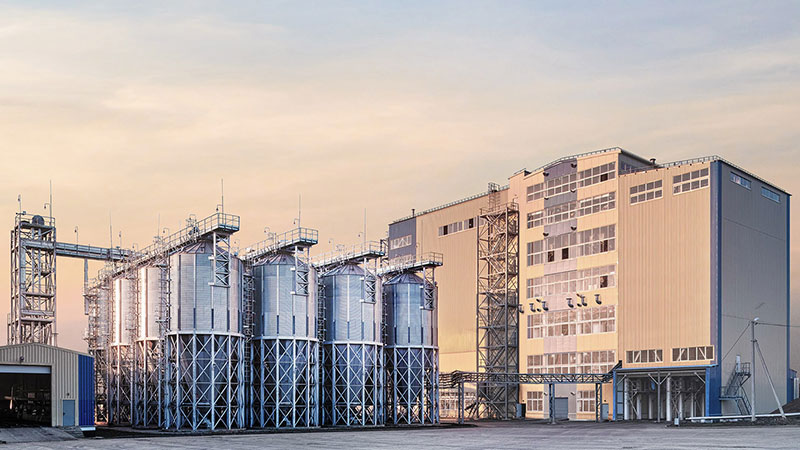
At RICHI, we go beyond project completion. With RICHI Servicee, we’re your dedicated partners in success. Count on us for expert guidance, minimal downtime, and optimized productivity. Choose RICHI for unmatched service and support.
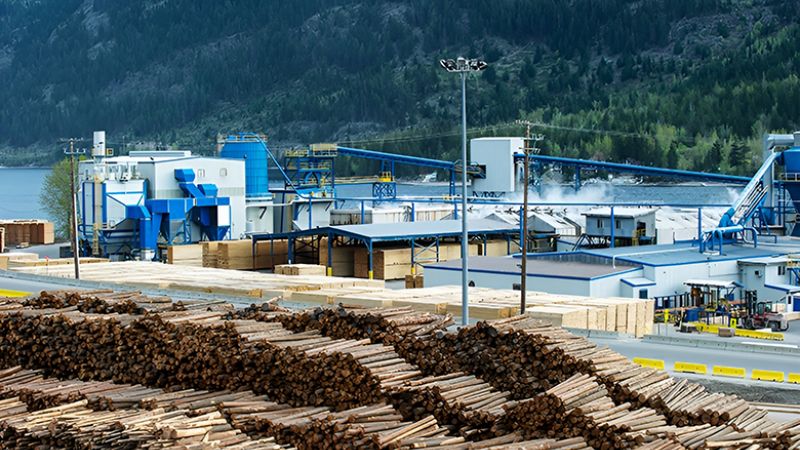


Meet global product demands and quality standards with industry-leading pellet plant design, engineering, equipment, and construction services for pellet processors.


Your Partner Beyond Project Completion
2000+ cases
RICHI is the leading designer, manufacturer and builder of pellet plants in the world, completing over 2000 projects in 140 countries across 6 continents.
Read More
Increase plant productivity, profitability, and safety by integrating high quality equipment into your pellet production line. Over the years, RICHI has become China's top pellet equipment manufacturer. At the same time, RICHI has established valuable partnerships with the world's leading component and raw material manufacturers to bring you the best there is in technology, automation, and efficiency in pelleting plant machinery.

For nearly 30 years, RICHI has been providing best-in-class pellet plant equipment and services to clients across a variety of industries, sizes, and needs. We pride ourselves on the knowledge and skill that each team member possesses – from our technical sales team to our process design engineers. You can count on RICHI Machinery to take your operation to the next level of innovation, quality, and success.
Need help with your pellet manufacturing plant project? Contact us today.
ANIMAL FEED
BIOMASS
WOOD
ORGANIC FERTILIZER
AQUA FEED
CAT LITTER
MUNICIPAL WASTE RECYCLING
SPECIAL PELLET PRODUCTION
RICHI Machinery continues to deliver world class pellet mill equipment, pellet plant engineering and project solutions that add value to our customers in the animal feed, wood waste, agriculture waste, organic fertilizer, cat litter and special pellet products industries. Throughout the years, we RICHI Machinery have built strong brand, becoming industry-leading pellet machine manufacturer. We value integrity, promise quality, and prioritize your success.
Learn MoreWith our expert team, we precisely implement your process engineering requirements in pellet mill and pelletizing plant systems. No matter which industry you’re in – we understand your needs and deliver solutions that meet the highest standards.
At RICHI, quality comes first. Our pellet making machine and related pellet line equipment undergo rigorous quality controls to ensure they meet the highest standards. Rely on products that are durable, safe, and efficient.
With decades of experience in pellet machine and pellet production line production, we have earned a reputation as a trusted partner in various industries. Our expertise allows us to cover a wide range of applications.
Not only do we offer premium pelleting equipment, but we are also experts at designing, building, installing, and maintaining facilities from the ground up. Our expertise is within pellt plant process design, discovering the most efficient, productive, and profitable way to handle your materials in an end-to-end cycle.
○ RICHI MACHINERY
Keeping in touch with us is an effective way to solve all your problems. If you have any needs or questions, please leave your contact information, then RICHI technical consultants will send design, quotation, videos to your mailbox. You can also contact us directly via WhatsApp: +86 13838389622
Copyright©2015-2026 by HENAN RICHI MACHINERY CO., LTD. All rights reserved.