
An industrial beet pulp dryer in Argentina was delivered to a customer in Córdoba Province. But this was not a single-machine order.The customer bought two identical units at the same time. That is unusual. Most first-time buyers start with one machine to test the market.
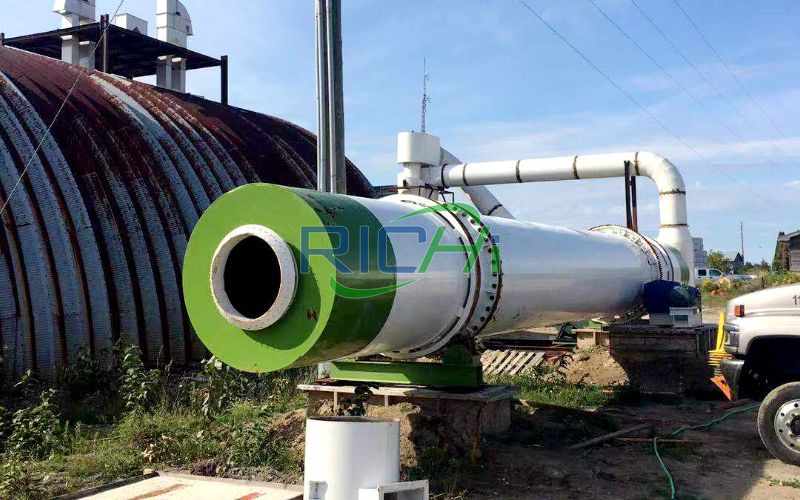
An industrial beet pulp dryer in Argentina was delivered to a customer in Córdoba Province. But this was not a single-machine order.The customer bought two identical units at the same time. That is unusual. Most first-time buyers start with one machine to test the market.
This customer was different. They had already done the testing - with a small pilot dryer they rented from a local university for six months.
They knew exactly what they needed and how much capacity they required. The customer runs a sugar beet processing facility that handles about 200,000 tons of beets per year.
That is larger than most of the operations we have worked with in other countries. Their wet pulp output during harvest season is roughly 1,200 tons per day.
Name:
Beet Pulp Dryer
Country:
Argentina
Date:
2026
Capacity:
10 -14 tons per hour
Model:
φ1.8*20
Raw material:
Sugar Beet Tailings
Inlet Temperature:
400 to 500°C
Outlet Temperature:
70 to 80°C
A single dryer could handle that volume, but it would need to run 22 hours per day with no downtime for maintenance.
That is risky. If the dryer breaks during harvest, they lose an entire day of pulp drying.
Wet pulp cannot be stored. It spoils within 48 hours.
Their solution was to buy two smaller dryers instead of one large one. Each machine handles about half the volume.
If one dryer goes down, the other keeps running at reduced capacity, and they can still process most of their wet pulp.
The customer calculated that the extra cost of a second machine was worth the insurance against a harvest-season shutdown.
Here is how the customer justified two dryers to their board. A single large dryer (φ1.8*36 single-pass) would cost about $100,000 -$280,000USD.
Two medium dryers (φ1.8*20 each) would cost about $250,000 total - $50,000 more.
But the single large dryer would require a 45 kW motor, while the two smaller dryers would require 30 kW each (60 kW total). The difference in electricity cost is minimal. The real difference is in maintenance and uptime.
| Scenario | Single large dryer | Two medium dryers |
|---|---|---|
| Annual uptime (estimated) | 85% | 96% |
| Harvest season downtime risk | One breakdown = 50% loss | One breakdown = 25% loss |
| Spare parts inventory | Complete set required | Can share between units |
| Operator training | One team | Two teams (redundancy) |
The board approved the higher upfront cost because the projected revenue from the 2025 harvest alone would cover the difference. The customer had already signed supply contracts with dairy farms in Santa Fe and Buenos Aires provinces for dried pulp at $380 USD per ton.
At that price, losing even one day of production during harvest would cost them roughly $15,000. The second dryer effectively insures them against that loss.
Unlike the Kenyan and Brazilian customers who chose three-pass dryers, this customer selected single-pass units.
The reason is maintenance. Their facility has a well-equipped mechanical workshop, and their maintenance team has experience with single-pass dryers from other applications in their plant.
Three-pass dryers are more efficient, but they have more internal moving parts and are harder to access for repairs.
The customer valued serviceability over efficiency. The two dryers are identical. This simplifies spare parts inventory - one set of bearings, one set of belts, one set of lifting flights fits both machines.
If one dryer breaks, the maintenance team can cannibalize parts from the other dryer if necessary (though they have not had to do that yet). Here is the configuration they selected for each unit:
| Configuration Item | Specification | Details |
|---|---|---|
| Selected Model (each) | φ1.8*20 | Single-pass rotary dryer |
| Drum Diameter | 1.8 meters | Standard configuration |
| Drum Length | 20 meters | Single-pass design |
| Number of Passes | 1 | Single-pass |
| Rotational Speed | 4 to 8 rpm | Variable operation |
| Inlet Temperature | 400 to 500°C | High-efficiency drying |
| Outlet Temperature | 70 to 80°C | Stable discharge |
| Main Drive Power | 30 kW each | Independent drive |
| Wet Feed Capacity (each) | 5 to 7 T/H | Per dryer |
| Combined Capacity | 10 to 14 T/H | Two dryers combined |
This customer does something most sugar processors do not. They separate their beets by size before processing.
Large beets go to the main sugar extraction line. Small beets and beet tailings - the thin root ends - go to a separate line.
The tailings have lower sugar content but higher fiber content than the main beets. The pulp from tailings is actually more valuable as animal feed because of the higher fiber.
The customer dries the tailings pulp separately from the main pulp. The tailings pulp is sold as a premium product to equine feed manufacturers. Horses digest beet pulp fiber better than cows do, and the higher fiber content from tailings is ideal for horse feeds.
The main pulp goes to dairy farms. This segregation allows the customer to charge about $420 USD per ton for the tailings pulp compared to $350 for the main pulp.
The two dryers are dedicated to different pulps. Dryer A handles main pulp. Dryer B handles tailings pulp. This avoids cross-contamination. The customer samples the output from each dryer weekly to verify moisture content and fiber levels.
Natural gas is available in Córdoba, but it is expensive. The customer wanted an alternative. They looked at wood waste, but Córdoba is not a forestry region. They looked at agricultural residues, but most crop residues in the area are already used for other purposes.
Their solution was unusual: they built a partnership with a local peanut processor.
Argentina is a major peanut producer, and Córdoba is the center of the peanut industry. Peanut shells are a waste product with high energy content. The peanut processor was paying to haul shells to a landfill. Now they pay the sugar processor to take the shells.
The sugar processor dries the shells and burns them in a specially modified furnace. The shells are high in lignin, which burns hot and clean. The furnace on each dryer was modified with a vibrating grate to handle the light, flaky peanut shells.
The customer reports that one ton of peanut shells produces about 70% of the heat of one ton of natural gas, but the shells cost essentially nothing except transportation.
The customer had to reconfigure their facility to accommodate two dryers. The original plan was to install the dryers in parallel, with a common feed conveyor and a common discharge conveyor. But space was tight.
The solution was to install them in series - one dryer feeding dried pulp directly into a storage bin, the other dryer feeding into a separate bin. This required longer conveyors but less floor space. The installation took six weeks for both dryers, including the conveyor modifications.
RICHI Machinery sent two field engineers to Córdoba for the final week of installation and commissioning. The customer had already prepared their operators with remote training sessions over three weeks.
Eight months after commissioning, the customer's plant manager sent us a detailed report. Here is an excerpt:
"We have completed one full harvest season with both dryers running. Total uptime for Dryer A was 94%. Dryer B was 92%. The lower number for Dryer B was due to a bearing failure in week three.
Because we had two dryers, we continued processing tailings pulp on Dryer A while repairing Dryer B. The bearing was replaced in six hours. If we had only one dryer, that six hours would have cost us about 40 tons of lost drying capacity. The peanut shell fuel system works well.
We burned approximately 4,200 tons of shells during harvest. Our natural gas consumption was 60% lower than the previous year.
The only adjustment we made was adding a magnet to the shell feed line because some shells had small metal fragments from harvesting equipment. We are now planning to add a third dryer next year for soybean hulls from a new crushing plant opening nearby."
The customer has already identified off-season applications for both dryers.
The two-dryer setup gives them the flexibility to run different materials simultaneously, something a single large dryer could not do.
Both rotary dryers were shipped from Qingdao port to Buenos Aires Port (Porto Nuevo), Argentina's largest seaport and the primary entry point for industrial machinery.
From Buenos Aires, the equipment traveled by truck to Córdoba Province, approximately 700 kilometers northwest.
Having the right mix of reliable, high-quality pellet machine and pelletizing systems and expert support is essential to your success. Watch how our end-to-end feed pellet plant solutions have helped our customers optimize their performance.
Our customized and future-proofed turnkey pellet plant solutions is designed with you at the core. From vision to reality and beyond, our team stays connected with yours. Giving you peace-of-mind with an expert at your side.
At RICHI, we go beyond project completion. With RICHI Servicee, we’re your dedicated partners in success. Count on us for expert guidance, minimal downtime, and optimized productivity. Choose RICHI for unmatched service and support.


Meet global product demands and quality standards with industry-leading pellet plant design, engineering, equipment, and construction services for pellet processors.


Your Partner Beyond Project Completion
2000+ cases
RICHI is the leading designer, manufacturer and builder of pellet plants in the world, completing over 2000 projects in 140 countries across 6 continents.
Read More
Increase plant productivity, profitability, and safety by integrating high quality equipment into your pellet production line. Over the years, RICHI has become China's top pellet equipment manufacturer. At the same time, RICHI has established valuable partnerships with the world's leading component and raw material manufacturers to bring you the best there is in technology, automation, and efficiency in pelleting plant machinery.

For nearly 30 years, RICHI has been providing best-in-class pellet plant equipment and services to clients across a variety of industries, sizes, and needs. We pride ourselves on the knowledge and skill that each team member possesses – from our technical sales team to our process design engineers. You can count on RICHI Machinery to take your operation to the next level of innovation, quality, and success.
Need help with your pellet manufacturing plant project? Contact us today.
ANIMAL FEED
BIOMASS
WOOD
ORGANIC FERTILIZER
AQUA FEED
CAT LITTER
MUNICIPAL WASTE RECYCLING
SPECIAL PELLET PRODUCTION
RICHI Machinery continues to deliver world class pellet mill equipment, pellet plant engineering and project solutions that add value to our customers in the animal feed, wood waste, agriculture waste, organic fertilizer, cat litter and special pellet products industries. Throughout the years, we RICHI Machinery have built strong brand, becoming industry-leading pellet machine manufacturer. We value integrity, promise quality, and prioritize your success.
Learn MoreWith our expert team, we precisely implement your process engineering requirements in pellet mill and pelletizing plant systems. No matter which industry you’re in – we understand your needs and deliver solutions that meet the highest standards.
At RICHI, quality comes first. Our pellet making machine and related pellet line equipment undergo rigorous quality controls to ensure they meet the highest standards. Rely on products that are durable, safe, and efficient.
With decades of experience in pellet machine and pellet production line production, we have earned a reputation as a trusted partner in various industries. Our expertise allows us to cover a wide range of applications.
Not only do we offer premium pelleting equipment, but we are also experts at designing, building, installing, and maintaining facilities from the ground up. Our expertise is within pellt plant process design, discovering the most efficient, productive, and profitable way to handle your materials in an end-to-end cycle.
○ RICHI MACHINERY
Keeping in touch with us is an effective way to solve all your problems. If you have any needs or questions, please leave your contact information, then RICHI technical consultants will send design, quotation, videos to your mailbox. You can also contact us directly via WhatsApp: +86 13838389622
Copyright©2015-2026 by HENAN RICHI MACHINERY CO., LTD. All rights reserved.