
A heavy duty design hammer mill in Chile was installed at an existing feed manufacturing facility in the Biobío Region after the customer's previous grinder became increasingly difficult to operate with both grain and fibrous forage ingredients. The plant already had raw material receiving, conveying, batching, mixing and pelletizing equipment, so replacing the entire feed production system was unnecessary.
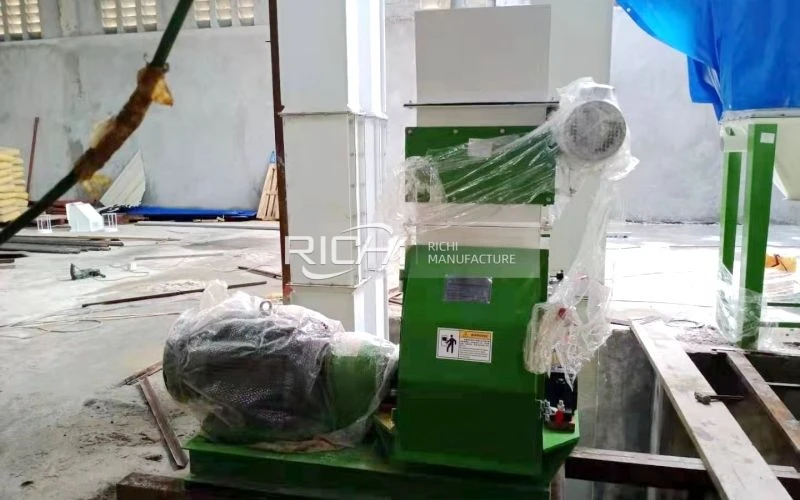
A heavy duty design hammer mill in Chile was installed at an existing feed manufacturing facility in the Biobío Region after the customer's previous grinder became increasingly difficult to operate with both grain and fibrous forage ingredients. The plant already had raw material receiving, conveying, batching, mixing and pelletizing equipment, so replacing the entire feed production system was unnecessary.
The customer purchased one SFSP66×120 hammer mill with a 185 kW main motor as a direct upgrade to the grinding section. Its main job is to provide more stable size reduction for corn, dry alfalfa and selected cereal straw before these materials enter the plant's existing mixing and feed production process.
Name:
Feed Hammer Mill
Country:
Chile
Date:
2025
Capacity:
5–6 T/H
Model:
SFSP66×120
Main Motor Power:
185 kW
Raw Materials:
Corn, dry alfalfa, cereal straw
Final product size:
0.5mm-20mm
The customer produces feed for poultry and cattle markets in southern-central Chile. Its production schedule requires the grinding section to handle both relatively dense grains and much lighter fibrous materials.
The original hammer mill had been installed when the plant processed a larger proportion of grain-based formulations. Under those conditions, its capacity was acceptable.
As the customer's product range changed, more dry alfalfa and forage ingredients began entering the grinding section. This exposed several limitations.
Fibrous material moved through the old grinder much more slowly than corn. Operators frequently had to reduce the feed rate when forage was introduced, and irregular feeding sometimes caused motor-load fluctuations. Screen wear also made particle-size consistency more difficult to maintain between production runs.
The bottleneck began affecting equipment downstream. A mixer or pellet mill cannot operate at its intended capacity if the grinding section cannot provide enough prepared material.
This is why the customer focused its investment on a heavy duty design hammer mill in Chile instead of purchasing another complete feed line.
The machine remains inside the customer's feed-production system, so the project concentrates on appropriate feed raw materials rather than trying to demonstrate that one hammer mill can process every possible material.
Corn is an important ingredient in the plant's grain-based formulations. It is received, cleaned and transferred to the grinding section according to production requirements.
Dry alfalfa hay is used in cattle-oriented feeds. Because whole hay bales and long stems are not suitable for direct feeding into the SFSP66×120, the forage first passes through preliminary bale opening or chopping equipment.
Selected cereal straw can also be processed when a formulation requires a dry fibrous ingredient. Like alfalfa, it needs suitable upstream preparation before fine grinding.
The customer does not process wood chips through the same feed grinder. Keeping wood residues out of the feed grinding route avoids an unnecessary cross-contamination risk and keeps the machine focused on materials relevant to the plant's animal feed production.
The customer initially compared machines mainly by main motor power and maximum grain capacity. RICHI instead evaluated how the grinder would perform within the complete existing process.
Upstream conveying capacity, the percentage of fibrous ingredients, required particle size, daily working hours and downstream mixing capacity were all considered.
The SFSP66×120 provides a relatively wide crushing chamber and sufficient motor power for this scale of feed production.
| Project Item | Specification |
|---|---|
| Equipment | Heavy duty feed hammer mill |
| Model | SFSP66×120 |
| Quantity | 1 unit |
| Main Motor Power | 185 kW |
| Rotor Diameter | 660 mm |
| Crushing Chamber Width | 1200 mm |
| Rotating Speed | 2980 rpm |
| Hammer Line Speed | 103 m/s |
| Typical Forage Capacity | Approximately 5–6 T/H under suitable conditions |
| Main Raw Materials | Corn, dry alfalfa and selected cereal straw |
| Main Application | Grinding before feed mixing and pelletizing |
The customer did not interpret one capacity number as the output for every material. Grain and forage behave differently inside the same hammer mill, so their actual throughput cannot be expected to be identical.
This became one of the most useful technical discussions during the project.
Corn has relatively high bulk density and flows through feeding equipment more easily. Dry alfalfa occupies considerably more volume at the same weight and contains long fibrous structures that are harder to move uniformly through the grinding chamber.
As a result, the same SFSP66×120 animal feed hammer mill can achieve much higher throughput on suitable grain than on fibrous forage.
Screen opening adds another variable.
A larger screen opening generally allows material to leave the chamber more quickly. When the customer requires finer particles, material remains in the grinding zone longer and receives more hammer impacts before it can pass through the screen.
This increases grinding work and can reduce T/H.
For this reason, a customer asking RICHI for a heavy duty design hammer mill in Chile should not provide only one capacity target. The supplier also needs to know the raw material and required final particle size associated with that capacity.
This project was a replacement and integration job rather than a greenfield feed mill.
The customer's existing receiving system continues to bring ingredients into the production area. Material is transferred through the existing conveying arrangement toward the grinding section.
Before the hammer mill, magnetic separation helps reduce the risk of ferrous metal entering the high-speed grinding chamber.
The material is then metered into the SFSP66×120 at a controlled rate.
Inside the grinding chamber, high-speed hammers repeatedly impact the material. Particles continue circulating until they become small enough to pass through the installed screen.
After grinding, the prepared material moves into the customer's existing batching and mixing section. Depending on the feed product, the mixture can then proceed to pelletizing or another downstream process.
This is the commercial value of buying only one heavy duty design hammer mill in Chile. The customer improved the stage that was restricting production without paying again for equipment that was already performing adequately.
The phrase heavy duty can create the wrong expectation if it is not explained properly.
A large rotor, wider chamber and stronger drive allow the hammer mill to work under demanding industrial conditions, but the machine still requires properly prepared feed material.
Whole hay bales should not be pushed directly into the grinder.
Long alfalfa or straw needs preliminary breaking or chopping so the material reaches the feed inlet in a condition that can be metered consistently.
This is particularly important with low-density forage. If large clumps enter suddenly, motor load can rise rapidly. If the feeding system then runs empty, production becomes unstable even though the hammer mill itself has sufficient power.
RICHI therefore reviewed the existing feeder and forage preparation equipment together with the hammer mill.
The Chilean customer does not permanently operate one screen for every production order.
Grain used in poultry feed may require a different particle-size specification from alfalfa incorporated into cattle feed. Straw also does not need to be ground unnecessarily fine if the formulation calls for a coarser fibrous component.
This means screen selection has two direct consequences: finished particle size and production capacity.
The customer can change screens according to the product being manufactured, but RICHI also advised the plant not to chase finer grinding unless the feed specification actually requires it.
Grinding material finer than necessary consumes additional energy and reduces throughput without automatically improving the finished feed.
For potential buyers, screen opening is therefore one of the most useful pieces of information to provide during equipment selection.
The customer's old grinder could still process material. The problem was that production became unpredictable when the material changed.
For a commercial feed plant, predictable output is often more valuable than a high number achieved only under ideal test conditions.
If a hammer mill can produce high tonnage on corn but repeatedly slows or plugs when a forage-containing batch begins, the entire plant schedule becomes harder to manage.
The SFSP66×120 was selected to provide a stronger and more stable grinding stage across the customer's real feed mix.
The wide chamber, replaceable screens and accessible wear components also made routine maintenance easier to organize.
Hammers and screens still wear during operation. Their service life depends on operating hours, raw material cleanliness, particle-size requirements and foreign material entering the machine.
The customer therefore incorporated hammer and screen inspection into scheduled maintenance rather than waiting until particle quality deteriorated severely.
Dry feed grinding produces dust, particularly when grain and dry forage are processed for long operating periods.
The customer already operated an aspiration and dust-control system, so the new hammer mill was connected to this existing arrangement.
Correct airflow helps material move through the grinding system while reducing uncontrolled dust accumulation around the machine.
The project also considered metal separation, electrical protection, bearing inspection and safe maintenance access.
These are not attractive brochure features, but they matter to a buyer who expects an industrial hammer mill to operate every day rather than only during a demonstration.
The SFSP66×120 hammer mill crusher machine was shipped by sea from Qingdao Port in China to Valparaíso Port in Chile.
Before shipment, RICHI secured the rotor and other critical components for long-distance ocean transportation and supplied dimensional drawings and electrical information to the customer.
Because this machine was replacing existing equipment, interface dimensions had to be checked before delivery.
Inlet height, discharge position, foundation conditions and maintenance clearance all needed to match the customer's workshop as closely as possible.
Preparing these details in advance reduced the risk of the hammer mill reaching the plant only to discover that existing conveyors or structural supports required major changes.
After startup, the production team noticed that switching between grain-based and forage-containing batches became more predictable.
The operators still change screens and adjust feeding according to the raw material. The difference is that these adjustments are now part of normal production planning rather than emergency responses to an overloaded grinder.
Particle preparation before mixing also became more consistent.
This matters because grinding is not an isolated process. Variation created at the hammer mill can continue into mixing and pelletizing, affecting the stability of the entire feed production system.
The customer also found maintenance easier to schedule because wear components could be checked systematically instead of continuing to operate the old machine until output fell noticeably.
This heavy duty design hammer mill in Chile project is a useful example for an existing feed producer whose main bottleneck is grinding.
If receiving, conveying, mixing, pelletizing and packing equipment are still suitable for the required capacity, replacing them simply because the grinder is undersized creates unnecessary investment.
A standalone hammer mill can be the better option when the new machine can be properly integrated with what is already installed.
The opposite is also true.
If the customer's feeder cannot supply the required T/H, or the downstream mixer is much smaller than the grinder, installing a large SFSP66×120 will not increase the capacity of the complete plant by itself.
RICHI therefore checks the surrounding process before recommending the model.
The SFSP66×120 used in this project was selected around an existing commercial feed plant processing both grain and fibrous forage ingredients. Another customer searching for a heavy duty design hammer mill in Chile may have a very different requirement.
A grain mill focused mainly on corn may need different capacity calculations from a cattle feed operation processing large amounts of alfalfa. A project starting with whole hay bales may require a bale breaker or preliminary chopper before the hammer mill. A customer targeting very fine grinding may also require a different screen and capacity expectation.
To evaluate the correct machine, RICHI Machinery needs several practical details: the raw materials, their current size and moisture, the required finished particle size, the T/H required for each major material, operating hours, local voltage and the capacity of existing feeding and downstream equipment.
Photos of the raw material and existing grinding section can also help determine how the new machine should be connected.
With this information, RICHI Machinery can judge whether the SFSP66×120 used in this heavy duty design hammer mill in Chile project is the right match, whether a smaller model would be sufficient or whether a larger grinding solution is justified. For an existing feed mill, selecting the correct hammer mill is ultimately about removing a real production bottleneck without creating a new one somewhere else in the process.
Having the right mix of reliable, high-quality pellet machine and pelletizing systems and expert support is essential to your success. Watch how our end-to-end feed pellet plant solutions have helped our customers optimize their performance.
Our customized and future-proofed turnkey pellet plant solutions is designed with you at the core. From vision to reality and beyond, our team stays connected with yours. Giving you peace-of-mind with an expert at your side.
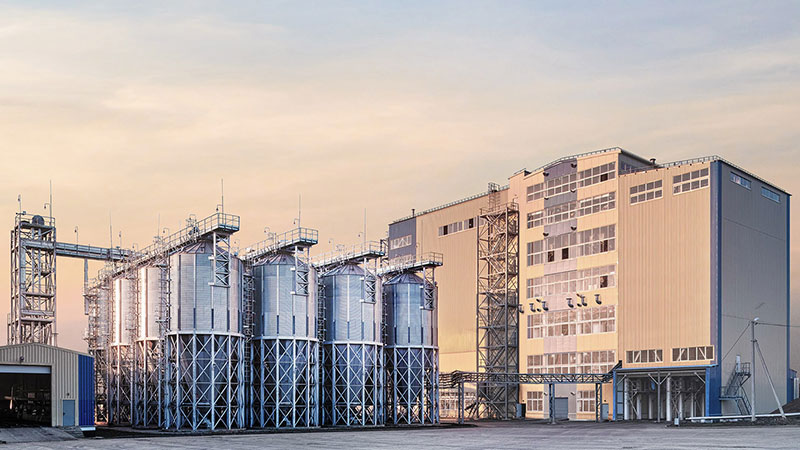
At RICHI, we go beyond project completion. With RICHI Servicee, we’re your dedicated partners in success. Count on us for expert guidance, minimal downtime, and optimized productivity. Choose RICHI for unmatched service and support.
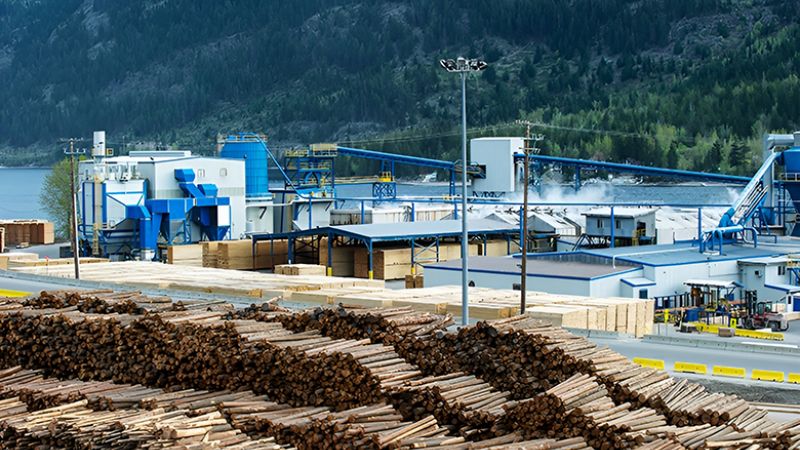


Meet global product demands and quality standards with industry-leading pellet plant design, engineering, equipment, and construction services for pellet processors.

Your Partner Beyond Project Completion
2000+ cases
RICHI is the leading designer, manufacturer and builder of pellet plants in the world, completing over 2000 projects in 140 countries across 6 continents.
Read More
Increase plant productivity, profitability, and safety by integrating high quality equipment into your pellet production line. Over the years, RICHI has become China's top pellet equipment manufacturer. At the same time, RICHI has established valuable partnerships with the world's leading component and raw material manufacturers to bring you the best there is in technology, automation, and efficiency in pelleting plant machinery.

For nearly 30 years, RICHI has been providing best-in-class pellet plant equipment and services to clients across a variety of industries, sizes, and needs. We pride ourselves on the knowledge and skill that each team member possesses – from our technical sales team to our process design engineers. You can count on RICHI Machinery to take your operation to the next level of innovation, quality, and success.
Need help with your pellet manufacturing plant project? Contact us today.
ANIMAL FEED
BIOMASS
WOOD
ORGANIC FERTILIZER
AQUA FEED
CAT LITTER
MUNICIPAL WASTE RECYCLING
SPECIAL PELLET PRODUCTION
RICHI Machinery continues to deliver world class pellet mill equipment, pellet plant engineering and project solutions that add value to our customers in the animal feed, wood waste, agriculture waste, organic fertilizer, cat litter and special pellet products industries. Throughout the years, we RICHI Machinery have built strong brand, becoming industry-leading pellet machine manufacturer. We value integrity, promise quality, and prioritize your success.
Learn MoreWith our expert team, we precisely implement your process engineering requirements in pellet mill and pelletizing plant systems. No matter which industry you’re in – we understand your needs and deliver solutions that meet the highest standards.
At RICHI, quality comes first. Our pellet making machine and related pellet line equipment undergo rigorous quality controls to ensure they meet the highest standards. Rely on products that are durable, safe, and efficient.
With decades of experience in pellet machine and pellet production line production, we have earned a reputation as a trusted partner in various industries. Our expertise allows us to cover a wide range of applications.
Not only do we offer premium pelleting equipment, but we are also experts at designing, building, installing, and maintaining facilities from the ground up. Our expertise is within pellt plant process design, discovering the most efficient, productive, and profitable way to handle your materials in an end-to-end cycle.
○ RICHI MACHINERY
Keeping in touch with us is an effective way to solve all your problems. If you have any needs or questions, please leave your contact information, then RICHI technical consultants will send design, quotation, videos to your mailbox. You can also contact us directly via WhatsApp: +86 13838389622
Copyright©2015-2026 by HENAN RICHI MACHINERY CO., LTD. All rights reserved.