
A livestock feed processor in Central Greece selected one RICHI SFSP66×60 hammer mill for feed in Greece to upgrade the grinding section of an existing sheep and goat feed production system. The customer serves its own livestock operation together with nearby small-ruminant farms, producing concentrate feed based mainly on locally available cereals and purchased protein ingredients.

A livestock feed processor in Central Greece selected one RICHI SFSP66×60 hammer mill for feed in Greece to upgrade the grinding section of an existing sheep and goat feed production system. The customer serves its own livestock operation together with nearby small-ruminant farms, producing concentrate feed based mainly on locally available cereals and purchased protein ingredients.
The project did not require another complete feed mill. Receiving, ingredient storage, batching, mixing and finished-feed handling equipment were already available. The customer therefore replaced an undersized grinder with a larger SFSP66×60 hammer mill, allowing the existing plant to process grain ingredients more consistently while retaining most of its original infrastructure.
Name:
Feed Hammer Mill
Country:
Greece
Date:
2025
Capacity:
5–6 T/H
Model:
SFSP66×60
Main Motor Power:
55 kW
Rotor Speed:
2,980 rpm
Hammer Tip Speed:
103 m/s
Sheep and goat farming has a strong position in Greece, particularly in regions where dairy production supports traditional cheese and other livestock products.
For this customer, expansion created a practical feed-processing problem.
The existing small grinder had originally been selected for a much lower daily feed requirement. As more material passed through the plant, grinding became one of the sections limiting batch preparation.
The customer did not need to replace its mixer, ingredient bins or finished-feed handling system simply because grinding capacity was insufficient.
RICHI therefore treated the project as a retrofit.
The engineering work started with the required grinding rate, existing mixer batch size, number of batches per shift, ingredient types, screen requirements and available electrical capacity.
This approach allowed the customer to strengthen one bottleneck without paying for equipment that was still suitable for continued use.
| Project Parameter | Configuration |
|---|---|
| Equipment | Feed hammer mill |
| Model | SFSP66×60 |
| Main Motor | 55 kW |
| Rotor Diameter | Approximately 660 mm |
| Grinding Chamber Width | Approximately 600 mm |
| Reference Rotor Speed | Approximately 2,980 rpm |
| Reference Hammer Tip Speed | Approximately 103 m/s |
| Reference Capacity | Approximately 5–6 T/H on suitable feed materials and grinding conditions |
| Main Application | Grinding dry concentrate-feed ingredients for sheep and goat feed |
| Project Type | Existing feed grinding section upgrade |
The SFSP66×60 gives the plant more grinding capacity than its previous unit, but the reference 5–6 T/H figure should not be interpreted as a guaranteed throughput for every ingredient and every screen size.
Hammer mill output changes with raw-material hardness, moisture, bulk density, incoming particle size, screen aperture, hammer condition, aspiration and the required finished particle distribution.
Grinding dry maize through a relatively open screen is therefore different from processing barley through a smaller screen.
Model selection has to reflect the customer’s actual ingredient mix rather than one catalogue capacity number.
The primary application is dry ingredient preparation for sheep and goat concentrate feed.
Central Greek livestock producers can work with cereal grains and agricultural feed ingredients such as maize, barley and wheat-derived materials, together with purchased protein meals and mineral components.
For this plant, maize and barley represent the principal materials requiring size reduction.
Ingredients such as soybean meal, wheat bran or other already suitably sized meals may not need to pass through the hammer mill at all.
This is an important process distinction.
A feed mill should not grind every ingredient simply because a hammer mill is available.
Unnecessary grinding consumes electricity, reduces particle size without a formulation requirement and can increase the quantity of fine material entering the mixer.
The customer therefore routes ingredients according to their physical condition.
Whole grains enter the grinding section. Pre-ground meals can move directly toward batching and mixing where their particle condition already meets the formula requirement.
Alfalfa is relevant to sheep and goat feeding in Greece, but baled or long-fibre hay should not be treated as if it were another cereal grain.
A conventional grain hammer mill is not a bale breaker.
If dried alfalfa arrives in bales, twine or netting first has to be removed and the compressed forage opened. Long stems then require coarse size reduction before controlled feeding into a suitable grinding system.
Trying to feed intact hay bales or long tangled forage directly into the SFSP66×60 would create poor feeding behavior and an unsuitable load on the grinding section.
For this customer, the SFSP66×60 is therefore positioned primarily around concentrate-feed ingredient grinding.
If the plant later wants to process substantial quantities of dried alfalfa meal, RICHI would evaluate a separate forage receiving and preprocessing route rather than simply adding loose hay to the grain inlet.
This keeps the single-machine application technically clear while still allowing the overall feed mill to use alfalfa as part of its ruminant feeding program.
The previous grinding system produced an inconsistent mixture of coarse particles and fines. The upgrade gives the operator more control over the grinding stage through appropriate screen selection, feeding and hammer condition.
However, a target such as 0.8–1.5 mm should not automatically be described as ideal for all sheep and goat feed.
Ruminant feeding requires consideration of the complete ration.
Sheep and goats need physically effective forage in addition to concentrate ingredients, and grinding the concentrate more finely does not replace that structural fibre.
Excessive grinding can also increase dust and unnecessary energy consumption.
The customer therefore determines the required grain particle distribution according to the ration design and downstream process.
If the ground ingredients will subsequently be pelletized, screen selection also needs to match the pellet-mill requirements.
If the product is sold as mash concentrate, the desired texture can be different.
Screen aperture is only one control variable.
A 3 mm screen, for example, does not mean that every particle leaving the hammer mill measures exactly 3 mm. Material can break into a distribution of sizes, and elongated particles may pass through screen openings differently from approximately spherical grain fragments.
The most useful retrofit calculation is not simply whether the new hammer mill is larger than the old one.
The grinding section has to support the batching and mixing schedule.
If the mixer requires a certain quantity of ground cereal for each batch, the hammer mill must prepare that material quickly enough to avoid extending the batch cycle.
At the same time, installing an oversized grinder provides little benefit if the downstream mixer, conveying equipment or bins cannot accept the resulting flow.
RICHI therefore checks the complete material path:
This calculation is particularly useful for a retrofit because the customer wants to reuse existing equipment rather than discover after installation that the new grinder has simply moved the bottleneck to another section.
A feed hammer mill should not be considered only as a rotor, hammers and screen.
Air movement through the grinding chamber affects material discharge, heat removal, dust control and overall grinding behavior.
An appropriate aspiration system helps move ground material away from the screen after it reaches a suitable size.
If airflow is inadequate, material can remain in the grinding chamber longer than necessary. This can increase recirculation, create more fines and reduce effective capacity.
For the Greek retrofit, RICHI therefore evaluates the existing cyclone, filter or aspiration arrangement together with the hammer mill.
Dust collection also matters for housekeeping and plant safety.
Dry grain grinding generates combustible organic dust, so equipment layout, dust extraction, electrical design, housekeeping and applicable local safety requirements need to be considered as part of the installation.
The hammer mill itself cannot make the entire feed plant compliant simply because certain components are supplied for the European market.
Wear management is particularly important when the customer processes different grains during the same production week.
Hammer edges gradually wear, while screens can become damaged or partially blocked.
As wear progresses, the relationship between capacity, particle distribution and electrical load can change.
The operator therefore monitors the machine rather than waiting for complete component failure.
Useful operating indicators include motor current, throughput, unusual vibration, bearing condition, screen condition and the particle distribution of the ground product.
Screen changes should be based on the feed product being manufactured.
The plant does not need to grind every formula through the smallest available screen.
A more open screen can increase throughput and reduce unnecessary energy consumption when a coarser grind meets the production requirement.
A smaller aperture can be installed when downstream processing genuinely requires finer material.
This gives the customer process flexibility without claiming that the machine automatically reduces electricity consumption for every material.
Because this is a single-machine replacement, installation focuses heavily on interfaces with equipment already in the building.
RICHI checks the feed inlet elevation, discharge position, supporting structure, motor installation, access for screen and hammer maintenance, aspiration connection and the capacity of the downstream conveyor.
The electrical system also needs to match the 55 kW main motor and the site’s actual industrial power supply.
The final protection, cable sizing, starter or control arrangement is determined from the plant electrical design rather than assuming one breaker size for every installation.
Before shipment, the machine can be prepared for international transport from Qingdao, with the normal logistics route continuing by sea to Greece and then inland to the customer’s facility.
Piraeus can provide a practical Greek entry route depending on the selected freight arrangement and final plant location.
The more important engineering work, however, occurs before shipment: checking whether the machine physically and electrically fits the existing feed mill.
This hammer mill for feed in Greece project uses one RICHI SFSP66×60 to upgrade the dry ingredient grinding section of an existing sheep and goat feed operation in Central Greece.
The hammer mill is configured with a 55 kW main motor and has a reference processing capacity of approximately 5–6 T/H under suitable material and grinding conditions.
Its primary job is grinding dry concentrate-feed ingredients such as maize and barley before batching and mixing.
Already suitable meals do not need unnecessary regrinding, while long-fibre alfalfa requires separate forage preparation if it is to be processed in significant quantities.
The machine does not directly improve digestibility, nutrient absorption, milk production or animal performance.
Its engineering role is physical size reduction.
More controlled particle preparation can support consistent batching, mixing and downstream pelletizing where applicable, but animal results depend on the complete ration and feeding management.
For another customer searching for a hammer mill for feed in Greece, sheep feed hammer mill, goat feed grinder, grain hammer mill for animal feed, barley grinding machine, maize feed grinder or SFSP66×60 hammer mill, RICHI first checks the percentage of the formula that actually needs grinding.
This is often more useful than selecting a machine from the total finished-feed tonnage.
A plant producing 5 T/H of finished feed does not necessarily need to grind 5 T/H continuously if only part of the formula consists of whole grain. Conversely, a batching system may require a higher short-term grinding rate if ground ingredients must be prepared rapidly between mixer cycles.
Useful project information includes the raw-material list, percentage of whole grains in each formula, incoming grain size, moisture, required particle distribution, mixer batch size, batches per hour, existing conveying capacity, available ground-material storage, aspiration system and electrical supply.
If dried alfalfa or other long-fibre forage is also involved, RICHI needs to know whether it arrives loose, chopped, in square bales or in round bales. This determines whether bale breaking, coarse shredding or another preprocessing machine is required before fine grinding.
For a Greek livestock-feed retrofit, send RICHI your current grinder model, daily feed output, peak hourly requirement, grain types, screen sizes, mixer capacity, existing plant layout and the bottleneck you want to remove. RICHI can then determine whether an SFSP66×60 or another hammer mill configuration is appropriately matched to the existing system.
Having the right mix of reliable, high-quality pellet machine and pelletizing systems and expert support is essential to your success. Watch how our end-to-end feed pellet plant solutions have helped our customers optimize their performance.
Our customized and future-proofed turnkey pellet plant solutions is designed with you at the core. From vision to reality and beyond, our team stays connected with yours. Giving you peace-of-mind with an expert at your side.
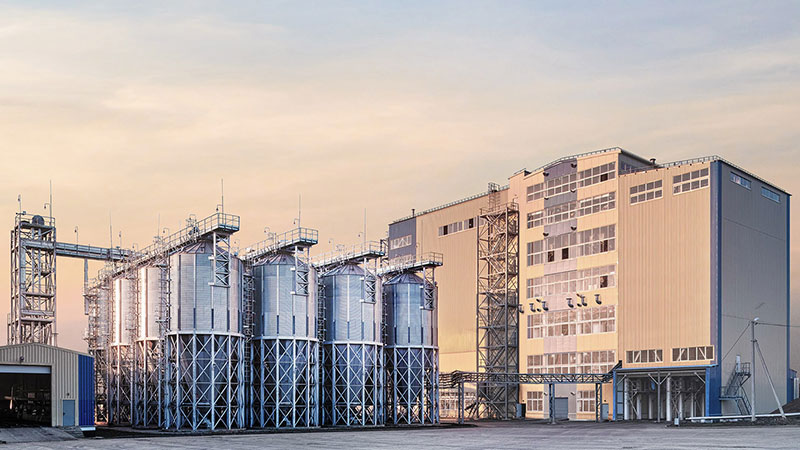
At RICHI, we go beyond project completion. With RICHI Servicee, we’re your dedicated partners in success. Count on us for expert guidance, minimal downtime, and optimized productivity. Choose RICHI for unmatched service and support.
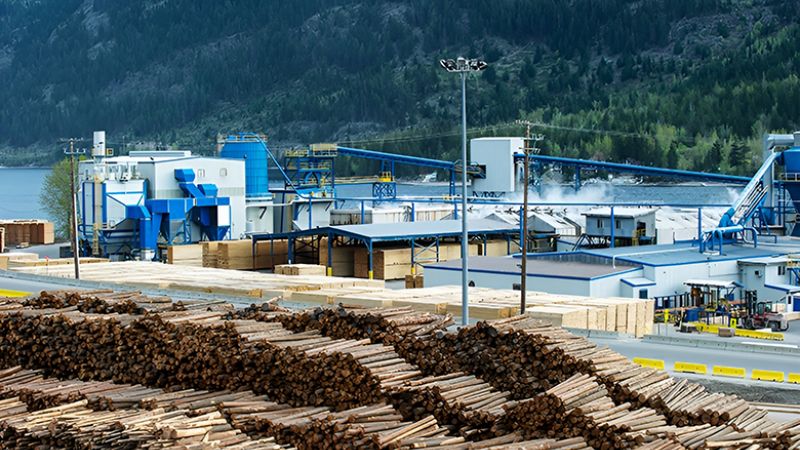


Meet global product demands and quality standards with industry-leading pellet plant design, engineering, equipment, and construction services for pellet processors.

Your Partner Beyond Project Completion
2000+ cases
RICHI is the leading designer, manufacturer and builder of pellet plants in the world, completing over 2000 projects in 140 countries across 6 continents.
Read More
Increase plant productivity, profitability, and safety by integrating high quality equipment into your pellet production line. Over the years, RICHI has become China's top pellet equipment manufacturer. At the same time, RICHI has established valuable partnerships with the world's leading component and raw material manufacturers to bring you the best there is in technology, automation, and efficiency in pelleting plant machinery.

For nearly 30 years, RICHI has been providing best-in-class pellet plant equipment and services to clients across a variety of industries, sizes, and needs. We pride ourselves on the knowledge and skill that each team member possesses – from our technical sales team to our process design engineers. You can count on RICHI Machinery to take your operation to the next level of innovation, quality, and success.
Need help with your pellet manufacturing plant project? Contact us today.
ANIMAL FEED
BIOMASS
WOOD
ORGANIC FERTILIZER
AQUA FEED
CAT LITTER
MUNICIPAL WASTE RECYCLING
SPECIAL PELLET PRODUCTION
RICHI Machinery continues to deliver world class pellet mill equipment, pellet plant engineering and project solutions that add value to our customers in the animal feed, wood waste, agriculture waste, organic fertilizer, cat litter and special pellet products industries. Throughout the years, we RICHI Machinery have built strong brand, becoming industry-leading pellet machine manufacturer. We value integrity, promise quality, and prioritize your success.
Learn MoreWith our expert team, we precisely implement your process engineering requirements in pellet mill and pelletizing plant systems. No matter which industry you’re in – we understand your needs and deliver solutions that meet the highest standards.
At RICHI, quality comes first. Our pellet making machine and related pellet line equipment undergo rigorous quality controls to ensure they meet the highest standards. Rely on products that are durable, safe, and efficient.
With decades of experience in pellet machine and pellet production line production, we have earned a reputation as a trusted partner in various industries. Our expertise allows us to cover a wide range of applications.
Not only do we offer premium pelleting equipment, but we are also experts at designing, building, installing, and maintaining facilities from the ground up. Our expertise is within pellt plant process design, discovering the most efficient, productive, and profitable way to handle your materials in an end-to-end cycle.
○ RICHI MACHINERY
Keeping in touch with us is an effective way to solve all your problems. If you have any needs or questions, please leave your contact information, then RICHI technical consultants will send design, quotation, videos to your mailbox. You can also contact us directly via WhatsApp: +86 13838389622
Copyright©2015-2026 by HENAN RICHI MACHINERY CO., LTD. All rights reserved.